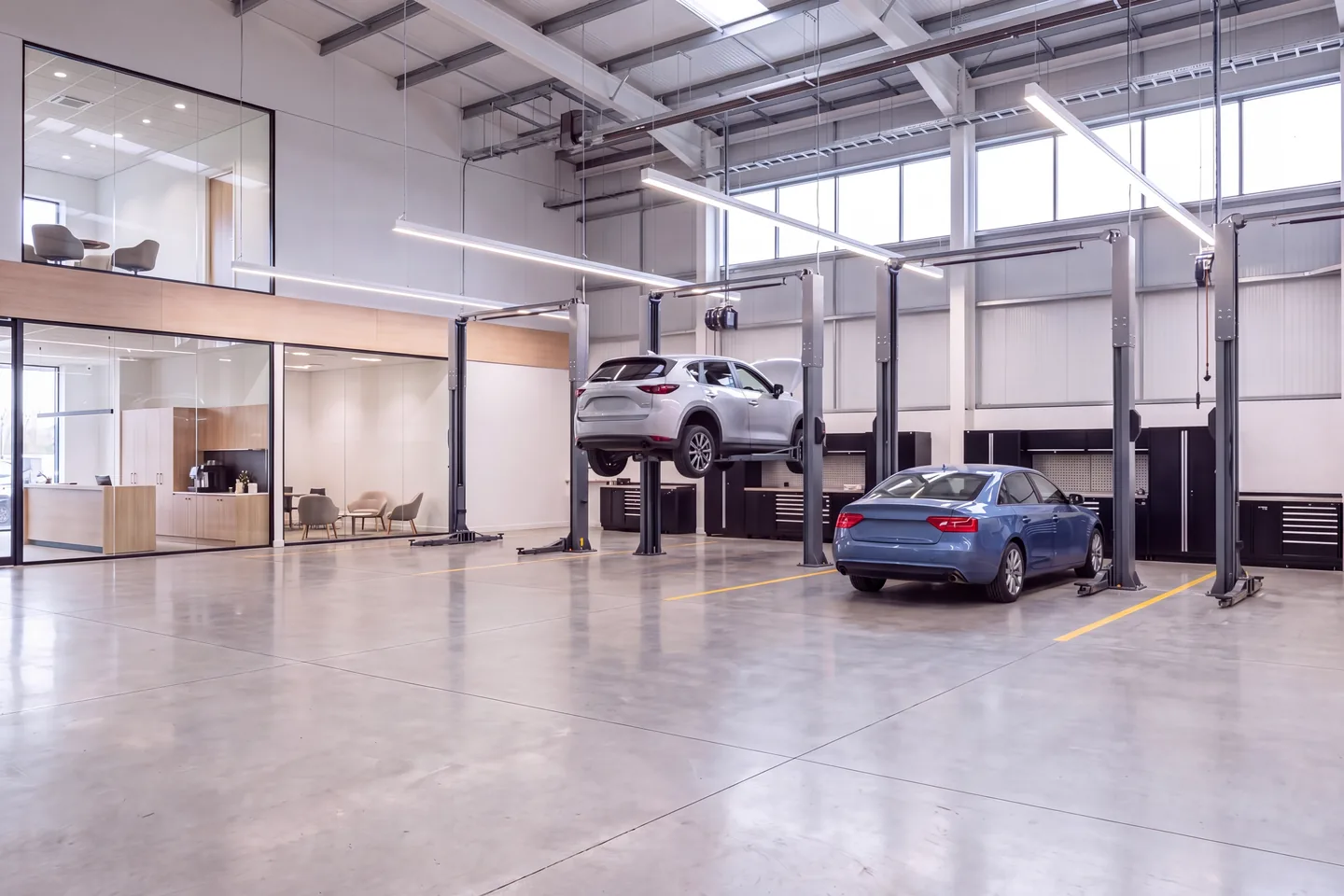
3D rendering terminology is the shared vocabulary studios and clients use to describe how a 3D model becomes a finished image — spanning modeling, materials, lighting, camera, and output. This glossary defines 50+ key terms grouped by production stage, the way we actually use them when briefing and reviewing real CGI projects.
Most glossaries list terms alphabetically, which scatters related ideas. We ordered ours by the pipeline a project moves through, so each term sits next to the ones it connects to on a real job.
Core 3D Rendering Terms Every Client Should Know
These are the umbrella terms people mix up most. Getting them straight makes every project brief clearer.
- 3D rendering — the process of turning a 3D model or scene into a 2D image or animation. It is the output stage of architectural rendering and most CGI work.
- Render (noun) — the finished 2D image a render engine produces from a 3D scene.
- 3D visualization — the broader end-to-end process — modeling, texturing, lighting, rendering, and post-production. Rendering is one step inside 3D visualization.
- CGI (computer-generated imagery) — any still or moving image created with 3D software rather than a camera. See how it differs from AI imagery in CGI vs AI.
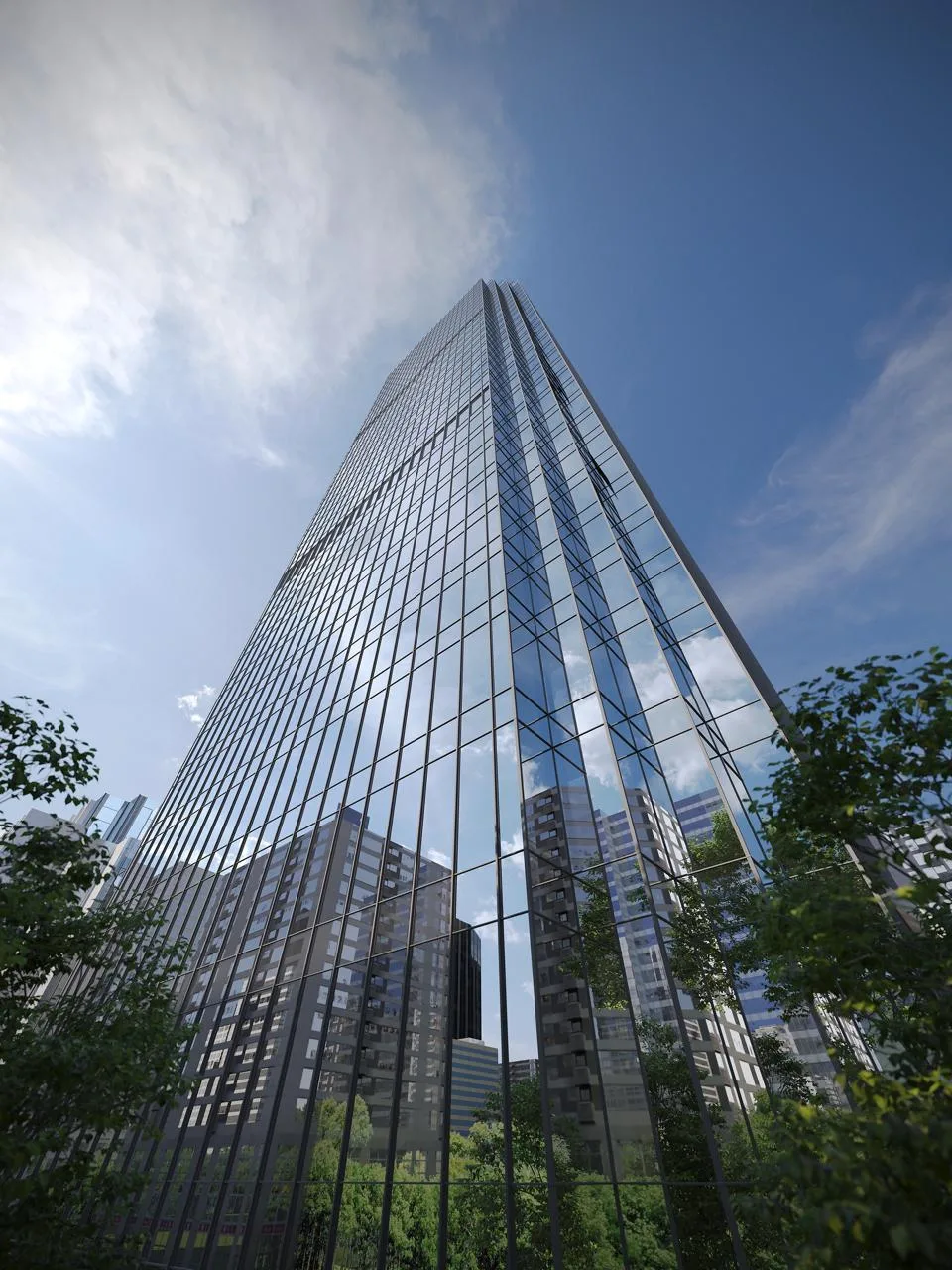
- Photorealism — rendering so accurate it is hard to tell from a photograph — the goal of most photorealistic rendering.
- Real-time vs offline rendering — real-time renders instantly in a game engine; offline renders frame by frame for maximum quality.
- Scene — the assembled 3D environment — models, cameras, lights, and materials — that gets rendered.
| Term | What it covers | Reach for it when |
|---|---|---|
| 3D rendering | Producing the final image from a scene | You mean the output picture/animation |
| 3D visualization | The whole modeling-to-render workflow | You mean the full project process |
| CGI | Any 3D-generated imagery, still or motion | You mean the category of imagery |
| Render | The finished image itself | You mean the deliverable file |
3D Modeling Terminology
Before anything is rendered, it is modeled. These terms describe the geometry a scene is built from.

- 3D model — a digital object defined by geometry. Building one is 3D modeling.
- Mesh — the network of vertices, edges, and faces that forms a model’s surface.
- Polygon (poly) — a single flat face, usually a triangle or quad; polycount signals how heavy a model is.
- Vertex, edge, face — the three building blocks of a mesh — points, the lines between them, and the surfaces they enclose.
- Topology — how polygons flow across a surface; clean topology renders and animates predictably.
- NURBS — curve-based modeling for smooth, mathematically precise surfaces like car bodies.
- UV mapping — flattening a 3D surface into 2D coordinates so textures wrap correctly.
- Rigging — adding a skeleton to a model so it can be posed or animated.
- Retopology — rebuilding a dense mesh into cleaner, lighter geometry.
- LOD (level of detail) — swapping a model for simpler versions as it moves farther from the camera.
Not sure where modeling ends and rendering begins? We break the line down in 3D modeling vs 3D rendering.
Materials and Texturing Terms
Geometry defines shape; materials define how a surface looks and reacts to light. This is where renders start to feel real.
- Material / shader — the rules for how a surface responds to light — color, reflection, transparency.
- Texture — an image mapped onto a surface to add color, pattern, or detail.
- PBR (physically based rendering) — a material system that mimics real-world light physics for consistent realism.
- Albedo / base color — the pure surface color, before any lighting or shadow.
- Bump, normal, and displacement maps — textures that fake or physically add surface detail like grain or brick.
- Roughness / metalness — how sharp or blurred reflections are, and whether a surface reads as metal.
- HDRI — a high-dynamic-range image used to light a scene with realistic environment reflections.
- Subsurface scattering (SSS) — light passing through translucent materials such as skin, wax, or marble.
Lighting and Rendering-Technique Terms
These terms describe how a render engine actually calculates light. They also answer the common question of what the main rendering techniques are.
- Global illumination (GI) — simulation of indirect, bounced light — the biggest driver of realism.
- Ray tracing — tracing light rays through a scene for accurate reflections, refractions, and shadows.
- Path tracing — an advanced form of ray tracing that solves full light transport for photorealism.
- Radiosity — a technique focused on soft, diffuse light bouncing between surfaces.
- Rasterization — a fast technique that projects geometry to pixels; standard in real-time engines.
- Ambient occlusion (AO) — soft contact shadows where surfaces meet, in corners and crevices.
- Caustics — bright light patterns focused through glass or water, or bounced off metal.
- Render engine — the software that computes the final image, such as V-Ray or Corona — compared in Corona vs V-Ray.
- Sampling / noise — more samples mean less grain but longer render times.
Camera and Composition Terms
A render is a photograph of a scene that does not exist. These are the virtual-camera controls that shape the shot.
- Field of view (FOV) — how wide an area the camera captures.
- Focal length — the lens value that controls zoom and perspective compression.
- Depth of field (DoF) — selective focus that blurs the fore- or background.
- Aspect ratio — the width-to-height proportion of the frame, like 16:9.
- Camera angle — the viewpoint — eye-level, bird’s-eye, or worm’s-eye. See the full set in types of angles in 3D visualization.
- Exposure — the brightness setting of the virtual camera.
Output and Deliverable Terms
Once a scene is rendered, these terms describe what you actually receive and how it is finished.
- Resolution — the pixel dimensions of a render, such as 4K (3840×2160).
- Still — a single rendered image.
- Animation / walkthrough — a moving sequence of rendered frames.
- 360 panorama — a spherical image a viewer can pan around, often used for VR tours.
- Render pass / AOV — separate output layers — shadows, reflections, depth — kept apart for editing.
- Compositing — combining render passes and elements into one final image.
- Post-production — color, retouching, and effects applied after rendering, a stage inside the 3D rendering process.
Wondering how a render compares to a real photo shoot? We weigh both in 3D rendering vs photography.
Emerging: AI and Real-Time Terms
The vocabulary is expanding as AI and real-time tools reshape the pipeline. These are the terms showing up in briefs now.
- Real-time engine — software like Unreal Engine that renders interactive scenes instantly.
- Gaussian splatting — a point-based method that captures and renders photoreal scenes from photos. More in Gaussian splatting.
- Diffusion model — the AI approach behind text-to-image tools, explained in diffusion models.
- Virtual staging — digitally furnishing an empty room — see what is virtual staging.
- AI denoising / upscaling — machine-learning cleanup that removes render noise or boosts resolution.
Frequently Asked Questions About 3D Rendering Terminology
What are the different types of 3D rendering?
The main types are still images, animations or walkthroughs, real-time renders, and 360/VR panoramas. Renders are also grouped by subject — architectural, interior, product, and commercial — each with its own conventions and detail level.
What are the five rendering techniques?
The five most-cited rendering techniques are rasterization, ray casting, ray tracing, path tracing, and radiosity. Rasterization is fastest and powers real-time engines, while ray and path tracing deliver the most accurate light for photorealistic stills.
What is a 3D render called?
A finished 3D render is simply called a render. Depending on context it may also be called CGI, a 3D visualization, or a 3D image — all referring to the 2D picture produced from a 3D scene.
What is another word for 3D rendering?
3D visualization and CGI are the closest synonyms for 3D rendering. Strictly, rendering is the final output stage, while 3D visualization describes the whole modeling-to-image process, so the terms overlap but are not identical.
What is the difference between 3D modeling and 3D rendering?
3D modeling builds the geometry of an object or scene; 3D rendering lights that scene and computes it into a finished 2D image. Modeling comes first and defines shape, rendering comes last and defines how it looks.
Need these terms turned into finished imagery? Explore our 3D architectural rendering services.