What 3D visualization is: the full discipline of turning ideas, drawings, or CAD data into 3D imagery—covering modeling, materials, lighting, camera, rendering, and presentation.
What 3D visualization is not:
- Not 3D rendering alone. Rendering is one technical stage inside visualization—the step that computes the image; visualization is the whole workflow around it.
- Not architectural animation. Visualization output is often a still image; animation specifically means moving video such as a walkthrough.
- Not 3D modeling. Modeling builds the geometry; visualization is the end-to-end process that turns that geometry into a finished visual.
3D visualization is a digital process that turns ideas, drawings, CAD files, or technical data into three-dimensional images, animations, virtual tours, or interactive experiences. It helps people see and understand a product, building, interior, environment, or system before it is built, manufactured, or photographed. Unlike simple 3D rendering, 3D visualization covers the full workflow: modeling, materials, lighting, camera setup, rendering, presentation, and visual storytelling. It begins with 3D modeling of the scene. For CGI specifically, our overview of CGI production studios compares leading providers. Framing changes everything — our guide to the types of angles in 3D visualization breaks down each viewpoint.
What Is 3D Visualization? Definition and Core ConceptWhat Is 3D Visualization? Definition and Core Concept
In simple terms, 3D visualization turns technical or conceptual information into visual 3D content that people can explore, review, and understand more easily. Depending on the project, the output may be a photorealistic rendering, a product image, an animation, a virtual tour, or a real-time interactive scene. For moving visuals, see leading architectural animation studios. One practical output for real estate is the 3D floor plan.
Unlike a 2D image, which shows one fixed view, 3D visualization allows a product, object, or environment to be presented from multiple angles, under different lighting conditions, and in different materials or variations. This makes it a flexible tool for communication, design approval, sales, and marketing.
For businesses, the main advantage is efficiency. A single 3D asset can generate many outputs, including still images, close-up details, animations, AR experiences, and interactive presentations. Instead of repeating photo shoots or building multiple physical prototypes, teams can reuse one digital source across different channels and project stages. Take it further and you get virtual reality for architecture, an immersive way to present a space.
3D visualization is especially valuable when something has not yet been built, manufactured, or photographed. It helps stakeholders understand scale, proportions, materials, and design intent before production begins. This reduces uncertainty, improves collaboration, and makes it easier to present complex ideas clearly.
Modern 3D visualization can also include real-time interaction, such as zooming, rotating, or changing finishes instantly. These features are useful for e-commerce configurators, virtual tours, training environments, and high-value product presentations. In that sense, 3D visualization is not just a way to create images, but a broader visual communication tool used across many industries. Emerging applications include metaverse interior design.
3D Visualization, 3D Rendering, and 3D Modeling: What’s the Difference?
3D visualization, 3D rendering, and 3D modeling are closely connected, but they do not mean the same thing. 3D modeling is the process of building the shape and structure of an object, product, or environment. 3D rendering is the technical process of turning a prepared 3D scene into a final image or animation by calculating lighting, materials, shadows, and camera settings. 3D visualization is the broader process that combines modeling, materials, lighting, camera work, rendering, and presentation strategy to communicate an idea clearly and convincingly.
In practical terms, modeling creates the asset, rendering produces the final visual output, and visualization turns the entire workflow into a business tool for design review, marketing, sales, training, or stakeholder communication. Understanding the difference helps companies choose the right service, define project scope correctly, and avoid confusion when discussing deliverables, pricing, and revision rounds.
| Term | What it means | Typical output | Business use |
|---|---|---|---|
| 3D Modeling | Creating the geometry, proportions, and structure of an object or environment in 3D space | 3D model or source file | Product development, engineering preparation, and asset creation for later visualization |
| 3D Rendering | Calculating light, materials, shadows, and camera settings to generate a final visual from a 3D scene | Still image, animation, or render sequence | Marketing images, product shots, architectural stills, and campaign visuals |
| 3D Visualization | The full process of presenting an idea, object, or space through 3D content using modeling, materials, lighting, rendering, and visual storytelling | Renderings, walkthroughs, virtual tours, configurators, and real-time experiences | Sales presentations, approvals, pre-construction marketing, training, and interactive product experiences |
For example, a furniture brand may start with a 3D model of a chair, apply realistic materials and studio lighting, and then render several product images for its website. The model is the asset, the render is the final output, and the full workflow used to prepare those visuals for e-commerce and marketing is 3D visualization.
This distinction is especially important when hiring a studio or requesting a quote. A company asking for “3D rendering” may actually need full 3D visualization, including modeling, materials, art direction, and revisions. Likewise, requesting only a model will not produce presentation-ready images. Separating these terms makes project planning more accurate and helps align expectations from the start.
How 3D Visualization WorksFrom our studio — For us, “visualization” and “rendering” mean the same thing. People use them interchangeably, and that’s fine. The dictionary definition of visualization is broader, but in day-to-day work it’s the same job — turning a project into an image people can actually understand.
— Dim Kuzmenko, Company Owner, Maverick Frame
How 3D Visualization Works
The production pipeline is key to understanding basic principles of 3D visualization. This involves a structured workflow from concept to final output, with each stage requiring specific expertise and software tools. To evaluate vendor proposals, set realistic timelines, and budget appropriately, business leaders first need to understand the 3D visualization process.
3D Modeling
Any visualization begins with the geometric foundation of 3D modeling. This digital skeleton is constructed from vertices, edges, and polygons that define an object’s structure. The appropriate technique depends on the use case. Polygonal modeling is the industry standard for architecture and products. NURBS offers mathematical precision for manufacturing. Sculpting and procedural methods are best suited for organic forms and repetitive environments. Each method has specific trade-offs regarding artistic control, computational weight, and dimensional accuracy. These differences directly influence the flexibility and performance of the asset in downstream processes. For building projects, this stage is delivered through dedicated architectural 3D modeling services.
Accurate modeling is essential for building stakeholder confidence. This process requires architectural dimensions to match CAD drawings within tolerances that are acceptable to contractors. Additionally, product surfaces must maintain continuity to ensure realistic light reflection. The density of the polygon mesh affects both visual fidelity and computational requirements. High-poly models capture finer detail but require significantly more rendering time. Therefore, the modeling approach selected early in the pipeline affects the efficiency of the texturing and lighting stages. Technical precision is thus a prerequisite for visual credibility.
From a business perspective, modeling accounts for 40-60% of the total project time and budget. Rushing this phase to accelerate delivery often has costly consequences. Texturing errors, lighting artifacts, and revision requests increase when the base geometry is flawed. Investing adequate resources in accurate modeling minimizes revisions and ensures that the final visualization meets professional standards. This reduces overall production costs.
Texturing and Materials
In computer graphics, texturing involves adding visual information to a geometric foundation. This is done by defining surface properties such as color, roughness, reflectivity, and relief. Physically based rendering is the current industry standard. It uses texture maps to simulate how materials interact with light under different conditions. Albedo, roughness, and metallicity maps determine the identity of materials. Meanwhile, normal and displacement maps add detail without excessively complicating the geometry.
The advantage of PBR is predictability. Materials created according to these standards appear accurate under daylight, artificial, or studio lighting. This is essential for cross-channel marketing. The quality of textures directly affects the perception of realism. Even minor errors can undermine credibility. Signs of poor quality include pattern repetition, incorrect texture scale, an absence of surface imperfections, and materials behaving incorrectly.
From a commercial standpoint, using material libraries can reduce the time required for typical texturing tasks by 50%-70%. But unique brand finishes and exclusive products require custom development from scratch. This increases project timelines. Finding the right balance between ready-made assets and customization optimizes your budget. This approach ensures the final visualization maintains its visual identity and technical accuracy.
Lighting and Realism
The perception of the quality and realism of 3D visualizations is affected by lighting. Even a flawless model can appear artificial under poor illumination. But good lighting can make mediocre geometry appear convincing. The right approach depends on the task at hand. Direct lighting is optimal for product photography because it is quick. Global illumination is essential for interior scenes because it calculates reflections, accounting for 60–80% of total illumination. HDRI maps create realistic environments and reflections. Area lights mimic the soft studio lighting necessary for product photography.
Ray tracing simulates the physical behavior of light to produce accurate shadows and refractions. Thanks to modern GPUs, this technique has become the standard. To achieve photorealism, consider factors such as color temperature, light intensity in lumens, camera settings, and surface imperfections. Together, these parameters make the image seem like a photograph. This builds viewer trust in the visualization.
Though photorealism is often the goal in commercial work, it is not always the ultimate objective. For architectural diagrams or conceptual presentations, a stylized visualization often conveys ideas more effectively than imitation photography. The key is to align the visual style with the project’s communication goal. Resources should be directed toward lighting aspects that influence an object’s perceived value. Excessive detail is best avoided when clarity of presentation is essential.

Rendering and Output
3D rendering is the process of turning a prepared 3D scene into a final image or animation. In simple terms, it is the stage where software calculates lighting, materials, shadows, reflections, and camera settings to produce the finished visual output.
The industry uses two main approaches. The first is pre-rendering. This approach produces the highest-quality images for marketing and cinema. The second one is real-time rendering. It enables interactivity for presentations and VR. Hybrid methods combine the advantages of both approaches, allowing for iterative work without compromising the final product’s quality.
Workflows have been transformed by real-time technologies based on modern engines. Instead of waiting for static images, customers can now instantly navigate spaces. But the choice of method is dictated by technical compromises.
Pre-rendering takes hours per frame to produce a perfect image. In contrast, real-time rendering provides millisecond response times on powerful graphics processing units. Rendering time varies from minutes for simple products to hours for complex exteriors. This directly affects production times.
From a commercial standpoint, real-time capabilities shorten approval cycles by providing instant customer feedback. But pre-rendering is often necessary for print and highly detailed campaigns. The optimal strategy is to combine these approaches: use interactivity for concept approval and high-quality rendering for final marketing assets.
Service Selection: Modeling, Rendering, or Full 3D VisualizationFrom our studio — People think you sit down and produce a render in a couple of minutes. You don’t. It’s a full pipeline — making sense of the drawings, building the scene, setting up materials and textures, and only then rendering. Asking for five different variations isn’t a small request; it’s days of work. This process gets underestimated more than almost anything else in our field.
— Dim Kuzmenko, Company Owner, Maverick Frame
Service Selection: Modeling, Rendering, or Full 3D Visualization
It is important to clearly distinguish between terms when selecting a contractor and forming a budget. Mixing them up can result in financial errors and delays to the project.
Keep in mind that modeling is just one part of visualization. Without lighting and textures, a bare model is inadequate for business communication. Rendering is the final computational stage, while visualization involves making strategic choices about angles and mood. Even if an image is technically correct, it may be ineffective for business purposes without a competent visual strategy.
In procurement, the distinction between labor intensity and computational resources is often unclear. Modeling costs are billed as either artist time or asset complexity. Rendering fees, on the other hand, are charged either per image or by the hour. Understanding these differences is key to accurately evaluating estimates. Changes in geometry are more costly than adjustments to lighting or materials. This directly affects the price of revisions.
Clearly defining the deliverables is key when evaluating contractors. This includes specifying whether source files will be transferred, how many rounds of revisions are included, and the cost of additional angles. Understanding the differences between modeling, rendering, and visualization helps prevent scope creep and budget overruns. This ensures transparency throughout the process.
Effective planning requires matching each task with the appropriate service. Designs require modeling so they can be viewed from all angles, and marketing materials need a complete visualization process. Interactive presentations use real-time technology, and rendering farms are more efficient for creating hundreds of product variations from a single model.

Common mistakes include requesting a rendering without providing a model and expecting to receive source files when only images are purchased. The cost of revisions is often underestimated as well. License agreements clearly distinguish between the rights to files and the ownership of final images.
Real-Time 3D and Digital TwinsReal-Time 3D and Digital Twins
Real-time visualization marks a transition from static images to interactive experiences. Users can instantly navigate the environment, which is a critical feature for client presentations, virtual tours, and training. Technically, this is achieved by converting CAD, BIM, or 3D scans into optimized mesh data for engines such as Unreal Engine or Unity. Modern workflows allow geometry to be exported without losing dimensional accuracy, enabling free exploration of spaces without rendering delays. Pre-rendered motion, by contrast, is produced as architectural 3D animation services.
Digital twins are the next evolutionary step in linking 3D models to live sensor data. Unlike static visualizations, the models update in real time. This enables predictive maintenance, optimized energy consumption, and space utilization tracking. Thus, visualization transforms from a presentation tool into an asset management solution. In this context, the visual representation reflects the physical state of an object.
Commercial applications span key industries and offer measurable ROI. For example, virtual tours in real estate can reduce the cost of physical viewings by 60%-70%. In manufacturing, simulations may cut staff training time in half. Retailers could increase customer engagement by three times with virtual showrooms. Architects may reduce revision cycles by 30 to 40 percent when they receive interactive approvals in the early stages.
Technical implementation requires high-performance equipment: Specifically, NVIDIA RTX 3080–4090 graphics cards, 32–64 GB of RAM, and fast NVMe drives are necessary. These resources ensure smooth asset streaming and maintain high frame rates during interactive sessions. This ensures an enjoyable user experience without delays, which could ruin the immersive nature of the presentation.
Digital twins are the next evolutionary step in linking 3D models to live sensor data. Although there is a significant initial investment in licenses and hardware, the ability to iterate during meetings justifies the cost. This is because it accelerates the decision-making process. Digital twins are optimal for highly liquid assets because the long-term benefits of operational optimization outweigh the implementation costs. Investing in real-time technology reduces approval time and increases conversion rates. Essentially, this pays for itself at the sales stage.
Types of 3D VisualizationTypes of 3D Visualization
Different types of 3D visualization are used depending on the industry, the level of realism required, and whether the final output is static or interactive. Some projects focus on photorealistic marketing images, while others are built for technical communication, simulation, or immersive user experiences. Understanding these categories helps match the right workflow to the right business goal.
Architectural Visualization
Architectural 3D visualization is used to present buildings, interiors, landscapes, and master plans before construction begins. Common outputs include exterior renderings, interior views, aerial perspectives, and animated walkthroughs. Developers, architects, and real estate teams use it for pre-sales marketing, design approvals, investor presentations, and communication with contractors or planning authorities. Specialized subtypes include interior rendering for indoor spaces and commercial rendering for retail, office, and hospitality projects. On the residential side, the same workflow drives our residential 3D rendering services, while layouts are communicated through 3D floor plan rendering.

Product Visualization
Product 3D visualization helps brands create product images before physical samples are available. It is commonly used for e-commerce, advertising, packaging previews, launch campaigns, and product configurators. A single 3D model can generate multiple angles, finishes, and color variations, making product visualization especially useful for marketing teams that need speed, flexibility, and consistency. It extends into motion through 3D product animation services for ads and e-commerce.
Industrial Visualization
Industrial 3D visualization is used to communicate machines, engineering systems, production lines, and complex assemblies. It is especially valuable in manufacturing, plant design, construction technology, and B2B sales, where equipment often needs to be shown clearly before installation or production. Industrial visualization may include exploded views, cutaways, technical animations, training materials, and interactive presentations that make complex systems easier to understand.
Medical Visualization
Medical visualization is used to show anatomical structures, surgical procedures, treatment concepts, and medical devices. It supports patient education, clinical communication, medical training, and healthcare marketing. In this field, clarity and accuracy are especially important because the visuals often need to explain complex biological information in a way that is easy to understand.
Scientific Visualization
Scientific visualization focuses on data-driven phenomena rather than commercial presentation. It is used to represent molecular structures, fluid dynamics, geological models, environmental systems, and other complex datasets. Unlike architectural or product rendering, scientific visualization is designed to make patterns, processes, and relationships visible for research, education, and technical analysis.
VR and AR Visualization
VR and AR visualization create more immersive ways to explore 3D content. Virtual reality places users inside a fully digital environment, while augmented reality overlays 3D content onto the real world. These formats are often used for virtual property tours, product demonstrations, training simulations, and interactive customer experiences where engagement matters as much as visual quality.
3D Visualization Software and Tools3D Visualization Software and Tools
The best 3D visualization software depends on the type of project, the level of realism required, and whether the final output is static or interactive. Some tools are built for photorealistic rendering, while others are better suited for real-time 3D visualization, animation, or CAD-based workflows.
Common 3D visualization tools include 3Ds Max, Blender, Cinema 4D, Maya, SketchUp, Rhino, Unreal Engine, Unity, V-Ray, Corona Renderer, Arnold, and Octane. In architecture, artists often use 3Ds Max with V-Ray or Corona for high-quality still images and animations. In product visualization, teams may combine CAD data with Blender, Cinema 4D, or other rendering software to create flexible marketing assets before production.
For interactive projects, real-time engines such as Unreal Engine and Unity are especially important. They are widely used for virtual tours, product configurators, training simulations, and digital twins because they allow users to explore scenes instantly instead of waiting for every image to be rendered in advance.
No single tool is the best fit for every 3D visualization workflow. The right choice depends on speed, visual quality, engineering precision, team experience, and how the final content will be used. In practice, many studios combine several tools rather than relying on one platform alone.
Applications Across IndustriesApplications Across Industries
3D visualization is used across many industries, but the business goal varies from one field to another. In some cases, it is used to support sales and marketing. In others, it helps with design validation, technical communication, training, or stakeholder approval. The format may also differ by industry, ranging from static renderings to interactive walkthroughs and real-time presentations. In commercial real estate specifically, this is delivered as commercial 3D rendering for retail, office, and hospitality developments.
In architecture and real estate, 3D visualization is widely used to present buildings and interiors before construction is complete. Developers and design teams use it for pre-sales campaigns, investor presentations, planning approvals, and internal design reviews. It helps communicate scale, materials, atmosphere, and layout more clearly than drawings alone, especially when the audience is not familiar with technical plans.
In manufacturing and product design, 3D visualization is often used to present products before they are physically produced or photographed. Brands can create launch materials, e-commerce visuals, packaging previews, and product variations from a single digital asset. This makes it easier to test concepts, shorten content production cycles, and keep visual communication consistent across channels.
In healthcare, visualization is used to explain anatomy, medical devices, and treatment procedures more clearly. It can support patient education, medical training, and healthcare marketing by turning complex information into visuals that are easier to understand. In these cases, clarity and accuracy matter just as much as visual quality.
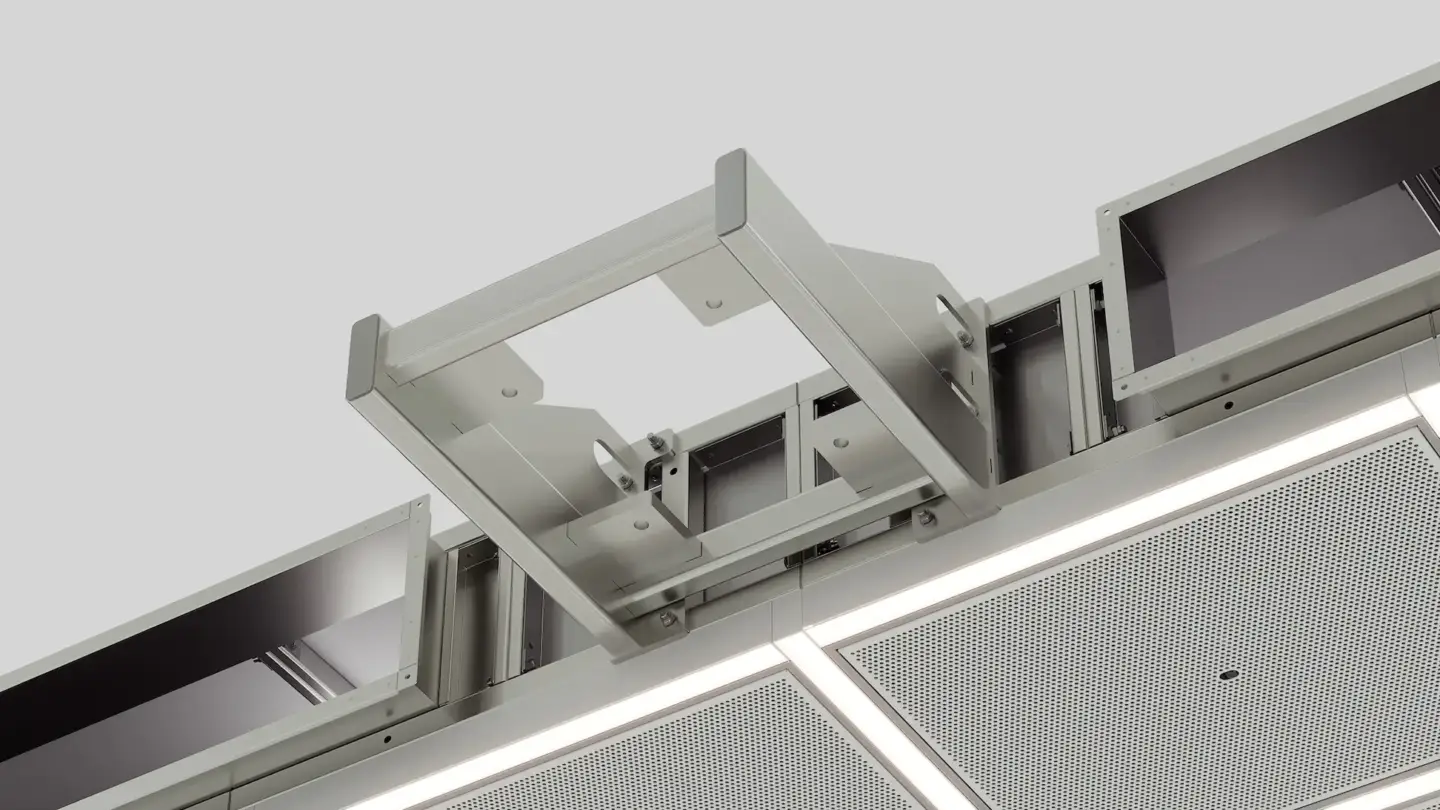
Engineering, industrial, and technical sectors use 3D visualization to communicate systems that are difficult to explain with photographs or flat drawings. This may include machinery, assemblies, plant layouts, installation sequences, and training simulations. For complex products and environments, 3D visuals help reduce ambiguity and make technical ideas easier to present to clients, teams, and decision-makers.
Effective 3D visualization is never only about making an image look attractive. It is about choosing the right level of realism, the right format, and the right visual message for a specific industry and audience. That is why industry knowledge often matters as much as software skill when selecting a visualization partner.
Benefits of 3D VisualizationBenefits of 3D Visualization
The main benefits of 3D visualization come from clarity, flexibility, and speed. Instead of relying only on sketches, technical drawings, or physical prototypes, teams can use 3D visuals to review ideas earlier and present them in a way that is easier for clients, stakeholders, and buyers to understand.
One of the biggest advantages is clearer communication. A well-made 3D visualization shows form, scale, materials, lighting, and context in a way that is much easier to interpret than flat drawings or written descriptions. This helps reduce misunderstandings and makes approvals more efficient, especially when decisions involve multiple stakeholders.
Another major benefit is flexibility. A single 3D asset can be reused to create still images, close-up details, animations, virtual tours, product configurators, and other visual outputs. Instead of recreating the same concept for each format, businesses can adapt one source asset for different sales, marketing, and presentation needs.
3D visualization can also support faster design and content workflows. Teams can test materials, layouts, colors, and product variations before production or photography begins. This is especially useful in architecture, manufacturing, and e-commerce, where changes made early are usually easier and less expensive than changes made later.
For marketing and sales, 3D visualization makes it possible to present products and spaces before they physically exist. Photorealistic rendering, virtual tours, and real-time 3D experiences can help create stronger presentations, more consistent branding, and more engaging customer interactions. This is one of the reasons why 3D visualization has become a standard tool in industries where visual presentation influences decision-making.
Ultimately, the value of 3D visualization is not only in making things look attractive. Its real benefit is that it helps businesses explain ideas earlier, compare options more clearly, and create visual content that can be used across multiple stages of a project.

Limitations and Challenges
Although 3D visualization offers clear advantages, it also comes with practical limitations. The most common challenges involve time, technical complexity, hardware requirements, and the need for experienced specialists. The right workflow can reduce these issues, but they still affect project planning, budgets, and delivery speed.
One of the main challenges is production effort. High-quality 3D visualization usually requires several stages, including modeling, materials, lighting, rendering, revisions, and final output preparation. Even when the final image looks simple, the process behind it may involve a substantial amount of technical and creative work.
Another limitation is computing demand. Complex scenes, large asset libraries, photorealistic rendering, animation, and real-time experiences all require reliable hardware and efficient file management. Performance becomes even more important in projects that involve virtual tours, configurators, or large architectural environments.

Accuracy can also be a challenge, especially when 3D visualization depends on CAD, BIM, scans, or incomplete reference materials. If the source information is inconsistent, the final visuals may require extra revisions or may create unrealistic expectations. This is one of the reasons why a strong approval process is just as important as visual quality.
There is also a learning curve. Professional 3D visualization requires more than software knowledge alone. Artists and studios need to understand composition, materials, lighting, technical workflows, and the communication goals behind the project. For businesses building an in-house capability, that usually means ongoing investment in training, tools, and production standards.
For many companies, the biggest challenge is deciding whether to build internal capacity or work with an external partner. In-house production can offer more control, while outsourcing can provide access to specialized talent and established workflows without the cost of maintaining a full production setup. The right choice depends on how often 3D visualization is needed and how central it is to the business.
In practice, the most effective approach is to treat 3D visualization as a structured production process rather than a quick design add-on. Clear briefs, reliable source files, realistic timelines, and defined revision rounds usually make the difference between a smooth workflow and an expensive one.
3D Visualization vs 3D Data VisualizationFrom our studio — Beyond creating the scene, it still has to be rendered, and that’s a stage of its own. Clients sometimes ask for so many revisions across so many separate renders that the timeline becomes physically impossible — even if you model everything in time, there simply aren’t enough hours to render it all.
— Dim Kuzmenko, Company Owner, Maverick Frame
3D Visualization vs 3D Data Visualization
3D visualization and 3D data visualization may sound similar, but they are used for different things. 3D visualization is usually created to show products, spaces, buildings, or systems in a clear and engaging way. It is commonly used for design communication, marketing, sales, training, and client presentations.
3D data visualization is more focused on analysis than presentation. Instead of showing how something should look in real life, it helps reveal patterns, structures, measurements, and relationships inside data. This type of visualization is common in science, engineering, medicine, research, and business intelligence.
Techniques such as volume rendering, scientific visualization, and medical imaging belong to this category. The workflow is different too. Design-focused 3D visualization often starts with CAD models, sketches, BIM data, or product geometry, then adds materials, lighting, rendering, and presentation context. 3D data visualization usually begins with datasets, scans, simulations, or sensor-based information and turns them into visual models for analysis.
This difference matters when choosing software or a service provider. A studio that specializes in photorealistic architectural or product rendering may not be the right fit for scientific or data-driven visualization. In the same way, a team that works with analytical datasets may not focus on the visual storytelling needed for commercial 3D rendering.
In short, 3D visualization is mainly about showing ideas, objects, or spaces clearly, while 3D data visualization is about interpreting and communicating information inside data. Both use three-dimensional visuals, but the goal, workflow, and audience are usually very different.
The Future of 3D VisualizationThe Future of 3D Visualization
The future of 3D visualization is being shaped by faster workflows, more interactivity, and wider use across industries. What was once mainly a specialist production service is becoming a more integrated part of design, marketing, training, and product communication. As software improves and hardware becomes more accessible, 3D visualization is moving closer to everyday business use.
One of the biggest changes is the growth of real-time 3D visualization. Instead of waiting for every image to be rendered in advance, teams can now review scenes interactively, test variations instantly, and present ideas in a more flexible way. This is especially important for virtual tours, product configurators, design reviews, and client presentations that benefit from immediate feedback.
Artificial intelligence is also starting to affect 3D visualization workflows. AI tools can help with repetitive tasks such as material generation, image enhancement, scene organization, and reference-based experimentation. These tools do not replace the need for artistic direction or technical skill, but they can speed up parts of the process and make iteration easier.
Another important development is the wider use of digital twins and connected 3D environments. In these workflows, a 3D model is not only used for presentation but also linked to real-world information, operational data, or ongoing monitoring. This expands the role of visualization beyond marketing and design into planning, maintenance, training, and asset management.
Virtual reality and immersive presentation formats are likely to grow as well, especially in industries where space, scale, and user experience are difficult to communicate through static images alone. At the same time, traditional photorealistic rendering will remain important for marketing, advertising, and any situation where a polished final image is still the strongest format.
In practice, the future of 3D visualization is not about one technology replacing another. It is about combining high-quality rendering, real-time interaction, and smarter production tools in ways that make visual communication faster, clearer, and more useful for decision-making. You can see this combination already at work in mature markets — for instance, among the top 3D visualization studios in Sweden. Maverick Frame itself is a 3D visualization studio working with brands and developers worldwide.

Trade shows are one of the clearest use cases, as in this custom exhibition stand design.

Turn Ideas Into Visual Stories
Frequently Asked Questions
What is 3D visualization?
3D visualization is the creation of 3D images, animations, or interactive scenes that show a product, space, or system before it exists in real life. Companies use it to present ideas more clearly, test concepts earlier, and create marketing materials without relying only on drawings or photography.
What is the difference between 3D visualization and 3D rendering?
3D rendering is one part of the 3D visualization process. Rendering is the stage where software turns a prepared 3D scene into a final image or animation. 3D visualization is the bigger picture: it includes modeling, materials, lighting, rendering, and the way the result is presented to clients or buyers.
What is the difference between 3D modeling and 3D visualization?
3D modeling is about building the object itself — its shape, dimensions, and structure. 3D visualization goes further by turning that model into something people can actually review, understand, and approve. In most projects, the model is the foundation, while visualization is the final communication tool.
What industries use 3D visualization?
3D visualization is common in architecture, real estate, manufacturing, product design, automotive, healthcare, and retail. It is useful anywhere a business needs to show something clearly before it is built, launched, or photographed.
What software is used for 3D visualization?
Popular 3D visualization software includes 3Ds Max, Blender, Cinema 4D, Maya, SketchUp, Rhino, Unreal Engine, Unity, V-Ray, Corona Renderer, and Arnold. The right choice depends on the task. Some tools are better for photorealistic rendering, while others are better for real-time 3D visualization or CAD-based workflows.
How much does 3D rendering cost?
The cost depends on the type of project, the amount of detail, and the final output. A simple product render usually costs much less than a complex architectural scene or animation. Pricing also changes depending on whether a 3D model already exists, how many views are needed, and how many revisions are included.
How long does a 3D visualization project take?
A simple project can take a few days, while larger visualization projects may take several weeks. The timeline usually depends on the complexity of the model, the number of images or scenes, and how quickly feedback is approved.
Can 3D visualization replace photography?
In many cases, yes. It is especially useful for products or spaces that do not exist yet, need many variations, or would be expensive to photograph. At the same time, photography is still better when you need to capture real finished spaces, people, or real-life situations. Many brands use both.
What are the main benefits of 3D visualization?
The biggest benefits are clearer communication, faster approvals, fewer physical prototypes, and more flexible marketing production. It helps businesses show ideas earlier, make changes before production, and create visuals for sales, e-commerce, presentations, and training.
What is real-time 3D visualization?
Real-time 3D visualization lets users explore a scene instantly instead of waiting for every image to be rendered in advance. It is often used for virtual tours, product configurators, VR presentations, training simulations, and digital twins.
What is meant by 3D visualization?
3D visualization means using computer software to create three-dimensional images, animations, or interactive scenes of an object, space, or concept before it physically exists. It lets people see and evaluate a design in realistic detail, so decisions are made earlier and costly changes are avoided.
What is the difference between 3D visualization and 3D rendering?
In everyday practice the terms are used interchangeably. Strictly, 3D rendering is the single step of generating an image from a 3D scene, while 3D visualization is the broader workflow around it — modeling, materials, lighting, camera, rendering, and presentation. Most studios, including ours, treat them as the same service.