Tropical interior design brings the calm of a resort into everyday rooms by pairing natural materials — rattan, teak, bamboo — with lush greenery, breezy layouts, and a light, airy palette. It favours indoor-outdoor flow, botanical pattern used in small doses, and textures that stay cool in warm, humid climates.
What Is Tropical Interior Design?
Tropical interior design is a decorating style inspired by equatorial and island regions — the Caribbean, Southeast Asia, Hawaii, and the South Pacific. It layers organic materials, saturated greens and jewel tones, and abundant plant life to create relaxed, nature-connected spaces built for heat, humidity, and strong natural light. It is one of the more sensory members of the wider family of interior design styles, closer to a mood than to a strict rulebook.
Whatever the region it borrows from, a tropical room usually shares five defining traits:
- Natural, breathable materials — rattan, wicker, bamboo, teak, and jute
- Lush greenery — statement palms, monstera, banana-leaf, and bird of paradise
- An airy, indoor-outdoor layout with large openings and light window treatments
- A palette of crisp neutrals lifted by emerald, teal, coral, and sunshine yellow
- Handcrafted, textured accents chosen over glossy, mass-produced finishes
The Core Elements of a Tropical Interior
Natural materials and textures
Woven and grained materials do most of the work in a tropical room. Rattan and wicker seating, bamboo blinds, teak and mango-wood tables, and jute or sisal rugs supply the tactile, handmade quality the style depends on. The goal is contrast in texture rather than in colour: a smooth plaster wall beside a tightly woven cane chair, or polished timber against a rough sea-grass mat. Because these are the materials that historically survived heat and humidity, they read as authentic rather than decorative.
The tropical color palette
The classic tropical palette starts with a warm neutral base — white, sand, or pale wood — then adds saturated accents: emerald and palm green, teal and ocean blue, plus coral, terracotta, or sunshine yellow. A reliable ratio is roughly 70% neutral shell, 20% green from plants and timber, and 10% bold accent in cushions, art, or ceramics. Keeping the loud colours to that final tenth is what separates a resort-calm room from a noisy one.
Greenery and botanical motifs
Live plants are the signature of the style, not an afterthought. A few large specimens — a fiddle-leaf fig, a kentia palm, a monstera — carry more impact than a scatter of small pots. Botanical pattern reinforces the theme on wallpaper, a single upholstered chair, or cushions, but it works best when confined to one or two surfaces so the print stays a feature instead of a backdrop that fights the real foliage.
Light, airflow, and window treatments
Tropical interiors are designed to breathe. Sheer linen or cotton curtains, rattan or bamboo shades, wide doorways, and ceiling fans all keep air and daylight moving. Where a temperate style might layer heavy drapery for warmth, the tropical version strips it back so rooms feel open and cool. That emphasis on ventilation and connection to the outdoors is as much a functional inheritance from hot climates as an aesthetic choice.
Modern Tropical Interior Design and Tropical Modernism
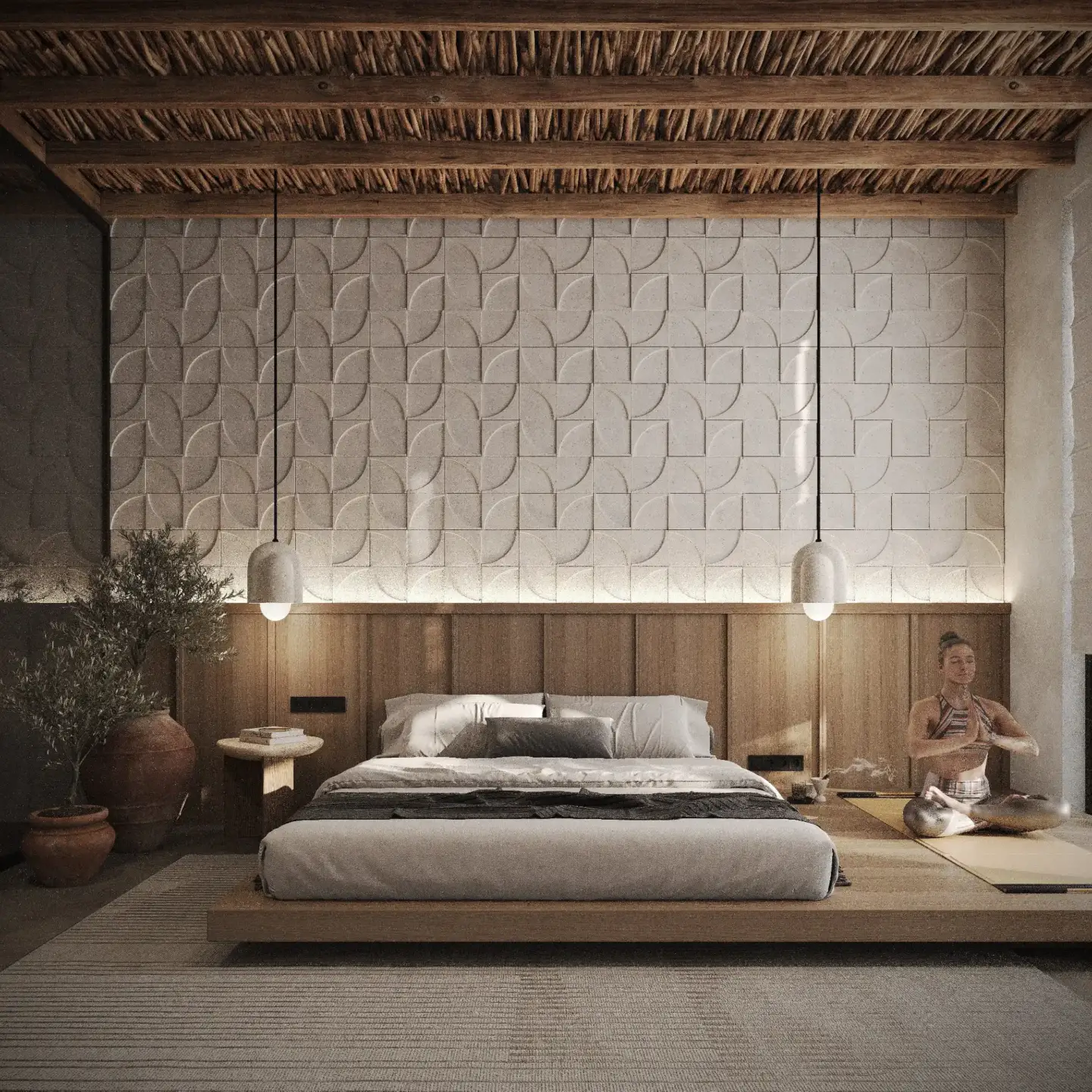
Modern tropical interior design keeps the materials and greenery but strips away the fuss: cleaner lines, larger areas of calm neutral, fewer patterns, and architectural furniture in place of ornate rattan. The look leans on a smaller number of strong gestures — one sculptural palm, one slab of timber, one wall of glass to the garden — rather than dense layering.
This restraint has roots in tropical modernism, an architectural movement led by figures such as Sri Lanka's Geoffrey Bawa and mid-century designers across Singapore, Brazil, and Southern California. They adapted clean modernist forms to hot climates using shade, cross-ventilation, courtyards, and local stone and wood. Contemporary "modern tropical" interiors borrow that discipline, which is why the style now reads as luxurious and current rather than kitschy.
British Colonial Tropical Style
British colonial tropical style is the darker, more formal cousin of the look, drawn from the plantation houses of the colonial-era Caribbean, India, and Southeast Asia. It sets deep, carved hardwoods — mahogany, ebony-stained teak — against crisp white walls, then adds caned furniture, planter's and campaign chairs, brass and leather accents, and framed botanical or map prints. The mood is polished and collected rather than breezy and casual.
The tension that defines it is light against dark: pale plaster and linen keeping the heat at bay, offset by weighty timber and heritage detailing. It is the version of tropical most associated with hotel bars and heritage resorts, and the one that scales most comfortably into luxury interiors.
Tropical vs Coastal, British Colonial, and Moroccan
Search results routinely blur tropical with coastal, colonial, and Moroccan decor because all four use natural materials and a relaxed feel. They pull apart cleanly once you compare them on palette, materials, and mood. The table below sets tropical against its three closest neighbours — including coastal interior design and Moroccan interior design.
| Style | Palette | Signature materials | Mood |
|---|---|---|---|
| Tropical | Neutral base with emerald, teal, coral, jewel tones | Rattan, bamboo, teak, live palms and monstera | Lush, sensory, resort-relaxed |
| Coastal | White, sand, and soft sky-blue | Weathered wood, linen, rope, light woven textures | Bright, breezy, understated |
| British colonial | Crisp white against dark timber | Carved hardwood, cane, brass, leather | Formal, heritage, collected |
| Moroccan | Warm terracotta, saffron, deep jewel tones | Zellige tile, carved wood, metal lanterns | Ornate, layered, pattern-rich |
The quickest test: tropical leans on living greenery and woven texture, coastal on faded light and sea references, colonial on dark wood and formality, and Moroccan on tile and intricate pattern. Rooms often mix two — "tropical coastal" and "tropical colonial" are common hybrids — but naming the dominant partner keeps a scheme from drifting into visual noise.
Tropical Interiors Room by Room
Living room
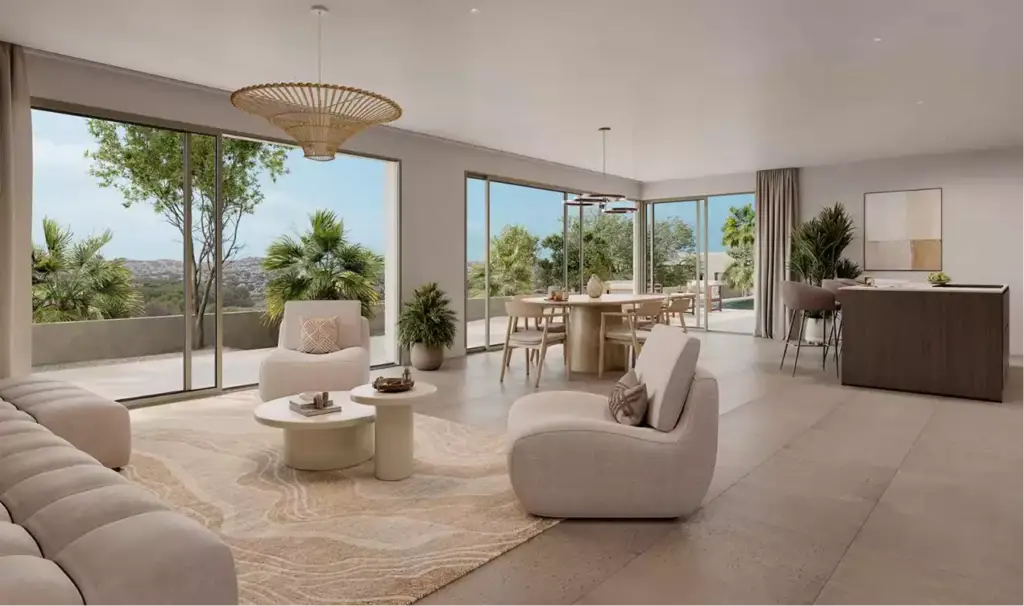
A tropical living room usually centres on a low, relaxed seating group in rattan or a slipcovered sofa, grounded by a natural-fibre rug and layered with textured cushions. One or two large plants frame the seating, a woven pendant or ceiling fan anchors the ceiling, and a single botanical accent — a print, a piece of art, a patterned chair — sets the theme without taking over.
Bedroom
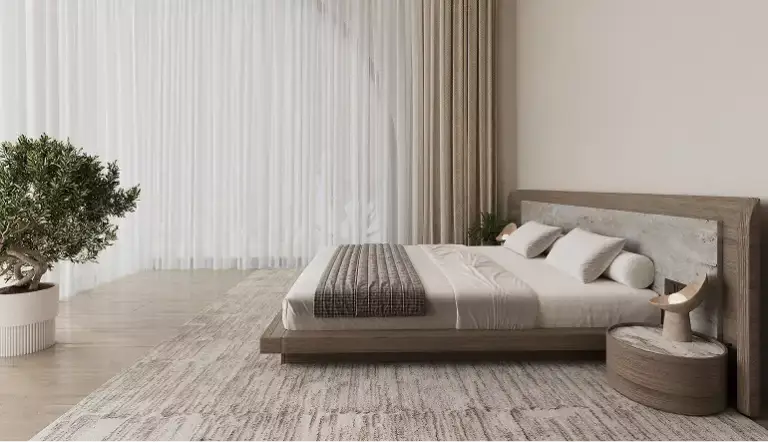
In a tropical bedroom, the bed does the talking: a cane or carved timber headboard, crisp white linen, and a light throw in a leaf or palm motif. Sheer curtains keep the room airy, a paddle fan or rattan pendant sits overhead, and a couple of plants soften the corners. The restraint matters more here than anywhere — a bedroom reads as restful only if the greenery and pattern stay disciplined.
Rendering a Tropical Interior Without the Clutter
Tropical is one of the harder styles to get right in a 3D render, and it fails in a predictable way: over-planting. Because greenery is the signature, it is tempting to fill every corner with foliage — and the room collapses into an unreadable green mass instead of a calm, layered space. The fix is proportional, not additive.
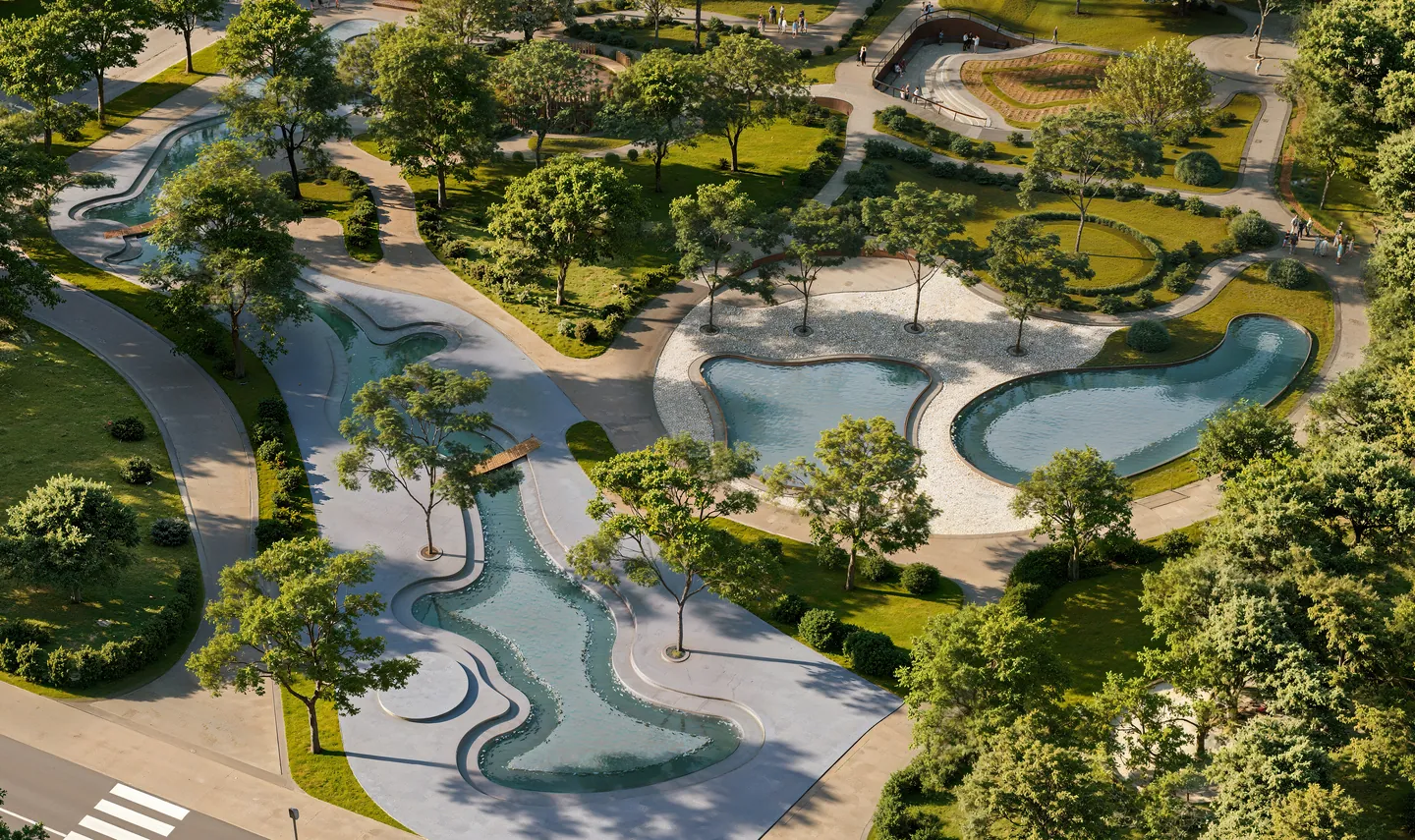
In our studio we treat plants as a small number of anchors rather than fill: two or three statement specimens at clearly different heights (a tall palm, a mid-height monstera, a trailing pothos), botanical pattern capped to a single surface, and a neutral shell held near 60% of the visible frame so the green reads as accent. Method note: we judge it by squinting at the grayscale render — if the plants blur into one dark blob, there are too many; if three distinct silhouettes survive, the balance holds. That same discipline is what we apply when producing 3D interior rendering services for tropical and resort projects. In our beachfront resort hotel concept, palms and grasses frame the pools, courts and putting greens.