Interior design styles are recognizable looks defined by a consistent set of choices — color palette, materials, furniture shapes, and overall mood. Most spaces draw on one dominant style and borrow elements from others. Knowing the core families helps you brief a designer, choose finishes, and picture how a room will actually read. Below are the 14 most popular interior design styles, what defines each, and how they translate into 3D renders.
Interior Design Styles at a GlanceInterior Design Styles at a Glance
Each style is a shorthand for a specific palette, material set, and feeling. Use the table below as a quick map before reading the detailed breakdowns — it pairs every style with its defining trait, typical colors, signature materials, and the rooms where it works best.
| Style | Defining trait | Palette | Key materials | Best rooms |
| Modern | Clean lines, uncluttered | Neutrals + bold accent | Steel, glass, polished wood | Living areas, lofts |
| Contemporary | Of-the-moment, evolving | Soft neutrals, grayscale | Mixed metals, glass, concrete | Open-plan spaces |
| Minimalist | Only the essential | White, muted neutrals | Smooth, matte surfaces | Bedrooms, studios |
| Scandinavian | Light, cozy, functional | White, pale wood, soft gray | Light oak/ash, wool, linen | Living rooms, bedrooms |
| Japandi | Japanese + Scandinavian calm | Earthy neutrals, muted green | Natural wood, paper, ceramics | Bedrooms, living rooms |
| Mid-Century Modern | 1950s–60s organic forms | Warm wood, mustard, teal | Walnut, leather, molded plastic | Living + dining |
| Industrial | Raw, warehouse-inspired | Gray, black, rust | Exposed brick, concrete, steel | Lofts, kitchens |
| Bohemian (Boho) | Layered, eclectic, free | Warm jewel tones | Rattan, macramé, textiles | Living rooms, bedrooms |
| Traditional | Classic, symmetrical | Rich warm hues | Dark wood, velvet, brass | Formal living/dining |
| Transitional | Traditional meets modern | Soft neutral palette | Mixed wood + metal | Whole home |
| Modern Farmhouse | Rustic warmth, clean lines | White, greige, black accent | Reclaimed wood, shiplap | Kitchens, living |
| Coastal | Airy, beach-inspired | White, blue, sandy neutral | Weathered wood, linen, rattan | Living rooms, bedrooms |
| Art Deco | Glamorous, geometric | Jewel tones, black + gold | Brass, lacquer, velvet, marble | Lounges, dining |
| Mediterranean | Warm, sun-washed, textured | Terracotta, ochre, blue | Stucco, wrought iron, tile | Living, kitchens |
14 Popular Interior Design Styles Explained
The styles below cover the vocabulary most clients and designers use. For each one you’ll find what defines it and a short note on how it behaves in a 3D render — because a style that looks effortless on a mood board can be surprisingly demanding to reproduce convincingly in CGI.
1. Modern
Modern design comes from the early-to-mid 20th-century movement: clean horizontal lines, uncluttered surfaces, and a neutral palette punctuated by a single bold accent. Function leads, ornament is stripped away. How it renders: forgiving geometry but unforgiving surfaces — flat planes and glass expose any flaw in reflections and lighting, so material accuracy matters more than detail.
2. Contemporary
Contemporary is whatever is current — a moving target that today means soft curves, rounded furniture, grayscale neutrals, and mixed metals. It’s often confused with modern, but contemporary keeps evolving while modern is fixed. How it renders: curved upholstery and organic forms need careful modeling, but the muted palette is easy to light cleanly.
3. Minimalist
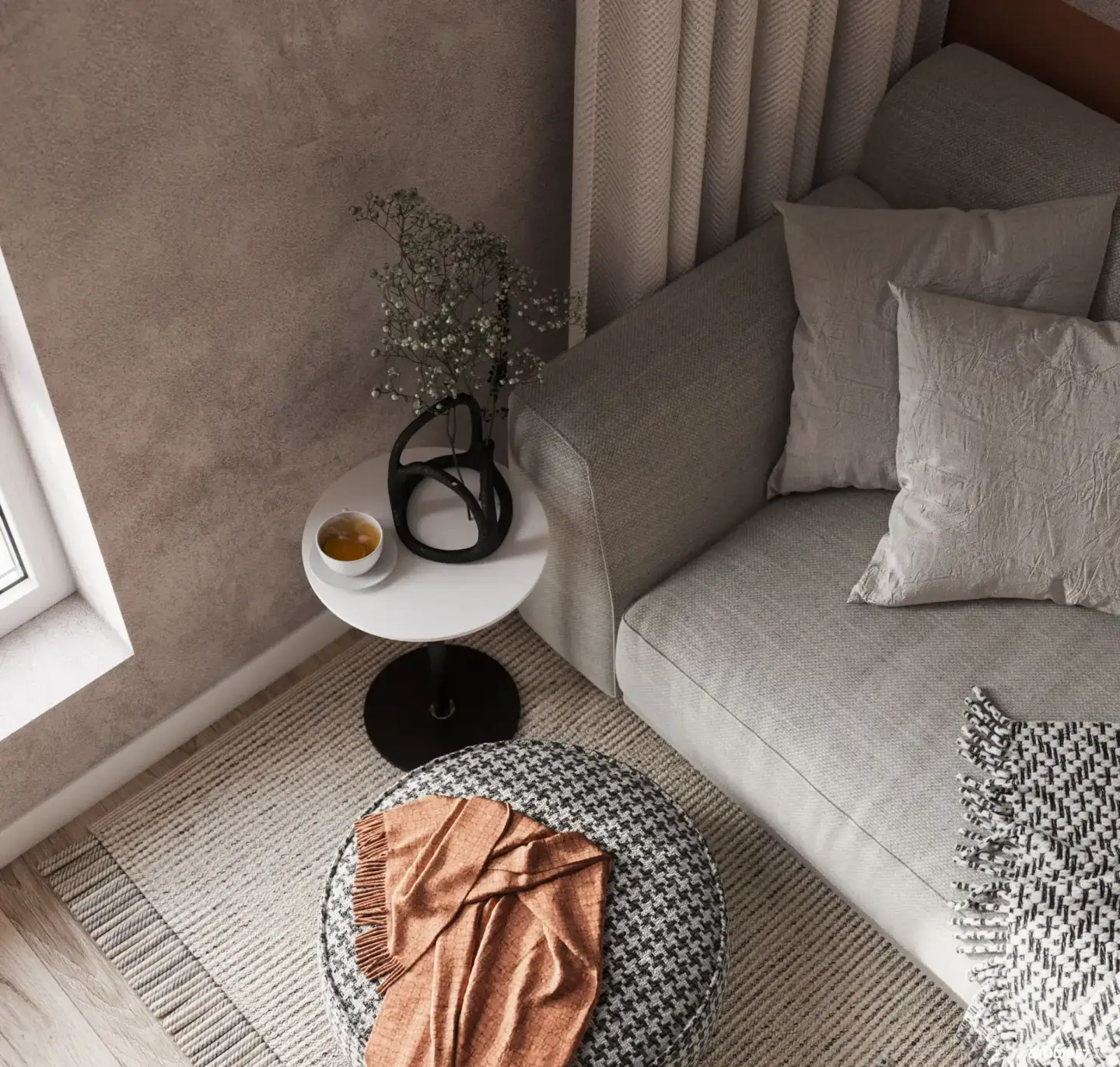
Minimalism takes modern further: only the essential remains, with white and muted neutrals, hidden storage, and matte surfaces that let space and light do the work. How it renders: the hardest “simple” style — with nothing to hide behind, every shadow, seam, and material imperfection is visible, so lighting has to be perfect.
4. Scandinavian
Scandinavian style pairs pale woods, whites, and soft grays with cozy textiles to create bright, functional, hygge-driven rooms. It’s minimal but warm, never cold. We break it down fully in our guide to Scandinavian interior design. How it renders: light oak and layered wool read beautifully in CGI, but the warmth depends on diffuse, even daylight.
5. Japandi
Japandi fuses Japanese wabi-sabi with Scandinavian function: earthy neutrals, low natural-wood furniture, handmade ceramics, and a deliberate calm. See our dedicated Japandi interior design breakdown. How it renders: materially close to Scandinavian, so the difference lives in atmosphere — the imperfect, quiet “spirit” is the part that’s genuinely hard to capture.
6. Mid-Century Modern
Born in the 1950s–60s, mid-century modern is defined by organic curves, tapered legs, warm walnut, and accents of mustard, olive, and teal. It remains one of the most enduring looks. How it renders: iconic furniture silhouettes need accurate modeling, but the style’s warm woods and clear forms light predictably.
7. Industrial
Industrial style celebrates raw structure: exposed brick, concrete, ductwork, and steel in a palette of gray, black, and rust. It reads best in lofts and converted spaces. How it renders: rich, texture-heavy surfaces are rewarding in CGI but demand high-resolution material maps so concrete and weathered metal don’t look flat or fake.
8. Bohemian (Boho)
Boho is layered and free-spirited — warm jewel tones, mixed patterns, rattan, macramé, plants, and collected pieces with no strict rules. How it renders: one of the heaviest scenes to build, because the look depends on dozens of unique textiles, props, and plants, each adding modeling and scatter time.
9. Traditional
Traditional design is rooted in classic European interiors: symmetry, dark woods, velvet, brass, and rich, warm colors. It signals comfort and permanence. How it renders: ornate millwork, carved furniture, and detailed moldings make this one of the more time-consuming styles to model accurately.
10. Transitional
Transitional sits between traditional and contemporary — classic furniture shapes in a soft, neutral, modern palette. It’s the safe, broadly appealing middle ground. How it renders: balanced and predictable; the neutral palette and familiar forms make it one of the most efficient styles to visualize.
11. Modern Farmhouse
Modern farmhouse blends rustic warmth — reclaimed wood, shiplap, apron sinks — with clean modern lines and a white, greige, and matte-black palette. How it renders: the reclaimed-wood and shiplap textures carry the look, so realistic, varied wood grain is what separates a convincing render from a generic one.
12. Coastal
Coastal style is light and airy: whites, blues, and sandy neutrals with weathered wood, linen, and rattan for a relaxed, beach-house feel. How it renders: depends almost entirely on bright, natural light — the breezy mood collapses if the daylight isn’t soft and abundant.
13. Art Deco
Art Deco is unapologetic glamour: bold geometry, jewel tones, black and gold, and luxe materials like brass, lacquer, marble, and velvet. How it renders: one of the most expensive styles to build — a single statement piece, like a lacquered coffee table, can become the focal point and take days of modeling and material work on its own.
14. Mediterranean
Mediterranean interiors are warm and textured — terracotta, ochre, and sea blues with stucco walls, wrought iron, arches, and patterned tile. How it renders: the hand-made imperfection of plaster and tile is the charm, so procedural texture and subtle surface variation keep it from looking machine-made.
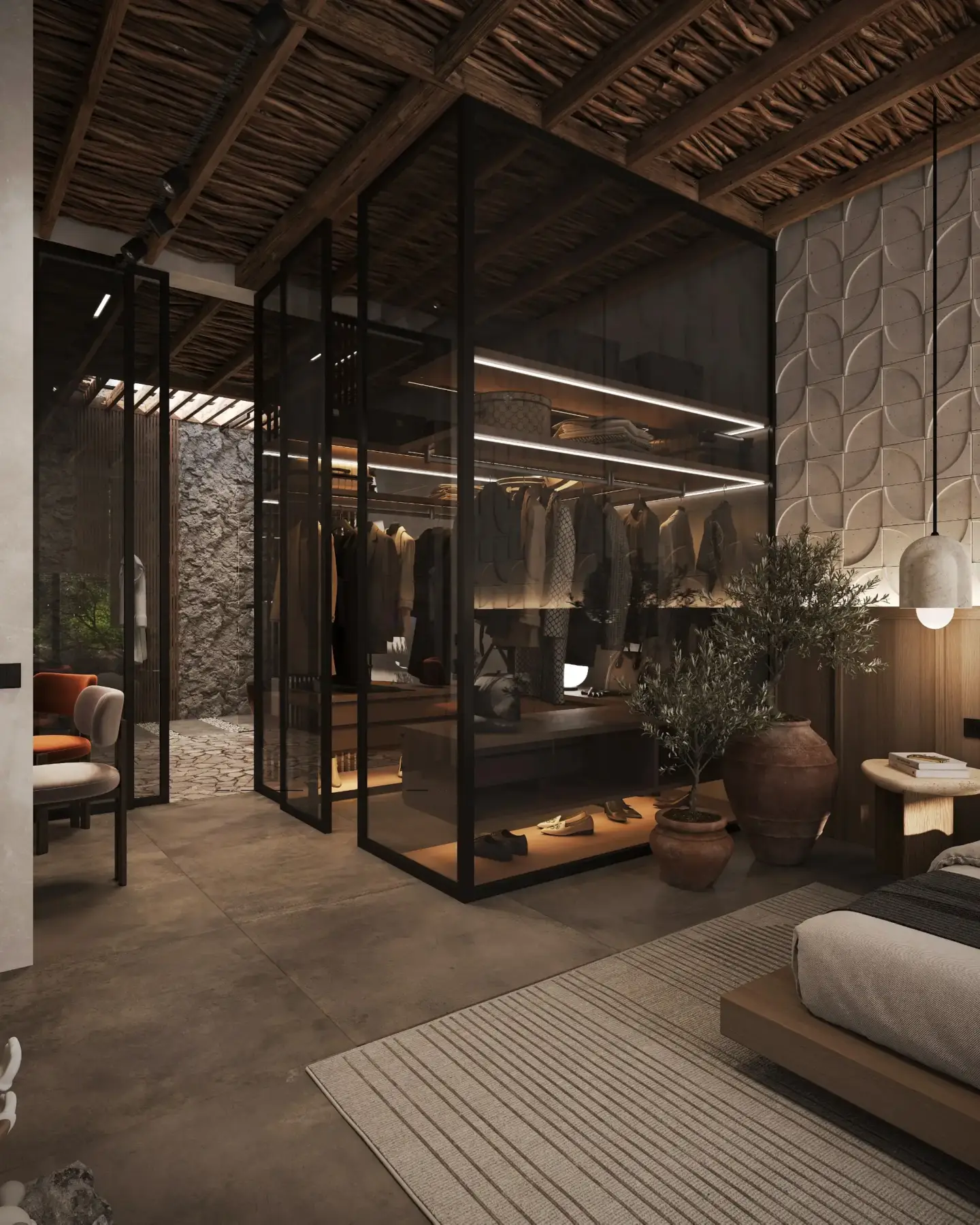
Modern vs Contemporary vs Transitional: The Overlap Clients Confuse
These three trip up almost everyone. Modern refers to a specific historical movement with a fixed vocabulary of clean lines and mid-century roots. Contemporary means whatever is current right now, so it shifts over time. Transitional deliberately blends traditional and contemporary into a softer middle ground. In practice the boundaries blur, and most real rooms mix elements from several styles.
How to Choose the Right Interior Design StyleClients mix up everything — modern, contemporary, boho, wabi-sabi, all of it — and honestly it doesn’t matter that much. Styles blend; you pull an element from one and a piece from another. What actually matters is that the client gives strong references or trusts the designer to make it beautiful. The label on the style is the least important part.
From our studio — Dim Kuzmenko, Co-Founder, Maverick Frame
How to Choose the Right Interior Design Style
Start with references, not labels. Collect images you’re drawn to, then look for what repeats — the palette, the materials, the amount of visual “stuff.” That pattern is your style, even if it doesn’t match one name exactly. From there, weigh the room’s light, its size, and the job it has to do.
- Gather references first. Save 15–20 rooms you love and look for the common thread.
- Match the architecture. A loft leans industrial; a beach house leans coastal — work with the bones, not against them.
- Consider the light. Airy styles like coastal and Scandinavian need bright rooms; dramatic styles like Art Deco suit darker, intimate spaces.
- Anchor with one style, accent with others. Pick a dominant look and let a second style add character.
- Think about the job. A space meant to sell or rent should read clearly in photos and renders, not just in person.
I think what usually matters is two things. First, the room should be beautiful — full stop, whether or not it suits the person it’s made for. Second, it has to do its job: get the hotel booked, get the apartment sold, whatever the picture is for. The style is secondary. The task comes first.
From our studio — Dim Kuzmenko, Co-Founder, Maverick Frame
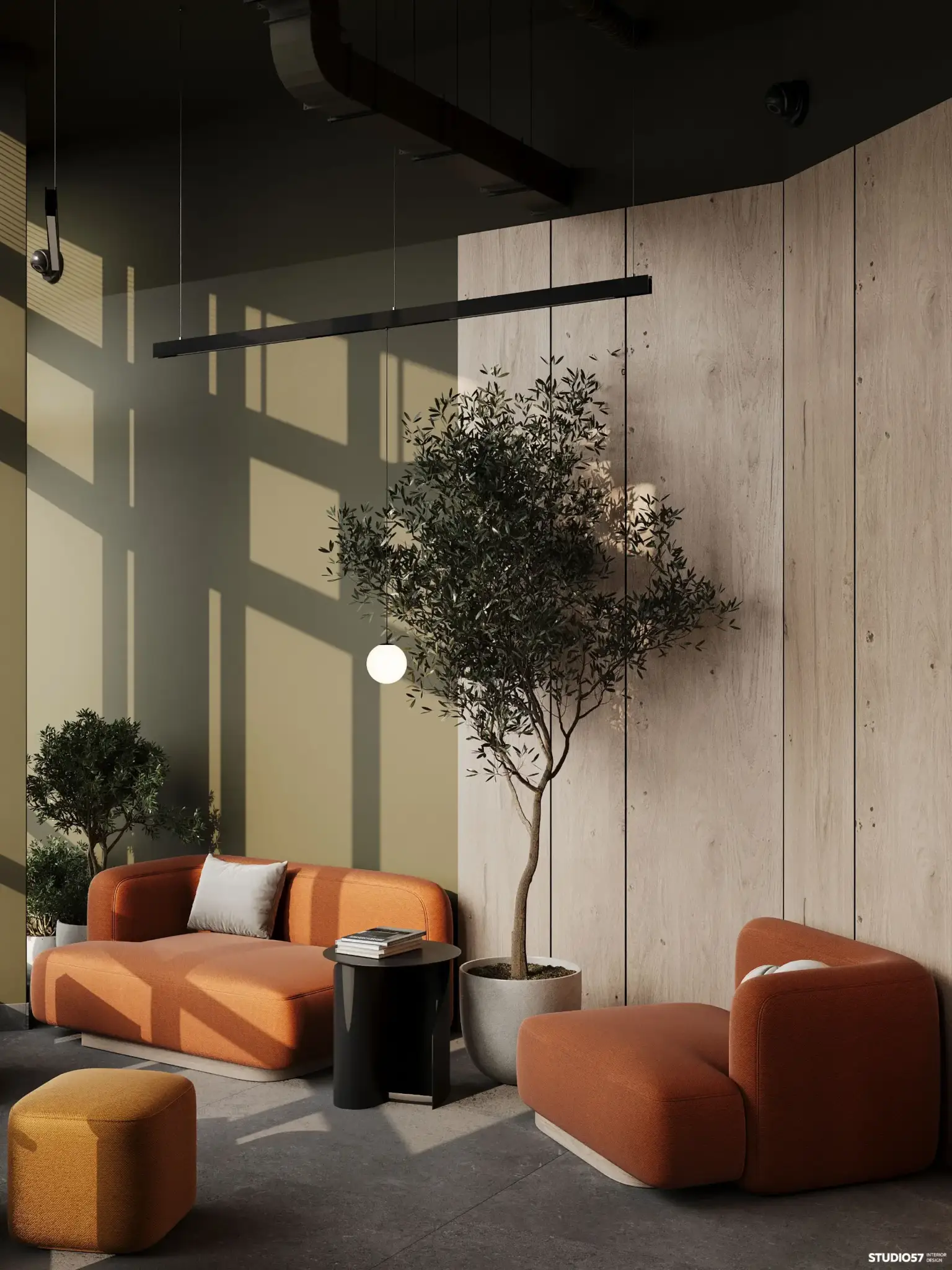
Seeing Your Interior Design Style in 3D Before You Commit
A style that looks certain on a mood board can feel wrong once it’s a full room. 3D rendering lets you test palettes, materials, and furniture in a photoreal space before anyone orders a sofa or pours a foundation — which is why developers, designers, and brands use it to validate a direction. Our 3D interior rendering services turn a style brief into images you can judge, adjust, and sign off on.
The hard part splits in two. Technically, classic styles are tough — Baroque, Art Deco, custom furniture, sculpted detail, exact paint shades; in Art Deco a single coffee table can be the center of the whole composition, and you’ll spend days just on that one model. Aesthetically, the hard styles are the ones the artist doesn’t know firsthand. Wabi-sabi looks almost identical to Scandinavian minimalism in materials — the difference is spirit, atmosphere, tiny details — so if you’ve never felt it, it’s very hard to render.
From our studio — Dim Kuzmenko, Co-Founder, Maverick Frame
Styles also translate beyond a single room. The same approach that visualizes an interior look scales to full homes and developments — see how it works for residential projects. And if you’re weighing interior looks against the building’s exterior character, our guide to popular architectural styles covers the structural side.
Style choices carry into real projects: a fitness center interior design and this contemporary house exterior.

Turn Ideas Into Visual Stories
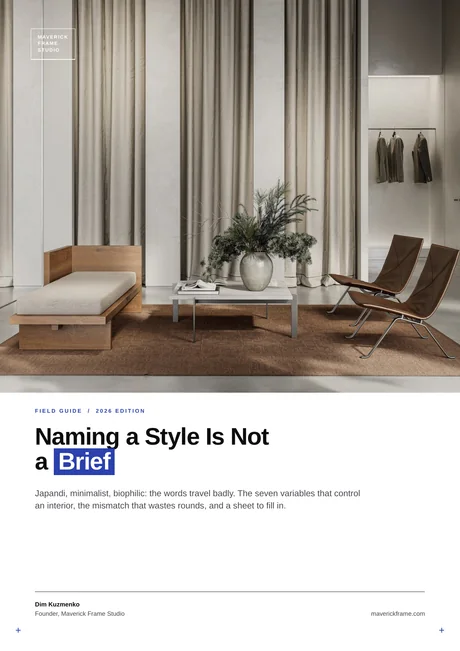
Free field guide
Naming a Style Is Not a Brief
Japandi, minimalist, biophilic: the words travel badly. The seven variables that control an interior, the mismatch that wastes rounds, and a sheet to fill in.
If it didn't open, download it here.
Download the PDF