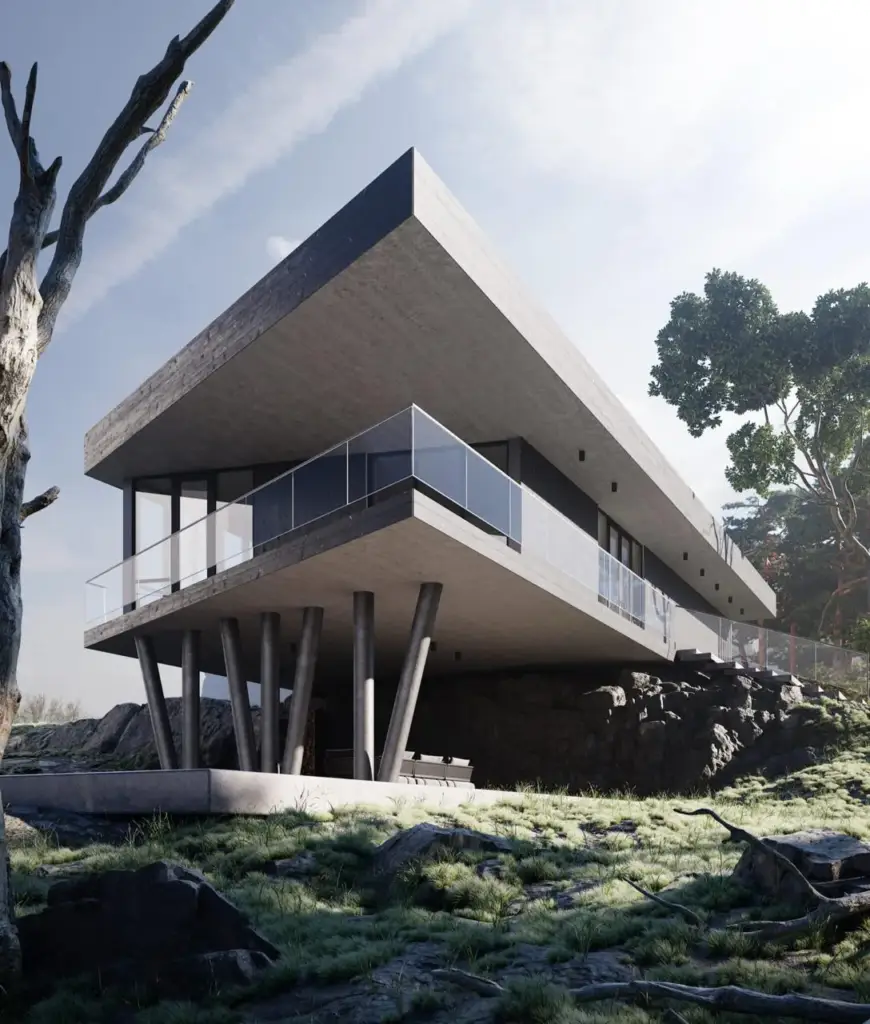
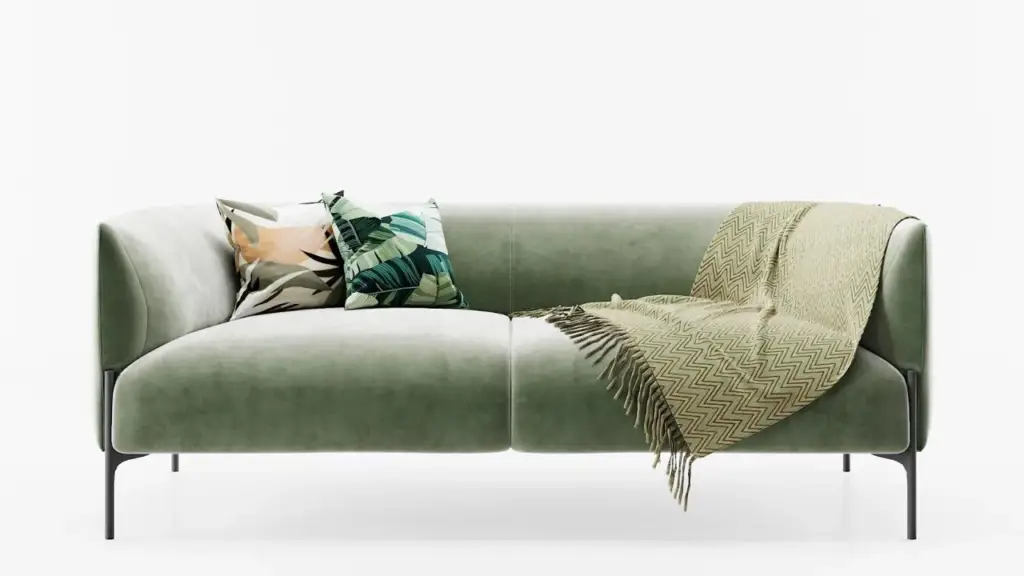
Japandi interior design is a hybrid style that fuses Japanese minimalism with Scandinavian functionality. It pairs the warmth and craft of Nordic interiors with the calm restraint and wabi-sabi philosophy of Japanese design, creating spaces that are serene, uncluttered, and grounded in natural materials. The result is quiet, intentional, and built to last.
What Is Japandi Interior Design?What Is Japandi Interior Design?
Japandi is an East-meets-West design movement that blends two minimalist traditions: Japanese aesthetics rooted in wabi-sabi (the beauty of imperfection) and Scandinavian design built around hygge (cosy, functional comfort). The name itself is a portmanteau of “Japan” and “Scandi.” Both traditions value simplicity, natural materials, and craftsmanship, so the combination feels seamless rather than forced.
Where the two diverge is in mood. Scandinavian interiors lean bright, airy, and light-toned. Japanese interiors lean darker, more grounded, and contemplative. Japandi sits in the middle: it borrows Nordic warmth and light woods, then anchors them with Japanese depth, darker accents, and a deliberate sense of emptiness. If you already know the Scandinavian style, think of Japandi as its more meditative, pared-back cousin.
Key Characteristics of Japandi StyleKey Characteristics of Japandi Style
Japandi interiors share a recognisable set of traits that separate them from generic minimalism. The defining characteristics are:
- Functional minimalism — every object earns its place; nothing is purely decorative.
- Natural materials — wood, bamboo, rattan, linen, paper, and stone dominate the palette.
- Muted, neutral colours — warm whites, beiges, and earth tones grounded by darker accents.
- Clean lines and low silhouettes — furniture sits low and close to the floor.
- Wabi-sabi imperfection — handmade ceramics, visible grain, and organic textures are celebrated, not hidden.
- Negative space — empty space is treated as a design element, giving the eye room to rest.
- Craftsmanship and quality — fewer, better pieces chosen to last for decades.
The Japandi Color Palette
The best colours for Japandi are warm, muted neutrals layered with grounding darker tones. Start with a soft base of off-white, oatmeal, beige, and warm grey, then add depth with charcoal, black, or deep brown accents. Nature-derived hues — muted sage green, clay, terracotta, and ochre — bring subtle warmth without breaking the calm. The contrast between Scandinavian light and Japanese dark is what gives the palette its signature balance.
Natural Materials and Textures in Japandi InteriorsNatural Materials and Textures in Japandi Interiors
Material choice carries Japandi more than colour does. The style relies on tactile, natural surfaces that age gracefully and add quiet texture to a restrained palette. Typical materials include:
- Wood — both light Nordic woods (oak, ash, birch) and darker Japanese tones (walnut, charred timber).
- Bamboo and rattan — woven texture for furniture, screens, and accents.
- Linen, cotton, and wool — natural, breathable textiles in undyed or muted shades.
- Paper and ceramics — rice-paper lighting, handmade stoneware, and matte glazes.
- Stone and clay — matte surfaces that add weight and an earthy, organic feel.
Japandi Furniture: Low, Functional, Handcrafted
Japandi furniture is low-profile, functional, and handcrafted. Pieces sit close to the floor in the Japanese tradition, favour solid wood and clean geometry, and avoid ornamentation entirely. The guiding principle is “fewer, better”: a single well-made oak table outranks a room full of disposable pieces. Upholstery stays neutral and tactile, and storage is built to keep surfaces clear so the room reads as calm and intentional. For e-commerce and catalogue work, this same restraint is what makes Japandi pieces translate so cleanly into 3D furniture rendering.
Japandi Design Room by RoomJapandi Design Room by Room
Japandi Living Room
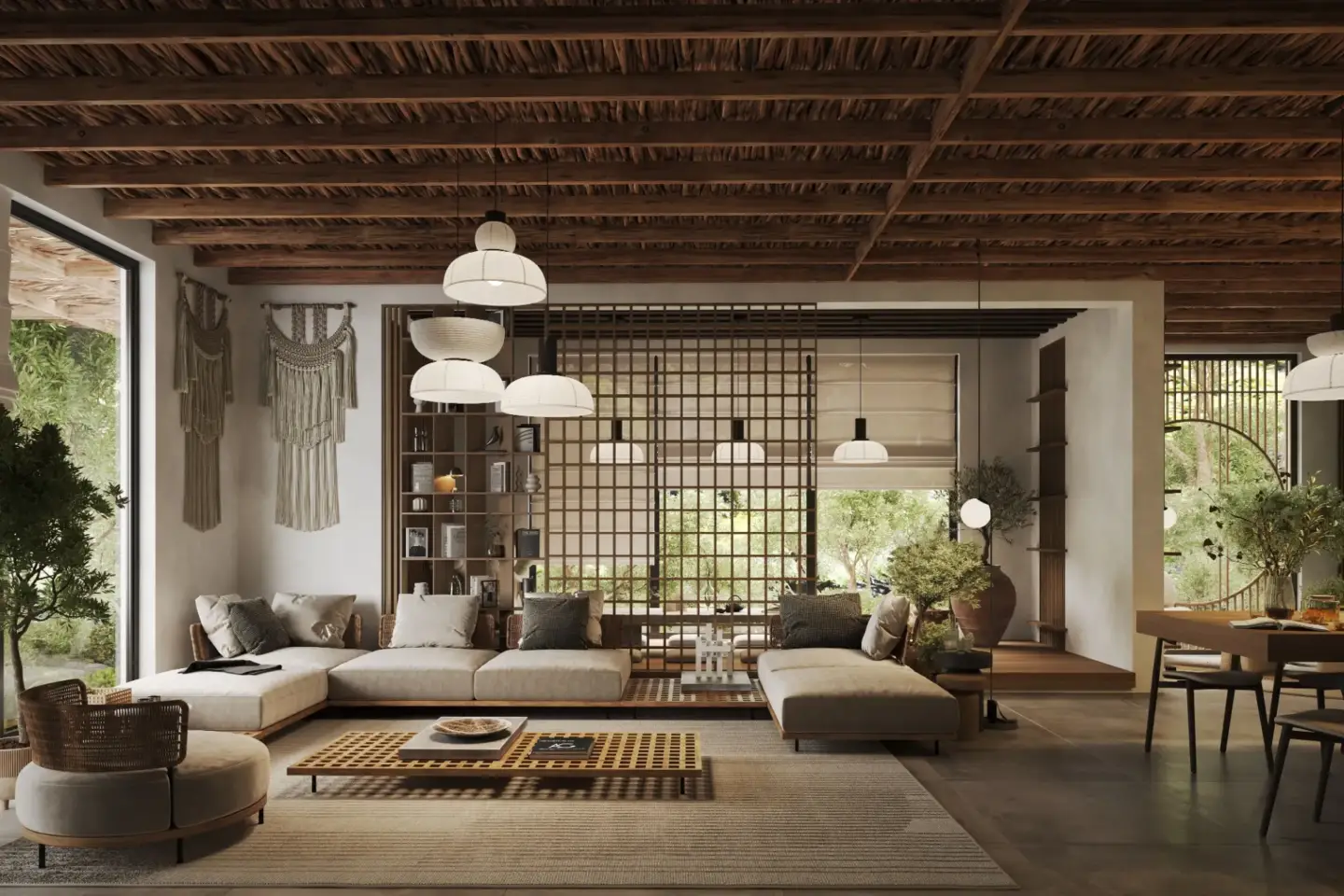
A Japandi living room centres on a low sofa, a solid-wood coffee table, and a restrained palette of neutral textiles. Keep the floor plan open, choose one or two statement pieces — a sculptural lamp or a handmade ceramic vessel — and leave the rest of the space deliberately empty. A single plant or a branch in a stoneware vase adds life without clutter.
Japandi Bedroom
The Japandi bedroom is built for rest. A low platform bed, natural linen bedding in muted tones, and warm wood nightstands set the foundation. Decoration is minimal: soft, diffused lighting, one piece of understated art, and clear surfaces. The goal is a sanctuary that feels calm the moment you walk in.
Japandi Kitchen
A Japandi kitchen pairs handleless cabinetry with natural wood and matte stone. Counters stay clear, hardware is hidden or minimal, and open shelving displays a small, curated set of ceramics. The palette echoes the rest of the home — warm neutrals grounded by a darker island or timber accent — for a space that is as functional as it is serene.
Common Japandi Design Mistakes to AvoidCommon Japandi Design Mistakes to Avoid
Most Japandi failures come from misreading the style as “just minimalism” or “just Scandinavian.” The most common mistakes are:
- Making it cold and sterile — skipping the Scandinavian warmth and hygge that keep the space liveable.
- Over-cluttering — adding too many objects and breaking the calm that defines the style.
- Mixing too many wood tones — without a clear logic, the palette reads chaotic instead of layered.
- Ignoring wabi-sabi — over-polishing everything removes the handmade, imperfect soul of Japandi.
- Treating it as Scandinavian with dark accents — the philosophy, not the colour scheme, is what makes it Japandi.
How to Achieve a Japandi LookFrom our studio — The mistake I see most often is designers making Japandi, wabi-sabi, modern minimalism and Scandinavian all look the same. People don’t understand the difference between them, so no matter what brief the client gives us, the interior comes out looking identical. Knowing where one style ends and the next begins is the whole job.
Dim Kuzmenko, Maverick Frame
How to Achieve a Japandi Look
You can build a Japandi interior step by step. Follow this sequence to get the balance right:
- Start with a warm, neutral base palette across walls and large surfaces.
- Choose natural, tactile materials — wood, linen, stone, and ceramics.
- Pick low, functional, handcrafted furniture and keep the count low.
- Declutter ruthlessly and let negative space do the work.
- Add wabi-sabi through handmade objects and organic, imperfect textures.
- Layer warmth with soft textiles and diffused, low-level lighting.
- Introduce greenery sparingly — one sculptural plant is enough.
Visualizing Japandi Interiors in 3D
Japandi is one of the harder styles to capture in CGI, precisely because it lives in atmosphere rather than objects. The materials — matte wood, soft linen, diffused light — are straightforward to model, but the feeling of stillness and intention is not. Getting it right means treating Japandi as its own philosophy, not as Scandinavian design with darker accents. For designers and developers presenting a concept, that atmosphere is exactly what a strong 3D interior rendering can sell before a single piece of furniture is bought.
From our studio — When we render a Japandi interior, the hardest part isn’t the matte textures or the soft light or the wood. It’s the atmosphere. Japandi is a different philosophy from Scandinavian, even when the materials look almost identical — and you have to actually feel that atmosphere to get it right. It’s genuinely hard to put into words.
Dim Kuzmenko, Maverick Frame
There is also a commercial reason these interiors photograph and render so well. Pared-back styles like Japandi avoid the highly personal, taste-driven clutter that can divide buyers, so the images read as clean and broadly appealing — which is why they work hard in property marketing and residential rendering for pre-sales and listings.
From our studio — Minimalist styles like Japandi sell because there’s no clutter — no piling on decor and random elements, which is very specific and comes down to personal taste. A render in a Japandi, minimalist or wabi-sabi style sells better simply because it’s clean.
Dim Kuzmenko, Maverick Frame
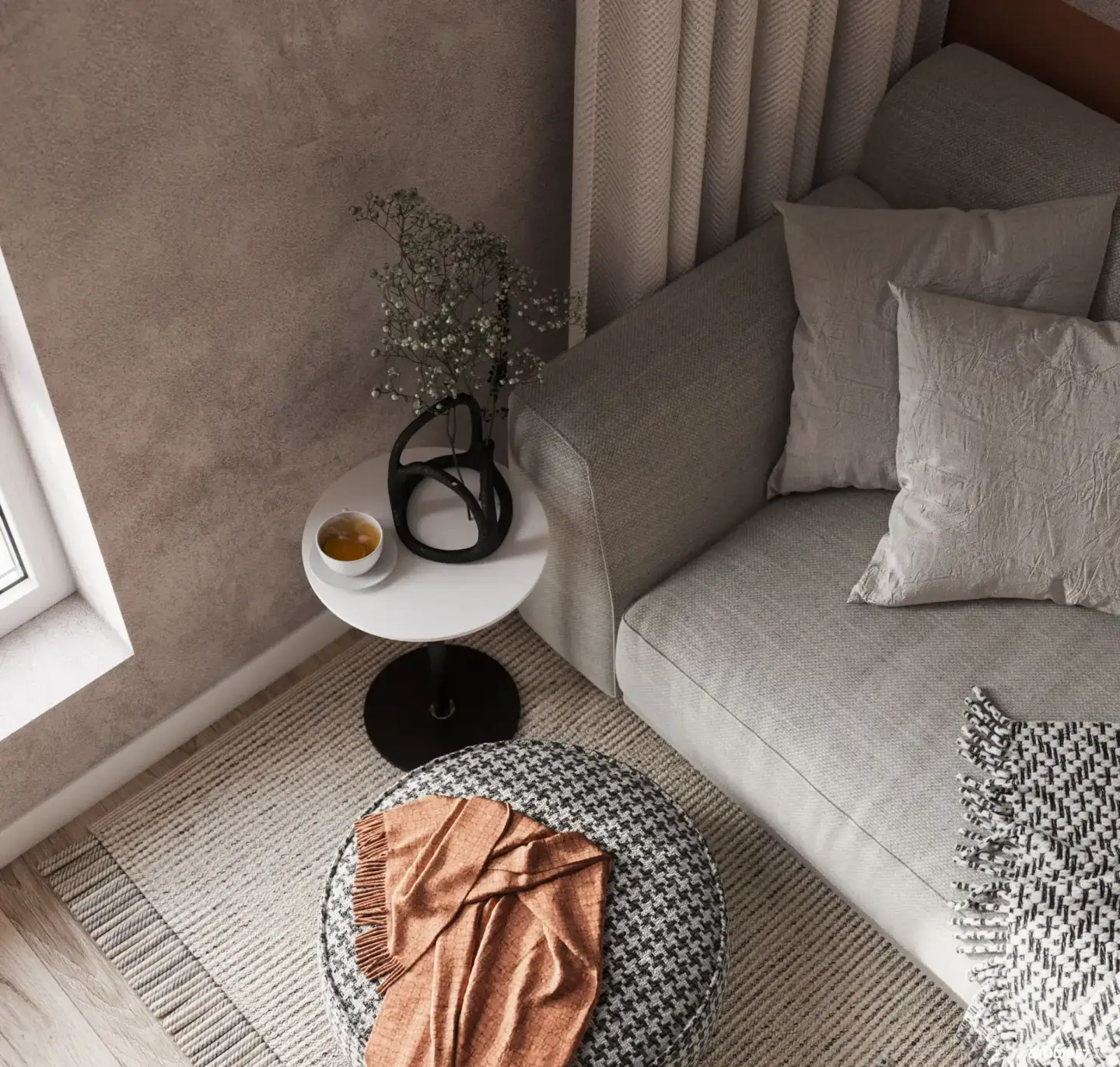
Japandi vs Scandinavian vs Japanese Minimalism
The three styles are related but not interchangeable. This table shows where they overlap and where they part ways.
| Aspect | Japandi | Scandinavian | Japanese minimalism |
| Origin | Japan + Scandinavia fusion | Nordic countries | Japan |
| Palette | Warm neutrals + dark accents | Bright, light, airy | Earthy, dark, grounded |
| Mood | Calm, balanced, intentional | Cosy, bright, functional | Contemplative, austere |
| Materials | Light + dark wood, linen, ceramics | Light wood, wool, textiles | Dark wood, paper, stone |
| Decor philosophy | Wabi-sabi + hygge | Hygge, comfort | Wabi-sabi, emptiness |
Japandi borrows much of its restraint from Japanese wabi-sabi. We cover that influence separately in wabi-sabi interior design.

Turn Ideas Into Visual Stories
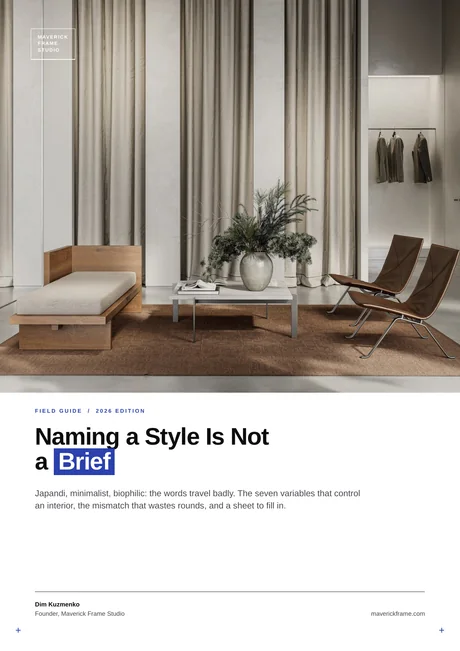
Free field guide
Naming a Style Is Not a Brief
Japandi, minimalist, biophilic: the words travel badly. The seven variables that control an interior, the mismatch that wastes rounds, and a sheet to fill in.
If it didn't open, download it here.
Download the PDF