To open a gym, pick a format and a target member, write a business plan with real membership and rent numbers, secure funding, plan the layout before you sign a lease, get licenses and insurance, buy or lease equipment, and pre-sell memberships before opening day. Most gyms cost $50,000 to $500,000 or more to open.
- Choose the format: Decide between a boutique studio, a CrossFit box, a martial arts school or a full-size gym, because the format sets most of the budget.
- Define the member: Name who you serve, what they pay per month and how many of them live or work within a short drive.
- Write the business plan: Model members, monthly price, rent, payroll and the months until break-even before you tour a single space.
- Line up the money: Combine savings, an SBA-backed loan or equipment financing, and keep three to six months of operating cash aside.
- Shortlist locations: Check parking, zoning, ceiling height, floor loading and the rent per square foot.
- Test the layout in 3D: Place the strength floor, cardio, studios, locker rooms and reception on a floor plan before you commit to the lease.
- Sign the lease and file paperwork: Form the company, get the business license and permits, and buy liability insurance.
- Build out and equip: Hire a contractor, fit flooring, mirrors and HVAC, and install the equipment you planned for.
- Pre-sell memberships: Show the finished gym online weeks before opening and sign founding members at a launch price.
How Much It Costs to Open a Gym
Opening a gym costs between $50,000 and $500,000 or more in 2026, according to Gymdesk's 2026 gym startup cost guide. A small yoga studio or martial arts school sits at the low end, while a large traditional gym with a full cardio floor and locker rooms can pass $500,000. The table below shows typical ranges, not quotes.
| Gym startup cost | Typical range | What drives it |
|---|---|---|
| Lease deposit and first rent | $10,000 to $50,000 | Size, city, landlord terms |
| Build-out | $10,000 to $150,000 | Cosmetic refresh vs new HVAC, plumbing and bathrooms |
| Equipment | $10,000 to $100,000+ | Format, new vs used, buy vs lease |
| Licensing, legal and insurance | $3,000 to $12,000 | State fees, lease review, contact sports |
| Technology, branding and marketing | $5,000 to $30,000 | Software, website, signage, launch campaign |
| Working capital | $15,000 to $90,000 | Three to six months of operating costs |
| Total | $53,000 to $432,000+ | Typical ranges, not quotes (source: Gymdesk 2026) |
The same guide puts the lease and the equipment at about 60 to 70 percent of total startup costs. That is why the order of decisions matters: if you get the space and the equipment list right, most of the budget is already under control.
By format, Gymdesk gives these ranges: a yoga studio $30,000 to $150,000, a martial arts school $40,000 to $200,000, a CrossFit box $50,000 to $250,000, a boutique fitness studio $75,000 to $300,000, a mid-size gym of 2,500 to 5,000 square feet $150,000 to $300,000, and a large gym of 5,000 to 10,000 square feet or more $300,000 to $500,000 and up.
Choosing a Gym Format and Target Member
The format is the first real decision, and it is also the most expensive one to change later, because each format sells something different. A boutique studio sells classes in one discipline, such as Pilates, cycling or boxing. A strength gym sells open floor time and coaching. A full-service club sells a mix of cardio, weights, classes and amenities like a sauna or a pool.
Each format also needs a different space. A reformer Pilates studio can work in a long, narrow unit, while a strength gym needs high ceilings, a strong structural slab and room for lifting platforms, and a full-service club needs wet areas, changing rooms and serious ventilation. Pick the format before you look at spaces, or you will end up shaping the business around a building.
The market is large and still growing. The Health & Fitness Association reports that 81 million Americans belonged to a gym, studio or other fitness facility in 2025, a record and a 5.2 percent rise over 2024. That is about 26.1 percent of the US population aged six and older. Overall demand is there, so your job is to win a specific, well-defined slice of it within easy reach of your door.
If your concept leans toward recovery, spa treatments or holistic care rather than training, read our guide on how to open a wellness center. The costs and the space plan are quite different.
Gym Business Plan: The Numbers to Model Before You Sign
A gym business plan is not a formality for the bank; it is the test that tells you whether a particular space can work at all. Write it before you tour locations, then update it with real rent numbers once you have a shortlist.
The plan for a gym should contain these sections:
- Concept and member profile: the format, the classes or training you sell, and the member you serve.
- Market and competition: every gym and studio within a short drive, with their prices and what they do not offer.
- Pricing model: monthly memberships, class packs, personal training, drop-ins and founding member rates.
- Space and layout: the square footage you need, the zones you plan and the capacity of each class room.
- Startup budget: the cost categories from the table above, with a contingency line.
- Operating budget: rent, payroll, utilities, insurance, software, marketing and maintenance per month.
- Break-even and cash flow: how many members you need and how many months it takes to reach them.
The numbers that matter most are members, average monthly price, churn and rent. Gymdesk suggests keeping rent under 25 percent of revenue. For example, 200 members at $150 a month bring in $30,000, so rent should stay under $7,500. Owners interviewed for the same guide took 6 to 18 months to break even, so model a slow ramp, not a full gym on day one.
Funding a New Gym
Most new gyms combine several sources of money. Personal savings show the lender that you share the risk, and a bank loan usually covers the build-out. Equipment can be leased or financed against the machines themselves, which keeps cash free for rent and payroll.
The U.S. Small Business Administration backs 7(a) loans with a maximum loan amount of $5 million, and its microloans go up to $50,000. A small studio may fit inside a microloan, while a full-size gym usually needs a 7(a) loan or a conventional bank loan plus investor capital.
Lenders and partners want to see the space, not only the spreadsheet, and a floor plan with a few renders of the finished gym makes the plan concrete. We cover what those visuals cost further down.
Finding a Gym Location and Negotiating the Lease
Gymdesk puts typical lease rates at $15 to $40 per square foot per year. The same 3,000 square feet might cost about $3,000 a month in a small city and $10,000 to $15,000 a month in downtown Austin or Brooklyn.
When you tour a space, check more than the rent:
- Zoning: confirm that a fitness use is allowed and ask about parking minimums.
- Structure: dropped weights and heavy racks need a solid slab, and upper floors may need an engineer's check.
- Ceiling height: overhead presses, rigs and wall balls need clear height.
- Noise: music and dropped weights can trigger complaints from neighbors above or beside you.
- Services: showers, changing rooms and HVAC are among the biggest build-out costs, so a unit that already has them can save a lot.
Gymdesk notes that reusing a former gym or studio can save $30,000 or more on build-out. Ask the landlord for a rent-free fit-out period too, because otherwise you will pay rent for months before the first member walks in.
Planning the Gym Layout Before You Sign the Lease
This is the step most generic guides skip, and it is the one that usually saves the most money. Before you sign, put your equipment list and your zones on a scaled floor plan of the actual unit. You will see immediately whether the strength floor, the cardio line, the class studio, the locker rooms and the front desk all fit with room to move.
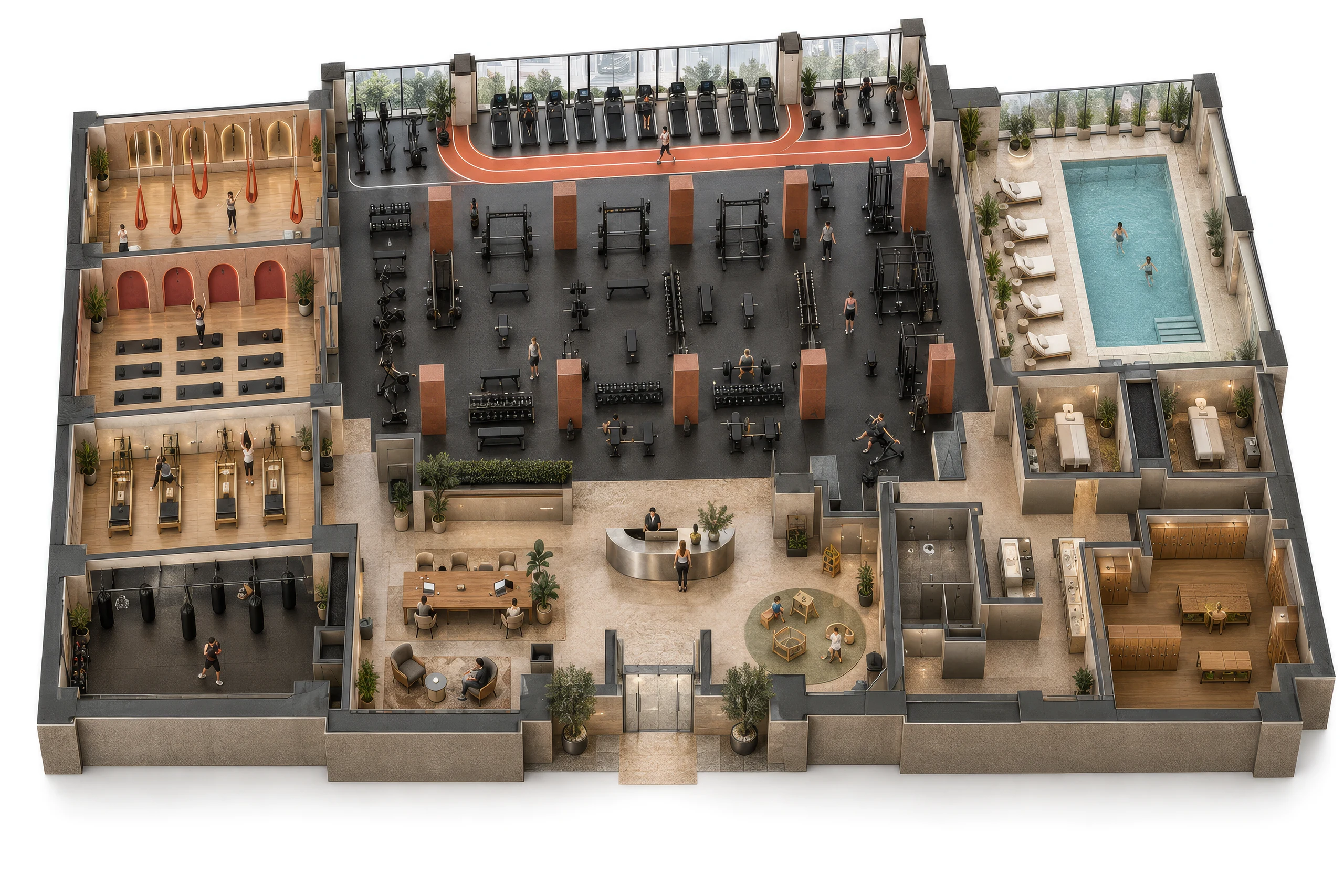
A good gym layout answers a few questions:
- Can members see the training floor from reception, and can staff see the whole floor from the desk?
- Is there a clear path from the entrance to the locker rooms that does not cut through a lifting area?
- How many people fit in each class room at peak hour?
- Where do heavy racks sit relative to the structure and the neighbors?
Accessibility belongs in the first version of the plan, not the last, because under the 2010 ADA Standards, at least one of each type of exercise machine needs a clear floor space for a person who uses a wheelchair, and an accessible route must serve those machines. The U.S. Access Board sets that clear floor space at a minimum of 30 by 48 inches. These required spaces add up quickly on a crowded training floor.
A 3D model of the plan also helps you talk to the landlord, the contractor and the bank with one picture. If you want a team to plan and visualize the space with you, our gym design and visualization page shows how we approach fitness spaces. For a quick test of the floor alone, a 3D floor plan render is often enough at the lease stage.
Gym Licenses, Insurance and Legal Requirements
The paperwork is usually cheaper than most first-time founders fear, but it has to be finished before you open the doors, and Gymdesk lists these typical costs:
- Forming an LLC: $100 to $800, depending on the state.
- Business license and permits: $200 to $2,000.
- Legal fees for the lease and member contracts: $1,000 to $3,000.
- Liability insurance: $2,000 to $6,000 a year, higher for contact sports.
Beyond those, you will usually need a certificate of occupancy for the fitness use, building permits for the build-out, and signed liability waivers from every member. If you plan showers, a sauna or a pool, ask your local health department what it inspects. If you affiliate with a brand such as CrossFit, budget the yearly affiliate fee as well. Rules vary by state and city, so check with your local office and a lawyer before you sign.
Buying Gym Equipment: Buy, Lease or Used
Equipment is the cost founders love to spend on, and the one that is easiest to overbuy. Start from the layout, not from the manufacturer's catalog, because every machine needs its own footprint plus space to use it safely, so the floor plan tells you how many you can actually fit.
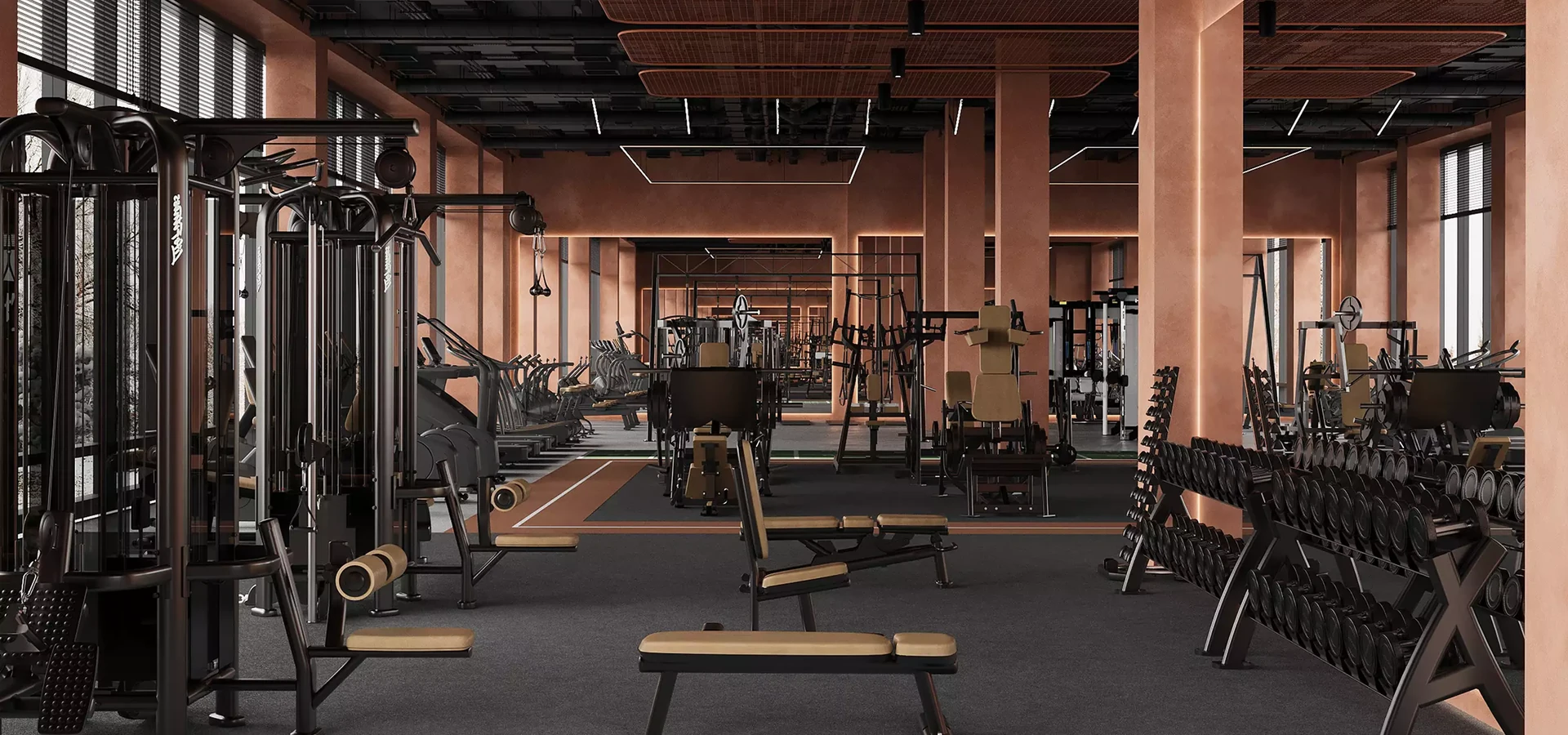
Gymdesk gives these purchase ranges: strength equipment such as racks, barbells and dumbbells $15,000 to $50,000; cardio such as treadmills, bikes and rowers $20,000 to $75,000; and accessories such as bands and kettlebells $2,000 to $10,000. Leasing cardio runs about $1,500 to $4,000 a month. Used equipment sells for about 40 to 60 percent of retail.
A practical approach is to buy strength equipment, which lasts for decades, and to lease or buy used cardio, which wears out faster. Add machines once you know what members actually use, and leave space in the plan for that second wave of equipment.
Gym Visuals You Need Before Opening, and What They Cost
People decide whether to join a gym before they ever see it, so if you want founding members, the visuals have to exist before the gym does. There are four moments when you need them:
- Before the lease: a 3D floor plan to test zones, capacity and flow.
- Before funding: photoreal interior renders that show the bank, partners and the landlord what the finished gym will look like.
- Before the build-out: the same renders give your contractor one clear picture of flooring, lighting, mirrors and finishes.
- Before opening day: social posts, a pre-sale landing page and a short walkthrough video, all made from the same 3D model.
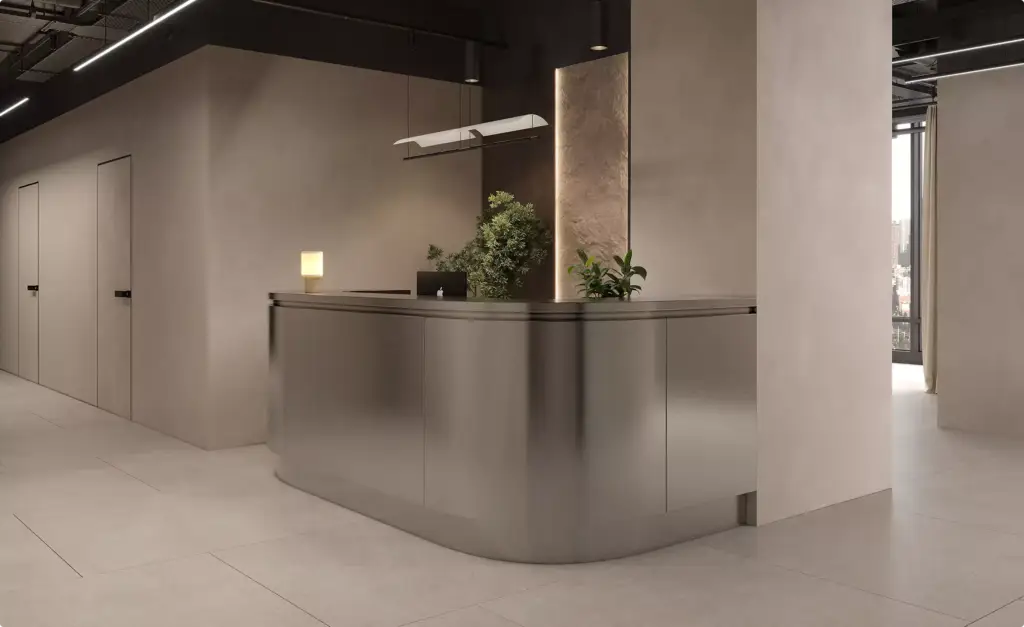
What does this cost? Market ranges for an interior still are about $120 to $350 from a freelancer and $300 to $700 from a studio. A package of five to eight views runs about $600 to $1,500 from a freelancer and $1,500 to $4,000 from a studio. Our architecture rate is $39 per hour; a still usually starts at about 8 hours, roughly $300. Animation starts from $2,200 per finished minute. The full breakdown is in our 3D rendering pricing guide.
Plan the timing as a guide, not a guarantee: a first draft still takes about 3 to 5 working days from a full brief, a package of five to eight views about 2 to 3 weeks, and an animation of up to a minute about 4 to 6 weeks. We send a quote within one working day, and any test image is discussed on a call. If you only need the interior shown, see our interior rendering services.
In our studio, we have shown large fitness spaces this way before; our fitness center interior design case covers how large wellness spaces were turned into premium experiences.
Pre-Selling Gym Memberships Before Opening Day
A new gym should open with paying members, not with an empty floor and a sign on the door, and pre-sales also prove demand to your lender and cover early rent.
Start selling while the build-out is still going on, and put renders of the finished gym on a simple pre-sale page and on social media. Offer a limited number of founding memberships at a launch price that steps up later. Gymdesk describes a jiu-jitsu gym that charged about $80 a month for its first 50 members and about $180 once it reached 420. Another school in the same guide had more than 300 pre-sign-ups before it opened.
Budget separately for the launch itself: Gymdesk puts grand-opening marketing at $3,000 to $15,000 and ongoing marketing at about 7 to 10 percent of monthly revenue. Host open days, partner with local businesses and physical therapists, and collect reviews from the first week. The same order of decisions works for other premises, too; see how it applies when you open a coffee shop.
Turn Ideas Into Visual Stories