Real estate email marketing is the practice of sending targeted, permission-based emails — new-listing alerts, market updates, and nurture sequences — to a database of buyers, sellers, and past clients. Done well, it keeps an agent top of mind and turns a cold contact list into booked showings and closings.
Most guides stop at subject lines and send times. This one starts where the top results don't: the image inside the email. In a business sold on how a property looks, the visual asset decides whether your email gets opened, clicked, or deleted — and for a home that isn't built yet, that asset can only be a render. Everything below is written from a rendering studio's side of that problem.
What Is Real Estate Email Marketing?
Real estate email marketing is a recurring, opt-in email program an agent or developer uses to nurture a database of leads and clients toward a transaction. It combines triggered messages (a new listing, a price change, an open house) with scheduled ones (a monthly market newsletter) so contacts hear from you consistently between deals.
It is not a one-off blast to a purchased list, and it is not the same as sliding into social DMs. The difference is ownership and permission: your email list is an audience you control, reached without an algorithm deciding who sees you. Social and paid ads rent attention; email keeps it. That makes email the backbone channel in a broader real estate marketing plan, with social and video feeding new contacts into the list.
Why Email Still Beats Social and Paid Ads for Realtors
Email wins on economics and control. Industry-wide averages put email marketing's return at roughly $36–$40 for every $1 spent — a figure from cross-sector studies (Litmus, DMA), not a real-estate-specific number, so treat it as a ceiling rather than a promise. Even discounted for a high-consideration purchase, the math beats paid social, where costs per lead keep climbing and reach is throttled by the platform.
The deeper advantage is durability. A follower on a social platform can be lost to an algorithm change overnight; an email address you collected with permission is yours for years. For a real estate business built on long sales cycles and repeat-and-referral clients, that longevity is the whole point — most people move every several years, so the value of a list is realized slowly, through staying in the inbox until the moment they are ready.
8 Real Estate Marketing Emails That Actually Get Opened
A working real estate email program is a mix of triggered and scheduled sends, each with one job. These eight cover the buyer and seller journey from first contact to post-close referral:
- Welcome email — sent the moment someone joins your list; set expectations and deliver one useful thing (a buyer guide, a home-value link).
- New-listing alert — a fresh property matched to what a segment wants, led by a strong exterior image.
- Coming-soon / off-plan reveal — a property before it hits the market or before it is built, shown through renders.
- Price-improvement email — a reduction or "back on market" note that re-activates warm buyers.
- Open-house invite — date, time, and a reason to show up, sent to the local segment.
- Monthly market newsletter — inventory, rates, and neighborhood notes that keep you useful between transactions.
- Just-sold / social proof — a recent win that signals momentum to sellers on the fence.
- Long-term nurture drip — an automated sequence that stays in touch with leads who are months from acting.
The point is not to send all eight to everyone. Segment by intent — active buyers, past clients, sellers, off-plan waitlists — and route each email type to the people it fits. Here is how the core sends line up against their trigger, goal, and the visual that carries them:
| Email type | Trigger | Goal | Best visual |
|---|---|---|---|
| New-listing alert | Property goes live | Book a showing | Photoreal exterior hero shot |
| Coming-soon / off-plan | Pre-market or pre-build | Capture early interest | 3D render or animation |
| Price improvement | Reduction applied | Re-activate warm buyers | Fresh twilight exterior |
| Market newsletter | Monthly schedule | Stay top of mind | Neighborhood or data graphic |
| Just-sold | Deal closes | Win seller listings | Lifestyle interior or exterior |
The Image Inside the Email Decides Everything
In a real estate email, the property image is the message. A buyer scanning a crowded inbox decides in a second or two, and that decision runs on the photo they see, not the copy they haven't read yet. Subject lines earn the open; the visual earns the click. So the single highest-leverage upgrade to most agents' email is not another A/B test on send time — it is a better image at the top of the listing.
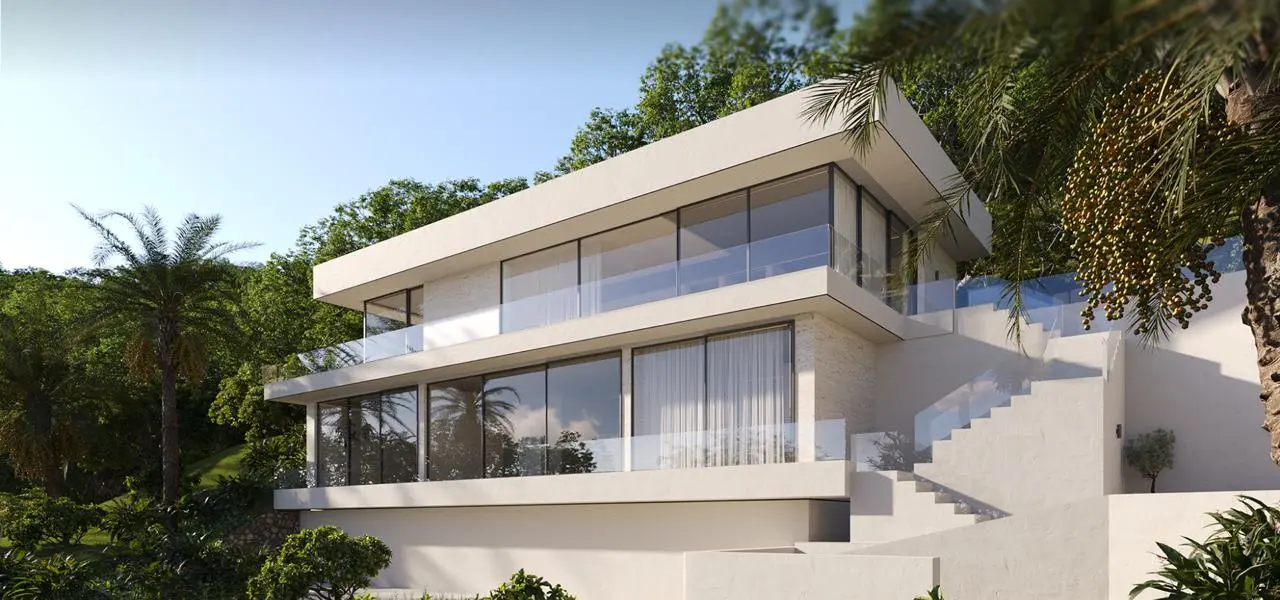
This is where new construction and off-plan sales hit a wall: the property does not exist to be photographed. A coming-soon email for a development still in permitting has nothing to show but a floor plan or an empty lot — and neither sells a lifestyle. A 3D render solves it. Photoreal 3D residential rendering lets you send a twilight exterior, a staged interior, or an aerial of the whole community months before the model home opens, so the email works the same as it would for a finished home.
In our studio we see the same pattern across developer campaigns: the coming-soon email built around a twilight render — warm interior light, dusk sky, landscaping filled in — consistently pulls more clicks than the same email led by a daytime construction photo or a line drawing. The render lets a buyer picture living there before a single wall is up, which is the entire job of an off-plan email.

Three Real Estate Email Templates You Can Adapt
Templates save time, but the ones worth keeping are skeletons you personalize, not scripts you paste. Each of these leads with the visual, keeps the copy short, and ends with one clear call to action.
New-listing announcement
Subject: Just listed in [neighborhood] — [beds]BR with [standout feature]
Body: Lead with the exterior hero image. One line on what makes it special ("walkable to [landmark], renovated kitchen, west-facing yard"). Price and key specs in a short list. Close with a single button: Book a private showing.
Coming-soon / off-plan reveal
Subject: First look: [development name] before it's public
Body: Open with a render — twilight exterior or aerial of the site. Frame it as exclusive early access for your list. Note the timeline ("model home opens this spring") and offer to reserve a spot on the priority list. CTA: Get on the early-access list.
Price improvement
Subject: New price on [address] — [amount] under previous
Body: Re-introduce the home with a fresh image, not the same one from the first send. State the new price plainly in the first line. Add one sentence of urgency grounded in fact ("comparable homes in [area] are selling in under [X] days"). CTA: See the updated listing.
How Often Should You Send Real Estate Marketing Emails?
Send at least one scheduled email a month, plus triggered emails as events happen. A monthly market newsletter is the floor that keeps you in the inbox; new-listing, price-change, and open-house emails go out when the event occurs, to the segment that cares. For a brand-new lead, a short drip of five to seven emails over the first two to three weeks does the early nurturing.
The ceiling matters as much as the floor. For general sends, staying at or under roughly one email a week protects your open rates and your sender reputation; segmented, event-driven emails can be more frequent because they are relevant by definition. When unsubscribe rates climb, the problem is almost always relevance, not frequency — people leave lists that stop being useful, not lists that email them often.
The Metrics That Prove Your Real Estate Emails Are Working
Track opens, clicks, and replies, but weigh them toward action. Reported real-estate email open rates generally land in the high-teens to high-20s percent range, with click-through rates around 1.5–3% — figures aggregated from email-provider benchmarks (Mailchimp, Constant Contact), not audited averages, and now distorted upward by Apple's Mail Privacy Protection, which auto-loads images and inflates opens. Because of that distortion, open rate is a weak signal on its own.
Click-through rate is more honest, because a click is a deliberate act of interest — and it is the metric most sensitive to the quality of the image and offer. The number that actually pays, though, is downstream: replies, showing requests, and listing appointments traced back to a send. A newsletter with a modest open rate that produces two listing appointments beat a clever subject line that produced none. Measure the channel by deals it moves, not vanity opens.