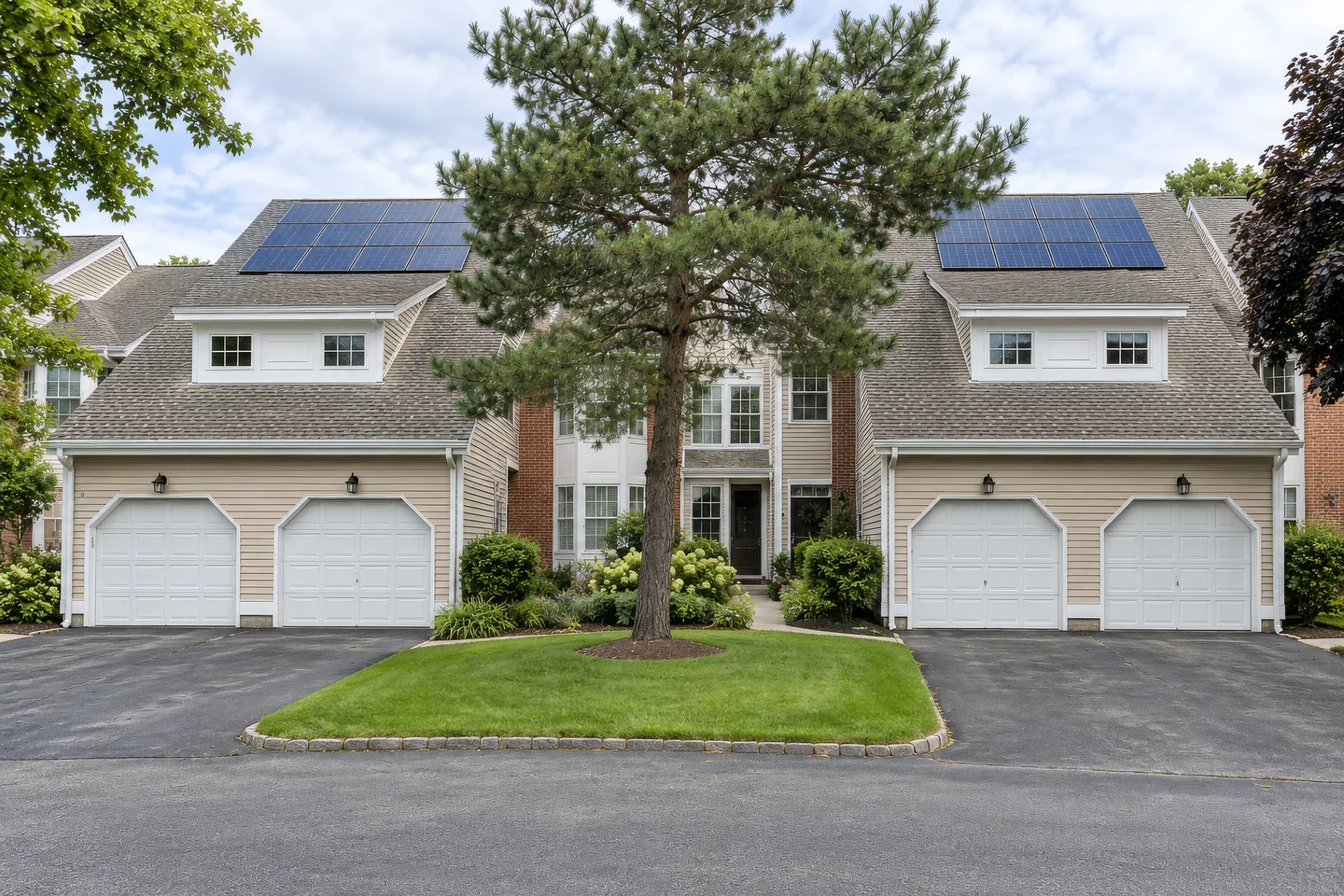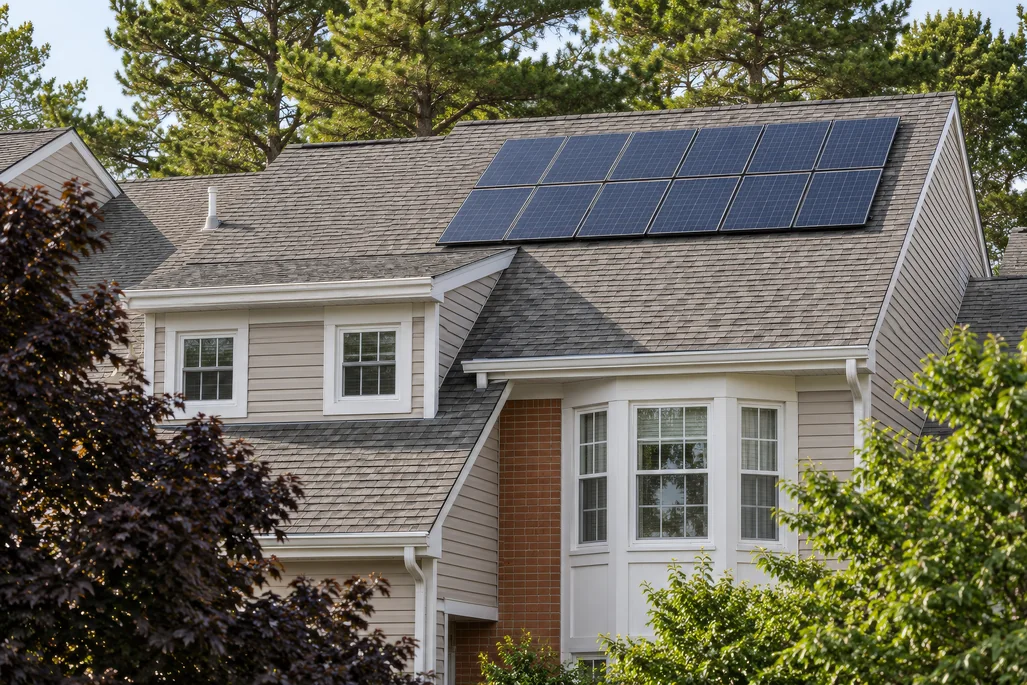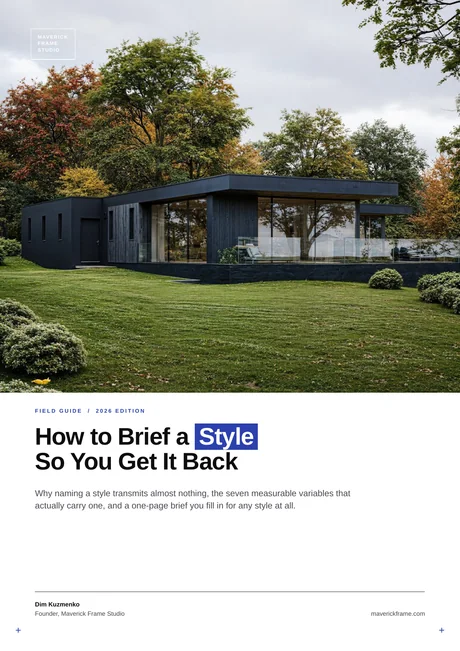
Modern Victorian architecture is a contemporary reinterpretation of the Victorian house: it keeps the recognizable silhouette — steep, complex rooflines, a prominent porch, and tall bay windows — but trades ornate trim for clean lines, dark or monochrome cladding, and an open floor plan. The result reads as period-inspired yet unmistakably new.
What defines modern Victorian architecture
The style works by subtraction, not addition. A classic Victorian home carries decades of applied ornament — spindlework, fish-scale shingles, bracketed eaves, and polychrome paint. A modern Victorian keeps the underlying shape that makes those homes read as Victorian and removes almost everything applied on top. Architects and designers usually agree on a short list of defining traits.
- Retained silhouette. Steep gables, asymmetry, and sometimes a turret or tower stay — the profile still scans as Victorian from the street.
- Simplified ornament. Gingerbread trim, corbels, and fussy brackets are stripped back or dropped entirely.
- Monochrome or dark palette. Instead of the traditional multi-color scheme, exteriors go matte black, charcoal, deep green, or crisp white.
- Modern materials. Standing-seam metal roofs, fiber-cement or charred-wood cladding, and large glazed openings replace period materials.
- Open, light-filled plan. The compartmentalized Victorian interior gives way to connected living spaces and bigger windows.
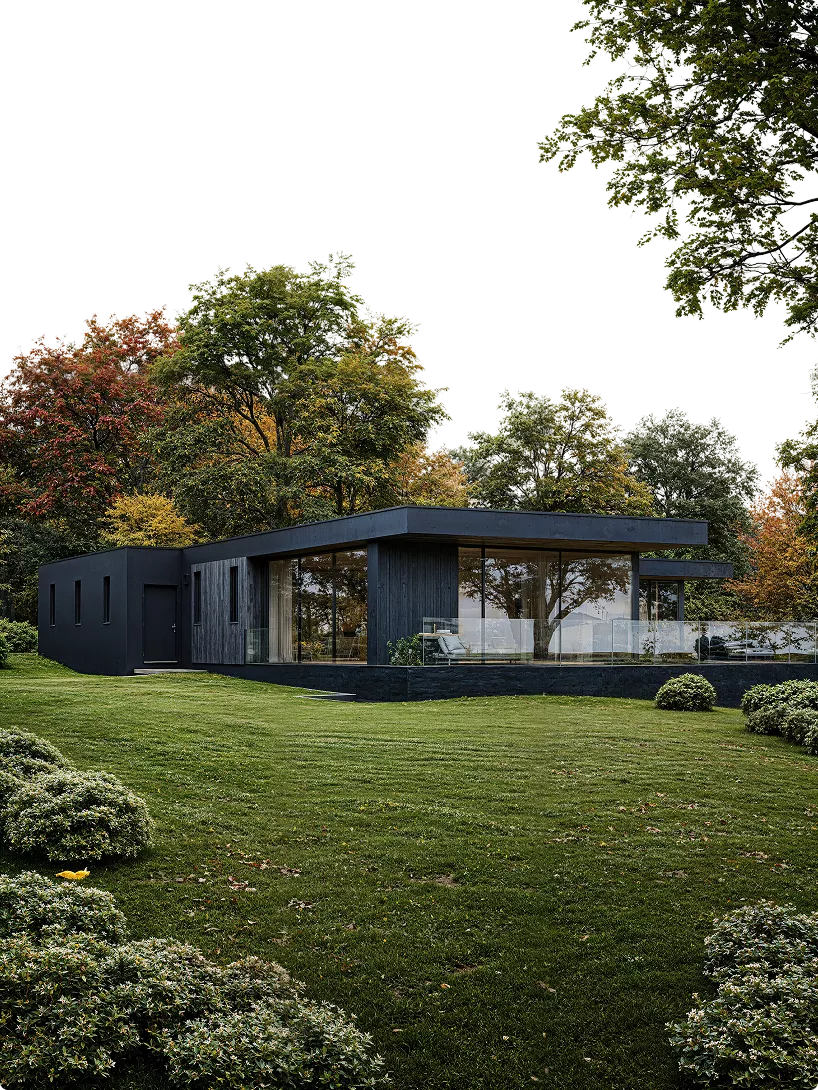
Modern Victorian versus original Victorian architecture
The clearest way to understand the modern version is to line it up against the 19th-century original. The two share a family resemblance in massing and roofline, but almost every surface decision diverges. For a full breakdown of the historic style, see our guide to Victorian architecture.
| Feature | Original Victorian (1837–1901) | Modern Victorian |
|---|---|---|
| Silhouette | Steep, complex, asymmetrical | Same steep silhouette, often pared down |
| Ornament | Heavy — spindles, brackets, trim | Minimal or removed |
| Color | Multi-color "painted lady" schemes | Monochrome, dark, or all-white |
| Materials | Clapboard, decorative shingles, slate | Metal, fiber-cement, charred wood, glass |
| Windows | Tall, narrow, divided lights | Tall proportions kept, larger unbroken glass |
| Floor plan | Compartmentalized rooms | Open, connected living areas |
The exterior features that read as modern Victorian
Because the style is defined by silhouette rather than decoration, a home only needs a few strong cues to read as Victorian — even when every material is contemporary. When we plan an exterior in 3D exterior rendering, three signals do most of the work.
- Roofline complexity. A steep primary gable, secondary gables, and a crisp ridge line carry the Victorian read even without decorative bargeboards.
- The porch or turret. A wraparound porch, a covered entry, or a squared-off tower anchors the front and echoes the original massing.
- Window rhythm. Tall, vertically proportioned windows — grouped or bayed — preserve the period cadence while using modern, large-pane glass.
Everything else can go fully contemporary: flush trim, hidden gutters, matte-black window frames, and a single-tone facade. That is why a matte-black house with a steep roof still feels "Victorian" while a low-slung ranch never will.
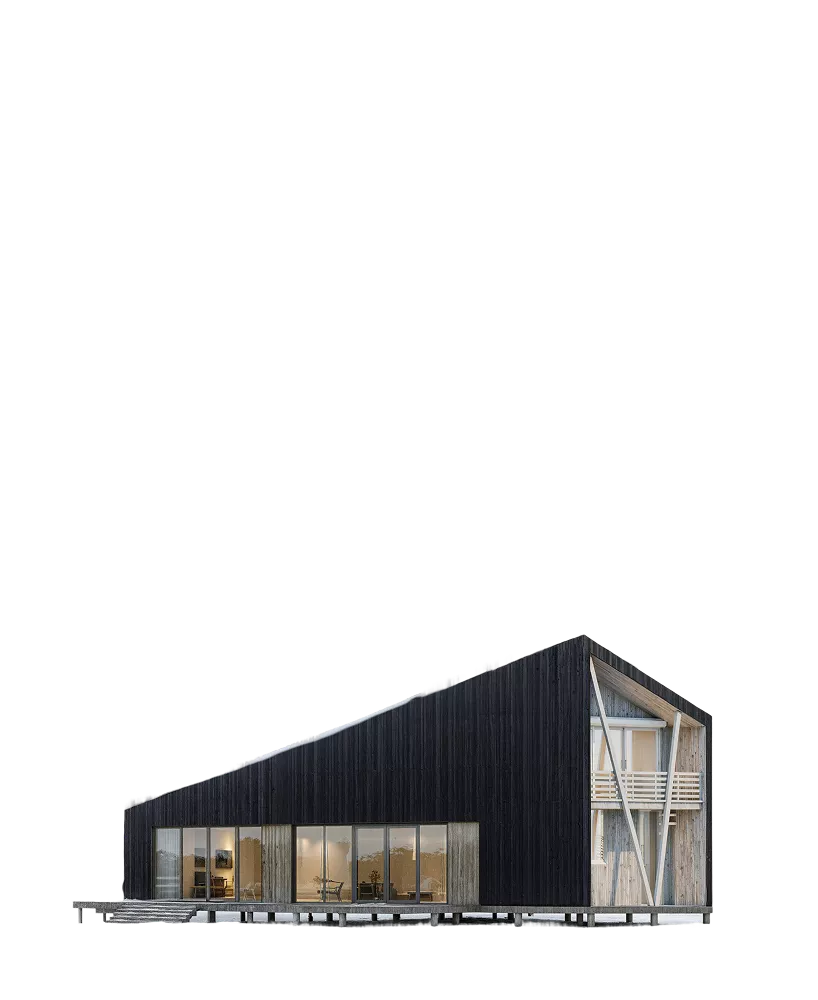
Modern Victorian versus modern farmhouse
These two contemporary styles are often confused because both mix old forms with clean finishes, but their source silhouettes are opposite. A modern farmhouse borrows from the simple, agrarian gable barn: long, low, symmetrical, with a straightforward roofline and board-and-batten siding. A modern Victorian borrows from the tall, vertical, asymmetrical town house: steeper roofs, a turret or bay, and a more ornamented profile even when the trim is gone. If the massing is horizontal and calm, it is farmhouse; if it is vertical and busy up top, it is Victorian.
How to make a Victorian house look modern
Updating an existing Victorian is mostly about editing, not rebuilding. The steps below move a period home toward the modern Victorian look while keeping its character.
- Simplify the palette. Repaint the multi-color scheme in a single deep or neutral tone to let the shape speak.
- Edit the trim. Remove or slim the fussiest gingerbread details; keep one or two as a nod to the era.
- Modernize the windows. Swap to larger panes and matte-black frames while preserving the tall, vertical proportions.
- Open key interior walls. Connect the front rooms to create the open, light-filled flow modern buyers expect.
- Update lighting and hardware. Replace ornate fixtures with clean, contemporary pieces to reset the whole feel.
Why new Victorian homes are rare — and how CGI changes the math
New Victorian-style homes are uncommon because the original detailing is expensive and labor-intensive: the ornament that defines a classic Victorian relies on skilled millwork and hand-applied trim that few builders still offer at reasonable cost. The modern Victorian solves this by keeping only the silhouette, which is affordable to frame, and dropping the costly decoration.
Because so much of the style lives in proportion and roofline, it is easy to get wrong on paper and expensive to fix in the field. Pre-construction 3D residential rendering lets builders and homeowners test the massing, cladding color, and window rhythm before a single board is cut — confirming that a design reads as modern Victorian, not accidental farmhouse, while the changes still cost nothing but a render.