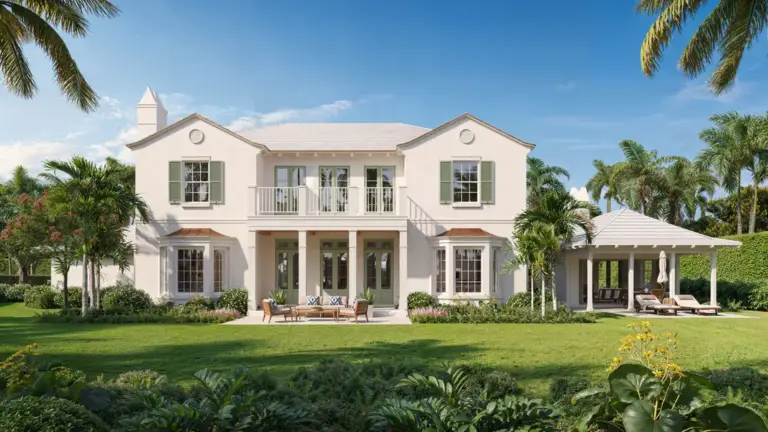
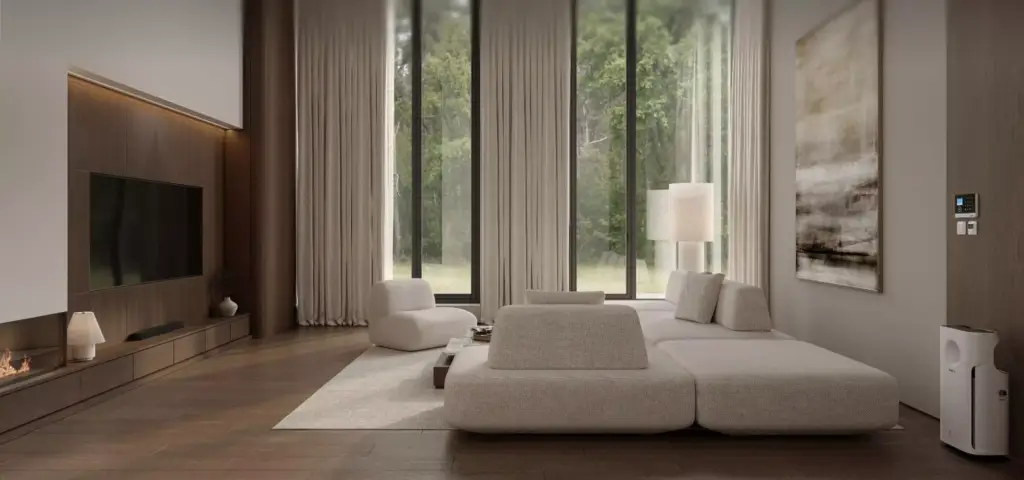
What contemporary architecture is: the architecture being built right now — roughly the 1970s to the present — with no single fixed style, changing as technology, budgets, and priorities change.
What contemporary architecture is not:
- Not modern architecture. Modern is a closed historical movement, roughly 1920s–1970s, with stated rules such as “form follows function”. Contemporary has no rulebook and keeps shifting.
- Not a look you can date by eye. A house finished in 2026 can be contemporary while using traditional stone or timber. What makes it contemporary is that it answers today’s brief, not that it avoids the past.
- Not minimalism or mid-century modern. Those are specific, nameable design vocabularies. Contemporary is the moving snapshot that borrows from them — and from everything else.
Contemporary architecture is the architecture of the present — buildings designed and built from roughly the 1970s onward. It is not one style. It has no fixed rulebook, no signature silhouette, and no agreed material palette. What holds it together is that every building answers current technology, budgets, and environmental priorities.
This guide covers what contemporary architecture is, how it actually differs from modern architecture, the traits it shows today, and why the people who build it increasingly treat it as a snapshot rather than a style.
Contemporary Architecture DefinitionContemporary Architecture Definition
Contemporary architecture covers buildings created since roughly the 1970s that use unconventional forms, innovative materials, sustainable systems, and responsive design thinking. Rather than a single visual template, contemporary architecture is an evolving response to current technological, cultural, and environmental realities.
To understand contemporary architecture’s meaning, think of it as the design of the present time. It reflects how people live today, what society values, and which tools architects have available. Unlike Gothic or Baroque architectural styles, which are locked into specific periods, contemporary architecture moves as technology and priorities move.
Contemporary vs. Modern Architecture: The Difference That Actually Matters
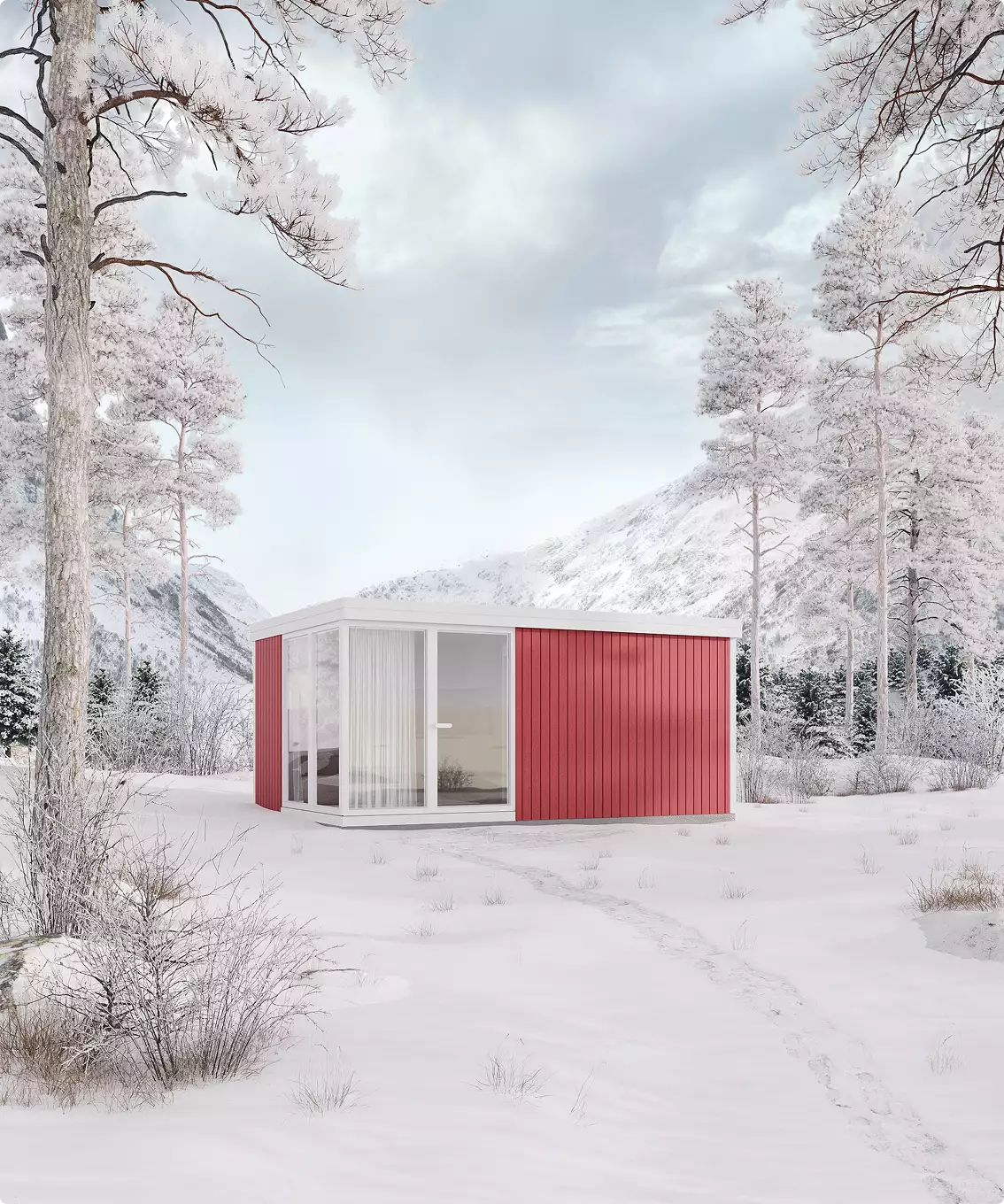
Modern architecture is a closed historical movement that ran from roughly the 1920s to the 1970s. Contemporary architecture is whatever is being built now. Modern is a period with rules; contemporary is a moving present without them. That one distinction resolves most of the confusion between the two terms.
The confusion comes from everyday language, where modern simply means new. Technically, modern architecture refers to a specific 20th-century movement with clear principles — and a building can be brand new without being modern in that sense.
| Modern Architecture | Contemporary Architecture |
| Era: closed movement, ~1920s–1970s | Era: ongoing, ~1970s–present |
| Principle: form follows function | Principle: form follows the brief and the site |
| Geometry: rectilinear, right angles | Geometry: asymmetry, curves, free-form shapes |
| Roofline: flat, strictly horizontal | Roofline: flat, sloped, or sculpted — no rule |
| Windows: ribbon and grid glazing | Windows: frameless, full-height, irregular openings |
| Ornament: rejected on principle | Ornament: allowed when it serves the concept |
| Materials: steel, concrete, glass | Materials: mixed — plus engineered timber, composites, smart systems |
| Rulebook: fixed and stated | Rulebook: none; it shifts with practice |
The Main Difference in Time and Design Logic
Contemporary architecture borrows from modernism, but it isn’t bound by its rules. A contemporary building can use traditional materials or curved forms that never appear in pure modernist design. It can also quote a dated vocabulary on purpose — mid-century modern details show up constantly in houses built this decade, and that does not make those houses mid-century.
Key Characteristics of Contemporary Architecture
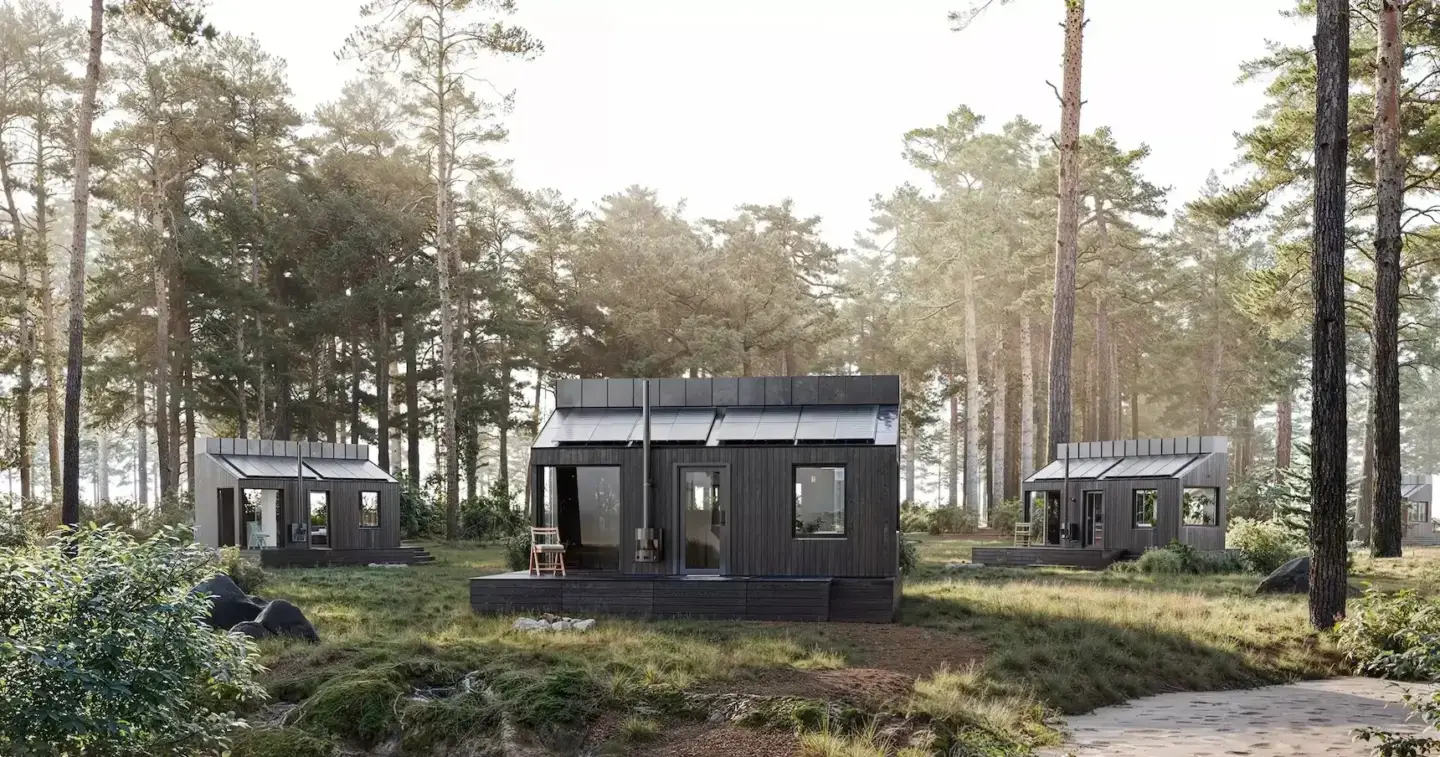
Contemporary architecture characteristics include asymmetry, open floor plans, extensive glazing, unconventional geometry, minimal detailing, indoor–outdoor integration, sustainable building systems, and mixed material palettes. Together they produce buildings that read as current, functional, and visually striking.
- Asymmetry. Massing is composed and balanced rather than mirrored around a central axis.
- Open floor plans. Fewer fixed internal walls, with rooms defined by light, level, and furniture instead of doors.
- Extensive glazing. Full-height and frameless glass used as a wall material, not as punched openings.
- Unconventional geometry. Curves, cantilevers, and irregular volumes that a strict grid would not permit.
- Minimal detailing. Concealed fixings, flush junctions, hidden baseboards, and door frames designed to disappear.
- Indoor–outdoor integration. Sliding walls, continuous floor finishes, and courtyards that read as rooms.
- Sustainable systems. Passive orientation, renewable energy, green roofs, and low-carbon material choices.
- Mixed material palettes. Glass, steel, and concrete combined with engineered timber, stone, and composites.
Form, Space, and Visual Language
Contemporary design in architecture emphasises curved or irregular forms, bold massing, and visual simplicity. Rather than being rigidly compartmentalised, spaces flow into one another. The relationship between volume, void, and natural light becomes a primary design tool.
Materials, Technology, and Sustainability
Contemporary buildings are constructed from glass, steel, concrete, engineered wood, and advanced composites — combinations often tested through 3D exterior rendering services before anything is ordered. Digital design tools allow precise fabrication of complex forms, while smart systems, renewable energy, and responsible material selection build sustainability in as a core layer rather than an add-on.
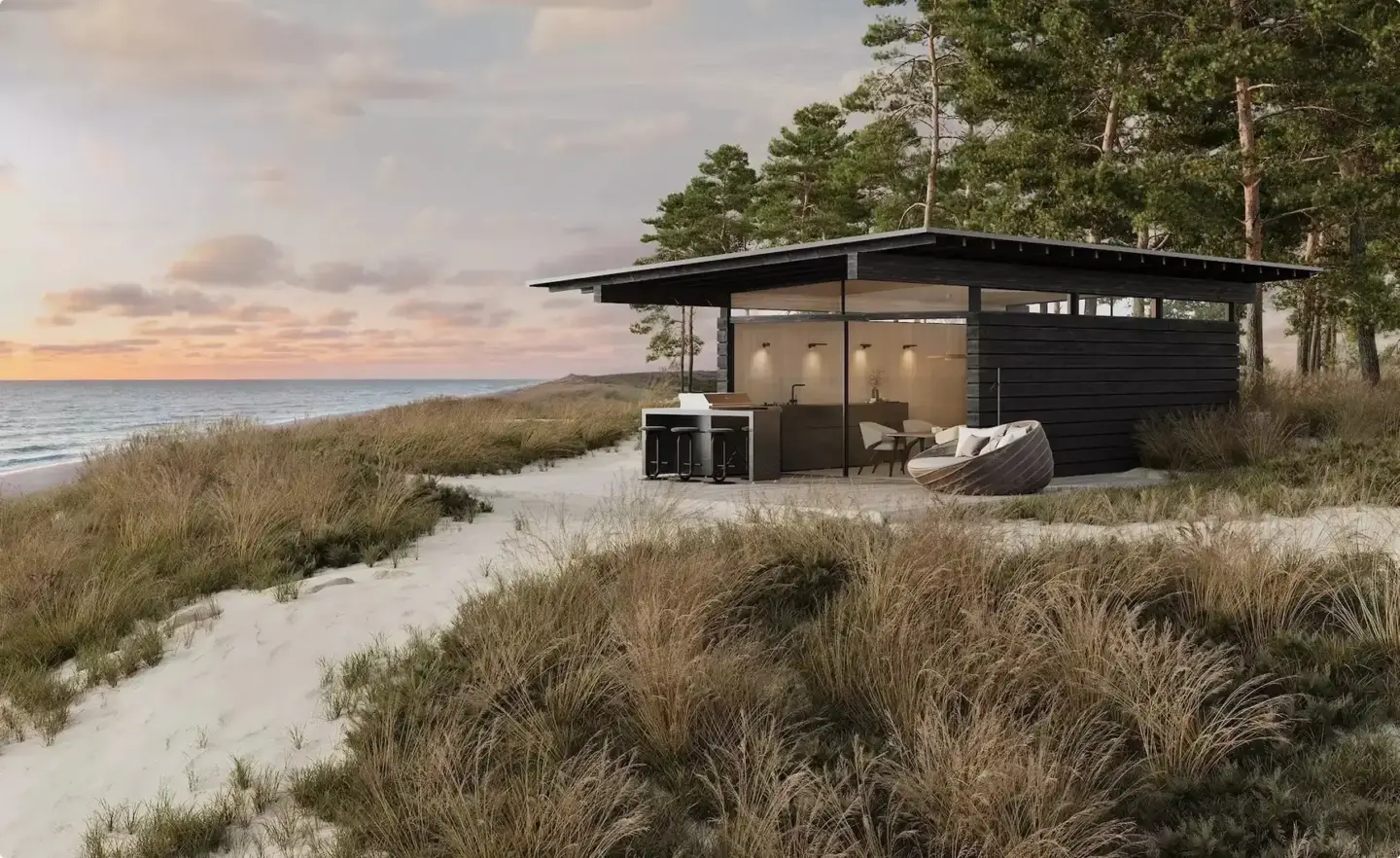
Contemporary Isn’t a Style — It’s a Snapshot
Most guides present contemporary architecture as a style with a fixed feature list. In practice it behaves differently: it is a snapshot of what is being built at a given moment, and the snapshot moves. This is also why the most authoritative definitions refuse to name a dominant style — there isn’t one to name.
From our studio — I’d say the styles have all mixed together by now. I wouldn’t call contemporary a style at all — it’s just what people are making right now. Invisible doors, hidden baseboards, a lot of lighting, a move toward minimalism: that’s what I’d call contemporary today. In two weeks it might be something else, and in three weeks something else again. I wouldn’t tie it to specific design decisions.
Dim Kuzmenko, Founder, Maverick Frame
Read the current snapshot and you get a vocabulary rather than a rulebook: frameless glazing, flush junctions, concealed door frames and baseboards, layered artificial lighting treated as a design element, and a steady drift toward minimalism — with the Scandinavian style among the strands feeding that drift. None of these are requirements. They are simply what is being specified this year.
There is a practical tell for this. When our studio renders a project, the style itself barely changes the work — if the scene is set up properly, a contemporary building is no harder to light or render than any other. What moves the timeline is whether ready-made models exist for what sits in the frame. The rarer the style, the fewer assets are available off the shelf, the more has to be modelled from scratch, and the longer the project runs. Contemporary is consistently the best-stocked category we handle — and that is the evidence for the argument: a vocabulary only becomes well-stocked once it is already what everyone is building.
Contemporary Architecture Examples
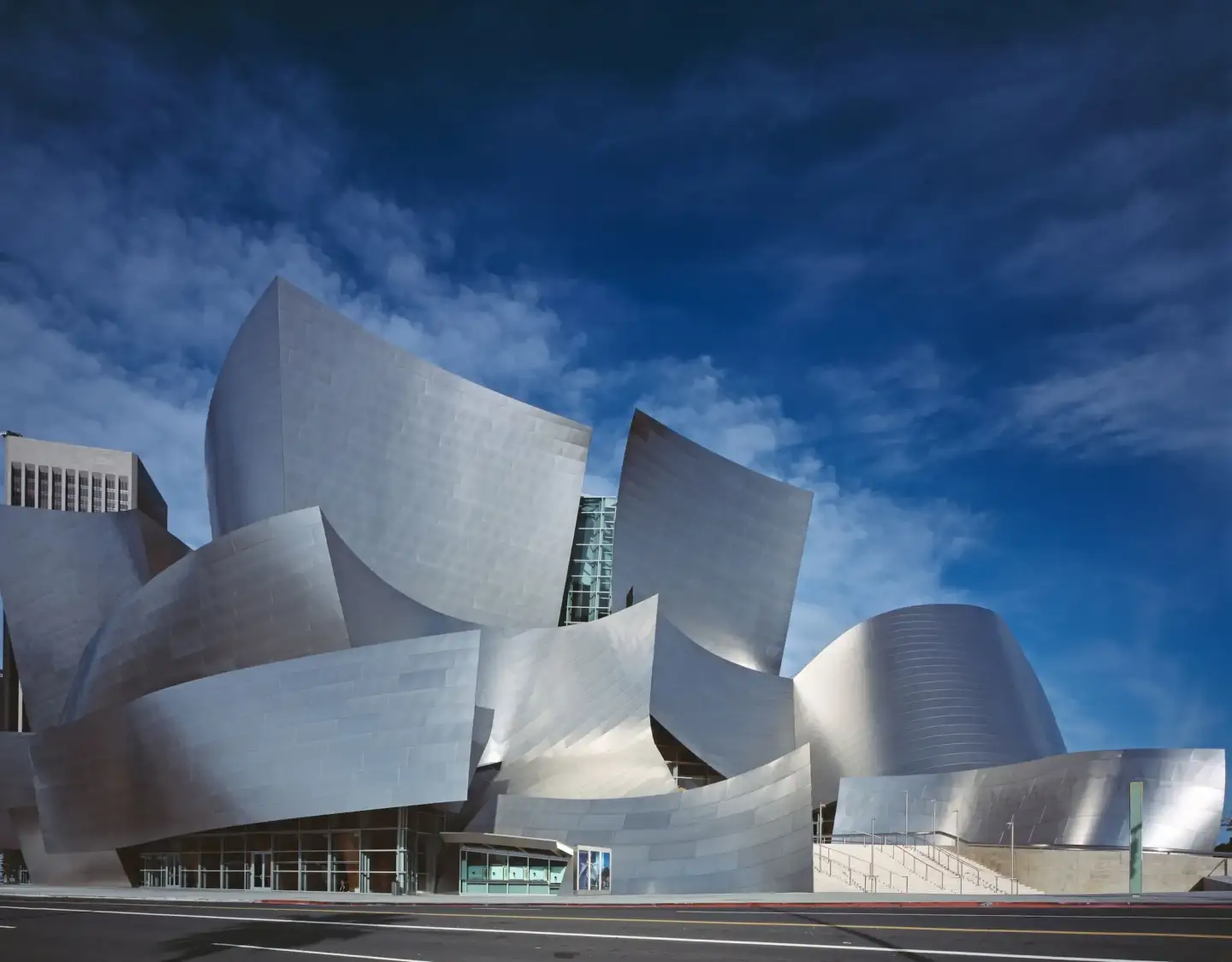
Contemporary architecture examples range from iconic cultural landmarks to private houses. What unites them is a willingness to experiment with form, adopt new technology, and answer a current environmental or social problem.
Public and Cultural Buildings
Landmark buildings exemplify contemporary architecture best because they carry the budget and the ambition to push boundaries. The Walt Disney Concert Hall in Los Angeles, by Frank Gehry, uses sculptural stainless steel forms that defy conventional geometry. The Guggenheim Museum Bilbao, also by Gehry, made undulating titanium curves into a civic landmark. The Heydar Aliyev Center in Baku, by Zaha Hadid, flows so continuously that walls and roof stop being separate elements. The Burj Khalifa in Dubai represents the engineering extreme of the same era. Each shows how innovative engineering establishes a powerful public identity through contemporary architectural style.
Residential Contemporary Architecture
Private homes and apartment buildings worldwide carry the same language, which is why residential rendering work is dominated by it. Common elements include floor-to-ceiling windows, open plans, a deliberate connection to the landscape, and adaptable interiors. Some contemporary houses add passive solar design, green roofs, or modular construction — features that show contemporary residential architecture is ultimately about performance, not appearance.
What Makes a House Contemporary?What Makes a House Contemporary?
A house is contemporary when it follows current design logic, not when it was recently built. The markers: open layouts that maximise natural light, clean geometric lines, seamless indoor–outdoor flow, flexible use of space, and integration with the surroundings. A contemporary house is defined by how it answers the way people live today.
From our studio — Most clients don’t actually know what they want. They have a picture in their head, and because the styles are so blended now, they’ll call it contemporary, or modern, or minimalism — and the label is usually wrong. It works better when they show references or analogues, or just trust the designer and let them deliver the result, instead of trying to control every small thing.
Dim Kuzmenko, Founder, Maverick Frame
Why Contemporary Architecture Matters Today
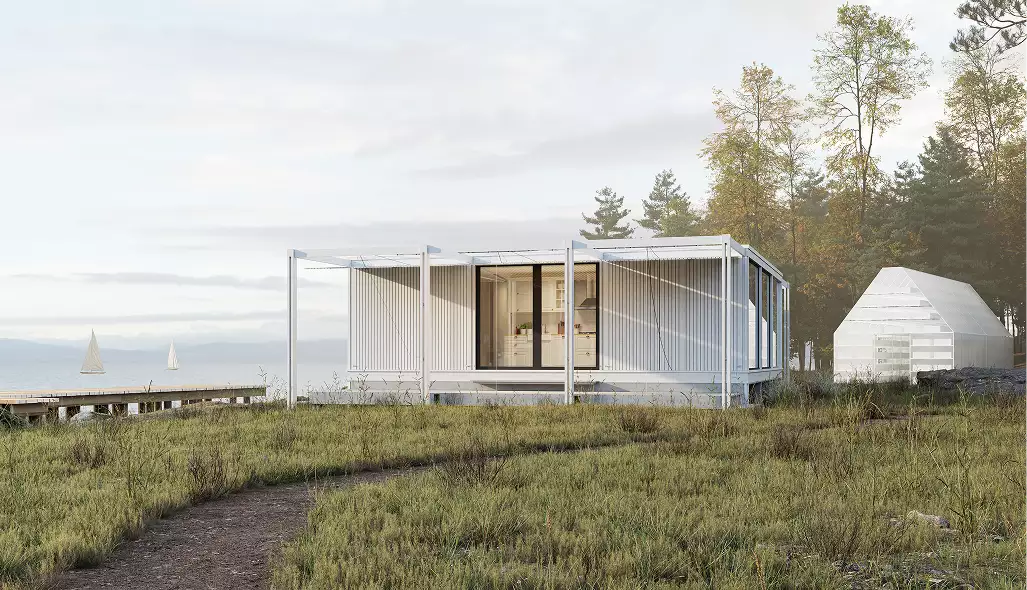
Contemporary building style matters because it responds directly to urgent environmental, social, and technological realities — and because, having no fixed rules, it can change faster than any named style could. Sustainable design is the clearest case of that adaptability; our guide to green architecture covers how it is reshaping practice.
Flexibility, performance, sustainability, and visual innovation let contemporary spaces go beyond shelter and create environments that support human well-being while respecting planetary limits. That is the brief the present is writing — and it will be rewritten again.

Turn Ideas Into Visual Stories
Free field guide
How to Brief a Style So You Get It Back
Why naming a style transmits almost nothing, the seven measurable variables that actually carry one, and a one-page brief you fill in for any style at all.
If it didn't open, download it here.
Download the PDF