Modern farmhouse architecture is a residential style that pairs the simple silhouette of a rural farmhouse — a steep gabled roof, a covered porch, board-and-batten siding — with contemporary moves like black-framed windows, open volumes, and a restrained, near-monochrome palette. It reads as familiar and clean at the same time, which is exactly why it became the default new-build look of the last decade.
What Is Modern Farmhouse Architecture?
Modern farmhouse architecture is a 21st-century reinterpretation of the traditional American farmhouse. It keeps the recognizable rural forms — a tall gable, a wide front porch, vertical siding, a rectangular footprint — and strips away ornament, then swaps in modern materials and details. The result is a house that signals warmth and heritage while feeling current. Unlike a working farmhouse, which grew room by room over generations, the modern version is designed as one deliberate composition from the start.
The style sits within a broader family of popular architectural styles that borrow historic silhouettes and update them for how people live now. What separates modern farmhouse from its neighbors is discipline: the same handful of elements, repeated cleanly, with high contrast doing most of the visual work.
Key Features of Modern Farmhouse Architecture
A modern farmhouse exterior is defined by a short, consistent set of features. When most of these appear together, a house reads unmistakably as modern farmhouse:
- Steep gabled roof. A tall, symmetrical gable — often with a standing-seam metal roof or metal accents over porches and dormers — is the signature form.
- Board-and-batten siding. Vertical boards with narrow raised battens give the walls texture and a farm-shed lineage; horizontal lap siding often appears as a secondary material.
- Black-framed windows. Large, black-sash windows in a regular rhythm create the crisp light-body / dark-trim contrast the style is known for.
- Covered front porch. A full-width or partial porch with simple square columns anchors the entry and nods to the original farmhouse.
- Simple, rectangular massing. Clean rectangular volumes, sometimes joined as a main house plus a smaller connected wing, replace the additive sprawl of old farmhouses.
- Minimal ornament. Trim is reduced to functional lines; the drama comes from proportion and contrast, not decoration.
Modern Farmhouse Exterior Materials and Color Palette
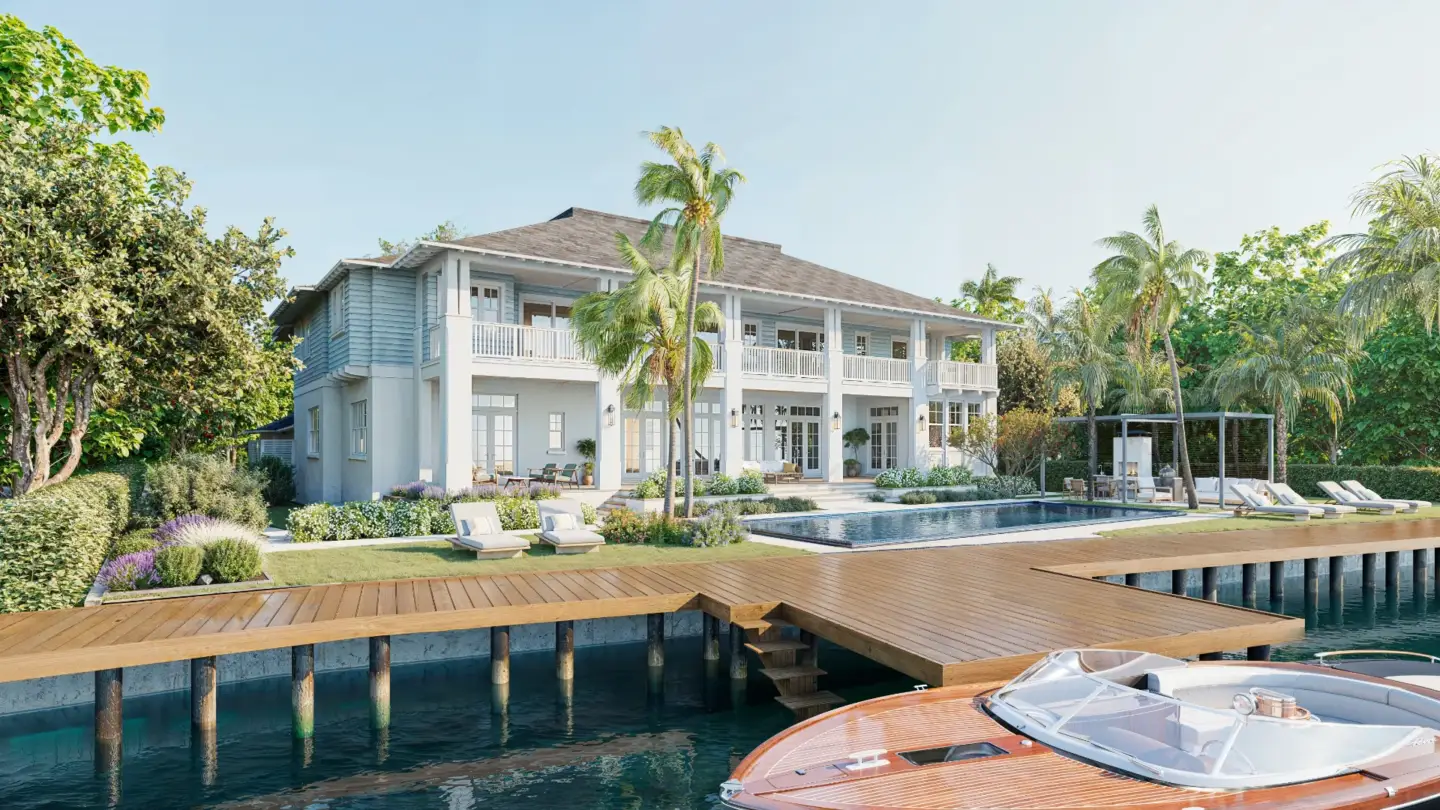
The modern farmhouse palette is deliberately narrow. Bodies are warm white or soft greige; trim, windows, and metal roofs are near-black; and natural wood is used as a warm accent on doors, soffits, garage panels, and porch ceilings. That roughly 70–80% light body, 10–15% black trim, and a small share of natural wood is what keeps the look clean rather than busy — the black works as a line, not a mass.
Material honesty matters more than variety. A typical exterior mixes just two or three surfaces: painted board-and-batten, a stone or brick base, and standing-seam metal. Textures stay matte, and finishes read as real wood, real stone, and real metal rather than glossy stand-ins.
The Origins of the Modern Farmhouse Style
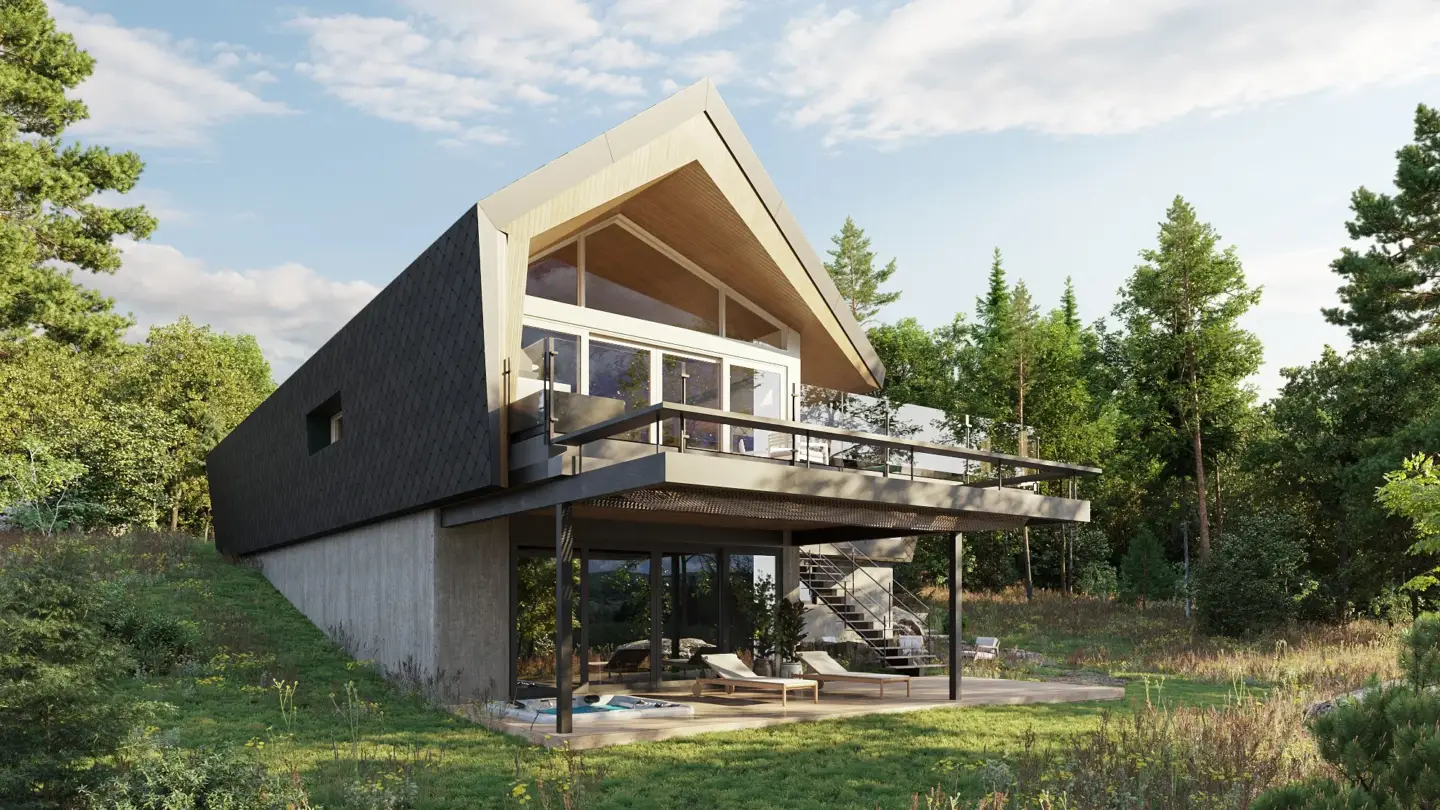
The traditional American farmhouse is a roughly 200-year-old vernacular: a practical, gable-roofed house built for rural life, with a wraparound porch, painted clapboard, and rooms added as families and farms grew. It was never a designed "style" so much as a set of sensible answers to weather, work, and budget.
The modern farmhouse emerged in the 2010s, when architects and builders reduced that vernacular to its cleanest gestures and reintroduced it with black windows, metal roofs, and open interiors. Popular design media and television accelerated it into the dominant look for new suburban and rural homes across the United States. By the mid-2020s it had matured from a trend into a recognized residential style — and, like every dominant style, started drawing questions about how long it would stay on top.
Modern Farmhouse vs. Traditional Farmhouse, Modern Victorian, and Contemporary
Modern farmhouse is easy to confuse with its neighbors because they share rural or historic roots. The differences show up fastest in the roofline, the materials, and how much ornament each style tolerates:
| Style | Roofline & silhouette | Signature materials | What sets it apart |
|---|---|---|---|
| Modern farmhouse | Steep symmetrical gable, simple rectangular volumes | Board-and-batten siding, standing-seam metal, black windows | High light-to-black contrast, minimal ornament |
| Traditional farmhouse | Gable with wraparound porch, additive wings | Painted clapboard, wood, fieldstone | Grew over time; weathered, layered look |
| Modern Victorian | Asymmetric, steeper pitches, occasional turret | Mixed textures, reinterpreted decorative trim | Ornament and silhouette are the point |
| Contemporary | Flat or low-slope, geometric massing | Glass, concrete, stucco, metal | No historic reference; volume over detail |
The closest sibling is modern Victorian architecture, which also updates a historic house type. But where modern farmhouse strips ornament down to contrast and clean gables, modern Victorian keeps the decorative rhythm and a more complex silhouette. If a house leans on porches, symmetry, and black-on-white restraint, it is farmhouse; if it leans on turrets, asymmetry, and reinterpreted trim, it is Victorian.
How Modern Farmhouse Reads in a 3D Exterior Rendering
In a 3D exterior rendering, a modern farmhouse succeeds or fails on three measurable things: gable proportion, trim contrast, and material realism. Get the roof pitch and the black-to-white ratio right, and even a simple massing reads instantly as farmhouse; get them wrong, and the same geometry reads as a generic new-build.
- Roof pitch and gable. A pitch around 8:12 to 12:12 keeps the gable tall and iconic; too shallow and the house drifts toward ranch or contemporary.
- Trim as a line. Black window frames and fascia should stay slim and continuous — thin enough to draw the eye as lines, not blocks — to preserve the light-body contrast.
- Board-and-batten spacing. Batten rhythm has to be modeled, not textured on; a flat siding map with painted-on battens is the fastest way a render loses the style.
- Material response to light. Matte painted wood, standing-seam metal, and real stone each catch light differently. Physically based materials and a warm, low-angle sun are what make the palette feel like a house instead of a showroom.
In our studio, roughly a third of residential exterior briefs ask for some version of modern farmhouse, and the notes almost always point the same direction: warmer light, quieter palette, honest materials. The pre-sale renders that close fastest are the ones where the black trim reads as a crisp line and the siding is real geometry — buyers register "farmhouse" in the first second, before they read a single spec.
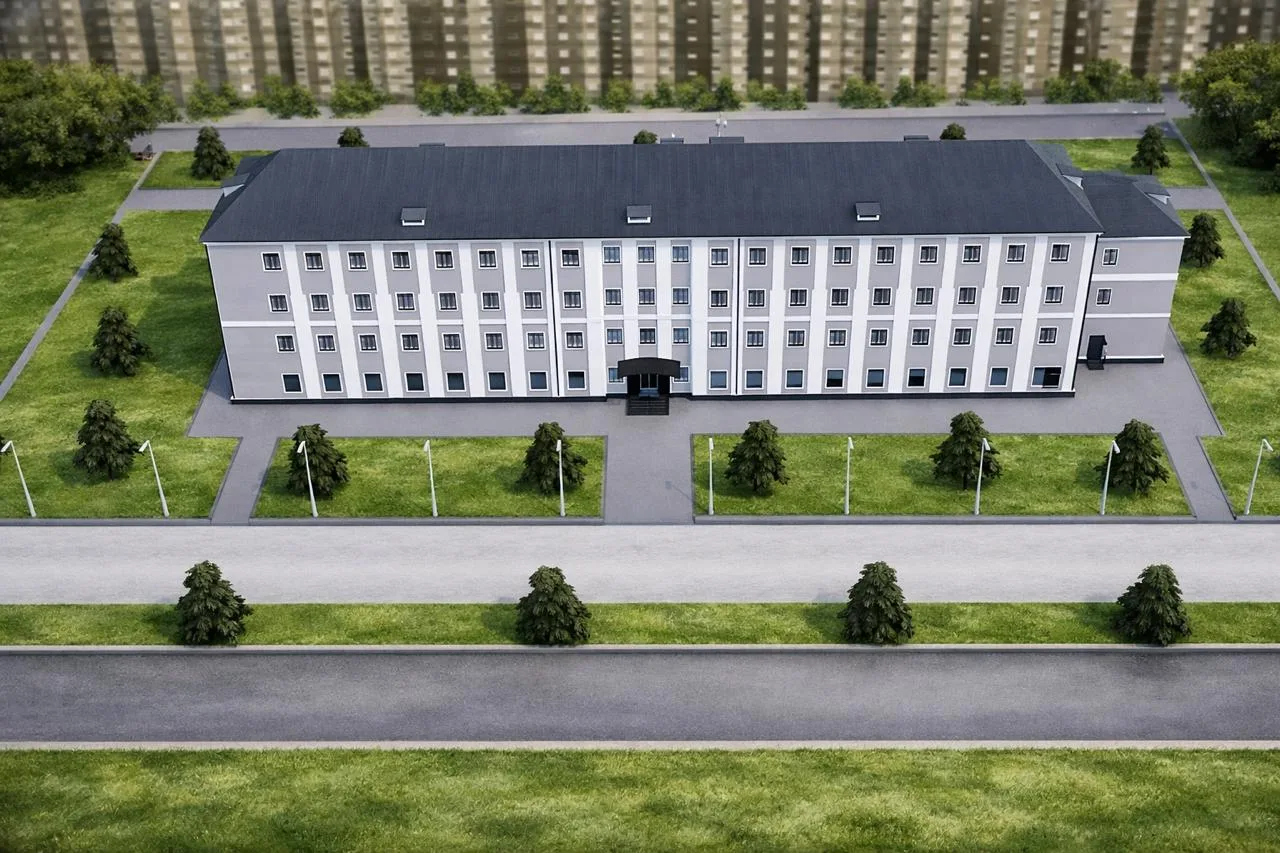
This is why the style is a natural fit for 3D exterior rendering: its whole identity lives in proportion, contrast, and material — the exact things a render controls precisely. For developers and builders marketing homes before they are built, accurate 3D residential rendering lets buyers recognize the farmhouse promise on day one of a listing.
Is Modern Farmhouse Architecture Going Out of Style in 2026?
Modern farmhouse is cooling from its peak but is not going out of style in 2026 — it is maturing. Search interest and new-build starts have eased off the frenzy of the early 2020s, and the loudest, whitest, highest-contrast versions now look dated. What is replacing them is a warmer, quieter evolution of the same style rather than a different one.
The direction is clear in current briefs: softer greige and warm-white bodies instead of stark white, more natural wood and stone, gentler black accents, and a drift toward transitional and warm-minimalist detailing. The gable, the porch, and the honest materials stay; the trend-chasing extremes fall away. For anyone building or marketing a home in this style, the safe bet is the calmer version — it is the one that will still look right in ten years.