Mediterranean interior design is a warm, sun-washed style built around earthy colors, textured plaster walls, arches, and natural materials like terracotta, stone, and aged wood. Inspired by coastal homes in Spain, Italy, and Greece, it blends old-world craftsmanship with breezy, indoor-outdoor living that feels relaxed, hand-made, and timeless.
Below is a practical guide to the colors, materials, décor, and room-by-room choices that define the look — plus a rendering studio's take on which elements are hardest to get right when you visualize a Mediterranean interior before it is built. For the wider family of looks it sits within, see our overview of interior design styles.
What Defines Mediterranean Interior DesignWhat Defines Mediterranean Interior Design
Mediterranean interior design is defined by warm earthy palettes, textured plaster or stucco walls, arched openings, and raw natural materials that show their age. The mood is calm and sun-drenched rather than polished — surfaces are hand-troweled, colors are drawn from the sea and the landscape, and rooms are built to flow toward light and open air.
- Earthy, sun-washed palette — warm neutrals grounded by terracotta, ochre, olive, and sea blue.
- Textured walls — lime wash, stucco, or Venetian plaster instead of flat paint.
- Arches and curves — arched doorways, niches, and coved ceilings soften hard geometry.
- Natural materials — terracotta tile, stone, wrought iron, and unfinished wood.
- Indoor-outdoor living — open plans, big windows, and breezy, uncluttered rooms.
- Handcrafted detail — ceramics, mosaics, and woven textures over mass-produced pieces.
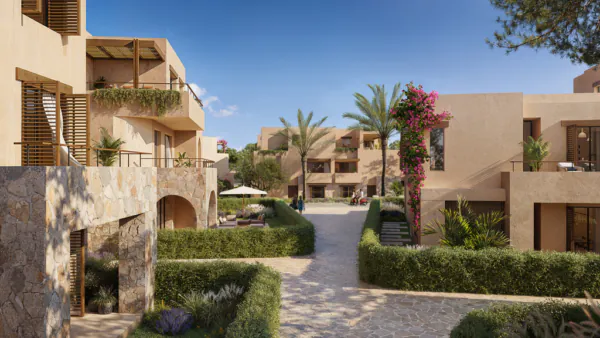
Not the same as Mediterranean architecture. The architecture is the shell — stucco exteriors, red tile roofs, and structural arches. Interior design is what happens inside that shell: the plaster finish, the palette, the furniture, and the light. If you are researching the building form rather than the décor, our guide to Mediterranean architecture covers the exterior style in depth.
Not the same as coastal. Coastal interiors lean cool, light, and nautical — crisp whites, pale blues, and breezy fabrics. Mediterranean interiors run warmer and more old-world, anchored by terracotta, aged wood, and hand-made ceramics. Both love natural light, but the Mediterranean look carries more earthy weight and craftsmanship.
The Mediterranean Color PaletteThe Mediterranean Color Palette
The Mediterranean color palette starts with warm neutrals — cream, sand, and soft white — then layers earthy and sea-drawn accents on top. The base keeps rooms bright and airy; the accents bring in the terracotta of the earth, the green of olive groves, and the blue of the water.
- Base neutrals: cream, sand, warm white, and pale limestone.
- Earth accents: terracotta, ochre, rust, and clay.
- Green accents: olive, sage, and muted eucalyptus.
- Sea accents: cobalt, azure, and Aegean blue used sparingly.
- Metals: aged brass, copper, and dark wrought iron for contrast.
Signature Materials and Textures in Mediterranean Interiors
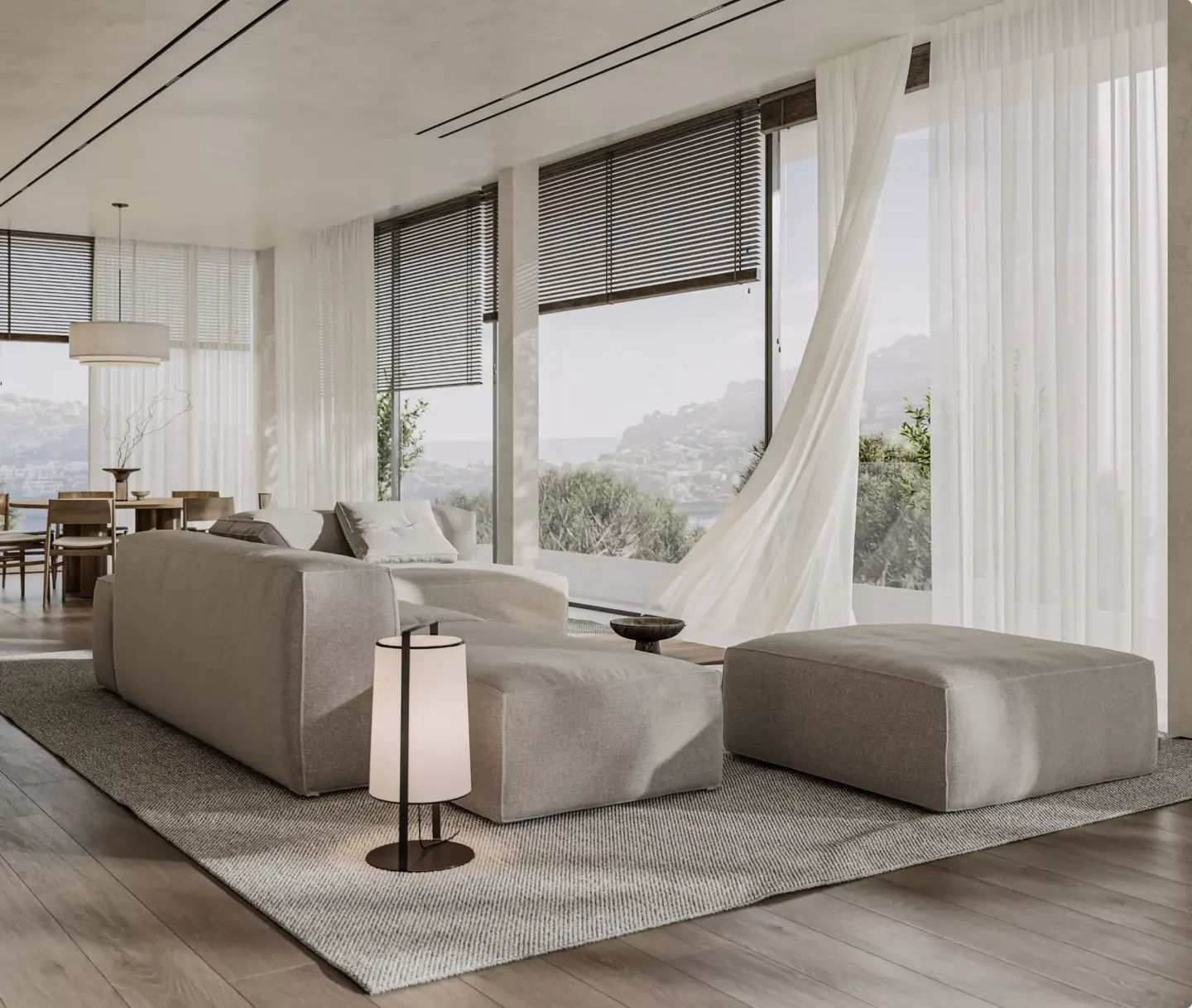
Materials do most of the work in a Mediterranean room. The style is defined by surfaces that are natural, tactile, and slightly imperfect — the opposite of flat, machine-smooth finishes. A handful of materials appear again and again.
- Terracotta tile — unglazed, warm-toned flooring with subtle color variation.
- Lime or Venetian plaster — hand-troweled walls that catch and soften light.
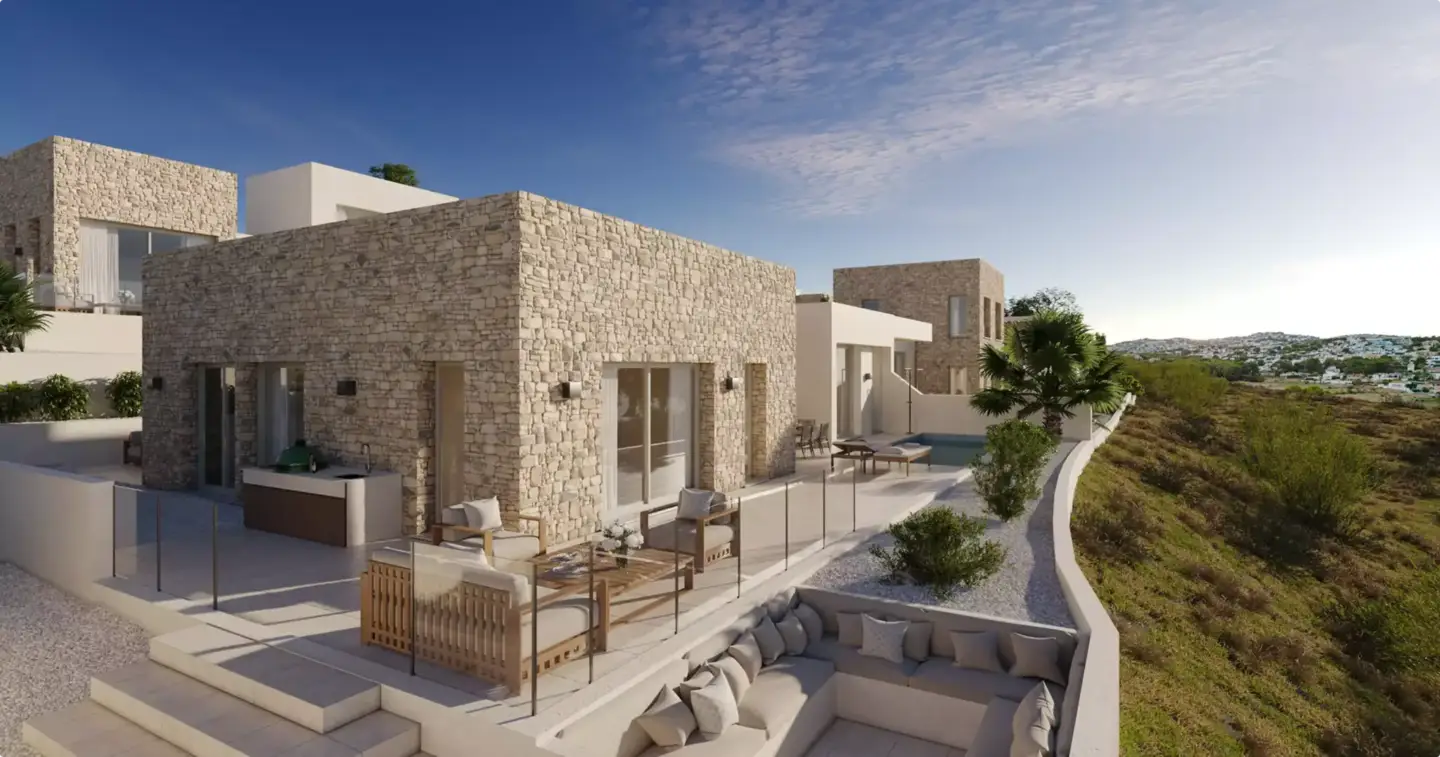
- Natural stone — limestone, travertine, and fieldstone for floors, fireplaces, and walls.
- Wrought iron — railings, light fixtures, and window grilles for dark, organic contrast.
- Aged wood — exposed beams and solid, distressed furniture.
- Ceramics and mosaic — hand-painted tiles, pottery, and Moroccan zellige.
In our studio, textured lime plaster and unglazed terracotta are the two materials that most often separate a convincing Mediterranean render from a flat one. Both rely on surface roughness and gentle color variation rather than a single repeating texture map — get that wrong and the room reads as plastic no matter how good the furniture is. We budget extra time on those two surfaces on every Mediterranean project.
Furniture and Décor for a Mediterranean Look
Mediterranean furniture is solid, low, and honest about its materials. Think distressed wood tables, woven rattan chairs, and upholstery in breathable linen and cotton. Décor stays handcrafted and collected-over-time rather than matched in sets.
- Solid, distressed wood furniture with visible grain.
- Wrought-iron beds, chandeliers, and console frames.
- Natural fabrics — linen, cotton, and jute in loose weaves.
- Handmade ceramics, terracotta pots, and glazed serving ware.
- Arched mirrors and simple framed art to echo the architecture.
- Olive branches, potted citrus, and greenery for a living, outdoor feel.
Mediterranean Interiors Room by Room
The core palette and materials stay consistent from room to room; what changes is how you apply them. Here is how the style translates into the four rooms people plan most often.
Living Room
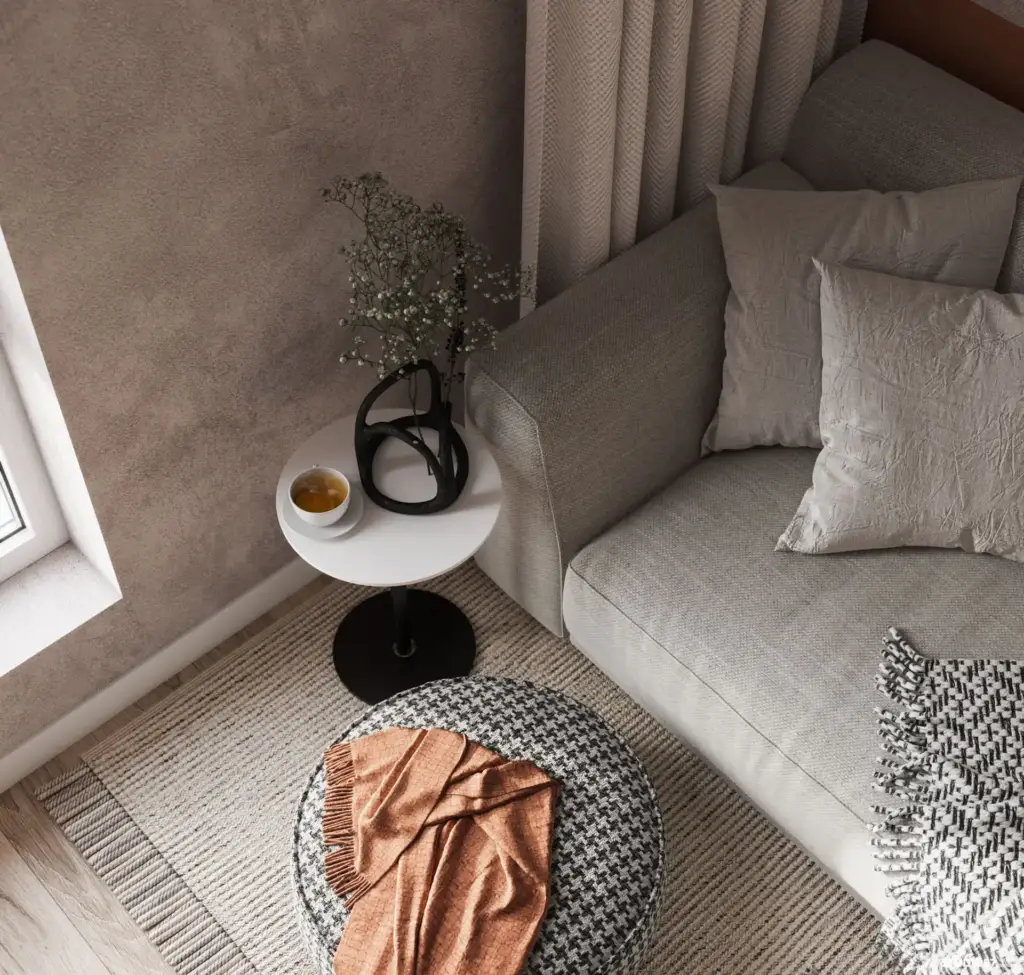
Keep the living room open and light. Anchor it with a plaster wall or stone fireplace, layer in a low wood coffee table and linen seating, and add warmth with a woven rug, ceramics, and greenery. Arched openings or a large window connecting to a terrace complete the indoor-outdoor feel.
Kitchen
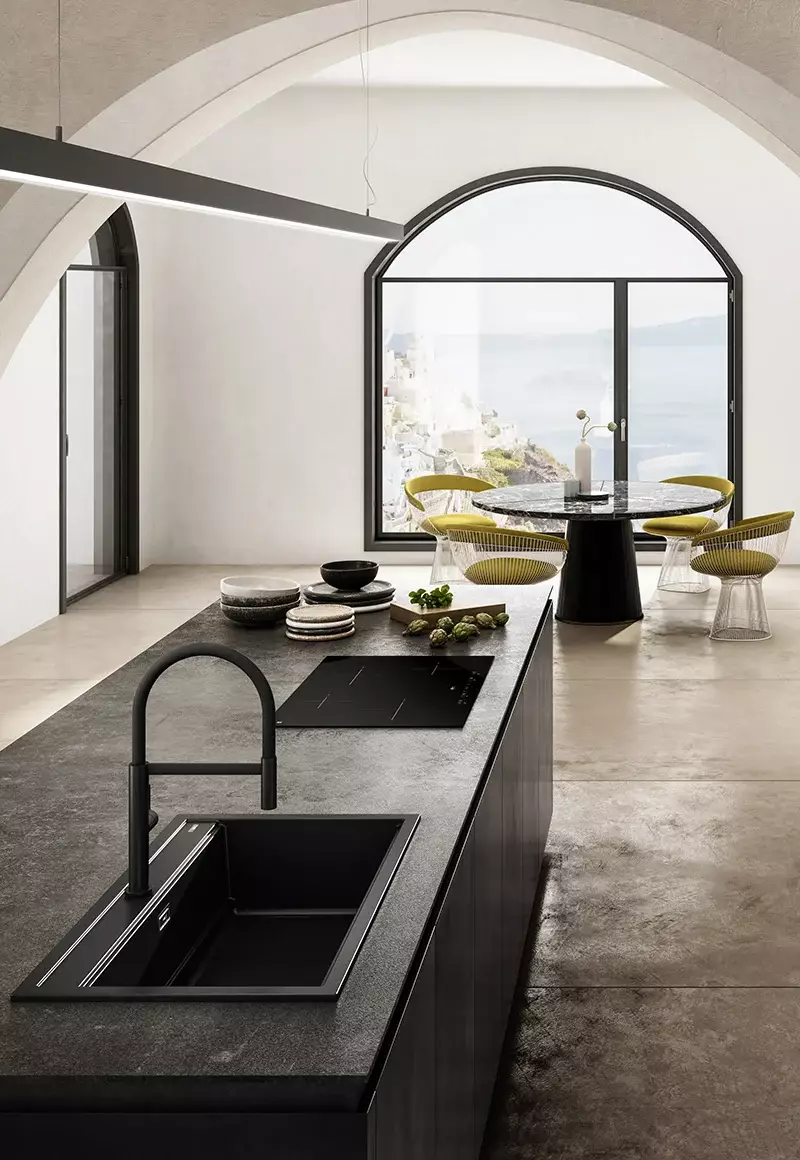
Mediterranean kitchens favor open shelving, hand-painted or zellige tile backsplashes, and warm wood or plaster cabinetry over glossy modern fronts. Terracotta or stone flooring grounds the space, and wrought-iron hardware and hanging copper pots add old-world character.
Bedroom
Bedrooms stay restful and uncluttered. A wrought-iron or carved-wood bed, crisp linen bedding, and lime-washed walls set the tone. Keep accents earthy — a terracotta lamp, a woven throw, and a single piece of ceramic art rather than a crowded gallery wall.
Bathroom
Bathrooms lean spa-like and natural. Travertine or stone surfaces, a plaster-finish wall, and mosaic or zellige tile create texture, while brass or aged-bronze fixtures add warmth. An arched niche or window keeps the light soft and the mood serene.
Modern vs Traditional Mediterranean InteriorsModern vs Traditional Mediterranean Interiors
Traditional Mediterranean interiors lean rustic and ornate — heavy carved wood, patterned tile, and warm, saturated color. Modern Mediterranean keeps the same materials but pares them back: cleaner lines, larger neutral fields, and fewer, more sculptural accents. The table below shows where they diverge.
| Element | Traditional Mediterranean | Modern Mediterranean |
| Palette | Warm, saturated, layered | Warm neutrals with restrained accents |
| Walls | Ornate tile, deep plaster tones | Smooth lime wash, larger blank fields |
| Furniture | Carved, heavy, dark wood | Low, simple, sculptural shapes |
| Detailing | Patterned, decorative, collected | Minimal, curated, fewer pieces |
| Overall feel | Rustic, old-world, cozy | Airy, calm, contemporary |
Spanish Mediterranean Interiors
Spanish Mediterranean is a regional variation with heavier Moorish influence — more intricate tilework (azulejos and zellige), wrought-iron detail, carved wood, and courtyard-centered layouts. It reads richer and more patterned than the pared-back Italian or Greek-island versions of the style, but the core palette and natural materials are the same.
Rendering a Mediterranean Interior: What Makes or Breaks ItRendering a Mediterranean Interior: What Makes or Breaks It
When a Mediterranean interior is visualized before construction, three things decide whether the render feels authentic: the quality of the natural light, the texture of the plaster, and the color variation in the terracotta and stone. Nail those and even a simple room reads as sun-drenched and real; miss them and the warmest palette still looks flat.
In our studio a detailed interior render runs around eight working hours, and on Mediterranean scenes a disproportionate share of that time goes into the plaster and terracotta surfaces and the daylight setup — the elements clients feel but rarely name. We bill interior work by the hour rather than by revision round, precisely because these material-heavy scenes need real iteration to land. If you are planning a Mediterranean space and want to see it before you build, our 3D interior rendering services turn plans and mood boards into photorealistic images.