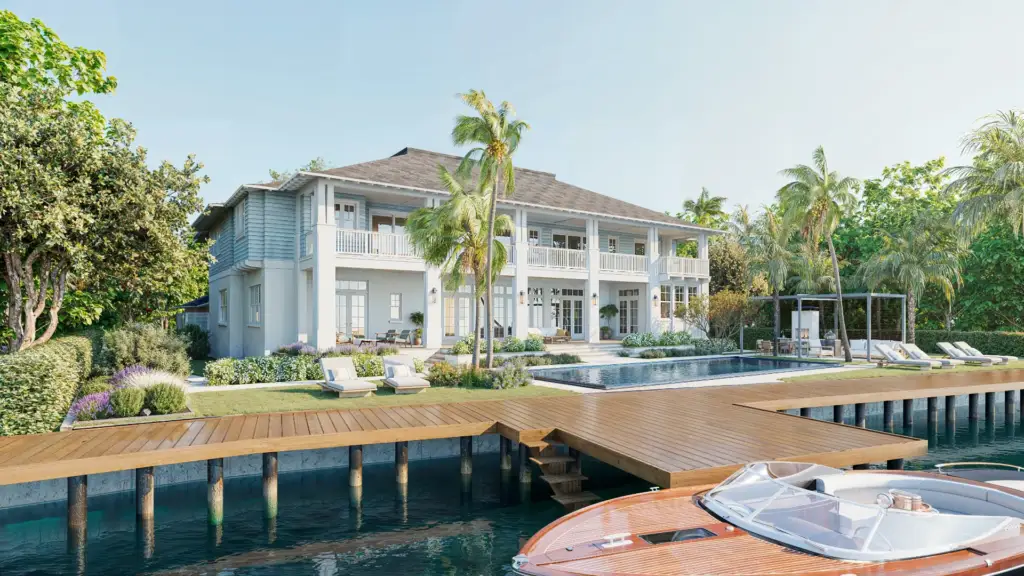
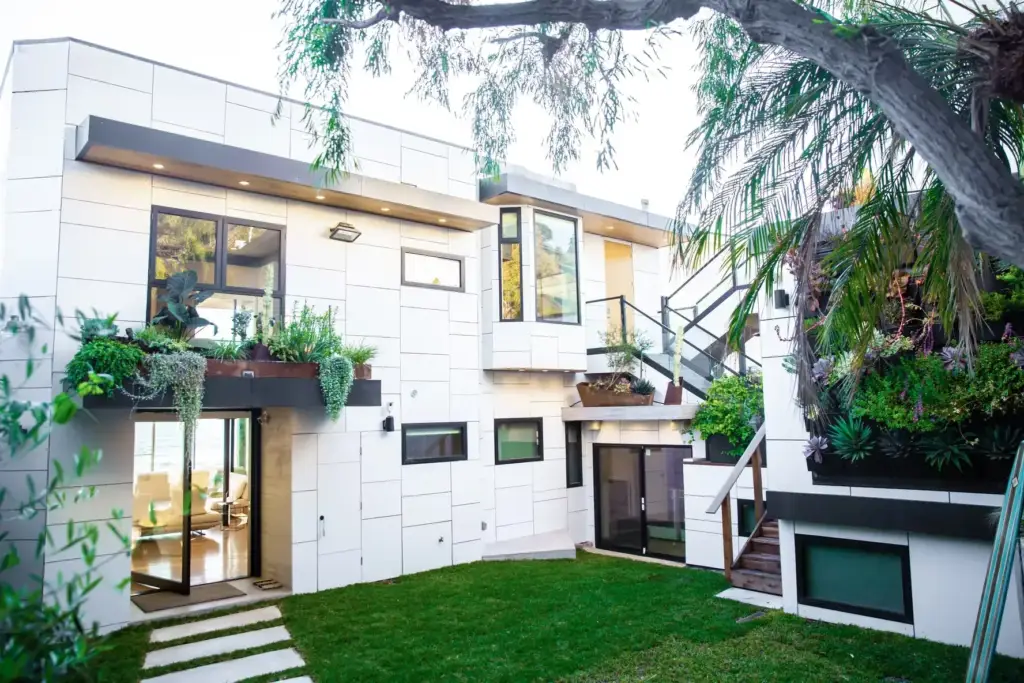
Few residential styles are as instantly recognizable as Mediterranean architecture: sun-washed stucco, terracotta roofs, and shaded courtyards that pull the outdoors in. This guide covers what defines the style, where it comes from, how traditional and modern versions differ, and the landmark buildings that made it famous.
What is Mediterranean architecture?What is Mediterranean architecture?
Mediterranean architecture is a residential style inspired by the coastal regions of Spain, Italy, and Greece. It is defined by low-pitched terracotta tile roofs, stucco walls in warm earth tones, rounded arches, wrought-iron detailing, and courtyards that blur the line between indoor and outdoor living.
The style draws on centuries of building traditions around the Mediterranean Sea, where thick masonry walls, shaded loggias, and small openings kept interiors cool in a hot, sunny climate. Those same climate-driven features were later adopted across the warm-weather United States, which is why the style remains one of the most enduring of all popular architectural styles in coastal and resort regions today.
Key characteristics of Mediterranean architectureKey characteristics of Mediterranean architecture
Most Mediterranean homes share a consistent set of features rooted in climate and craft. The hallmarks of the style include:
- Low-pitched terracotta roofs — barrel or clay tiles in red and earthy orange tones.
- Stucco exterior walls — smooth or textured plaster, usually in cream, ochre, or sand.
- Rounded arches and arcades — framing doorways, windows, and covered walkways.
- Courtyards and loggias — sheltered outdoor rooms that anchor daily life.
- Wrought-iron accents — railings, window grilles, light fixtures, and gates.
- Heavy timber elements — carved wooden doors and exposed ceiling beams.
- Warm, earthy palette — terracotta, ochre, and stone offset by deep greens and blues.
- Symmetrical façades — balanced proportions and ornamental focal points.
Mediterranean Revival: the American style explained
In the United States, Mediterranean architecture is most often called Mediterranean Revival. It is an eclectic style that flourished from the 1890s through the 1930s, borrowing freely from Spanish, Italian, and Moorish precedents and applying them as decorative layers on otherwise modern homes.
Mediterranean Revival took hold in warm resort regions — especially Florida and California — where architects like Addison Mizner shaped entire neighborhoods of stucco villas, red-tile roofs, and palm-lined courtyards. The style signaled leisure and luxury, and it still defines the character of cities such as Palm Beach, Coral Gables, and Santa Barbara.
Spanish, Italian, and Greek roots of Mediterranean designSpanish, Italian, and Greek roots of Mediterranean design
Mediterranean architecture is best understood as an umbrella that blends several regional traditions. Each contributes distinct features, which is why no two Mediterranean homes look exactly alike.
| Influence | Signature features | Where you see it |
| Spanish / Spanish Colonial | Red tile roofs, stucco, interior courtyards, ornate ironwork | Florida, California, the Southwest |
| Italian Renaissance | Symmetry, loggias, low-pitched roofs, formal gardens | Grand estates and civic buildings |
| Greek / Aegean | Whitewashed walls, blue accents, cubic forms, flat roofs | Coastal and island-inspired homes |
| Mediterranean Revival (US blend) | An ornamental mix of Spanish, Italian, and Moorish sources | Resort towns and luxury suburbs |
The Greek strand sits closest to the cool, whitewashed look of the Aegean islands, while the Spanish and Italian strands lean warmer and more ornamental. For a related American style with formal, column-driven roots, see our guide to Greek Revival architecture.
Traditional vs modern Mediterranean architectureTraditional vs modern Mediterranean architecture
Contemporary architects keep the spirit of the style — light, warmth, and indoor-outdoor flow — while stripping back the ornament. The table below shows how a modern Mediterranean home departs from the traditional version.
| Element | Traditional Mediterranean | Modern Mediterranean |
| Roofs | Terracotta barrel tile, low pitch | Low-profile tile or flat roofs |
| Walls | Textured, ornamented stucco | Smooth, minimal stucco |
| Windows | Small, arched, iron grilles | Large glazing, slim steel frames |
| Palette | Terracotta, ochre, cream | White and neutral with natural stone |
| Indoor-outdoor | Enclosed courtyards | Open plan with sliding glass walls |
Mediterranean interiors and outdoor living
Inside, Mediterranean homes carry the same warmth as their façades. Interiors favor natural materials and handcrafted texture over polish, and the boundary between rooms and gardens stays deliberately soft.
- Terracotta or natural-stone flooring, often laid in large formats.
- Lime-plaster walls and exposed wooden ceiling beams.
- Arched interior openings that echo the exterior arcades.
- Wrought-iron lighting, railings, and decorative hardware.
- Courtyards, loggias, and pergolas that act as open-air living rooms.
Outdoor space is treated as architecture, not landscaping: shaded patios, fountains, olive and cypress planting, and terraces that frame the view all carry equal design weight to the interior rooms.
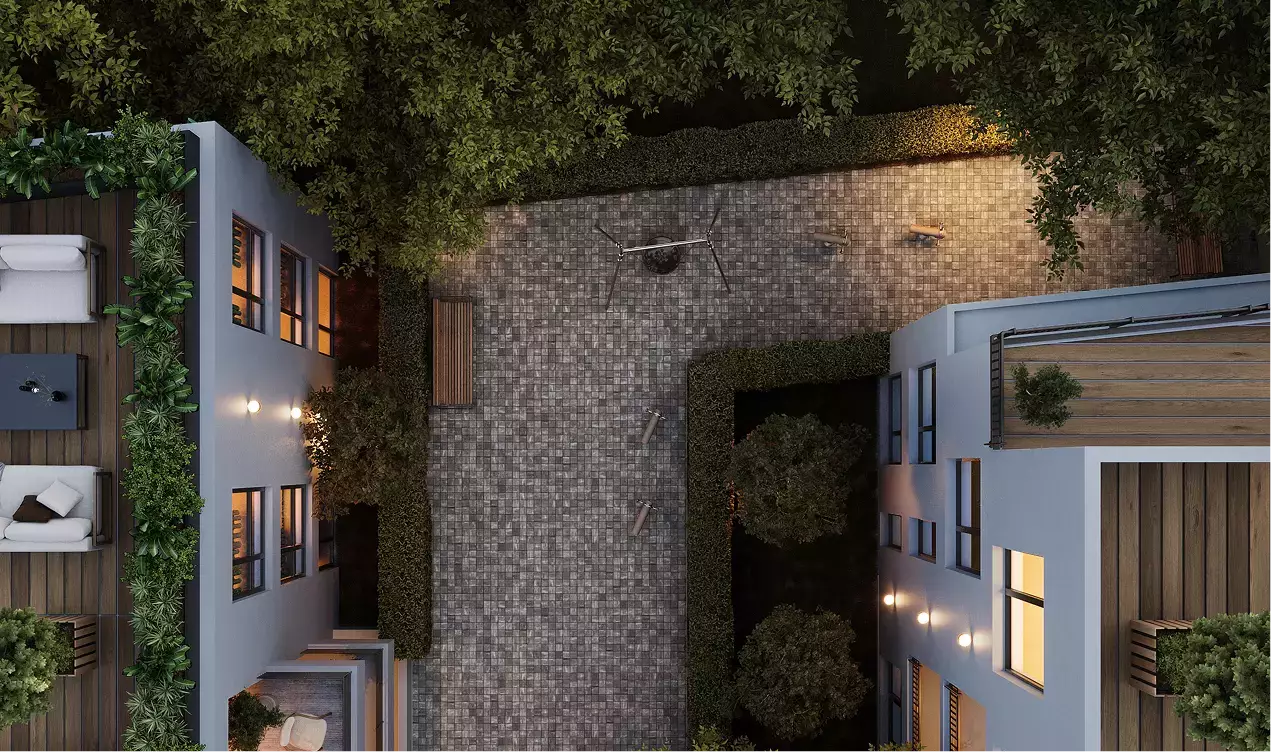
How we visualize Mediterranean homes in 3D
Mediterranean architecture is one of the more demanding styles to render convincingly, precisely because its appeal lives in texture and light. Hand-troweled stucco, weathered terracotta tile, aged ironwork, and the warm, low-angle sun of a coastal afternoon are exactly the details a flat or generic render flattens out.
In practice, that means modeling the irregularity into the surfaces — varied tile, soft stucco imperfections, and deep window reveals that cast real shadow — and lighting the scene for that golden Mediterranean glow rather than neutral studio light. The payoff is high: the same warmth that sells the style in person is what makes a render feel like a real home. We bring this to client projects through our 3D residential rendering services, and for façade-led marketing and approvals through 3D exterior rendering services.
Famous examples of Mediterranean architectureFamous examples of Mediterranean architecture
The style is best learned by looking at the landmarks that define it. A few of the most influential examples in the United States and beyond include:
- Hearst Castle (San Simeon, California) — a Mediterranean Revival estate blending Spanish and Italian elements.
- Vizcaya Museum and Gardens (Miami, Florida) — an Italian Renaissance-inspired villa and formal gardens.
- Worth Avenue (Palm Beach, Florida) — a stucco-and-tile shopping street anchored by Addison Mizner’s Everglades Club and Via Mizner.
- Coral Gables (Florida) — an entire city planned around the Mediterranean Revival aesthetic.
- Aegean village homes (Santorini, Greece) — the whitewashed, blue-domed Greek strand of the style.
Whether traditional or modern, these buildings share the same DNA — climate-smart design dressed in warmth and craft. For developers and architects bringing new Mediterranean projects to market, that character is best communicated early through architectural rendering services that capture the style before a single tile is laid.

Turn Ideas Into Visual Stories
Free field guide
How to Brief a Style So You Get It Back
Why naming a style transmits almost nothing, the seven measurable variables that actually carry one, and a one-page brief you fill in for any style at all.
If it didn't open, download it here.
Download the PDF