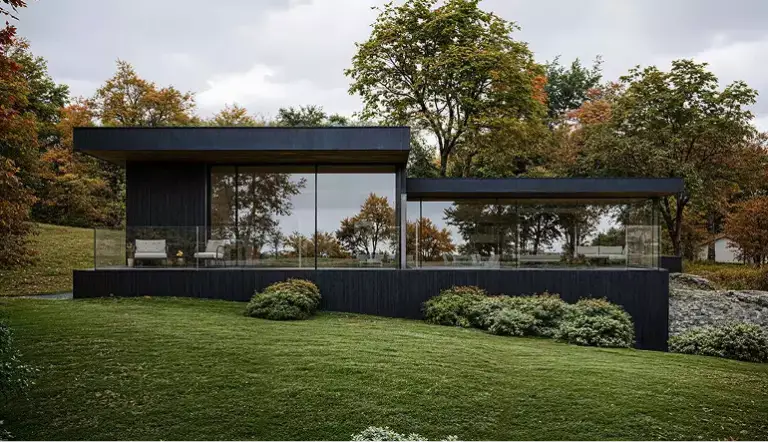
To start a construction company, choose one trade and market, write a plan with real numbers, form an LLC, get your state contractor license, buy insurance, set up bonding and working capital, then bid small jobs you can finish well. Renderings of the proposed result help you win bids before a portfolio exists.
- Choose a niche: Pick one trade, one type of client and one service area that you can cover well.
- Write the business plan: Model overhead, margins, cash flow and bonding needs before you spend money on anything else.
- Form the business: Register an LLC or corporation, get an EIN and open a separate business bank account.
- Get licensed: Meet your state's experience, exam and bond rules before you advertise or submit a bid.
- Insure the company: Buy general liability, workers' compensation and commercial auto cover before the first crew starts.
- Build bonding capacity: Open a file with a surety agent so bid and performance bonds are ready when a job asks for them.
- Fund working capital: Arrange cash or credit to pay crews and suppliers until the first progress payments arrive.
- Prepare bid visuals: Order renderings of the finished project so the owner can see what you plan to build.
- Bid small and finish well: Win modest jobs, document every one, and turn them into your first portfolio.
Most guides list the same steps. The order matters more than the list. Each early decision limits the next one: your trade decides your license class, your license and balance sheet decide your bonding, and your bonding decides which jobs you can bid. This guide follows that order and ends with the part most new contractors skip: how to show a client a finished project you have not built yet.
How Much It Costs to Start a Construction Company
The fixed costs of starting a small construction company are mostly paperwork, insurance and bonds. The larger number is working capital: the cash you need to pay crews and suppliers before the client pays you. The table shows typical costs, not quotes. Insurance figures come from Insureon's 2026 data for its general contractor customers, who are mostly firms with fewer than five employees.
| Cost item | Typical cost | Source |
|---|---|---|
| General liability insurance | About $1,950 a year ($162 a month) | Insureon |
| Workers' compensation | About $2,348 a year | Insureon |
| Commercial auto | About $3,444 a year | Insureon |
| Builder's risk | About $1,635 a year | Insureon |
| Tools and equipment cover (inland marine) | About $505 a year | Insureon |
| Surety bond premiums (license-type bonds) | About $126 a year | Insureon |
| Contract bonds (bid, performance, payment) | 0.5% to 3% of the contract amount | Surety Information Office |
| LLC annual tax, California example | $800 a year | California Franchise Tax Board |
Your own rates will depend on your trade, state, payroll and claims history, so get quotes for your company before you set prices. Leave room in the budget for estimating software, a vehicle, safety gear and the visuals you will use in bids. Those visuals are covered in their own section below, with prices.
Construction Company Licensing: State Rules Come First
Licensing is the first hard gate. Rules differ widely from state to state, and some cities add their own registration on top. Check the rules for every place you plan to work before you form the company, because the license class often decides which jobs you may legally bid.
California shows how strict a state can be. According to the Contractors State License Board (CSLB), the qualifying person must have at least four years of journey-level experience in the classification within the past ten years, pass a law exam and a trade exam, and show proof of workers' compensation or liability insurance. Every applicant must also post a $25,000 license bond or cashier's check with the CSLB.
Small jobs are not a loophole either. Since January 1, 2025, California allows unlicensed work only up to $1,000, and only when the person hires no workers and the job needs no building permit. Any job that needs a permit or a crew needs a license, whatever its size.
Qualifier, entity and license class
In many states the license sits with a qualifying person, not only with the company. If you lack the years of experience yourself, a licensed qualifier can hold that role, but then the company depends on that person staying. Pick the license class that matches the work you will actually sell. A general building license and a specialty trade license open different bids.
Construction Company Bonding: Bid, Performance and Payment Bonds
Bonds are where many new contractors get stuck. A bond is a promise from a surety company to the project owner that you will do what you signed. The U.S. Small Business Administration describes the main types this way:
- Bid bond: shows that the bidder can get full payment and performance bonding if it wins.
- Performance bond: covers completion of the contract.
- Payment bond: covers payment to suppliers and subcontractors.
Public work is where bonds become mandatory. Under the federal Miller Act, as set out in FAR 28.102-1, any federal construction contract above $150,000 requires performance and payment bonds, and many states apply similar rules to state and local public work. Private owners and lenders often ask for bonds on larger jobs too.
Premiums are a share of the contract value. The Surety Information Office, backed by the Surety and Fidelity Association of America, puts them between one-half of one percent and three percent of the contract amount. The rate depends on the surety, the project and, above all, your own record and finances.
A new company has a thin record, so the SBA runs a Surety Bond Guarantee program for small contractors. It covers contracts up to $9 million for non-federal work and up to $14 million for federal work. The guarantee fee is 0.6% of the contract price for performance and payment bonds, and bid bond guarantees carry no fee. Talk to a surety agent before your first bid is due, not the week it is due.
Construction Company Insurance You Need Before the First Job
Owners and general contractors will ask for a certificate of insurance before you set foot on site. Most will also ask to be named as an additional insured on your general liability policy. Without that paperwork, a strong bid still loses.
- General liability: covers injury to third parties and damage to their property.
- Workers' compensation: covers your employees if they are hurt at work, and most states require it once you hire.
- Commercial auto: covers the trucks and vans the business owns or uses.
- Builder's risk: covers the structure while it is being built.
- Inland marine: covers tools and equipment that move between job sites.
Buy cover that matches the contracts you will sign, not the cheapest policy you can find. Read the insurance clauses in your first contracts and send them to your broker before you sign.
Construction Company Capital: Funding the Gap Between Invoice and Payment
Many construction companies get into trouble not for lack of work, but because cash leaves before it comes back. You buy materials and pay crews every week, while the client pays on a draw schedule, often with retainage held back until the end. That gap is your working capital need, and it grows with every job you add.
Common ways to fund it are owner savings, a business line of credit, equipment financing and supplier credit. The SBA microloan program lends up to $50,000, and the average microloan is about $13,000, which suits tools, a vehicle or a first payroll cushion. Rent heavy equipment until you have steady work for it.
Capital also sets your ceiling. Sureties read your balance sheet before they decide how much bonded work you can carry, so money left in the company is not idle. It is what lets you bid the next, larger job.
Winning the First Bids as a New Construction Company
Your first bids will likely come from three places: subcontract work for established general contractors, small private jobs from owners, and public bid boards for modest projects. Each one asks for slightly different proof, but all of them ask the same question: can this company deliver what it is promising?
What a first construction bid package includes
- A clear scope, with exclusions written out.
- A take-off and estimate that ties every line to the drawings.
- A schedule with key dates and long-lead items.
- Your license number, certificate of insurance and bond, if required.
- References and past work from your team, even from previous employers.
- A picture of the finished result, so the owner sees what the price buys.

Experienced firms answer the delivery question with a portfolio. A new company cannot. It can, however, show that it has read the drawings closely enough to picture the result, and that is where visuals come in.
Construction Company Visuals: Win Bids Before You Have a Portfolio
A rendering of the proposed project does two jobs in a bid. It proves you understood the scope, and it gives the owner something to remember when ten price sheets look alike. For design-build work it also lets the owner approve the look before you price the final details, which cuts change orders later.
In our studio, one case page states the point plainly in its title: desert hotel renderings that secured a winning construction tender.

The most useful visuals before a first bid are an exterior still of the finished building, one or two interior stills of the key spaces, a 3D floor plan, and for larger jobs a short walkthrough or a construction sequence animation that shows phasing. The ranges below are typical ranges, not quotes, from our studio's own review of the market.
| Visual | Freelancer range | Studio range |
|---|---|---|
| Exterior still | $100 to $300 | $250 to $600 |
| Interior still | $120 to $350 | $300 to $700 |
| Package of 5 to 8 views | $600 to $1,500 | $1,500 to $4,000 |
| Animation, per minute | $1,000 to $3,000 | $3,000 to $8,000 |
Our own architecture rate is $39 an hour. A still usually starts at about 8 hours, roughly $300, and animation starts from $2,200 per finished minute. The full breakdown is in our guide to 3D rendering pricing. We give a price within one business day of the brief.
Time matters as much as price, because bid deadlines do not move. A draft still takes 3 to 5 business days from a full brief, a package of 5 to 8 views takes 2 to 3 weeks, and an animation up to one minute takes 4 to 6 weeks. Order visuals as soon as the drawings are fixed enough to price.
You do not need a finished 3D model. We can work from drawings, CAD files or the client's own Revit file, and our rendering from a Revit model also covers construction sequence animation. For offices, retail, hotels and other commercial bids, our commercial rendering team handles the full set. We make the visuals only: we do not do construction or renovation work.

How a New Construction Company Pre-Sells Projects With Renderings
Some new contractors build on their own account: a spec home, a pair of townhouses, a small infill project. Here renderings do more than win a bid. They let you sell before you build, which brings cash in while the foundations are still going in.
The order of work is simple. Fix the design and the permit drawings first, then order visuals for the listing, the site hoarding and the sales brochure. Buyers reserve from the pictures, and deposits ease the cash gap described above. Our page on 3D rendering for home builders shows the kind of exterior, interior and floor plan set a builder needs, and one of our cases covers pre-construction renderings for a for-sale listing.

Keep the renders honest. Show the finishes, windows and landscaping you will actually deliver, and tie them to the contract specification. A buyer who gets less than the picture becomes a dispute, not a reference. If you plan to buy land and lead projects yourself, the path is closer to becoming a real estate developer, with its own funding and approval steps.
Construction Company Business Plan: What to Model Before You Bid
A construction business plan is not a document for a drawer. Lenders and sureties will read it, and you will use it to decide which bids to chase. It should contain these sections:
- Market and niche: your trade, client type, service area and the competitors who already work there.
- Services and exclusions: what you build, what you subcontract and what you will not take on.
- Licensing, insurance and bonding: license class, qualifier, policies and the bonding limit you expect.
- Team: owners, the qualifier, site supervision and key subcontractors.
- Sales plan: where bids come from, how many you will submit each month, and the visuals budget per bid.
- Operations: estimating method, scheduling, safety and quality checks.
The numbers to model are what make the plan useful:
- Monthly overhead, including insurance, vehicles, software and your own salary.
- Gross margin per job and the markup you need to cover overhead.
- Break-even revenue per month.
- Cash gap per job: costs paid out before each draw, plus retainage held back.
- Bid-to-win ratio, and the cost of each bid, including estimating time and visuals.
- Bonding capacity you need for the jobs you want next year.
Run the plan again after your first three jobs. Real margins and real payment times will replace your guesses, and the next version will be the one a lender takes seriously.
Turn Ideas Into Visual Stories