To start a clothing brand, pick a narrow niche, design a small first collection, turn it into tech packs and 3D garment visuals, test demand with those images, then order samples and production only for the styles that sell. Budgets run from about $500 with print on demand to $20,000 or more for stocked inventory.
- Pick a niche: Name one customer, one use case and one price point before you design anything.
- Plan a capsule: Limit the first collection to a few styles that work together.
- Set the budget: Choose print on demand, small batch or full production and price each line item.
- Design and spec: Turn sketches into tech packs with measurements, fabrics and trims.
- Build 3D garments: Create product visuals from the 3D files before any sample is sewn.
- Test demand: Use the images for a waitlist, pre-orders or a small paid ads test.
- Sample the winners: Order physical samples only for the styles people actually wanted.
- Produce at MOQ: Agree minimum order quantities per style and colorway with your factory.
- Launch the store: Register the business, file the trademark, open the shop and start selling.
Clothing Brand Startup Costs: Typical Ranges
Starting a clothing brand costs anywhere from a few hundred dollars to tens of thousands. Vistaprint puts the overall range at $500 to $10,000, while Printful estimates $20,000 to $50,000 or more for a traditional clothing company that holds its own stock. The gap comes from one decision: whether you buy inventory before you sell.
| Business model | Typical startup budget | Where the money goes first |
|---|---|---|
| Small print-on-demand brand | $500–$1,000 | Store, designs, marketing tests |
| Mid-size fashion brand | $1,500–$5,000 | Samples, small runs, branding |
| Traditional clothing company | $20,000–$50,000+ | Inventory, warehousing, sales channel |
Line by line, these are the costs most founders meet in the first year. Treat them as typical ranges, not quotes, and check them against your own suppliers.
| Cost item | Typical range | Source |
|---|---|---|
| Tech pack | $50–$500 per design | Lightspeed |
| Prototype or sample | $100–$500 per sample | Lightspeed |
| Small-batch production (50–100 units) | $20–$50 per unit | Lightspeed |
| Mass production (from about 1,000 units) | $5–$15 per unit | Lightspeed |
| Logo design | $300–$2,500 | Lightspeed |
| Model photography for apparel | $150–$400 per image | Squareshot |
| Ecommerce site setup | $500–$5,000 | Vistaprint |
| Shopify Basic plan | $29–$39 per month | Shopify pricing page |
| U.S. trademark application | $350 per class | USPTO fee schedule |
| Initial inventory, traditional model | $20,000–$50,000 | Printful |
A worked example shows where the money really goes. Six styles sampled twice at $100 to $500 per sample cost $1,200 to $6,000 before a single sale. Making 100 units of each style at small-batch prices of $20 to $50 adds $12,000 to $30,000. Visuals and testing are the cheap part of that budget, which is why they belong at the front of the plan, not at the end.
How to Start a Clothing Line in the Right Order
Most guides list the same steps: niche, designs, manufacturer, store, marketing. The steps are right, but the usual order is expensive. Many new brands order samples, wait weeks, pay for a photoshoot of samples that may still change, and only then learn which styles people want. A cheaper order puts proof of demand before the money that cannot come back.
- Cheap and easy to change: niche, collection plan, sketches, tech packs, 3D garments and the images made from them.
- More expensive, still small: sample rounds for the two or three styles that tested best.
- Money that is locked in: production runs at the factory minimum, inventory and storage.
Each section below follows that order, from the idea to the launch day.
Choosing a Niche and First Collection for Your Clothing Brand
A clothing brand needs a reason to exist that fits in one sentence: who wears it, when, and why they would pay your price. "Streetwear for everyone" is not a niche. "Heavyweight hoodies for cold-weather cyclists at $90" is. A narrow brief makes every later decision easier, from fabric to photography.
Keep the first collection small. A capsule of a few styles that share fabrics, trims and colors lowers sample and minimum-order costs and gives you a clear story for the launch. Check demand early: search your product terms, read reviews of competing brands, and ask people in your niche what they cannot find today.
Clothing Brand Pricing Before Design
Set the retail price before design, not after. Work back from that price to the cost you can afford per unit, including fabric, labor, trims, labels, packaging, shipping and returns. If the numbers do not work at your planned volume, change the product, not the margin.
Clothing Brand Design: Sketches, Tech Packs and 3D Garments
Design turns the idea into files a factory can price. You start with sketches or flats, then build a tech pack for each style: measurements, size grading, fabric, trims, stitching, labels and colorways. Lightspeed lists tech packs at $50 to $500 per design, depending on detail and who prepares them.
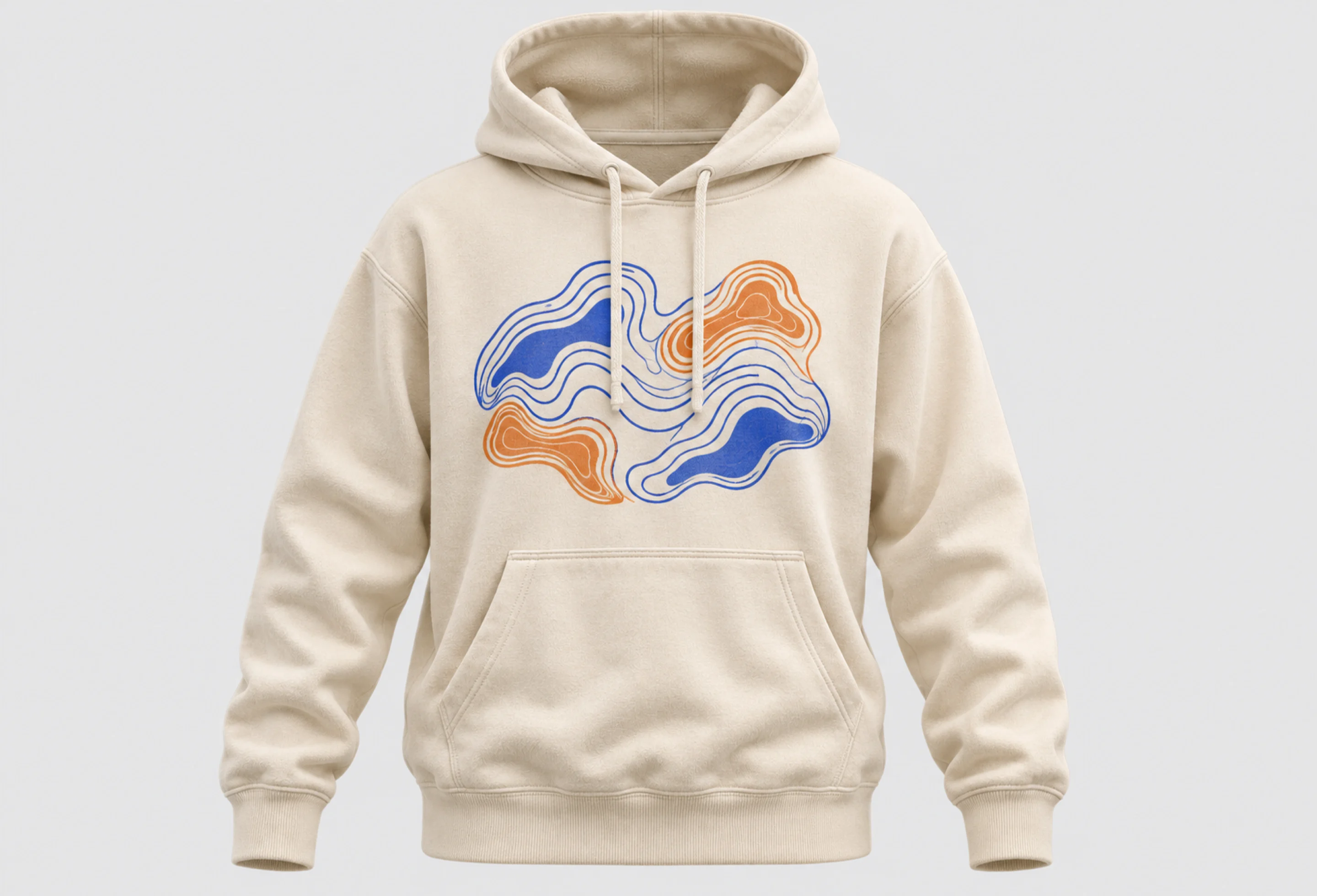
A 3D garment sits next to the tech pack. Garment tools such as CLO3D and Marvelous Designer build the pattern pieces digitally and drape them with fabric settings. In our studio, garments are cut and simulated in CLO3D or Marvelous Designer with the weight and stretch of the real fabric, on an invisible mannequin, so the folds behave like the real garment rather than a flat mock-up.
The 3D file does two jobs. It lets you check proportion, color and print placement on screen before a sample is sewn, and it becomes the source for every product image you will need. Patterns, grading and the final tech pack still sit with your pattern maker and factory.
Clothing Brand Manufacturing: Samples, MOQs and Print on Demand
Manufacturing is where a clothing brand spends most of its money, so choose the model first. Each one changes your budget, your risk and how much control you have over fabric and fit.
- Print on demand. A partner prints each item after it sells. Printful lists $0 upfront inventory, manufacturing at about $10 to $25 per unit and profit margins of 30 to 50% per product. It is the fastest way to test graphics, but fabric and cut options are limited.
- Small batch. Lightspeed puts runs of 50 to 100 units at $20 to $50 per unit. You get your own fabric and fit, but each unit costs more.
- Full production. From about 1,000 units, the Lightspeed range drops to $5 to $15 per unit, but you now carry inventory and storage.
Every factory sets a minimum order quantity. Maker's Row gives common ranges of 50 to 500 units per style and 25 to 200 units per colorway, and notes that most manufacturers apply the minimum per colorway, not only per style. Two extra colors can double or triple a first order, so test colors in images before you commit to them in fabric.
Samples cost $100 to $500 each, according to Lightspeed, and most styles need more than one round. Ask the factory what can change between the first sample and the production sample, and how long each round takes.
Product Visuals a Clothing Brand Needs Before Samples and Inventory
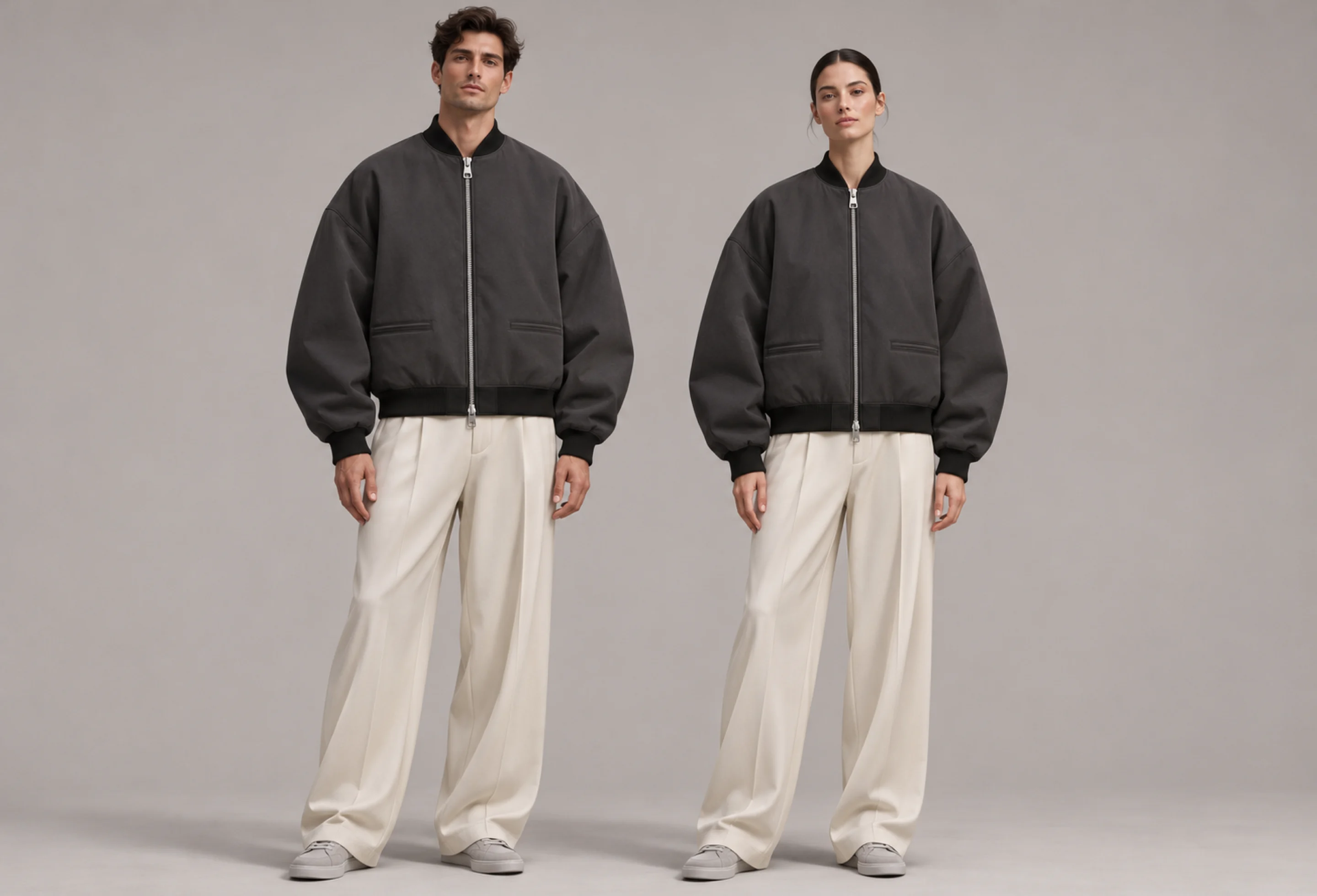
A new clothing brand sells from images long before customers touch the fabric. You need visuals for the store, the waitlist, ads, wholesale line sheets and social media. Built from the 3D garment, they can exist before the first sample ships.
- Ghost-mannequin store images: front, back and detail views on a clean background for each style.
- Lookbook and on-model images: the collection worn in a setting, for the launch page and press kit.
- Colorway sets: the same style in every planned color, so you can test which colors to produce.
- 360° spins and short animations: motion for product pages and ads.
Prices vary widely. Squareshot puts model photography for apparel at $150 to $400 per image, and that needs a finished sample, a model, styling and a location. A 3D route works differently: you pay for the garment model once, then each new view or color costs rendering time. Our product rate is $45/hour. As a guide, a white-background or studio still takes about 4 hours and a lifestyle still about 6 hours, so roughly $180 to $270 of rendering time per still once the model is built. The garment model itself is quoted by complexity, and animation is billed at the same $45 hourly rate. Our guide to 3D rendering prices explains how studios quote stills and animation.
Timelines belong in the plan too. As a rough guide, a draft still takes 3 to 5 business days from a full brief, a set of 5 to 8 views takes 2 to 3 weeks, and an animation up to a minute takes 4 to 6 weeks. Our product rendering team handles ghost-mannequin, colorway and lifestyle stills.
For on-model scenes, a mix of CGI and AI keeps the garment exact. The garment is a 3D model built from your artwork and specifications, the print is applied to the 3D fabric along with its folds, and AI is used only for the location, light and atmosphere. You can see this kind of work on our fashion CGI page for apparel, bag and accessory brands and in the AI model visualization case.
For 360° spins, the scene can be built once as a template. The print sits on its own texture layer, so your team can swap in a new design and render it with the step-by-step guide that comes with the scene. That suits brands that drop new graphics often, and our 3D product animation team builds these spins.
Pre-Selling a Clothing Line With 3D Images
Once the images exist, use them to collect proof before you pay for production. A waitlist page with the full collection, a pre-order with a clear ship date, or a small paid ads test with two colorways will show which styles people click, save and buy.
- Compare click and sign-up rates per style, not just total sign-ups.
- Show every planned colorway and watch which ones people choose.
- Ask sign-ups one short question: which size, which color, what price feels fair.
- Be clear in pre-order copy about ship dates and that the images show the planned product.
Then cut the line. Sample and produce the styles that earned it, drop the rest, and keep the 3D files: a dropped style can come back next season without a new shoot. The same images work on product pages after launch, and our page on 3D rendering for e-commerce shows the formats online stores use.
Clothing Line Business Plan: What to Model Before You Order Stock
A clothing line business plan does not need to be long, but it does need numbers that a lender, investor or partner can test. For this kind of business, cover these sections:
- Brand and customer: the niche, the customer, the price point and three competitors with their prices.
- Collection plan: styles, colorways, sizes and the launch calendar for the first two seasons.
- Unit economics: cost per unit by style, including fabric, labor, trims, packaging, shipping and duties, against wholesale and retail prices.
- Production plan: factory, minimum order per style and colorway, sample rounds and lead times.
- Cash flow: when you pay deposits, when stock lands and when money from sales arrives.
- Sales channels: your own store, marketplaces, wholesale and pop-ups, with the share of sales you expect from each.
- Marketing and visuals: launch images, lookbook, ads budget and the pre-sale test that decides what gets made.
Model three cases: selling 40%, 70% and 100% of the first run at full price. The low case shows how much cash you need if styles do not sell and how much discounting you can survive. Add a return rate for fit problems, and keep the pre-sale results in the plan as evidence for your order sizes.
Launching the Clothing Brand: Store, Legal and Marketing
Registration comes before the first sale. Lightspeed puts LLC registration at $50 to $500, depending on the state. Check the name before you print labels: the USPTO base application fee is $350 per class for electronic filings, and a trademark attorney can tell you which classes your products need.
For the store, Shopify's Basic plan costs $39 a month billed monthly or $29 a month billed yearly, and setting up an ecommerce site runs $500 to $5,000 or more, according to Vistaprint. Settle the logo, labels and packaging before the visuals, so every image carries the same look. Lightspeed puts logo design at $300 to $2,500.
Plan the launch as a sequence: teaser images to the waitlist, the full lookbook on launch day, then ads with the styles and colors that won the pre-sale test. A short film made from the same 3D models can run on social media and on product pages, and our launch video production team can build it before stock arrives.
The order is the point. Images, tests and tech packs are cheap and easy to change. Samples are slower, and inventory is the money that is hardest to get back. Put proof of demand between the two, and a first collection can launch with fewer styles, fewer leftover units and a clearer story.
Turn Ideas Into Visual Stories