To open a restaurant, you pick a concept and menu, write a business plan, raise the money, test the floor plan before you sign a lease, get licenses, build out, hire and soft-open. In one survey of independent owners, the median startup cost was about $375,000, so plan your funding around that scale.
- Define the concept: Choose the cuisine, service style, price point and guest you are building for.
- Build the menu and costs: Price every dish so food and drink cost stays near 30% of its menu price.
- Write the business plan: Model covers, average check, prime cost and break-even before you talk to lenders.
- Secure funding: Raise the build-out budget plus a cash reserve of at least six months.
- Test the space before the lease: Lay out the kitchen, bar and seats in 3D and check the seat count works.
- Sign the lease and apply for permits: Start licenses, health permits and any liquor license as soon as the site is fixed.
- Build out and equip: Renovate, install the kitchen and buy furniture against the approved plan.
- Prepare launch visuals: Get renders and a short video ready for your website, social pages and booking platforms.
- Hire and train: Recruit the team, train on the menu and run test services.
- Soft-open, then launch: Open to a small invited crowd, fix what breaks and then open to the public.
How Much Does It Cost to Open a Restaurant?
Most independent restaurants cost a few hundred thousand dollars to open. According to a 2018 RestaurantOwner.com survey of more than 350 independent owners and operators, the median startup cost was $375,000. That works out to about $3,586 per seat and $113 per square foot, and because the survey is several years old, it is best treated as a starting point for budgeting rather than a substitute for current local quotes.
WebstaurantStore's restaurant cost guide gives a wider total range of $180,000 to $800,000. It reports an average of about $275,000 for a leased space and about $425,000 when the owner also buys the land. The gap between those two figures reflects the first major decision: leasing keeps the opening budget lower, while purchasing property ties up capital before you serve a single plate.
What moves the number most is the existing condition of the space, since a former restaurant with a working hood, grease trap and walk-in cooler can cost far less than a raw shell or a retail unit that has never had a kitchen. Seat count matters too, because every additional seat requires kitchen capacity, staff and furniture behind it.
Restaurant Startup Costs by Category
Here is where the money usually goes. These are typical ranges, not quotes, according to WebstaurantStore's restaurant cost guide, and your own numbers will depend on the city, the size of the room and how much work the building needs.
| Cost item | Typical range |
|---|---|
| Construction or renovation | $140,000 to $350,000 |
| Kitchen equipment | $75,000 to $115,000 |
| Furniture and tableware | $20,000 to $80,000 |
| ADA accessibility work | $10,000 to $30,000 |
| POS system | $12,500 to $20,000 |
| Opening food and beverage inventory | $5,000 to $25,000 |
| Opening marketing | $6,000 to $30,000 |
| Insurance | $1,000 to $10,000 per year |
| Liquor license | $300 to $400,000, depending on the state |
| Business, health and foodservice licenses | About $50 to $1,000 each |
Two lines in this table cause most budget overruns: renovation and the liquor license. Renovation costs grow whenever the plan changes after the contractor has started, and a liquor license can be cheap or very expensive, depending on whether your state limits the number of licenses available. Check both before you commit to a site. The same guide also advises keeping enough cash to cover at least six months of slow trading, and that reserve belongs in your budget from day one.
Restaurant Opening Checklist in the Right Order
Most step lists are correct, but the order is where owners lose money. A good restaurant opening checklist makes each decision before the next one becomes expensive to change, and the sequence below is the one that protects your budget.
- Concept before location. The concept determines how many seats, how large a kitchen and what kind of neighborhood you need; without it, every property listing looks possible.
- Menu before kitchen. Your menu determines the equipment list, because a pizza oven, a charcoal grill or a raw bar each requires its own space, power supply and ventilation.
- Layout before lease. Fit the kitchen, bar, restrooms and seating into the actual floor plan before you sign, since a space that only seats 40 when your financial plan needs 60 is a bad deal at any rent.
- Approved design before build-out. Every modification after construction begins costs considerably more than the same change made on screen.
- Visuals before opening day. Your website, delivery listings and social media pages need images weeks before the first guest arrives, when there is still nothing to photograph.
If you are comparing formats, the checklist for a café is shorter. Our guide on opening a coffee shop covers that smaller, counter-service version of the same process.
Restaurant Concept and Menu Decisions
Your concept is a short set of answers: what you serve, how you serve it, what it costs and who it is for. Fast casual, full service, a bar with food and a fine dining room all need different spaces, staff counts and budgets, so write the concept in one paragraph and test every later decision against it.
Then build the menu and cost it. A common rule of thumb is the 30/30/30 rule. As ChefStore describes it, about 30% of revenue goes to food and drink, 30% to labor, 30% to overhead such as rent and utilities, and the last 10% is profit. Toast suggests a slightly different check called prime cost, which is food and drink cost plus labor. It calls 60% of sales or lower a good benchmark, and notes that full-service restaurants often run near 65%.
Use these percentages while the menu is still on paper: if a signature dish only works at a 45% food cost, change the recipe, the portion or the price immediately, not after you have printed menus and trained the kitchen.
Restaurant Location and Lease Checks
The lease is usually the largest long-term promise you make. Before you sign, check four things: foot traffic at the hours you plan to open, parking or transit access, the zoning for food service, and what the building already has. A working hood, grease trap, gas line and enough electrical capacity can save a large part of the renovation budget.
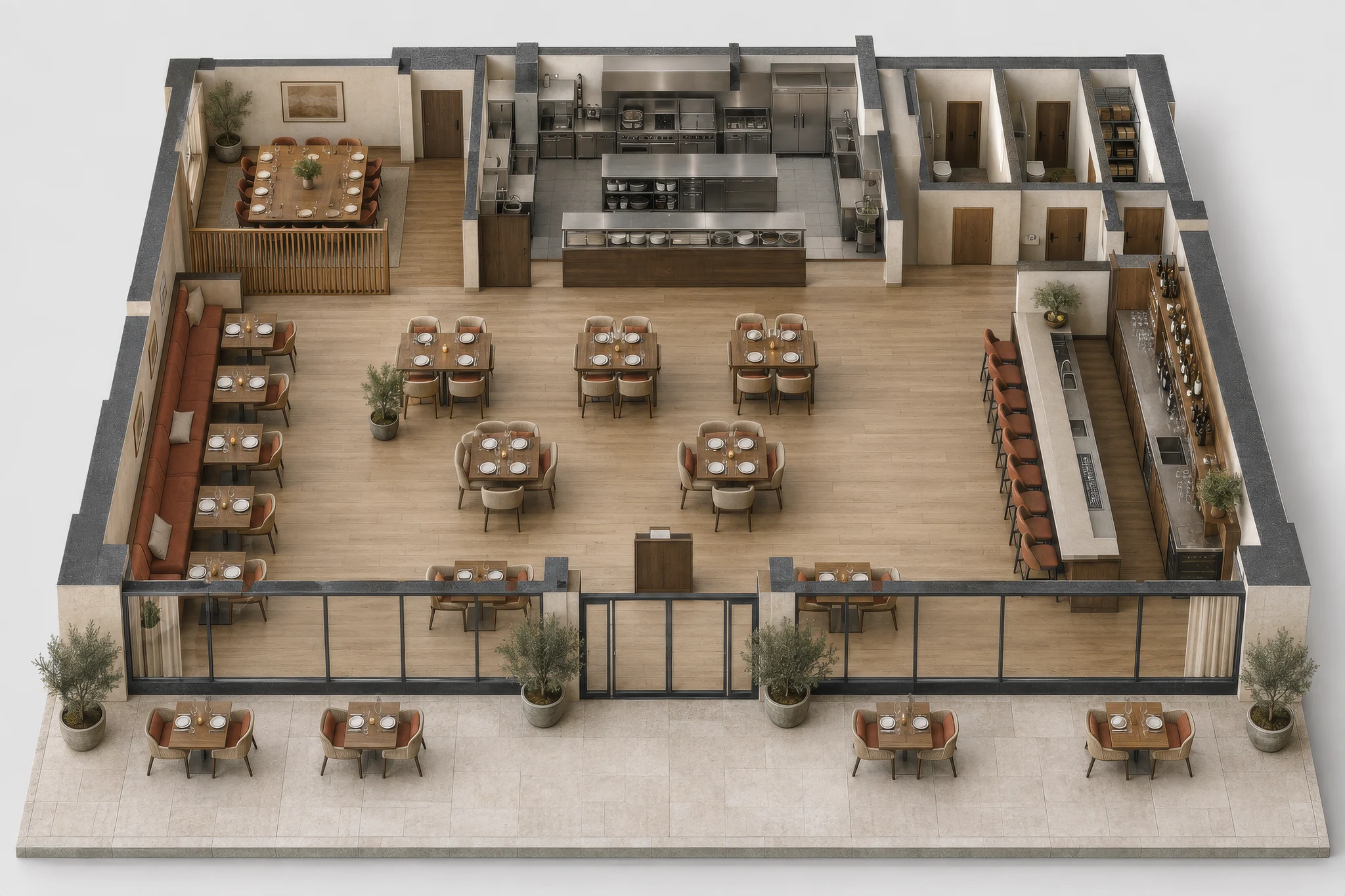
Next, test whether your concept fits the space. Place the kitchen line, dish area, storage, bar, restrooms and dining seats on the real floor plan. Check the circulation paths for servers and guests, count the seats that actually fit, and consider presenting it as a 3D plan so the landlord, partners and contractor can all review the same room. If you want help with this stage, our restaurant design and 3D rendering team plans the layout and shows it in 3D before you commit.
Ask the landlord for a rent-free period during build-out and a clause that lets you leave if permits are refused, because both terms protect you while the restaurant earns nothing.
Restaurant Licenses and Permits
Every city and state maintains its own requirements, so confirm the rules with your local government early. Most restaurants in the United States need a business license, a foodservice license, a health permit, a certificate of occupancy and a sign permit. Staff who handle food often need food handler training. If you serve alcohol, you also need a liquor license, which can take the longest of all.
According to WebstaurantStore, a business license runs about $50 to $400, a health permit $50 to $1,000 and a certificate of occupancy about $100. The liquor license is the wild card, from a few hundred dollars to several hundred thousand in states that cap the number of licenses. Apply as soon as your site is fixed, because health inspections and final sign-offs often come right before opening, when delays hurt most.
Restaurant Visuals to Prepare Before Opening
A new restaurant has an unusual problem: you need to sell tables, hire staff and convince investors before the room exists. Photography is impossible, and a sketch rarely persuades anyone, which is where 3D visuals earn their place in the budget.
You typically need them at three moments. First, before the lease and the loan, a few interior views help lenders, partners and the landlord picture the finished room. Second, before build-out, renders let you compare finishes, furniture and lighting so the contractor builds one approved version. Third, before launch, the same files feed your website, booking pages, delivery listings and opening posts.
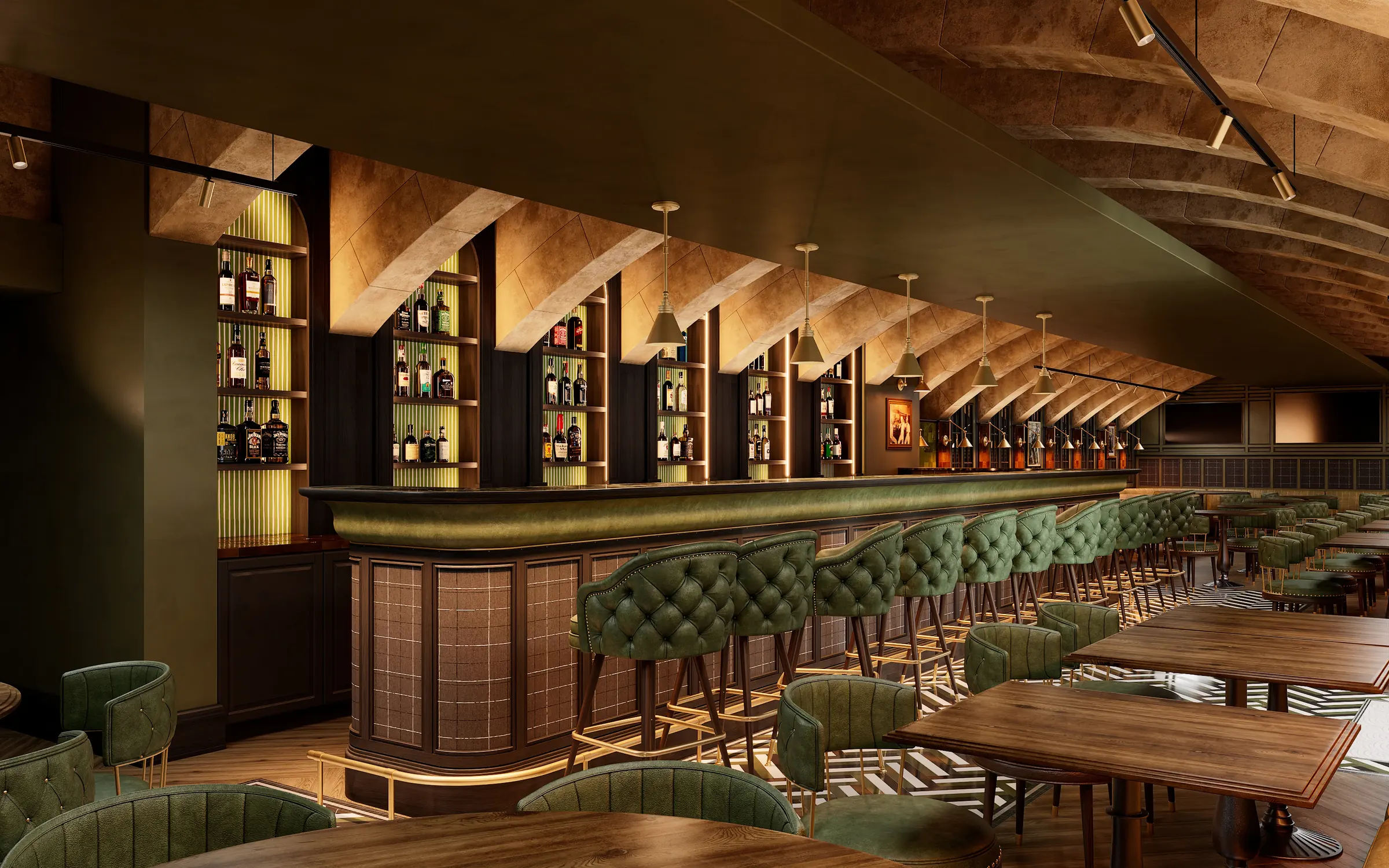
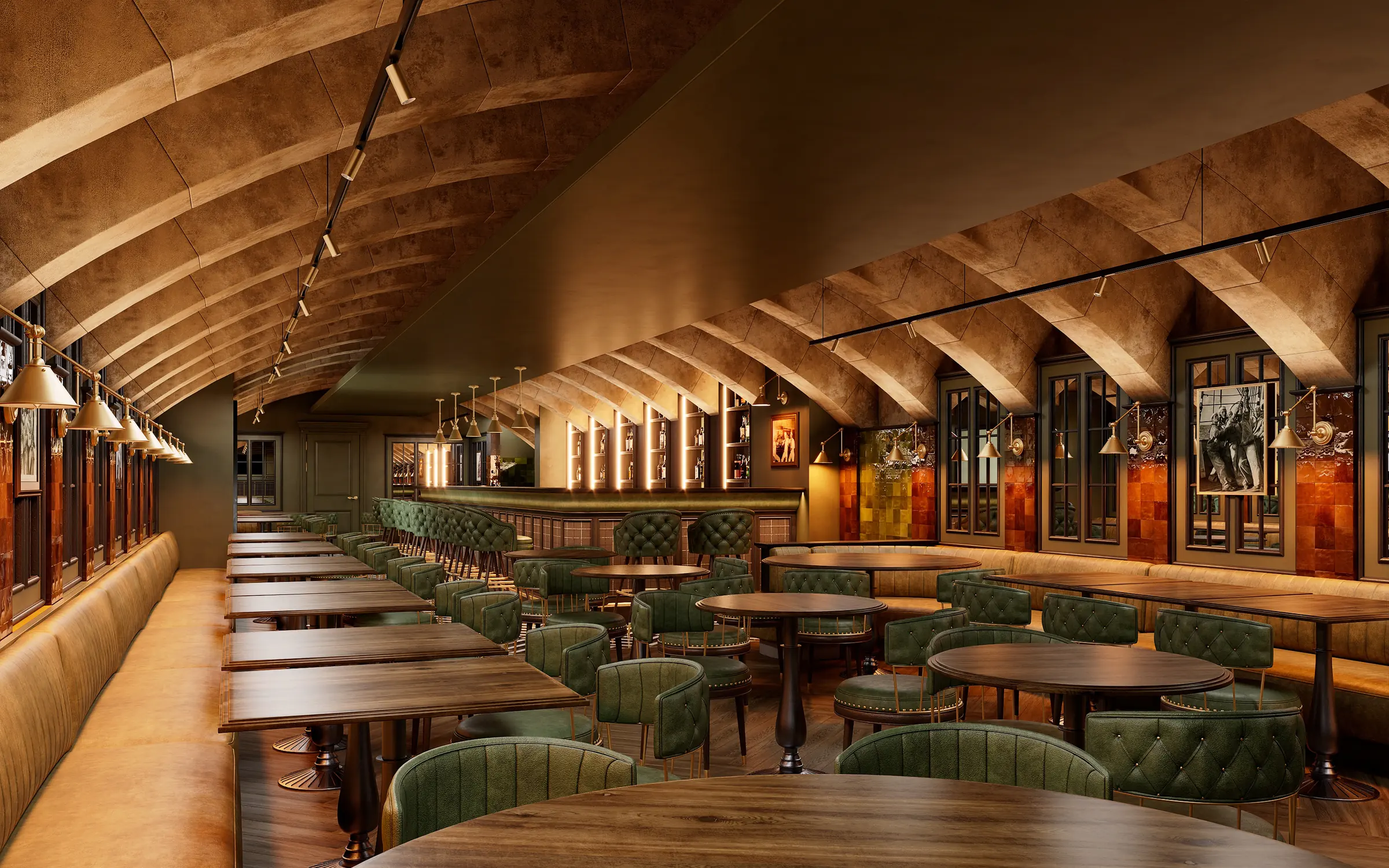
In our studio, about half of projects arrive without a finished design, so we often plan the layout and the interior concept first and render it after. Working drawings and construction documents stay with your architect or contractor. Our gastropub interior renders for a modern British pub in Malta show what this looks like for a hospitality space.
Here is what these visuals usually cost. Market ranges come from our own pricing guide, and the studio rates are ours.
| Visual | When you need it | Typical market range | Our pricing |
|---|---|---|---|
| Interior render, one view | Investor deck, lease talks | $120 to $350 freelancer, $300 to $700 studio | From about $300 (about 8 hours at $39 per hour) |
| Package of 5 to 8 views | Design approval, launch marketing | $600 to $1,500 freelancer, $1,500 to $4,000 studio | Billed by the hour at $39 |
| Walkthrough animation | Website, social, opening campaign | $1,000 to $3,000 freelancer, $3,000 to $8,000 studio, per minute | From $2,200 per finished minute |
As a rough guide, a first draft of a still takes about three to five working days from a full brief, a set of five to eight views about two to three weeks, and an animation of up to a minute about four to six weeks. For a full breakdown by type, see our guide to 3D rendering prices. You can also read more about our interior rendering work for hotels, bars and dining rooms.
Your visual identity belongs in the same window. A name, a logo and a menu style should be ready before the signage, uniforms and website go into production. If you need that too, our branding services can be planned alongside the renders, so the room and the brand look like one place.
Restaurant Business Plan: What to Include
A lender or investor will ask for a business plan, and writing one also forces you to test the idea with numbers. The U.S. Small Business Administration lists the usual sections: executive summary, company description, market analysis, organization and management, service or product line, marketing and sales, funding request and financial projections. For a restaurant, each section has a specific job.
- Concept and menu. Describe the cuisine, service style, sample menu and expected average check per guest.
- Market and location. Show who eats nearby, at what hours, and which competitors already serve that audience.
- Team. Name the chef, the general manager and anyone with restaurant experience, and include the planned staffing schedule.
- Space and build-out. Include the floor plan, seat count and renders of the finished room, plus the renovation budget.
- Marketing. Explain the pre-opening plan, including the website, reservation platforms, social media and the opening event.
- Funding request. State how much financing you need, what it covers and how large the operating reserve will be.
The financial section matters most: model sales as seats multiplied by table turns multiplied by average check, for each day part. Then subtract prime cost, rent and other overhead to find your break-even number of covers per week. The SBA suggests projections for five years, with monthly or quarterly detail for the first year. Keep the first months conservative, because new restaurants rarely operate at full capacity from opening night.
Restaurant Survival Odds and What They Mean
You may have heard that nine out of ten restaurants fail in their first year. The data does not support that. In a study of restaurant closures in the western United States, researchers Tian Luo and Philip Stark found that 17% of independently owned full-service restaurant startups failed in their first year, compared with 19% of other service startups. They put the median lifespan of a restaurant at about 4.5 years.
That is still a hard business, and the same study found that very small restaurants with five or fewer employees closed sooner. The practical lesson is that restaurants that fail early often run out of cash before sales catch up, so the reserve, the realistic forecast and the controlled build-out budget are not paperwork; they are what keep you open long enough to find your regulars.
Restaurant Pre-Opening, Hiring and Soft Launch
The last weeks before opening are about people and practice. Hire key roles first, usually the chef and the general manager, so they can help shape the menu, the kitchen setup and the rest of the team, then recruit servers, cooks and dishwashers and train everyone on the menu, the POS system and the sequence of service.
Run at least one soft opening with friends, neighbors or local businesses, and treat it as a test rather than a party. Time the tickets, watch where servers get stuck and taste every dish on the line, then adjust the menu and the service flow before you open to the public.

Start your marketing well before the doors open: claim your listing on maps and review sites, set up booking and delivery pages, and post the progress on social media. With renders and a short walkthrough ready, your first posts show the finished room instead of a construction site, and guests know what to expect when they book.
Turn Ideas Into Visual Stories