To sell vacant land, price it against recent comparable lot sales, clear the title, and confirm zoning, utilities, and access — then market it with visuals that show what could be built there. From there you can sell to a cash buyer for speed, list it yourself (FSBO) to keep full value, or hire an agent to handle the work.
How to sell vacant land: the process at a glance
Selling raw land follows the same five steps whether you own a quarter-acre building lot or forty acres of timber. Get these right, in order, and the sale takes care of itself.
- Price it with real comps. Base your price on recent sales of similar parcels — same size, zoning, and access — not on asking prices or on what nearby houses sell for.
- Clear the title and order a survey. Resolve any liens, confirm the legal boundaries, and get a current survey so buyers know exactly what they are buying.
- Confirm zoning, utilities, and access. Document what the lot is zoned for, whether water, power, and sewer or septic are available, and how the parcel is reached.
- Market it visually. Post clear photos, an aerial view, and a 3D render of what could be built — the single biggest lever for raw land.
- Negotiate and close. Accept an offer, sign a purchase agreement, and close through a title company or a real estate attorney.
Why vacant land is harder to sell than a house
Vacant land is harder to sell than a house because buyers cannot picture the finished result. A house sells itself — people walk the rooms and imagine living there. A bare lot gives them dirt and a property line, and they have to imagine the driveway, the home, and the yard on their own. Most cannot. That imagination gap, more than price, is what keeps land on the market for months.
Selling land is not a smaller version of selling a house — the marketing job is reversed. With a house, you show what already exists. With land, you have to show what could exist. Everything that follows is built around closing that one gap.
Three ways to sell vacant land: cash buyer, FSBO, or agent
There are three common paths to selling vacant land, and they trade speed for price. Pick the one that matches your timeline and how much of the work you want to handle yourself.
| Selling path | Typical timeline | What you'll net | Best for |
|---|---|---|---|
| Cash land buyer | 7–14 days | Below market (often 50–70% of value) | Speed; inherited or distressed lots |
| For sale by owner (FSBO) | 2–6 months | Full market, no commission | Owners willing to market and handle paperwork |
| Real estate agent | 3–9 months | Full market minus ~5–10% commission | Owners who want it handled end to end |
Timelines and figures vary widely by location, parcel type, and local demand, so treat them as ranges rather than guarantees. A well-priced lot with strong visuals sells at the fast end of each range; a raw, hard-to-picture parcel sells at the slow end.
How 3D rendering sells vacant land faster
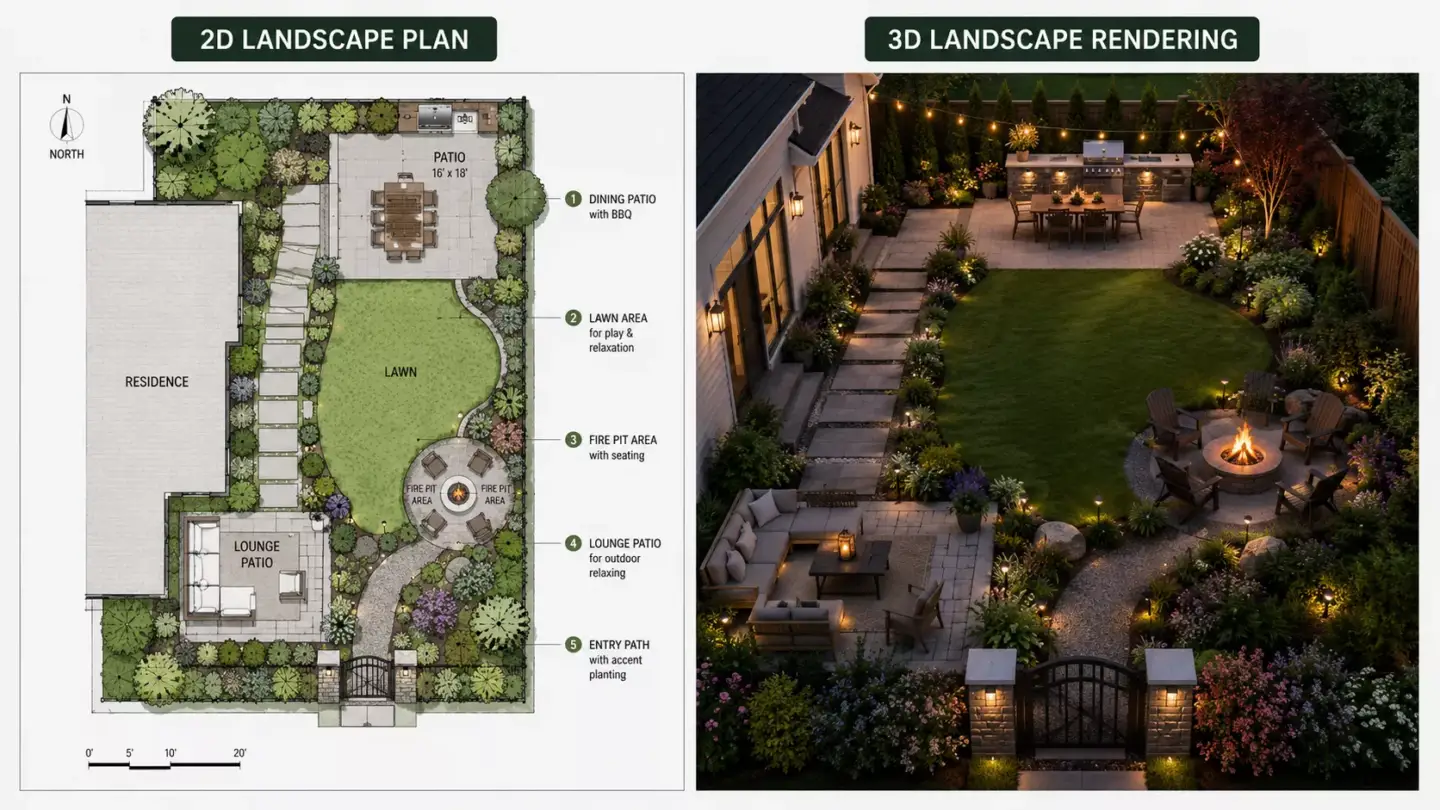
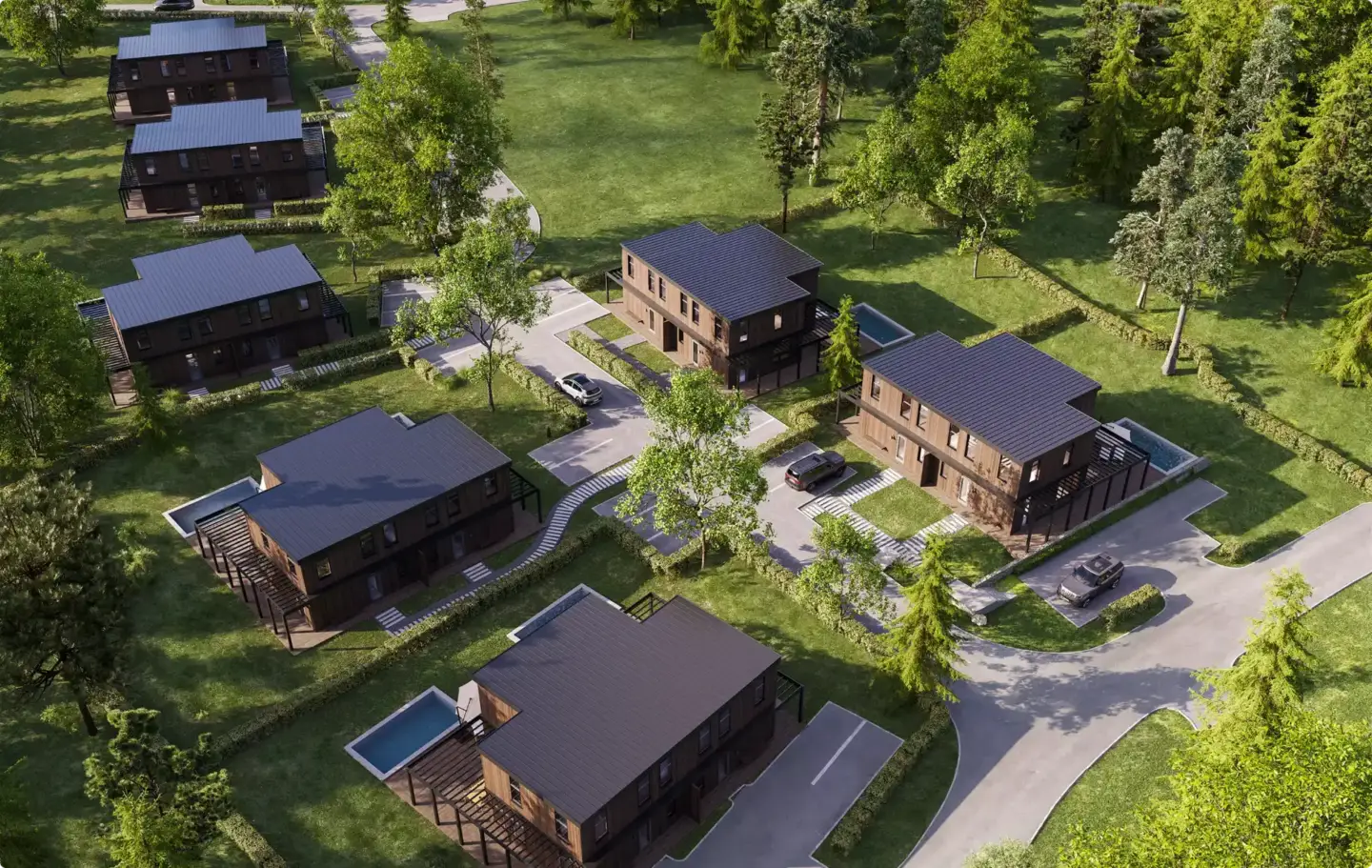
A 3D render turns an empty parcel into a picture of its finished potential — the house, the landscaping, and the layout a buyer would otherwise have to imagine. For raw land it is the highest-leverage marketing move you can make, because it directly closes the visualization gap that keeps lots sitting unsold.
- A photorealistic exterior render of a plausible home on the lot, so buyers see a finished property instead of bare ground.
- An aerial view of the parcel, its access, and its surroundings, so buyers grasp the setting and scale at a glance.
- Clean visuals that support permit, HOA, or design-review submissions, which can speed up a buyer's plans after the sale.

In our studio, the parcels that move fastest are the ones marketed with a render of what could be built, not a photo of what is already there. An empty-lot photo asks the buyer to do all the imaginative work; a render does it for them — and a buyer who can already see the finished home is a buyer who is ready to make an offer.
Paperwork and documents you need to sell land
To sell vacant land you will typically need the deed, a recent survey or plat, a title report, property tax records, and any zoning, easement, or access agreements — plus a purchase agreement to close. The three that matter most are the deed, which proves ownership; the title report, which proves the title is clear; and the purchase agreement, which sets the terms of the sale.
- Deed — proves you legally own the parcel.
- Survey or plat — shows exact boundaries and acreage.
- Title report — confirms there are no liens or ownership disputes.
- Property tax records — show that taxes are current.
- Zoning and easement documents — spell out what is allowed and any shared access.
- Purchase agreement — the signed contract that finalizes the sale.
Taxes when you sell vacant land
When you sell vacant land at a profit, that gain is generally subject to capital gains tax. Land held longer than a year is usually taxed at lower long-term rates, while land held a year or less is taxed as a short-term gain at your ordinary income rate. A 1031 exchange may let you defer the tax if you reinvest the proceeds in similar property. Rules vary by situation and by state, so confirm the specifics with a tax professional — this is general information, not tax advice.
The takeaway: land sells on vision. Price it against real comps, clear the paperwork, choose the selling path that fits your timeline — and give buyers a picture of what the lot could become. That last step is what turns an empty parcel into an easy yes.