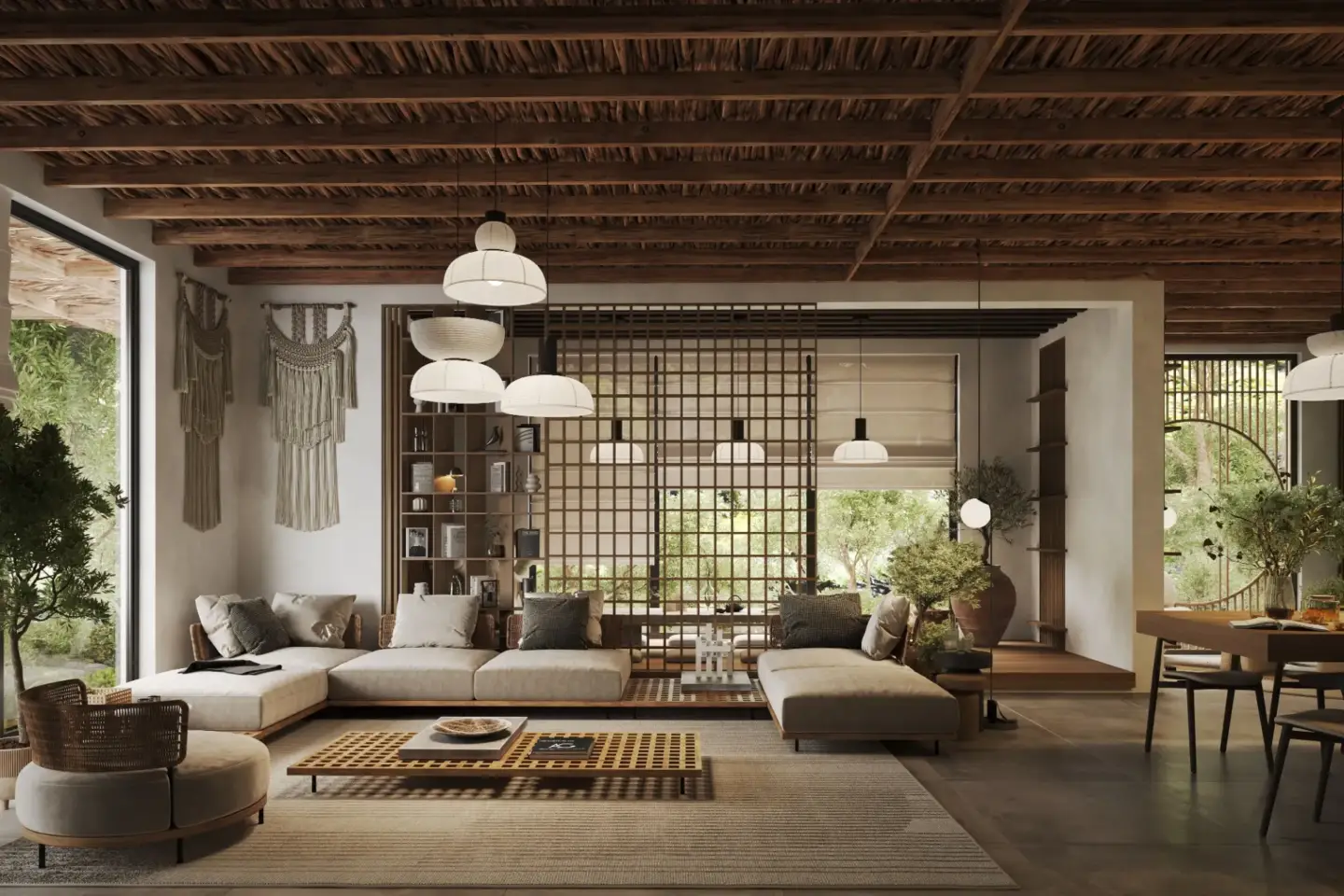
Biophilic interior design is an approach that weaves nature into a room’s core layout, materials, and light so the space actively supports well-being rather than just looking green. It goes well beyond a few potted plants: daylight, organic textures, natural color, water, airflow, and biomorphic shapes are treated as design decisions from the first sketch, not decoration added at the end.
What is biophilic interior design?What is biophilic interior design?
Biophilic interior design is the practice of building a human’s innate pull toward nature into an interior, using real and simulated natural elements to lower stress and lift focus. The term comes from “biophilia,” the idea that people are wired to seek connection with living systems. In a room, that translates into maximized daylight, natural materials, live greenery, water or its sounds, and forms that echo the curves and patterns found outdoors.
It is worth separating two things people often merge. Biophilic architecture works at the scale of the building shell — orientation, façades, atriums, green roofs. Biophilic interior design works inside that shell, on the surfaces, furniture, planting, and lighting a person actually touches and sits within. A room can be biophilic even inside a conventional building, which is why this style adapts so well to renovations and apartments.
The core elements of biophilic interior designThe core elements of biophilic interior design
Most biophilic interiors are assembled from a consistent kit of elements. You rarely need all of them at once — two or three, used with intent, read as biophilic more convincingly than a room crowded with every trick.
- Natural light and air: large windows, skylights, and clear sightlines that track daylight and the changing seasons, plus real airflow.
- Natural materials and textures: untreated or lightly finished wood, stone, clay, rattan, bamboo, wool, and linen that give a tactile, earthy read.
- Plants and greenery: clustered planting, living walls, trailing vines, and trees used as focal points rather than scattered accents.
- Biomorphic forms: curved furniture, arches, and flowing lines that replace rigid right angles with shapes drawn from nature.
- A nature-led color palette: greens, earthy browns, terracotta, soft blues, and warm off-whites pulled from landscapes.
- Water and multi-sensory cues: indoor water features, natural scent, and sound that engage more than sight alone.
- Views and refuge: a balance of open outlooks (prospect) and sheltered, enclosed corners (refuge) that make a room feel both connected and safe.
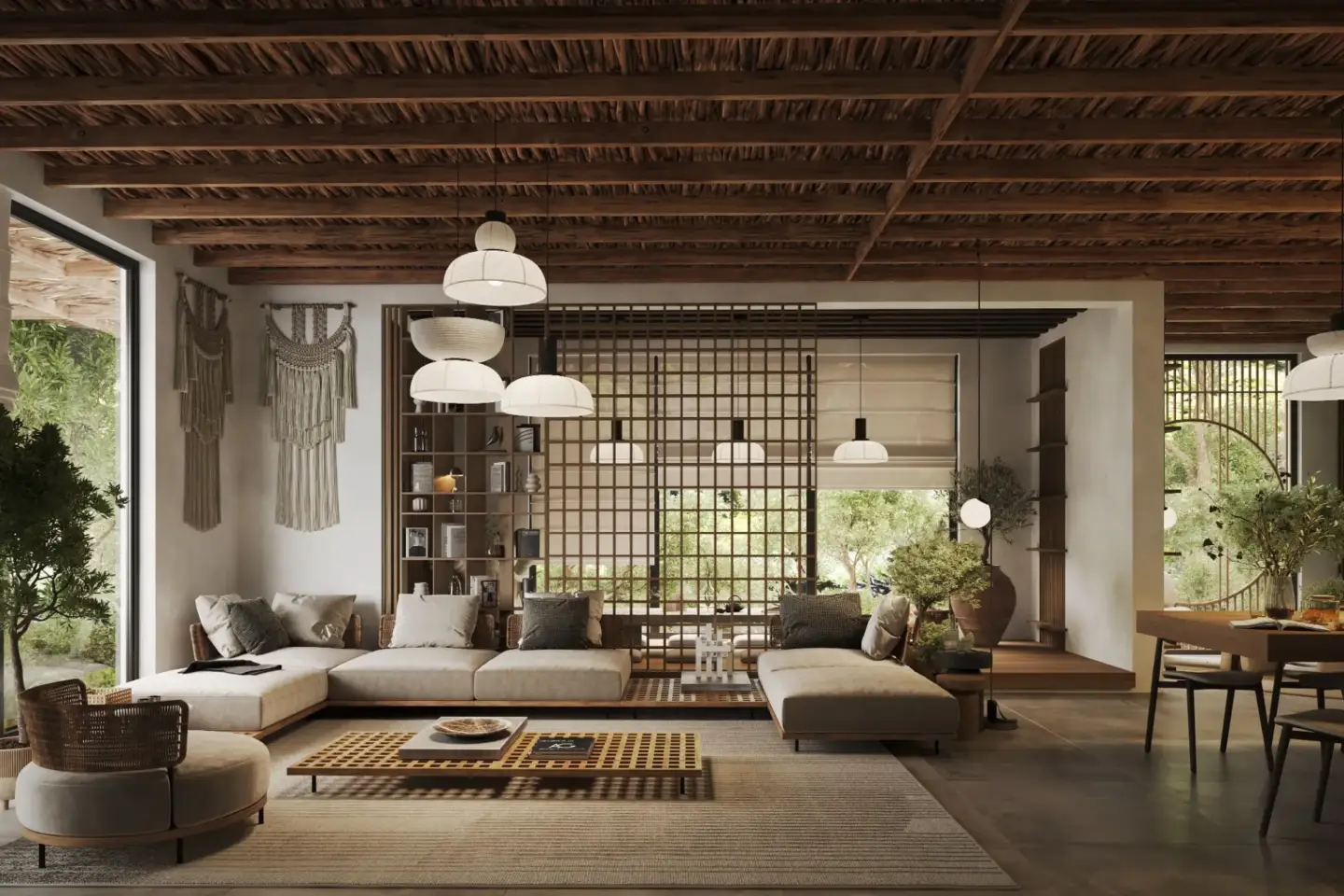
The 14 patterns of biophilic design, in three groups
The most cited framework is the “14 Patterns of Biophilic Design,” published by consultancy Terrapin Bright Green in 2014. The patterns sort into three categories, which is the fastest way to hold them in your head and apply them to a real room.
| Category | What it covers | Patterns |
| Nature in the Space | Direct, physical contact with nature inside the room | Visual connection with nature; non-visual connection; non-rhythmic sensory stimuli; thermal and airflow variability; presence of water; dynamic and diffuse light; connection with natural systems |
| Natural Analogues | Indirect echoes of nature in material, pattern, and form | Biomorphic forms and patterns; material connection with nature; complexity and order |
| Nature of the Space | Spatial arrangements that mirror how we experience landscapes | Prospect; refuge; mystery; risk and peril |
You do not need to hit all fourteen. Terrapin’s own guidance is that a strong space delivers a few patterns deeply rather than every pattern faintly — a single well-placed window with dynamic, diffuse light often outperforms a wall of small potted plants.
Biophilic interior design ideas, room by roomBiophilic interior design ideas, room by room
The elements shift emphasis depending on how a room is used. Below are practical starting points for the spaces people ask about most.
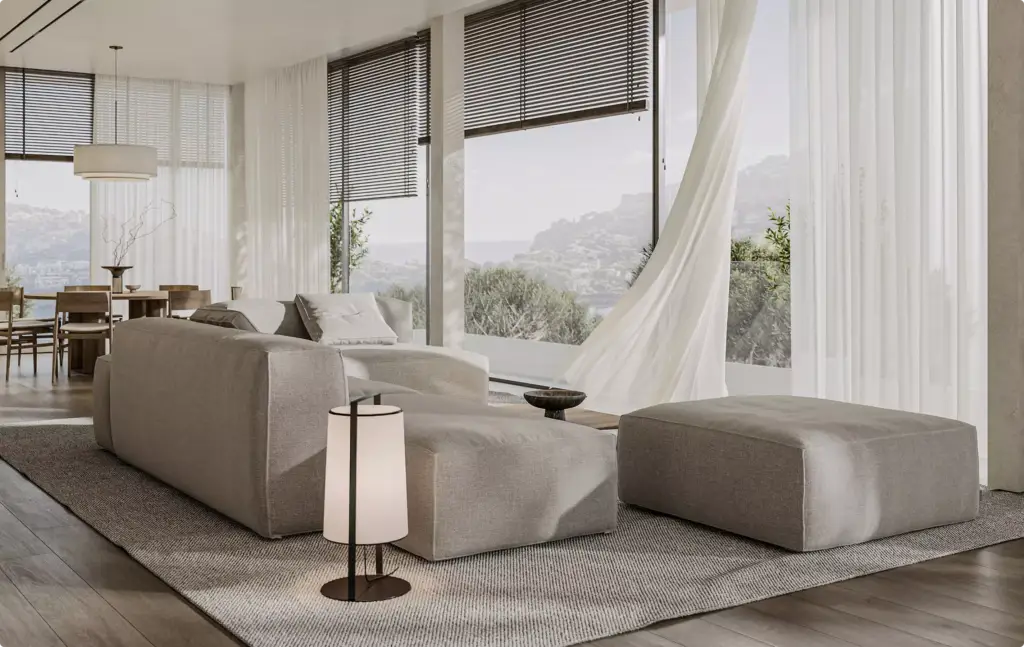
- Living room: anchor the space with one large plant or a clustered “plant corner,” add a natural-fiber rug and a curved sofa, and keep window treatments light so daylight leads the room.
- Bedroom: lean into refuge — warm wood, layered natural textiles, low-toxicity finishes, and calming greens — while keeping planting simple so the room reads restful, not busy.
- Kitchen: stone or timber surfaces, an herb wall or window garden, and open shelving in natural materials connect daily tasks to nature.
- Home office: a desk facing a window (prospect), a few air-cleaning plants, and dynamic daylight support focus and reduce screen fatigue.
- Bathroom: humidity-loving plants, stone or pebble textures, and natural light turn a utilitarian room into a spa-like retreat.
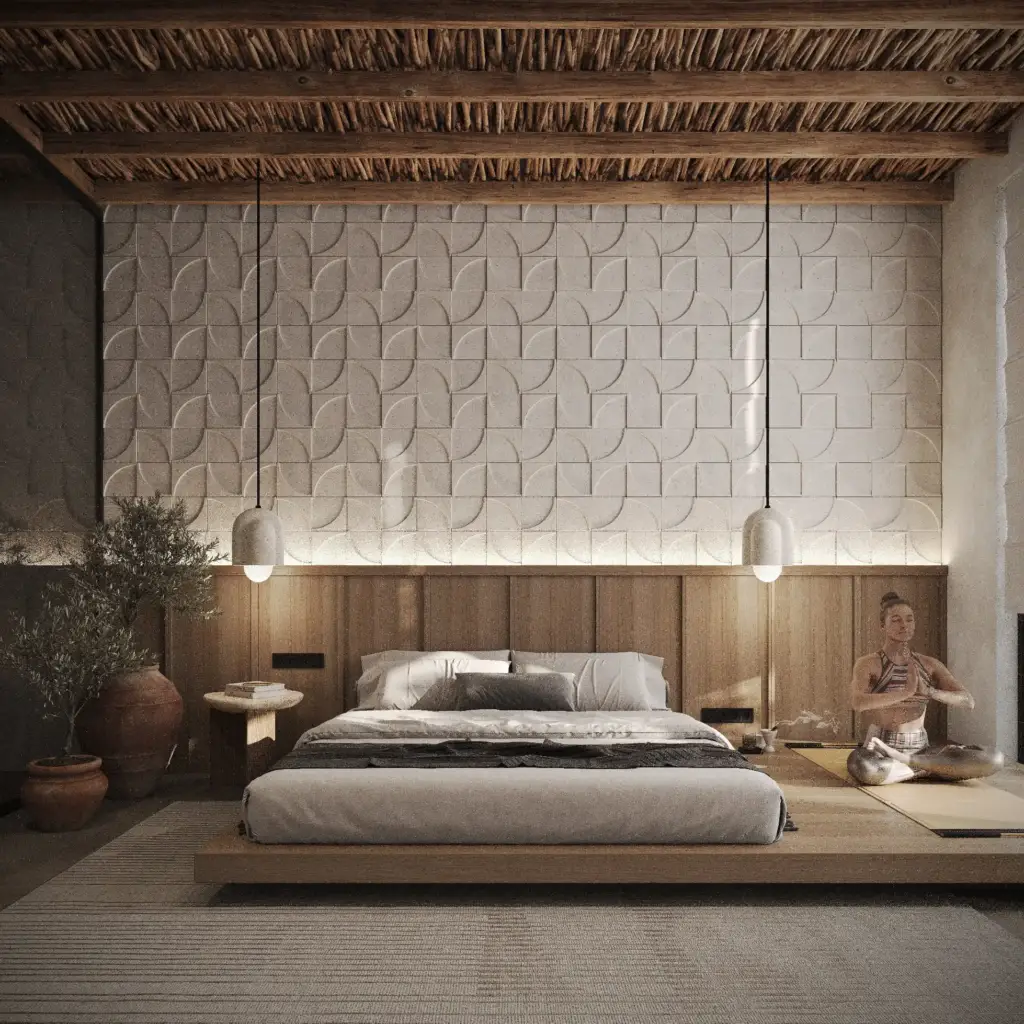
A natural color palette for biophilic interiors
Biophilic colors are the muted, layered tones you find in landscapes: greens, earthy browns and terracotta, soft blues, and warm neutrals and off-whites. The point is not to paint everything green but to build a grounded base of natural neutrals, then layer greens and a single earthy accent so the palette feels pulled from a forest, coastline, or desert rather than a swatch book.
Pairing these shades with real natural materials and living plants is what makes the palette land. A green wall reads as biophilic; the same green next to raw oak, linen, and daylight reads as a place you want to stay.
Biophilic interior design examplesBiophilic interior design examples
Biophilic design shows up across very different spaces, but the moves rhyme. A few recognizable examples:
- The plant-wall living room: a full-height living wall or dense planting cluster becomes the room’s focal point, framed by natural wood and diffuse daylight.
- The courtyard-view home: glazing and sightlines pull a garden, tree, or courtyard into the interior so the outdoors reads as part of the room.
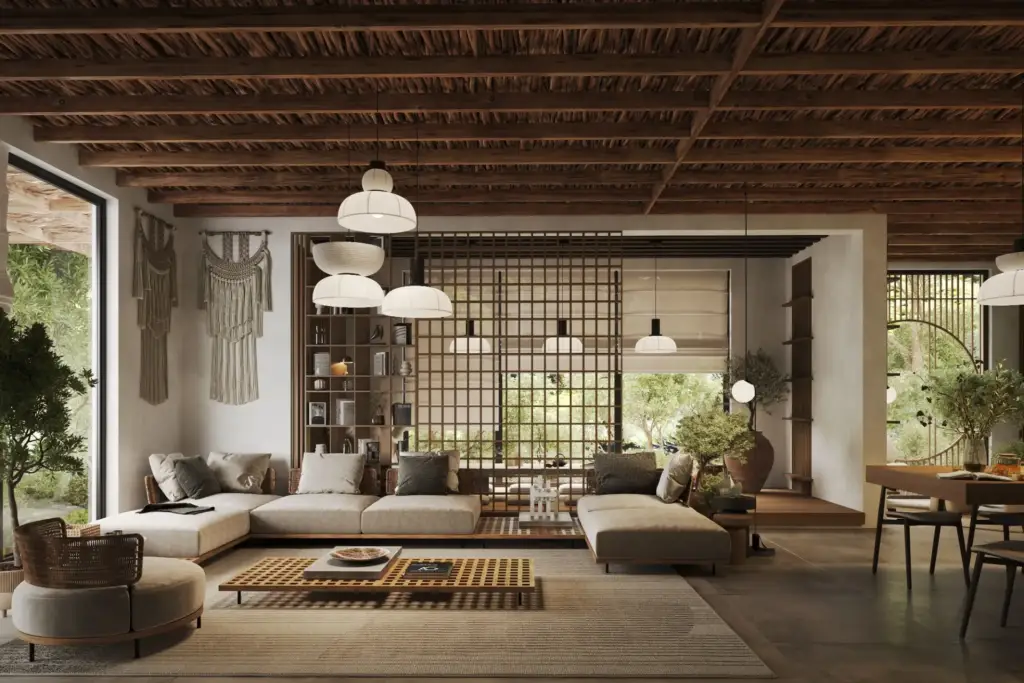
- The material-forward retreat: stone, exposed timber, and woven textures carry the biophilic weight with only a handful of plants.
- The workplace atrium: offices use planted atriums, water features, and organic seating pods to cut stress and signal well-being to staff and visitors.
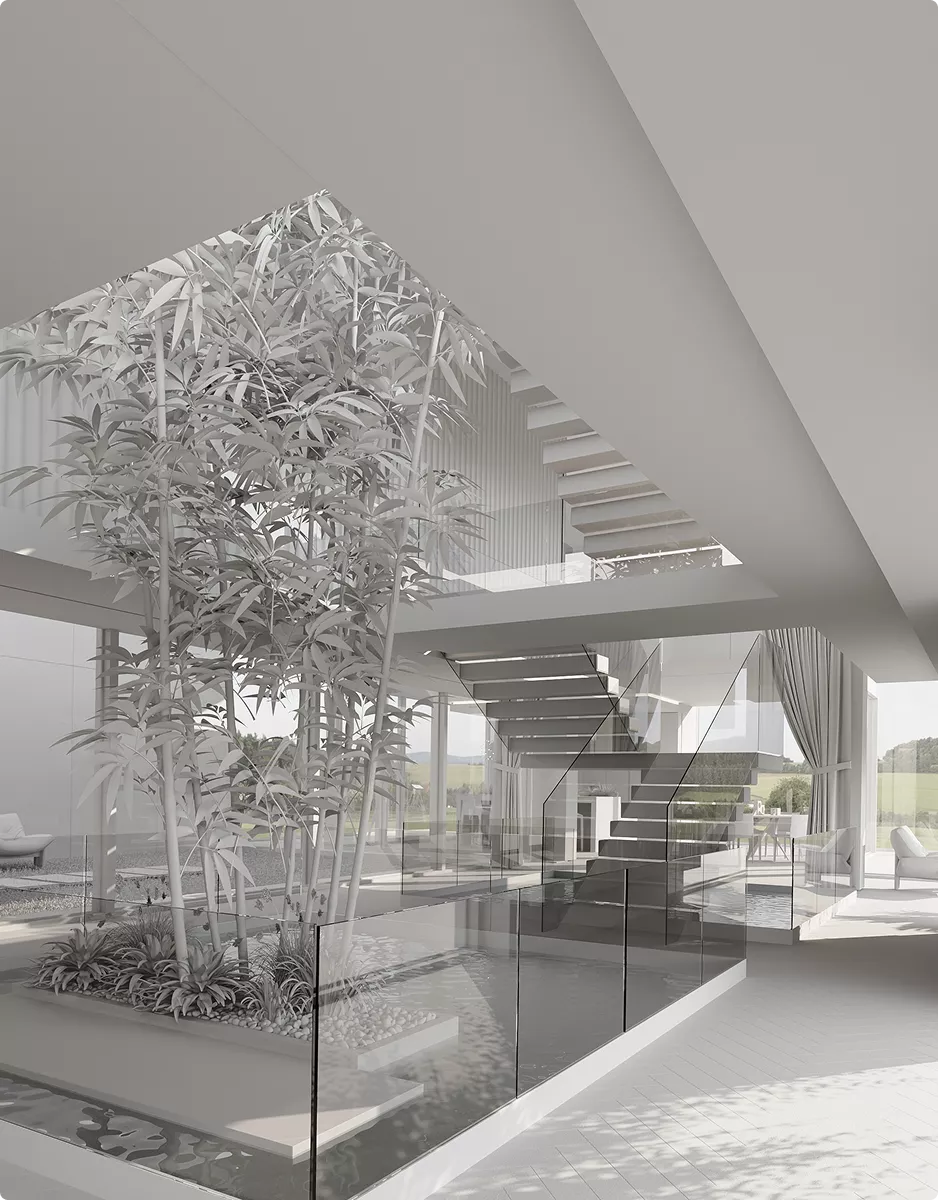
Visualizing biophilic rooms in 3D before you build
Because biophilic design depends so heavily on light, materials, and living texture, it is a style that benefits from being previewed in a render before anything is bought or built. A visualization lets you test how afternoon daylight falls across a stone wall, how a plant cluster reads at real scale, and whether a biomorphic sofa fits the flow — decisions that are expensive to reverse once a room is finished.
In our studio, a photoreal biophilic interior takes longer to render than a comparable minimalist room: foliage, translucent leaves, dappled light, and water are among the most compute-heavy things to make convincing. That production reality is also the reason biophilic scenes reward planning — the elements that make the style feel alive are exactly the ones you want to get right on screen first. If you are designing a nature-led space and want to see it before committing, our 3D interior rendering services turn biophilic concepts into photoreal images you can iterate on.
Biophilic design also sits close to the broader sustainable movement — for the building-scale view, see our guide to green architecture, and for neighboring looks, browse the full range of interior design styles.

Turn Ideas Into Visual Stories
Maverick Frame Blog FAQ
What is biophilic design in interior design?
Biophilic design in interior design is the practice of building nature into a room through daylight, natural materials, plants, water, and organic forms. Rather than adding a few plants at the end, it treats the connection to nature as a core design decision that measurably lowers stress and supports focus.
What are the 14 patterns of biophilic design?
The 14 patterns of biophilic design are a framework from Terrapin Bright Green, grouped in three categories: Nature in the Space (direct nature such as plants, water, and daylight), Natural Analogues (organic materials, forms, and patterns), and Nature of the Space (spatial qualities like prospect, refuge, and mystery).
What are biophilic colors?
Biophilic colors are the muted, layered tones drawn from landscapes: greens, earthy browns and terracotta, soft blues, and warm neutrals and off-whites. They work best as a grounded natural base layered with greenery and a single earthy accent, paired with real natural materials rather than one bold wall color.
Is biophilic interior design expensive?
Biophilic interior design does not have to be expensive. Its highest-impact moves — maximizing daylight, choosing natural materials, adding a few well-placed plants, and using a nature-led color palette — range from free to modest. Costs rise only with large interventions like living walls, indoor water features, or structural glazing.
What is the difference between biophilic and sustainable design?
Biophilic design focuses on connecting people to nature to support well-being, while sustainable design focuses on reducing a building’s environmental impact. They overlap often — natural materials and daylight serve both — but a room can be biophilic without being sustainable, and vice versa.