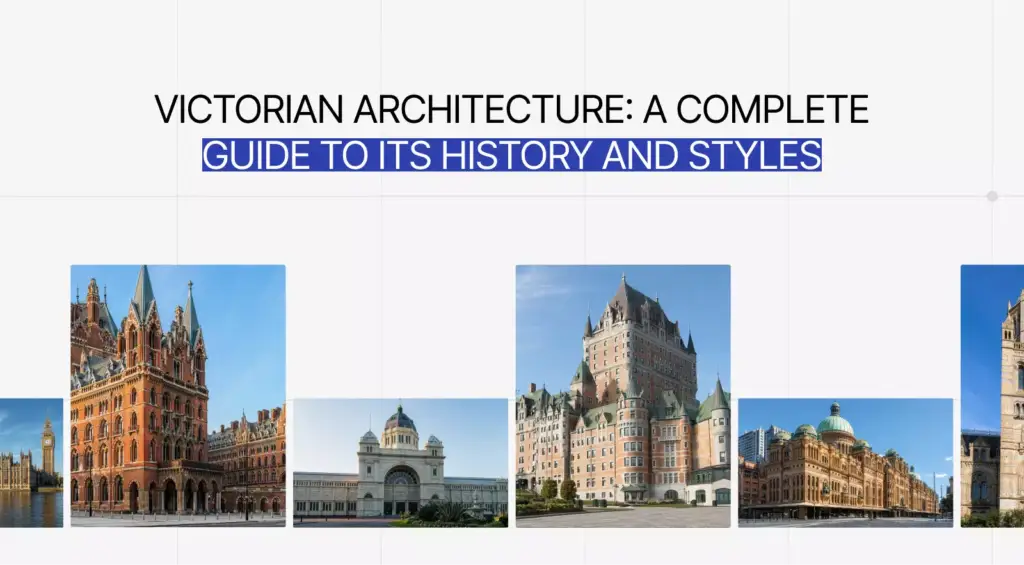
Gothic architecture emerged in medieval Europe as a style that transformed heavy stone construction into taller, brighter, and more visually striking buildings. It is known for its pointed arches, ribbed vaults, flying buttresses, stained glass, and emphasis on height and light. It is most closely associated with cathedrals, churches, monasteries, and other major civic buildings, where structural logic and visual drama reinforce each other.
Its appearance is striking because its signature elements do practical work instead of serving as decoration alone. Pointed arches, ribbed vaults, and exterior buttresses helped move weight more efficiently, which allowed builders to open the walls, enlarge the windows, and intensify the upward pull of the whole composition. In the broader history of popular architectural styles, this medieval shift stands out because engineering and atmosphere became inseparable.
What Is Gothic Architecture?What Is Gothic Architecture?
The simplest answer to what is Gothic architecture is that it is a medieval European style characterized by height, light, and structural refinement. Developed in the 12th century, it became one of the most important turning points in Western building history by changing how walls, ceilings, and windows could relate to one another. While Gothic architecture is most commonly found in cathedrals and large churches, it also appears in monastic complexes, chapter houses, colleges, and prominent civic settings. Its revival strongly influenced Victorian architecture in the 19th century.
A usable Gothic architecture definition should explain why the style seems dramatic at first glance. Its spaces appear to look upward because vertical lines dominate the composition. The support system becomes more legible, and large windows reduce the sense of blunt masonry mass. The result is architecture that feels less like a sealed stone container and more like an organized framework filled with light.
Key Characteristics and Features of Gothic ArchitectureKey Characteristics and Features of Gothic Architecture
Recognition becomes much easier once the reader stops viewing the famous details as separate ornaments. The clearest answer to what defines Gothic architecture is that its main parts work together structurally to produce the style’s most memorable visual effects. The best way to understand this concept is to connect each visible element to its function.
The five key characteristics of Gothic architecture are pointed arches, ribbed vaults, flying buttresses, tall stained-glass windows, and a strong vertical emphasis. Each one is structural first and decorative second, which is why the style reads as both engineered and dramatic.
- Pointed arches — redirect weight more efficiently than rounded arches and pull the eye upward.
- Ribbed vaults — a stone framework that channels ceiling loads along clear structural lines.
- Flying buttresses — exterior supports that carry thrust away from the walls so openings can grow.
- Tall windows and stained glass — large lancet and rose windows that flood the interior with coloured light.
- Strong vertical emphasis — slender shafts, pinnacles, and tracery that make the whole building soar.
Pointed Arches
This feature is usually the fastest signal that a building belongs to the Gothic family. Among the most recognizable Gothic architecture features, the pointed arch helps direct pressure more flexibly than a rounded arch while also making doorways, arcades, and windows look sharper and more vertical. Even before a viewer notices the rest of the structure, that shape starts to pull the eye upward.
Ribbed Vaults
The ceiling system is just as important as the arch beneath it. Stone ribs form a framework that directs loads along clearer lines. This makes the vault easier to organize across complex spans and gives the interior a more articulated rhythm. Instead of appearing as one continuous, heavy shell overhead, the ceiling appears as a network of coordinated structural lines.
Flying Buttresses
Exterior support is where the logic of the style becomes easiest to grasp. A flying buttress carries thrust from the upper walls outward to external piers, which reduces the burden placed directly on the wall plane and allows much larger openings. That is why it is both a technical solution and one of the style’s most recognizable silhouettes.
Tall Windows and Stained Glass
Wall openings become dramatically more important once the building no longer depends on heavy continuous masonry in the older Romanesque way. The most widely cited Gothic architecture characteristics therefore include tall lancet windows, rose windows, tracery, and extensive stained glass that transforms light into color and atmosphere. In practical terms, the wall becomes less of a barrier and more of a luminous surface.
Vertical Lines and Visual Drama
The final clue is not one object but one overall effect. Slender shafts, tall facades, pinnacles, and layered elevations answer what are the main features of Gothic architecture by making the whole building feel directed upward rather than spread outward. Even when ornament is abundant, the deepest impression is usually one of ascent, lift, and visual tension.
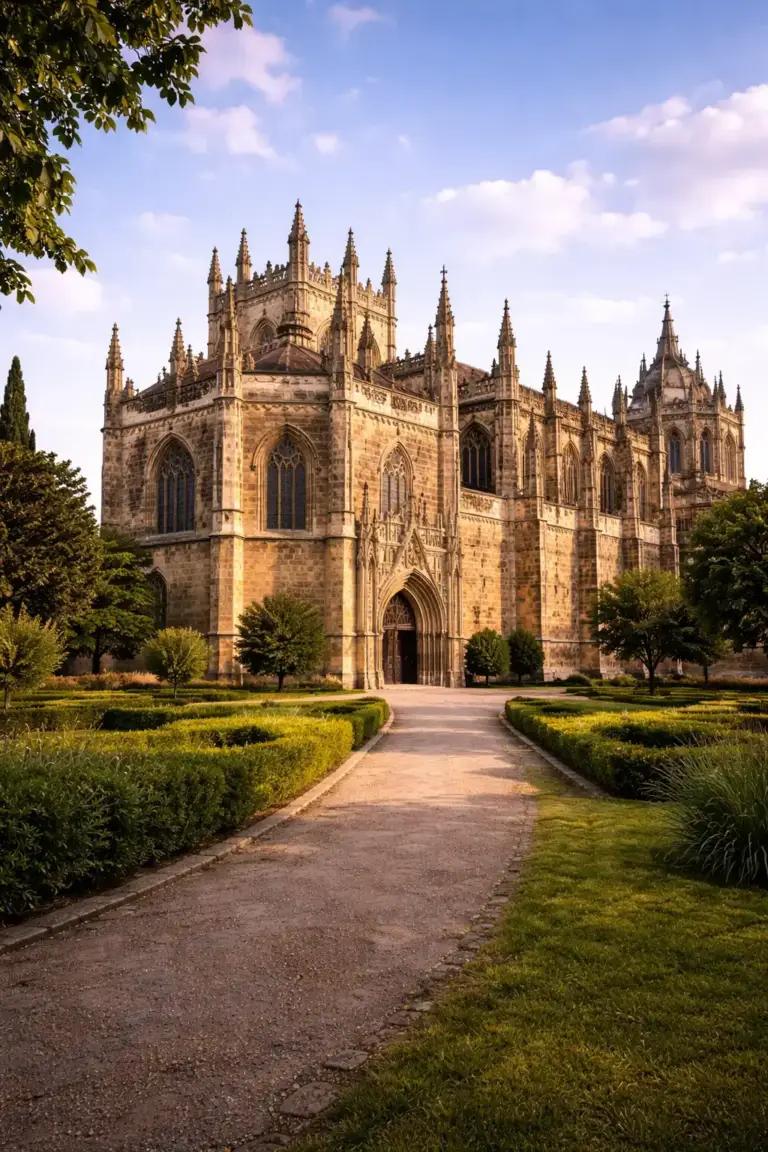
Origins of Gothic Architecture
The style makes the most sense when it is seen as a response to earlier building limits rather than as a sudden invention with no background. The question when did Gothic architecture begin is best answered by placing its rise in 12th-century France, where builders and patrons were looking for ways to create more open, elevated, and light-filled sacred spaces. From there, the style spread because its structural logic was effective, persuasive, and visually powerful.
From Romanesque to Gothic
The transition from Romanesque to Gothic architecture was gradual rather than abrupt. Late Romanesque buildings had already experimented with vaulting and more ambitious spatial effects. However, Gothic architects integrated these tendencies into a more defined system featuring pointed arches, ribbed vaults, and redistributed loads. The shift was evident not only in the decoration, but also in the organization of the entire building.
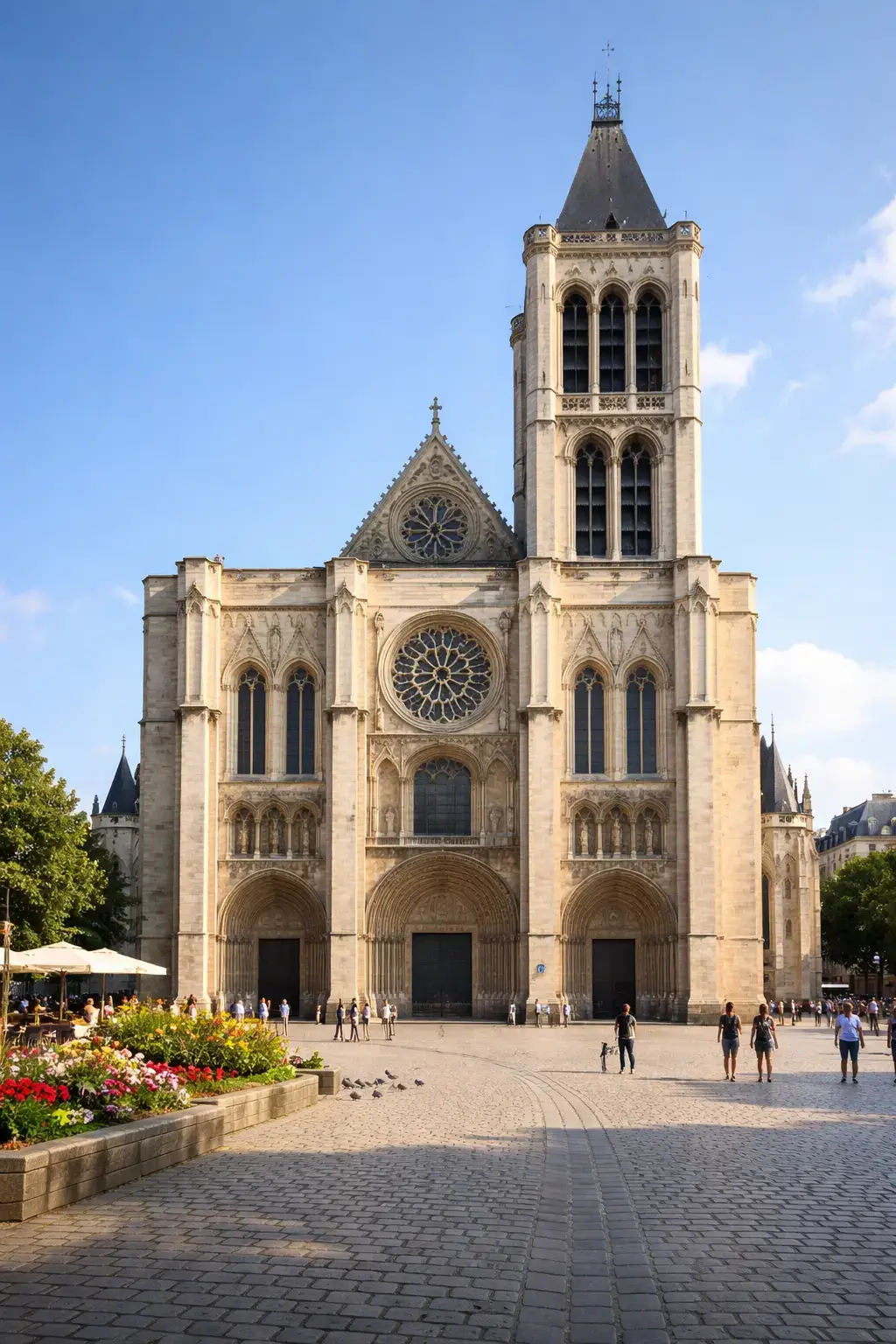
Why Saint-Denis Is Important
The Basilica of Saint-Denis plays a central role in this story because its reconstruction was closely tied to the emergence of the new style. Under the leadership of Abbot Suger, the choir and ambulatory were designed to integrate structure, light, and visual continuity more effectively. These changes made the building a powerful early statement of Gothic ambition. The basilica’s significance lies in its ability to seamlessly integrate emerging ideas into a cohesive whole.
How the Style Spread Across Europe
After the French model proved compelling, the style spread to England, Germany, and other parts of Europe. Local builders adapted the core design to regional materials, traditions, and liturgical needs. Yet, despite those differences, the shared pursuit of openness, height, and luminosity remained evident. This balance of unity and variation explains why the style remained recognizable even as national versions developed distinct accents.
Why Gothic Buildings Are So Tall and BrightWhy Gothic Buildings Are So Tall and Bright
The style becomes much easier to understand once the reader realizes that height and brightness stem from the same structural logic. The clearest explanation for why Gothic buildings are so tall is that engineering innovations redirected pressure, reduced wall mass, and enabled larger openings without compromising stability. In this way, height and light were not separate aesthetic goals, but rather parallel results of one engineering system.
Engineering Behind Height
Medieval builders were challenged by the immense downward and outward forces created by masonry vaults. Ribbed vaults concentrated these forces along specific paths, and pointed arches allowed for greater flexibility in spanning spaces of different dimensions and heights. Together, these features allowed for taller interiors without the need for the same level of thick walls used in earlier constructions.
How Buttresses Changed Wall Design
Once exterior supports absorbed more of the lateral thrust, the wall itself no longer had to act as such a massive structural barrier. That change altered the visual character of the building because the whole composition began to read as a skeletal frame with infill rather than a solid shell punctured by a few openings. In modern architectural study, exterior visualization is especially useful for making that structural logic easier to understand before a viewer ever steps on site.
The Role of Stained Glass and Light
Larger openings transformed the interior experience as much as they changed the facade. Through interior visualization, it becomes easier to understand how vault height, window scale, and colored glazing shape mood, depth, and circulation in ways that flat plans cannot fully convey. The medieval builders understood that light was not just illumination, but a spatial and symbolic force that animated the entire structure.
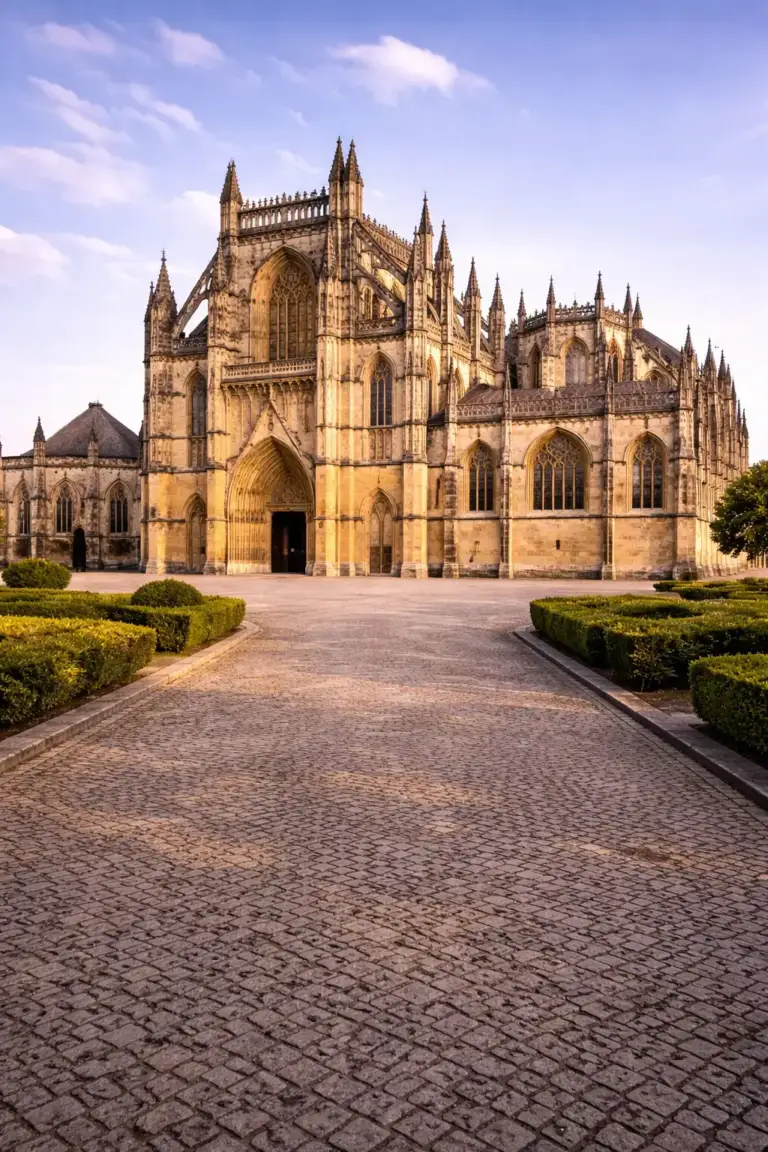
Gothic Architecture vs. Romanesque Architecture
The most useful comparison is the one that clarifies what changed in plain visual terms. In broad outline, Gothic vs Romanesque architecture is a shift from heavier, more earthbound massing toward a more vertical, open, and articulated approach to stone building. Romanesque tends to feel solid and fortress-like, while Gothic tends to feel light, dramatic, and structurally refined.
| Aspect | Gothic Architecture | Romanesque Architecture |
| Arches | Pointed | Rounded |
| Walls | More skeletal, lighter-looking | Thicker, heavier |
| Windows | Larger, more stained glass | Smaller openings |
| Vertical Effect | Strong upward emphasis | More grounded and massive |
| Overall Feel | Light, dramatic, soaring | Solid, heavy, fortress-like |
Quick Difference
The shortest answer to what is the difference between Gothic and Romanesque architecture is that one emphasizes elevation and openness while the other emphasizes mass and enclosure. A Romanesque church generally feels heavier and more grounded, while a Gothic cathedral usually feels pulled upward by lines, light, and layered support. This contrast is often apparent even before the viewer can identify a single detail.
Arches, Walls, and Windows
Rounded arches are the classic Romanesque clue, while pointed arches are the classic Gothic one. Romanesque walls tend to be thicker and have smaller openings, while Gothic walls are more porous because vaults and buttresses carry more of the load elsewhere. Consequently, Gothic buildings often appear more open and articulated.
Height, Light, and Decoration
Romanesque decoration can be elaborate, but the building’s substantial mass is usually the first thing that stands out. By contrast, Gothic decoration tends to accentuate the structure’s height because tracery, sculpture, pinnacles, and glazing reinforce the vertical direction already established by the engineering. In this way, ornament works with the architecture’s lift rather than sitting on top of a heavy block.
Why People Confuse the Two
Confusion arises because the two styles overlap in time, and transitional buildings can combine elements of both. The easiest way to tell the difference is to ask whether the building feels primarily weighty and rounded or skeletal, upward-moving, and open to light. This question usually resolves most uncertainty for beginners.
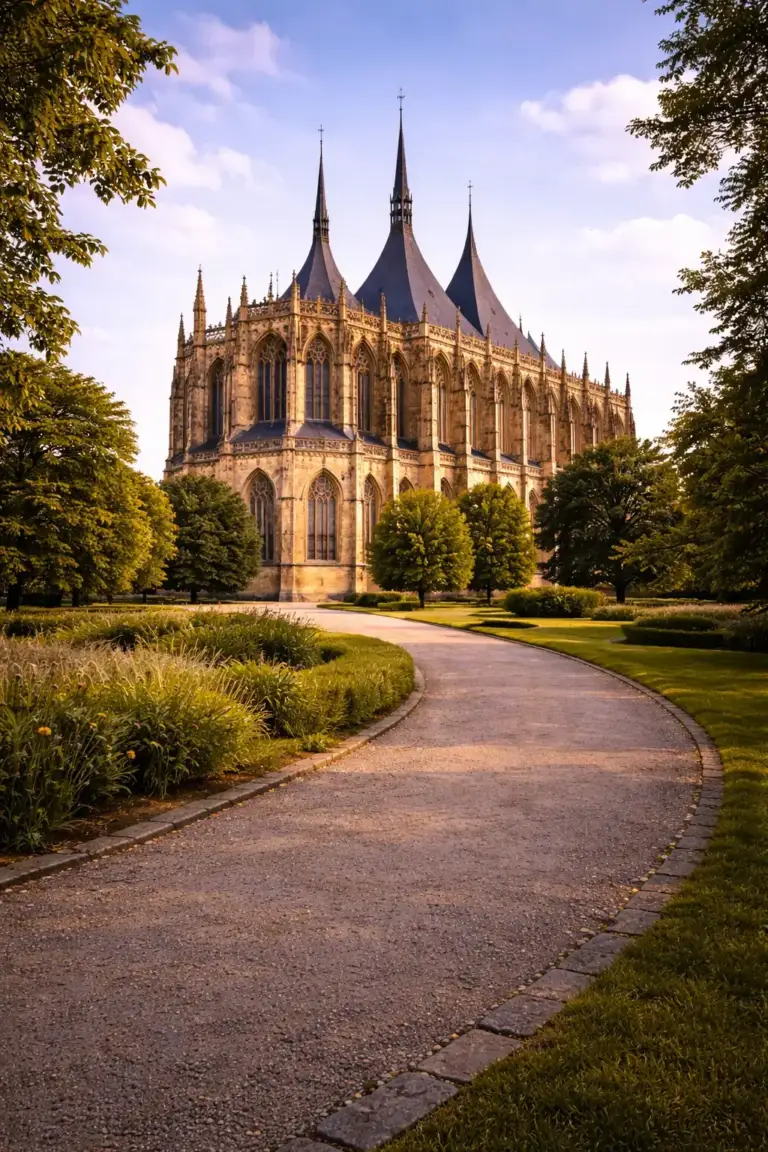
Famous Examples of Gothic Architecture
Examples become most useful when each one teaches a principle instead of merely adding another famous name. A strong answer to what are famous examples of Gothic architecture should show how individual buildings clarify origins, structure, glass, facade design, and regional variation. The landmarks below matter because each one makes a different part of the style easier to see.
Basilica of Saint-Denis
This church is essential because it exemplifies the early development of the architectural style. The first features to note are the choir and ambulatory. Unlike heavier earlier interiors, the space features slender supports, expanded openings, and a stronger sense of luminous continuity. Saint-Denis encourages readers to look for systems rather than isolated decorations.
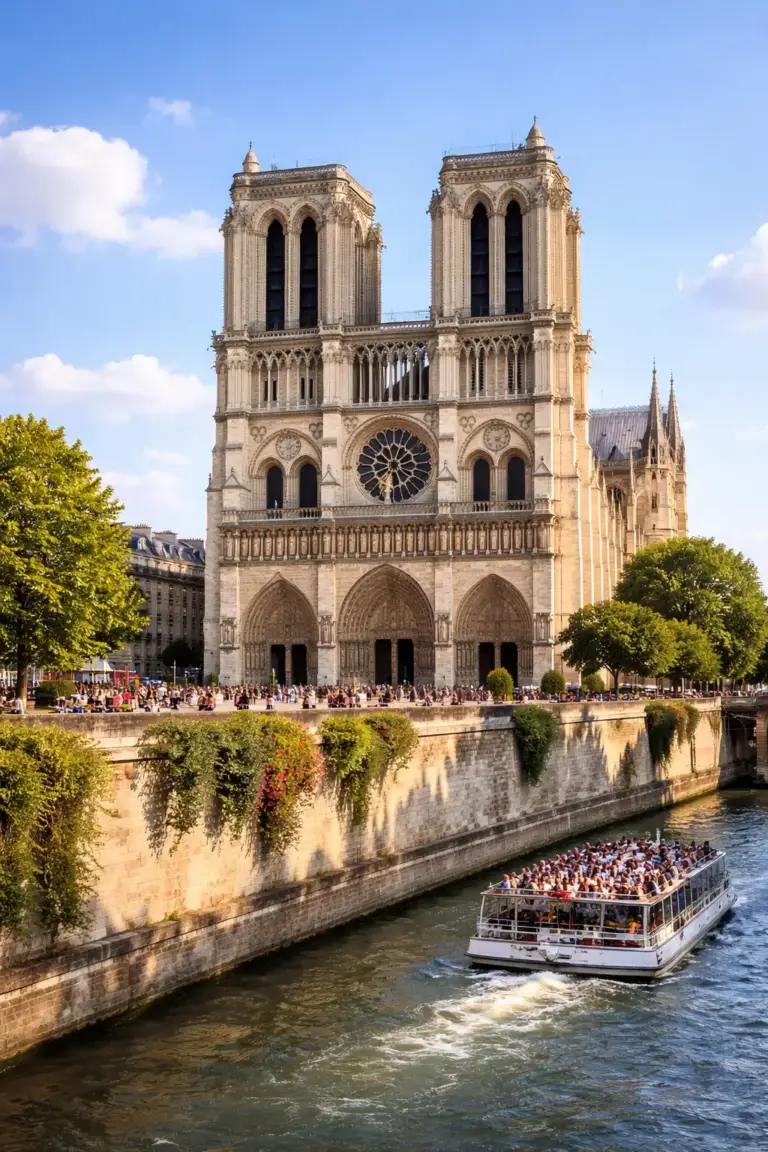
Notre-Dame de Paris
This cathedral is one of the clearest examples of mature French Gothic composition. The first aspect to examine is the interplay between the rose windows, pointed openings, and exterior supports because the facade and structural logic reinforce each other at every level. Notre-Dame demonstrates that spectacle in this style is built on disciplined engineering rather than theatrical excess alone.
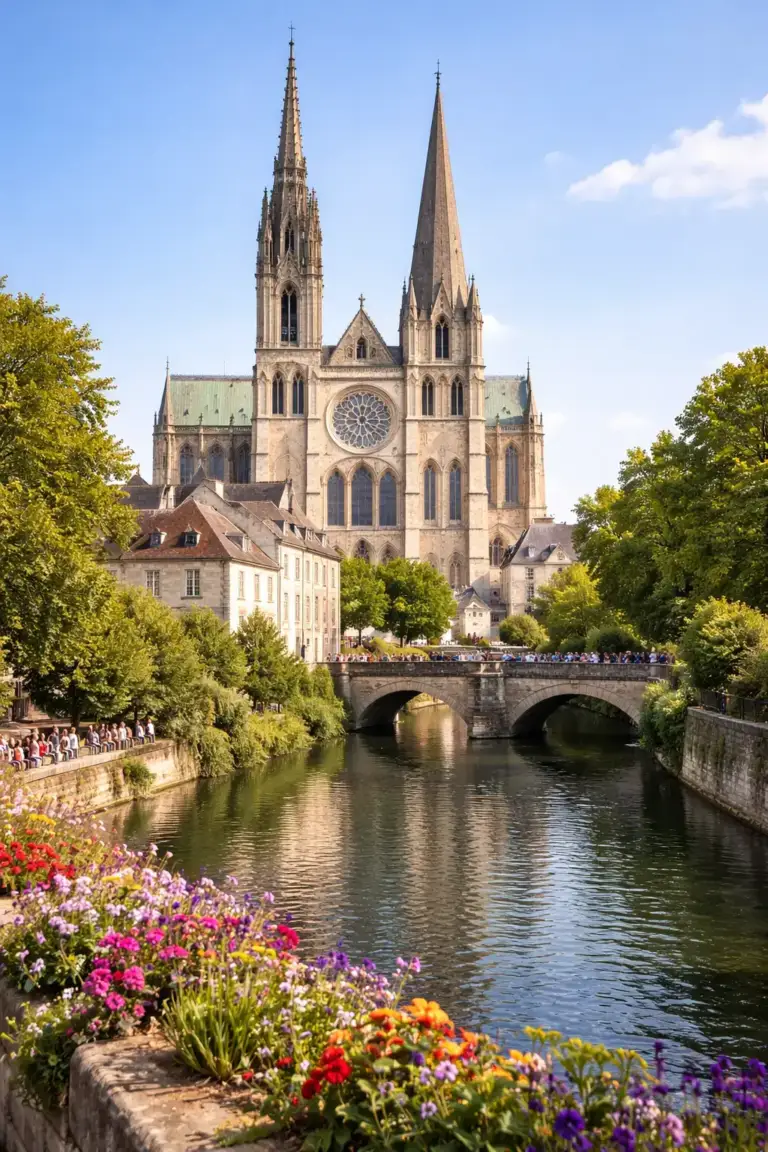
Chartres Cathedral
This monument is often considered a pinnacle of the tradition due to the seamless integration of its components. First, notice the bond between the soaring elevation and the luminous glazing. This bond makes the interior feel like a complete environment rather than a sequence of separate decorative elements. For many, Chartres is where the logic of Gothic cathedrals becomes most easily grasped.
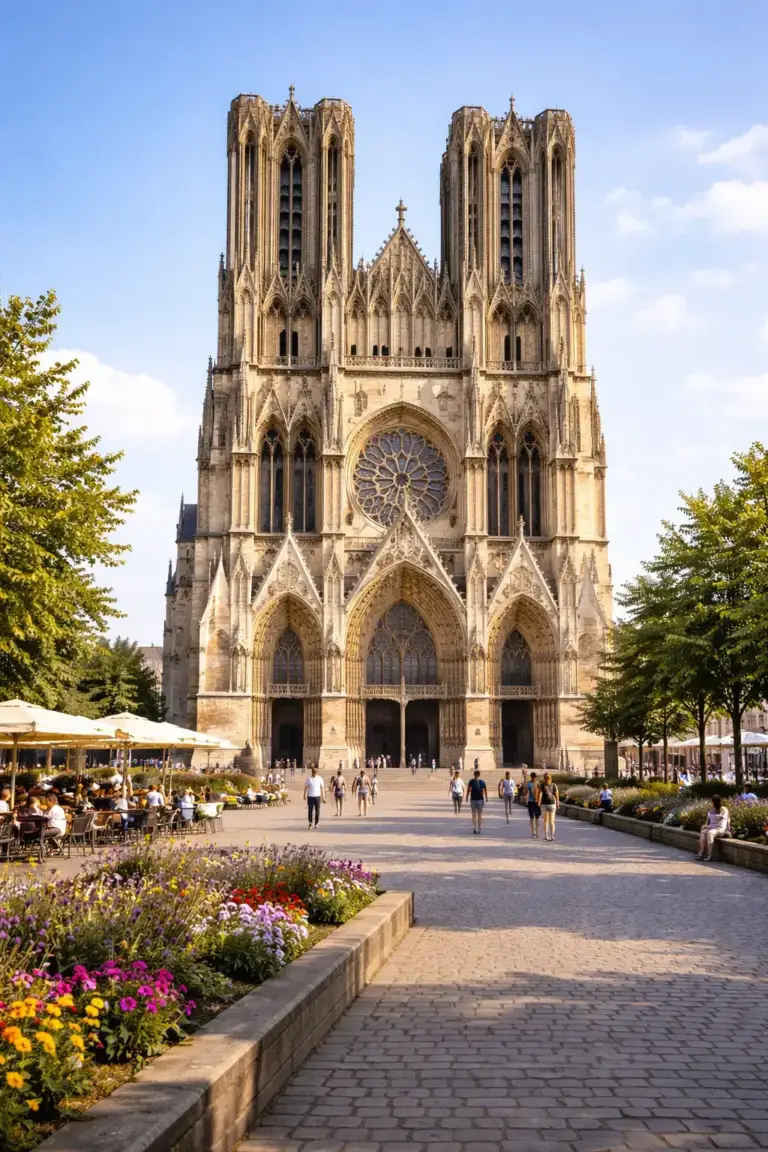
Reims Cathedral
This building is particularly useful for understanding facade rhythm and sculptural integration. The first thing to notice is the harmony of the front elevation, where the portals, window zones, sculptures, and vertical accents appear coordinated rather than crowded. Reims makes the style’s formal discipline apparent from afar.
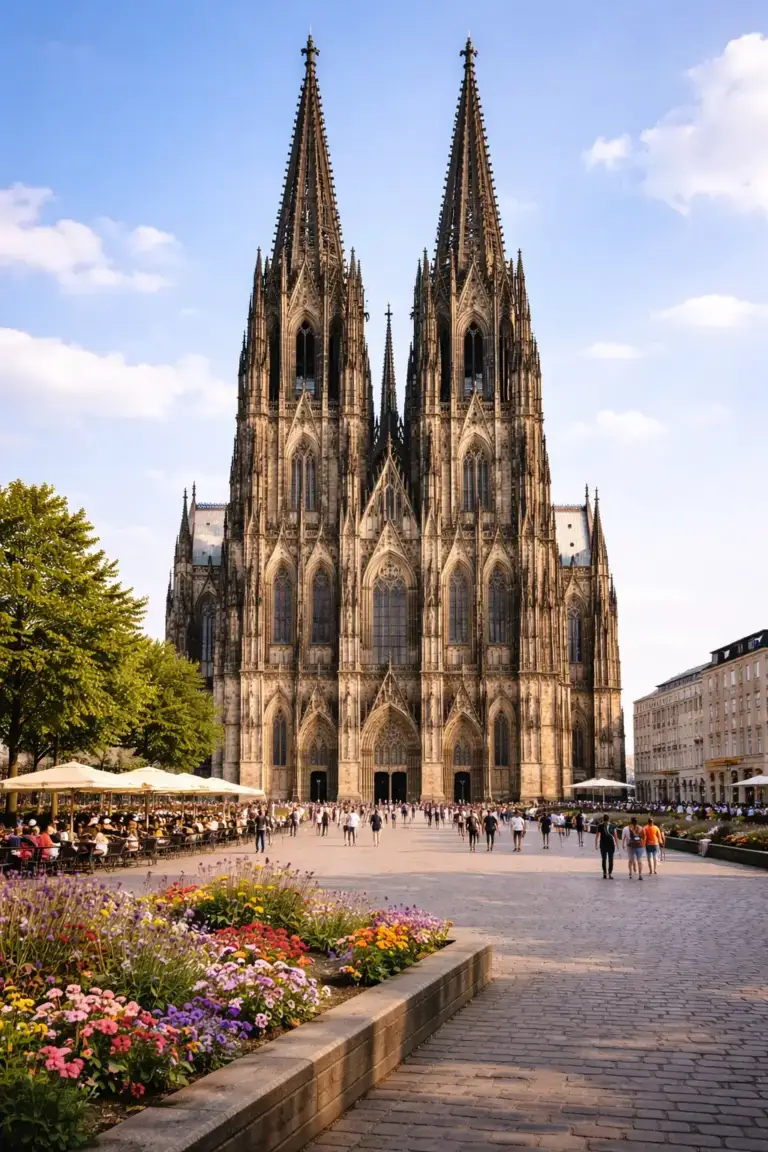
Cologne Cathedral
This cathedral exemplifies how the Gothic style could become more monumental in a German context. The first notable feature is the extraordinary height of the overall silhouette, which intensifies the style’s upward thrust into an almost overwhelming vertical statement. Cologne is one of the strongest examples of Gothic architecture for readers who want to see ambition expressed at maximum scale.
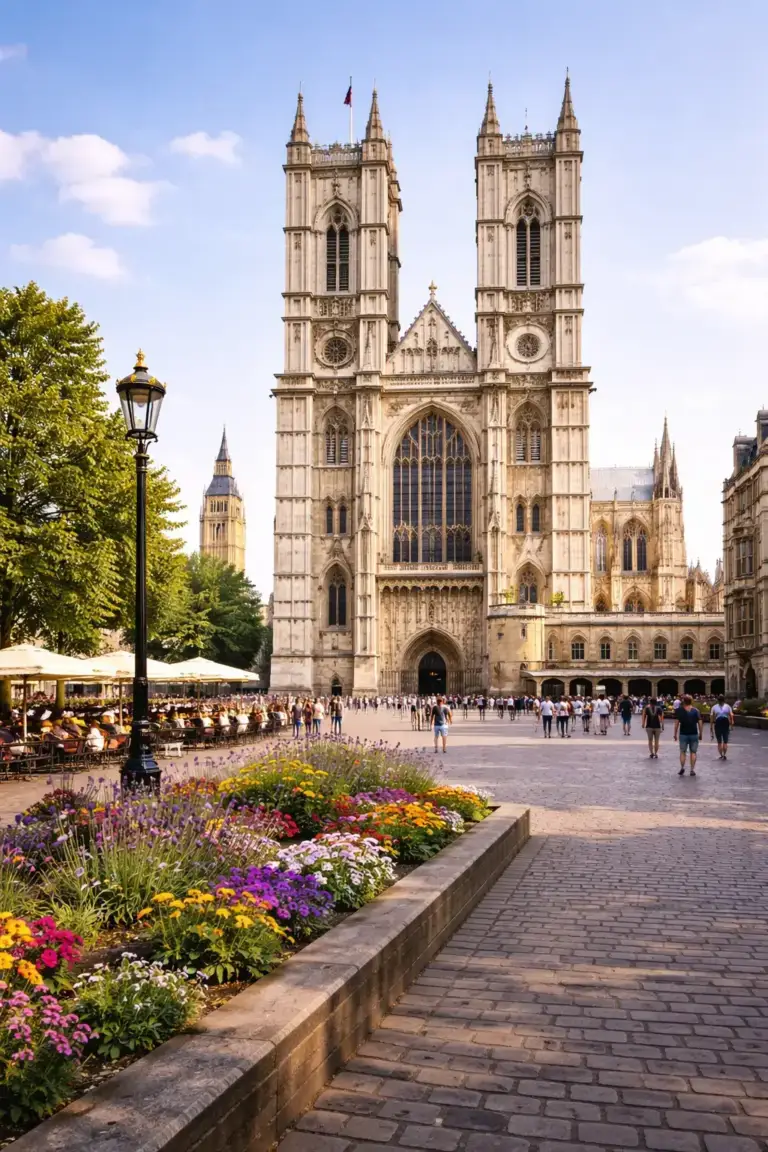
Westminster Abbey
This landmark is significant because it shows how the Gothic style evolved in an English context while keeping its core identity. First, note the long interior and measured elevation, which give the space a less concentrated and more rhythmically extended feel than a French cathedral. As a result, Westminster helps clarify how Gothic cathedral architecture could adapt to local priorities.
Main Regional Variations of Gothic Architecture
The style is one tradition, but it does not look identical everywhere it appears. The most useful way to frame French Gothic vs English Gothic is to see both as regional expressions of the same structural vocabulary rather than as unrelated systems. What changes most visibly from one region to another is the balance among height, facade rhythm, tracery, and plan emphasis.
French Gothic
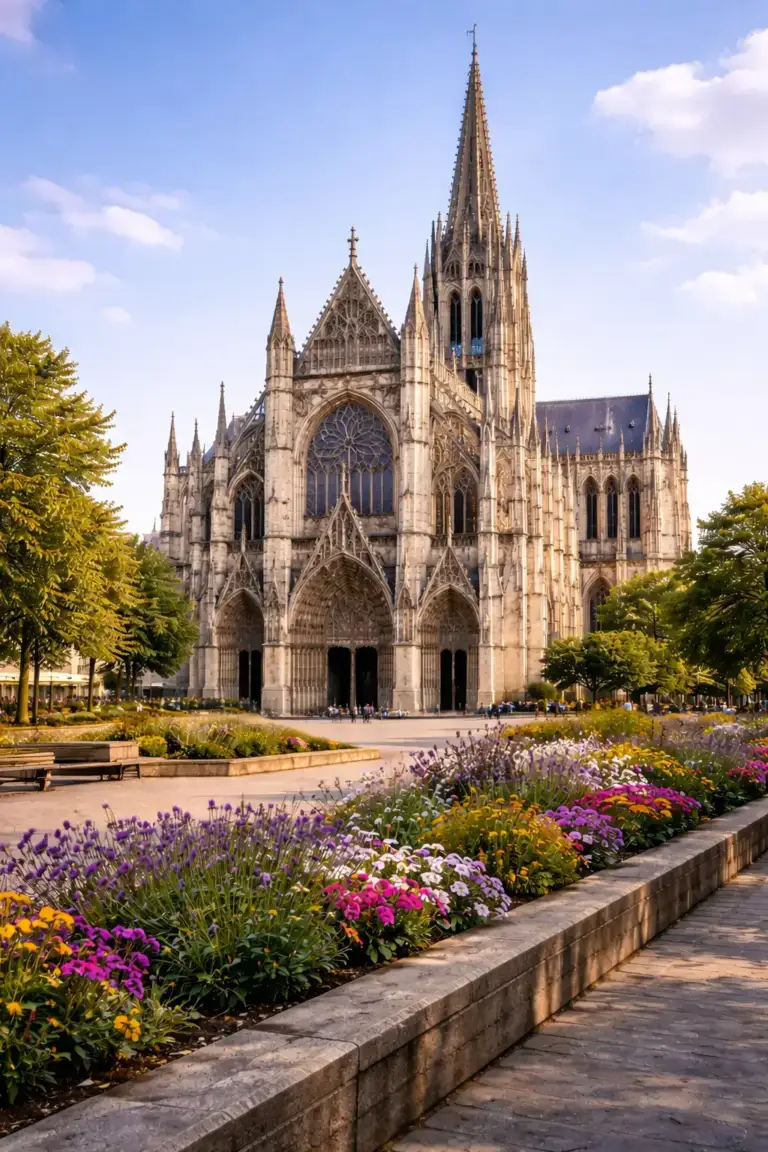
The French version is often the clearest expression of the drive toward height, luminosity, and unified elevation systems, and it is the origin point. Facades tend to be strongly ordered, windows become increasingly ambitious, and the relationship between vaulting, buttressing, and glazing remains easy to understand. When people imagine the classic form of the style, they are usually envisioning this version.
English Gothic
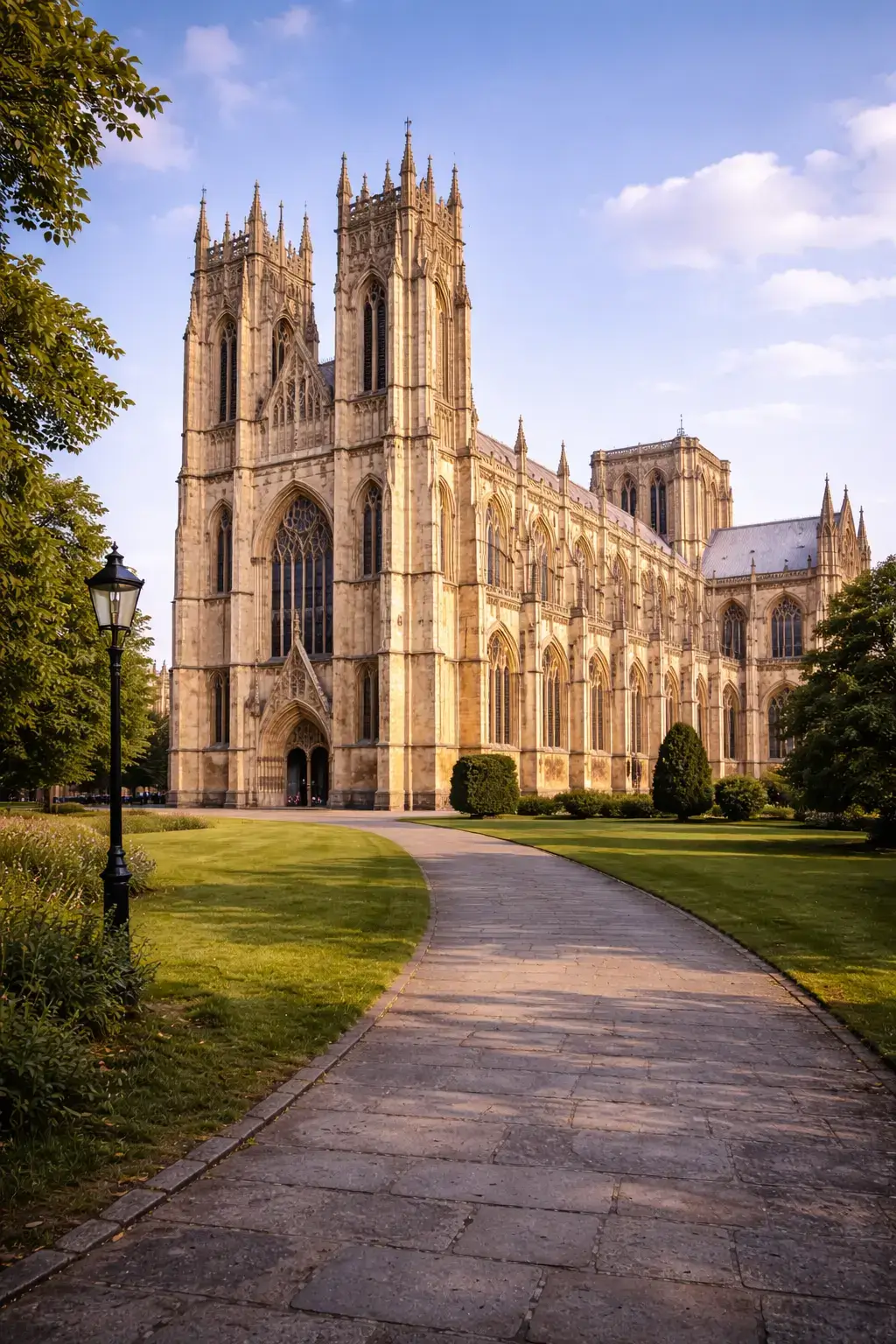
The English version often feels more expansive and varied in its surface treatments. Rather than concentrating visual energy into one soaring vertical statement, English buildings distribute interest along the length of the church and across the evolving treatment of tracery and wall surfaces. This is why Westminster Abbey feels related to French precedents while maintaining a distinctly local rhythm and emphasis.
German and Central European Gothic
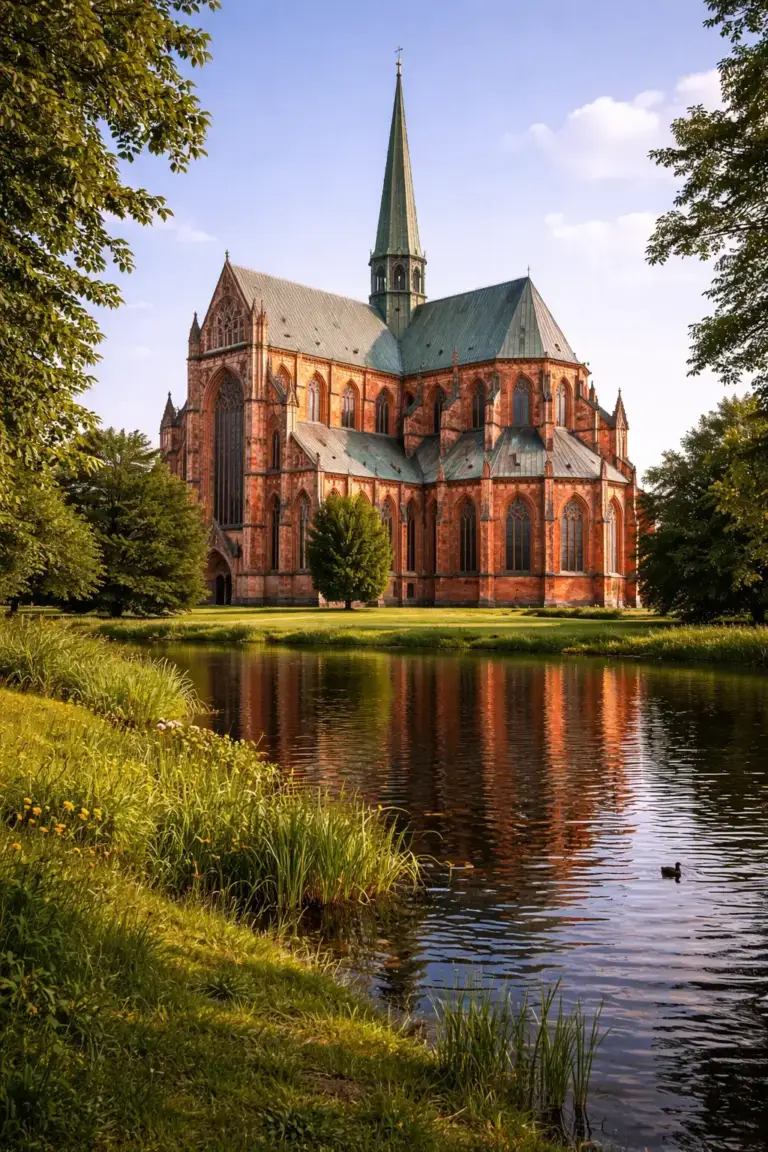
The German and Central European versions often intensify monumentality in striking ways. Large urban churches and cathedrals have especially powerful silhouettes due to their emphasis on height, mass, and vertical focus, which sometimes makes the style feel more severe and emphatic than its French counterparts. Nevertheless, the underlying logic of pointed forms, skeletal support, and luminous aspiration remains immediately recognizable.
Gothic vs. Neo-Gothic Architecture
A second comparison is useful because many readers first encounter the style through later revival buildings rather than through medieval cathedrals themselves. The key difference in Gothic vs Neo-Gothic architecture is that the original style belongs to the Middle Ages, while Neo-Gothic belongs to later periods that looked back to medieval forms for inspiration. They may share arches and decorative cues, but they belong to different historical contexts and design cultures.
Original Medieval Gothic
The medieval form emerged from structural experimentation and the need for religious buildings in 12th-century Europe. Builders developed its features in an attempt to solve problems of load, height, illumination, and spatial continuity in large sacred spaces. This practical origin is one reason why the style feels so internally coherent.
Later Gothic Revival or Neo-Gothic
The later revival reused medieval vocabulary for new cultural purposes, especially in the 18th and 19th centuries. Gothic Revival architecture often carried associations of morality, spirituality, romance, education, and historical memory, depending on the building type and period. It could be scholarly and precise, or it could borrow the look more selectively for atmosphere and symbolism.
How to Avoid Confusion
The fastest check is chronological rather than stylistic. For example, a building erected in the Victorian period may have pointed windows and tracery, but it is still part of a later revival unless it truly belongs to the medieval era. Once the date is clear, it becomes much easier to sort out the visual overlap.
How to Recognize Gothic Architecture in Real Buildings
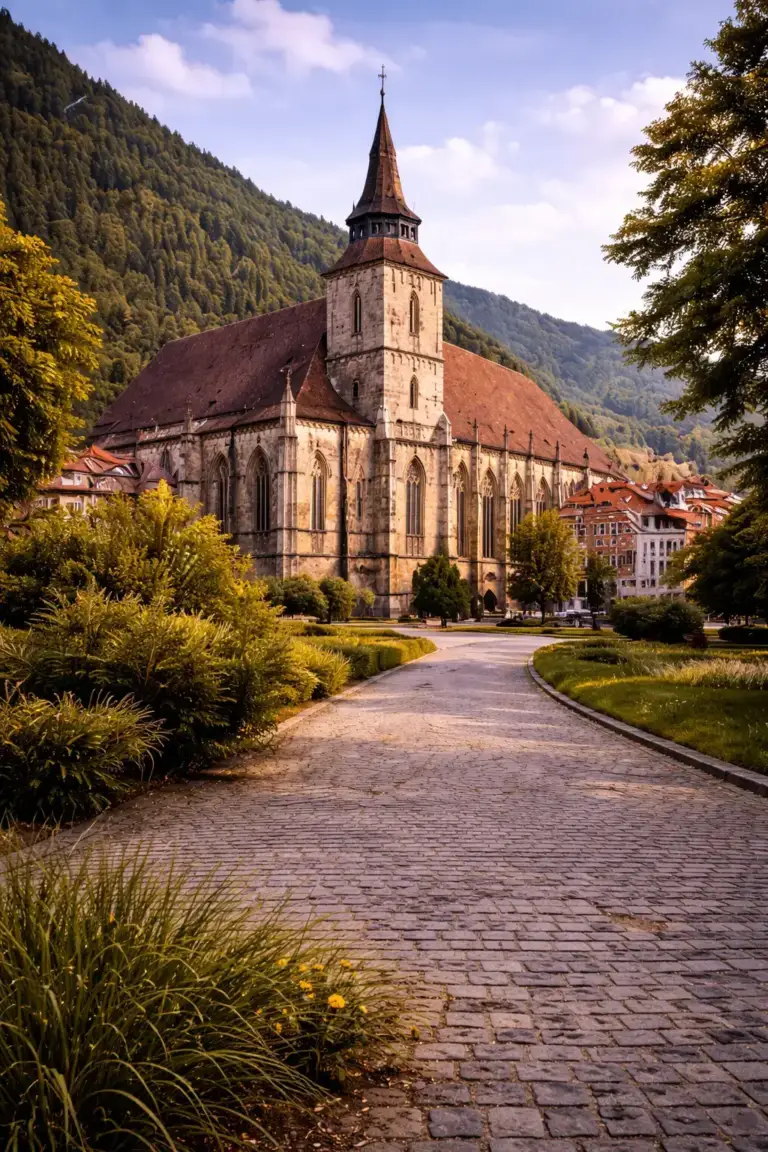
A practical field guide is more useful than a dense chronology when the goal is recognition. The quickest way to identify the Gothic building style is to begin with the overall silhouette and then move inward to the arch shape, wall thickness, window size, and exterior support. In most cases, the style reveals itself through coordinated upward movement rather than through a single decorative motif.
One effective method is to start with the openings and ask whether the arches taper to a point. Then look at whether the facade pulls the eye upward through towers, pinnacles, elongated window zones, and repeated vertical accents. A rendered facade study makes this reading process easier to understand because the eye naturally climbs the composition before it studies individual details.
Another reliable check is to compare the apparent wall mass to the size of the openings. The idea of pointed arches in Gothic architecture matters, but it becomes more useful when paired with questions about buttresses, glazing, and whether the building feels skeletal rather than bluntly solid. If the structure seems to soar instead of hunker down, the odds are high that the viewer is looking at a Gothic building or a later revival modeled on it.
Why Gothic Architecture Still Matters
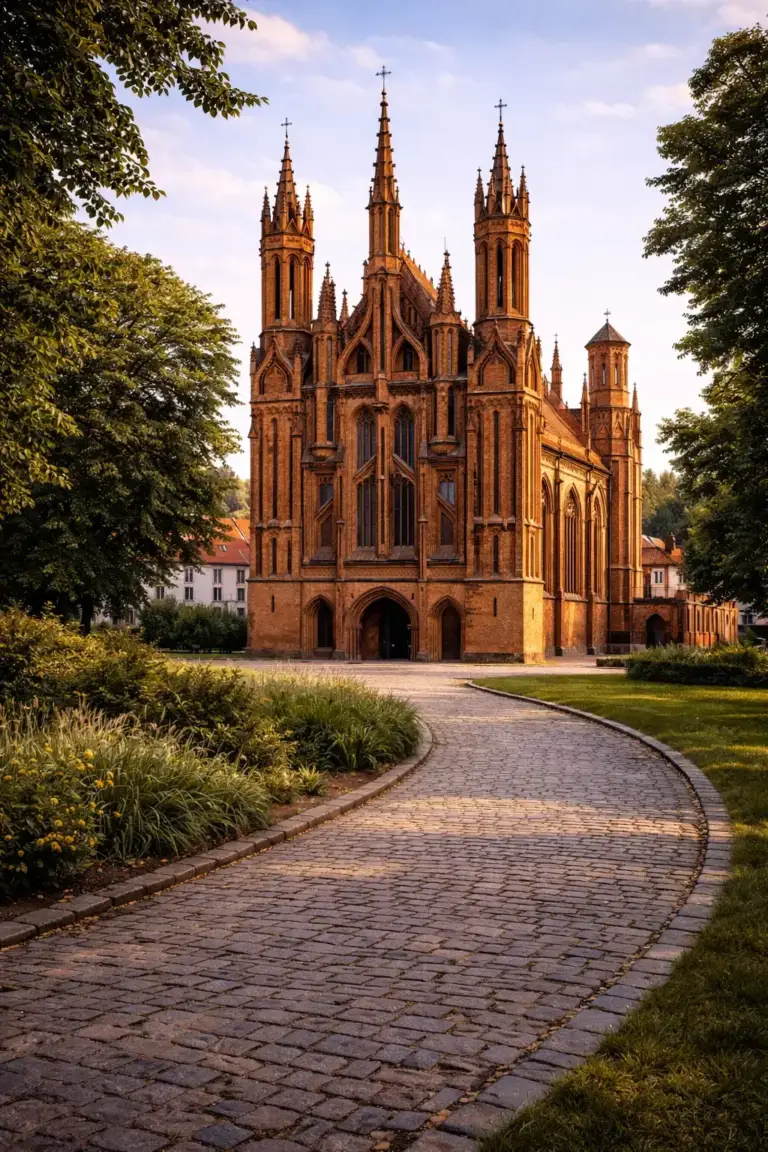
The style still matters because it remains one of the clearest demonstrations of how engineering, symbolism, and visual identity can reinforce one another. As a form of medieval Gothic architecture, it continues to teach readers how a building can communicate through structure instead of relying on surface treatment alone. That continuing legibility helps explain its lasting presence in education, heritage culture, tourism, and design thinking.
Influence on Later Religious Architecture
Later, when designers wanted a space to feel elevated, solemn, and luminous, they repeatedly returned to the principles of sacred Gothic architecture. This style offered a lasting way to transform height, rhythm, filtered light, and structural expression into a spiritual atmosphere while ensuring the building did not feel inert. The lesson was not merely decorative but also experiential.
Gothic Revival and Modern Imagination
The revival movements of later centuries helped keep the medieval image active in public memory. For contemporary practices that translate historical references into visual proposals, architectural rendering can clarify proportion, facade rhythm, and lighting effects before decisions move into documentation or construction. That modern afterlife shows how strongly the style still shapes the visual imagination.
Why the Style Remains Culturally Powerful
Its cultural power comes from the fact that it is easy to recognize yet difficult to exhaust intellectually. The characteristics of Gothic cathedrals still communicate collective ambition, technical daring, spiritual aspiration, and public identity in a form that remains visually immediate even to non-specialists. In heritage-sensitive planning contexts, architectural visualization can also help evaluate how new projects relate to historic skylines shaped by tall vertical landmarks.
Gothic Architecture: Key Takeaways
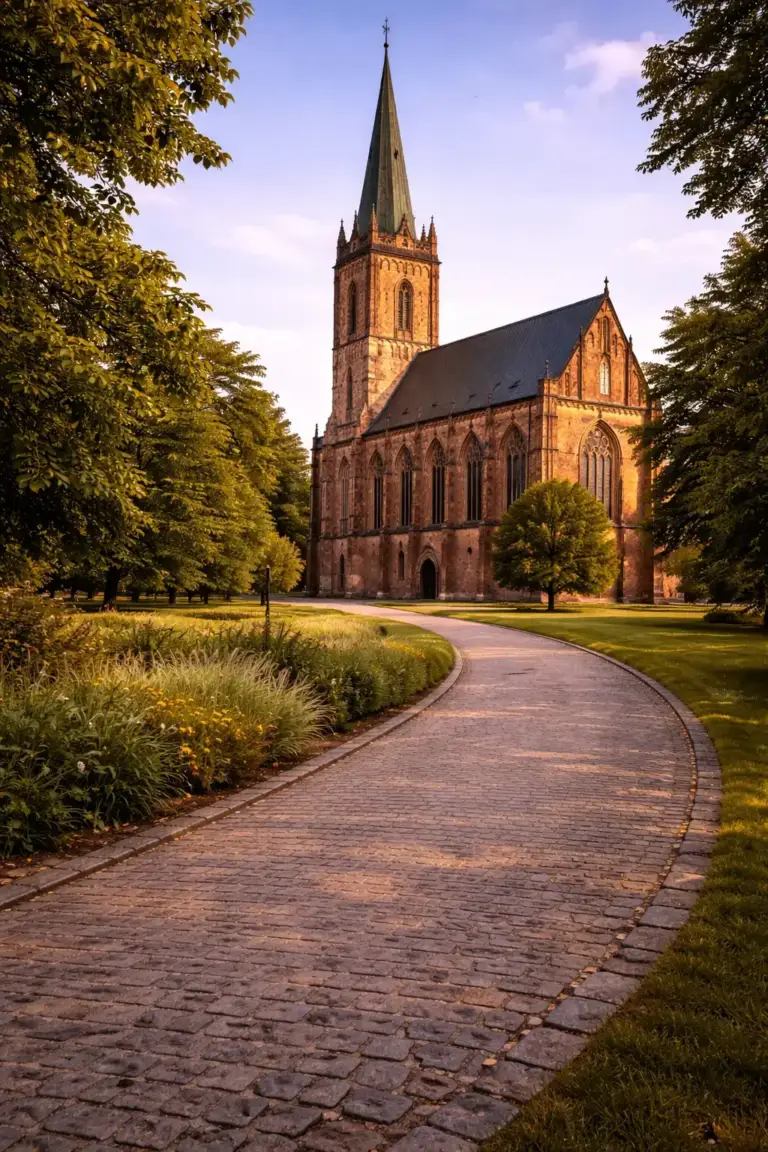
The best way to understand Gothic architecture is to link each major feature to the problem it solves and the effect it creates. Gothic architecture is not just medieval decoration. It is a coordinated system of pointed arches, ribbed vaults, flying buttresses, large windows, and vertical lines that make buildings taller, brighter, and more expressive. Once this system is understood, the style becomes easier to recognize in world-famous cathedrals and lesser-known historic buildings.
This insight also explains why the style still feels modern in certain ways. It shows how structure can influence atmosphere, how engineering can enhance beauty, and how a building can evoke emotion through the organized use of space and light. This combination is the real reason Gothic architecture remains so memorable.

Turn Ideas Into Visual Stories
Frequently Asked Questions
What is Gothic architecture?
Gothic architecture is a medieval European style of building known for its pointed arches, ribbed vaults, flying buttresses, stained glass, and strong vertical emphasis. Developing in the 12th century, it became especially associated with cathedrals, churches, and other monumental religious settings. Its distinctiveness stems from the way structure and appearance work together as a unified system.
What are the main features of Gothic architecture?
The main features are pointed arches, ribbed vaults, flying buttresses, and large stained-glass windows, which give the structure an overall sense of upward movement. These elements are not random decorations; each contributes to the structure’s stability and visual drama. Together, they create the signature combination of height, openness, and light for which the style is known.
When did Gothic architecture begin?
Gothic architecture originated in 12th-century France. Emerging from Romanesque precedents, it introduced more refined structural and visual solutions that made buildings taller, brighter, and more open. From there, it spread across much of Europe in various regional styles.
Why are Gothic cathedrals so tall?
Gothic cathedrals are so tall because their builders used structural systems that distributed weight more efficiently. Ribbed vaults and flying buttresses reduced the need for extremely thick walls, allowing for more ambitious vertical planning. Height also held symbolic significance because it evoked awe and spiritual aspiration.
What is the difference between Gothic and romanesque architecture?
Romanesque architecture typically appears heavier, thicker, and more grounded. In contrast, Gothic architecture tends to appear taller, lighter, and more open. This is due to its use of pointed arches, larger windows, and more visible support systems. This contrast is most evident when comparing arch shape, wall mass, and window size.
What are some famous examples of Gothic architecture?
Notable examples of this style include the Basilica of Saint-Denis, Notre-Dame de Paris, Chartres Cathedral, Reims Cathedral, Cologne Cathedral, and Westminster Abbey. Each highlights a different aspect of the style, including early development, facade design, stained glass, and regional adaptations. Together, they offer a practical, visual introduction to the tradition.
Is Gothic architecture the same as Neo-Gothic?
Gothic architecture and Neo-Gothic are not the same. Medieval Gothic is the original historical style, whereas Gothic Revival, also known as Neo-Gothic, is a later reinterpretation inspired by medieval forms. Similar details can make them appear related, but they have different dates and cultural contexts.
How can you identify Gothic architecture quickly?
The fastest method is to check the arch shape, vertical pull of the facade, window size, and presence of exterior buttresses. Gothic buildings usually feel soaring and articulated rather than blunt, thick, and fortress-like. This overall impression is often sufficient for a preliminary identification.
What are the 7 characteristics and elements of Gothic architecture?
The seven defining elements are pointed arches, ribbed vaults, flying buttresses, tall stained-glass windows, vertical emphasis, ornate tracery, and decorative pinnacles or spires. Each began as a structural solution and then became a visual signature, which is why Gothic buildings look both engineered and dramatic.
What are the five key elements of Gothic architecture?
The five key elements are the pointed arch, the ribbed vault, the flying buttress, large stained-glass windows, and a strong vertical emphasis. Together they let medieval builders raise taller, brighter walls than the heavier Romanesque style allowed, creating the soaring, light-filled interiors the style is known for.

Free field guide
How to Brief a Style So You Get It Back
Why naming a style transmits almost nothing, the seven measurable variables that actually carry one, and a one-page brief you fill in for any style at all.