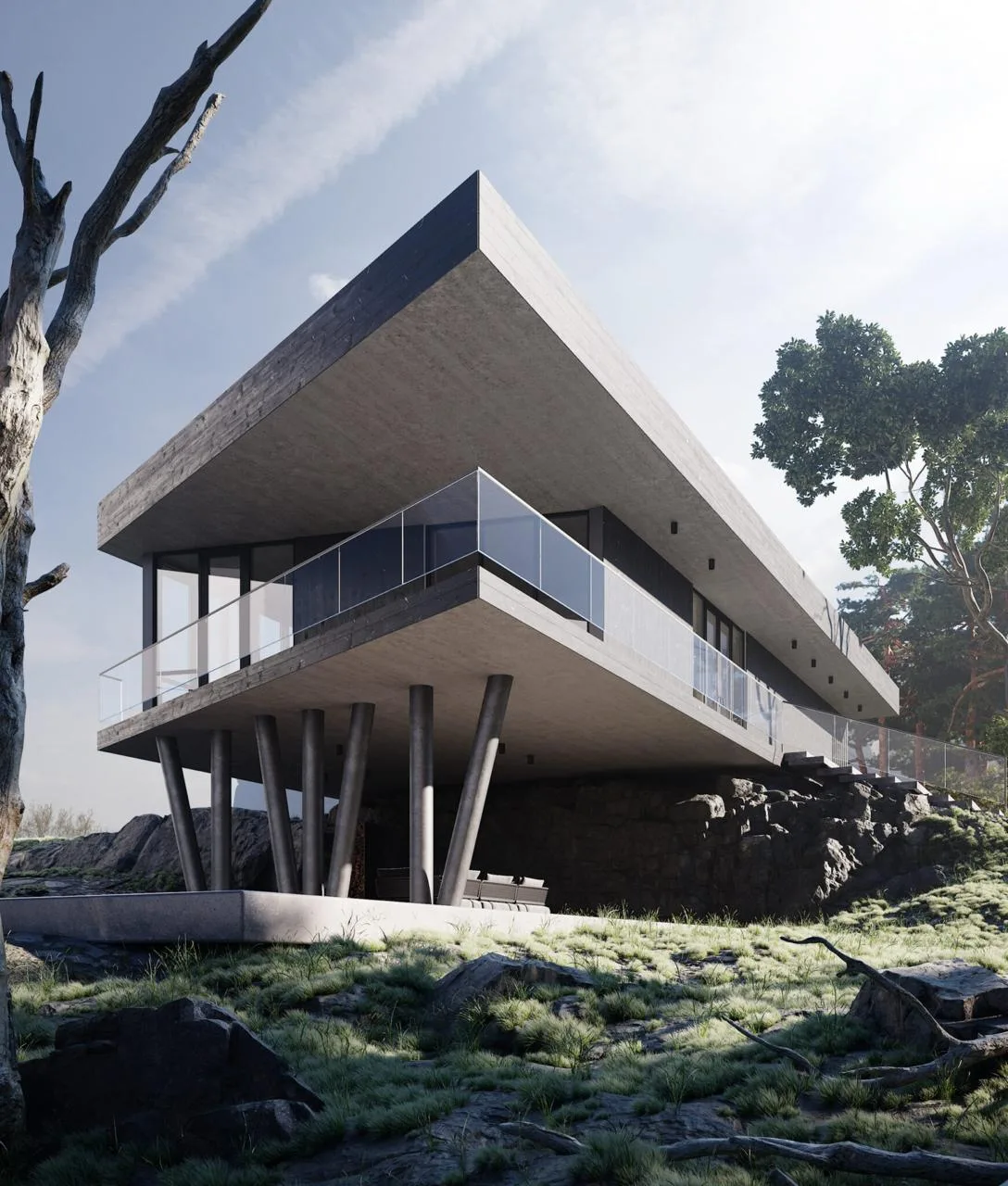
Brutalist interior design brings the raw honesty of brutalist architecture indoors: exposed concrete, bold geometric forms, and a tight monochrome palette. Rooted in the 1950s béton brut movement, today’s interiors soften that rawness with warm light, natural wood, and tactile textiles — keeping the drama while making spaces genuinely livable.
What Is Brutalist Interior Design?What Is Brutalist Interior Design?
Brutalist interior design is a style built on raw, unfinished materials — exposed concrete, raw stone, blackened steel — arranged into heavy, sculptural forms with little ornament. It treats structure as decoration: a board-formed concrete wall or a monolithic island is the feature, not something to be hidden. The look prizes honesty, mass, and texture over polish and comfort.
The style is the indoor cousin of brutalist architecture, which grew out of Le Corbusier’s post-war concrete buildings and was named by critic Reyner Banham in 1955. For decades brutalism read as cold and institutional. Its current revival — visible across Pinterest, design media, and a wave of interior design styles threads on Reddit — reframes that rawness as calm, grounding, and quietly luxurious.
Key Characteristics of Brutalist InteriorsKey Characteristics of Brutalist Interiors
A brutalist interior is recognisable at a glance. A few defining traits do most of the work:
- Exposed concrete — walls, ceilings, or floors left raw, often showing board-form or formwork marks.
- Honest, unfinished materials — raw stone, brick, blackened or oxidised metal, and unlacquered wood.
- Monochrome palette — greys, charcoal, taupe, and off-white, with material colour doing the talking.
- Bold geometric forms — blocky, monolithic shapes; thick slabs; heavy, sculptural furniture.
- Function over decoration — minimal ornament; every element earns its place.
- Dramatic light and shadow — directional light that models texture and casts deep, deliberate shadows.
- Visible structure — beams, columns, and services treated as features rather than flaws.
The through-line is restraint. Where maximalism layers and decorates, brutalism strips a room back to its structural truth and lets a single concrete plane or sculptural seat carry the whole composition.
Brutalist vs. Minimalist and Industrial Interiors
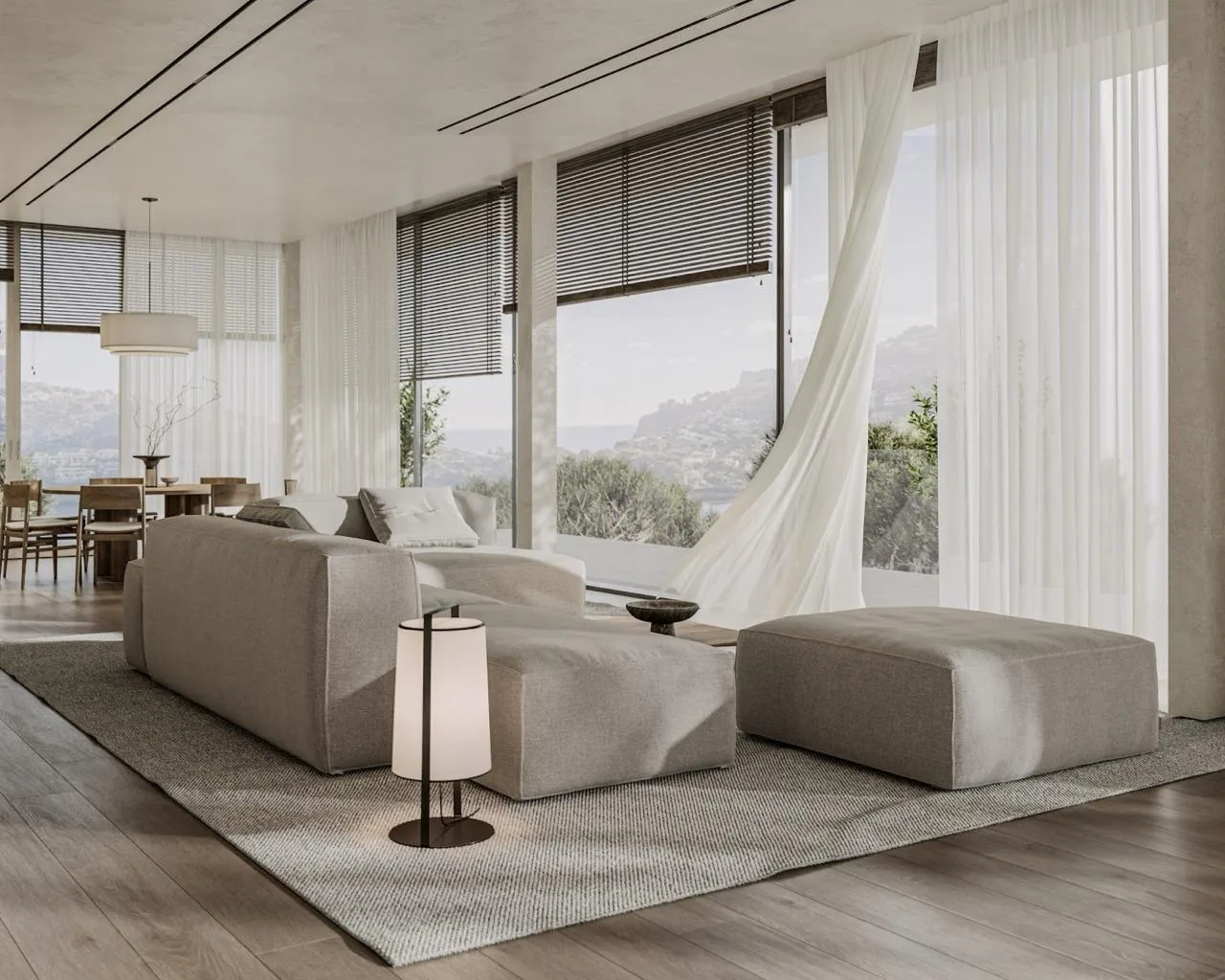
Brutalist interiors are often confused with minimalist interiors and industrial style. All three favour pared-back spaces and honest materials, but their intent differs: minimalism chases lightness and calm, industrial leans on reclaimed warehouse grit, and brutalism pursues mass, weight, and sculptural drama.
| Aspect | Brutalist | Minimalist | Industrial |
| Core idea | Raw mass and sculptural form | Less is more; visual calm | Reclaimed, utilitarian grit |
| Signature material | Exposed concrete | Clean painted surfaces | Brick, steel, salvaged wood |
| Palette | Greys, charcoal, taupe | White, beige, soft neutrals | Rust, black, weathered tones |
| Mood | Bold, grounding, monumental | Light, airy, serene | Edgy, workshop-like |
| Furniture | Heavy, monolithic, sculptural | Slim, low-profile, hidden storage | Metal frames, leather, vintage |
In practice the styles overlap. A “minimalist brutalist” scheme keeps the concrete but dials down the bulk, while a warmer reading borrows the soft neutrals of Scandinavian style to stop the room feeling severe.
Warm Brutalism: Softening the Style for Real HomesWarm Brutalism: Softening the Style for Real Homes
The biggest shift driving brutalism’s comeback is “warm brutalism” — keeping the raw concrete and heavy forms while layering in warmth so a home feels inviting rather than like a bunker. It is the difference between a brutalist building and a brutalist home: same bones, far more livable.
A few moves do most of the softening:
- Warm light — low-temperature LEDs and pools of lamplight to take the blue chill off grey surfaces.
- Natural wood — oak or walnut joinery against concrete to add grain and warmth.
- Tactile textiles — bouclé, wool, and linen in seating and throws to break up hard planes.
- Earth-toned accents — terracotta, ochre, and muted rust within the monochrome base.
- Greenery — a single sculptural plant to soften the geometry without clutter.
The discipline is balance: enough warmth to live with, not so much that the brutalist character dissolves. This restrained, material-led warmth is exactly what overlaps with Japandi interiors — both treat texture and natural light as the real luxury.
Brutalist Interior Design Room by RoomBrutalist Interior Design Room by Room
Living Room
The living room is where brutalism makes its statement. A board-formed concrete feature wall, a monolithic coffee table, and a deep modular sofa in a neutral bouclé set the tone. Keep the layout open, anchor it with one sculptural light fixture, and let shadow play across the concrete as the daylight moves.
Bedroom
Brutalist bedrooms work best when the rawness is balanced with comfort. A low platform bed, a concrete or microcement headboard wall, and linen bedding in greige keep the mood calm. Warm, layered lighting is essential here — it is what turns a hard, monastic space into a restful one.
Kitchen
In the kitchen, a monolithic concrete or stone island becomes the hero. Handleless cabinetry in matte grey, exposed shelving in blackened steel, and a single slab backsplash reinforce the look. Pair the cold surfaces with timber open shelving to keep the room from feeling clinical.
Materials, Furniture, and Color Palette
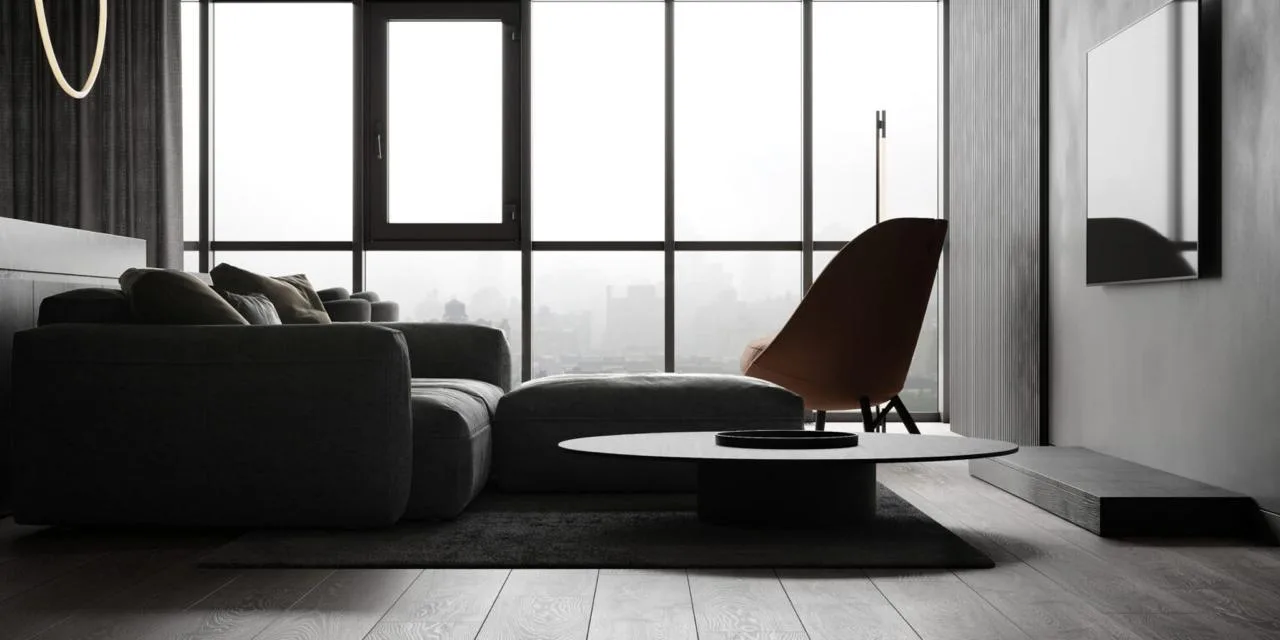
Brutalism is a material-first style, so the palette is chosen for texture as much as colour. The core ingredients:
- Surfaces — exposed or polished concrete, microcement, raw stone, and brick.
- Metals — blackened steel, raw aluminium, and oxidised or patinated brass.
- Wood — solid oak, walnut, or ash, left matte and unlacquered for contrast.
- Textiles — bouclé, wool, leather, and heavy linen in earthy neutrals.
Furniture is heavy and sculptural — chunky plinths, monolithic tables, and seating with strong geometry. Brutalist and modern brutalist pieces are often statement objects in their own right, so a few go a long way. The colour palette stays disciplined: greys and charcoal as the base, taupe and off-white to lift it, and a single earthy accent — terracotta, rust, or deep olive — for warmth.
How We Visualize Brutalist Interiors in 3D
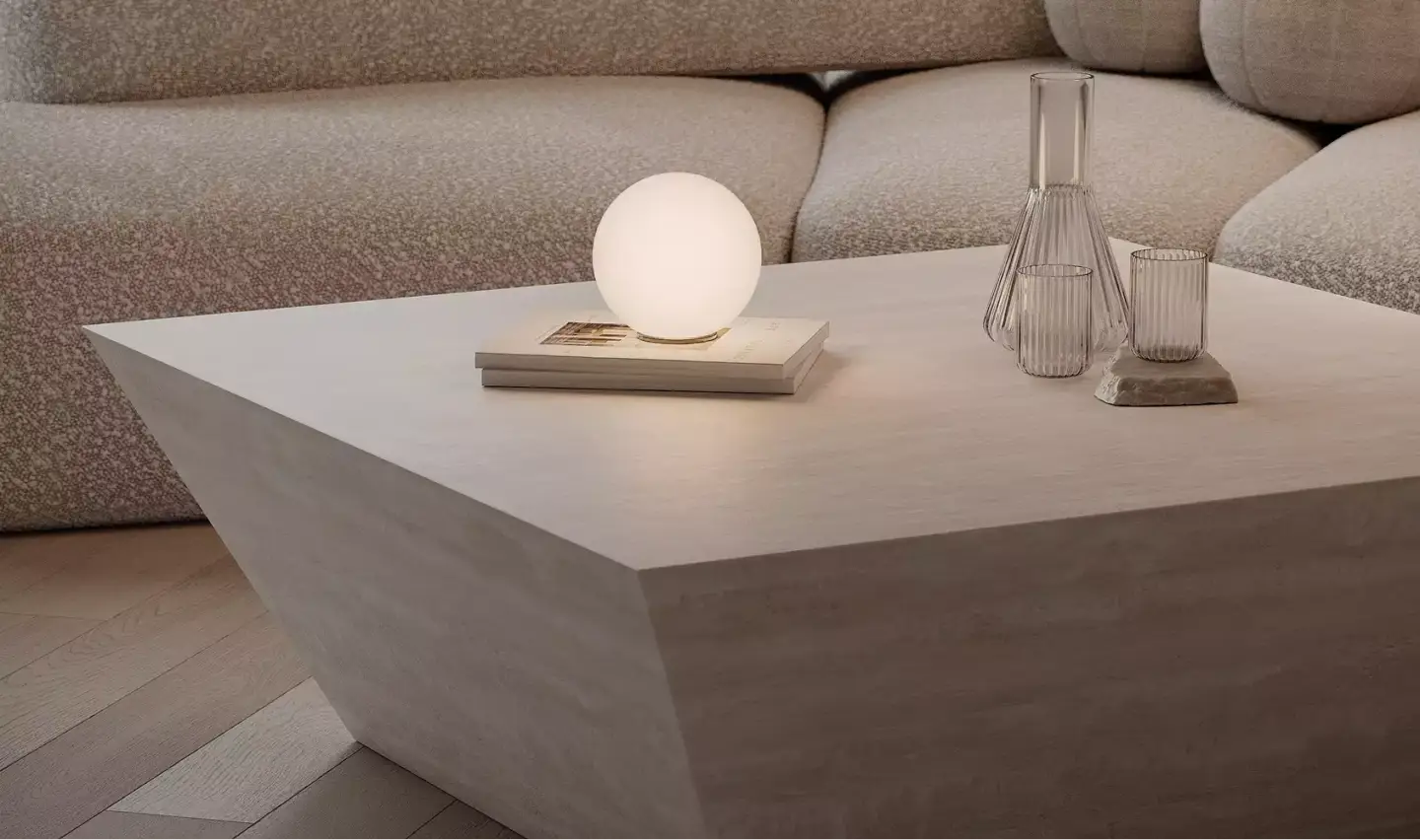
Brutalist interiors are deceptively hard to render. With almost no colour or decoration to carry the image, everything rides on material accuracy and light. Concrete is the challenge: it needs the right roughness, subtle colour variation, board-form lines, and small imperfections, or it reads as flat grey plastic instead of cast stone.
That is why our 3D interior rendering work on these spaces leans heavily on lighting studies — testing how directional daylight and warm artificial light model the texture and cast the deep shadows the style depends on. For developers and homeowners planning a brutalist scheme across whole residential projects, photoreal CGI is the safest way to confirm that raw concrete will feel grounding rather than grim before a single panel is poured.

Turn Ideas Into Visual Stories
FAQ about brutalist interior design
What is brutalist interior design?
Brutalist interior design is a style built on raw, unfinished materials — exposed concrete, raw stone, and blackened steel — shaped into heavy, sculptural forms with a monochrome palette and minimal ornament. It treats structure as decoration, prizing honesty, mass, and texture over polish.
What are the characteristics of brutalist interior design?
Its defining traits are exposed concrete, honest unfinished materials, a monochrome grey palette, bold geometric forms, function over decoration, and dramatic light and shadow. Visible structure — beams, columns, and raw surfaces — is treated as a feature rather than hidden away.
Is brutalist interior design the same as minimalism?
No. Both strip rooms back and use honest materials, but minimalism chases lightness and empty space while brutalism pursues mass, weight, and sculptural drama through raw concrete. A minimalist brutalist scheme blends the two, keeping concrete forms with less visual bulk.
Why is brutalist interior design making a comeback?
After decades read as cold and institutional, brutalism is being reframed as calm, grounding, and quietly luxurious. The warm brutalism trend — pairing raw concrete with wood, warm light, and tactile textiles — makes the style livable at home, driving its revival across design media.
What colors work in a brutalist interior?
Brutalist interiors stay monochrome: greys, charcoal, taupe, and off-white, with the natural colour of concrete, stone, and metal doing most of the work. A single earthy accent — terracotta, rust, or deep olive — adds warmth without breaking the disciplined palette.
Can a brutalist interior feel warm and cozy?
Yes. Warm brutalism keeps the concrete and heavy forms but layers in natural wood, low-temperature lighting, bouclé and wool textiles, and earth-toned accents. The result feels grounding and inviting rather than severe, while preserving the style’s bold, sculptural character.
What furniture suits a brutalist interior?
Heavy, sculptural, monolithic pieces — chunky plinths, slab tables, and seating with strong geometry — suit the style best. Because each piece is a statement object, a few go a long way; pair them with tactile upholstery in neutral tones to soften the hard forms.
Who is considered the father of Brutalism?
Brutalism grew from Le Corbusier’s post-war use of raw concrete — béton brut — which gave the movement its name. British critic Reyner Banham popularised the term New Brutalism in 1955, framing it as a defining architectural and design movement of the era.