Grandmillennial interior design is a decorating style that pairs traditional, heirloom-inspired details—chintz florals, chinoiserie, skirted tables, and needlepoint—with a lighter, more edited modern hand. Nicknamed “granny chic,” it lets younger homeowners embrace the patterns and antiques mainstream taste once dismissed as stuffy, but curated rather than cluttered.
What Is Grandmillennial Style?
Grandmillennial style is a nostalgic decorating look that revives grandmother-era traditional decor—florals, ruffles, porcelain, and antiques—filtered through a younger, more playful and restrained sensibility. Journalist Emma Bazilian coined the term in House Beautiful in 2019 to describe millennials, then in their mid-20s to late-30s, drawn to design that mainstream culture had written off as “stuffy”: Laura Ashley prints, embroidered linens, and tasseled trim.
The look is sometimes called “granny chic” because it borrows the comfort and craft of a well-loved family home. What separates it from a straight period revival is editing: instead of matching sets and formal symmetry, grandmillennial rooms mix eras, lighten palettes, and let one bold pattern or inherited piece carry the room.
Key Elements of Grandmillennial Decor
Grandmillennial decor is built from a recognizable kit of traditional motifs, layered in a controlled palette. The signature ingredients are:
- Chinoiserie — blue-and-white porcelain, pagoda motifs, and hand-painted or block-printed wallpaper.
- Chintz and florals — glazed floral cotton on upholstery, cushions, and drapery.
- Skirts and ruffles — bed skirts, skirted side tables, and ruffled or pleated lampshades.
- Trims and tapes — grosgrain tape, tassels, fringe, and scalloped edges on curtains and pillows.
- Heirloom brown wood — cherry, mahogany, and walnut antiques mixed with newer pieces.
- Needlepoint and embroidery — pillows, footstools, and framed samplers.
- Patterned wallpaper — florals, trellis, grasscloth, and toile.
- Layered textiles — several prints combined inside two or three repeating colors.
Grandmillennial vs. Traditional, Cottagecore, and Maximalist
Grandmillennial style overlaps with several nostalgic looks but is distinct from each. It borrows traditional’s patterns and antiques, cottagecore’s florals, and maximalism’s density—yet edits all three around inherited, granny-era pieces. If you want the fuller formal version, see our guide to traditional interior design; grandmillennial is its younger, looser cousin.
| Style | Core idea | How it differs from grandmillennial |
| Traditional | Formal, symmetrical, matched sets, historically consistent | Grandmillennial keeps the patterns and antiques but breaks the symmetry with mixed eras and brighter, playful color. |
| Cottagecore | Rural, pastoral fantasy; rustic and handmade | Grandmillennial is more refined and urban—chinoiserie and heirlooms over farmhouse gingham and raw wood. |
| Maximalist | More-is-more, any era or palette | Grandmillennial’s excess is specifically nostalgic and heirloom-anchored, and more carefully curated. |
How to Decorate a Grandmillennial Room
The grandmillennial look scales down to a single room. The method is the same everywhere: start with one traditional anchor, add pattern in layers, and keep the palette tight so the mix reads as collected, not chaotic.
Grandmillennial living room
Anchor a grandmillennial living room with a roll-arm or skirted sofa in a small floral or solid, then layer chintz throw pillows, a pair of blue-and-white lamps, and a chinoiserie garden stool as a side table. Hang a gallery of framed botanicals, and add a skirted table with a pleated shade for softness.
Grandmillennial bedroom
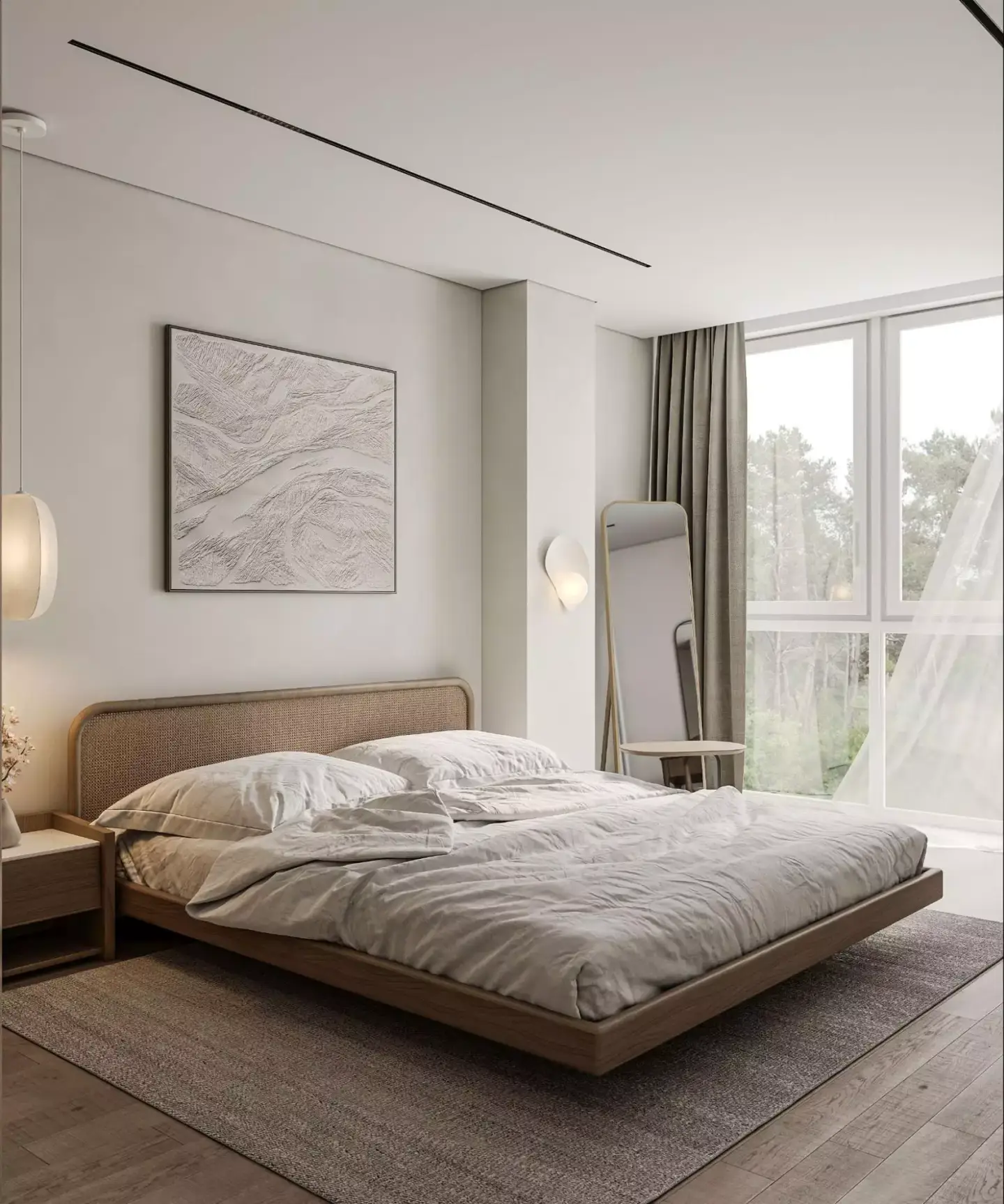
In a grandmillennial bedroom, choose an upholstered or scalloped headboard, a ruffled bed skirt, and mixed floral bedding pulled together by two or three shared colors. Add needlepoint pillows, a brown-wood heirloom nightstand, and a ruffled or fringed lampshade to complete the granny-chic layering.
Grandmillennial dining room
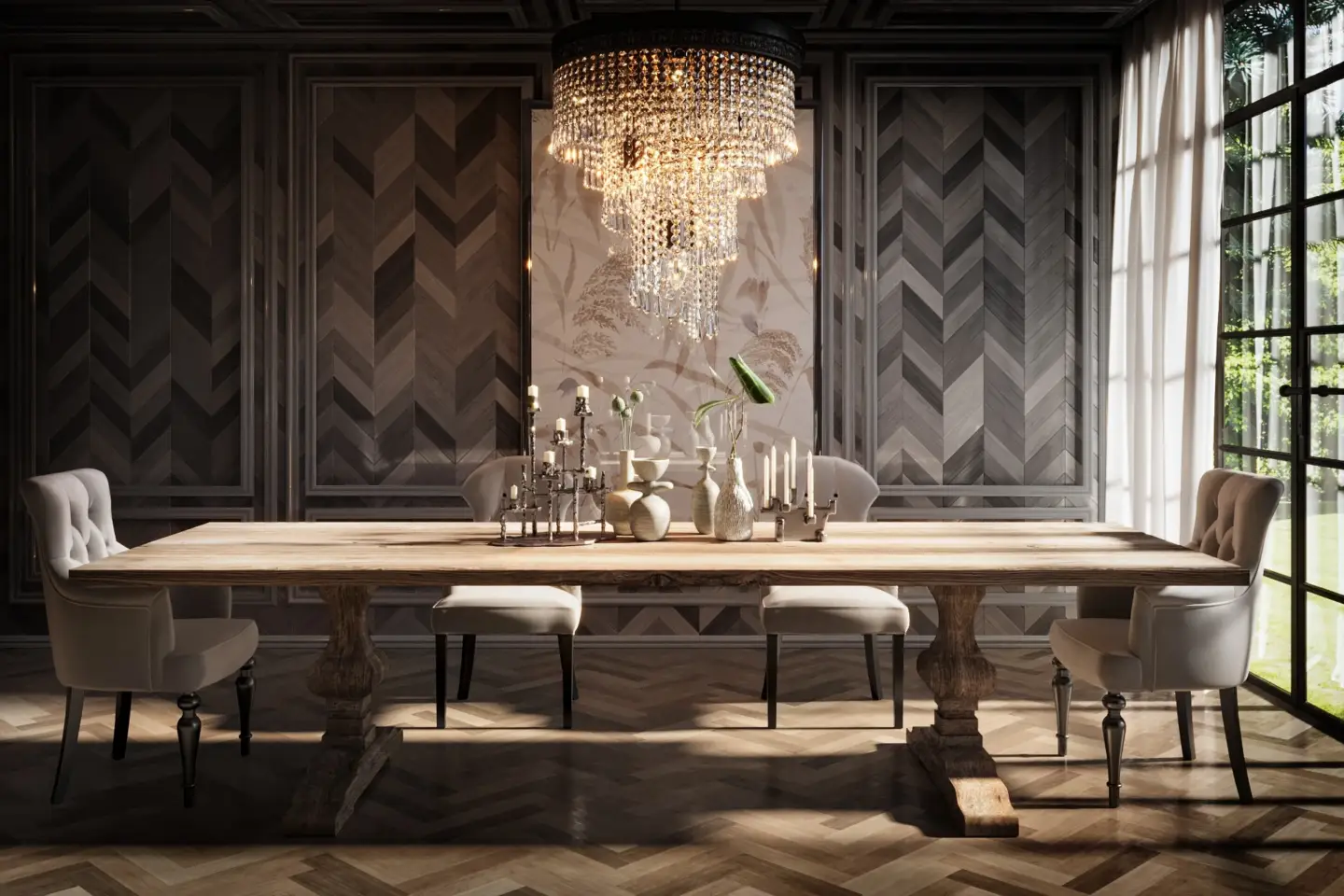
A grandmillennial dining room leans on patterned wallpaper—a floral, trellis, or toile—paired with an antique or skirted table, rattan or ladder-back chairs, and blue-and-white porcelain on open display. A statement chandelier and a collection of framed prints turn the room into the layered, heritage centerpiece the style is known for.
Layering Grandmillennial Patterns Without the Clutter
The line between “curated” and “cluttered” is what makes grandmillennial hard to pull off. A workable rule: build each room around one anchor antique, then layer three to five patterns that vary in scale—one large floral, one mid-scale check or trellis, one small stripe or dot—inside a two- or three-color palette. Varying the scale is what lets the eye read rhythm instead of noise; matching every pattern at the same size is the most common way the look tips into busy.
In our studio, grandmillennial rooms are the ones clients most often ask to see rendered before they commit. A chintz that charms on a fabric swatch can overwhelm an entire wall at full scale, and a pattern mix that works in a mood board can crowd once it wraps real furniture. Testing pattern scale, saturation, and quantity in a 3D interior rendering before ordering fabric or wallpaper is far cheaper than discovering the combination reads as clutter after installation.
Is Grandmillennial Style Going Out of Style?
No—grandmillennial style has proven durable rather than faddish, and design media were still publishing new grandmillennial guides through 2026. Because the look is built on antiques, heirlooms, and craft rather than a single seasonal color or finish, it ages slowly and leans naturally sustainable: much of the furniture is secondhand by definition. Expect it to keep evolving toward a lighter, more modern mix rather than disappearing.