Hamptons interior design is a relaxed-luxury coastal style born on Long Island's East End, where classic American architecture meets a soft, sea-air palette. It pairs crisp warm whites with muted blue-greys, natural textures like rattan and linen, and detailed millwork to create rooms that feel breezy, tailored, and quietly expensive.
The look sits inside the broader coastal family but reads as its own thing: more architectural, more polished, and more grown-up than a beach cottage. Below is a working guide to the palette, the essential elements, the modern 2026 shift, and how the style differs from the neighbours it gets confused with — one of the more distinctive entries in the wider world of interior design styles.
What Is Hamptons Interior Design?What Is Hamptons Interior Design?
Hamptons interior design is an East Coast coastal style that combines the openness of a beach house with the finish of a formal residence. It grew out of the shingle-style summer homes of the Hamptons — the affluent seaside towns of Long Island, New York — and translates that setting into interiors built on light, symmetry, natural materials, and a restrained blue-and-white palette.
Unlike a literal nautical theme, it rarely leans on anchors and rope. The mood is understated: high ceilings, panelled walls, generous windows, and comfortable furniture in pale, forgiving fabrics. The result is a home that looks effortless but is carefully composed — coastal calm with a luxury backbone.
The Hamptons Colour PaletteThe Hamptons Colour Palette
The Hamptons colour palette is a soft coastal scheme built on warm whites and layered neutrals, accented with cool blues drawn from sea and sky. It avoids stark, clinical white in favour of creamy off-whites, and keeps colour low in saturation so rooms feel calm rather than themed.
- Warm whites and creams — the dominant base on walls, trim, and upholstery.
- Soft greys and greige — grounding mid-tones for floors, larger furniture, and stone.
- Muted blues — from pale sky blue to deeper navy, used as the signature accent.
- Natural timber tones — warm oak, weathered driftwood, and rattan for contrast and texture.
- Sand and taupe — quiet earth tones that keep the blues from feeling cold.
10 Essential Elements of Hamptons Style
Classic Hamptons interiors are recognisable by a consistent set of ingredients. You do not need all ten in one room, but the style falls apart without most of them working together.
- Architectural millwork — shiplap, wainscoting, coffered ceilings, and board-and-batten panelling that give walls depth.
- A light, layered palette — warm whites and blue-greys rather than a single flat white.
- Natural materials — linen, rattan, jute, weathered oak, and marble or engineered stone.
- Abundant natural light — large windows, French doors, and sheer or plantation-shutter window treatments.
- Statement lighting — oversized lanterns, rattan pendants, and classic table lamps as focal points.
- Relaxed, tailored furniture — deep slipcovered sofas and roll-arm chairs in pale, washable fabrics.
- Symmetry and balance — paired lamps, matched nightstands, and a clear focal point in each room.
- Subtle coastal cues — texture and colour that suggest the sea, not literal shells and anchors.
- Quality over quantity — fewer, better pieces with room to breathe between them.
- Indoor-outdoor flow — verandas, porches, and living spaces that open toward the garden.
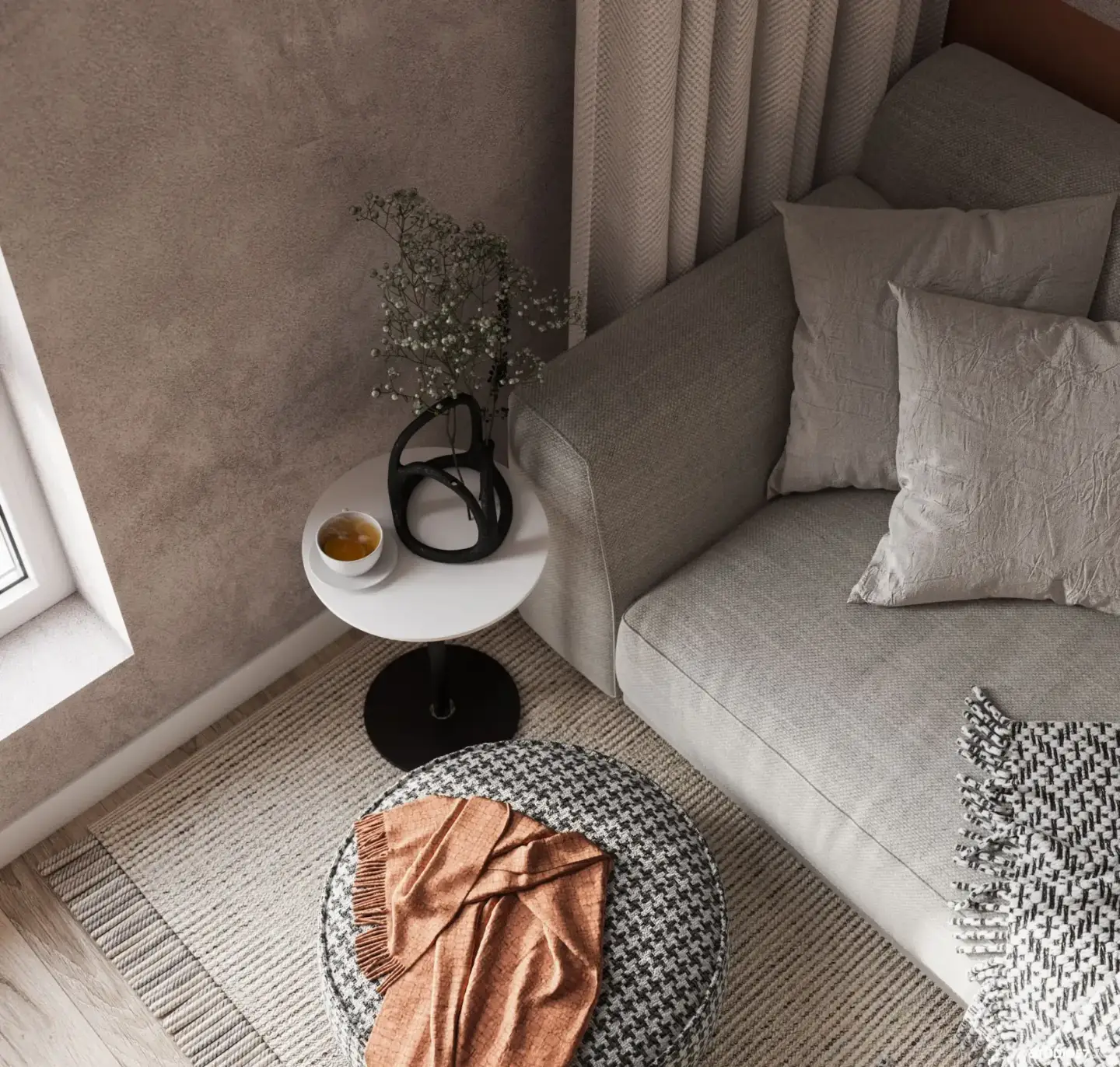
Architecture First: Why Hamptons Lives in the Shell, Not the Sofa
The most common mistake with Hamptons style is treating it as a shopping list of decor. The style is carried by the built shell of the room — the panelling, ceiling detail, door proportions, and window scale — far more than by any single piece of furniture. Strip the millwork out and even a perfectly styled room reads as generic coastal.
In our studio, this shows up clearly in visualisation work. When we produce a 3D interior rendering of a Hamptons scheme, roughly 70% of what makes it read as "Hamptons" is architectural: the depth of the wainscoting, the shadow line of a coffered ceiling, the mullion pattern in the French doors. Swap the sofa and the room still reads Hamptons; flatten the walls to plain drywall and no amount of rattan and linen brings it back. If you are renovating, spend the budget on the shell first and let the furnishings follow.
The second detail that separates a convincing Hamptons render from a flat one is palette temperature. Beginners reach for pure white (RGB 255) and a saturated navy; both read cold and cartoonish. Authentic Hamptons walls sit in the warm-white range, and the signature blue works best kept low — roughly 15–20% saturation — so it behaves like weathered paint rather than a primary colour. Warm the whites, mute the blues, and the room gains the softness the style is known for.
Modern Hamptons vs Classic HamptonsModern Hamptons vs Classic Hamptons
Modern Hamptons style keeps the light palette and natural materials of the classic look but strips back the traditional detailing. Where classic Hamptons leans formal — heavy millwork, blue-and-white china, layered curtains — the modern version is cleaner, warmer, and more pared down, closer to how the style is used in new builds today.
| Feature | Classic Hamptons | Modern Hamptons |
| Palette | White, navy, soft grey | Warm white, greige, muted sage or black accents |
| Millwork | Ornate, layered panelling | Simplified shiplap and clean trim |
| Furniture | Traditional roll-arm, skirted | Lower, lighter, more contemporary lines |
| Metals | Polished nickel, brass | Matte black and aged brass |
| Overall feel | Formal, timeless | Relaxed, current, minimal |
For 2026, the momentum is with modern Hamptons: warmer neutrals over cool greys, black-metal fixtures instead of chrome, and fewer overtly nautical motifs. The style is trending away from theme and toward a warm, architectural coastal calm that sits comfortably alongside contemporary and transitional interiors.
Hamptons vs Coastal, Nautical, and Mediterranean StyleHamptons vs Coastal, Nautical, and Mediterranean Style
Hamptons is one branch of a larger coastal family, and search results routinely blur the lines. The quick distinction: Hamptons is the most tailored and architectural of the coastal styles, while nautical is the most literal and Mediterranean is the warmest. This table keeps them apart.
| Style | Palette | Signature | Feel |
| Hamptons | Warm white, blue-grey, navy | Millwork, symmetry, tailored luxe | Polished coastal |
| Coastal (general) | White, sand, aqua | Casual beach comfort, driftwood | Easy, breezy |
| Nautical | Navy, red, white | Stripes, rope, anchor motifs | Literal, thematic |
| Mediterranean | Terracotta, ochre, blue | Plaster, arches, wrought iron | Warm, rustic |
If you want the broader casual beach look rather than the tailored East Coast version, coastal interior design is the closer fit; Hamptons is what you reach for when you want that coastal calm dressed up with architecture and restraint.
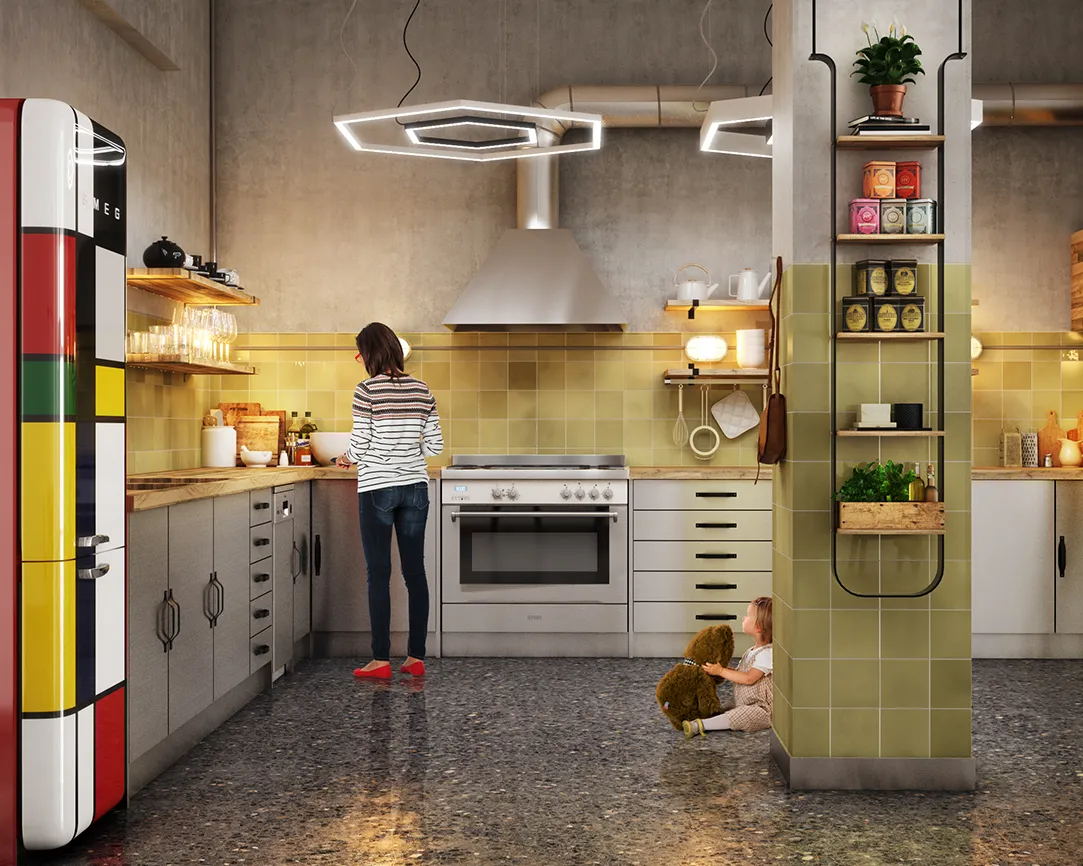
How to Get the Hamptons Look Room by Room
Living Room
Anchor the room with a deep, slipcovered sofa in warm white or oatmeal, then layer texture through linen cushions, a jute rug, and a rattan accent chair. Add a pair of matching lamps for symmetry, keep artwork calm and coastal, and let a large window or French doors be the real focal point.
Kitchen
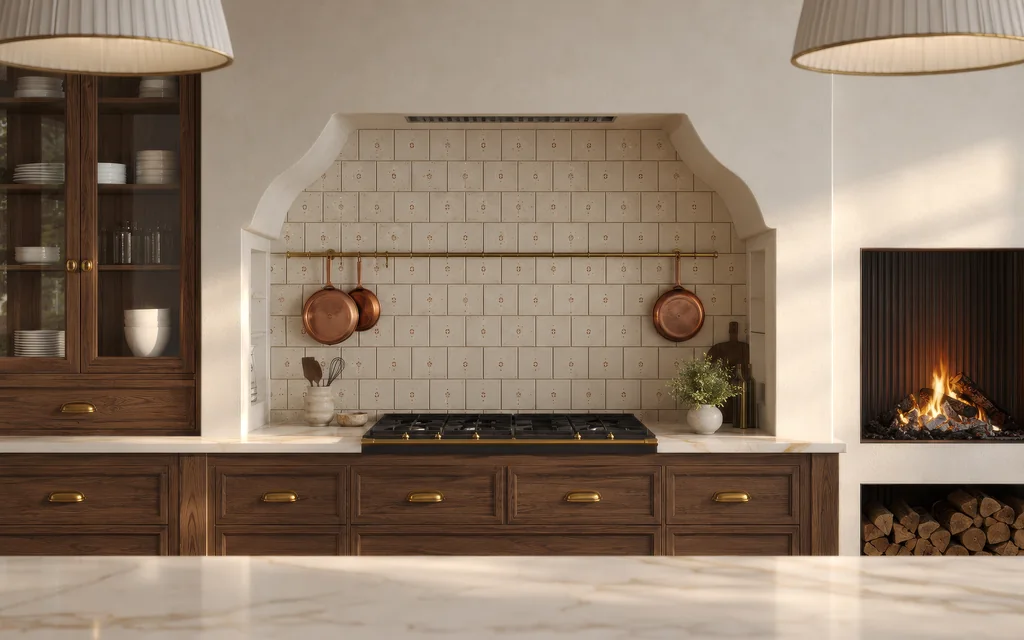
Shaker cabinetry in white or soft grey-blue is the backbone, topped with marble or a marble-look quartz. Add a generous island, polished nickel or aged-brass hardware, and two or three pendant lights or lanterns overhead. Open shelving with simple ceramics keeps it from feeling too formal.
Bedroom
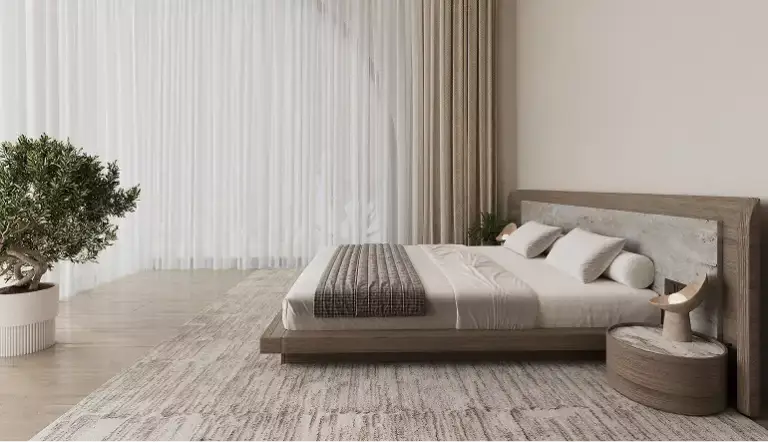
Build a restful bedroom around an upholstered or panelled bed in a neutral tone, dressed in crisp white linen with one muted-blue layer. Flank it with matching nightstands and lamps, add a woven bench or rattan detail for texture, and keep window treatments light with sheers or plantation shutters.