3D product rendering costs about $50–$600 for a simple white-background image and $400–$1,500 or more for glass, metal, liquids or styled scenes, according to 2026 market price guides. The 3D model is usually the largest line on a quote; a 360 spin, an AR-ready GLB file and an animation are priced on top of it.
The ranges below come from studio and marketplace price guides published in 2026, and every row names its source. They are typical market ranges, not quotes. We do not repeat our own rates here: the aim is to give you a yardstick for any quote you receive. For architectural, interior and furniture prices, see our 3D rendering pricing guide.
3D Product Rendering Cost by Output in 2026
Product rendering is bought as a set of outputs made from one 3D model: still images, a 360 spin, an AR file, an animation. The table shows the published 2026 market range for each output and what moves it inside that range.
| Output | Typical market range, 2026 | What sets the price | Source |
|---|---|---|---|
| White-background (silo) packshot, simple product | $50–$600+ per image; $100–$300 for simple geometry | Shape, number of materials, number of angles | Fortes Vision (March 2026); Framesixty (August 2026) |
| Mid-tier or configured product image | $300–$900 per image | Parts, finishes, configurable options | Framesixty (August 2026) |
| Luxury product or hard materials (glass, liquids, polished metal, gemstones) | $400–$1,500+ per image | Reflections, refraction, macro detail, lighting tests | Framesixty (August 2026) |
| E-commerce package (several angles plus lifestyle scenes) | $800–$3,500+ per product | Number of scenes, props and set dressing | Framesixty (August 2026) |
| 3D model of the product | From about $125; $100–$1,000+ per SKU | CAD or photos as source, part count, mechanisms | Advertflair; Framesixty citing Q99 Studio (2026) |
| AR-ready GLB/USDZ model or virtual try-on asset | $100–$1,000+ per SKU; try-on models from $365 | Polygon and file-size budget, PBR textures | Framesixty (August 2026); Advertflair |
| 360 product spin | Rarely published; quoted by frame count and render time on top of the model | 24, 36 or 72 frames, background, smoothness | UFO3D (September 2026) |
| Short product animation (30–60 seconds) | $2,000–$5,000+ | Length, camera moves, exploded views, simulation | Framesixty (August 2026) |
| Interactive 3D product configurator | $10,000–$30,000 setup | Number of options, materials, platform | Framesixty (August 2026) |
Read the table as a map, not a price list. The same jar can sit in the first row or the third, depending on whether its label is matte paper or embossed foil and whether the lid is plastic or glass. The low end has also stayed in a similar band for years: a 2022 Cad Crowd guide gave $50–$550 for basic product renders. What has changed is how many outputs a brand buys from each product model.
Freelancer, Studio or AI Tool: Price per Product Render
The provider type explains most of the spread in product rendering prices. A freelancer prices one person's time, a studio prices a team with a project manager and a written revision policy, and an AI image tool prices a software seat.
| Provider | Typical rate | What you usually get | Where it breaks |
|---|---|---|---|
| Freelancer on a marketplace | Median $25–$40 per hour for 3D artists on Upwork; about $75–$250 per image | One artist, low overhead, flexible scope | Capacity on a 50-SKU batch; revision terms vary from person to person |
| Mid-range studio | $400–$2,000 per image | Project manager, fixed revision rounds, team capacity for many SKUs | Minimum order on very small jobs |
| Premium firm | $2,000–$5,000+ per image | Difficult materials, enterprise multi-SKU delivery | Overpriced for plain catalog packshots |
| AI image tool | A monthly software subscription | Backgrounds and scenes around a product photo you already have | Needs a real photo; small geometry, logos and label text can drift between generations |
Sources: Upwork's hiring guide for 3D artists; Framesixty (August 2026) for per-image ranges. AI tools are cheapest when the product already exists and a photo is good enough. Before launch there is no photo to start from, so the product has to be built as a 3D model. In our studio we combine the two: the product is a 3D model built from the client's artwork and specifications, and AI is used only for the location, light and atmosphere around it.
If you are comparing named studios rather than provider types, our review of 3D product rendering companies covers who does what and how each one quotes.
What Drives the Price of a 3D Product Render
Eight inputs decide where a product render lands inside the market range. Most of them are fixed in the brief, which is why two quotes for the "same" product can differ by a factor of three.
- Source data: CAD files (STEP, IGES, SolidWorks, Fusion 360 or Rhino) give the exact geometry; photos and dimensions mean modeling from scratch. Framesixty estimates that complete CAD files and clear specifications cut the cost by 35–50% compared with an unprepared brief.
- Geometry and part count: a bottle is one shape; headphones have dozens of parts, seams, cables and fabric.
- Materials: PBR materials for matte plastic are quick to set up. Glass, liquids, brushed or polished metal, fabric and gemstones need lighting tests and longer render times.
- Scene: a white background needs a light setup; a lifestyle scene needs a set that is built, dressed and lit like a photo shoot. In our studio a white-background still takes about 4 hours of work and a lifestyle scene about 6.
- Outputs and resolution: number of angles, colorways and aspect ratios for marketplaces and ads, plus 4K or print resolution for packaging and posters.
- Revision rounds: two to three rounds are standard in studio quotes; Framesixty puts extra rounds at $100–$400 each. Ours are two on the draft and one on the final.
- Deadline: rush delivery adds 30–50% on market quotes (Framesixty).
- Volume: catalog orders of 50+ SKUs are typically discounted 20–40% per image (Framesixty).
Why the 3D Model Is the Biggest Line on a Product Rendering Quote
Every output in this guide, whether a still, a spin frame, a GLB file or an animation, is a camera view or an export of the same 3D model. Building and checking that model is fixed work; each further output reuses it. That is why per-image prices fall so sharply with volume: UFO3D lists silo renders from about $20 per image, falling to roughly $1 each in volume once the model exists, and prices a second colorway at a fraction of the first.
So compare quotes on the model line first, then on the outputs. Ask three things: what the model is built from, whether it is built to real-world scale with PBR materials so it can be reused for AR and animation, and who owns it afterwards. On request we transfer exclusive commercial rights to the finished model together with the source files, and the transfer is written into the contract.
A product rendering quote is easier to compare when every line is counted the same way. This is the structure we use to read quotes, line by line.
| Quote line | How it is counted | What changes it |
|---|---|---|
| 3D model | Per product (SKU) | Source data, parts, materials |
| Variants | Per colorway or finish | Texture-only change or new geometry |
| Still images | Per image or angle | White background or lifestyle scene, resolution |
| 360 spin | Per spin, by frame count | 24, 36 or 72 frames, transparent background |
| AR/GLB export | Per SKU | File-size and polygon budget, USDZ version |
| Animation | Per second or per project | Length, camera moves, simulation |
| Revisions | Rounds included | Extra rounds, changes after approval |
| Rights and source files | Per project | Exclusive rights, native scene files |
360 Spin and AR Model Cost: What You Are Paying For
A 360 product spin is a sequence of renders taken at even steps around the product. Studios rarely publish a fixed price for it because the cost depends on frame count and render time. UFO3D describes the usual options: 24 frames (one every 15°), 36 frames (every 10°, the common default) and 72 frames (every 5°) for watches, jewelry and footwear.
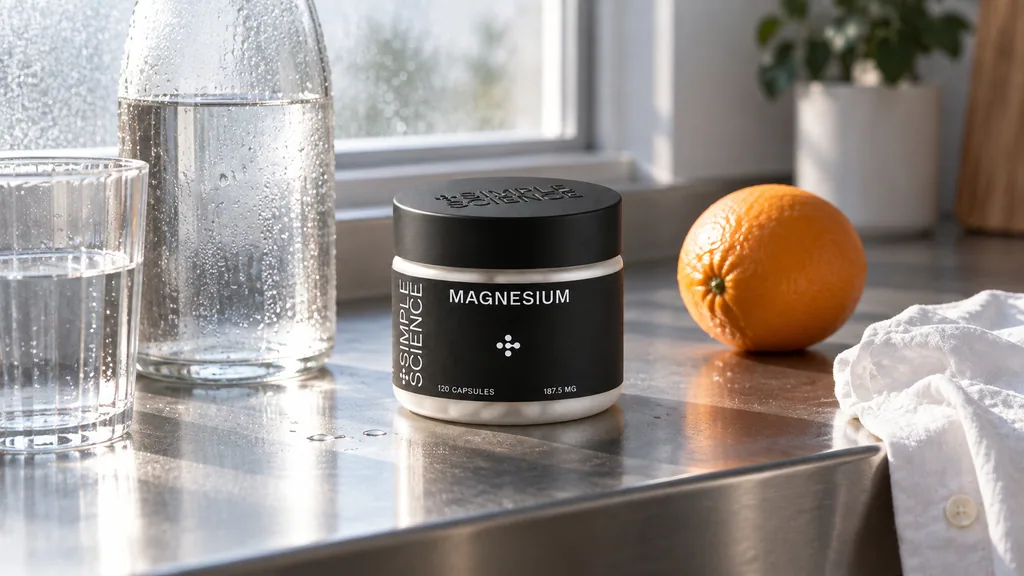
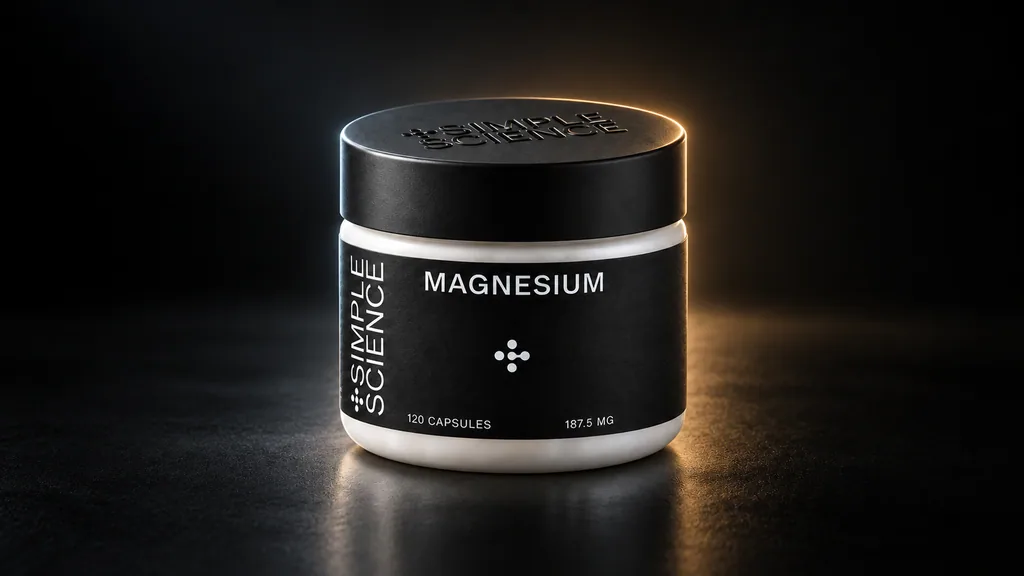
For the Simple Science magnesium jar we rendered four spin sequences of roughly 110 to 140 frames each with a transparent background, so the same frames work on a white marketplace listing and a dark campaign page without re-rendering. For apparel we build the spin once as a template: the print sits on its own texture layer, and the client's team can swap the design and render new spins themselves.
An AR model is priced on how far the render model has to be optimized. Shopify's 3D model standards ask for a GLB file of about 4 MB in total, textures no larger than 2048 × 2048 px for mobile web and a PBR material set; USDZ is added for Apple's AR Quick Look. Framesixty puts web AR models at 20,000–300,000 triangles and a hosted WebAR viewer at $140–$500 per month. Marketplace limits differ, so check our 3D model requirements for Amazon, Wayfair and Shopify before you order.
How to Get an Accurate 3D Product Rendering Quote
An accurate quote comes from a brief that fixes the model, the materials and the outputs before work starts. Send these seven things with your request:
- CAD files or a physical reference: STEP, IGES or native CAD; otherwise photos from every side with dimensions in millimeters.
- Materials and artwork: Pantone or RAL codes, the finish (matte, gloss, brushed) and label artwork as vector files.
- Every output you need: angles, aspect ratios, resolution, spin frame count and GLB/USDZ files.
- SKUs and variants: a fixed variant list is quoted as one batch at a lower per-image price.
- Revision rounds: how many are included and what counts as a change.
- Deadline and usage: marketplace listing, ads, packaging or print.
- Ownership: who holds the model and the source files after delivery.
Market timelines for 2026 run from 2–4 business days for a single product with one or two views to 3–6 weeks for a full catalog with lifestyle scenes (Framesixty). In our studio a first draft still arrives 3–5 working days after a complete brief, and a package of 5–8 views takes 2–3 weeks.
If you would like a fixed quote for your product, our 3D product rendering team starts from your CAD files or a sample and the list of outputs you need.
Turn Ideas Into Visual Stories