3D product animation costs about $5,000–$25,000 at a studio for a product spin or feature video in 2026, $20,000–$75,000+ for exploded-view technical films and launch videos, and $50,000+ for cinematic commercials. Freelancers start in the low thousands. These are published market ranges, not quotes: the brief, not the running time, sets the price.
We compiled the figures below from cost guides and price lists published between April and November 2026 by animation studios, a freelance marketplace and Google, and checked them against how our own product films are built. Every number names its source, and none of them is a Maverick Frame Studio price. For architectural fly-throughs and 2D explainers, see the separate guides on walkthrough animation cost and explainer video cost.
3D Product Animation Cost by Format
The format decides the budget more than the length does. A 10-second spin and a 30-second exploded view can be close in running time and an order of magnitude apart in price, because the exploded view needs every internal part modeled, separated and choreographed.
| Format | Typical length | Market range per project (2026) | What the money pays for |
|---|---|---|---|
| 360° spin or turntable loop | 5–15 seconds | $5,000–$10,000 at studios; marketplace gigs start far lower | One hero model, studio lighting, one camera move, a seamless loop |
| Feature or callout animation | 15–45 seconds | $10,000–$25,000 | Several shots, on-screen callouts, moving buttons, lids and hinges |
| Exploded view or technical animation | 20–60 seconds | $20,000–$50,000+ | Every internal part modeled and separated, assembly order, cutaways |
| Product launch film | 30–90 seconds | $25,000–$75,000+ | Storyboard, several environments, lifestyle context, edit and music |
| Cinematic product commercial | 15–60 seconds | $50,000–$100,000+ | Art direction, liquid, particle or cloth simulation, broadcast finish |
| Ad cutdowns (6, 15, 30 s; 9:16, 1:1) | 6–30 seconds each | Quoted per version on top of the master film | Re-edit and re-render of existing shots in new lengths and aspect ratios |
The project ranges come from the planning table Just Animations published in May 2026. Frame Sixty’s September 2026 guide lands in the same place for a single length: $5,000–$15,000 for a basic 30-second product animation and $20,000–$50,000+ for one with exploded views or internal reveals. Freelance answers run lower: in Reddit’s r/ProductViz, one reply to “how much would this product animation cost” put a short polished piece at $3,000–$5,000 for the right client.
3D Product Animation Price per Second and per Minute
Per-minute rates for commercial 3D animation run from $1,000–$5,000 with freelancers to $5,000–$15,000 with boutique studios and $15,000–$50,000+ with full-service agencies, according to figures Vidico published in May 2026 and Frame Sixty summarized in September 2026. Divided by 60, that is roughly $17 to $830 per second.
| Provider tier | Price per minute | Price per second (÷ 60) |
|---|---|---|
| Freelance 3D animator | $1,000–$5,000 | About $17–$83 |
| Boutique 3D studio | $5,000–$15,000 | About $83–$250 |
| Full-service agency | $15,000–$50,000+ | About $250–$830+ |
Hourly figures sit underneath these rates. Upwork lists independent 3D animators at $17–$30 per hour, and Hatch Studios puts professional studio work at $7,000–$15,000 per minute in its April 2026 guide.
Use per-second numbers to sanity-check a quote, not to build one. Product animation is front-loaded: Hatch Studios notes that the first thirty seconds are the most expensive because they carry the modeling and lighting. Doubling a 30-second film to 60 seconds rarely doubles the price, and cutting it to 15 seconds rarely halves it.
Where a 3D Product Animation Budget Goes: Fixed vs Per-Second Costs
Every product animation quote mixes two kinds of cost. Fixed blocks are paid once, whatever the length; variable blocks grow with seconds, shots or versions. Knowing which is which explains why two quotes for “the same video” differ, and where a budget can actually be cut.
| Production block | Fixed or variable | What moves the cost |
|---|---|---|
| 3D model | Fixed | A clean CAD or STEP file versus building from photos and measurements; number of parts |
| Look development (materials and lighting) | Fixed, per colorway | Glass, chrome, liquids, fabric, printed logos; each colorway adds a material set |
| Storyboard and animatic | Fixed | Number of scenes and how much creative direction the brief needs |
| Shot animation | Grows with shots | Camera moves, mechanisms, exploded sequences, hands and product interaction |
| Simulation | Grows with shots | Liquid, particles, smoke, cloth; each simulated shot needs its own setup |
| Rendering | Grows with seconds | Resolution (1080p or 4K), frame rate, length, render farm time |
| Edit, sound and cutdowns | Grows with versions | Music licence, voiceover, every extra length and aspect ratio |
The cheapest second you can buy is the one added to a model and a look that already exist. That is why a launch film with four cutdowns costs far less than five separate videos, and why a product you will animate again next season is worth modeling properly once. At Maverick Frame Studio, the same 3D model of a product feeds its stills, spins, films and cutdowns, so a new colorway or a 9:16 version starts from the finished look rather than from zero.
What Drives the Price of a 3D Product Animation
Ten inputs move most product animation quotes. The first four set the fixed blocks; the rest scale with what you ask to see on screen.
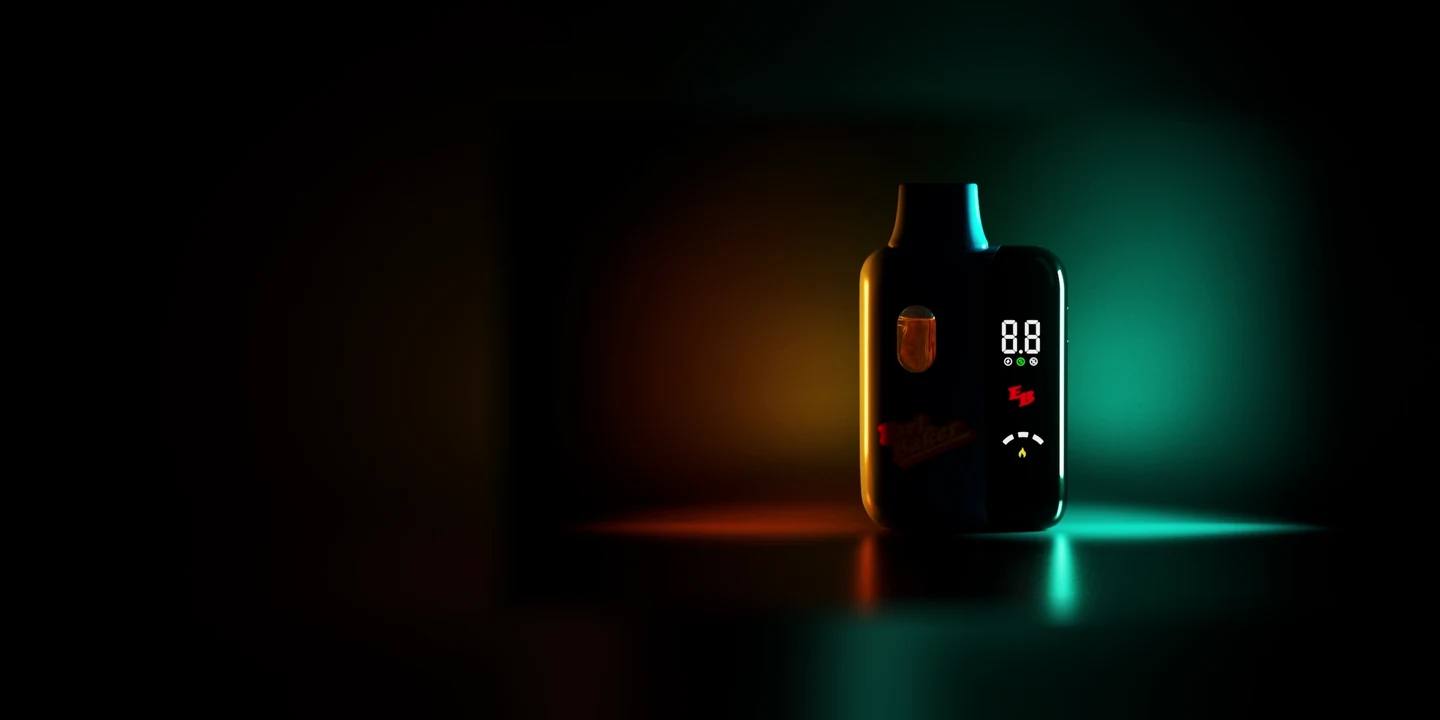
- CAD or STEP file: a clean engineering file replaces most of the modeling stage. We accept STEP, IGES, SolidWorks, Inventor, Creo, Fusion 360 and Rhino files; our disposable vape animation, for example, started from the manufacturer’s STEP file. Building from photos and calipers takes longer and adds review rounds.
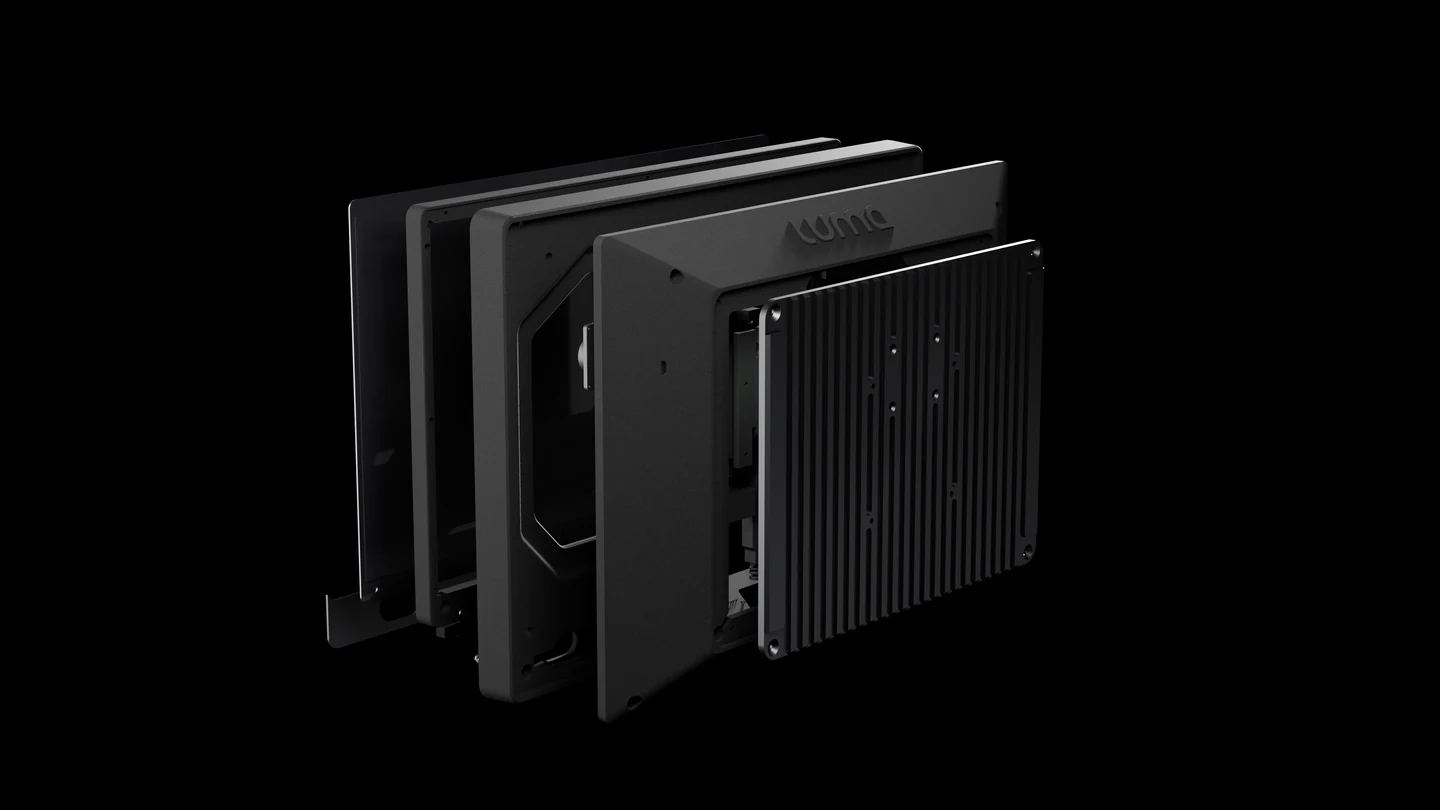
- Number of parts: an exploded view needs every internal component as a separate, clean object, so a device with 40 parts costs more than a bottle. The 45-second launch film for a clinical eye tracker separates the monitor housing and keypad into layers, and each layer had to be prepared from the client’s CAD.
- Materials and surfaces: glass, transparent plastic, brushed metal, liquids and fabric need more look development and longer renders than matte plastic.
- Colorways and variants: each extra color or finish adds a material set and, if it gets its own shots, extra rendering.
- Shot count and camera work: ten short shots cost more than one long move of the same length, because each shot is set up, lit and animated on its own.
- Simulation: liquid pours, particles, smoke and breaking surfaces are among the most expensive seconds in any product film.
- Resolution, frame rate and aspect ratios: 4K costs more render time than 1080p, and every extra format (16:9, 9:16 for Reels and TikTok, 1:1 for feeds) is another edit and render pass.
- Sound and voice: a music licence, voiceover and sound design are often quoted separately.
- Revision rounds: ask how many rounds are included and at which stage. We include two rounds on the draft and one on the final; changes after final rendering cost the most, because shots are rendered again.
- Deadline: a rush schedule means more artists and more render capacity at once, so ask how a shorter deadline changes the quote before you commit to a launch date.
Studio vs Freelancer vs AI: Product Video Cost Compared
A freelancer is the cheapest route to a simple spin, a studio is the safer route to a multi-shot film with exploded views and cutdowns, and AI video is the cheapest per second but cannot hold your exact product geometry and logo on its own.
| Option | How it is priced | Market figure (2026) | Best for | Watch out for |
|---|---|---|---|---|
| Freelance 3D animator | Per hour or per gig | $17–$30 per hour for independent animators on Upwork | Spins, loops and single shots from a ready CAD file | Capacity for multi-shot films, render power, fixed deadlines |
| 3D animation studio | Per project | $5,000–$15,000 per minute at boutique studios; $15,000–$50,000+ at agencies | Launch films, exploded views, campaigns with cutdowns | Compare the same deliverable list, not headline prices |
| AI video generation | Per generated second or monthly plan | About $0.10 per generated second for Google’s Gemini Omni Flash on the Gemini API | Mood shots, backgrounds, social variations | Invented details, drifting logos and proportions, many discarded takes |
The AI price covers generation only. Video models redraw the product in every take, so shapes, buttons and logos drift, and the real cost sits in the takes you throw away and the cleanup. A working middle route is hybrid: a CGI model of the real product carries the hero shots, and AI builds the environments and lifestyle moments around it. We make AI video ads this way, and the schedules differ: a 30-second AI ad takes about a week from a full brief, a 30-second CGI film 2–4 weeks.
How to Get an Accurate 3D Product Animation Quote
An accurate quote needs the same seven inputs from every studio you ask. Send them in one brief, and the quotes you get back become comparable line by line.
- Send the CAD or STEP file, or photos with dimensions in millimetres if there is no CAD yet.
- List every deliverable: the master length, each cutdown, aspect ratios and resolution.
- Share two or three reference videos and say what you like in each one.
- Name the colorways and the shots that must show each of them.
- Say where the video will run: product page, Amazon listing, paid social, a trade show screen.
- Give the launch date and the date you need the first draft.
- Ask what is included: revision rounds, music licence, voiceover, source files and reuse of the 3D model.
To build a shortlist, see our comparison of the best 3D product animation companies; for what a studio delivers in a product film, see 3D product animation services. If you also need stills from the same model, the 3D rendering pricing guide covers images, and our 3D animation services page covers other animation types, from architecture to medical devices.
Turn Ideas Into Visual Stories