Maximalist interior design is a decorating style built on the "more is more" principle: layered color, mixed pattern, and dense collections arranged with intent rather than restraint. It is the deliberate opposite of minimalism. Done well, a maximalist room reads as curated abundance—every object earns its place—not as clutter, which is the line that separates the style from a crowded room.
What Is Maximalist Interior Design?
Maximalist interior design is an expressive, layered approach that celebrates bold color, pattern-on-pattern combinations, texture, and personal collections displayed together. Where minimalism removes until only the essential remains, maximalism adds until a room feels full, warm, and unmistakably personal. The defining discipline is curation: maximalism is intentional abundance, so each layer is chosen to build a cohesive story instead of accumulating at random.
Core characteristics of maximalist interiors
- Saturated, layered color: deep jewel tones, and often "color drenching"—walls, trim, and ceiling in one bold hue.
- Mixed patterns: florals, geometrics, stripes, and animal prints combined and anchored by a shared palette.
- Rich texture: velvet, lacquer, brass, high-pile rugs, and glossy or tactile surfaces layered together.
- Curated collections: art, books, ceramics, and objects grouped as intentional displays rather than scattered.
- Statement pieces: ornate lighting, bold furniture silhouettes, and a "collected-over-time" mix of vintage and modern.
Maximalist vs. Minimalist Interior Design
Maximalist and minimalist interior design sit at opposite ends of the same spectrum: minimalism edits down to essentials and negative space, while maximalism layers up color, pattern, and objects. Both are curated—the difference is direction, not discipline. If restraint is more your instinct, minimalist interior design takes the opposite path from the same starting point. The table below compares them on the choices that actually change a room.
| Design choice | Minimalist | Maximalist |
| Guiding rule | Less is more | More is more |
| Color | Neutral, restrained palette | Saturated, often color-drenched |
| Pattern | Minimal or none | Mixed and layered |
| Objects on display | Few, highly edited | Many, curated in collections |
| Negative space | Central to the look | Used sparingly, as a rest point |
| Emotional read | Calm, orderly | Energetic, personal |
The Curated-Not-Cluttered Spec Our Studio Renders By
"Curate with intention" is the advice everyone gives, but it is hard to act on. In our visualization work we translate it into four measurable constraints that keep a maximalist scheme reading as design rather than mess—on camera and in a 3D render, where clutter is unforgiving.
- Anchor on three dominant colors. Let a trio carry roughly 60–70% of the visual weight; add unlimited accents on top of that base. The anchor is what makes the layering feel deliberate.
- Cap pattern coverage near 70%. Leave about a third of your surfaces—a wall, an upholstery, a run of floor—relatively quiet so the eye has somewhere to land.
- Keep one rest zone per room. A single low-density area (a plain wall, an uncluttered console) gives the maximalism contrast and prevents visual fatigue.
- Vary pattern scale across three bands. Combine a large-scale motif, a mid-scale, and a small-scale print; uniform scale is what reads as noise instead of layers.
Method note: these are studio heuristics tuned for how a scheme reads in photography and 3D renders, not an industry standard—treat the percentages as starting points, not rules.
In our studio, maximalist rooms fail in render for one repeatable reason: the pattern scale is too uniform. When every motif sits in the same size band, the camera flattens the layers into busy static. Spreading the same patterns across large, medium, and small scales is usually the single change that turns "cluttered" into "collected." — Dim Kuzmenko, Maverick Frame
Maximalist vs. Eclectic, Bohemian & Dopamine Decor
Maximalism is often confused with eclectic, bohemian, and dopamine decor because all four reject restraint. The differences are real and worth naming: eclectic is about mixing eras and origins, bohemian is a specific relaxed-global aesthetic, and dopamine decor is a mood-first color trend. Maximalism is defined by density and layering, whatever the palette or provenance.
| Style | Core idea | How it differs from maximalism |
| Maximalist | Intentional density and layering | — |
| Eclectic | Mixing periods, styles, and origins | Can be sparse; about variety, not volume |
| Bohemian | Relaxed, global, plant-and-textile look | A specific aesthetic; maximalism is a philosophy |
| Dopamine decor | Color and objects chosen for mood/joy | Mood-led and often lighter; not always layered |
The overlap is genuine—an eclectic maximalist or bohemian maximalist room is entirely possible. The useful test: if you removed half the objects and the room still felt full and layered, it is maximalist. If it just felt varied, it is eclectic.
Popular Maximalist Interior Design Styles
Maximalism is a framework, not a single look, so it blends readily with other interior design styles. These are the most common maximalist directions and what defines each.
- Modern maximalist: clean-lined furniture and contemporary art paired with bold color and pattern—layered, but disciplined.
- Colorful maximalist: the archetype—high-saturation palettes, color drenching, and clashing hues held together by repetition.
- Vintage maximalist: antiques, heirlooms, and thrifted finds layered for a genuine collected-over-time feel.
- Scandinavian maximalist: the warm counter to Scandi minimalism—natural materials and light wood, but with far more pattern and objects.
- Mid-century maximalist: mid-century silhouettes and warm woods amplified with graphic pattern and saturated accent color.
Dark and moody maximalist interiors
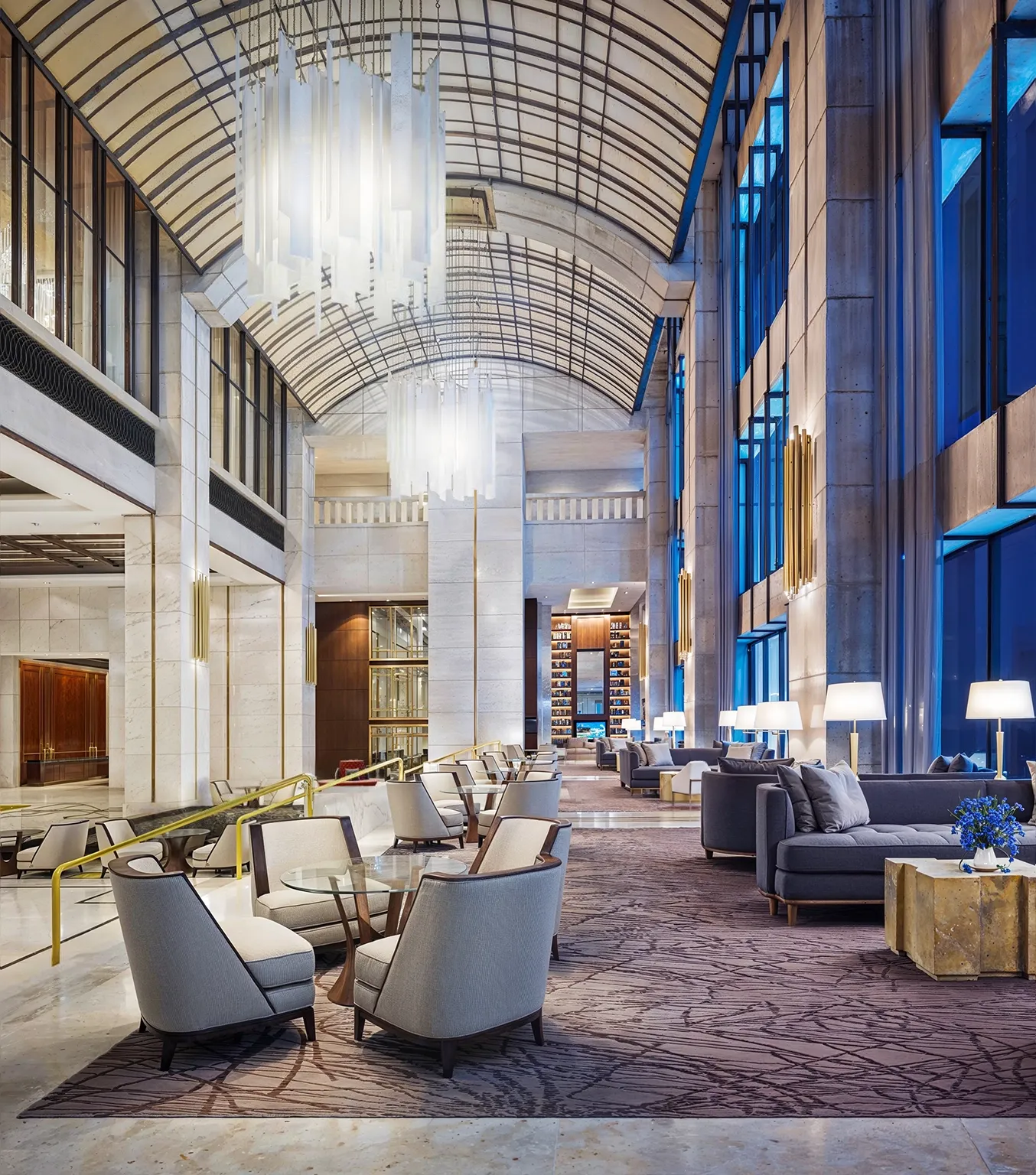
Dark maximalism swaps bright saturation for depth: charcoal, forest green, oxblood, and near-black backdrops that make brass, jewel tones, and artwork glow. It leans hard on color drenching—one deep hue across walls, trim, and ceiling—to wrap the room and let dense layering feel intimate rather than heavy. In a render, dark maximalist schemes live or die on lighting: without layered warm light sources, the palette collapses into a flat, muddy field, so plan lamps, sconces, and reflective metals as part of the color scheme, not as afterthoughts.
How to Build a Maximalist Room, Step by Step
Build a maximalist room in layers, starting from a color anchor and adding pattern, texture, and collections in a deliberate order. Working outward from a base keeps the density coherent instead of chaotic.
- Set a color anchor. Choose three dominant colors—or commit to color drenching one bold hue—before you add anything else.
- Mix patterns in three scales. Combine a large, a medium, and a small-scale motif, tied together by a color they share. Florals with geometrics, stripes with animal print—contrast is the point.
- Layer texture. Add velvet, lacquer, brass, and high-pile rugs so surfaces feel rich under the pattern.
- Curate collections. Group art, books, and objects into intentional displays—a gallery wall, a styled shelf—rather than spreading them thin.
- Protect one rest zone. Leave a single quieter area so the abundance has contrast and the room stays legible.
The best maximalist color palettes pair two or three saturated anchors—think emerald and rust, or cobalt and ochre—with a metallic and a grounding dark neutral. Patterns work best when they contrast in type but agree on color.
Maximalist Living Rooms and Bedrooms
The maximalist principles hold across rooms, with a shift in emphasis. A maximalist living room is where the style goes fullest—gallery walls, patterned sofas, layered rugs, and statement lighting built around one color anchor. A maximalist bedroom dials up texture and depth over visual noise: an upholstered or color-drenched backdrop, layered bedding, and a curated bedside vignette, so the room reads as enveloping rather than loud. For detailed, room-by-room design ideas, working from a professional 3D interior rendering lets you test bold combinations before committing to paint and fabric.
Why Maximalism Is Trending Again in 2026
Maximalism is resurging as a direct reaction to a decade of grey, pared-back minimalism that many now find impersonal. The style rewards individuality, secondhand and heirloom pieces, and self-expression—values that resonate strongly with younger homeowners and renters documenting their spaces online. Search interest for the term is seasonal and has cooled from its peak, but the cultural direction is clear: color drenching, pattern mixing, and "dopamine"-driven decorating continue to define the 2026 conversation as the antidote to minimalism, even if most people land on a personal middle ground rather than the extreme.