Light academia interior design is the bright, optimistic counterpart to dark academia: the same scholarly, old-world mood of books, classical art, and vintage furniture, but built on creamy neutrals, warm wood, and daylight instead of shadow. Think a sunlit library, a linen-draped reading nook, an aged-brass lamp on a walnut desk. It keeps the intellectual romance while trading gloom for glow.
What is light academia interior design?What is light academia interior design?
Light academia interior design is a decor style that channels the aesthetic of a classic university, an old library, or a European study, styled in a soft, luminous palette. Where dark academia leans into deep greens, oxblood, and near-black wood, light academia keeps the same references — literature, philosophy, antiquity, the love of learning — and renders them in cream, oat, sage, and honeyed wood. The result feels scholarly but airy, nostalgic but hopeful.
The style grew out of the same online aesthetic movement as dark academia, and the two are often described as siblings. Its core themes are gentler: friendship, curiosity, quiet joy, and the beauty of everyday ritual — a cup of tea, a well-read paperback, morning light across a desk. In a room, that translates to layered books, worn leather, botanical prints, and surfaces that look collected over time rather than bought in one trip.
Light academia vs dark academia interior designLight academia vs dark academia interior design
The difference between light and dark academia interior design is value and temperature, not subject matter. Both revere books, classical art, and vintage furniture; light academia sets them against pale walls and natural light, while dark academia wraps them in moody color and low light. Pick light academia if you want the scholarly look without a room that feels heavy or dim.
| Trait | Light academia | Dark academia |
| Palette | Cream, ivory, oat, sage, camel | Charcoal, forest green, oxblood, brown |
| Wood tones | Honey oak, ash, warm walnut | Near-black walnut, mahogany, ebony |
| Light | Abundant natural light, sheer drapery | Low, warm, lamp-lit and shadowed |
| Mood | Optimistic, airy, romantic | Brooding, dramatic, cozy-heavy |
| Core themes | Friendship, joy, curiosity | Mystery, melancholy, obsession |
| Easy to confuse with | Cottagecore, coastal grandmother, French country | Gothic, moody maximalism |
Two neighbors trip people up. Cottagecore shares the soft palette but is rural and floral rather than scholarly — light academia's references are the classroom and the library, not the garden. Coastal grandmother borrows the creamy neutrals but skews breezy and beachy; light academia stays anchored to books, antiquity, and warm wood. If a room reads more "seaside cottage" than "sunlit study," it has drifted out of the style.
The light academia color paletteThe light academia color palette
The light academia color palette is a warm-neutral scheme layered in a 60-30-10 ratio: roughly 60% soft base tones, 30% muted mid-tones, and 10% grounding accents. Keeping the split disciplined is what stops the look from sliding into either sterile all-white or busy thrift-store clutter.
- 60% base: cream, ivory, oat, parchment, warm off-white — walls, large upholstery, drapery.
- 30% secondary: soft taupe, sage green, dusty blue, camel and tan — rugs, accent chairs, throws, cabinetry.
- 10% accent: warm walnut or oak, aged brass, oxblood or cognac leather, sepia and gilt — books, frames, lamps, hardware.
Avoid stark, cool white as the base; it reads clinical and drains the warmth the style depends on. Reach instead for whites with a yellow, pink, or grey undertone so the room feels sun-washed rather than bleached.
8 key elements of a light academia room8 key elements of a light academia room
A convincing light academia room is built from eight recurring elements. You don't need all of them, but the more you layer, the more the space reads as an intentional style rather than a beige room with a few books.
- Warm neutral walls. Cream, oat, or greige — never a bright, cold white. This is the canvas everything else sits on.
- Aged wood furniture. Spindle chairs, a writing desk, a bookcase in honey oak or warm walnut, ideally vintage or vintage-looking.
- Books, everywhere. Open shelving, stacked on tables, spines out. Weathered classics and cloth covers beat glossy new paperbacks.
- Classical and vintage art. Plaster busts, botanical prints, sepia photographs, and gilt-framed portraits or landscapes.
- Natural, layered textiles. Linen, wool, cotton, and lace. Sheer curtains are essential — they diffuse light into that signature soft glow.
- Brass and warm metals. Library lamps, candlesticks, drawer pulls, and picture frames in aged, low-shine brass rather than chrome.
- Greenery. Potted ferns, ivy, olive trees, or dried florals to keep the scholarly look from feeling like a museum.
- Maximized natural light. Sheer drapery, well-placed mirrors, and furniture arranged to keep windows unblocked.
Light academia by room: bedroom, living room, and office
Light academia bedroom
A light academia bedroom leans on soft, layered bedding in white and cream linen, a wood headboard or an upholstered one in oat, and a bedside stack of books under a brass lamp. Add a small reading chair, sheer curtains, and one or two framed classical prints. Keep the palette calm so the room feels restful rather than busy.
Light academia living room
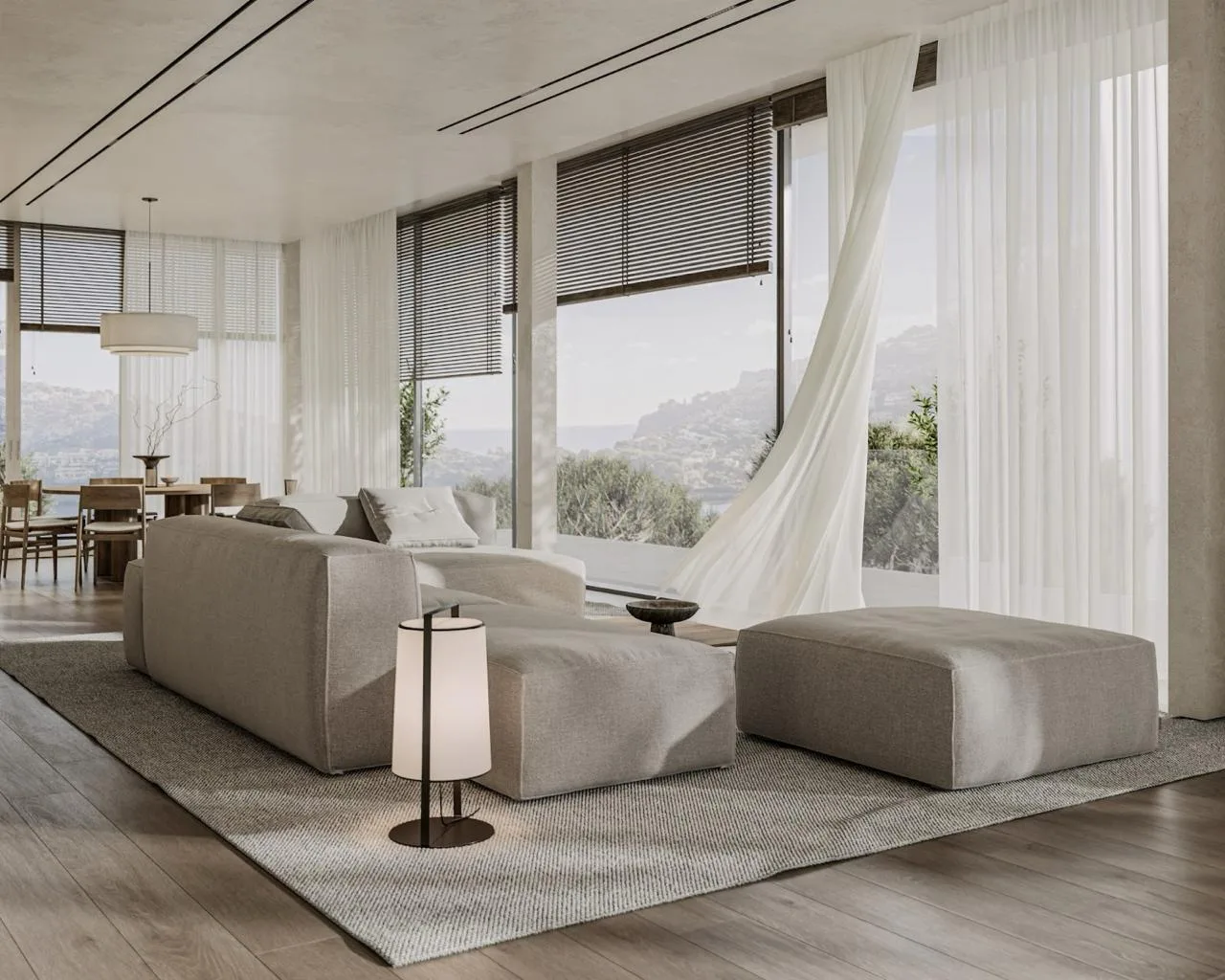
In a living room, the style shows up as a cream or camel sofa, a wood coffee table, and floor-to-ceiling books or a styled bookshelf as the focal point. Layer a wool or vintage rug, add a leather armchair for a grounding accent, and mix in brass, plants, and gilt-framed art. A globe, a chess set, or a stack of art books reinforces the scholarly note.
Light academia home office
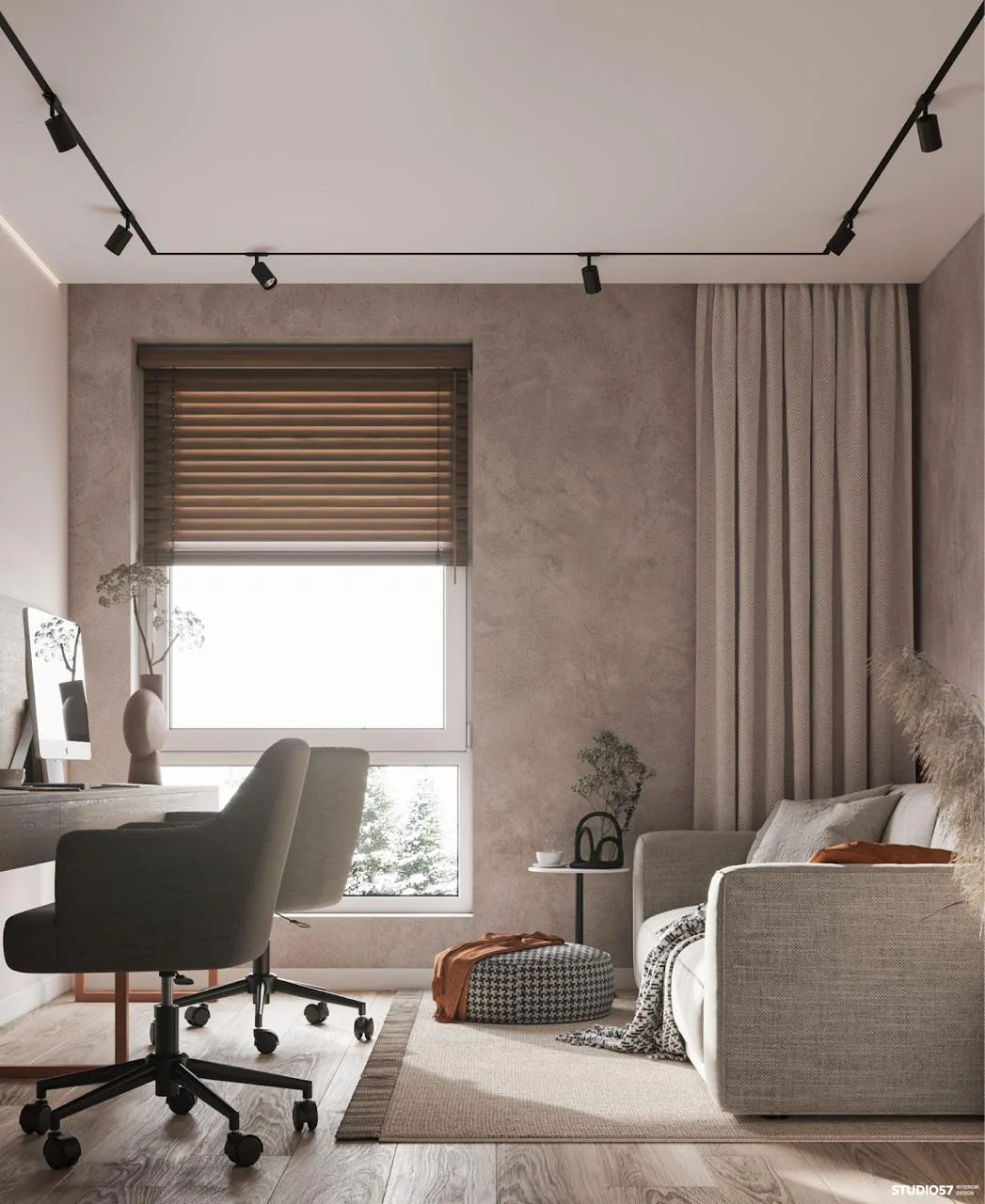
The home office is where light academia is most at home. Anchor it with a wood writing desk, a comfortable vintage chair, and open shelving full of books and curiosities. A brass desk lamp, a leather desk pad, and a botanical print or map complete the look. Position the desk to face or sit beside a window so you work in natural light.
Rendering light academia interiors without washing them out
Light academia is deceptively hard to render or photograph well. Where dark academia collapses into a black hole when the palette runs too low in reflectance, light academia fails the opposite way: when nearly every surface sits at a high light reflectance value (LRV 75–85), the room flattens into a washed-out, clinical box. Depth disappears, and cream walls, ivory drapery, and oat upholstery all melt into one bright value with no material identity.
Three moves keep it from going flat, whether you are staging a real room or building a 3D visualization:
- Hold a value ladder. Don't let everything float above LRV 70. Drop at least one mid-to-low mass into every view — a walnut desk, a cognac leather chair, sage cabinetry — so the eye reads front-to-back depth instead of a single plane.
- Warm the light to 2700–3000K. Cool daylight above 5000K turns cream grey and clinical. A warm color temperature keeps that sunlit-library glow and lets the neutrals read as intentional rather than washed out.
- Vary texture and specular. Uniform matte albedo is what makes a light room dissolve. Give linen a visible weave, aged brass a low-gloss highlight, book spines and plaster their own roughness — one small specular anchor per frame gives the eye something to lock onto.
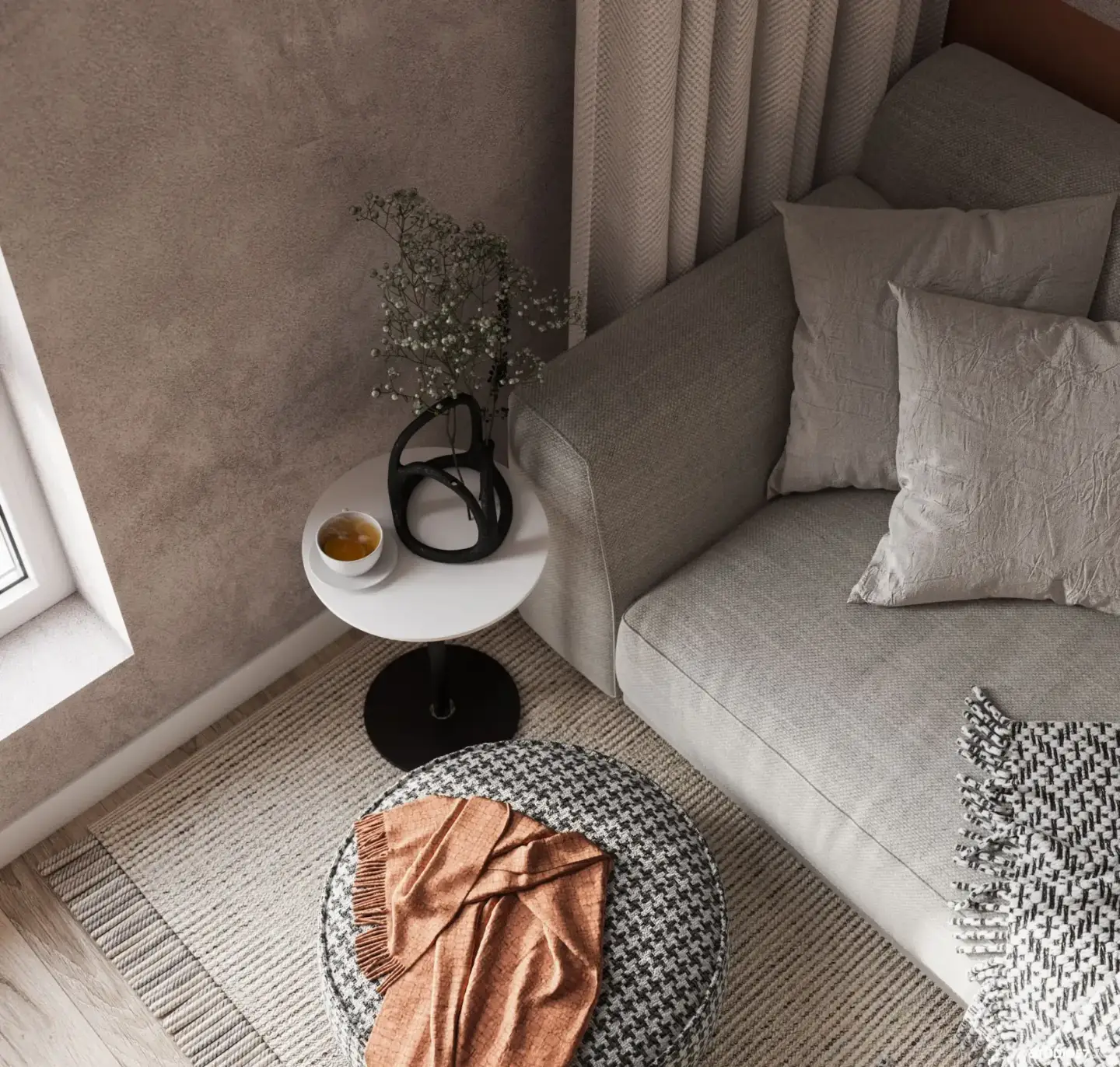
In our studio, the light academia brief is one of the trickiest interior styles to make convincing: the palette that looks airy on a mood board renders flat unless we drop a mid-tone mass and a single warm highlight into every camera. We aim for a value spread of roughly LRV 15 to 80 in frame — without the low end, the room reads like a showroom instead of a study. If you're commissioning visuals of a soft-palette interior, our 3D interior rendering services are built around exactly this kind of tonal control.
Is light academia still in style in 2026?Is light academia still in style in 2026?
Light academia peaked as a named social-media aesthetic around 2021–2023, and direct search interest has cooled since. But the look itself hasn't gone anywhere — it has quietly folded into the broader warm-minimalist and light-traditional palettes that dominate 2026 interiors: creamy neutrals, natural wood, books as decor, and layered vintage textures. Treat it less as a fleeting trend and more as a durable, scholarly take on warm neutrals that happens to have a catchy name.
If you're deciding between styles, light academia pairs naturally with a handful of neighbors. It's worth browsing the wider field of interior design styles to see how it sits next to modern traditional, English country, and organic modern before committing a whole room to it.