Hollywood Regency is a glamorous interior design style built on high contrast, reflective surfaces, and bold colour. Born in 1930s Los Angeles during the Golden Age of Hollywood, it blends Art Deco polish, Neoclassical detail, and theatrical excess into rooms that feel like a film set: lacquered walls, mirrored furniture, brass accents, and jewel-tone velvet.
What Is Hollywood Regency Style?What Is Hollywood Regency Style?
Hollywood Regency style is a maximalist decorating style that pairs the opulence of European Regency and Neoclassical design with the sleek glamour of 1930s film sets. It is one of the boldest of the interior design styles. Also called Hollywood Glam or Regency Moderne, it emerged when set designers and decorators dressed the homes of movie stars to look as cinematic as the screen. The result is a look defined by drama, reflection, and unapologetic luxury rather than restraint.
The style crystallised in the 1930s and 1940s and had a major revival in the late 1990s and 2000s, led by designer Kelly Wearstler. Unlike period styles tied to one era of furniture, Hollywood Regency is a curated mix: it borrows freely from Regency, Art Deco, Baroque, and Chinoiserie, then heightens every element with gloss and shine.
Key Characteristics of Hollywood Regency DécorKey Characteristics of Hollywood Regency Décor
Hollywood Regency décor is recognisable by a handful of signature moves: high-gloss lacquer, mirrored and glass surfaces, metallic accents, and saturated colour used with confidence. The defining elements are:
- Lacquered surfaces — high-gloss walls, doors, and case goods in black, white, or a jewel tone that reflect light like glass.
- Mirror and glass — mirrored consoles, chests, and coffee tables that multiply light and add sparkle.
- Brass and gold accents — polished metal on legs, frames, lamps, and hardware for warmth and glint.
- Jewel-tone velvet — plush upholstery in emerald, sapphire, ruby, or amethyst for depth and touchability.
- Bold contrast — black-and-white pairings, often in stripes, checkerboard floors, or graphic patterns.
- Chinoiserie and motifs — Greek key, lattice, fretwork, palm, and Asian-inspired patterns as ornament.
- Statement lighting — crystal chandeliers, sculptural table lamps, and metallic sconces treated as jewellery for the room.
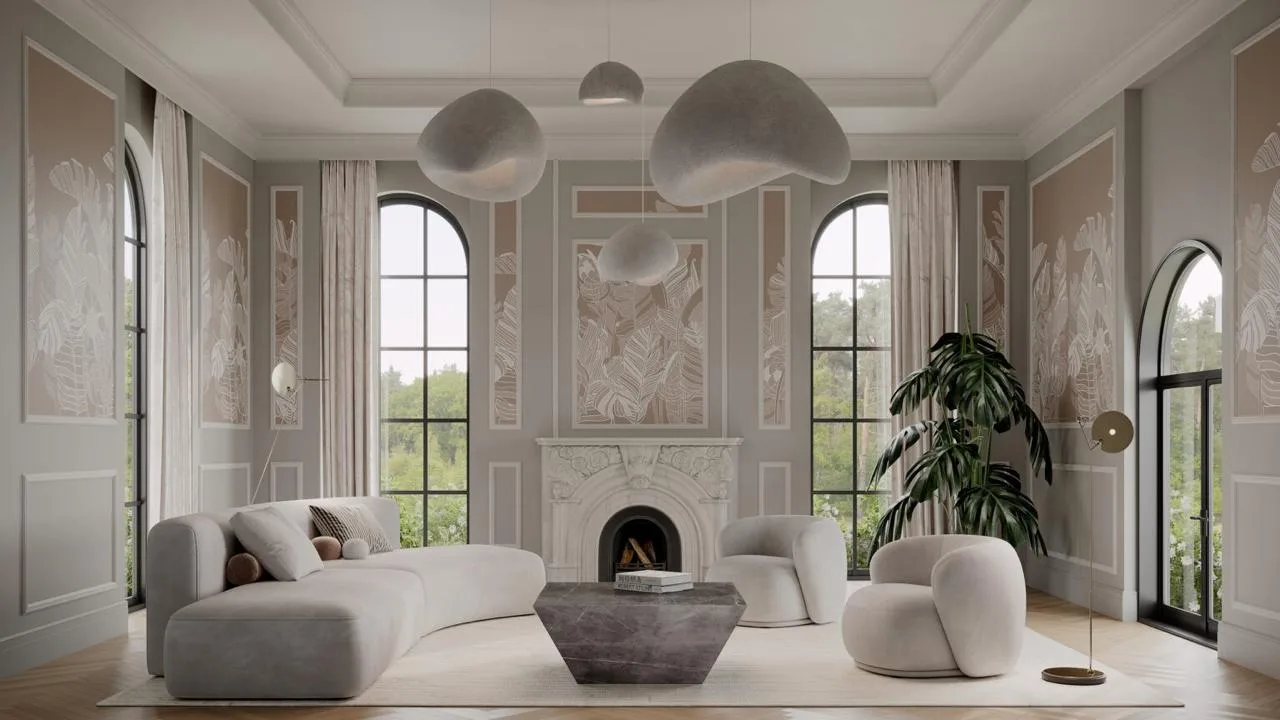
The Hollywood Regency Colour Palette
The Hollywood Regency colour palette is built on high-contrast neutrals anchoring one or two saturated jewel tones, with metallics as the connective thread. Black and white form the graphic base — think lacquered black walls or checkerboard marble — while a single bold colour carries the drama.
- Jewel tones: emerald green, sapphire blue, ruby red, amethyst purple.
- Statement brights: hot pink and fuchsia, a Dorothy Draper signature.
- Graphic neutrals: glossy black and crisp white for contrast.
- Metallics: gold, brass, and chrome to tie the scheme together and catch light.
Hollywood Regency vs Art Deco vs Regency Architecture
Hollywood Regency is often confused with Art Deco and with Regency architecture, but the three differ in era, form, and purpose. Art Deco is an earlier, more geometric design movement; Regency architecture is a British building style from the early 1800s; Hollywood Regency is an eclectic 20th-century decorating style that borrows from both. The table below sets them apart on the axes that matter.
| Axis | Hollywood Regency | Art Deco | Regency Architecture |
| Era | 1930s–1940s (revived 1990s–2000s) | 1920s–1930s | c.1811–1830 (Britain) |
| Discipline | Interior décor | Design & architecture | Architecture |
| Geometry | Eclectic, curved & ornamental | Streamlined, symmetrical, geometric | Neoclassical, restrained, symmetrical |
| Palette | Jewel tones + black/white + gold | Bold contrasts, chrome, black | Pale stucco, white, muted tones |
| Materials | Lacquer, mirror, brass, velvet | Chrome, glass, exotic wood, inlay | Stucco, ironwork, sash windows |
| Mood | Theatrical, glamorous, maximalist | Machine-age, sleek, luxurious | Elegant, orderly, classical |
In short: Art Deco supplied the glamour and much of the geometry, but Hollywood Regency is more playful and ornamental, mixing historical references freely. Regency architecture is a separate topic entirely — a period building style, not a decorating look.
Signature Furniture and MaterialsSignature Furniture and Materials
Hollywood Regency furniture favours pieces that are visually light, highly finished, and sculptural — designed to reflect light and read as statements rather than blend in. Typical pieces and materials include:
- Mirrored chests, consoles, and coffee tables.
- Lacquered case goods with brass or gold hardware.
- Klismos and cabriole-leg chairs upholstered in velvet.
- Lucite and acrylic accents for a light, modern contrast.
- Tufted or channel-back sofas in rich, plush fabric.
- Faux bamboo, fretwork, and Greek-key detailing.
- Oversized mirrors in ornate or geometric frames.
The unifying principle is finish. Matte, rustic, or distressed materials are rare; instead surfaces are polished, reflective, or plush, so the room reads as curated and luxurious from every angle.
Iconic Hollywood Regency Designers
Hollywood Regency was shaped by a small group of decorators who dressed the homes of film stars and studio executives. Their work defined the style and still guides it today:
- Dorothy Draper — the pioneer of "Modern Baroque," known for bold colour, oversized plasterwork, and black-and-white drama.
- William "Billy" Haines — an MGM actor turned decorator who designed for stars like Joan Crawford and defined the polished Hollywood look.
- Elsie de Wolfe — an early influence who brought lightness, mirror, and Chinoiserie into fashionable interiors.
- Kelly Wearstler — the leader of the late-1990s and 2000s revival, translating the style for a modern audience.
How to Bring Hollywood Regency Into a Space
You can introduce Hollywood Regency without a full renovation by layering its signatures onto a restrained base. Start with contrast and one reflective statement piece, then build up colour and metallic accents:
- Set a graphic base with black-and-white or a lacquered feature wall.
- Add one mirrored or glass statement piece to bounce light.
- Introduce a single jewel tone through velvet upholstery or drapery.
- Layer in brass or gold through lamps, frames, and hardware.
- Finish with statement lighting and a graphic motif like Greek key or lattice.
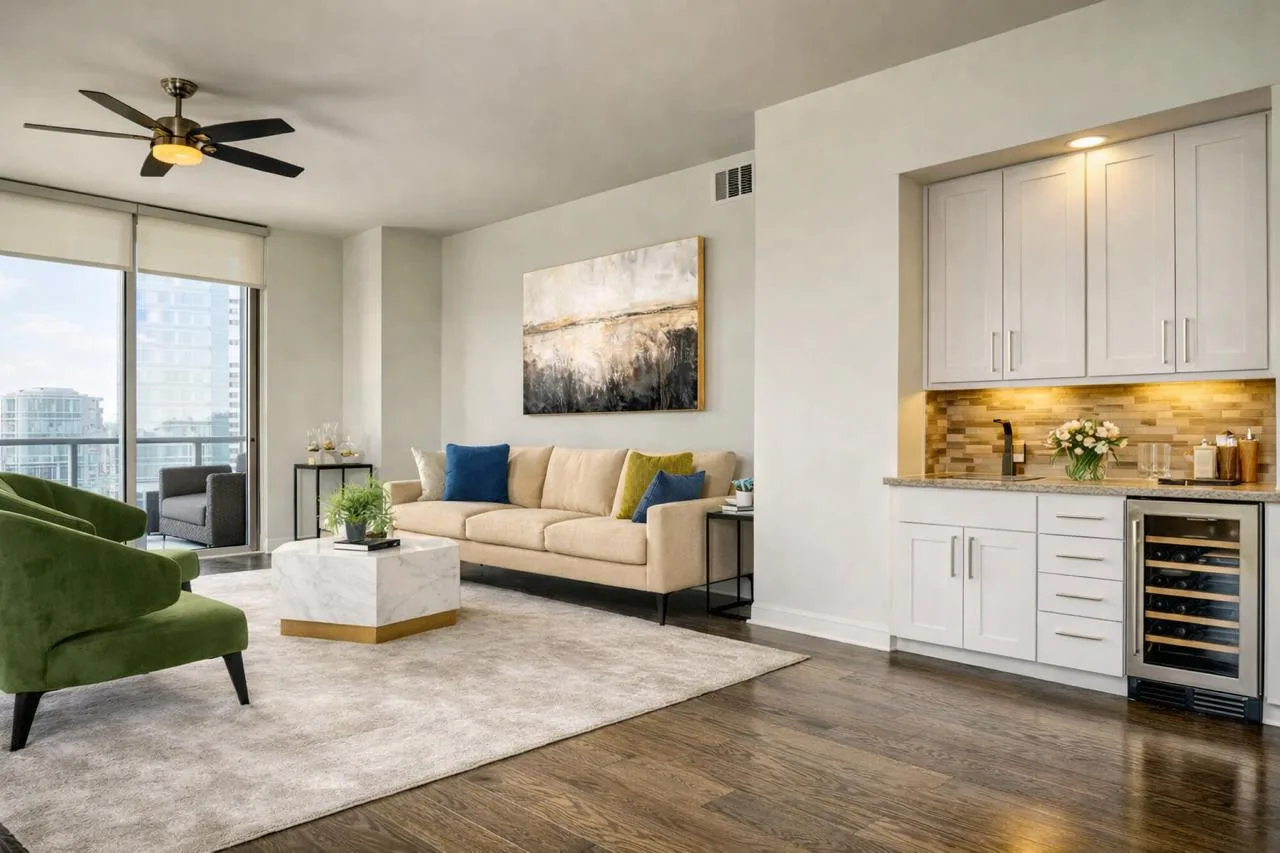
In our 3D interior rendering work, the hardest part of visualising a Hollywood Regency scheme is never the colour — it is the reflections. Lacquer, mirror, and brass only convince when the render accounts for what they reflect, so we spend most of the lighting pass controlling reflected highlights and the surroundings that appear in every glossy surface. Get the reflections right and the glamour reads instantly; get them wrong and the same materials look flat and plastic.
Because the style leans maximalist, restraint keeps it elegant rather than cluttered: one hero colour, disciplined contrast, and reflective surfaces used deliberately do more than piling on every element at once. If you like glamour but want a warmer, sun-washed alternative, Mediterranean interior design offers a softer counterpoint.