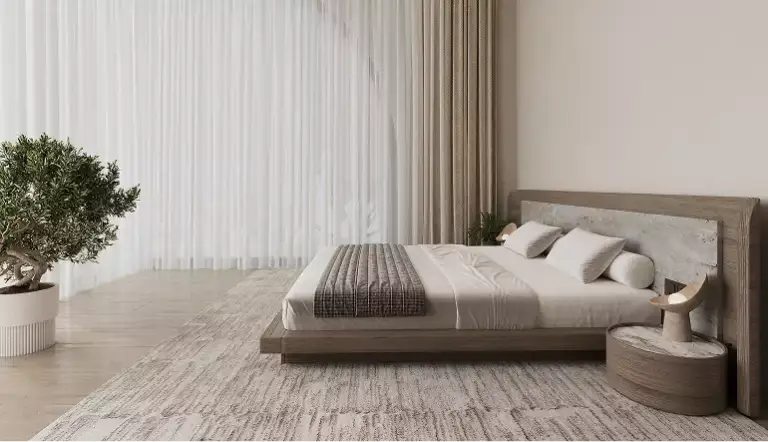
Organic modern interior design is a style that pairs the clean lines and restraint of modern design with the warmth, texture, and imperfection of natural materials. It leans on warm-neutral colors, sculptural curves, and tactile surfaces like unfinished wood, stone, and woven fibers to make a space feel calm and grounded rather than cold or stark. Think modern structure softened by nature.
What is organic modern interior design?What is organic modern interior design?
Organic modern interior design is the fusion of two ideas that used to sit on opposite ends of the spectrum: modern minimalism and the raw, textured character of the natural world. From modern design it borrows uncluttered layouts, honest materials, and a quiet color story. From nature it takes stone, wood, clay, linen, and curved forms that never quite repeat. The result is a room that reads as considered and current, but still feels soft to live in.
The style gained momentum as a direct reaction against the cold, gray, high-gloss minimalism of the 2010s. Search interest for organic modern interior design has climbed sharply, and the fastest-growing variant is telling: searches for warm organic modern interiors have risen more than tenfold year over year. People are not just asking what the style is anymore; they are asking how to make their homes feel warmer. That warmth pivot is the whole engine behind organic modern.
Key characteristics of organic modern interiorsKey characteristics of organic modern interiors
Organic modern rooms share a small, consistent set of ingredients. If a space is missing most of these, it usually reads as plain modern or plain minimalist instead.
- Natural, tactile materials: light-stained oak and walnut, travertine, marble, unglazed clay, rattan, jute, linen, wool, and bouclé used in their raw or lightly finished state.
- A warm-neutral palette: creamy whites, oatmeal, sand, and soft taupe as a base, with muted greens and earthy browns layered on top.
- Soft, sculptural silhouettes: curved sofas, rounded arches, organic-edge tables, and asymmetrical shapes that offset the straight lines of modern architecture.
- Relaxed minimalism: open, breathable rooms with fewer, better pieces, prioritizing quality and craft over quantity.
- Biophilic touches: large potted plants, foraged branches, and natural light treated as a design element in its own right.
- Layered texture: smooth stone against chunky wool, matte plaster against grainy wood, so the eye reads depth even in a neutral room.
The organic modern color palette
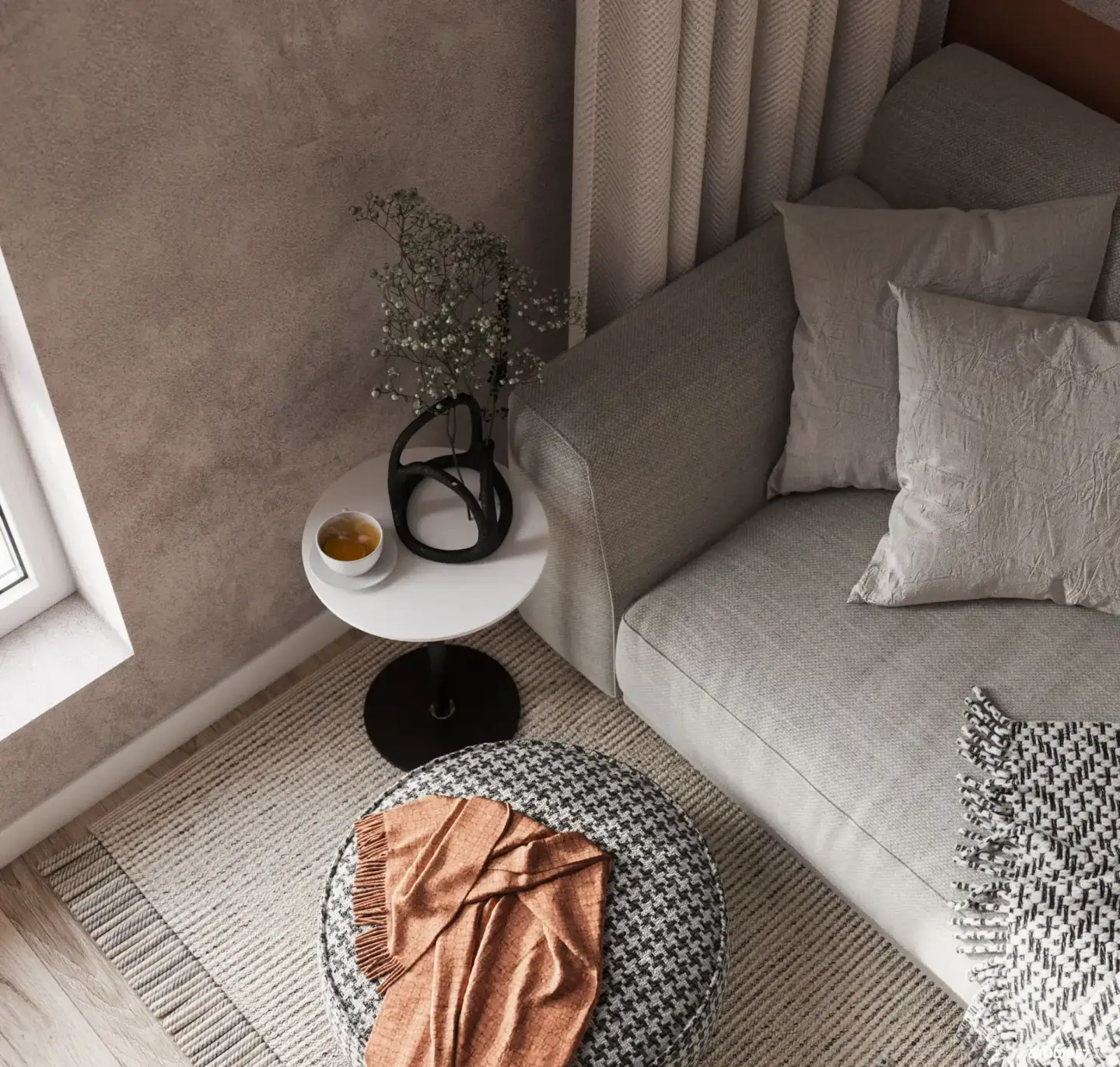
The organic modern color palette is built on warm neutrals, not cool grays. A creamy white or oatmeal base carries most of the room, earthy mid-tones like taupe, clay, and muted green do the layering, and a small dose of black or raw metal adds definition. A simple 60-30-10 split keeps it from turning flat: roughly 60% base neutral, 30% mid-tone natural material, and 10% grounding accent.
| Role | Colors | Where it lives |
| Base (about 60%) | Creamy white, oatmeal, warm off-white, sand | Walls, large upholstery, rugs |
| Mid-tone (about 30%) | Taupe, warm greige, clay, muted sage green, honey wood | Wood furniture, stone, textiles, cabinetry |
| Accent (about 10%) | Charcoal or black, raw brass and iron, terracotta, ochre | Hardware, lighting, frames, pottery |
Organic modern vs contemporary, Japandi, and modern farmhouse
Organic modern is often confused with neighboring styles because they share warm neutrals and natural materials. The differences are real, though, and they come down to which idea leads. The table below sorts the four styles people mix up most often.
| Style | Leading idea | Signature move | How to tell it apart |
| Organic modern | Modern lines warmed by nature | Sculptural curves plus raw stone and wood | Warm, textured, and softly rounded, but still minimal |
| Contemporary | Whatever is current now | Sleek finishes, statement lighting, of-the-moment shapes | Cooler and more polished; trend-driven, not nature-driven |
| Japandi | Japanese wabi-sabi meets Scandinavian function | Low furniture, restraint, quiet craft | More austere and pared-back than organic modern's soft layering |
| Modern farmhouse | Rural comfort updated for today | Shiplap, shaker cabinets, black-and-white contrast | Cozier and more rustic; higher contrast, less curve |
Two quick tests settle most cases. If the room is warm and textured but the forms stay soft and modern, it is organic modern. If it is warm and pared back to near-nothing with low, quiet furniture, it drifts toward Japandi. Organic modern is the more relaxed, layered cousin of both.
How to design an organic modern room step by stepHow to design an organic modern room step by step
- Set a warm-neutral base. Paint walls in a creamy white or warm greige and choose large upholstery in the same family so the room reads calm before anything else lands.
- Anchor with one sculptural piece. A curved sofa, an organic-edge coffee table, or an arched doorway gives the space its signature soft geometry.
- Layer natural materials. Pair a smooth stone or plaster surface with grainy wood and a chunky wool or jute rug so texture, not color, creates the contrast.
- Edit hard, then style light. Keep surfaces mostly clear, then add a few tactile objects: handmade pottery, a linen throw, a stone bowl.
- Bring in living texture. A large potted plant or a branch in a matte vase supplies the biophilic element the style depends on.
- Ground it with a dark accent. A black light fixture, iron hardware, or a charcoal frame stops the palette from floating.
Organic modern in the living room, bedroom, and kitchen
Living room
The living room is where organic modern is easiest to read. Start with a curved, low-arm sofa in oatmeal bouclé, add a travertine or burl-wood coffee table, and layer a thick wool rug over the floor. Keep the coffee table styled with two or three objects, and let a single large plant do the greenery work.
Bedroom
In the bedroom, the style leans restful. A wood or upholstered platform bed, linen bedding in warm neutrals, and plaster-toned walls create the base. Many people push the bedroom slightly darker and moodier, adding deeper clay or charcoal accents, which is a popular organic modern variation rather than a departure from the style.
Kitchen
Organic modern kitchens favor flat-front or lightly grained wood cabinetry, stone or quartz counters with soft veining, and unlacquered brass or matte black hardware. Open shelving in wood carries a few ceramic pieces, and pendant lighting in a rounded, natural form finishes the look.
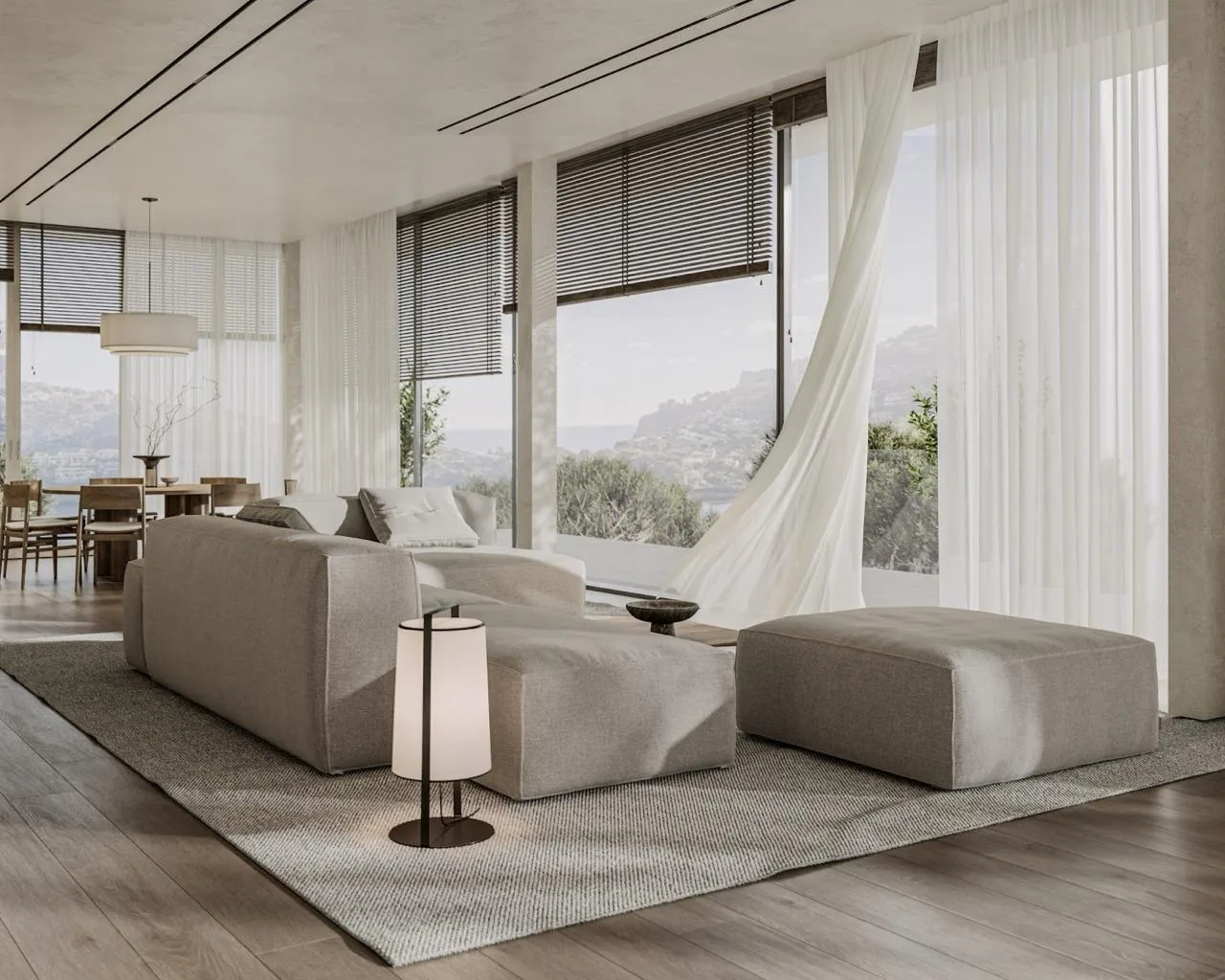
What organic modern looks like in a 3D render
Organic modern is one of the harder styles to visualize convincingly, because almost everything that sells it is tactile rather than graphic. A cool minimalist room can survive flat lighting; an organic modern room cannot. Its identity lives in surface detail that only reads when the render treats material and light as the main subject.
- Material contrast is the payload. Travertine pitting, wood grain direction, bouclé loop, and matte plaster each need their own texture and displacement work, or the room collapses into a beige box.
- Light temperature carries the warmth. A warm white around 2700-3000K reads as organic modern; push cooler and the exact same room turns contemporary.
- Curves demand clean geometry. Sculptural silhouettes show every facet, so low-poly shortcuts on a rounded sofa or arch are immediately visible.
- Negative space is deliberate. The relaxed-minimalist emptiness has to be composed, not left blank, so the eye lands on texture.
In our studio, the fastest way we can tell an organic modern render is working is the two-material squint test: if you blur your eyes and can still feel the difference between the stone and the wood, the textures are doing their job. When that contrast flattens, warming the key light and boosting surface roughness variation usually brings the room back to life. If you are commissioning visuals for this style, that material and lighting fidelity is exactly where a specialist matters most, which is why we treat it as core to our 3D interior rendering services.
Is organic modern still in style for 2026?
Yes. Organic modern is still very much in style heading into 2026, and by most signals it is still growing rather than fading. Interest has risen roughly 175% year over year, and designers increasingly frame it as the successor to the modern farmhouse look that dominated the late 2010s. The warmth-first, nature-led direction lines up with the broader 2026 mood toward calm, tactile, and personal spaces, so the style reads as durable rather than a passing trend. For a wider view of where it sits among today's looks, see our guide to interior design styles.