Mid-century modern interior design is a style rooted in the postwar years of roughly 1945 to 1969 that pairs clean lines and gentle organic curves with warm woods like teak and walnut. Spaces stay functional and uncluttered, low tapered-leg furniture keeps sightlines open, neutral bases meet bold accent colors, and large windows blur the line between indoors and out.
What Is Mid-Century Modern Interior Design?What Is Mid-Century Modern Interior Design?
Mid-century modern (MCM) interior design is a decorating style that applies the postwar design movement to how a room is furnished, colored, and lit. It favors honest materials, functional shapes, and a light, open footprint over ornament. The look emerged in the United States and Scandinavia after World War II, when new manufacturing methods made molded plywood, fiberglass, and steel furniture affordable for ordinary homes.
The style is deliberately quiet. Instead of pattern and trim, it leans on the grain of real wood, a few sculptural furniture pieces, and one or two saturated accent colors against a warm neutral shell. That restraint is why it still reads as current more than sixty years later, and why it sits at the center of most popular interior design styles guides.
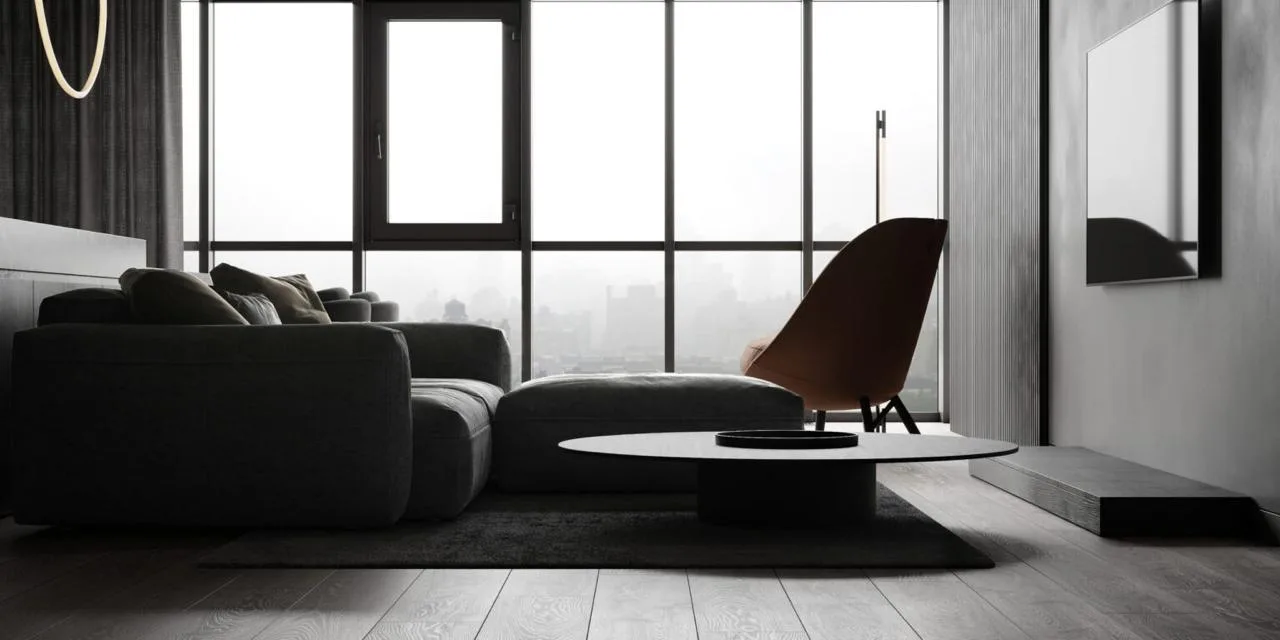
Core Characteristics of Mid-Century Modern Interiors
The core characteristics of mid-century modern interiors are clean lines, function-first furniture, natural and man-made materials mixed together, and a warm neutral palette lifted by bold accents. Most rooms combine several of the traits below rather than all of them at once.
- Clean lines with organic curves: straight, uncluttered forms softened by rounded edges, kidney shapes, and sculptural silhouettes.
- Function over ornament: every piece earns its place; storage, seating, and lighting are practical first and decorative second.
- Warm woods and mixed materials: teak, walnut, and oak set against metal, glass, molded plastic, and fiberglass.
- Low, tapered-leg furniture: sofas and sideboards sit low on thin peg legs, keeping floors visible and rooms feeling larger.
- Neutral base plus bold accents: beige, cream, and brown grounds punctuated by mustard, teal, or burnt orange.
- Indoor-outdoor connection: large windows, open-plan layouts, and houseplants pull daylight and greenery inside.
- Statement lighting: sputnik chandeliers, arc floor lamps, and globe pendants act as sculpture as much as illumination.
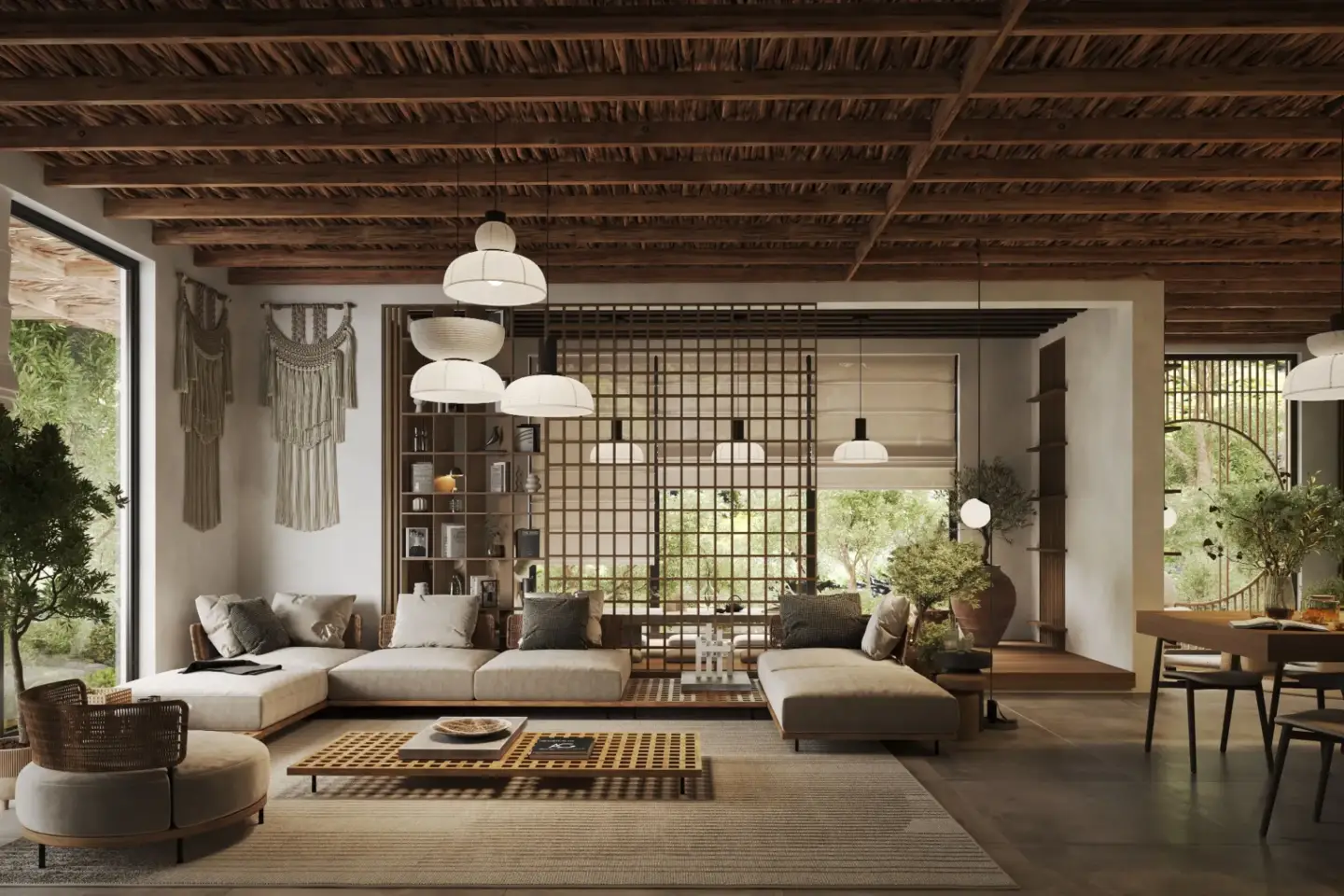
The Mid-Century Modern Color Palette
The mid-century modern color palette is a warm neutral base of wood tones, cream, and greige, layered with a small number of saturated accent colors such as mustard yellow, burnt orange, teal, and olive green. Accents usually cover no more than 10 to 20 percent of a room, appearing in a single sofa, a rug, or art rather than across every surface.
| Role in the room | Typical colors |
| Neutral base (walls, large furniture) | Warm white, cream, greige, walnut brown |
| Grounding tones (wood, leather) | Teak, walnut, tan, chocolate |
| Bold accents (one or two per room) | Mustard yellow, burnt orange, teal, olive green |
| Signature spike (used sparingly) | Tomato red, ochre |
Signature Furniture and Materials
Mid-century modern furniture is defined by low profiles, tapered legs, and sculptural shapes in warm wood and molded materials. A handful of iconic designs anchor the look: the Eames Lounge Chair, the Noguchi coffee table, the Egg chair, the Nelson platform bench, the tulip table, and the low wooden credenza or sideboard. You do not need originals, but the silhouettes matter.
On materials, the era mixed the natural and the industrial freely. Expect teak, walnut, and rosewood alongside molded plywood, fiberglass shells, tubular steel, and glass. Textiles stay tactile and simple: leather, wool, and boucle in solid colors or restrained geometric patterns.
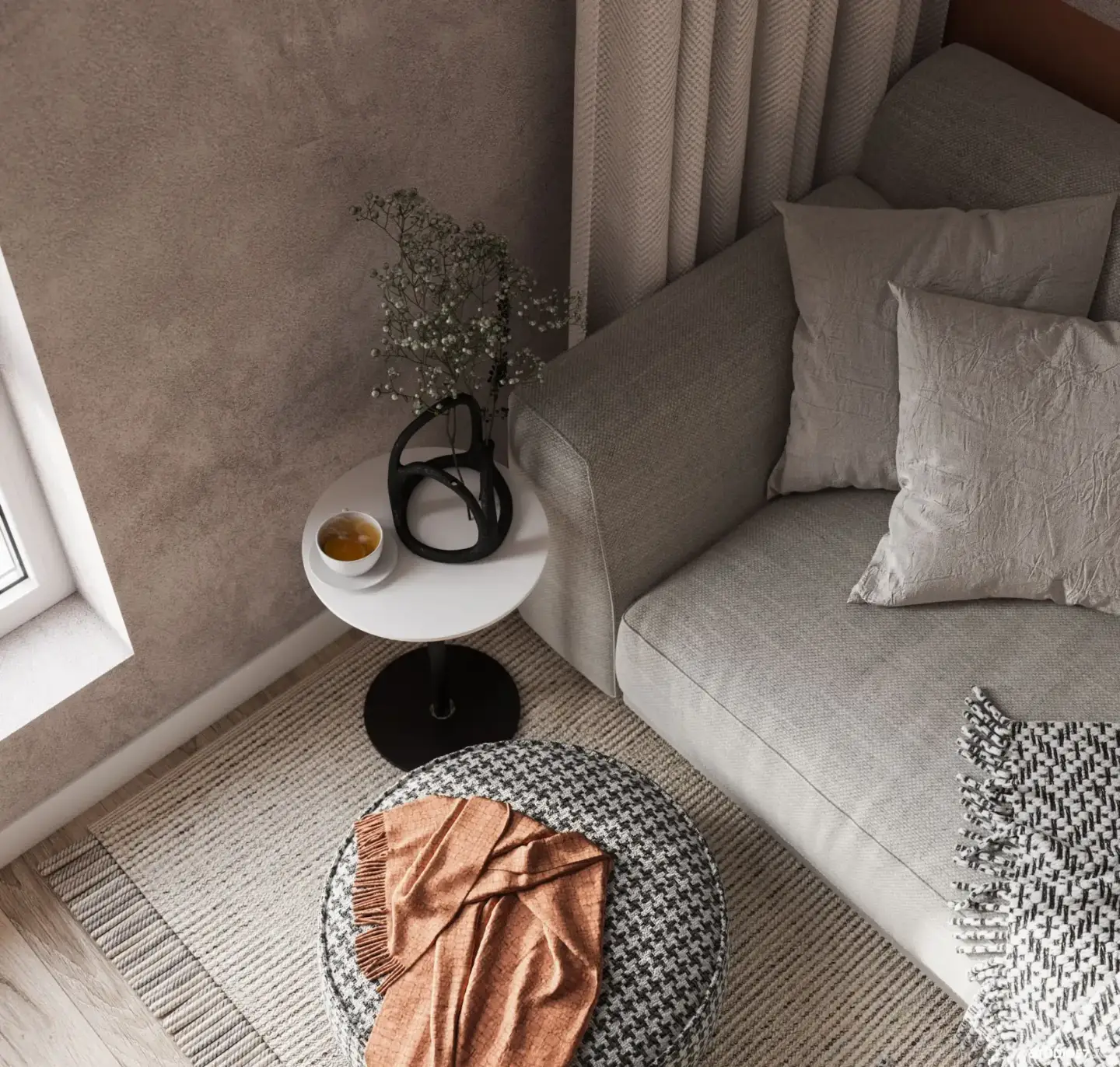
Mid-Century Modern Room by Room
Mid-century modern adapts to each room by keeping furniture low and legs visible, then adding one sculptural piece and one accent color per space. The essentials shift by function.
Living Room
Center the room on a low-slung sofa and a long walnut credenza. Add one statement chair, a sculptural coffee table, and a sputnik or globe light. Keep the rug neutral and let a single accent color carry the mood.
Bedroom
A low platform bed in warm wood, spindle-leg nightstands, and a pair of globe or cone bedside lamps set the tone. Bedding stays plain; texture and a single piece of graphic art do the work.
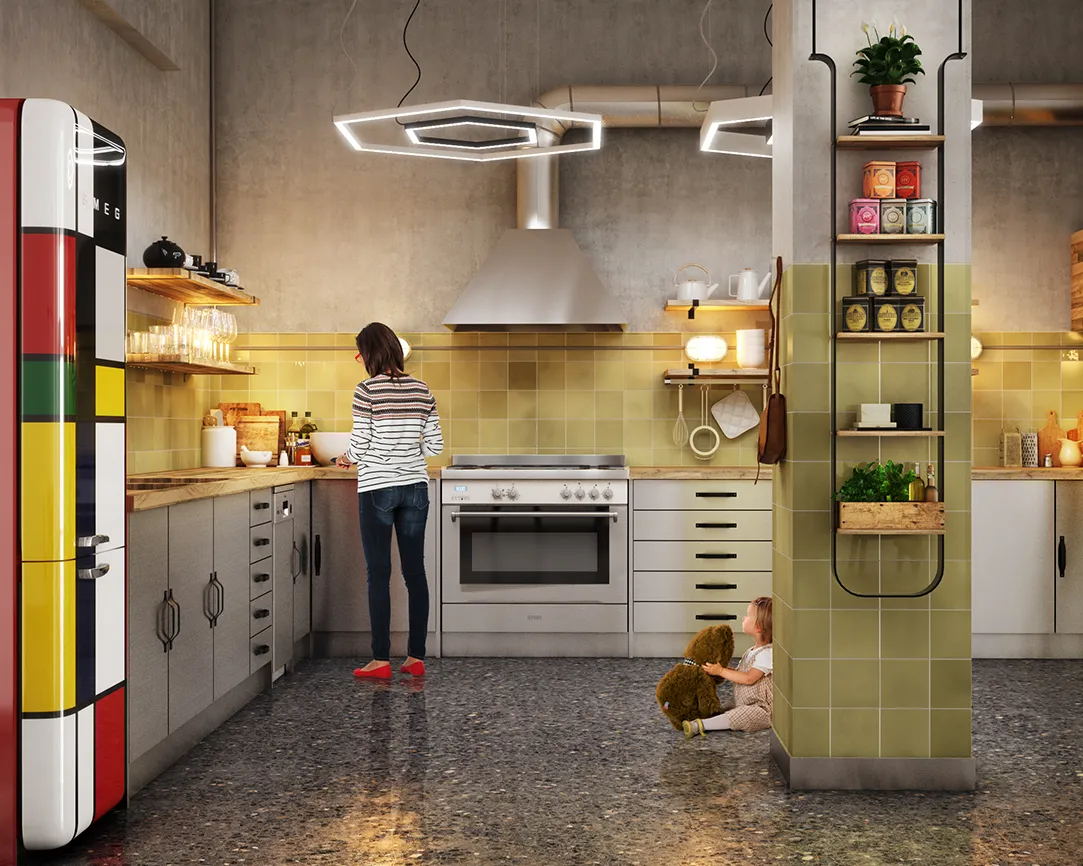
Kitchen
Flat-panel wood cabinets, a simple tile or terrazzo backsplash, and integrated handles keep the kitchen clean and functional. A pop of color on the lower cabinets or bar stools nods to the era without a full renovation.
Mid-Century Modern vs Modern, Contemporary, and Scandinavian
Mid-century modern is often confused with modern, contemporary, and Scandinavian design because they share clean lines and restraint. The differences come down to era, warmth, and materials. Mid-century modern is a fixed historical style with warm woods and bold accents; the others are broader or cooler.
| Style | How it differs from mid-century modern |
| Modern | A broad umbrella for early-to-mid-20th-century minimal design; MCM is one specific chapter within it. |
| Contemporary | Always current and evolving, with no fixed period; cooler and more neutral than MCM's warm woods and saturated accents. |
| Scandinavian | Shares the era and light footprint but leans cooler, paler, and cozier (hygge), with fewer bold accent colors. |
One more distinction matters for search: mid-century modern interior design is about décor and furnishing, while mid-century modern architecture describes the buildings themselves, with their flat planes, post-and-beam structure, and floor-to-ceiling glass. If you are comparing the softer, cooler cousin, see our guide to Scandinavian style.
Is Mid-Century Modern Still in Style?Is Mid-Century Modern Still in Style?
Mid-century modern is still popular, but its role is shifting from dominant look to accent. U.S. search demand for the term has cooled roughly a third over the past year, based on Google search volume, yet it remains one of the most-searched interior styles at thousands of queries a month. In practice, designers now blend a few MCM pieces into warmer, softer schemes rather than furnishing a whole home in the style.
The styles absorbing that attention are warm minimalism, Japandi, and organic modern, all of which keep MCM's clean lines while adding softer textures and a more neutral palette. Mixing one or two mid-century pieces into those rooms is the most durable way to use the style today.
How Mid-Century Modern Interiors Translate to 3D RendersHow Mid-Century Modern Interiors Translate to 3D Renders
Mid-century modern is one of the harder styles to render convincingly because so much of it lives in materials and light rather than shapes. A believable MCM render depends on a short list of details that are easy to get wrong.
- Wood grain and direction: teak and walnut read as plastic if the grain is too uniform or the sheen is too high.
- Tapered-leg contact: thin legs need accurate contact shadows and reflections, or furniture appears to float.
- Light temperature: the era's warmth comes from slightly warm, low-angle daylight and incandescent-style fixtures, not cool studio light.
- Accent calibration: a single mustard or teal object has to be saturated enough to pop without blowing out under lighting.
- Indoor-outdoor daylight: the signature large windows only work when the exterior and its light are modeled, not faked as a flat backdrop.
In our studio, the detail clients most often flag on a first mid-century draft is wood: get the walnut grain and its warm, matte sheen right and the whole room suddenly reads as authentic, even before the furniture is final. That is why we treat material and lighting setup as the real work on these scenes, not an afterthought. If you are visualizing a mid-century space before it is built or furnished, our 3D interior rendering services are built for exactly this kind of material-driven interior.