Mechanism of Action Animation for a Wearable Bladder Monitor
A medtech company developing a wearable urologic health system needed a short 3D animation of how it measures the bladder: a sensor film and pod on the skin, a weak field between the electrodes and a bladder that fills and empties, shown precisely and without overstating the science.
Client & Market Context
A Medtech Company Developing a Wearable Urologic Health System
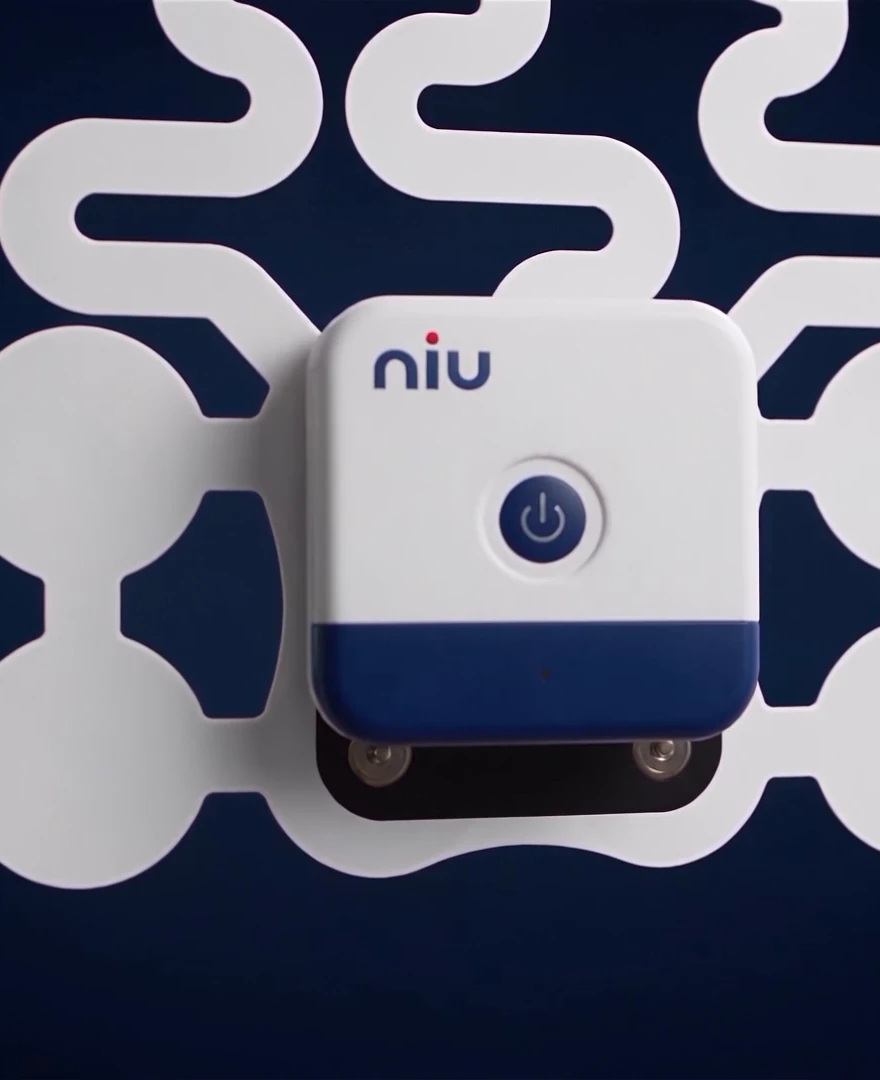
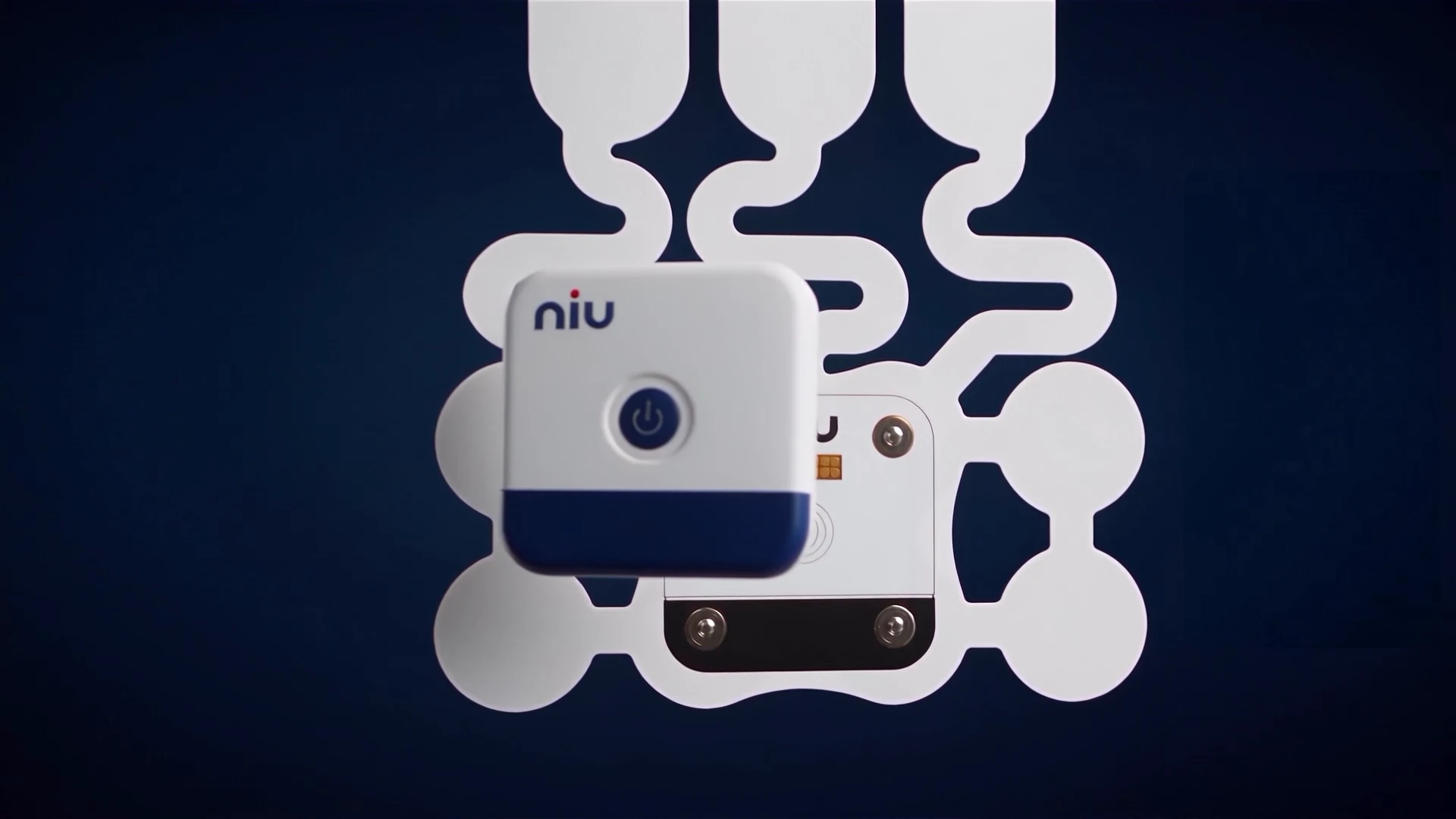
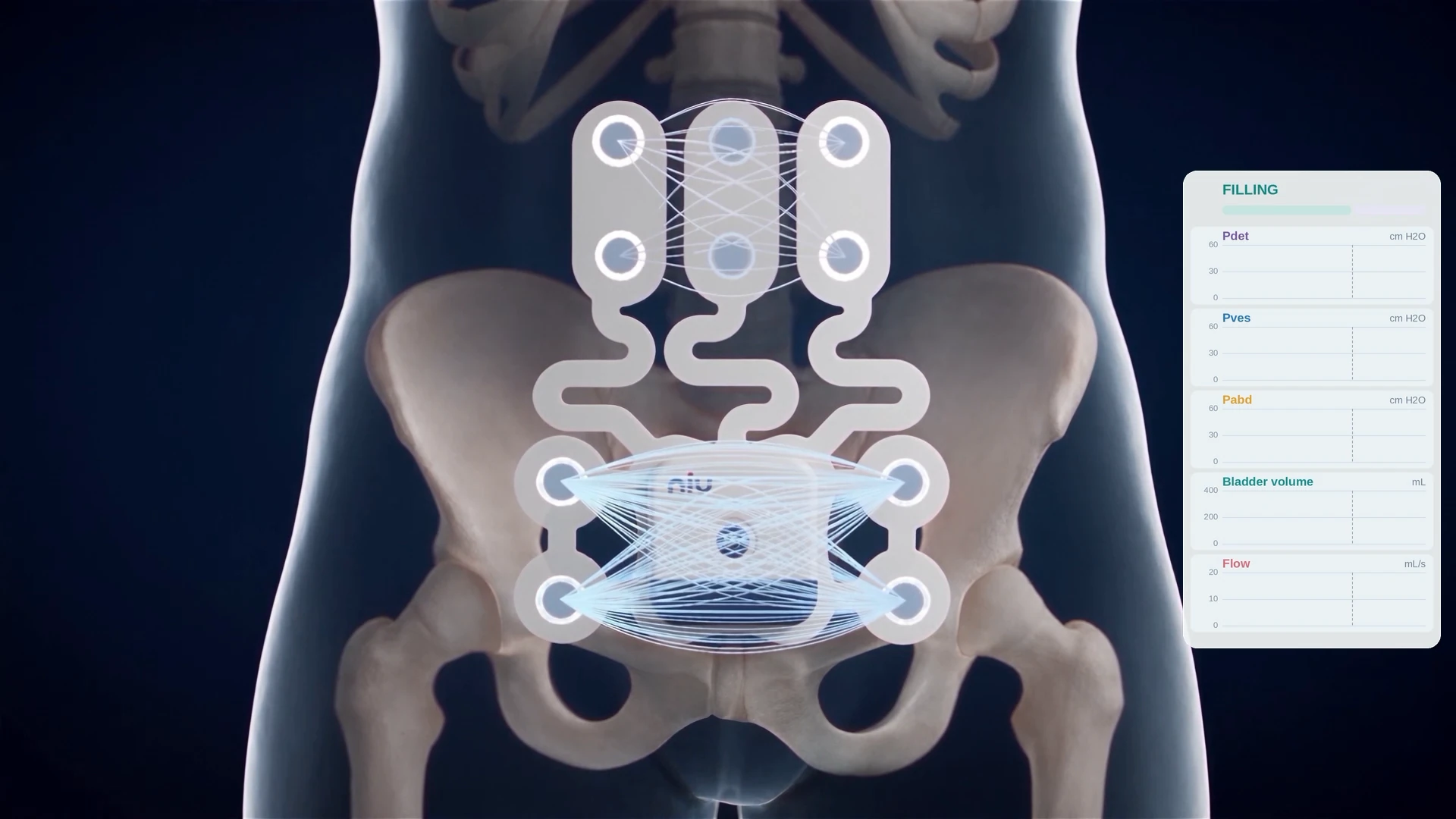
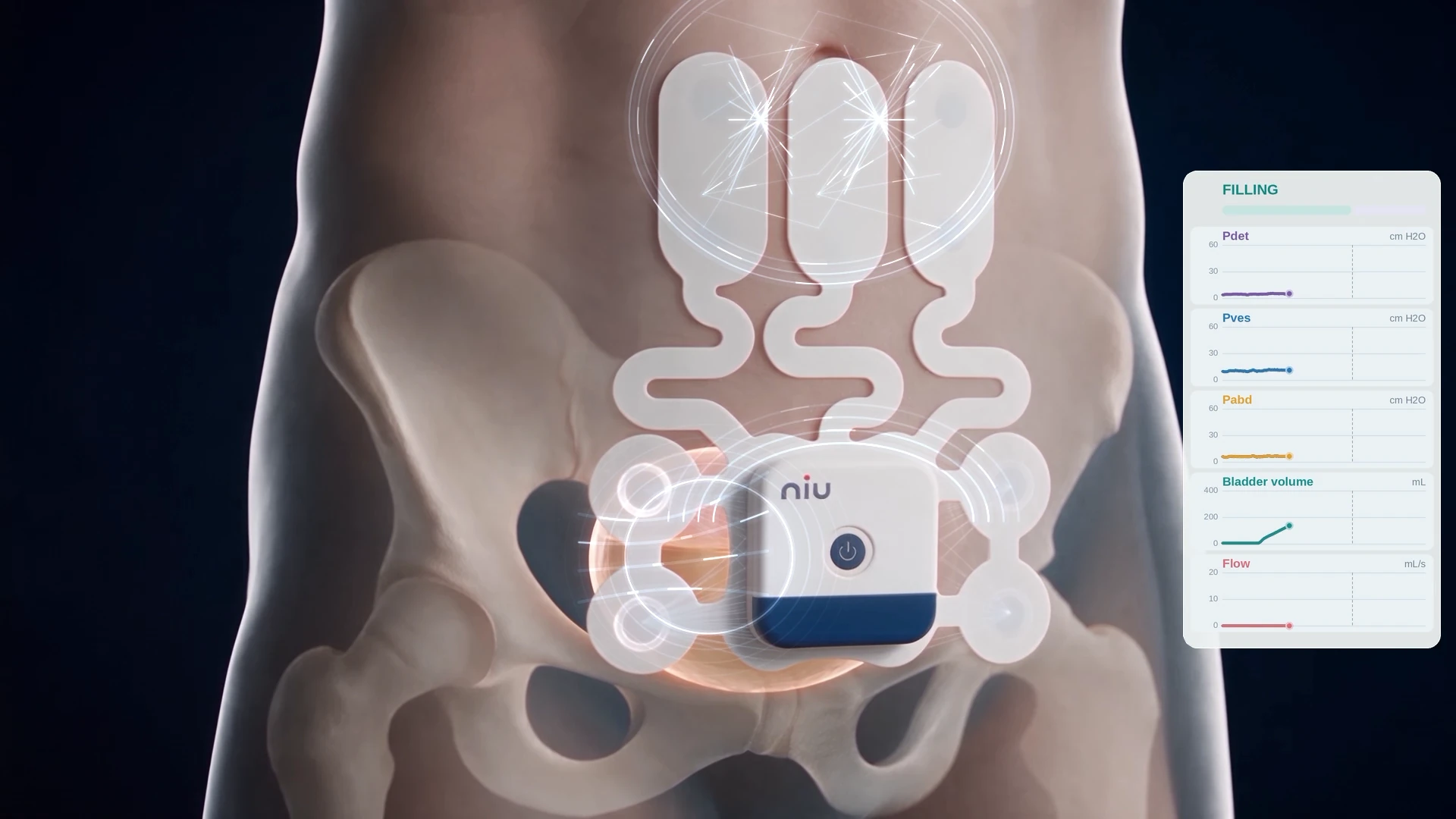
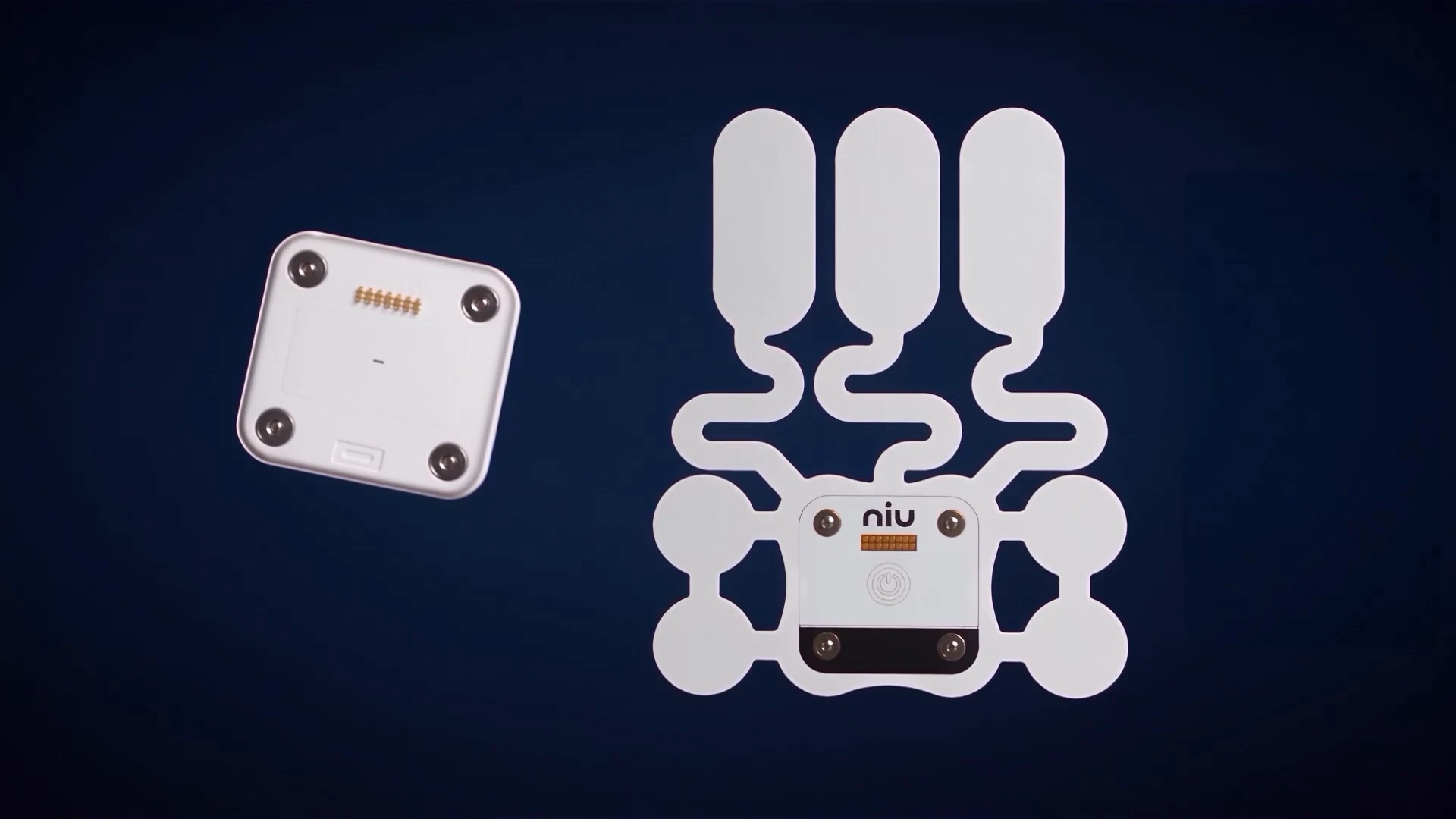
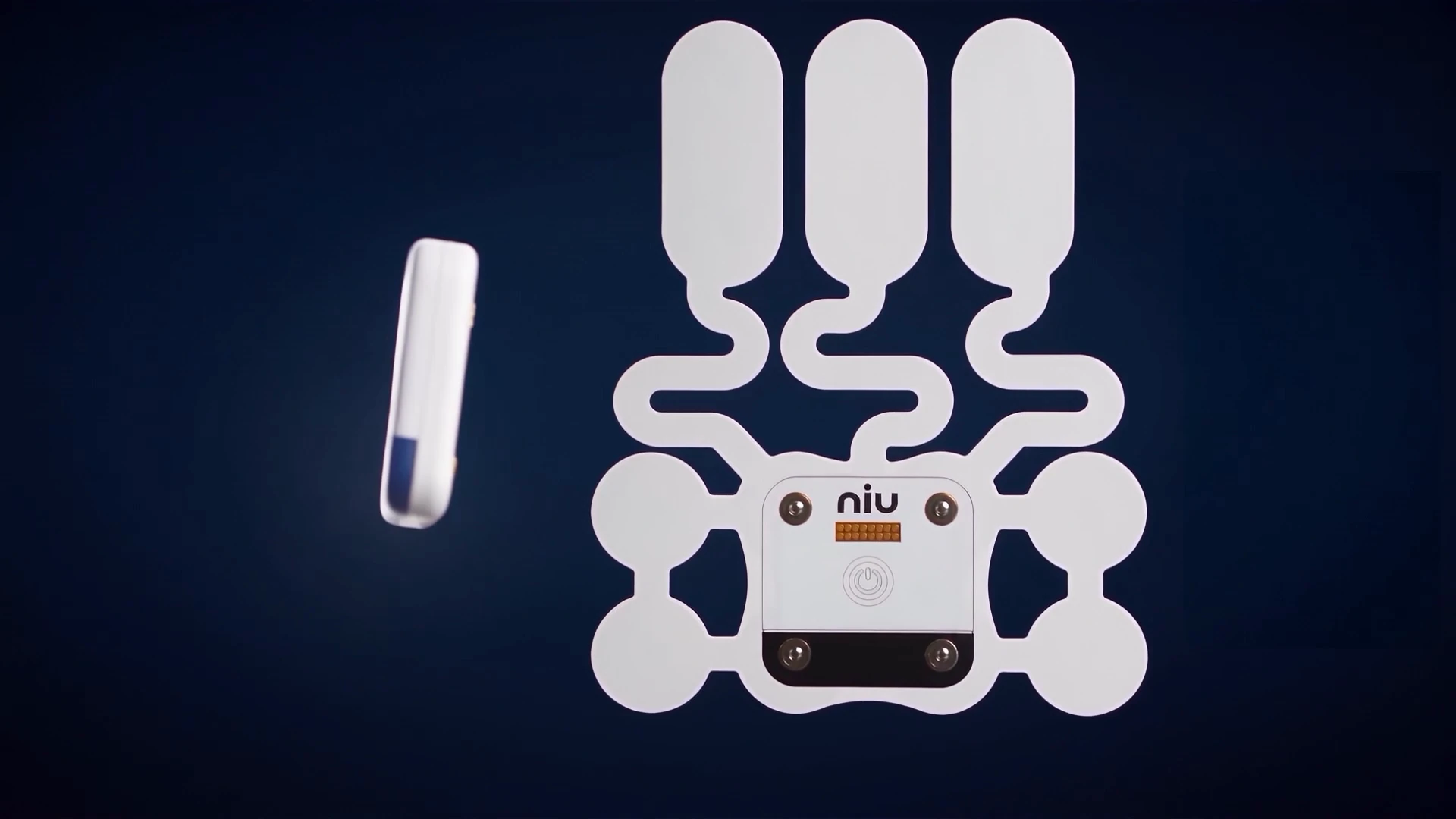
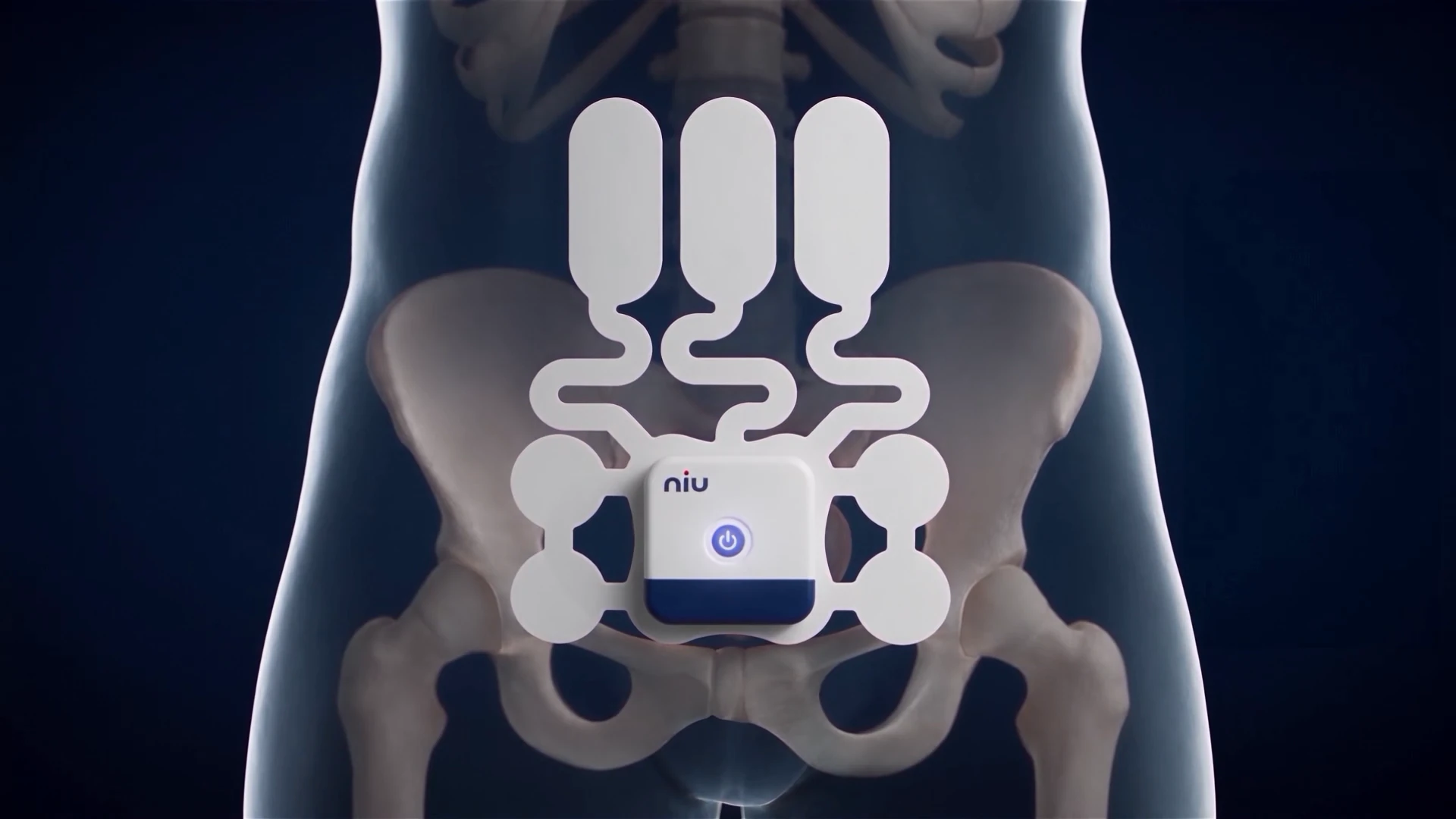
Our client is a medtech company in Israel building a wearable system for urologic health. A thin sensor film with fourteen electrode sites sits on the lower abdomen, and a compact pod clips onto it to drive the measurement.
Showing How a Wearable Sensor Reads the Bladder Without Overstating It
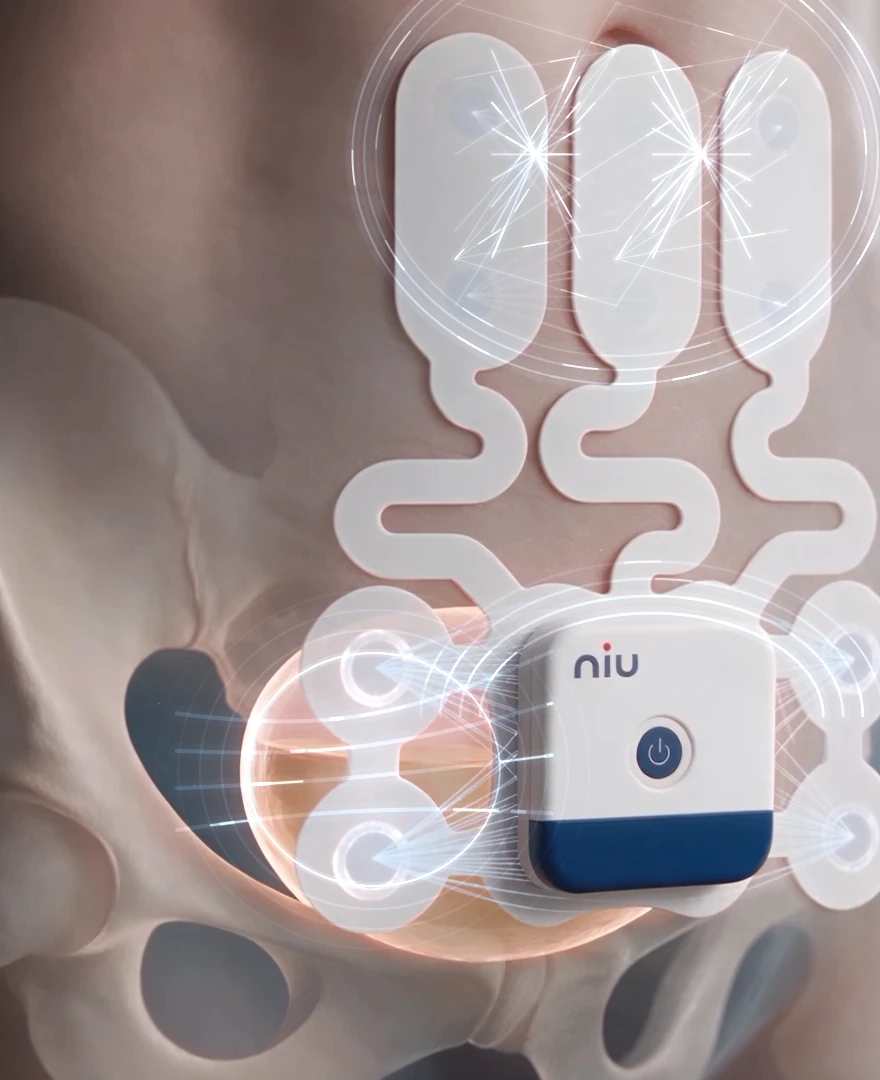
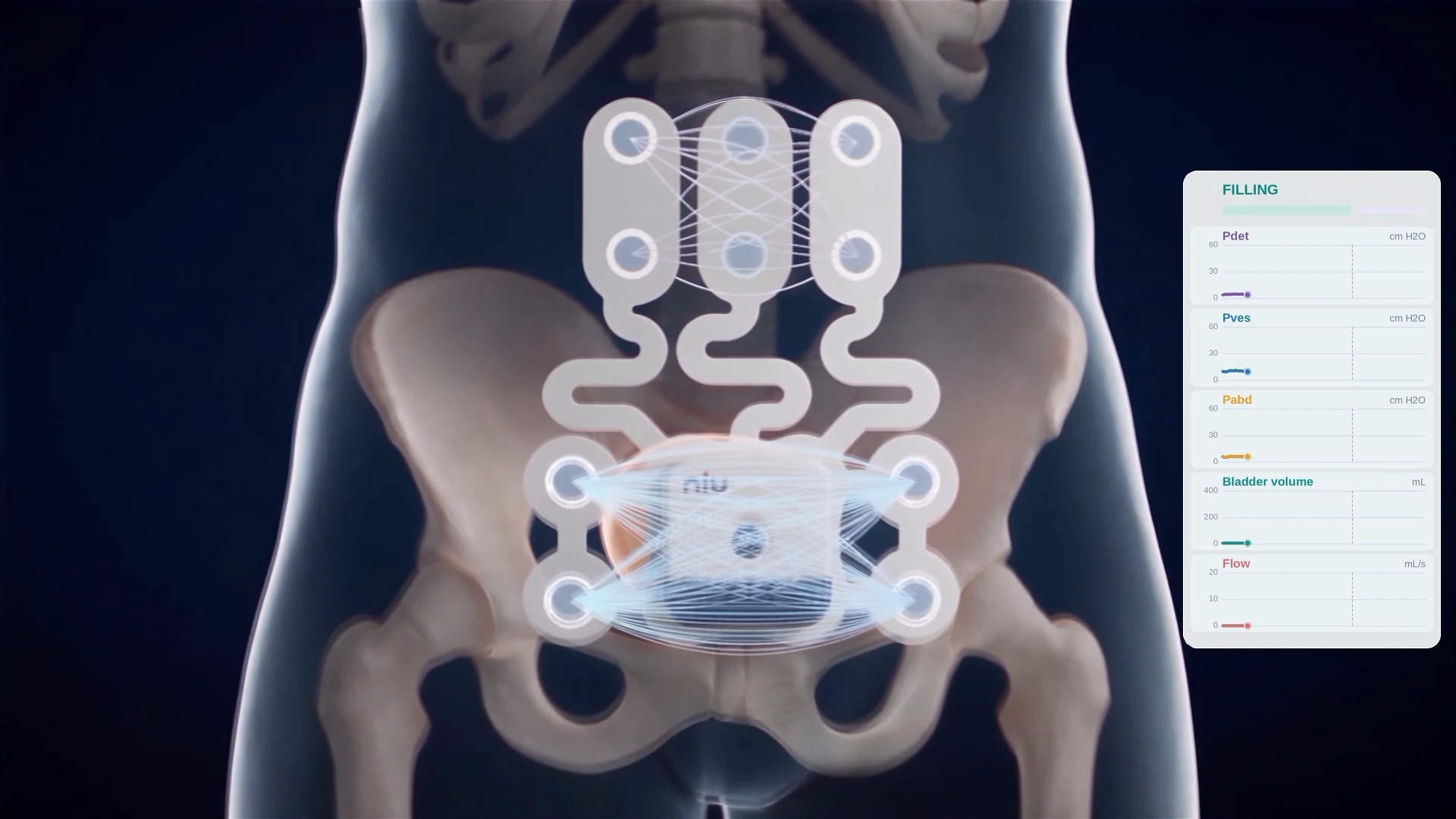
A 3D medical animation of a diagnostic wearable is easy to get wrong. Glowing lasers and pulses coming out of an organ look impressive but describe a different technology. Here the electrodes create a weak field and measure how it passes through the tissue, and the bladder only changes that picture as it fills. Every shot had to follow that logic, in about twenty seconds.
Visual Results
Frames From the Wearable Bladder Monitor Animation
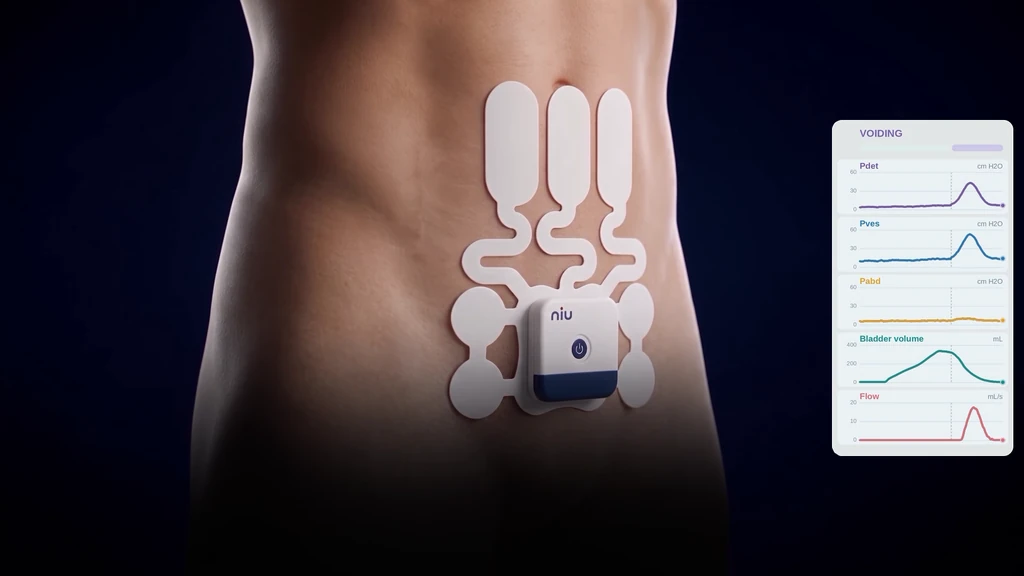
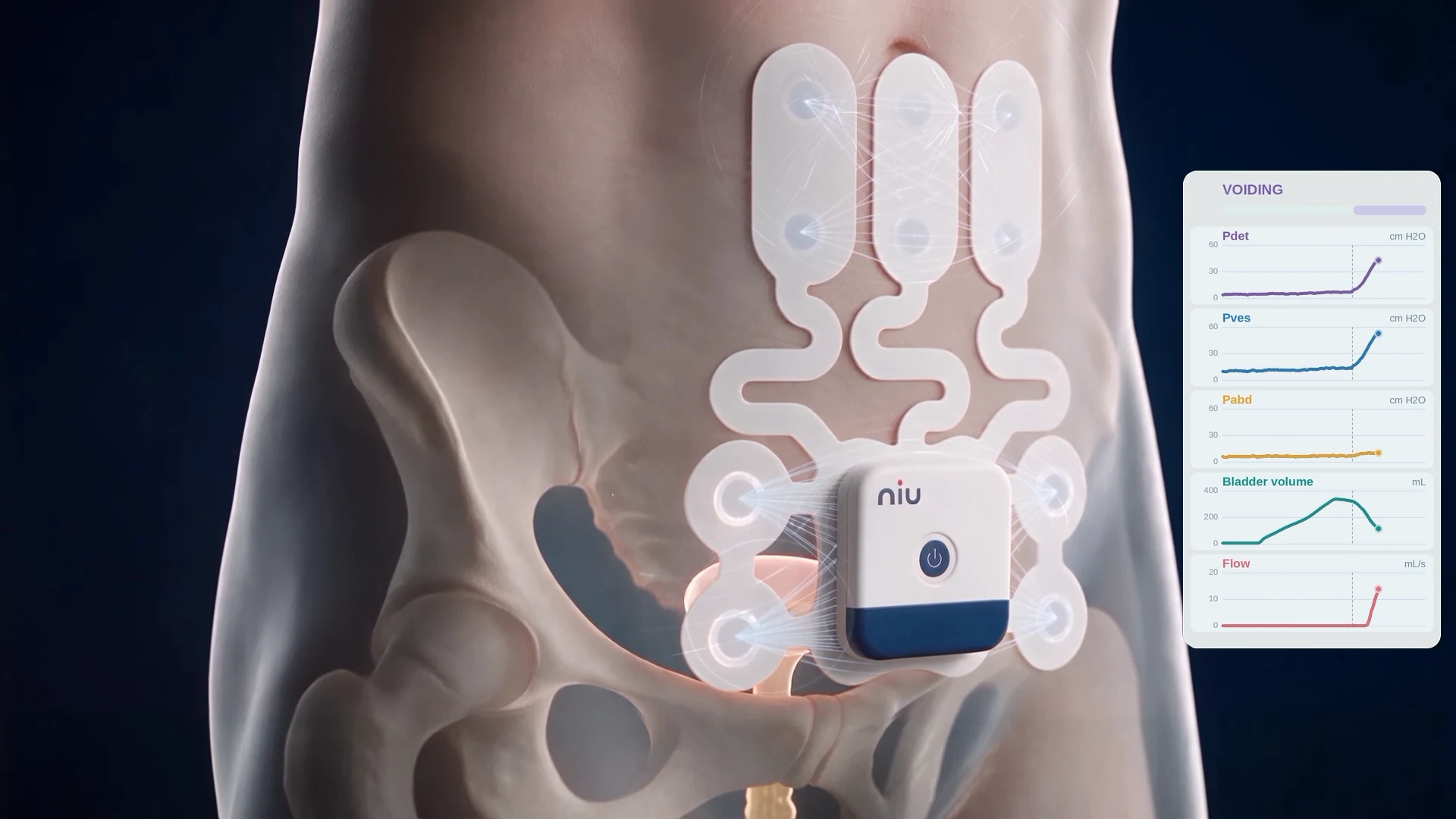
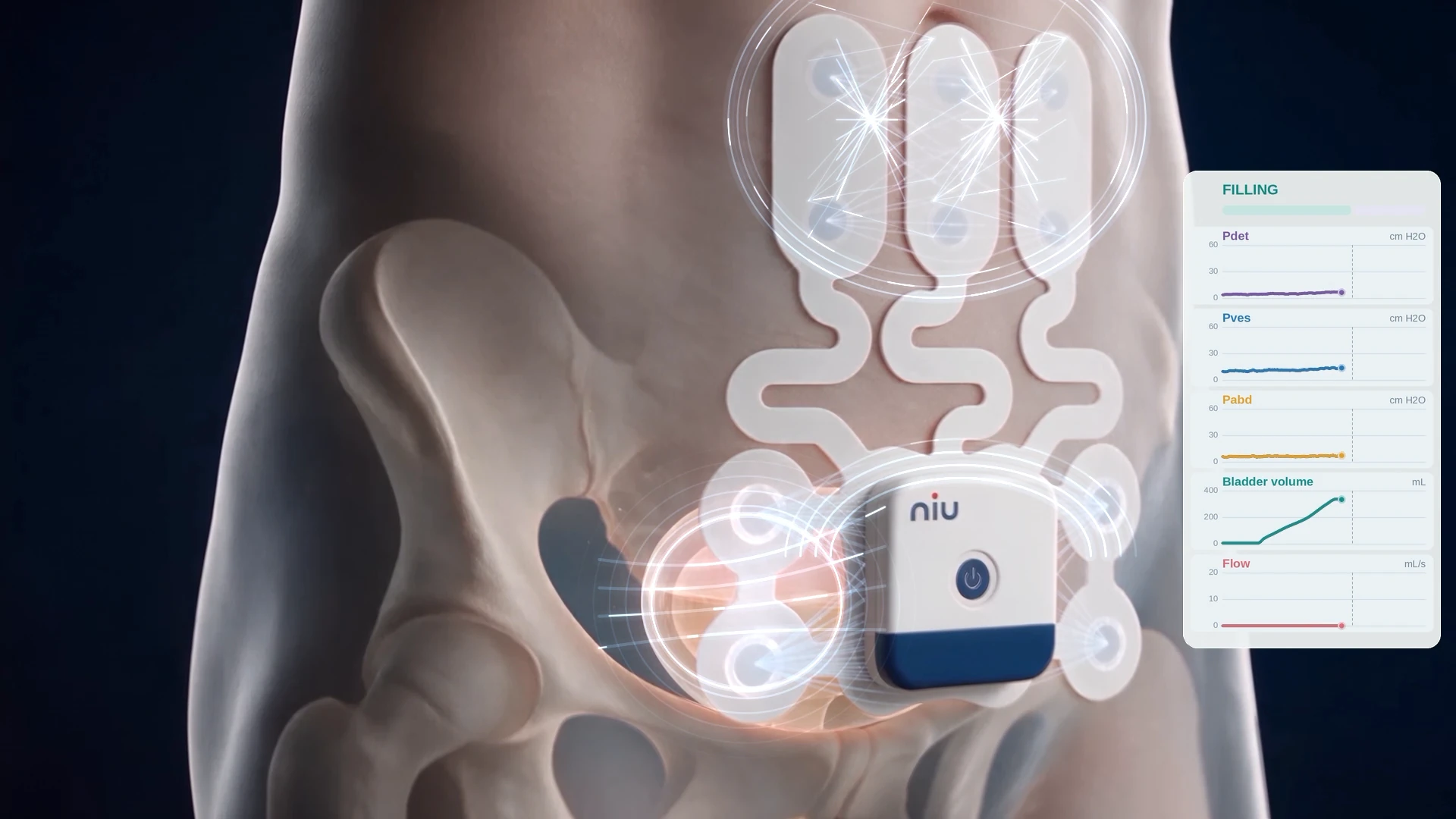
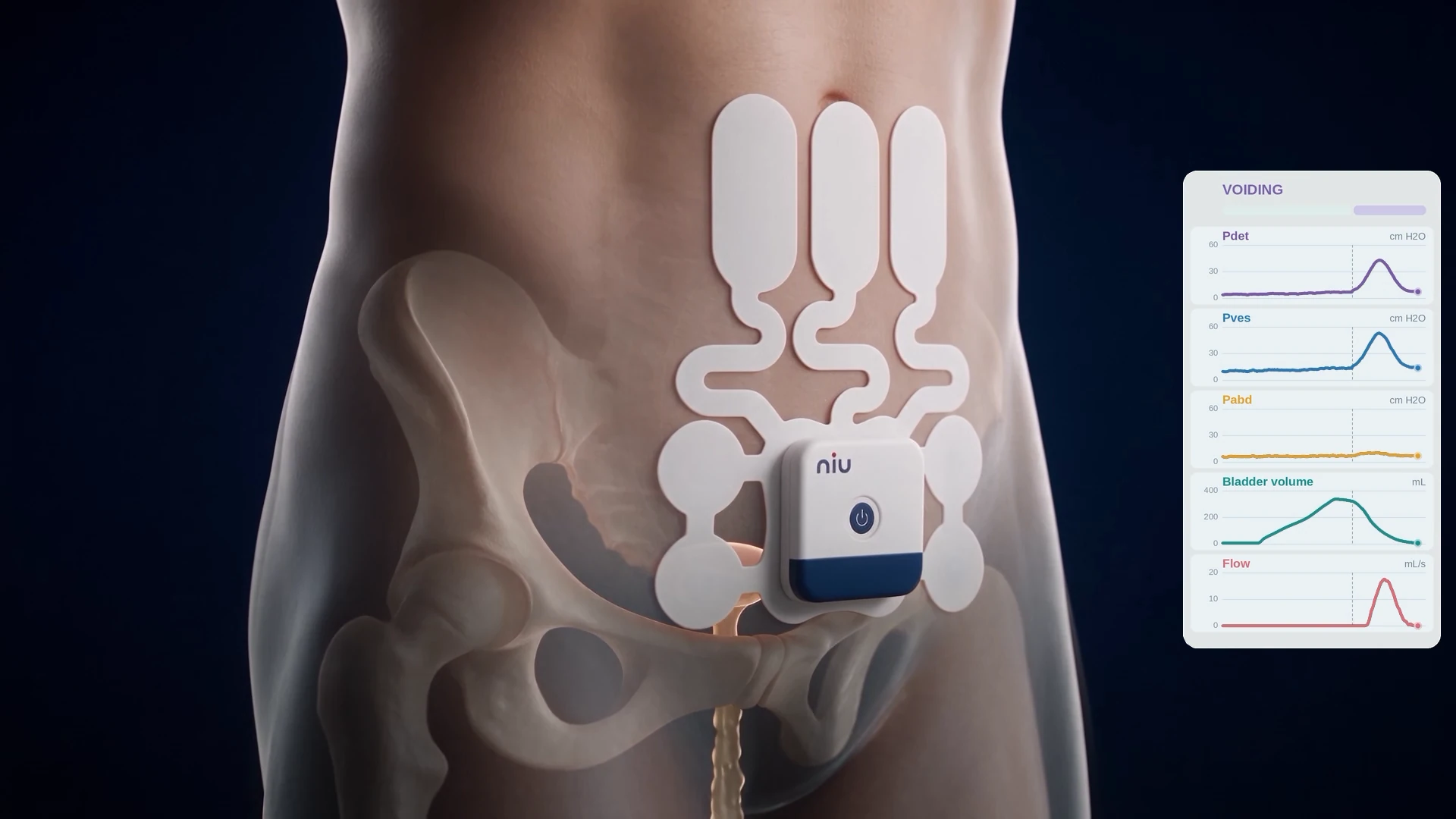
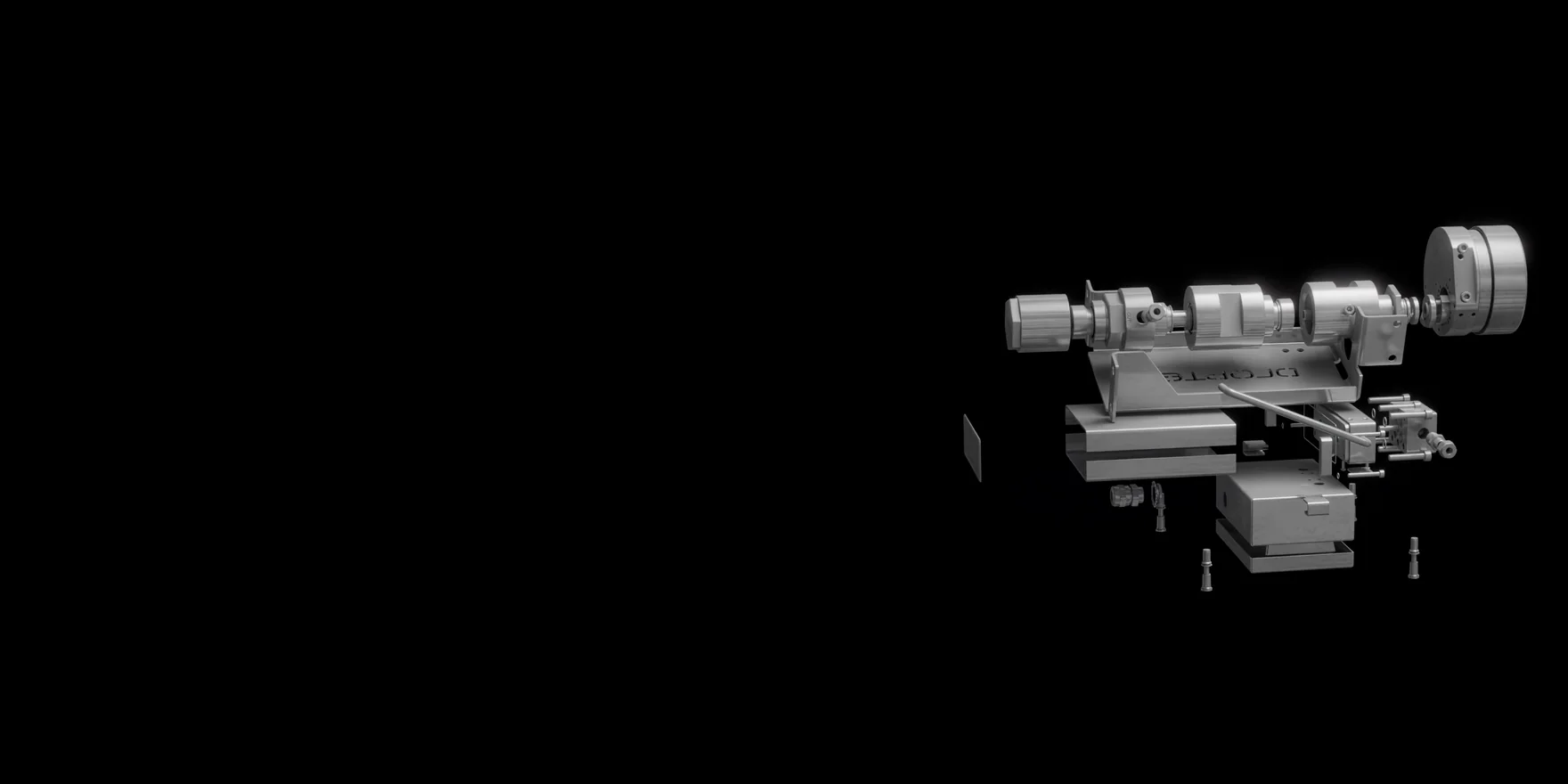
Stills from the film: the pod and sensor film, the device on the abdomen, the X-ray view of the pelvis, the measurement field, the full bladder and the voiding traces.

Free guide: a 60-second explainer in 12 shots, and the 4 you can cut
You have just seen a machine, a device or a procedure shown rather than described. Doing the same in motion is a matter of planning shots, not polishing renders. Our composite 60-second explainer, priced shot by shot at $8,100, does all its explaining in five shots. The guide gives you the priced shot list, the input to send from engineering or medical teams and the short brief for product animation.
- Free
- Instant download
- No sales call
If it didn't open, download it here.
Download the PDFRemote studio, your time zone
Planning a similar project?
Book a 30-minute call. Tell us about the project, and we will tell you which views it needs, how long it takes and what it costs.
Estimate on the call
A price range on the call, not a follow-up questionnaire.
Any stage of the project
From concept sketches to a finished model: we start from what you have.
Book a 30-minute call
Which day suits you?
What time?
Where should we send the invite?
- 30 minutes
- Free, no obligation
- Invite by email
Results & Business Impact
- 20s
Full HD film that goes from the device to the anatomy and back in one continuous camera move
- 1model
of the sensor film and pod, built from the client’s CAD files and used in every shot
- 14sites
electrode sites on the sensor film, placed from the client’s layer drawings
- 5traces
on the reading panel: detrusor, vesical and abdominal pressure, bladder volume and flow
In a mechanism of action animation, what you leave out matters as much as what you show. Keeping the bladder passive and every field line anchored to the electrodes made the film accurate enough for a medtech team and still clear in twenty seconds.
FAQ
FAQ about this mechanism of action animation
Didn’t find your question?
Ask it here. A producer replies within one business day — with an answer, not a sales call.
What is a mechanism of action animation for a medical device?
How long should a mechanism of action video be?
Can you build the device from our CAD files?
How do you keep a medical animation scientifically accurate?
What is an X-ray view in 3D medical animation?
Do you work with medtech companies outside the United States?
Explore Similar Medical and Product Animation Cases

Mechanism-of-Action Animation for an Appetite-Management Supplement
Where this film shows how a device reads the body, an animation of how Calocurb works in the body shows what a supplement does inside it, another mechanism of action told without a camera.
Medical Device Launch Video for a Clinical Eye Tracker
The same CAD-to-film workflow introduces a new device at launch, as in a medical device launch video for a clinical eye tracker with a 4K film and a teaser.
Industrial Valve Animation with Assembly, Cutaway and Flow Path
Exploded views and cutaways explain how parts fit and work, as in an industrial valve animation with assembly and cutaway built from engineering files.