FOOH (fake out-of-home) is a digital advertising format that uses CGI to fake a real-world billboard, building takeover, or street stunt that never physically happened, then releases the clip on social media. It looks like an out-of-home ad, but it lives online, costs a fraction of a real installation, and is built to be shared.
What FOOH (Fake Out-of-Home) Actually MeansWhat FOOH (Fake Out-of-Home) Actually Means
FOOH stands for “fake out-of-home.” The name plays on OOH (out-of-home) advertising — the billboards, transit wraps, and street furniture you pass in the real world. A FOOH ad imitates that format with computer-generated imagery instead of a physical media buy. A giant handbag opens on a Paris bridge, a perfume bottle pours down a skyscraper, a sneaker stomps through a square — none of it is really there.
The point is the share, not the street. FOOH content is produced first for Instagram, TikTok, and LinkedIn, where the surreal scale stops the scroll. Because the “placement” is virtual, brands skip the cost, permits, and lead time of a real installation and reach a far larger audience than any single physical site could deliver.
How FOOH Advertising Works, Step by StepHow FOOH Advertising Works, Step by Step
A FOOH ad is a visual-effects production compressed into a short social clip. The build follows a predictable path, whether the base footage is filmed or generated.
- Pick the location and the base plate. A real location is either filmed (a “plate”) or generated with AI. Famous landmarks make the illusion read instantly.
- Model and animate the hero object. The product or stunt is built in 3D, scaled to the scene, and animated to interact with the environment.
- Match the camera and lighting. Camera tracking locks the CGI to the real footage so it moves correctly; lighting and shadows are matched so the object sits in the world.
- Composite and grade. The CG element is layered into the plate, color-matched, and finished with reflections, contact shadows, and grain.
- Cut for social and publish. The clip is trimmed to a few vertical seconds, captioned, and released where it is meant to spread.
From our studio — there’s no single “FOOH program.” It’s a task, and the tools follow. We model in 3ds Max, build effects in Houdini, composite in Nuke or After Effects, and more and more of it gets done with AI. Anyone who tells you it’s one fixed pipeline hasn’t shipped many of these.
Dim Kuzmenko, Maverick Frame
That production craft is the same discipline behind any 3D product animation — FOOH simply stages it in a fake public space instead of a clean studio set.
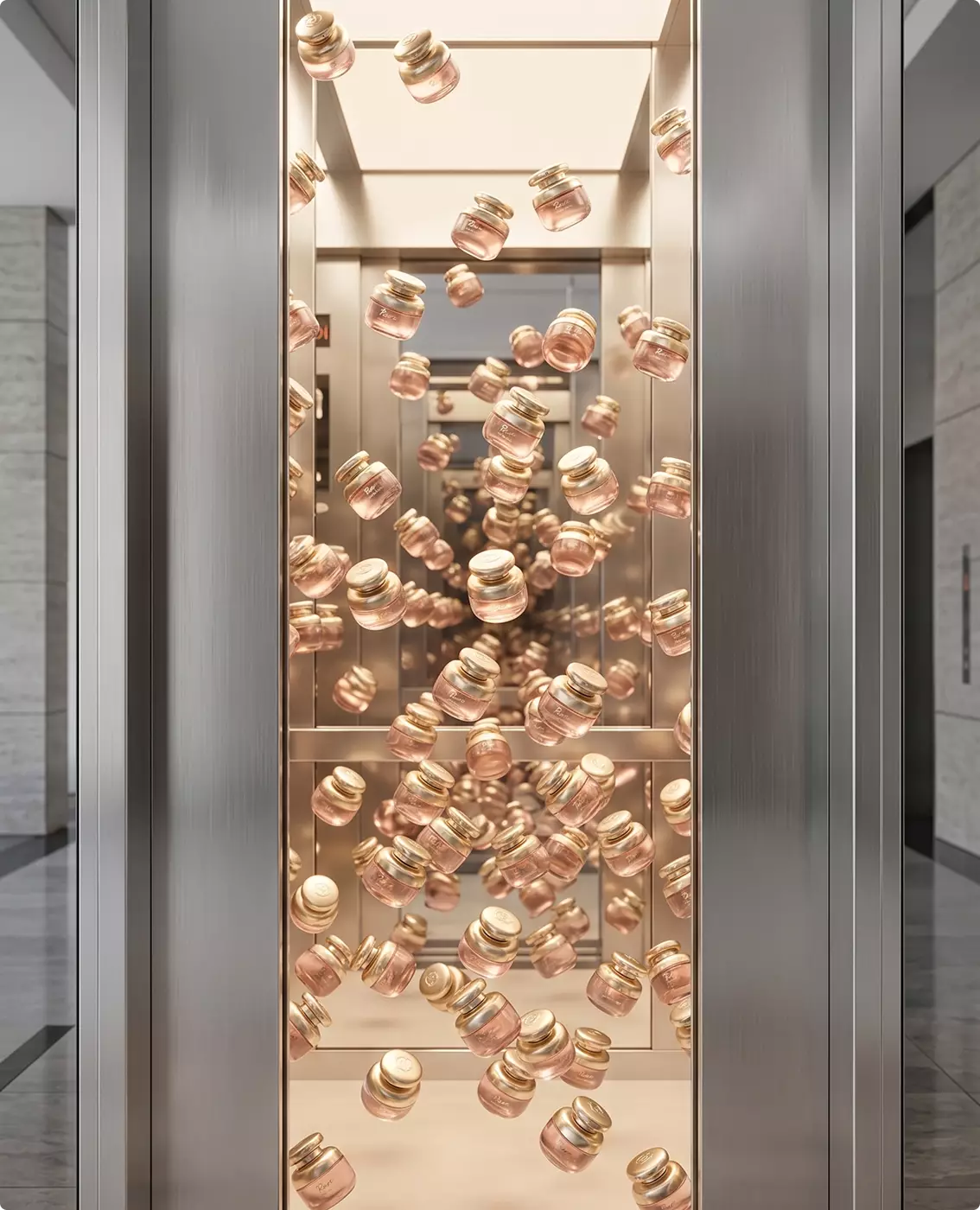
FOOH vs Traditional Out-of-Home: What’s the Difference
Traditional OOH buys a physical space and hopes people walk past it. FOOH manufactures a more spectacular version of that space digitally and ships it to where people already are — their feeds. The trade-offs:
| Factor | Traditional OOH | FOOH (Fake Out-of-Home) |
| Where it lives | Physical street, transit, building | Social feeds (Instagram, TikTok, LinkedIn) |
| Cost driver | Media buy, printing, installation | CGI production time |
| Lead time | Weeks to months (permits, booking) | Days to weeks |
| Reach | Limited to physical footfall | Potentially global if it spreads |
| What’s possible | Bound by physics and safety | Anything that can be rendered |
| Main risk | Wasted spend on a low-traffic site | Looking obviously fake or staged |
FOOH Campaign Examples That Went ViralFrom our studio — FOOH isn’t a passing trend. It’s here for the long run because it genuinely replaces traditional out-of-home and does it far cheaper. That economics doesn’t reverse.
Dim Kuzmenko, Maverick Frame
FOOH Campaign Examples That Went Viral
The format broke into the mainstream with a handful of campaigns that racked up tens of millions of views. A few that defined the playbook:
- Jacquemus — giant handbags rolling through the streets of Paris on wheels, the campaign widely credited with kicking off the FOOH wave.
- Maybelline — oversized mascara wands sweeping the lashes of London buses and Tube trains.
- Barbie — a giant doll box and pink takeovers timed to the film launch.
- L’Oréal, Adidas, and North Face — product-led stunts placed on landmarks far bigger than any real billboard.
We’ve built campaigns in the same vein for sports and lifestyle brands — see our FOOH ads case study for Nike for how a single CGI clip is staged, tracked, and finished.
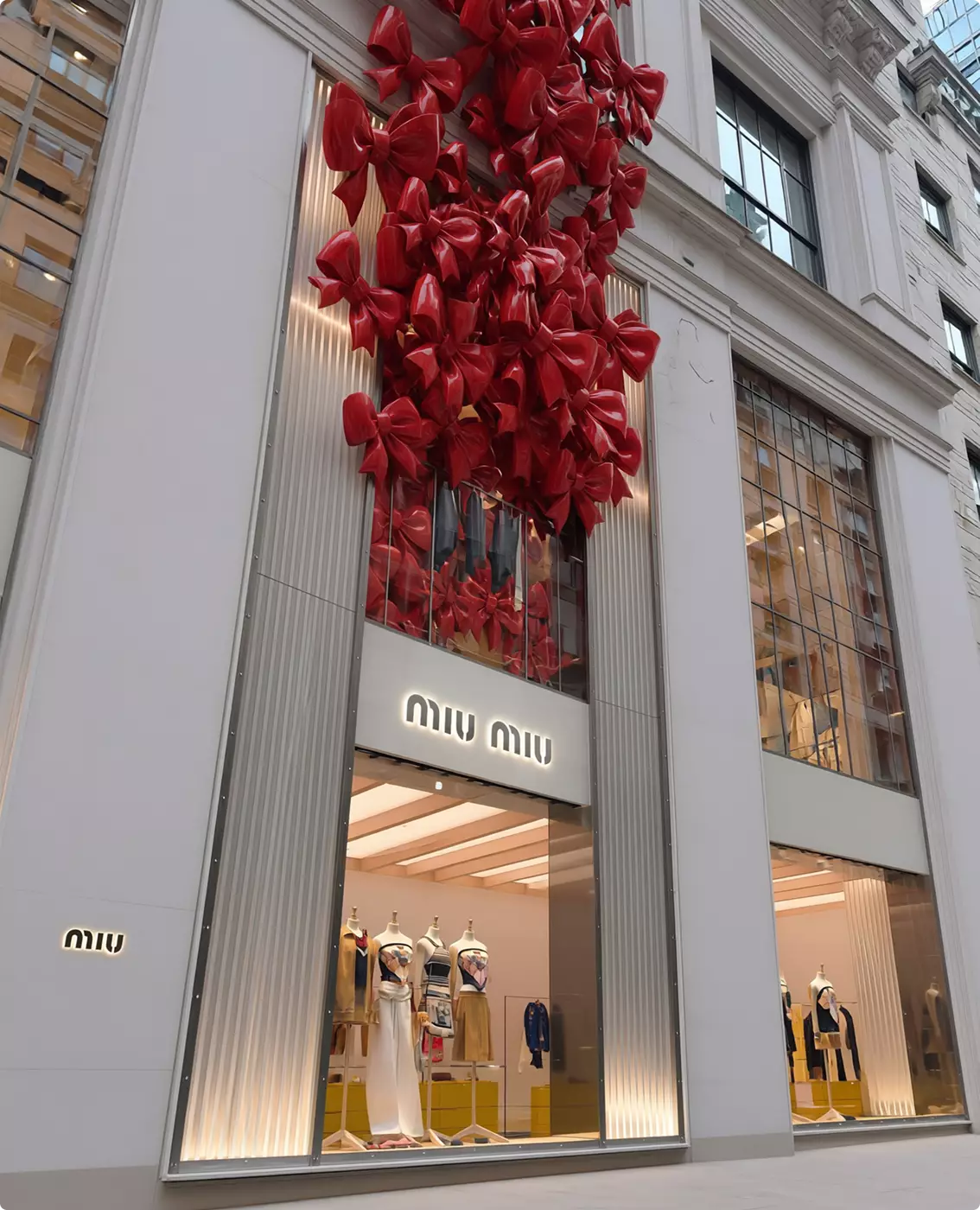
Why Brands Use FOOH
- Reach without a media buy. One shareable clip can out-perform a month of physical placements.
- Speed. No permits, printing, or rigging — production can move as fast as the brief allows.
- Creative freedom. Physics, safety, and budget no longer cap the idea.
- Built-in measurability. Views, shares, and saves are tracked natively on social.
From our studio — the honest timeline depends on how the scene is built. Shoot a real plate and add CGI and you’re looking at weeks; camera tracking and integration take time. If the environment is AI-generated, it can be days. The other variable is the client — the pickier the eye, especially on AI work, the longer the polish.
Dim Kuzmenko, Maverick Frame
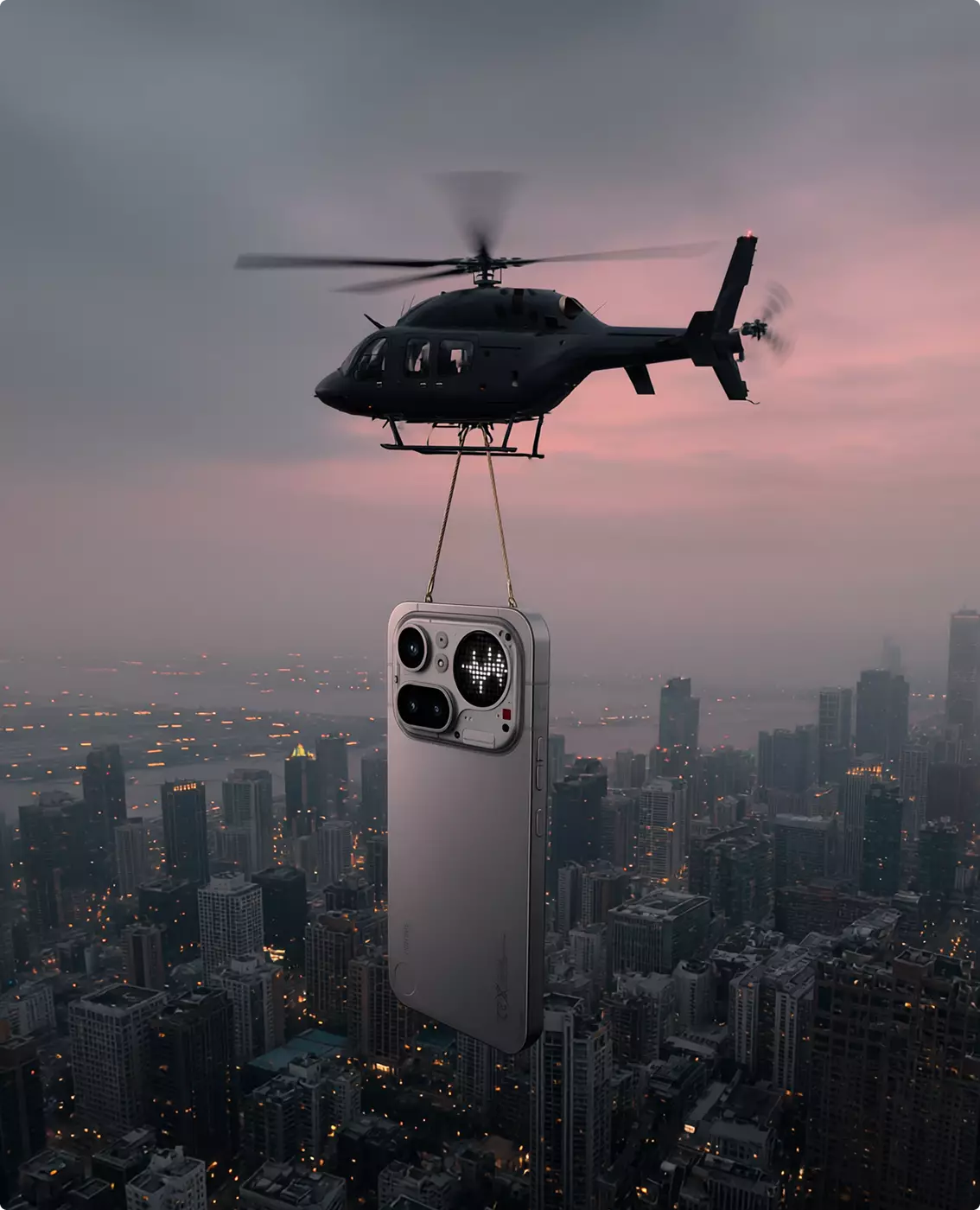
What FOOH Costs
A FOOH ad can cost anywhere from a few hundred dollars for a simple, AI-assisted clip to tens of thousands for a full live-action plate with heavy CGI. There is no flat rate — the price tracks the complexity of the build, the realism required, and how many revision rounds the client needs.
From our studio — a FOOH clip can run anywhere from about $500 for a simple AI-built piece to tens of thousands for a full live-action plate with heavy CGI. There’s no flat rate; the number tracks the task.
Dim Kuzmenko, Maverick Frame
For how CGI production is priced more broadly — per image, per animation second, and by complexity — see our 3D rendering pricing guide.
When FOOH Isn’t the Right CallWhen FOOH Isn’t the Right Call
FOOH rewards spectacle, so it is not the answer for every brief. When the goal is local foot traffic to a specific store, a real out-of-home placement still does the job better. When the audience is skeptical or the category is trust-sensitive, an obviously faked stunt can read as gimmicky and invite backlash. And when the CGI is rushed, the illusion breaks — a clip that looks fake undercuts the brand instead of lifting it. FOOH works best when the idea is genuinely surreal, the execution is clean enough to fool a first glance, and the brand is comfortable being playful in public.
When the concept is right, the difference between a clip that spreads and one that flops is production quality — which is exactly what our FOOH CGI advertising team is built to deliver.
Turn Ideas Into Visual Stories
Free field guide
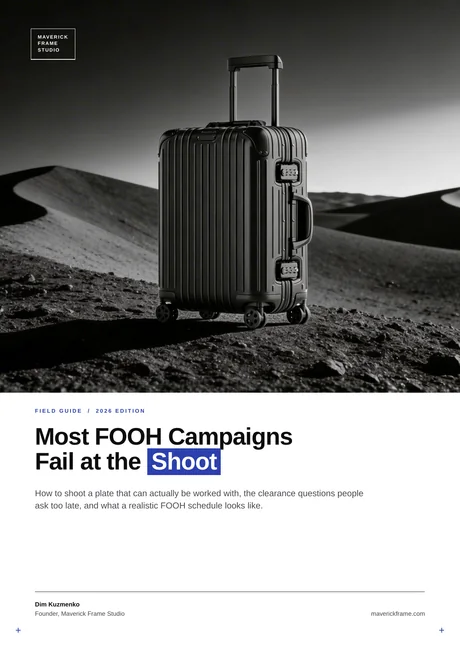
Most FOOH Campaigns Fail at the Shoot
How to shoot a plate that can actually be worked with, the clearance questions people ask too late, and what a realistic FOOH schedule looks like.
If it didn't open, download it here.
Download the PDF