The best tools aren’t the ones that create the most visually appealing image with one click.
Rather, they are the tools that can quickly and accurately convert sketches, models, or BIM views into readable output without distorting geometry, compromising consistency, or slowing the team down. Ultimately, the choice comes down to control, workflow compatibility, input flexibility, speed, and cost-effectiveness. Want to see how a younger generation actually applies them? Read about the AI tools used by modern 3D artists.
One-click visuals are easy to produce nowadays. Useful project imagery is not.
A glossy frame may look impressive on social media, but it won’t suffice when an architect needs repeatable camera logic, believable massing, or reliable iteration from the same model view.
That gap is why AI rendering has become a workflow question rather than a novelty question. Teams no longer ask whether generative output looks interesting. They ask whether it respects a design file, speeds up review, and helps them move from rough intent to client-ready communication without creating more cleanup than value.
For architectural rendering, image quality is only part of the decision. The real test is whether a tool can hold onto form, preserve window rhythm, stay close to material intent, and support multiple views of the same project without drifting into invented architecture. AI aside, the fundamentals still matter — here are the resources every 3D artist needs.
The strongest AI rendering tools now split into a few clear groups. Some operate within BIM or CAD software and use live geometry as a foundation. Others excel at mood work and early concept exploration. There are also those that sit in the middle, offering fast, web-based output from sketches, screenshots, or lightweight models. AI tools work best alongside a core renderer, so it helps to compare them with the best architectural rendering software before committing to a pipeline.
That is why AI rendering for architects cannot be judged with the same logic used for a general image generator.
This guide focuses on selection, not hype. You will receive a practical evaluation framework, a comparison table, and direct breakdowns of the most relevant tools and workflow-based recommendations.

What Makes an AI Rendering Tool Useful for Architectural Rendering
A tool becomes useful for AI architectural rendering when it works with design intent instead of replacing it with visual noise. That means it should respond to real geometry, preserve major relationships, and give the user enough control to steer the result instead of gambling on random style output.
An AI rendering tool must also fit the stage of the project. For example, a concept designer may value the ability to quickly generate variations from a rough massing model. A design lead, on the other hand, may care more about repeatability across views. Visualization specialists may need a quick way to test moods before transitioning back to a conventional pipeline.
The hard part in architectural rendering is not making something attractive. The challenge lies in maintaining believability to ensure the image still helps the project. Window spacing, floor-to-floor logic, façade rhythm, circulation cues, and site context matter more than surface-level style.
AI Image Generation vs Architectural Rendering
General AI rendering often treats an input image as inspiration rather than constraint. That is fine for mood boards, speculative atmospheres, or broad design directions. It is weak when the image must still read like the project the team is actually designing.
The phrase best AI image rendering only matters if the result can survive architectural scrutiny. Beautiful output with fake balconies, broken mullions, inconsistent slab edges, or invented landscape logic is not a strong rendering asset. It is a presentation risk.
Why Workflow Fit Matters More Than Pure Visual Wow
For AI rendering for architects, workflow fit usually matters more than raw spectacle.
A plugin that works inside a familiar modeling environment and keeps the camera, substrate, and iteration loop intact will often beat a more dramatic generator that requires exports, rewrites, and cleanup.
That is also why firms still invest in production visualization, animation, and review-ready CGI when stakes are high. A polished marketing image and a controllable design image are not the same deliverable, which is clear in this comparison of CGI vs AI.
How We Evaluated the Best AI Rendering ToolsHow We Evaluated the Best AI Rendering Tools
Although the current market for AI rendering tools is crowded, the tools are not competing on the same terms. Some are BIM-adjacent plug-ins. Others are real-time engines with AI assistance. And some are web generators aimed at quick idea generation. To compare them fairly, a framework tied to actual project use is required.
That framework needs to cover more than just the usual checklist of rendering tools. Even if a tool is fast, cheap, and visually appealing, it can still fail if it cannot maintain style consistency across three exterior views or if the team does not want to learn a separate process.
Core Evaluation Criteria
Our core test for AI software for rendering includes eight points: BIM or CAD integration, geometry control, image quality, speed, pricing and value, sketch or model input flexibility, learning curve, and team usability. We also look at consistency across views, because many tools can generate one attractive frame and then collapse when asked to support a presentation set.
What We Mean by Best
“Best” does not mean “most cinematic.” It means the most effective for a specific task.
The right choice varies depending on the stage of the project, the design process, client presentations, solo exploration, team workflows, and budget constraints.
This distinction is important in practice. For example, a sketch-first studio may prefer speed and flexibility. A Revit-heavy team may care more about direct integration. A presentation-focused office may get more value from a real-time renderer than a pure generator.
Comparison Table: Best AI Rendering Tools at a GlanceFrom our studio — There is no single AI tool you commit to. We run aggregators like Higgsfield, Invoke for local and targeted tasks, ChatGPT for storyboards and structuring briefs, and Magnific or Topaz for upscaling and cleanup. A modern archviz studio is not “I work in 3ds Max.” It is knowing Blender, Cinema 4D, SketchUp, a render engine like Corona, and a whole stack of AI tools to push an image to final. It is not about one tool, it is about the stack each artist carries.
Dim Kuzmenko, Co-Founder, Maverick Frame
Comparison Table: Best AI Rendering Tools at a Glance
This comparison of the best AI rendering tools is designed for selection, not brand theater. The table below prioritizes workflow issues because they usually determine whether a tool remains in the office stack or is dropped after a few tests.
| Tool | Best for | Input type | Geometry control | Main limitation |
| Veras | BIM-adjacent ideation from live design software | Revit, SketchUp, Rhino, Vectorworks, Forma, Archicad, web images | Medium to strong for concept phase | Not a full final-frame production renderer |
| Midjourney | Atmosphere, concept mood, visual direction | Prompts, uploads, edited images | Weak | Poor architectural precision |
| D5 Render | Real-time presentation work with AI support | LiveSync models, imported scenes | Strong | Depends on a more complete scene setup |
| Enscape | Fast walkthroughs and in-model communication | Live BIM/CAD model | Strong | Less generative freedom than pure AI tools |
| LookX AI | Fast design ideation for architects and designers | Sketches, images, text, trained styles | Medium | Less dependable for strict geometry |
| ArkoAI | Simple AI images from architecture software views | SketchUp, Rhino, Revit views | Medium | Less suited to deep team workflows |
| Vizcom | Sketch-led exploration and concept communication | Hand sketches, uploaded references, 3D-support features | Medium for early phase | More industrial-design rooted than architecture-specific |
| ReRender AI | Sketch-to-render and quick project visuals | Sketches, models, plans, project images | Medium | Web-only output, less consistent across views |
| Gendo | Fast architectural concept visuals | Model views, sketches, prompts | Medium | Stronger for concept than final production |
| ArchiVinci | All-in-one web AI rendering for design | Images, sketches, model views | Medium | Less tied to live BIM or CAD models |
The best AI renderer overall depends on whether you need BIM fit, concept freedom, real-time presentation output, or low-friction sketch exploration.
There is no honest universal winner.

The Best AI Rendering Tools for Architectural Rendering
The current field of AI rendering tools is useful only when you stop pretending they do the same job. A BIM plugin, a real-time renderer, and a prompt-based generator belong in the same article, but not in the same mental bucket.
The stronger best AI renderer candidates are the ones that handle a clear architectural use case well instead of trying to do everything. That is why the most useful shortlist mixes plugin tools, real-time engines, and a few web-first generators.
The broader category of architectural AI tools also overlaps with conventional visualization services. For teams that need polished marketing output, campaign-ready imagery, or high-control visual production, 3D exterior rendering services still solve a different problem than a fast in-house AI pass.
Veras
For AI rendering for architects, Veras is one of the clearest workflow-first options because it is built around existing design software rather than around prompt-only generation. Chaos positions it as a native workflow for Revit, SketchUp, Forma, Vectorworks, and Rhino, and its own blog also points to Archicad and other supported environments.
Its strength is simple. It starts with your actual view, massing, and camera logic. This makes it far more useful than a generic generator for rapid option testing from a real project file. It is especially helpful during the early stages of design development, for facade studies, and for quick presentation iterations.
Its limitations are equally clear. It is still an interpretation layer and does not guarantee perfect precision. If the team needs final marketing imagery, exact material behavior, or consistent details across a large, polished set, Veras usually works better as an ideation or acceleration layer than as the final step.
Midjourney
The best reason to use Midjourney for architects is not control. It is a visual range. Midjourney is excellent for mood imagery, atmospheric concept frames, and broad formal exploration. Its current web tools allow users to upload and edit images.
However, this strength becomes a weakness when the image needs to stay faithful to a project model. Midjourney can suggest character, color logic, and cinematic tone, but it is unreliable for strict facade rhythm, accurate floor count, or repeatable changes across a coordinated view set.
Midjourney works well when a team is testing directions. But it gets in the way when the office starts mistaking evocative imagery for design evidence. This distinction is important, particularly in client-facing work, where invented terraces or impossible glazing patterns can cause unnecessary confusion.
D5 Render and Enscape
For AI rendering software for architects, D5 Render and Enscape deserve to be grouped because both come from a real-time rendering tradition rather than a pure image-generator tradition. D5 supports major workflows through LiveSync and related plugins, while Enscape stays tightly integrated with Revit, SketchUp, Rhino, Archicad, and Vectorworks.
D5 is especially strong when the team already wants a presentation engine. It gives fast scene feedback, handles model-linked workflows, and has pricing that starts with a free community tier and a paid plan around $30 per month on annual billing.
Enscape is stronger when the office wants minimal friction inside active BIM or CAD work. It is less about speculative image generation and more about design communication, walkthrough readiness, and quick presentation output directly from the live model. That makes it useful for reviews, approvals, and repeat production across an office.
If your team also needs motion content rather than stills alone, architectural animation remains a separate decision. Real-time output is fast, but campaign-grade narrative sequences still call for a more controlled pipeline.
Web-Based AI Tools for Fast Concept Output
A lightweight AI rendering app can be useful when the team wants rapid ideation without committing to a heavy renderer or a full plugin workflow. LookX AI is one of the more architecture-aware web options, with a free plan and paid access from $20 per month.
ArkoAI sits closer to design-software-driven image generation. Its public site positions it around SketchUp, Rhino, and Revit compatibility, with subscription access and render-credit purchasing. That makes it more practical for quick solo iteration than for larger, repeatable team pipelines.
Beyond plugins and real-time engines, a wave of web-first platforms now targets AI rendering for architects directly. ReRender AI generates renders from sketches, models, plans, and project images, and is aimed at architects and studios. Gendo focuses on fast architectural visuals from a model or sketch and offers a free entry tier. ArchiVinci positions itself as an all-in-one AI render platform for architecture and design. These web tools lower the barrier to a first image, but like other generators they trade some geometry control and cross-view consistency for speed.
These tools are useful because they remove setup friction. They are limited because they rarely match the control, consistency, or production depth of stronger BIM-linked or real-time options.

Rhino, Sketch-Based, and Flexible Input Tools
The best place for AI rendering from sketch is still the early phase, where speed matters more than strict fidelity. Vizcom is especially relevant here because it is built around moving from sketch to fuller visual output and is positioned for creators and teams working from early design intent.
That makes this category useful for architects who think by drawing first, especially in competition work, hospitality concepts, and rapid massing studies. It is less convincing when the project is already deep enough that every opening, datum, and material edge needs to stay accountable.
Which Tool Is the Best AI Renderer Overall?
The most honest answer for best AI renderer is category-based, not absolute.
- Best for BIM workflow: Veras
- Best for concept art: Midjourney
- Best for real-time presentations: D5 Render or Enscape
- Best budget entry: D5 Community or LookX free tier
- Best for sketch-led exploration: Vizcom
- Best lightweight solo plugin path: ArkoAI
That spread reflects the actual market. Offices choosing tools by scenario tend to get more value than offices hunting for a mythical all-in-one winner.
Which AI Rendering Tool Fits Your Workflow?Which AI Rendering Tool Fits Your Workflow?
The most effective use of AI rendering begins with your existing workflow, not the most impressive demo image. A Revit-led office, a SketchUp-heavy boutique studio, and a visualization team building sales assets have different needs.
This is why AI rendering tools for architects should be selected based on stage, input type, and collaboration pattern rather than social media popularity.
Best for BIM-Based Architectural Workflows
If your team uses Archicad, Revit, Rhino, or SketchUp, options with plugins usually win. Veras is the best choice if you want AI ideation in your design environment. Enscape is a better choice when you need reliable, real-time communication from the live project. D5 is also a good option when linked scene control and presentation speed are important.
For firms looking at AI rendering for sketchup, the choice usually splits between fast image generation from a view and full real-time scene work. For offices asking about AI rendering for archicad, workflow friction matters even more, because the value comes from staying close to the BIM model rather than exporting into a disconnected image toy.
Best for Early Concept Exploration
The strongest use of AI architectural rendering in early design is broad option testing. Midjourney, LookX, and Vizcom all help here for different reasons: mood range, architecture-oriented ideation, and sketch-led communication. None of them should be confused with a precise development-stage renderer.
Best for Teams and Repetitive Production
When teams need repeatable output, real-time rendering tools usually outperform pure generators. For teams producing buyer-facing visuals, 3D rendering for real estate follows a more controlled production model than an experimental prompt workflow. Enscape and D5 are better suited to shared review cycles, presentation prep, and ongoing production because they keep a stronger relationship with the underlying model and are easier to standardize across an office. For developer-facing communication, 3D visualization for real estate developers is often a closer fit.
Best Free AI Rendering Tools
The best free AI rendering tools for architects are D5 Render’s free Community tier, LookX AI’s free plan, and Gendo’s free entry tier, which together cover real-time presentation, web-based ideation, and quick concept visuals at no cost. Midjourney has no free plan, but its lowest paid tier is inexpensive for concept imagery. Free tiers are ideal for testing workflow fit before committing, though most cap resolution, output volume, or commercial use.
Best for Budget-Conscious Users
Budget-conscious users should start with the workflow, not the sticker price. A cheap generator that wastes time is not cost-effective. D5’s free tier and LookX’s free access are ideal for testing purposes. Midjourney’s low-priced starter plan is reasonable for concept images but poor for model-faithful output.
Strengths and Limitations of AI Rendering in Architecture
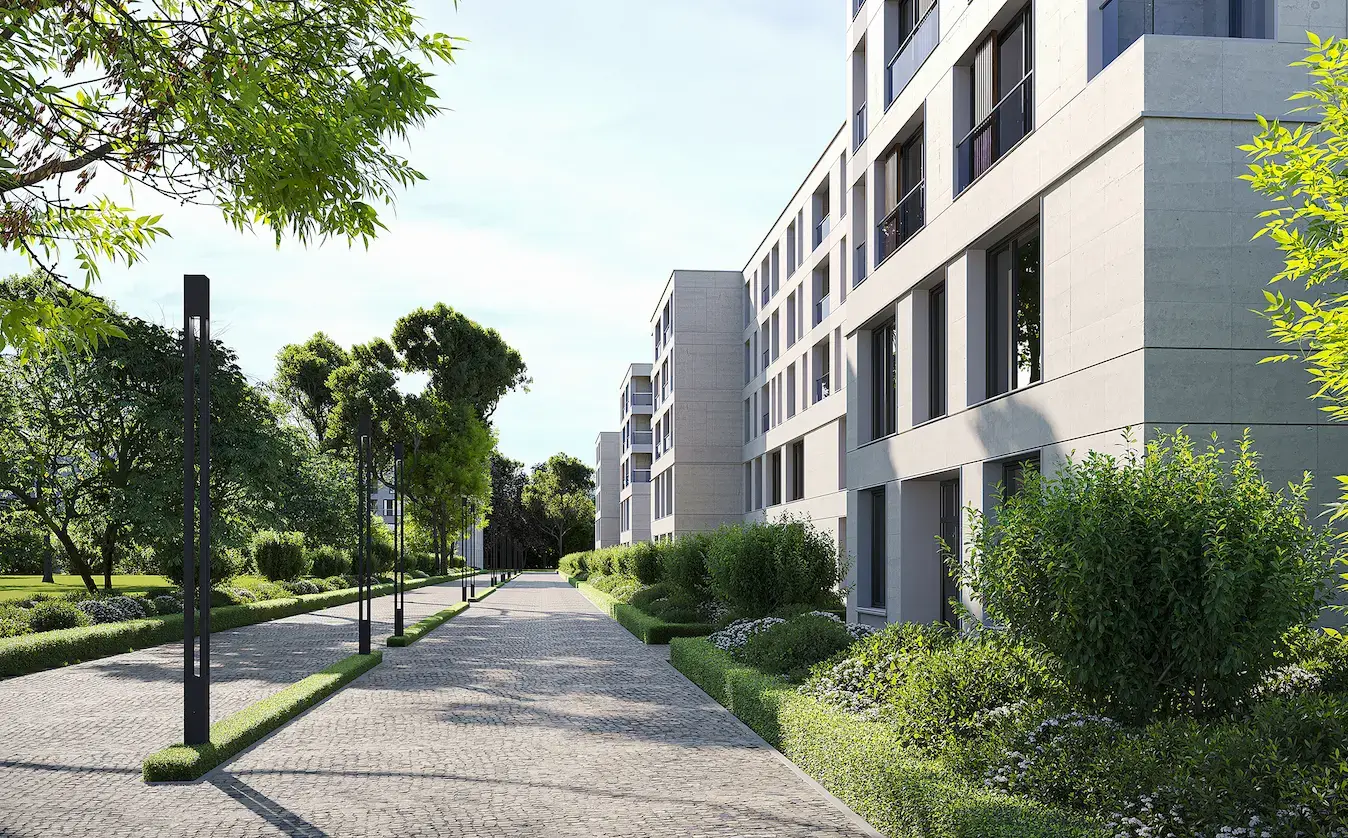
Used well, AI rendering saves time where the cost of exploration is usually high. It can speed up facade studies, concept mood tests, quick client options, site atmosphere trials, and internal reviews of massing direction before the team commits to a heavier rendering pass.
That does not mean it replaces controlled architectural rendering. AI still struggles with invented geometry, fake material behavior, inconsistent openings, and weak continuity across multiple views. The closer a project gets to design development, approvals, or marketing certainty, the more human review becomes mandatory.
From our studio — AI does not replace architectural visualization. Some jobs are 3ds Max plus Corona, some are 3ds Max plus Corona plus AI, and some are pure AI. They are just different tasks. Did media buyers replace marketers? No. AI is a new, separate instrument with its own jobs. It is now used in close to 100% of our projects, but the degree varies. In some it is one percent, in others the whole image is built in AI.
Dim Kuzmenko, Co-Founder, Maverick Frame
Where AI Rendering Saves Time
The strongest role for AI software for rendering is compression of the early visual loop. It enables teams to transition from “We need to see this” to “We can react to this” much faster than with a traditional full-scene setup. This is particularly useful in internal design reviews and early client workshops, where making comparisons is more important than achieving perfection.
It also helps when the office wants to test visual directions before deciding whether to invest in a more conventional CGI route. That same distinction shows up in this guide to rendering software for interior design and in this Corona vs V-Ray comparison, where workflow choice changes the output strategy.
Where AI Still Needs Human Control
An AI rendering tool still requires supervision because it does not interpret architectural intent the way a project team does.
It can predict convincing imagery. However, it does not verify that the building still makes sense.
This is where teams get into trouble. AI can hallucinate mullion spacing, shift slab logic, exaggerate finishes, and generate landscape richness that the actual scheme never had. AI can also create false confidence by making weak design information appear resolved.
How to Choose the Right AI Rendering ToolFrom our studio — AI breaks when you need surgical precision, like showing how a complex device works or the accuracy of surgical equipment in animation. But more often it is not the tech that breaks, it is the brief. A client gets a great ten-hour AI reel that would have taken months in Cinema 4D, then starts scrubbing frame by frame for artifacts in a one-second shot no real viewer will ever notice. You have to know what the result is for. If it is a social reel, do not hunt for pixel-level flaws that do not change the message.
Dim Kuzmenko, Co-Founder, Maverick Frame
How to Choose the Right AI Rendering Tool
The most practical way to compare AI rendering tools is to start by identifying the issues you want to avoid. Do you need to avoid broken geometry, endless exports, friction from team training, an inconsistent style, or a monthly bill that doesn’t make sense given your output volume?
The best AI rendering tools are usually chosen using five filters: your host software, the design stage, the amount of geometry control required, the need for consistency across views, and whether the tool must work for one person or a whole team.
Questions to Ask Before You Commit
Before you commit, ask:
- Does it work inside your current software or close to it?
- Can it respect geometry well enough for your stage?
- Can it hold style consistency across multiple images?
- Is pricing sustainable at your real output volume?
- Can the team use it without adding process friction?
- Is it stronger from sketches, model views, or full scenes?
- Will it support review, presentation, or only ideation?
A Simple Selection Framework
The simplest framework for AI rendering software for architects is as follows:
- Choose Veras if integration is the most important factor
- Choose Midjourney if the concept atmosphere is the most important factor
- Choose D5 or Enscape if presentation speed is the most important factor
- Choose LookX or Vizcom if flexible ideation is the most important factor
- Choose a traditional visualization pipeline when the image must be exact, sale-ready, or defensible under close review.
If you want to connect this article to broader marketing and delivery choices, CGI for real estate marketing and these project success stories are the most relevant next reads.

Turn Ideas Into Visual Stories
Free field guide
What AI Rendering Still Can't Do
A working prompt pack for the ten tools architects actually use — and the eight checks that decide whether AI output survives a client meeting.
If it didn't open, download it here.
Download the PDF