Architectural visualization trends are shifting 3D rendering from polished still images toward faster, more interactive and more emotionally convincing visual content. AI-assisted workflows, real-time rendering, immersive walkthroughs, cinematic CGI and sustainability-focused visuals now help architects, designers and property developers test ideas, explain projects, support approvals and market unbuilt spaces with more confidence. This guide highlights the trends that matter most now and shows where they fit best, from concept design and client reviews to property marketing, sales and handover.
The State of Architectural Visualization Right NowThe State of Architectural Visualization Right Now
Last updated: July 2026. The single biggest shift we see in our own studio pipeline is motion replacing stills. Roughly 40%+ of our commissions now include animation, 360 tours or VR — alongside or instead of static renders — and that share is still rising. Real-time (D5) is our default engine for architectural animation because it is the cheapest route to quality: work that took about a week to render in 3ds Max can now come back in minutes. AI helps most where nature carries the frame (greenery, water, planting) and far less on bare city blocks. These figures reflect our own project mix as an architectural CGI studio, not an industry survey.
Want to apply these trends to a live project? Our team delivers full-spectrum 3D architectural visualization services and product CGI.
The Current Trend in Architectural 3D Rendering
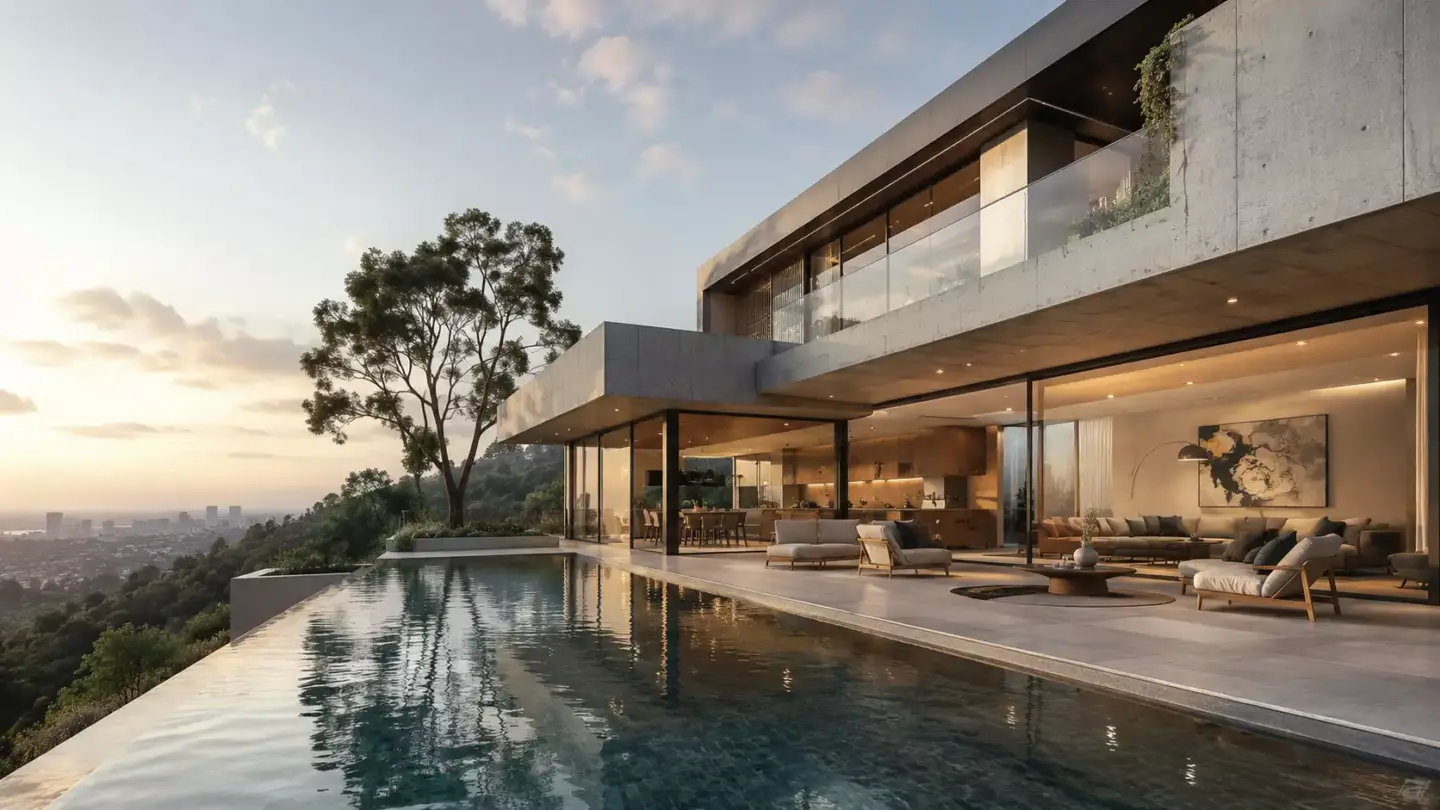
The current trend in architectural 3D rendering is the move from static, polished images to interactive, AI-assisted and real-time visualization workflows. Architects, developers and clients still rely on photorealistic stills, but they increasingly expect faster options, immersive previews and clearer decision support. The strongest trend is not one tool, but a broader shift from final-image production to visual communication across the whole project lifecycle. You can see this shift clearly in mature markets — our review of 3D rendering companies in London tracks how leading studios adapt.
AI helps with early concepts, material variations, post-production and visual direction. Real-time rendering supports live reviews and faster changes during meetings. VR, AR and 360 panoramas make spatial ideas easier to understand before construction starts.
This does not make traditional rendering obsolete. High-end stills remain essential for planning boards, investor decks, brochures, websites and sales campaigns. The change is that architectural rendering trends now combine speed, interactivity and emotional realism instead of treating final polish as the only goal.
1. AI-Assisted Rendering Becomes Part of the Workflow1. AI-Assisted Rendering Becomes Part of the Workflow
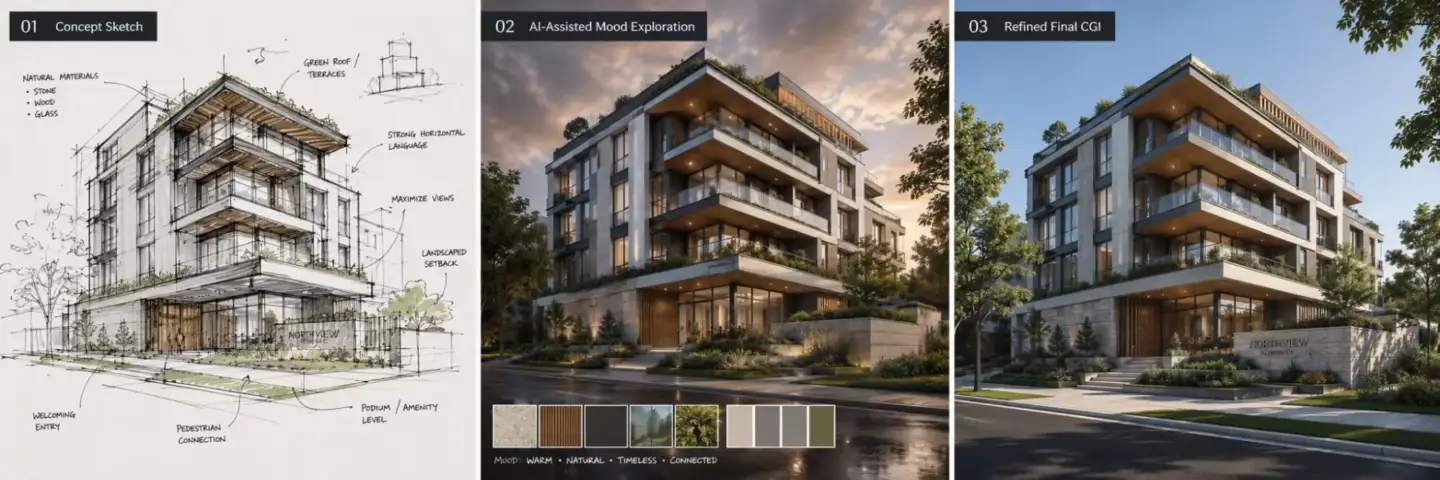
AI is becoming a practical production assistant, not a replacement for architectural CGI expertise. In archviz, the most useful applications are early idea generation, mood exploration, post-production support, image enhancement and faster variation testing. This is why AI architectural rendering is strongest when it supports a trained visual team rather than bypassing one.
Where AI Helps Most
AI can accelerate the first visual direction before a full 3D scene is built. It can help test lighting moods, populate background elements, generate moodboards and clean up certain image details. For architects and developers, this can make early reviews faster before committing to full production.
AI also helps when a team needs to compare visual directions quickly. A designer may explore warmer interiors, greener landscaping or different façade moods before final modeling begins. This can reduce wasted time because the team can align on atmosphere before investing in detailed CGI.
Where AI Is Not Enough
AI is not enough when a visual must be buildable, accurate or planning-sensitive. Final client-ready CGI still needs correct geometry, scale, material logic, lighting control and architectural intent. This is especially important for UK planning visuals, investor presentations and marketing assets where the render must not misrepresent the design.
AI can suggest an atmosphere, but it does not understand every structural, legal or commercial constraint. It may invent details that look convincing but do not match the model, brief or material schedule. That is why professional 3D rendering for architecture and design studios still matters when accuracy and presentation quality are both required.
From our studio — AI is getting stronger fast, but not evenly. Where a scene has nature in it — greenery, water, planting — the AI results are honestly amazing. For bare city blocks or empty streets it helps far less; there the scene has to be beautiful on its own first. So we lean on AI hardest exactly where nature carries the frame.
Dim Kuzmenko, Co-Founder, Maverick Frame
The Hype That Isn’t Landing Yet
Not every 2026 headline survives contact with production. The loudest claims — AI that “builds the model for you” or generates finished, planning-ready visuals straight from drawings — do not hold up yet. AI reads construction drawings poorly, so it cannot be trusted with accurate geometry, scale or planning-sensitive output. It is a genuinely useful assistant, but not the autonomous pipeline the marketing suggests.
2. Real-Time Rendering Is Changing Client ReviewsFrom our studio — Everyone says the neural net can just make the model now. It can’t — modeling isn’t there, and the tools that promise autonomous renders from drawings read the drawings badly. It’s a genuinely useful assistant, but nothing like the populist version people are selling.
Dim Kuzmenko, Co-Founder, Maverick Frame
2. Real-Time Rendering Is Changing Client Reviews
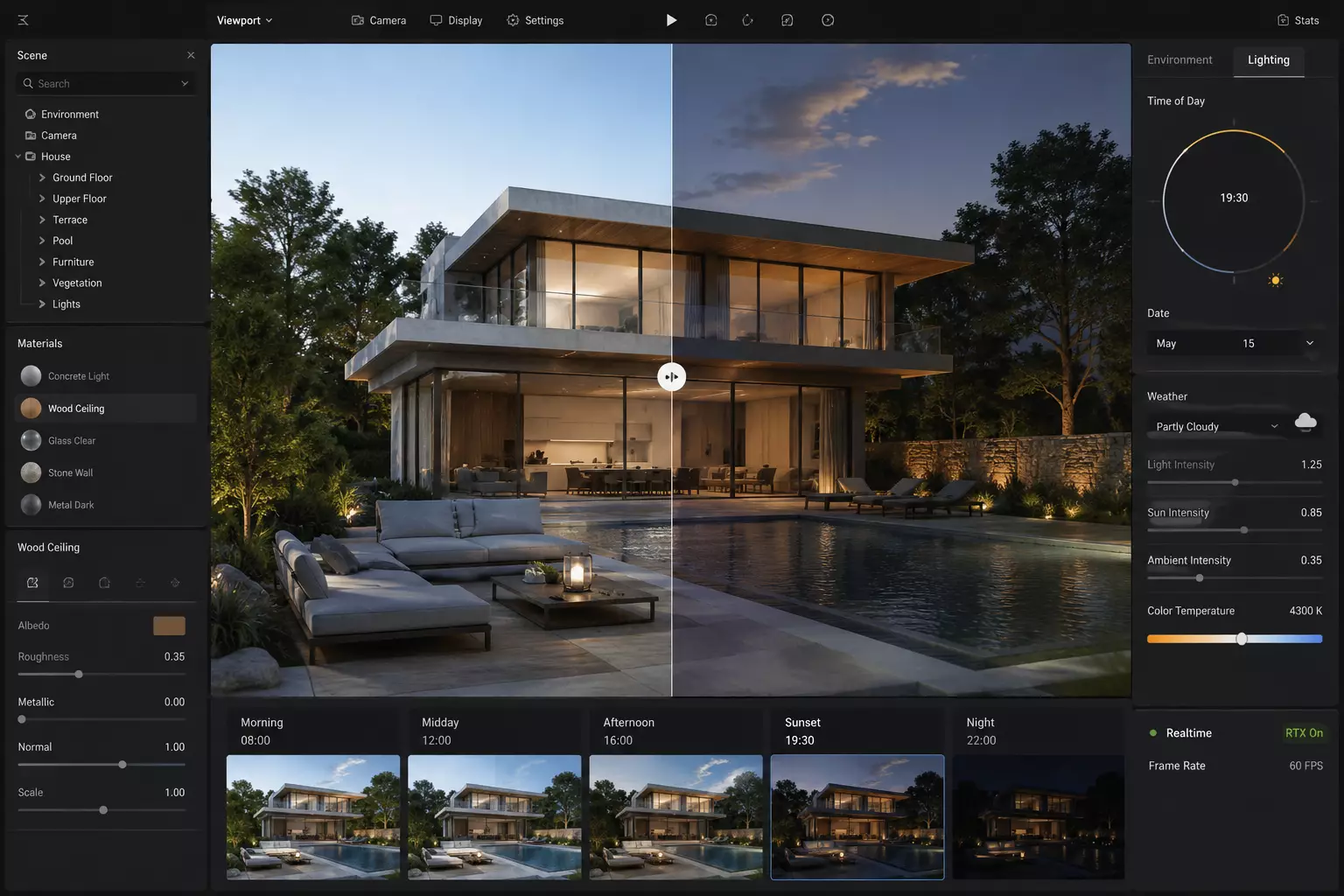
Real-time architectural rendering is changing how teams review projects because feedback can happen inside the visual environment. Instead of waiting for every update to render offline, teams can adjust materials, camera positions and lighting with immediate feedback. This is especially useful during concept and design development when decisions are still moving quickly.
Why Real-Time Rendering Matters
Real-time tools are valuable because they reduce the distance between design change and visual review. Architects can show clients how different finishes, lighting conditions or layouts affect the space during a meeting. Developers can also use fast previews to compare marketing directions before commissioning final assets.
This is useful for remote collaboration because stakeholders do not always need to gather in one office. A shared model, screen session or interactive walkthrough can make feedback more concrete. That reduces ambiguity because everyone sees the same space rather than interpreting drawings differently.
Real-Time Rendering vs Traditional Rendering
Real-time rendering and traditional rendering solve different problems. Real-time rendering supports speed, review and spatial exploration, while traditional CGI often provides stronger control for final marketing polish. Most mature workflows use both instead of choosing one permanently.
| Aspect | Real-Time Rendering | Traditional Rendering |
| Best for | Reviews, walkthroughs and fast iteration | Final marketing-quality stills |
| Speed | Immediate visual feedback | Slower, more controlled output |
| Visual control | Improving quickly, but setup-dependent | Stronger for final polish |
| Client value | Interactive decisions | High-end presentation |
| Best project stage | Concept and design development | Marketing, sales and final approval |
For exterior marketing images, traditional rendering still provides control over composition, landscaping and atmosphere. For live design reviews, real-time rendering can make the conversation faster and more collaborative. A project may begin in real time and finish with refined exterior rendering services for public-facing presentation.
3. VR, AR and 360 Panoramas Make Projects Easier to UnderstandFrom our studio — For archviz the real-time race is basically over — D5 won. We’ve moved our client-review work onto it, and almost nobody in archviz still reaches for Unreal Engine for this kind of work. D5 gives us the speed without the heavy setup overhead.
Dim Kuzmenko, Co-Founder, Maverick Frame
3. VR, AR and 360 Panoramas Make Projects Easier to Understand
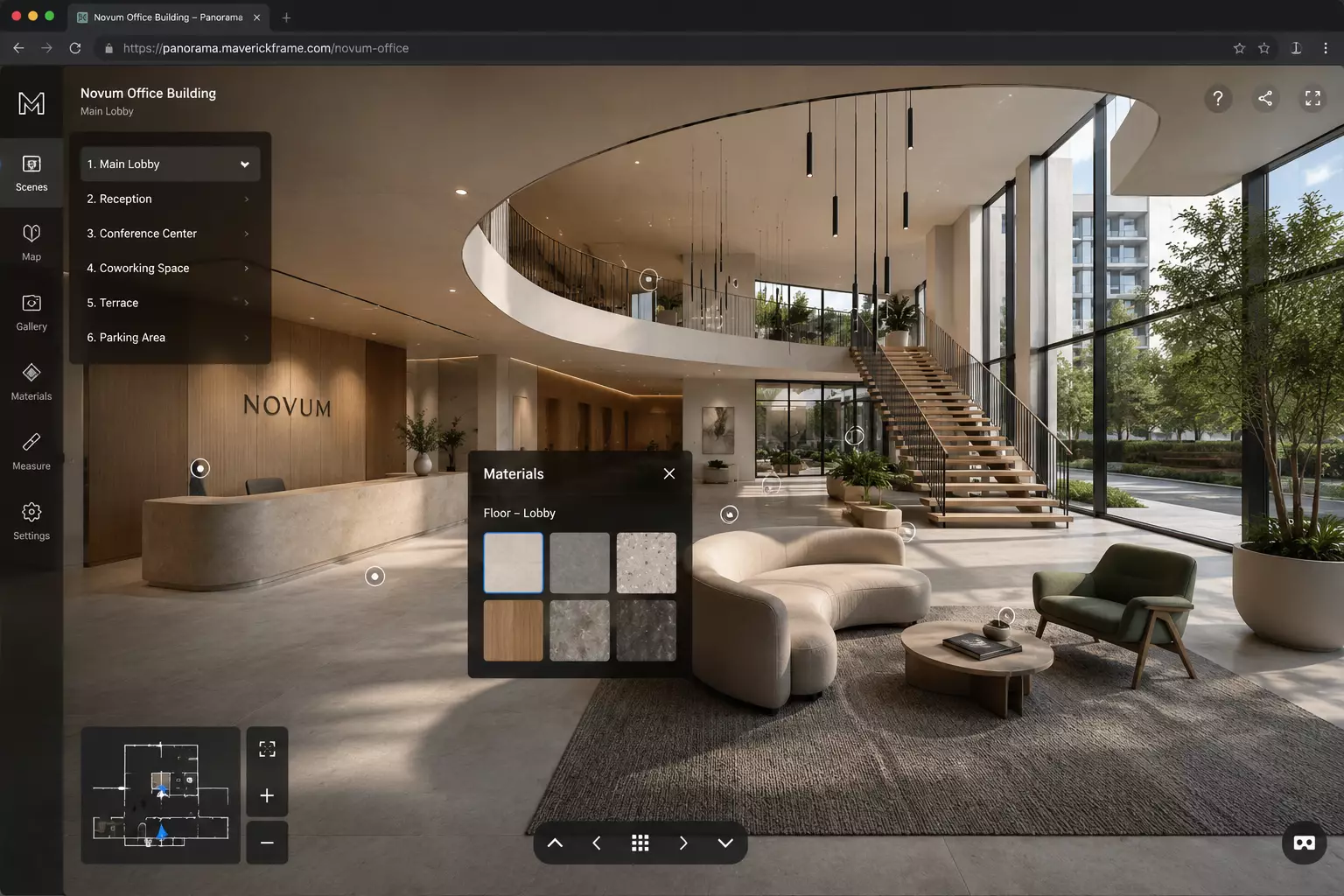
Immersive architectural visualization helps clients understand space before it exists. VR walkthroughs, AR overlays and web-based 360 panoramas can communicate scale, layout and atmosphere more directly than still images alone. This is especially valuable when a project includes complex interiors, premium residential schemes or commercial environments with important circulation.
VR is strongest when spatial experience is the main decision factor. It can help stakeholders understand sightlines, room transitions and the feeling of moving through a space. For overseas buyers, off-plan property marketing and remote stakeholder reviews, immersive formats can reduce uncertainty before a physical visit is possible.
360 panoramas are often more accessible than full VR. They can be viewed through a browser, shared easily and used in sales conversations without specialized hardware. For many projects, 360 panorama services are a cost-effective middle ground between static renders and full virtual reality production.
4. Cinematic Storytelling Replaces Sterile Perfection
Modern architectural CGI is becoming less sterile and more believable. The visual standard is no longer a flawless empty room with perfect surfaces and unrealistically clean lighting. Strong photorealistic architectural rendering now uses atmosphere, texture, human scale and subtle imperfection to make a future space feel lived in.
The Rise of the Lived-In Render
A lived-in render includes details that help the viewer imagine real use. Soft fabrics, natural clutter, imperfect vegetation, people in the right scale and daylight variation can make an image feel more truthful. These details should support the architecture rather than distract from it.
The goal is not to make visuals messy or overly dramatic. The goal is to avoid artificial perfection that makes a space feel detached from real life. Modern renders must feel believable, not artificially flawless.
Why This Trend Works
Cinematic CGI works because buying, approving and investing are emotional decisions as well as rational ones. A developer may need a buyer to imagine morning light in a kitchen or evening atmosphere in a lobby. An architect may need a client to understand how the design will feel, not only how it will look.
This trend also helps interior designers communicate material choices with more confidence. Texture, daylight, furniture and everyday details make finishes easier to judge. For residential and hospitality projects, interior architectural visualization becomes more persuasive when it communicates atmosphere as well as layout.
5. Architectural Animation and Short-Form CGI Are GrowingFrom our studio — We always push cinematic over sterile perfection. Think about why people retouch a portrait: a face with a blemish is realistic but not beautiful, so it’s made a touch less literal and more flattering. Architectural renders work the same way — a little less literal, a lot more beautiful, because that’s what actually sells the space.
Dim Kuzmenko, Co-Founder, Maverick Frame
5. Architectural Animation and Short-Form CGI Are Growing
Static images remain important, but motion is growing because many projects need to explain more than a single angle. Short CGI clips can show arrival sequences, day-to-night transitions, changing light, landscape movement and user flow. This makes static renders vs architectural animation a practical decision rather than a style preference.
Architectural animation is especially useful when motion explains value better than a still image. A commercial entrance, hotel lobby, residential masterplan or waterfront development may need movement to communicate scale and sequence. Short-form CGI also fits social media, investor decks and property marketing pages.
The best animations are concise and purposeful. A 15 to 30 second clip can be more effective than a long film if the message is clear. For projects where arrival, atmosphere or circulation matters, architectural animation can turn a static design into a clearer story.
6. Cloud Workflows and Digital Twins Improve CollaborationFrom our studio — If you ask me the single biggest shift right now, it’s video instead of stills. Architectural animation got dramatically easier and cheaper to produce, so clients aren’t just ordering images anymore — they want motion. That’s the trend I’d bet on hardest in 2026.
Dim Kuzmenko, Co-Founder, Maverick Frame
6. Cloud Workflows and Digital Twins Improve Collaboration
Cloud workflows are changing architectural visualization because teams are more distributed. Architects, developers, consultants and visualization studios often work from different cities or countries. Shared 3D models, centralized feedback and version control help reduce delays during review cycles.
Digital twins extend this idea beyond presentation. They connect visual representation with longer-term building data, operational planning or asset management. Not every project needs a digital twin, but data-linked visualization is becoming more relevant for large developments, campuses and public-facing assets.
The commercial value is practical. Faster feedback means fewer revision loops, and clearer shared visuals can reduce confusion between stakeholders. For leasing, fit-out and mixed-use spaces, commercial 3D rendering services can support decisions before teams commit to construction, staging or marketing spend.
7. Sustainable and Biophilic Visualization Becomes a Standard Expectation7. Sustainable and Biophilic Visualization Becomes a Standard Expectation
Sustainability is no longer a decorative theme in architectural visualization. Clients increasingly expect visuals to communicate daylight, greenery, material choices, adaptive reuse and the relationship between a building and its context. This makes sustainable and biophilic visuals one of the most important 3D architectural rendering trends for current projects.
For UK-based projects, this trend is especially useful because planning, community feedback and investor confidence often depend on clear environmental storytelling. A render can show how a project sits within the streetscape, how daylight reaches shared spaces and how landscaping affects the experience. These details can support a stronger narrative without making unsupported performance claims.
Biophilic visualization should be treated carefully. Adding plants to a render does not make a project sustainable by itself. The strongest visuals show believable material choices, seasonal context and landscape integration that match the actual design intent.
8. Hyperrealism Is Becoming More Human
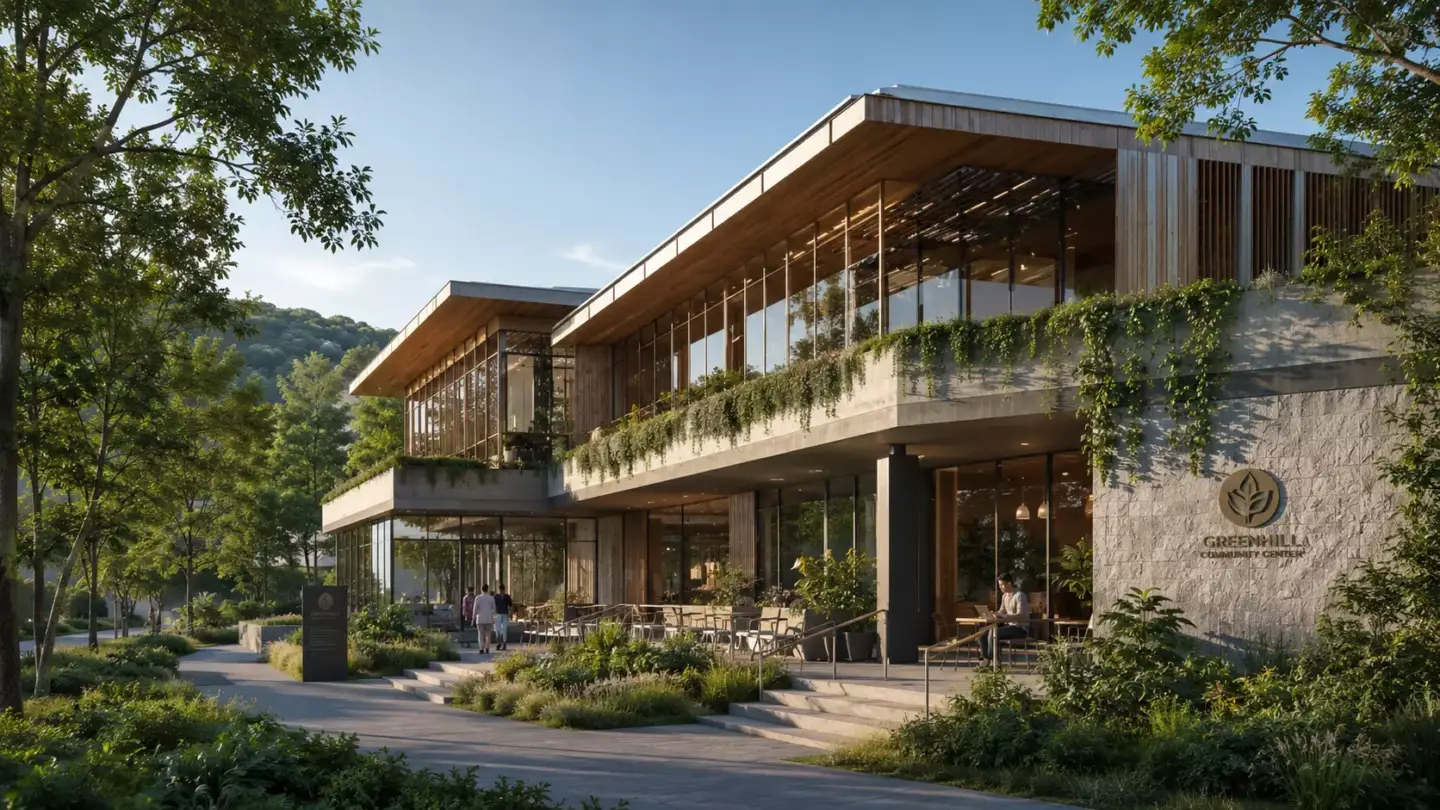
Hyperrealism is shifting from technical perfection toward human credibility. The best visuals now include realistic vegetation, weathered materials, contextual surroundings, human scale and time-of-day variation. This bridges visual style and business value because believable images reduce the gap between concept and reality.
A realistic exterior should not look isolated from its environment. Streets, pavements, neighboring buildings, light conditions and planting all affect how a viewer understands the project. For UK projects, contextual surroundings can be especially important because architecture is often judged against the local street, planning context and material character.
Human realism also matters inside the building. Spaces should feel usable, not staged only for a portfolio. When viewers can imagine how a place will work, they are more likely to understand the design and trust the proposal.
Architectural Visualization Trends by Project StageArchitectural Visualization Trends by Project Stage
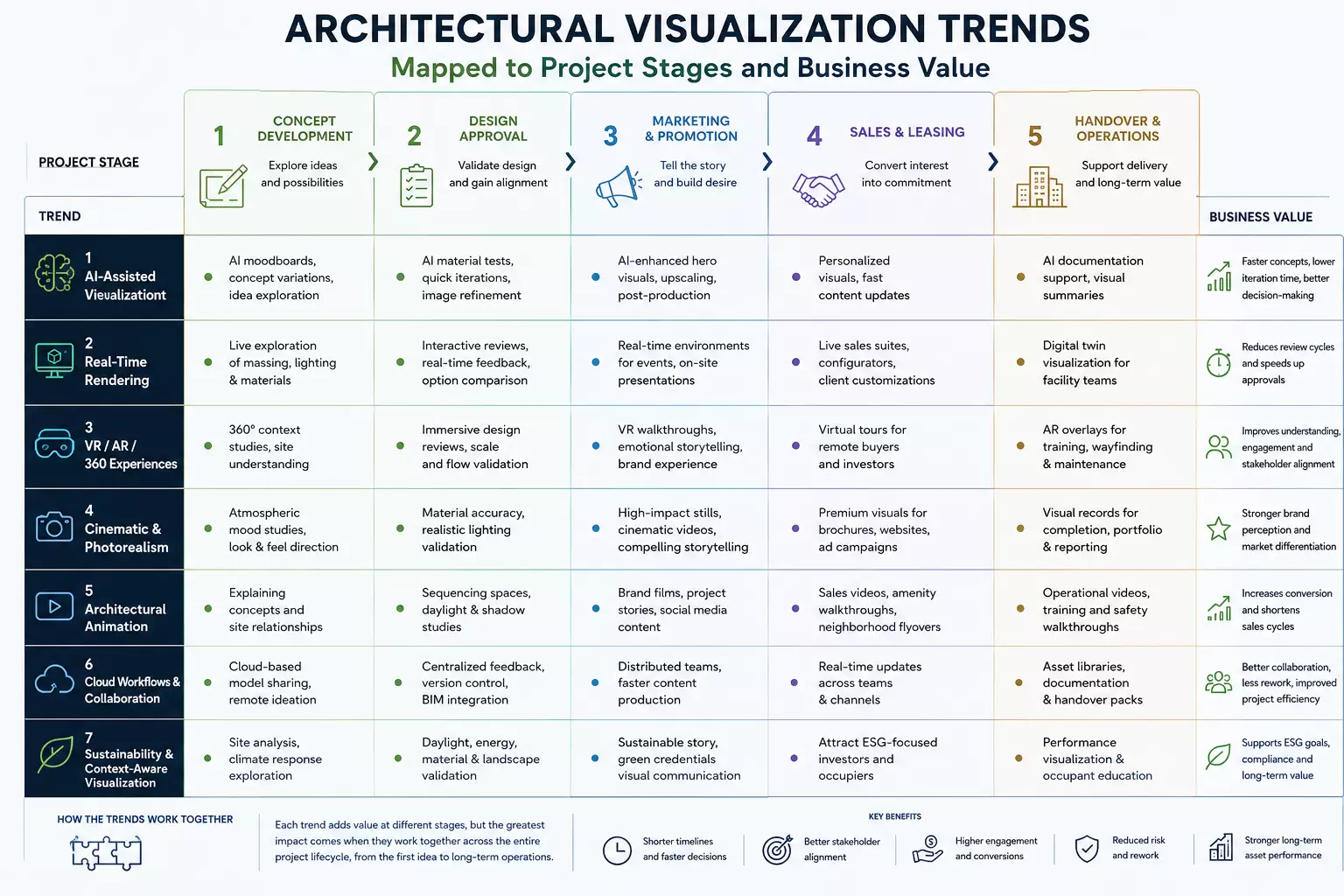
Not every trend belongs at every stage. AI-assisted exploration may be useful early, while photorealistic stills and animation may be more valuable during marketing. The table below maps architectural CGI trends to the project moments where they create the most value.
| Project Stage | Most Useful Trends | Why They Matter |
| Early concept | AI-assisted ideation and mood exploration | Fast options before committing to full CGI |
| Design development | Real-time rendering and cloud workflows | Faster feedback and fewer revision loops |
| Client approval | 360 panoramas, VR and contextual visuals | Easier spatial understanding |
| Property marketing | Cinematic CGI, animation and lived-in realism | Stronger emotional connection |
| Sales and leasing | Interactive tours, short-form video and photorealistic stills | Better buyer confidence |
| Handover and operations | Digital twins and data-linked visualization | Long-term asset value |
This project-stage view is important because trends should solve a real problem. A full VR experience may be excessive for a simple concept review, while a single still image may be weak for a premium off-plan sales campaign. The right choice depends on the decision stage, audience and commercial risk.
How to Choose the Right Trend for Your ProjectHow to Choose the Right Trend for Your Project
Choosing a trend should start with the project goal, not the technology. Ask whether the visual needs to support design review, planning approval, investor confidence, buyer interest or long-term operations. A trend is useful only when it makes the project easier to understand, approve, market or sell.
For Architects
Architects should prioritize accurate design communication, real-time reviews and AI-assisted exploration. Early AI studies can help compare visual directions, while real-time tools can make client reviews more productive. Final CGI should still protect geometry, proportions and material intent.
For architecture practices, trend adoption should not create more complexity than it solves. The best workflow is one that supports design thinking and keeps feedback clear. That is why many teams combine live previews with refined final renders.
For Property Developers
Property developers should prioritize cinematic stills, animation, 360 tours and sales-focused CGI. The goal is to help buyers, investors and stakeholders understand a project before it exists. For this audience, visuals should communicate lifestyle, value, scale and confidence.
Developers should avoid using a trend only because it looks impressive. A VR tour can be powerful for a premium scheme, but a strong set of stills and short clips may work better for a faster campaign. For off-plan sales, CGI for real estate developers should be chosen around buyer confidence and marketing channels.
For Interior Designers
Interior designers should prioritize material realism, lighting, lived-in details and client-friendly panoramas. These formats help clients understand finishes and atmosphere before procurement begins. They also reduce uncertainty when decisions involve expensive furniture, bespoke joinery or complex lighting.
The most useful trend for interiors is often not the most technical one. A believable render with correct materials can be more valuable than an advanced interactive feature. The visual should help the client say yes to the design with fewer doubts.
For Commercial Real Estate
Commercial real estate teams should prioritize scale, footfall, atmosphere, branding and flexible leasing visuals. Office, retail, hospitality and mixed-use spaces need imagery that explains how the environment will function. This is where animation, contextual CGI and presentation-ready stills can work together.
Commercial projects often involve multiple decision-makers. Landlords, tenants, investors and planning teams may all need different visual evidence. A good visualization strategy creates assets that can support those conversations without rebuilding the project story each time.
What These Trends Mean for Architectural Visualization in the UK
For UK-based projects, these trends are especially useful because teams often need clearer remote communication. Developers may be marketing off-plan units to local and overseas buyers, while architects may need faster feedback from distributed clients. Strong visuals help reduce confusion when people cannot experience the site physically.
Context is particularly important. Streetscape, daylight, materials, scale and local environment can affect how a proposal is understood. This is why UK-facing architectural visualization should avoid generic visuals that could belong anywhere.
The strongest trend for the UK market is practical clarity. AI, real-time rendering, VR and cinematic CGI are useful when they help stakeholders make better decisions. They are less useful when they create impressive visuals that do not match the project, planning context or audience.
The Future of Architectural Visualization Is PracticalThe Future of Architectural Visualization Is Practical
The strongest trends are not always the flashiest. The future of architectural visualization is practical because the best visuals help people understand, approve, market and buy architectural projects faster. AI, real-time rendering, VR and cinematic CGI work best when guided by technical accuracy and strong creative direction.
For architects and developers, the right question is not which trend looks most advanced. The better question is which format removes the most uncertainty at the current project stage. That may be a fast real-time review, a cinematic marketing image, a 360 panorama or a carefully crafted animation.
Maverick Frame can help teams choose the right visual format for the decision they need to support. If you need architectural visuals that help clients understand, approve and market a project faster, the studio can create photorealistic renders, animations, 360 panoramas and immersive CGI tailored to your project stage. The most effective visual strategy is not trend-driven, but decision-driven. And if you want to see how studios across Europe absorb these trends, our review of the top visualization studios in France is a good example.
Trends make more sense against the background of History of architectural visualization.

Turn Ideas Into Visual Stories
Free field guide
40% of Our Work Is No Longer Stills
What actually changed in architectural visualisation, measured on our own project mix rather than an industry survey — and what it does to your budget.
If it didn't open, download it here.
Download the PDF