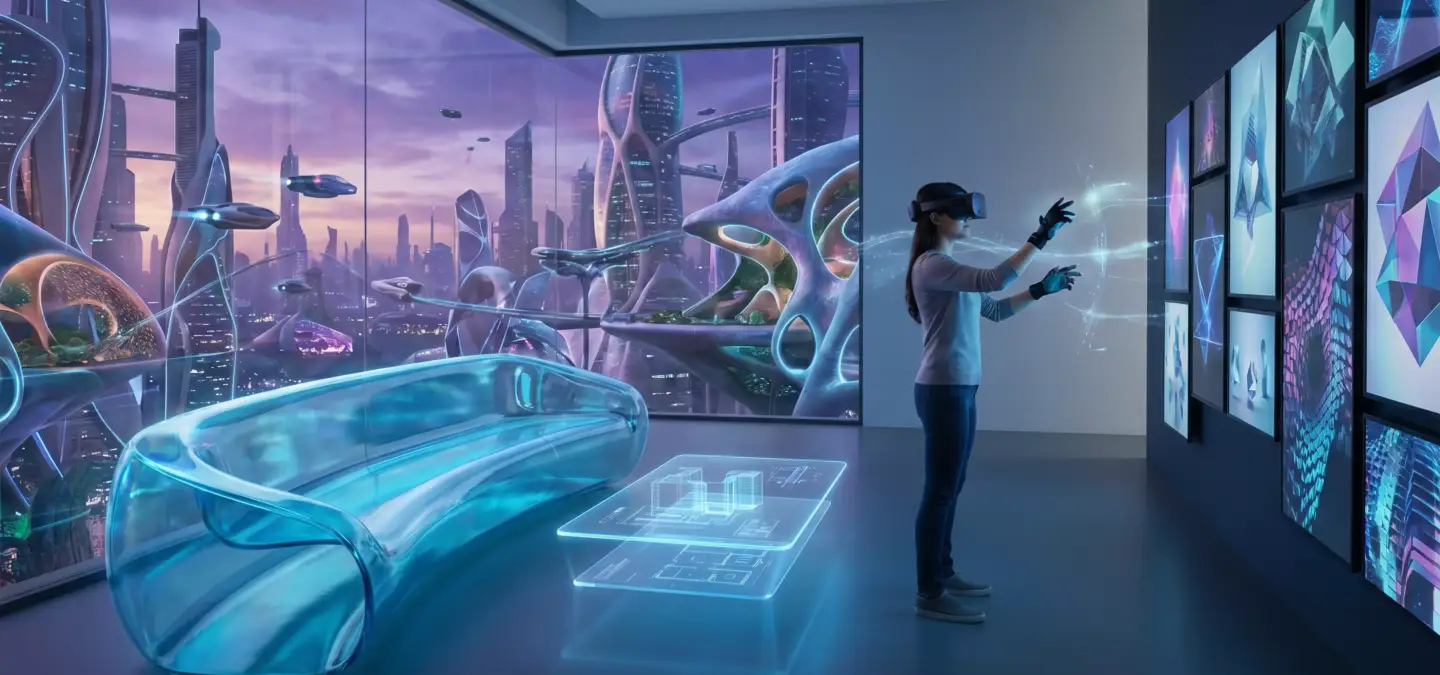
Metaverse interior design means designing interiors for digital spaces that exist inside virtual worlds, metaverse platforms, browser environments, VR experiences, or avatar-based communities. These spaces can include virtual apartments, offices, showrooms, galleries, branded rooms, event venues, and retail environments that users enter through a VR headset, desktop app, browser, or avatar platform. Unlike a static render or standard virtual tour, the final space is meant to be used, explored, customized, and experienced as a digital place.
The goal is not to decorate an imaginary room for novelty. The goal is to create a digital interior experience where people can meet, shop, learn, socialize, evaluate products, or express identity through space. This guide explains the definition, use cases, customization options, workflow, software role, business value, limitations, and how Maverick Frame can support metaverse-ready interiors through high-quality 3D production.
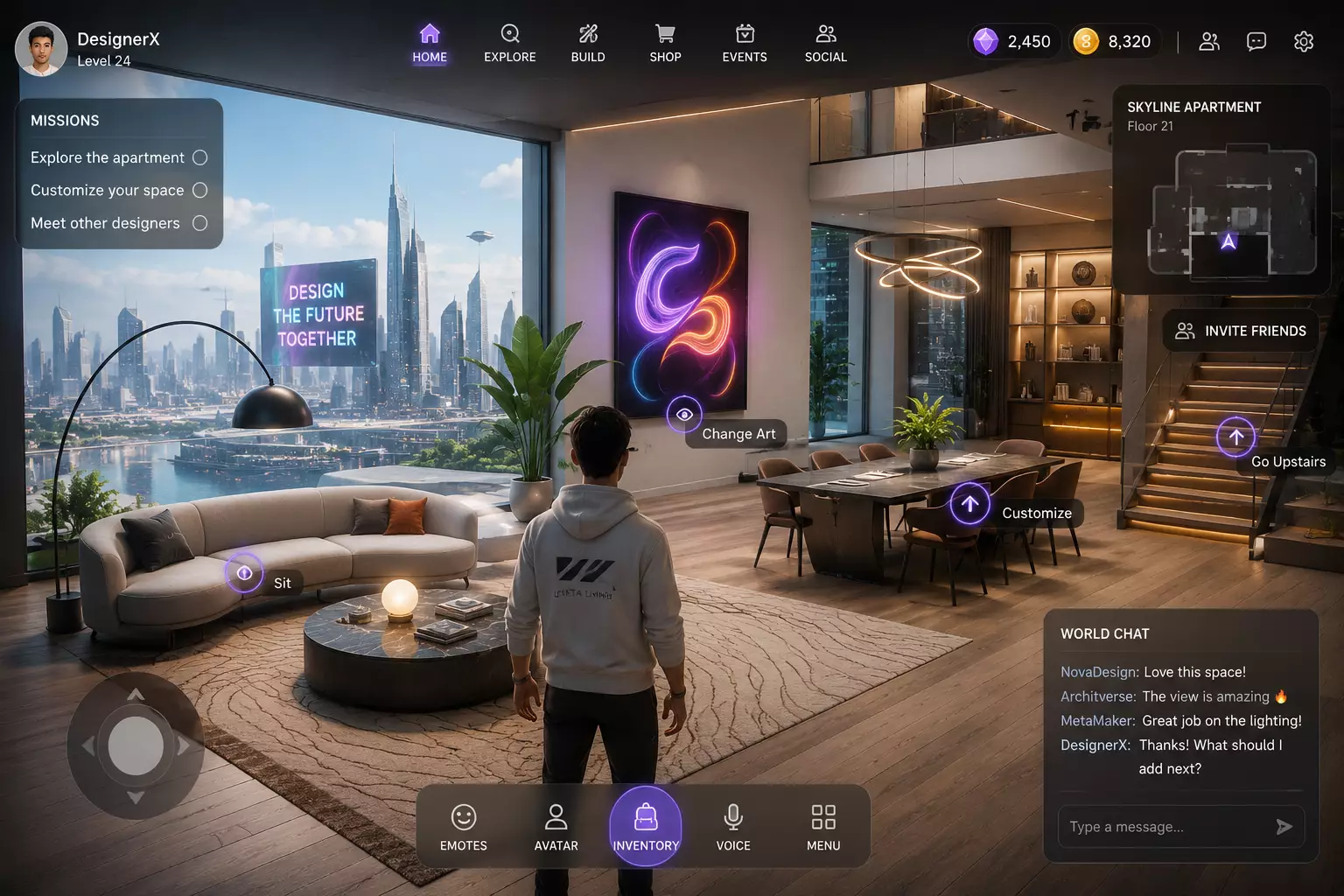
What Is Metaverse Interior Design
Metaverse interior design is the creation of functional and aesthetic interiors for digital properties and virtual environments inside metaverse platforms or virtual worlds. These interiors are not simply pictures of rooms because users can enter them, move through them, interact with objects, and share the space with other people. A virtual apartment, office, gallery, club, store, or showroom becomes part of a wider digital environment rather than a single visual asset.
The design process still uses familiar interior principles, including scale, circulation, lighting, materials, furniture, and mood. The difference is that these decisions must also serve avatars, platform rules, real-time navigation, and interactive behavior. A sofa may define a conversation zone, a product wall may trigger a shopping interaction, and a lighting state may shift the tone of an online event.
Metaverse Interiors Are Digital Places, Not Just Images
Metaverse interiors are digital places because they are built for presence, movement, and interaction rather than passive viewing. A static 3D image shows how a room might look from one camera angle, while a usable metaverse room must work from many positions. Users need to understand where to go, what to touch, how to gather, and why the space exists.
This distinction is important for brands, developers, and creative teams because a beautiful image can fail as a navigable environment. Doorways, seating zones, display walls, and interactive objects must support a clear user journey. The stronger the space feels as a place, the easier it is for people to return, share it, and connect it with a brand or community.
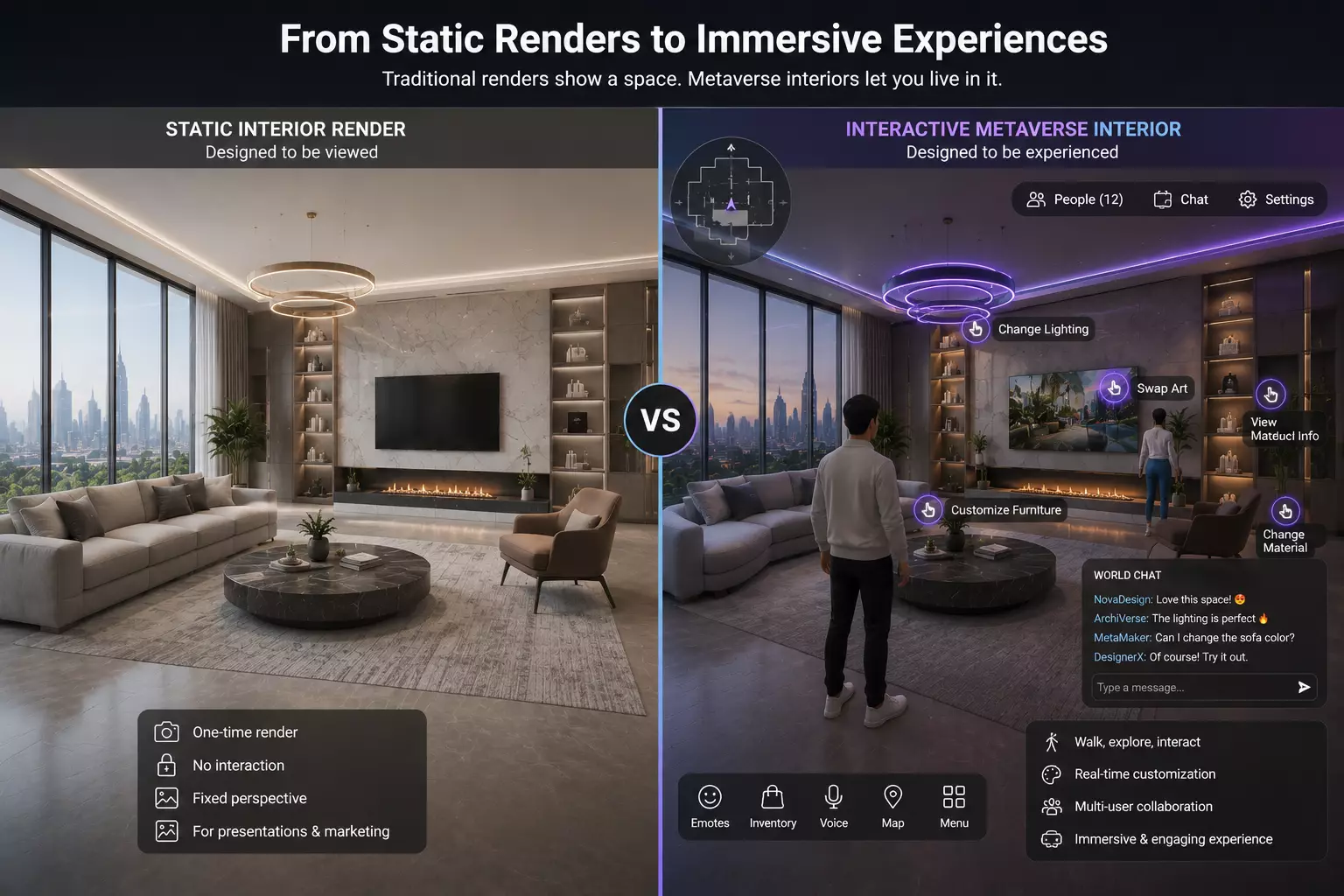
What Makes a Space Metaverse-Ready?
A space becomes metaverse-ready when it can run, load, and function inside the target digital platform. That means the room must use optimized 3D assets, practical file formats, avatar-scaled proportions, interactive elements, and performance-conscious materials. It also needs clear user flows so visitors can move naturally instead of getting lost in a visually complex scene.
Platform compatibility shapes many creative decisions. A VR office, browser showroom, mobile social room, and game-style apartment may need different texture sizes, lighting methods, object counts, and interaction logic. Strong design balances visual ambition with technical discipline so the room feels polished without becoming too heavy to use.
What Metaverse Interior Design Is and Is NotWhat Metaverse Interior Design Is and Is Not
Metaverse interior design is not a new label for standard rendering, virtual tours, or panoramic viewing. Those formats can support the production process, but the final metaverse interior is a usable digital space with movement, presence, customization, or interaction. This distinction keeps the concept practical instead of turning every 3D visual into a metaverse claim.
Maverick Frame’s 3D virtual tour services are useful adjacent experiences because they help viewers explore spaces remotely in an intuitive way. A virtual tour usually presents a property through planned viewpoints or controlled navigation. A metaverse interior goes further when users can exist in the space as participants, interact with objects, and use the room for meetings, commerce, events, or social presence.
| Misunderstanding | Correct Meaning | Why It Matters |
| “It is just a 3D render.” | It is a usable virtual interior inside a digital platform. | A render shows a space, while a metaverse interior can be entered, explored, customized, or used. |
| “It is only for real estate previews.” | It can be used for virtual offices, showrooms, events, social spaces, and branded environments. | The topic is broader than selling physical apartments. |
| “It is only VR.” | It can work through VR, desktop, browser, or avatar-based environments. | VR is one access method, not the whole concept. |
| “It is a 360 panorama.” | A 360 panorama is usually a fixed-view immersive visual, while a metaverse interior is a digital environment with interaction and presence. | This prevents the article from confusing adjacent formats. |
| “It is an ordinary archviz with a trend label.” | It requires user experience, interaction, platform readiness, and digital-space logic. | The design must work as a place, not just an image. |
Maverick Frame’s 360 panorama services fit the comparison because panoramic tours can help people explore visualized spaces from defined viewpoints. That format can be powerful for architecture and real estate presentations, especially when remote viewing matters. It should not be confused with interior design in the metaverse, where users expect a deeper sense of agency and presence.
Why Virtual Interiors Exist in the MetaverseWhy Virtual Interiors Exist in the Metaverse
Virtual interiors exist because people and businesses need digital places for identity, work, events, shopping, entertainment, social interaction, and branded experiences. A digital room can support the same emotional and commercial signals that physical interiors support, but without the same material limits. It can also change faster, scale to more visitors, and connect to online campaigns more easily.
For individuals, a virtual room can show taste, status, mood, and community affiliation. For businesses, the same design logic can support a launch, showroom, meeting space, training hub, or brand world. The value comes from giving people a reason to enter and a reason to stay.
Virtual Apartments and Digital Identity
Virtual apartments give users a personal digital space that can express taste, lifestyle, and belonging. People design them because digital identity now extends beyond profile photos and usernames. A room can communicate personality through furniture, lighting, art, objects, and gathering areas.
These apartments do not need to obey every physical constraint. A user might choose impossible views, animated surfaces, floating decor, or mood-based lighting that would be impractical offline. The design still needs structure because comfort, orientation, and social use matter even when the space is virtual.
Virtual Offices and Remote Collaboration
Virtual offices are digital work environments where teams can meet, present, onboard, and gather without using a purely flat video-call interface. A well-designed office may include meeting rooms, lounge areas, presentation zones, project walls, and informal spaces for quick conversations. The interior design helps people understand behavior by making some areas feel focused and others feel social.
The best office concepts are not copies of physical workplaces with decorative avatars added. They are designed around the way remote teams actually use time, attention, and shared context. A strong layout can make collaboration feel more intentional without forcing everyone into a simulated corporate lobby.
Branded Spaces and Digital Customer Experience
Branded virtual spaces help companies turn a product, campaign, or service story into an explorable environment. A brand can use a room to guide attention, stage product moments, host launch events, or create a social destination around a community. The interior becomes part of the customer journey, not just a background image.
Retail and product teams can use these spaces to show scale, context, variants, and lifestyle. A chair can appear in a lounge scene, a skincare product can sit in a wellness suite, and a hospitality concept can be tested as an atmosphere. This is where immersive interior design becomes commercially useful because the user can understand the product inside a designed situation.
How People Use Metaverse InteriorsHow People Use Metaverse Interiors
People use metaverse interiors by entering a virtual space through VR, desktop, browser, mobile, or an avatar-based platform. Once inside, they can move, meet, interact, shop, attend events, explore products, customize the room, or gather with other users. The experience depends on the platform, but the design must make the purpose clear from the first few seconds.
A gallery might guide people toward artworks and social discussion zones. A showroom might let visitors inspect products, switch finishes, and open product information. A virtual office might prioritize quick navigation, seating areas, presentation tools, and places where avatars can naturally cluster.
VR Access vs Desktop and Browser Access
VR interior design can deepen immersion, but metaverse interiors do not always require VR. Many spaces work through desktop apps, browsers, tablets, or mobile devices because the main requirement is usable digital presence. VR headsets add embodied scale and depth, but they also create hardware, accessibility, and onboarding barriers.
Business teams should choose access methods based on audience behavior. A luxury event for a small group may justify a VR experience, while a product showroom for broad traffic may work better in a browser. The right decision depends on reach, performance, budget, and how much interaction the visitor needs.
Avatar-Based Interaction
Avatar-based interaction gives users a visible body, position, and social presence inside a virtual room. Avatars need readable scale, clear paths, gathering points, and interaction zones that feel natural. Seating, stages, product displays, and meeting tables should be planned around how people approach, pause, and communicate.
This is where avatar-based spaces require a different kind of interior thinking. A room that looks balanced in a still image may feel awkward if avatars block each other, crowd the main display, or cannot understand where to stand. Good design considers movement, gestures, proximity, and social cues as part of the spatial experience.
Interior Customization in Metaverse SpacesInterior Customization in Metaverse Spaces
Interior customization in metaverse spaces lets users change the look, layout, function, and atmosphere of a digital room without rebuilding a physical environment. They can swap furniture, change wall finishes, adjust lighting, add digital art, replace branded objects, or alter the function of a zone. This makes the room feel owned, responsive, and worth revisiting.
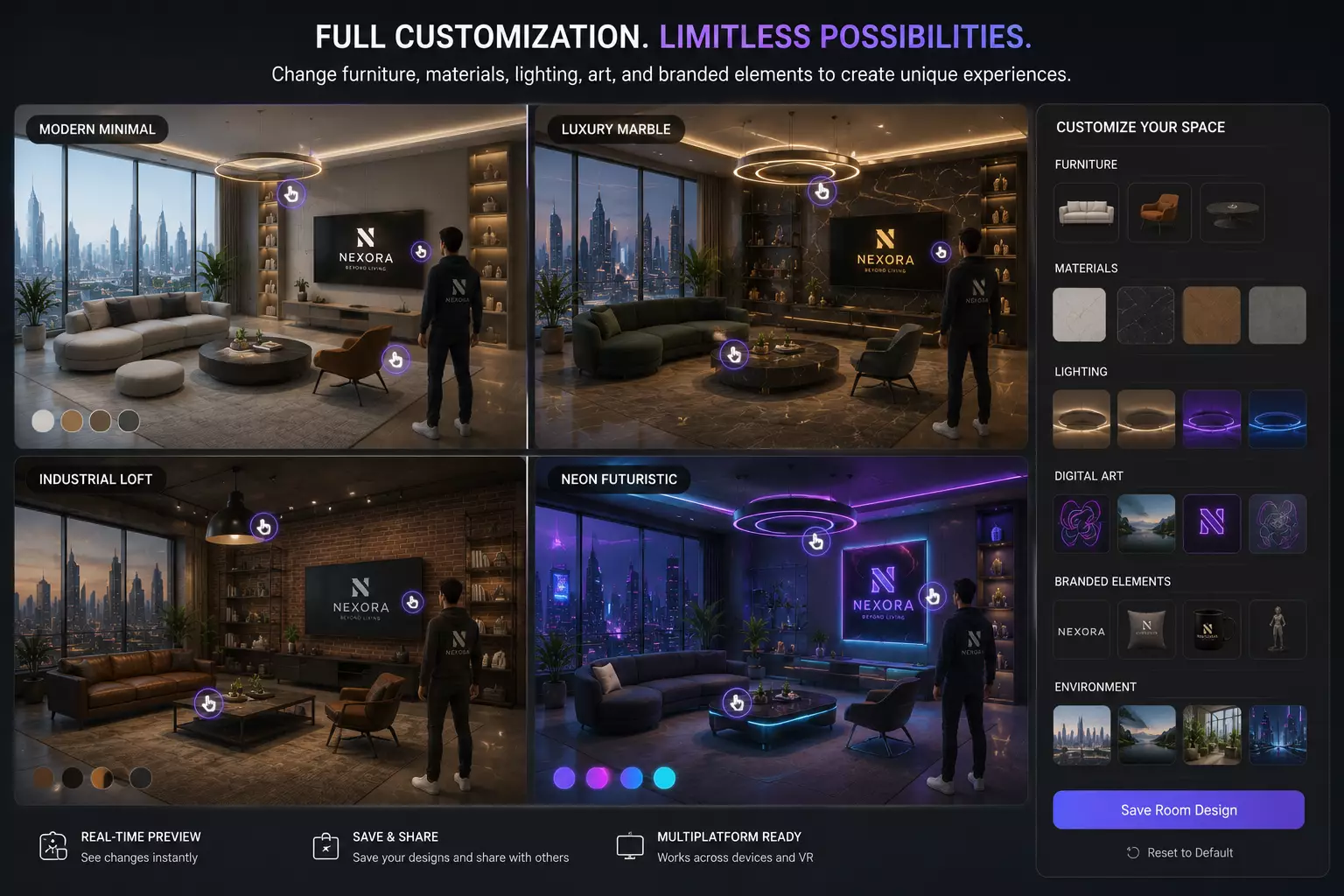
Customization matters because digital interiors are not fixed by construction costs in the same way physical rooms are. A brand can refresh a showroom for a seasonal campaign, while a user can change a virtual apartment for a different mood. Maverick Frame’s 3D furniture rendering services fit this need because furniture visuals can show materials, colors, finishes, proportions, and product details before physical production.
| Customization Area | What Users Can Change | Example Use |
| Furniture | Chairs, sofas, desks, beds, and modular pieces | A virtual apartment owner changes the room style. |
| Materials | Wood, fabric, stone, metal, and wall finishes | A showroom visitor switches finishes on a product wall. |
| Lighting | Color, intensity, direction, and mood | A brand changes atmosphere for an event. |
| Digital art | Screens, wall graphics, and projections | A gallery updates exhibitions without rebuilding the room. |
| Branded objects | Logos, product props, and campaign elements | A product launch space reflects a seasonal campaign. |
| Product displays | SKUs, variants, scale models, and interactive hotspots | A furniture brand shows collections in context. |
| Room function | Meeting zone, lounge, retail zone, stage, or gallery | A virtual office becomes an event space. |
| Avatar interaction zones | Seating, meeting points, and presentation areas | Users gather, talk, watch, or interact with objects. |
Why Customization Matters
Customization matters because it turns a room from a fixed visual into a participatory environment. Users are more likely to return when the space can reflect identity, preference, or progress. Brands also benefit because adjustable interiors can support campaigns, product drops, and community moments without rebuilding everything from scratch.
For retail, customization supports better product exploration. A visitor can see a sofa in different fabrics, a lamp in different lighting states, or a room set in multiple styles. This helps bridge the gap between product catalog browsing and spatial understanding.
Product Variants and Branded Objects
Product variants and branded objects make virtual rooms more useful for commerce and storytelling. A brand can let users swap finishes, test configurations, compare scales, or place products inside a styled interior scene. This makes digital interiors stronger than flat product pages because context becomes part of the decision.
Branded objects should be used with restraint. Too many logos, animated props, or promotional hotspots can make a room feel like an ad instead of a place. The best branded environment lets product value emerge through layout, atmosphere, and interaction.
How Metaverse Interiors Are CreatedHow Metaverse Interiors Are Created
Metaverse interiors are created through a 3D production workflow that turns a concept into an optimized, interactive, platform-ready digital environment. The process usually begins with purpose, audience, platform, and user flow before visual detail is built. From there, teams create geometry, assets, materials, lighting, interaction logic, performance settings, and final delivery files.
Maverick Frame’s architectural 3D modeling services are relevant because precise 3D models can support renderings, configurators, animations, and different presentation workflows. For metaverse spaces, that production foundation becomes even more important because poorly structured assets can slow the experience or create technical issues. A clean model makes later steps easier, from material setup to real-time optimization.
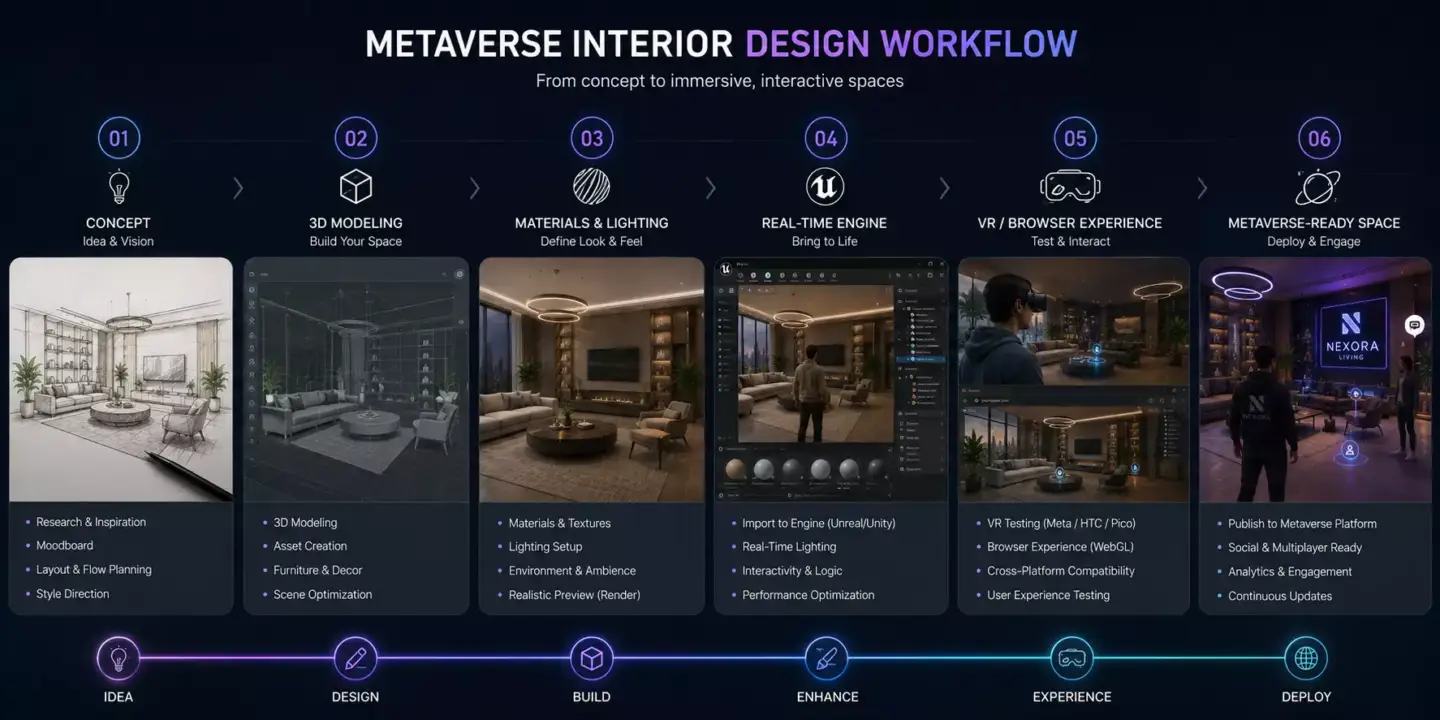
Concept and Spatial Planning
The concept stage defines why the space should exist and what users should do inside it. A virtual apartment, showroom, event venue, office, gallery, or branded room each needs a different interior logic. This decision shapes layout, mood, interaction density, and how much realism the final design needs.
Spatial planning then translates the purpose into user flow. Designers decide where people enter, where attention should go, and where avatars can gather without friction. In a showroom, the main path may lead from brand story to product display, while an office may prioritize meeting rooms and presentation zones.
3D Modeling and Asset Creation
3D modeling builds the room shell, furniture, fixtures, props, decor, and product assets. This stage determines the geometry that users will see and move around. The model must be detailed enough to feel credible but efficient enough to run inside the target environment.
Asset creation also includes products that may become interactive. A chair, lamp, appliance, or display wall may need multiple variants, clean UVs, and texture sets. When the space supports commerce, each product asset has to look attractive and behave predictably.
Materials, Lighting and Mood
Materials and lighting define how the room feels and how users understand depth, texture, and focus. Realistic finishes can communicate quality, while stylized materials can support a more playful or gaming-style environment. Lighting also guides movement by making key areas visible and secondary zones softer.
Maverick Frame’s 3D architectural animation and walkthrough services fit this stage when teams need motion, atmosphere, and spatial storytelling around a digital concept. Animation can help stakeholders understand the feel of a room before it becomes a fully interactive environment. It can also support marketing teasers, launch assets, and presentation materials.
Interactivity and Real-Time Engines
Interactivity is added when the room needs clickable objects, configurable products, avatar behavior, audio zones, or event triggers. Real-time engines such as Unreal Engine and Unity can support navigable environments where users move and interact without waiting for each view to render. This is different from offline rendering because the scene responds while the user is inside it.
A strong interaction plan should be simple enough for first-time visitors. Users should know what can be changed, where to click, and how to move between zones. Too much interaction can create confusion unless the experience is designed with clear priorities.
Optimization and Platform Delivery
Optimization prepares the interior for performance, loading speed, device limits, and platform requirements. Designers and technical artists may reduce polygon counts, compress textures, create levels of detail, bake lighting, or simplify materials. The goal is to preserve the intended look while keeping the experience smooth.
Delivery depends on the platform. A browser showroom, VR office, game-like apartment, and social metaverse venue may require different file formats and engine settings. A visually beautiful room still fails if it loads slowly, stutters, or breaks on the devices the audience actually uses.
The Role of 3D Rendering Software for Interior DesignThe Role of 3D Rendering Software for Interior Design
3D rendering software for interior design helps produce the models, materials, lighting, visuals, and real-time scenes used in metaverse interiors. Software is part of the production layer, not the definition of the concept. The core idea remains the design of usable digital spaces inside virtual worlds or platform-based environments.
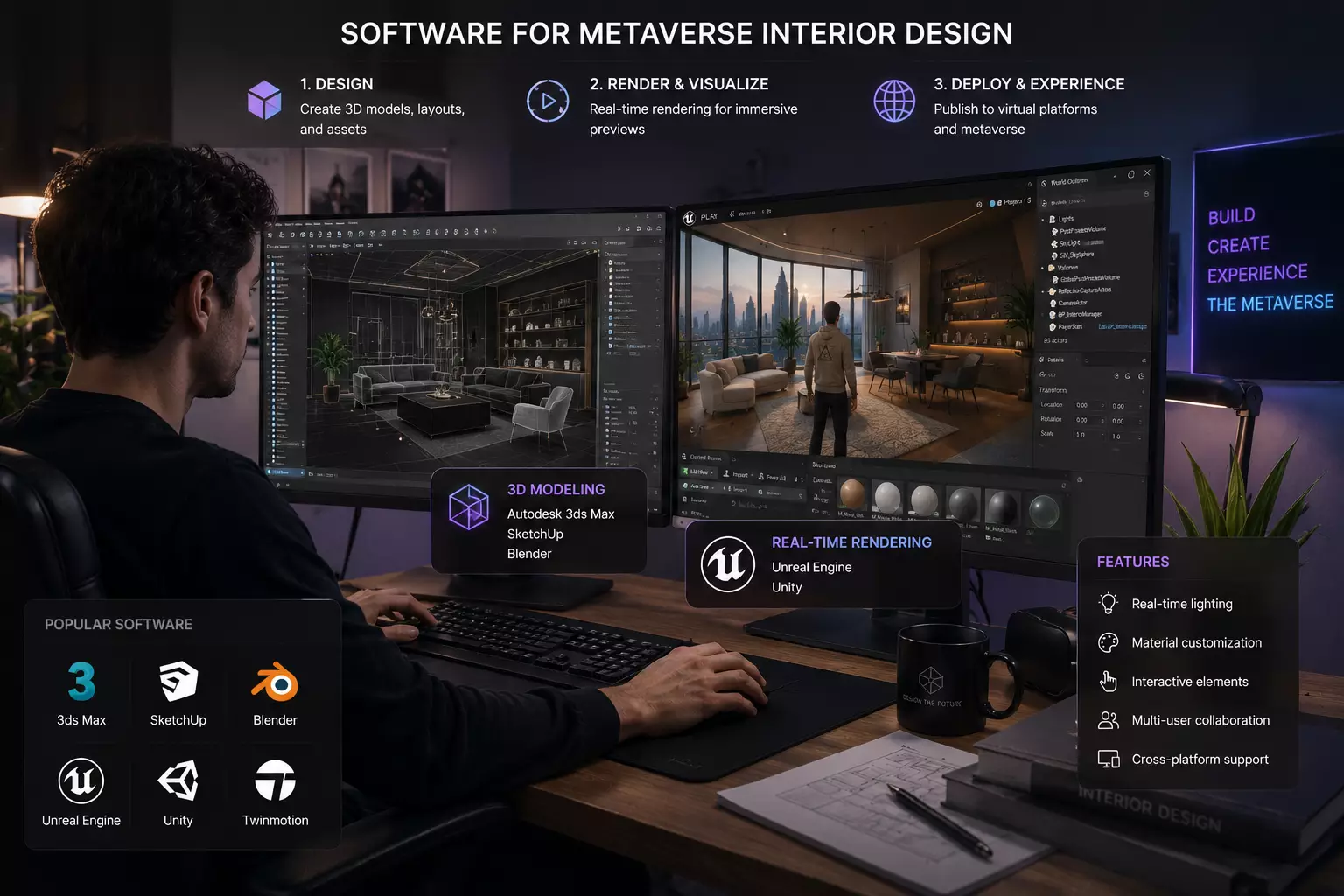
Maverick Frame’s 3D interior rendering services are relevant because interior visuals help teams communicate atmosphere, function, materials, lighting, and intent. For metaverse projects, those visual references can guide stakeholders before interactive production begins. Readers who want deeper tool context can also explore Maverick Frame’s guide to architectural rendering software.
| Tool Category | Role in Metaverse Interior Production | Example Software |
| 3D modeling | Build rooms, furniture, architecture, props, and product assets | Blender, 3ds Max, SketchUp |
| Rendering engines | Create realistic materials, lighting, stills, and visual references | V-Ray, Corona Renderer |
| Real-time visualization | Preview scenes, walkthroughs, and presentation environments | Enscape, Twinmotion, D5 Render |
| Game or real-time engines | Build interactive, navigable, platform-ready spaces | Unreal Engine, Unity |
| Optimization workflow | Prepare assets for performance, loading, and device compatibility | LOD tools, texture compression, engine optimization |
| Post-production | Polish campaign visuals, previews, thumbnails, and marketing assets | Photoshop, After Effects |
Offline Rendering vs Real-Time Environments
Offline rendering creates polished stills, animations, and reference visuals with high control over materials and lighting. Real-time environments support movement and interaction while the user is inside the space. Both can belong in one production workflow, but they serve different stages and expectations.
A photorealistic still may help a creative director approve the mood of a branded room. A real-time scene then turns that approved direction into a navigable experience. The production team needs to know which output matters most before choosing tools and asset detail.
Why the Tool Stack Depends on the Final Platform
The tool stack depends on the final platform because every destination has different technical and user requirements. An Instagram campaign image, browser-based showroom, VR sales space, and game-style apartment all require different decisions. The same concept may need one high-detail render for promotion and a lighter model for live interaction.
This is why software selection should follow the business goal. A product launch may need photorealistic hero visuals, while a community space may need low-latency performance. The best tool stack supports the user experience rather than showing off technical complexity.
Business Use Cases for Metaverse Interior DesignBusiness Use Cases for Metaverse Interior Design
Businesses use metaverse interior design to create immersive spaces where customers, teams, or communities can experience a brand, product, service, or event digitally. These rooms can support showrooms, product launches, virtual offices, retail concepts, hospitality previews, education, and community events. The commercial value depends on whether the space helps people understand, remember, or act.
Maverick Frame’s 3D product rendering services connect naturally to virtual showrooms and product-led environments. Product assets need to be clear, accurate, and appealing when users see them inside a room. Strong product visuals help the interior work as a sales tool instead of a decorative shell.
Virtual Showrooms
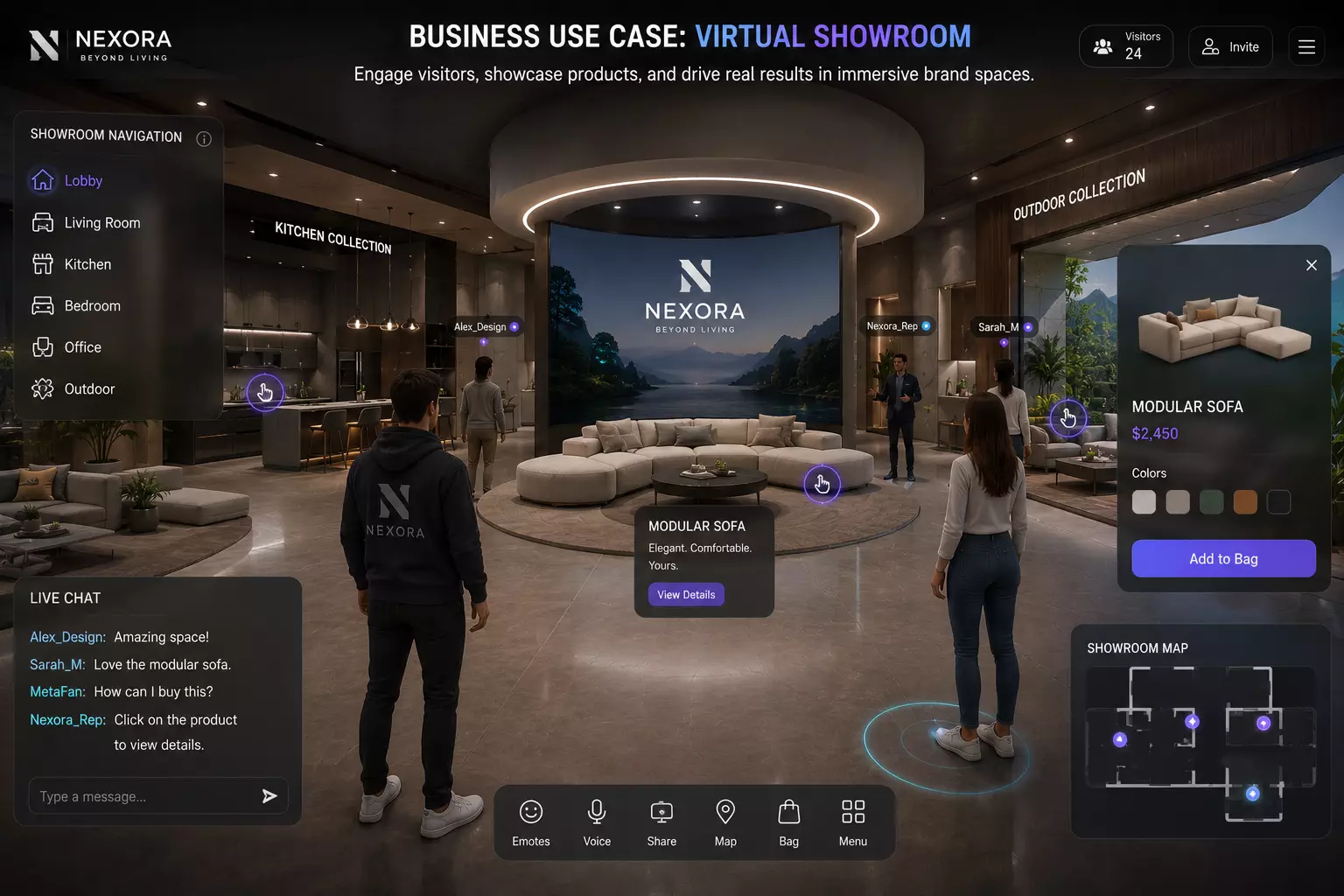
Virtual showroom interior design lets customers explore products in context instead of viewing isolated images. A furniture brand might show a collection inside a living room, while a technology company might stage devices in a branded workspace. The room can show scale, use, lighting behavior, and product combinations.
Showrooms can also support sales conversations before physical samples or store builds are ready. Product teams can present variants, test room scenes, and gather feedback from stakeholders. This makes digital showrooms useful for both marketing and internal alignment.
Branded Virtual Spaces
Branded virtual spaces let companies build a digital environment around identity, mood, and customer behavior. The room might communicate calm, energy, precision, luxury, or experimentation through material choices and spatial rhythm. It should feel like a place people want to enter, not a brochure expanded into 3D.
A relevant real-world example is Maverick Frame’s retail store 3D rendering success story, which shows how interior visualization can align stakeholders around retail atmosphere and product presentation. While that case is not a metaverse build, the same principles of clarity, material direction, and customer flow matter in digital brand rooms. The lesson is that spatial storytelling works best when it supports a clear business outcome.
Furniture, Retail and Product Display
Furniture, retail, and product display use cases are especially strong because virtual rooms can show products where they belong. A chair can be evaluated with nearby tables, lighting, and scale cues, while a retail display can show merchandising logic. This helps buyers understand not only what a product looks like but how it changes the space around it.
Virtual retail spaces can also make campaigns more flexible. A brand can update product displays, adjust room mood, or shift visual storytelling without rebuilding a physical store. The space becomes a reusable digital stage for launches, seasonal collections, and community moments.
Events, Education and Community Spaces
Events, education, and community spaces use metaverse interiors to bring people together around a shared purpose. A workshop may need presentation zones and breakout areas, while a gallery may need circulation paths and quiet viewing moments. A community lounge may need less formal structure and more emphasis on gathering.
These spaces work best when interaction design supports the event format. A stage, screen, seating area, or product demo should be obvious without lengthy instructions. Good design reduces friction so people can focus on the session, discussion, or experience.
Metaverse Interior Design and Virtual Real EstateMetaverse Interior Design and Virtual Real Estate
Virtual real estate gives people and companies digital properties that can be designed, customized, rented, purchased, branded, or used as social and commercial spaces. These properties may include apartments, offices, galleries, event venues, club spaces, or brand destinations. Interior design still matters because users need orientation, atmosphere, and a reason to spend time there.
Maverick Frame’s 3D visualization for real estate developers is relevant when property teams need clear visual communication for development concepts and marketing assets. The metaverse version should not be reduced to selling physical apartments. It can include digital property concepts where layout, mood, and customization carry their own value.
Are Virtual Apartments Real Interior Design?
Virtual apartments are real interior design when they have purpose, layout, user experience, aesthetic direction, and interaction. The room may not be built with concrete and timber, but it still shapes how people feel and behave. A poorly planned digital apartment can feel empty, confusing, or visually overloaded.
The same design questions apply in a new medium. Where do users enter, where do they gather, and what does the space communicate about identity. When those questions are answered with care, virtual apartments become meaningful environments rather than decorative backgrounds.
Digital Twins as Metaverse Interiors
Digital twins can be part of metaverse interior design only when people can enter, explore, or use them as digital environments. A technical building copy used only for facility data is not automatically a metaverse interior. It becomes relevant here when the twin supports presence, navigation, interaction, or customer experience.
This distinction keeps the article practical. A digital twin may reproduce a real space accurately, while a metaverse interior may be partly fictional or fully branded. Both can be useful, but their purpose determines the design and production workflow.
Benefits of Metaverse Interior DesignBenefits of Metaverse Interior Design
Metaverse interior design helps people and businesses create flexible, interactive digital spaces that support engagement, customization, storytelling, remote access, and product exploration. Its value comes from combining visual design with user behavior and commercial purpose. When done well, it gives users a memorable place to enter rather than another screen to scroll past.
The main benefits include stronger digital presence, richer product context, flexible room updates, remote participation, and more interactive brand storytelling. It can also support experimentation because teams can test atmosphere, layout, and product scenes without physical construction. For brands, it offers a way to turn campaigns into places where customers can spend time.
Another benefit is scalability. A physical showroom has location and capacity limits, while a digital showroom can serve remote visitors and support repeated updates. The strongest projects combine virtual spaces with clear goals so the environment supports measurable attention, education, or conversion value.
Challenges and LimitationsChallenges and Limitations
Metaverse interior design can be powerful, but it brings cost, performance, UX, compatibility, accessibility, and strategy challenges. A space requires more than attractive 3D visuals because it must run well and make sense to users. Without a clear use case, even a polished environment can become an expensive novelty.
Production teams must balance realism, asset weight, loading speed, and interaction complexity. Hardware limitations can restrict who can access the room, while platform choices can affect file formats and future maintenance. The design should be planned around actual audience behavior rather than a vague desire to be present in the metaverse.
The Risk of Building a Space Nobody Uses
The biggest strategic risk is building a space that nobody has a reason to visit. A virtual room needs a clear user scenario such as a product launch, team meeting, retail experience, event, gallery, or community hub. Beauty alone does not create participation.
Businesses should define what success looks like before production begins. That could mean longer engagement, better product understanding, smoother stakeholder alignment, or more qualified leads. Clear goals help the design team choose the right level of detail, interaction, and platform complexity.
From our studio — Most clients who ask for a “virtual showroom” saw one somewhere and want their own. The catch is they expect to order it as a standalone piece, separate from their website, without thinking about how visitors would actually reach it or how it plugs into their funnel. A real metaverse interior isn’t one render from one studio — it’s a job that needs several specialists, and usually more than one company, to ship. So before anything, we ask where the space will live and how people get to it. If there’s no honest answer to that, you’re paying for a beautiful room nobody walks into.
Dim Kuzmenko, Maverick Frame
Performance and Platform Constraints
Performance constraints can make or break the experience. A visually rich space may look excellent in a preview but fail if it loads slowly or stutters during navigation. Optimization is not a technical afterthought because it directly affects user trust and comfort.
Each platform has its own limits. A VR headset, desktop browser, and mobile device do not handle geometry, textures, lighting, and interactivity in the same way. Strong production planning keeps the room attractive while making it realistic to deliver.
How Maverick Frame Can Help With Metaverse-Ready Interior VisualsHow Maverick Frame Can Help With Metaverse-Ready Interior Visuals
Maverick Frame can support metaverse-ready interior visuals by producing 3D models, interior visualizations, product assets, furniture visuals, virtual tour materials, animations, and branded CGI that help digital spaces look clear and commercially useful. This support is best framed as visual production and 3D asset creation rather than a promise of full metaverse platform development. The studio’s role fits teams that need reliable visual foundations for digital interiors, product scenes, and immersive presentations.
For architecture and design teams, Maverick Frame’s 3D rendering for architecture and design studios can help translate spatial ideas into polished visuals for presentations and marketing. For brands and product teams, the same production discipline can support virtual showrooms, launch assets, and room-based product storytelling. The strongest collaboration starts with the intended platform, user behavior, and final asset requirements.
Maverick Frame’s broader CGI work also supports developers, manufacturers, retailers, hospitality concepts, and creative teams. Interior visualization can establish mood, furniture rendering can support product customization, and animation can communicate movement through a space. Those assets can become the visual foundation for gaming-style interiors, digital property concepts, and brand environments that need clarity before interactive deployment.
Designing Digital Interiors That People Can Actually UseDesigning Digital Interiors That People Can Actually Use
The strongest metaverse interiors are not just beautiful digital rooms because they are purposeful spaces designed around how people enter, move, interact, customize, and return. A successful room connects design, 3D production, platform readiness, and business value. It answers the user’s practical question before asking them to explore.
Metaverse interior design is most useful when teams treat the room as a digital place with a job to do. That job might be expression, collaboration, product discovery, community building, or brand storytelling. Once the purpose is clear, layout, lighting, furniture, interaction, and performance can work together.
A practical approach avoids hype and starts with use. Decide who the room is for, what they should do, and which platform they will use. Then build the space with enough visual quality to persuade users and enough technical discipline to keep them there.
Digital interfaces get the same treatment: a mobile app design visualization and the Escape travel app UI.

Turn Ideas Into Visual Stories
FAQ about metaverse interior design
What is metaverse interior design?
Metaverse interior design is the design of interiors for digital spaces inside virtual worlds or metaverse platforms. These spaces can include apartments, offices, galleries, showrooms, event venues, retail rooms, and branded environments. Users can enter through VR, desktop, browser, mobile, or avatar-based systems and then move, meet, shop, socialize, customize, or explore.
Is metaverse interior design the same as 3D interior rendering?
No, metaverse interior design is not the same as 3D interior rendering. Rendering can create visual references, marketing images, and design previews, but a metaverse interior is a usable digital environment. The final space must support navigation, interaction, presence, customization, or platform-based use.
How do people use virtual interiors in the metaverse?
People use virtual interiors by entering a digital room through VR, desktop, browser, mobile, or an avatar platform. Once inside, they can attend meetings, explore products, visit events, view exhibitions, interact with objects, or gather socially. The design must make these actions clear, comfortable, and relevant to the user’s purpose.
What is interior customization in metaverse spaces?
Interior customization in metaverse spaces lets users change the room’s furniture, finishes, lighting, art, branded objects, displays, or functional zones. This can support personal identity, product exploration, seasonal campaigns, or repeat visits. It is especially useful when a space needs to adapt without rebuilding a physical environment.
What software is used to create metaverse interiors?
Metaverse interiors can involve 3ds Max, Blender, SketchUp, V-Ray, Corona Renderer, Enscape, Twinmotion, D5 Render, Unreal Engine, and Unity. Modeling tools create geometry, renderers help define visual quality, and real-time engines support navigation and interaction. The right stack depends on the final platform and the required user experience.
Are virtual apartments and offices part of metaverse interior design?
Yes, virtual apartments and offices are part of metaverse interior design when they are digital environments people can enter, use, customize, or share. A virtual apartment may express identity, while a virtual office may support meetings and presentations. Both require layout, atmosphere, scale, and interaction planning.
Why would a business need a virtual showroom or branded virtual interior?
A business may need a virtual showroom or branded interior to present products, host launches, support remote access, or create a more memorable customer experience. These spaces can show product scale, variants, and lifestyle context more clearly than isolated images. They are most useful when tied to a campaign, sales journey, or community goal.
Does metaverse interior design require VR?
No, metaverse interior design does not require VR. VR can make the experience feel more embodied, but many virtual spaces work through desktop apps, browsers, mobile devices, or avatar-based platforms. The best access method depends on audience reach, budget, comfort, hardware availability, and the level of interaction needed.