
Classical architecture is a building style based on the architecture of ancient Greece and Rome. It is recognized by symmetry, balanced proportions, columns, pediments, and the classical orders: Doric, Ionic, and Corinthian. In simple terms, classical architecture makes a building look ordered, formal, and easy to read, with every major part arranged according to a clear visual system rather than random decoration.
This style is important because it enables people without specialized training to easily understand a facade. It also helps to place classical architecture within the broader history of architectural styles. Many of its most recognizable features can be spotted in seconds from street level. It can usually be identified by symmetry, columns or pilasters, pediments, measured proportions, and an overall sense that every visible part belongs to a formal system rather than an improvised composition.
What is Classical Architecture?What is Classical Architecture?
In the clearest sense, what is classical architecture? It is an architectural style that originated in ancient Greece and Rome. It is characterized by its focus on proportion, columnar systems, and formal composition. The column and pediment are among its most defining visual elements. In other words, it is architecture that looks intentionally ordered, with parts arranged according to rules that make the entire building feel balanced and understandable.
The term matters because it does not refer to just any traditional building with stone details or ornamentation. In Western architectural history, the term first points to the Greco-Roman tradition, and then, by extension, to later architecture that deliberately adopts its logic rather than merely resembling it at first glance. This distinction prevents the common mistake of treating all historical architecture as classical, even when its structure, proportions, and decorative system come from different traditions. Its principles were later revived in Neoclassical architecture.
A useful way to think about the classical architecture definition is that it names both a historical source and a design grammar. The historical source is antiquity, while the grammar is the repeatable set of principles that later architects could study, revive, and reinterpret. That layered meaning explains why the phrase can apply narrowly to ancient buildings and more broadly to later works that visibly inherit the same formal language. Classical ideas re-emerged centuries later in Renaissance architecture.

What Defines Classical Architecture?
The fastest answer to what defines classical architecture is visible order. A classical facade typically features a centered composition, recognizable geometry, repeated vertical supports, and an upper element or roofline that completes the front with a sense of ceremonial clarity. Rather than relying on novelty, classical architecture relies on relationships, which is why buildings often feel calm, deliberate, and easy to understand even before you know the vocabulary.
- Symmetry and balanced proportion — the façade is organized around a central axis so the two halves mirror each other.
- Columns and the classical orders — Doric, Ionic, or Corinthian columns or pilasters set the building’s scale and rhythm.
- Pediments and formal façades — a triangular gable over the entrance crowns an ordered, rule-based front.
- Restrained, structured ornament — decoration follows the system rather than covering every surface.
- Human-scale proportion — parts are sized by clear ratios, so the building reads as ordered and calm.
- Durable classical materials — stone, marble, and stucco echo the Greek and Roman buildings the style descends from.
Symmetry and Proportion
Classical architecture features begin with symmetry and proportion because those are the principles that make every other element feel coherent. In Greek architecture, the column was used as a proportional module. The broader tradition treated dimensions as related parts of a larger order rather than as isolated decorative choices. When a building appears balanced from left to right and from base to cornice, the most fundamental classical idea is often at work.
In this tradition, symmetry is not just mirror-image neatness. Rather, it is a way of making entrances, columns, windows, and roof elements work together so that the viewer immediately understands the hierarchy. Proportion accomplishes a similar feat at a quieter level, making the entire facade appear settled even when the viewer cannot pinpoint exactly why it looks right.
Columns and the Classical Orders
The presence of columns or pilasters is one of the most recognizable classical architecture characteristics. Yet columns are not simply supports or decoration, because in the classical tradition they belong to named orders that regulate shape, proportion, and ornament from base to capital. This is why a facade with columns often feels more rule-based than a one with generic vertical elements.
The phrase classical orders refers to the standardized systems that govern the appearance of columns and their related parts. When first encountering the three main orders, Doric, Ionic, and Corinthian, readers will notice that each carries a distinct visual impression that can be recognized without academic training. Once you start noticing design choices such as the shape of the capital, the slenderness of the shaft, and the amount of ornamentation, the orders become easier to identify.
Pediments and Formal Facades
Another group of classical architecture features appears above the columns. The entablature is the horizontal zone supported by the columns. The pediment often tops the facade with a triangular front, giving the building a clear visual finish. Together, these elements create the sense that the facade is composed of layers, each part occupying a defined role within the whole.
A formal facade in the classical sense does not require heavy ornamentation everywhere. Rather, it relies on disciplined placement, aligning structure and decoration so that the front elevation reads as a complete and intentional composition. This is why even relatively restrained classical buildings can appear monumental without looking overloaded.
Balance and Restrained Ornament
The final visible trait in what are the main features of classical architecture is restraint. Ornamentation exists, sometimes in abundance, but it typically follows the structure of the building rather than breaking away from it. This helps maintain the overall sense of harmony. In other words, the decoration reinforces the composition instead of competing with it.
The quickest checklist is simple. Look for a symmetrical front, clear geometry, columns or pilasters, a pediment, or a strong horizontal termination. Also look for details that seem governed by an inherited system rather than free improvisation. If most of these features appear together, you are probably interpreting a classical façade correctly.
Origins of Classical ArchitectureOrigins of Classical Architecture
The historical basis of classical architecture lies in ancient Greece and Rome. According to Britannica, it is defined by the architectural styles of these civilizations from the Greek and Roman periods, particularly the column-and-pediment tradition. This remains the essential starting point for understanding the style. While later revivals are important, they only make sense because Greece and Rome first established the style.
Greek Foundations
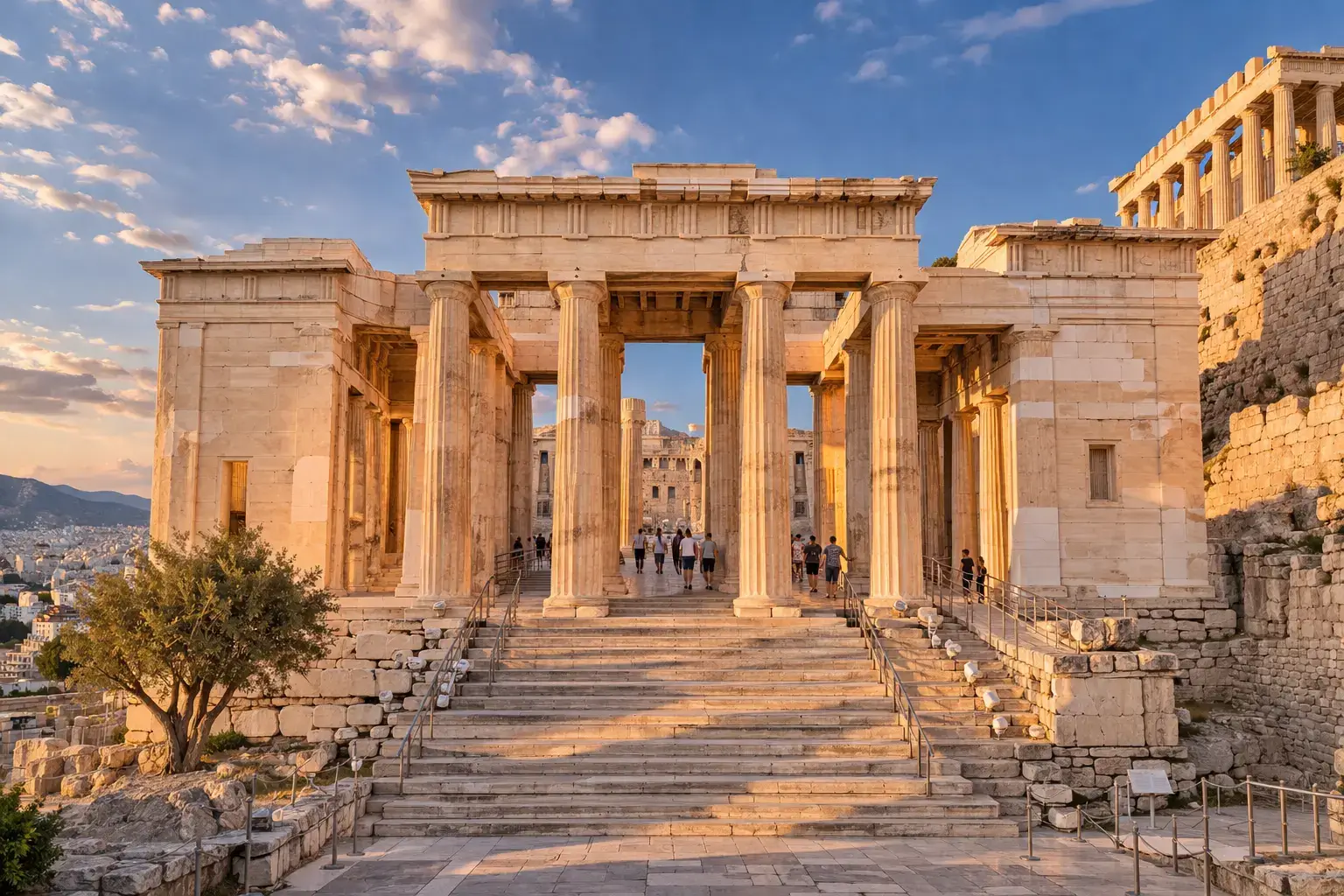
Greek architecture established fundamental principles of proportion, post-and-beam construction, and temple design that subsequent generations regarded as exemplary. The Greeks established the orders as visible, repeatable design systems and made the relationship between the column, entablature, and pediment central to architectural expression. The result was not merely a set of decorative motifs, but rather, a disciplined visual grammar that gave buildings unity and dignity.
When comparing Greek vs. Roman architecture, the Greek contribution often feels more tied to idealized form and carefully calibrated temple composition. This is one reason why the Parthenon remains such a powerful reference point; it demonstrates how proportion, order, and sculptural clarity can transform a relatively simple building type into a lasting model. Thus, Greek architecture is the conceptual backbone of the classical tradition, even when later periods built upon it.
Roman Adaptation And Expansion
Rome inherited Greek principles, adapting them to a broader imperial and urban world. Roman builders worked on a larger civic scale, incorporating Greek formal language into new building types and combining inherited compositions with engineering ambitions that expanded the practical scope of classical design. This is why Roman classical design often feels more expansive, infrastructural, and spatially varied than its Greek foundation.
This expansion is important for understanding the tradition’s later influence. The classical language was not confined to temples because Rome demonstrated how columns, orders, and formal fronts could contribute to a wider range of monumental architecture. From that point on, classical design became both an ancient inheritance and a transferable model for later civic expression.
The Three Classical Orders Explained
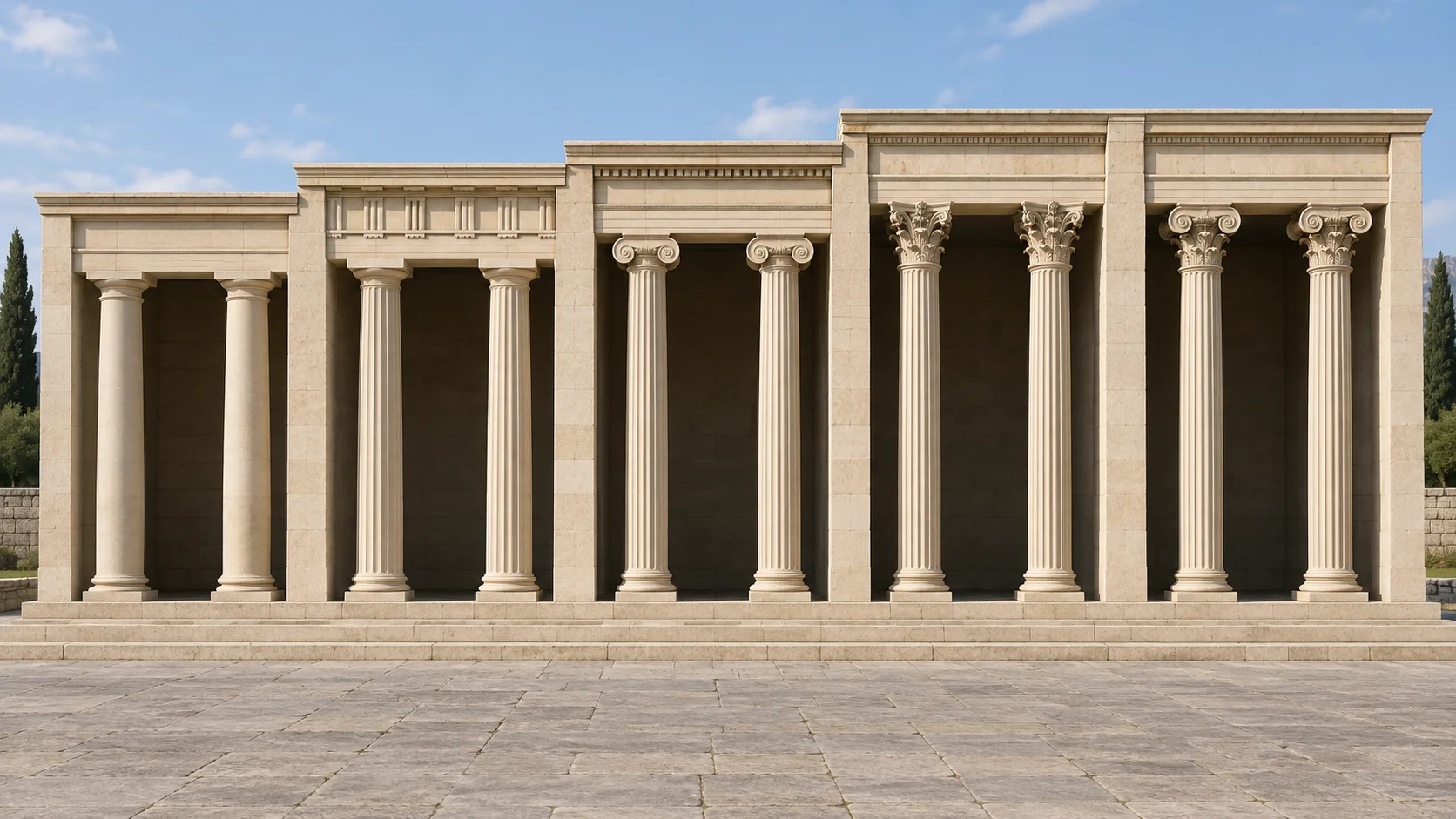
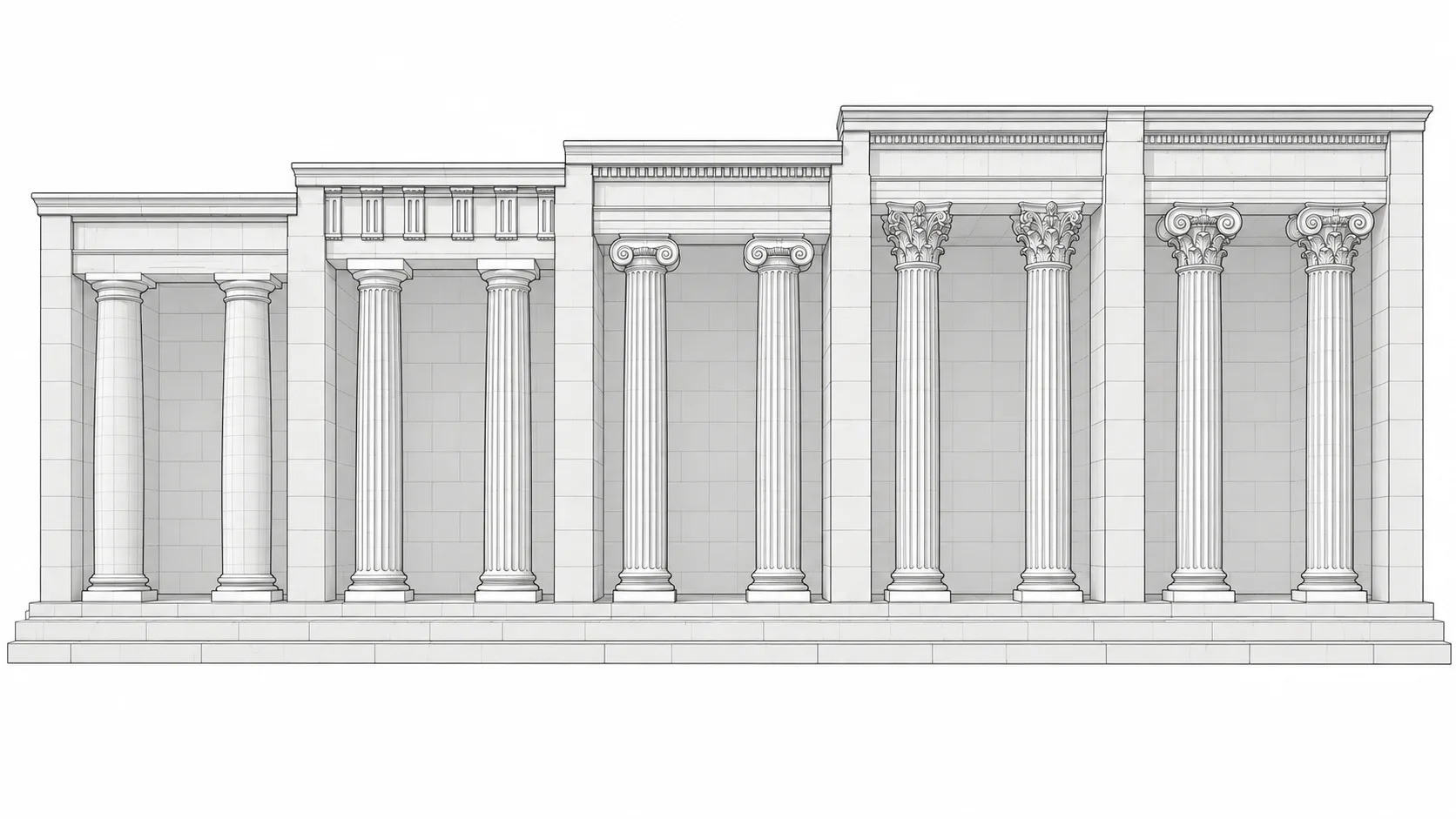
Anyone asking what are the three classical orders needs a visual answer first and a historical one second. The three primary orders are Doric, Ionic, and Corinthian. Each one signals a different level of refinement, slenderness, and ornamentation through its column and capital design. You don’t need to memorize dates to tell them apart because their forms communicate their distinct personalities at first glance.
Doric
The Doric order is the simplest and heaviest-looking of the three. It tends to appear sturdy, direct, and less decorated, which is why it often gives a façade an impression of strength and gravity. When you see a classical building whose columns look compact and severe rather than delicate, Doric is usually the first possibility to consider.
Ionic
The Ionic order is more slender and more visibly decorative than Doric. Its most famous marker is the scroll-like volute at the capital, which makes the top of the column look more elegant and articulate without becoming lavish. If Doric feels firm and grounded, Ionic usually feels lighter, more refined, and more obviously ornamental.
Corinthian
The Corinthian order is the most ornate of the three. It is associated with acanthus-leaf capitals and a more sumptuous sense of finish, so it often appears where grandeur and visual richness are part of the intended effect. Even without technical language, most viewers read Corinthian as the most elaborate member of the family.
The simplest way to understand the orders is to view them as increasingly decorated expressions of a broader language. Doric emphasizes weight and clarity. Ionic highlights refinement and movement at the capital. Corinthian showcases display and flourish within an ordered system. This sequence makes the orders easier to remember because it links the name, form, and impression visually.
| Order | Visual Traits | Overall Impression | Typical Associations |
| Doric | Plain capital, sturdier proportions, minimal decoration | Solid, severe, grounded | Strength, simplicity, temple clarity |
| Ionic | Slender shaft, scroll-like volutes, lighter profile | Elegant, refined, composed | Grace, measured ornament, visual lightness |
| Corinthian | Acanthus-leaf capital, richest detailing, more elaborate finish | Grand, ornate, ceremonial | Splendor, monumentality, decorative prestige |
The Roman Tuscan and Composite Orders
Rome added two orders to the three described above: the Tuscan, a plainer Roman adaptation of the Doric, and the Composite, a late Roman development of the Corinthian. With Doric, Ionic and Corinthian they make up the five classical orders that Renaissance architects later treated as one set.
Tuscan Order
The Tuscan column has an unfluted shaft and a simple capital. It is close to the Roman Doric in proportion and profile but much plainer, with almost no carved detail. In London you can see giant Tuscan columns in the east portico of Inigo Jones's St Paul's Church, Covent Garden, built 1631–38.
Composite Order
The Composite capital combines Ionic volutes with Corinthian acanthus leaves. It was a Roman invention, and the Arch of Titus in Rome, built in the AD 80s, carries one of the earliest examples. Because it is easy to mistake for Corinthian, check the capital for the large Ionic scrolls alongside the leaves.
How the Five Orders Became a System
Sebastiano Serlio's book on the orders, first published in 1537, described all five in sequence (Tuscan, Doric, Ionic, Corinthian, Composite) and the materials and ornament suited to each. Vignola's Regola delli cinque ordini d'architettura (1562) presented the same five as a rule book. From then on, the five-order set became the standard reference for classical design.
Famous Examples of Classical Architecture
The most useful classical architecture examples are not just famous names. They are buildings that teach the eye how the tradition works by making proportion, order, and formal composition unusually legible. That is why a short set of landmark examples can be more valuable than a long list without analysis.
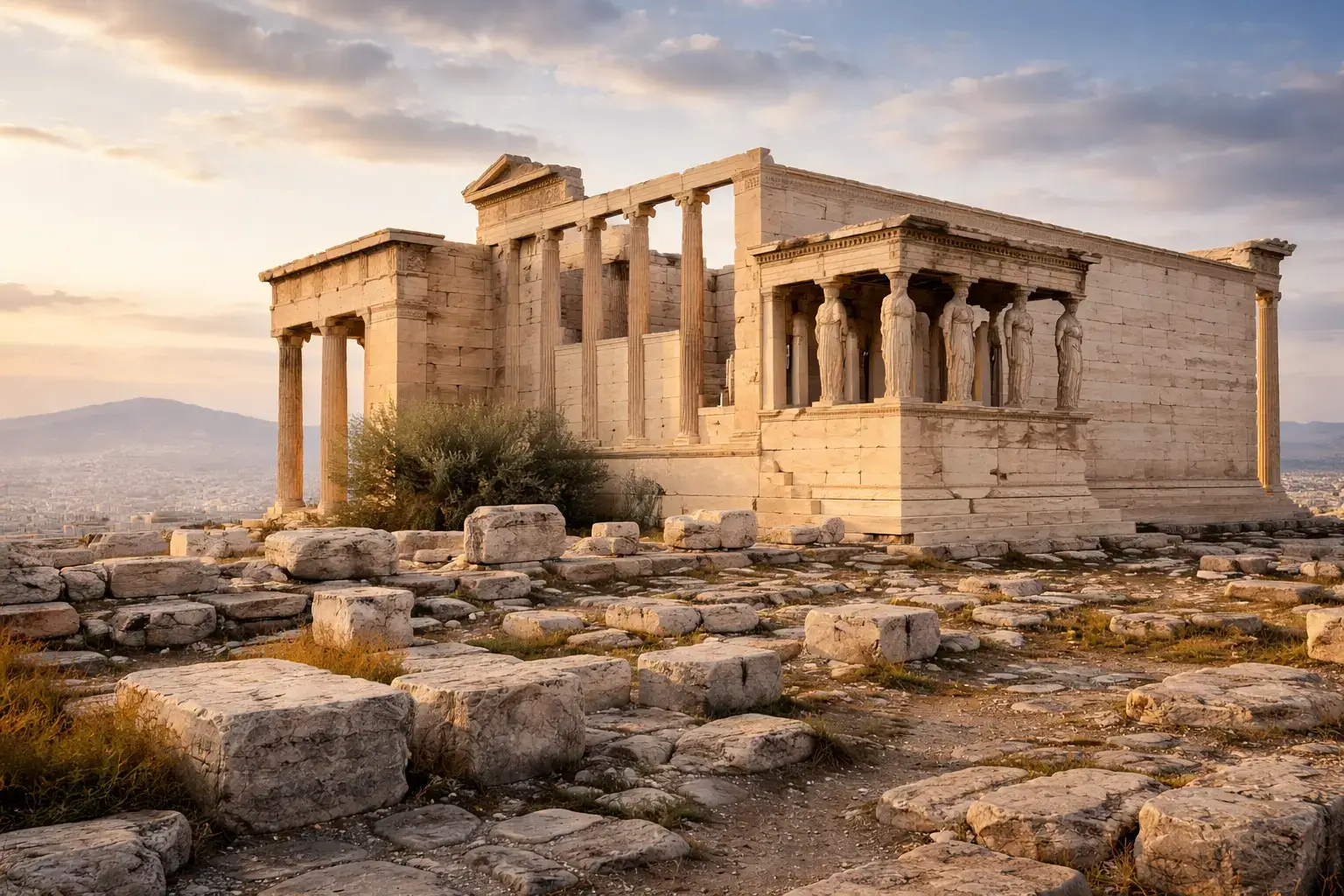
The Parthenon in Athens is one of the clearest statements of Greek classical design. First, take note of the disciplined temple facade and the commanding columnar rhythm. Then, observe how the entire building is unified by proportion rather than animated by visual excess. The building is classical not only because of its age, but also because it exemplifies how symmetry, order, and formal restraint can create a monumental presence.
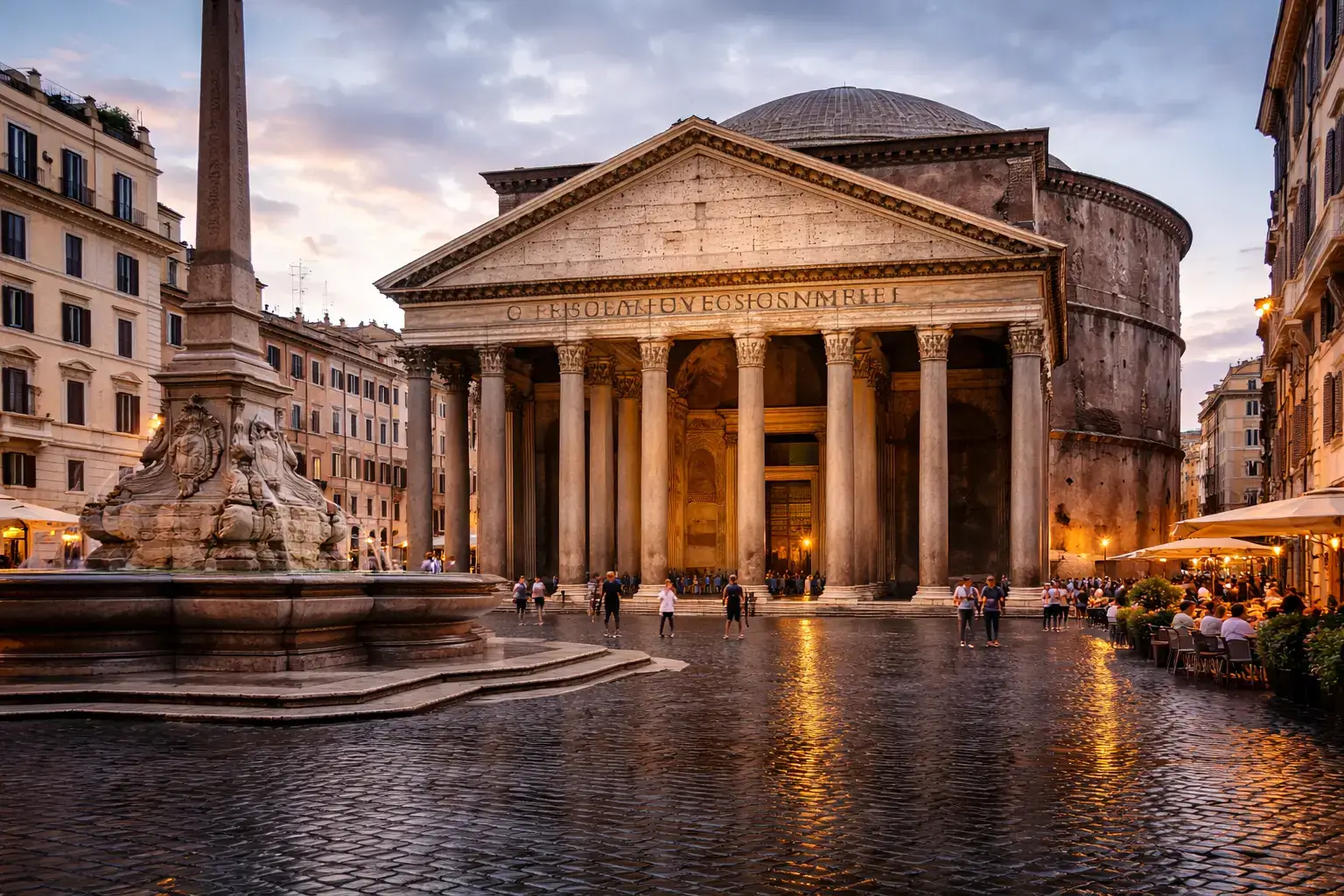
The Pantheon in Rome showcases a different aspect of this tradition. Its classical identity is evident in the temple front and columned portico, while its broader Roman ambition is apparent in the scale and spatial conception that transcend the standard Greek template. Pay attention to how the formal front announces classical order before the building reveals its larger Roman complexity.
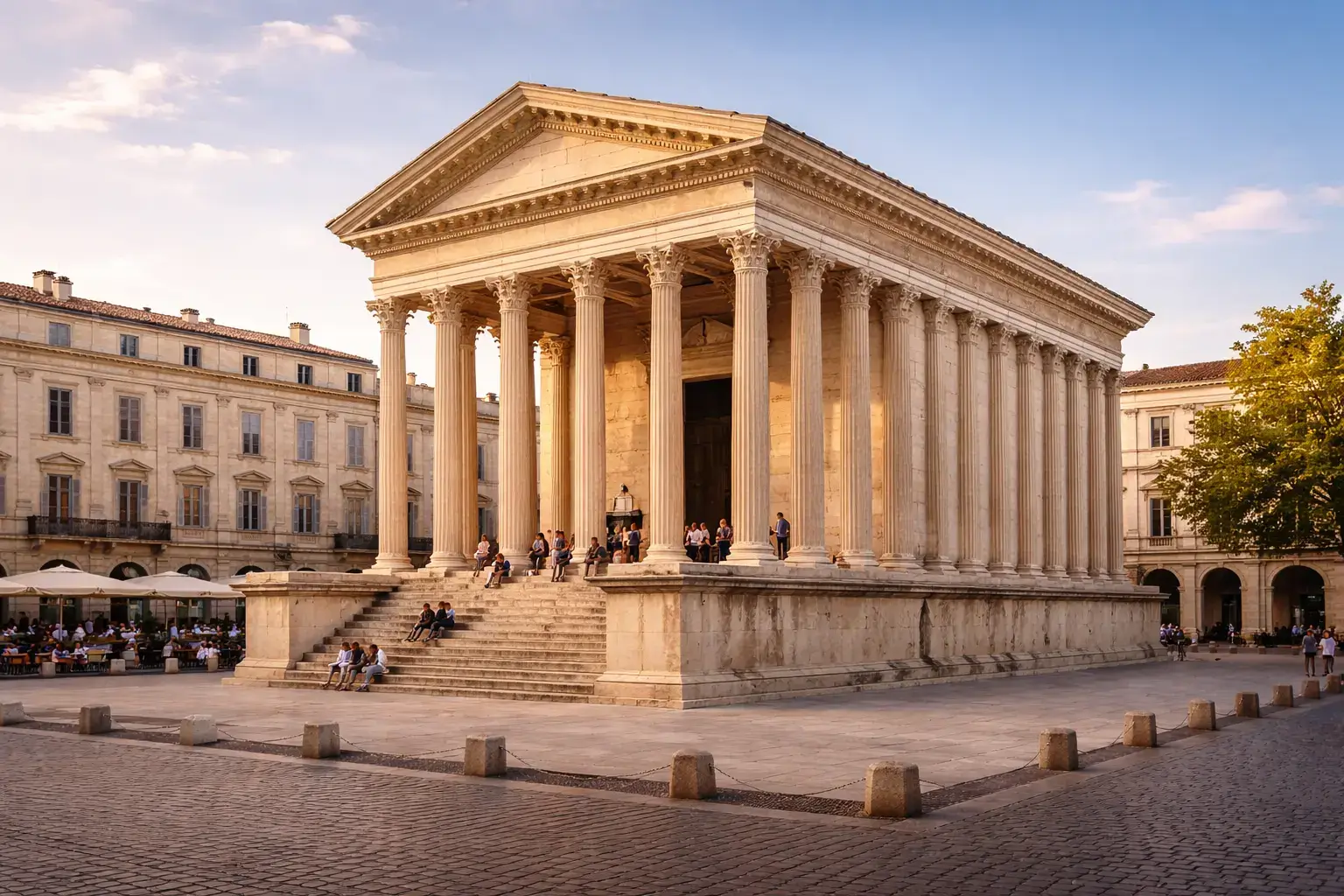
The Maison Carrée in Nîmes is valuable because it provides an exceptionally clear example of Roman classicism in the form of a temple. Its carefully organized front, disciplined use of columns, and strong proportional control demonstrate how dignity can be achieved without the visual density that later periods sometimes prefer. For those studying the style, it serves as an excellent reminder that classical monumentality stems from clarity rather than size.
Another important teaching example is the Temple of Hephaestus, which preserves the logic of Greek temple architecture in a direct and readable way. Its value in an explainer article lies in its ability to help readers compare one canonical Greek expression of the tradition with other buildings that carry similar principles into different contexts. When you look at it, notice how much of the building’s authority comes from regularity and measured repetition.
Later influences are important, especially when considering Andrea Palladio and the traditions that followed him. Although Palladio did not belong to antiquity, Britannica acknowledges his role in spreading Vitruvian ideas to later architectural theory. This helps explain why classical design evolved into a living tradition rather than becoming an isolated archaeological subject. This afterlife is one reason why the style remains so culturally relevant today.
Classical vs Neoclassical Architecture
The comparison behind classical vs neoclassical architecture matters because the two terms often overlap in casual use while referring to different historical situations. Classical architecture first refers to the architecture of ancient Greece and Rome, as well as the principles derived from it. By extension, it also refers to the revival of classical architecture that was especially prominent in the 18th and early 19th centuries, known as neoclassical architecture. The two styles appear related because one consciously studies and reuses the language of the other.
The clearest answer to what is the difference between classical and neoclassical architecture is source versus revival. Classical design is the original Greco-Roman tradition, whereas neoclassical design is a later movement that revived and reinterpreted those forms in a new cultural context. When readers remember that distinction, much of the confusion disappears immediately.
Period and Context
The time frame is the easiest dividing line. Classical architecture belongs to antiquity as a foundational tradition, while neoclassical architecture is mainly associated with the 18th and 19th centuries as a historically conscious return to ancient models. This later revival was no mere coincidence, but rather a deliberate program of renewed classicism shaped by evolving intellectual and cultural conditions.
Design Similarities and Distinctions
Visually, both styles use symmetry, columns, pediments, and measured geometry. The distinction is that classical buildings are part of the original ancient tradition, while neoclassical buildings are later reinterpretations that are more self-conscious and generalized in their relationship to antiquity. This explains why two facades can appear similar even though they belong to different periods in architectural history.
When the Terms Overlap
The terms overlap because people often use “classical” in a broad stylistic sense. For example, in everyday language, a building with columns and a temple front built in a later period may be called classical because it visibly uses classical principles, even though the stricter historical label would be neoclassical or revival. While this flexible usage is common, it is still useful to preserve the narrower distinction when precision matters.
| Aspect | Classical Architecture | Neoclassical Architecture |
| Historical basis | Ancient Greece and Rome | Later revival of classical principles |
| Time frame | Antiquity and foundational tradition | Mainly 18th and 19th centuries |
| Visual logic | Original classical forms | Reinterpreted classical forms |
| Reader takeaway | Source tradition | Revival style |
Why Classical Architecture Still Matters Today
A common question is why is classical architecture important now, when most new construction is not strictly classical. The answer is that its principles of order, readability, and proportion continue to influence how civic authority, institutional seriousness, and architectural dignity are expressed in the West and beyond. Even when a modern building rejects classical detail, it may still inherit classical ideas about symmetry, hierarchy, and visual legibility.
Influence on Civic and Institutional Buildings
Classical language has had an unusual amount of staying power in civic and institutional architecture. Public buildings often incorporate classical elements, such as columns, pediments, and balanced fronts, because they communicate permanence, ceremony, and public order with extraordinary efficiency. This symbolic effectiveness helps explain why classical references remain prevalent in courthouses, museums, memorials, and other settings where visual authority is important.
Influence on Residential and Revival Styles
Its influence also extends into domestic and revival traditions. Thanks to Renaissance classicism, Palladian design, Greek Revival, and neoclassical movements, the classical vocabulary became portable across eras and building types. This allowed later architects to adapt ancient principles to villas, townhouses, estates, and urban fronts. This enduring legacy is one reason why the style cannot be viewed as a mere historical relic.
Why Architects and Designers Still Study It
Designers continue to study classical architecture because it provides a structured approach to composition. That contrast becomes even clearer when set against contemporary architecture, which often approaches form, hierarchy, and ornament very differently. Classical architecture teaches us how parts relate to wholes, how ornament can reinforce structure, and how geometry can make a design legible before the viewer notices the individual details. These principles remain useful even for architects working with different materials and styles.
A helpful contrast between classical and modern architecture illustrates this point. Although modern buildings may reject historical orders and overt classical ornamentation, the question of how to organize massing, hierarchy, rhythm, and visual clarity remains. In that sense, the classical tradition still matters, not because everyone copies it, but because it continues to pose enduring design questions.
In our studio, classical references turn up constantly in client work. We handle everything from 3D exterior rendering of column-fronted façades to precise architectural 3D modeling of capitals, cornices, and entablatures, plus architectural animation that walks a viewer through a portico the way it was meant to be seen.
How to Recognize Classical Architecture in Real Buildings
The most practical way to identify classical architecture in the wild is to read the building in sequence rather than hunting for isolated details. Start with the whole front, then move to the supporting elements, and only then examine ornament. That sequence is especially useful when distinguishing classical buildings from Brutalist architecture, where visual authority comes from mass and material rather than orders and pediments. That method keeps readers from mislabeling any columned building as classical when the larger composition does not actually behave like one.
First, look at the overall symmetry. Classical buildings often have a stable center and balanced major elements on both sides, making the façade appear planned around order rather than picturesque irregularity. Even before you notice a pediment or capital, this larger balance can reveal the building’s style.
Then, take note of the columns or pilasters and determine if they belong to a recognizable system. If the vertical supports appear disciplined, repeated, and connected to a consistent capital type, then they are probably doing more than just adding surface decoration. In classical design, they typically organize the entire facade and link it to an established order.
Next, check the roofline or upper front for a pediment or strong horizontal finish. Classical composition often provides a clear termination to the facade, helping the building appear as a complete front rather than a loose aggregation of parts. This upper discipline is especially important when ornamentation is minimal and the building relies on geometry for its effect.
Then, compare the building’s overall balance rather than obsessing over one detail. A single triangular gable or a few decorative columns do not automatically make a building classical. Instead, a facade that incorporates geometry, hierarchy, and ornament according to the same formal logic is much more convincing. This broader reading method turns vocabulary into actual recognition. The same reading method also helps when identifying other distinct traditions, including desert architecture, where climate and regional response shape the visual language in a very different way.

Turn Ideas Into Visual Stories