Desert architecture is a way of designing buildings for hot, arid climates where extreme heat, intense sunlight, dry air, and limited water shape every design decision. Instead of resisting these conditions, desert architecture works with them through shading, thermal mass, controlled openings, natural ventilation, and climate-responsive materials.
This approach can be seen in both traditional desert houses and contemporary desert buildings. Historic settlements used thick earthen walls, courtyards, windcatchers, and compact urban layouts to stay cool and reduce exposure to the sun. Modern desert architecture follows the same logic while adding advanced glazing, insulation, and performance-based design tools.
Understanding what desert architecture is means looking at how buildings respond to desert climate in practical ways. Orientation, wall thickness, shading systems, airflow, and material choice all work together to improve comfort, reduce cooling demand, and make buildings more resilient in some of the harshest environments on Earth.
Climate Challenges in Desert EnvironmentsClimate Challenges in Desert Environments
Architectural decisions are affected by a unique combination of challenges presented by deserts:
- Daytime temperatures can exceed 45°C, while nights may drop below 15°C, so buildings must limit heat gain during the day and retain warmth at night.
- Direct sunlight can overheat walls and interiors, damaging materials and making the building uncomfortable.
- Rainfall is limited, so construction often needs a strategy for water collection, storage, and efficient use.
- Strong winds can erode surfaces, reduce outdoor comfort, and carry sand into interior spaces.
Most design decisions in desert architecture focus on addressing these challenges. Orientation, massing, wall thickness, shading, and ventilation are all influenced by local climate conditions. For example, reducing exposure on east and west facades helps limit heat gain from low, hard-to-block sunlight. Shaded courtyards and controlled openings are often used to encourage airflow while keeping interiors protected from direct sun and blowing sand.
| Desert climate challenge | Common design response | Why it works |
| Extreme daytime heat and cooler nights | Thick walls, thermal mass, compact building forms | Slows heat transfer during the day and helps stabilize indoor temperatures after sunset |
| Intense sunlight and solar gain | Recessed openings, deep overhangs, screens, shaded courtyards | Reduces direct sun exposure and protects walls, windows, and interior spaces from overheating |
| Dry air and limited water | Water-conscious planning, shaded outdoor areas, drought-tolerant landscaping | Helps reduce water demand and supports more resilient use of exterior space in arid conditions |
| Strong winds and blowing sand | Controlled openings, inward-looking layouts, durable exterior finishes | Improves protection from sand intrusion, erosion, and uncomfortable outdoor exposure |
| Large daily temperature swings | Insulated envelopes, high-mass materials, night ventilation | Helps buildings release stored heat at the right time and remain more comfortable across the full daily cycle |
Core Principles of Desert Architecture
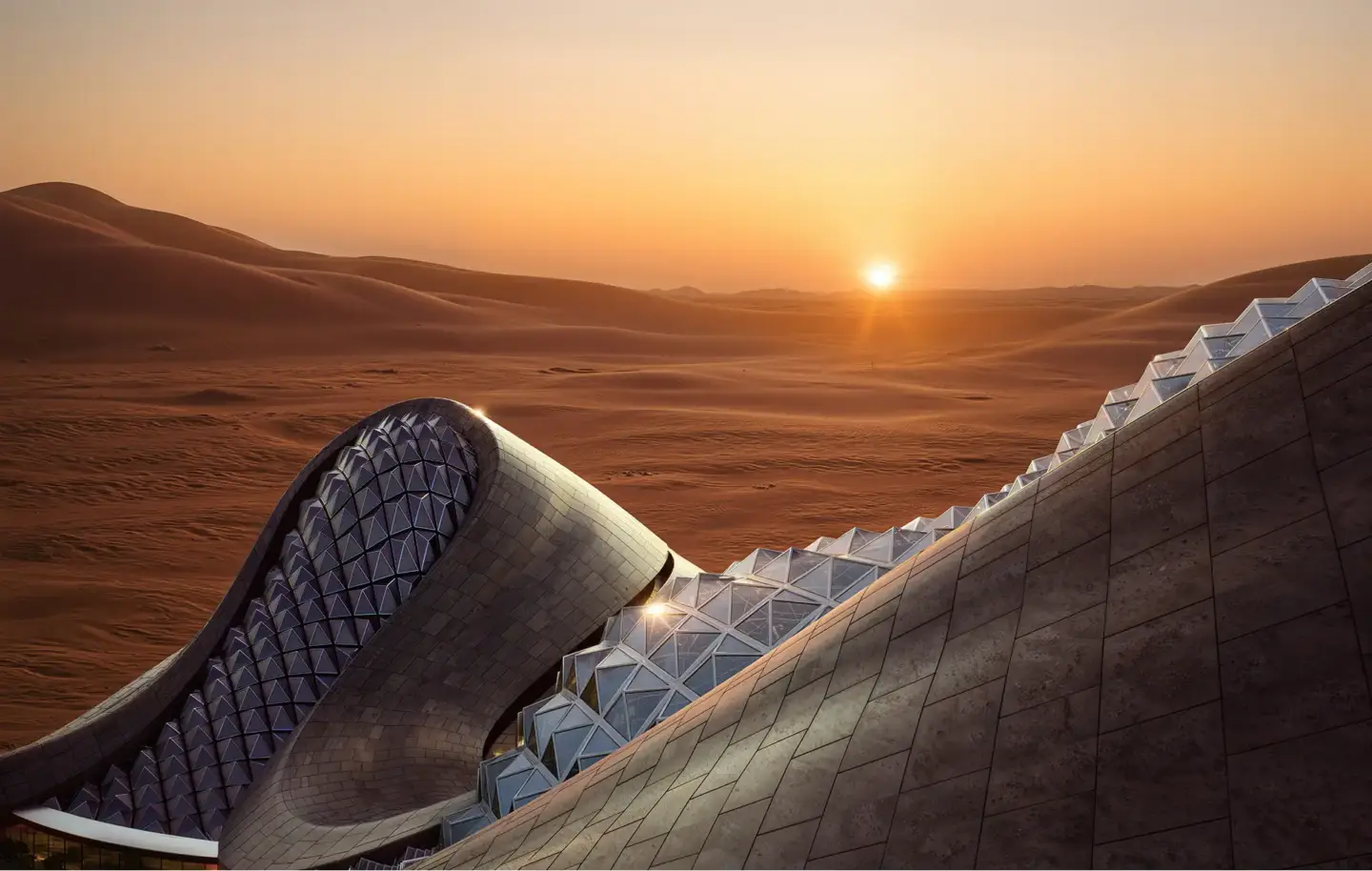
Desert architecture is shaped by a small set of principles that help buildings perform in hot, dry climates. While the exact form varies by region, most desert buildings rely on the same core strategies: limiting solar heat gain, storing or releasing heat at the right time, encouraging airflow, reducing water demand, and using materials suited to extreme temperature swings.
Orientation and Solar Control
One of the most important principles in desert architecture is reducing exposure to direct sun, especially on east and west facades where low-angle sunlight is hardest to block. Buildings are often oriented to control solar gain, while overhangs, screens, recessed openings, and shaded transitional spaces help protect interiors from overheating.
Thermal Mass and Heat Storage
Thick walls made of adobe, rammed earth, clay brick, or stone slow down heat transfer and stabilize indoor temperatures. These materials absorb heat gradually during the day and release it later when outdoor temperatures drop. This thermal lag helps desert buildings remain cooler during peak heat and more comfortable at night.
Shading and Protected Outdoor Space
Shade is essential in desert climates. Courtyards, arcades, pergolas, deep-set windows, and narrow streets create protected zones that reduce direct solar exposure and make outdoor movement more comfortable. In both traditional and modern desert architecture, shaded space acts as an environmental buffer between the harsh exterior and the interior rooms.
Natural Ventilation and Airflow
Air movement improves comfort by removing warm indoor air and drawing cooler air through shaded areas. Traditional desert buildings often used courtyards, high vents, and windcatchers to channel breezes into living spaces. Modern desert homes apply the same principle through controlled openings, cross-ventilation, and carefully planned air paths.
Water-Conscious Design
Because water is limited in arid regions, desert architecture often includes strategies for reducing consumption and protecting outdoor areas from unnecessary evaporation. Compact planning, shaded courtyards, drought-tolerant landscaping, and rainwater collection all reflect the need to treat water as a scarce resource rather than a guaranteed utility.
Climate-Responsive Material Choice
Materials in desert architecture are selected for how they perform in heat, sunlight, wind, and dry air. Durable mineral-based finishes, reflective surfaces, and high-mass wall systems help reduce heat gain and improve long-term resilience. In modern desert buildings, traditional materials are often paired with insulation and high-performance glazing for better energy performance.
Traditional Desert ArchitectureTraditional Desert Architecture
The evolution of architectural design in traditional desert homes is evident through trial and error across generations. These buildings prioritize function over form with compact footprints, minimal exterior exposure, and spatial sequences that guide airflow while blocking sunlight. The logic applies to all architecture, whether for dwellings or civic structures. In arid zones, design serves survival.
Traditional Desert Homes
Buildings in such environments are typically inward-looking and compact. Exterior walls are often plain and thick, minimizing exposure to direct sunlight. Living spaces are organized around courtyards or shaded internal zones rather than open facades. This layout protects interiors from heat while creating calm, usable outdoor space inside the house.
Buildings are closely grouped, reducing exposed surface area and helping neighboring structures shade one another. Windows are usually small and placed higher on walls, limiting heat gain while still allowing light and air inside.
Passive Cooling Logic
In regions such as North Africa, the Middle East, and parts of Iran, traditional homes rely on passive strategies that do not require mechanical cooling. Thick earthen walls made of adobe, rammed earth, or clay have a high thermal mass. They absorb heat slowly during the day and release it slowly at night. This softens temperature swings inside. Roofs are often flat, built with multiple layers of materials that slow heat transfer.
Courtyards and inward-facing spaces are common in many traditional houses. These semi-enclosed areas create shaded outdoor zones that remain noticeably cooler than the surrounding landscape. They also help manage airflow, drawing breezes through the building and improving natural ventilation.
Materials and Spatial Solutions
Local materials like mudbrick and stone are used because they handle heat well. Thick mudbrick walls slow heat transfer and keep interiors cooler during the hottest hours. Light plaster finishes help protect the walls and reflect some sunlight.
In places like Yazd in Iran, cities were designed to reduce heat. Narrow streets and closely built houses create shade, while thick walls and small, high windows limit direct sun. As a result, outdoor spaces and interiors stay cooler.
Windcatchers use natural airflow to cool buildings. These towers catch the wind and guide it inside, often working with shaded courtyards or water to improve ventilation in extreme heat.
Vernacular Urban Form
Cities like the Old Town of Ghadames in Libya exemplify traditional desert urbanism. Its dense, compact layout and narrow streets limit direct sun exposure while helping retain cooler air at ground level. This creates a natural thermal buffer that softens the harsh climate before heat reaches interior spaces.
Adopting a vernacular approach, neighborhoods are treated as climate systems in which shading, wind paths, and material properties work together.
Modern Desert ArchitectureModern Desert Architecture
Unlike traditional approaches, modern desert architecture carries forward the climate logic while integrating contemporary materials, construction methods, and analytical tools.
Evolving Traditional Logic
Contemporary desert homes reinterpret age-old wisdom through precise engineering. While traditional desert buildings relied on intuition, modern architectural design uses climate data to optimize every element, from the angle of a brise-soleil to the thermal properties of rammed earth. This is what defines modern desert architecture: the same climate logic refined through better materials, environmental analysis, and a more contemporary architectural language.
Orientation and shading strongly influence thermal comfort. In the Northern Hemisphere, windows are often recessed and oriented toward the north to capture soft, indirect daylight while avoiding direct solar heat. Overhangs, screens, and pergolas block the harshest radiation while letting light filter into living areas.
That logic can be seen in real contemporary projects across arid regions, where private homes, hospitality spaces, and cultural buildings use deep overhangs, shaded terraces, controlled glazing, and compact forms to stay comfortable in extreme heat. Even when these buildings look minimal or sculptural, their design is usually driven by climate performance first. In that sense, desert architecture often overlaps with broader modern architecture principles, but adapts them to much harsher environmental conditions.
Material and Technology Integration
New materials enhance traditional massing strategies. Insulation, special heat-storing materials, and smart shading help keep buildings cool. Sunshades, whether fixed or adjustable, block heat while allowing soft daylight in.
Digital tools now allow architects to test these strategies before construction. Simulations can show how sunlight, heat, and airflow will affect a building. This lets designers refine walls, windows, and shading to achieve the right balance of comfort, light, and energy efficiency.

Famous Examples of Desert Architecture
Desert architecture is easiest to understand through real buildings. These examples, from ancient mud-brick towns to contemporary climate-driven homes, show the same principles applied across centuries and very different cultures.
- Old Town of Ghadames, Libya — a dense mud-brick town where shared walls and covered, shaded alleys keep streets and interiors cool.
- Yazd, Iran — famous for windcatchers (badgirs) and narrow lanes that channel breezes while blocking direct sun.
- New Gourna, Egypt (Hassan Fathy) — a village that revived Nubian vaults and passive cooling for low-cost desert housing.
- The Great Wall of WA, Australia (Luigi Rosselli) — a 230-metre rammed-earth wall built from local clay and gravel for thermal mass.
- Desert Modernism, Arizona & California — mid-century and contemporary homes with low horizontal lines, deep overhangs, and large shaded glazing.
- AlUla and Saudi desert retreats — contemporary adobe-inspired volumes with courtyards and shaded terraces shaped for extreme heat.
These same strategies guide how we approach exterior rendering and residential rendering for arid-climate projects, where landscape rendering and aerial views help show how a building sits in its setting.
Common Materials Used in Desert ArchitectureCommon Materials Used in Desert Architecture
Material choice plays a central role in desert architecture because surfaces must respond to heat, sunlight, wind, and rapid temperature changes between day and night. Both traditional desert houses and modern desert buildings depend on materials that reduce heat gain, improve durability, and support long-term comfort.
Adobe and Rammed Earth
Adobe and rammed earth are widely associated with traditional desert architecture because they provide high thermal mass and are well suited to hot, dry climates. Thick earthen walls slow heat transfer, helping interior spaces remain cooler during the day and more stable at night.
Stone and Clay Brick
Stone and clay brick are also common in desert buildings because they are durable, widely available in many arid regions, and capable of handling strong sun exposure. These materials are often used in thick wall assemblies that improve thermal performance and reduce direct heat penetration into interior spaces.
Lime Plaster and Reflective Finishes
Light-colored plaster and reflective exterior finishes help reduce surface heat gain by reflecting more sunlight away from the building. In desert climates, these finishes can improve comfort while also protecting wall systems from weathering and erosion caused by wind and sand.
High-Performance Glazing and Shading Systems
Modern desert architecture often combines carefully limited glazing with external shading devices such as screens, louvers, pergolas, and recessed openings. This approach allows buildings to receive daylight while reducing solar heat gain, glare, and cooling demand.
Insulation and Modern Roof Assemblies
Contemporary desert homes frequently use insulation and advanced roof systems to limit heat entering through the building envelope. When paired with thermal mass, shading, and proper orientation, these materials help create more stable indoor conditions and better energy performance in extreme arid environments.
How Desert Buildings Stay CoolHow Desert Buildings Stay Cool
In hot, dry climates, passive cooling strategies are real, proven building patterns. These solutions appear consistently across both traditional desert settlements and contemporary climate-adapted housing.
Similar results were found in research conducted on residential buildings in Saudi Arabia: envelope strategies combining insulation, shading, and glass selection significantly outperformed unoptimized houses under the same climate conditions. This data explains why modern home design increasingly relies on testing and climate performance visualization rather than assumptions.
Compact Massing and Settlement Patterns
In historic desert towns, houses are built close together, often sharing walls. This reduces the total surface area exposed to direct sunlight and creates shaded streets that remain noticeably cooler during the day. Desert housing uses the same logic: compact, attached, sheltered designs that reduce heat exposure.
Shading and Reflectivity
Deep roof overhangs, recessed openings, pergolas, and perforated screens are integrated into the building’s structure. These elements block high-angle sun while allowing diffuse daylight to enter interior spaces. In contemporary homes, this approach appears in brise-soleil facades, layered screens, and deep-set glazing, which serve the same purpose using modern materials.
Parametric studies of desert housing show that lowering the window-to-wall ratio, using high-performance glazing, and installing reflective roofing can substantially reduce cooling energy demand compared to baseline designs.
Ventilation and Airflow
Keeping desert buildings comfortable requires air movement. Courtyards, wind channels, and high vents direct breezes into interior spaces, replacing hot indoor air with cooler outdoor air.
Heat Dissipation at Night
Nighttime temperature drops enable passive heat dissipation. After sunset, stored heat radiates from the thermal mass through the roof vents and open apertures, purging the warm air from the walls and floors. This nightly process prepares houses in the desert for the next day’s thermal cycle.
How Visualization Supports Desert Architecture
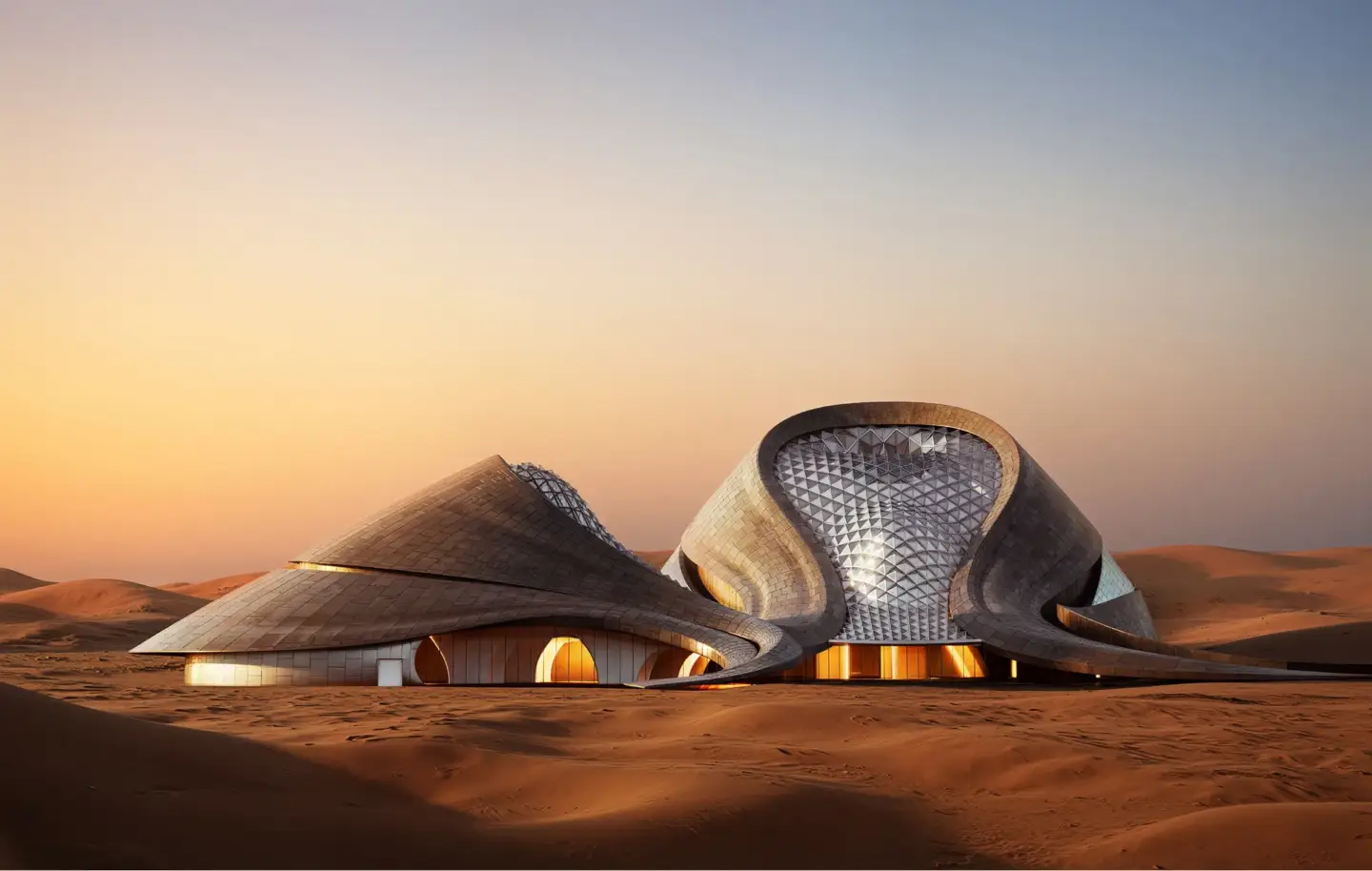
In desert architecture, small design decisions can have a major effect on comfort. The depth of an overhang, the position of an opening, the shape of a courtyard, or the choice of exterior finish can all change how a building handles sun, heat, and airflow. Architectural rendering helps architects study these relationships before construction begins, making climate-responsive ideas easier to test, explain, and refine.
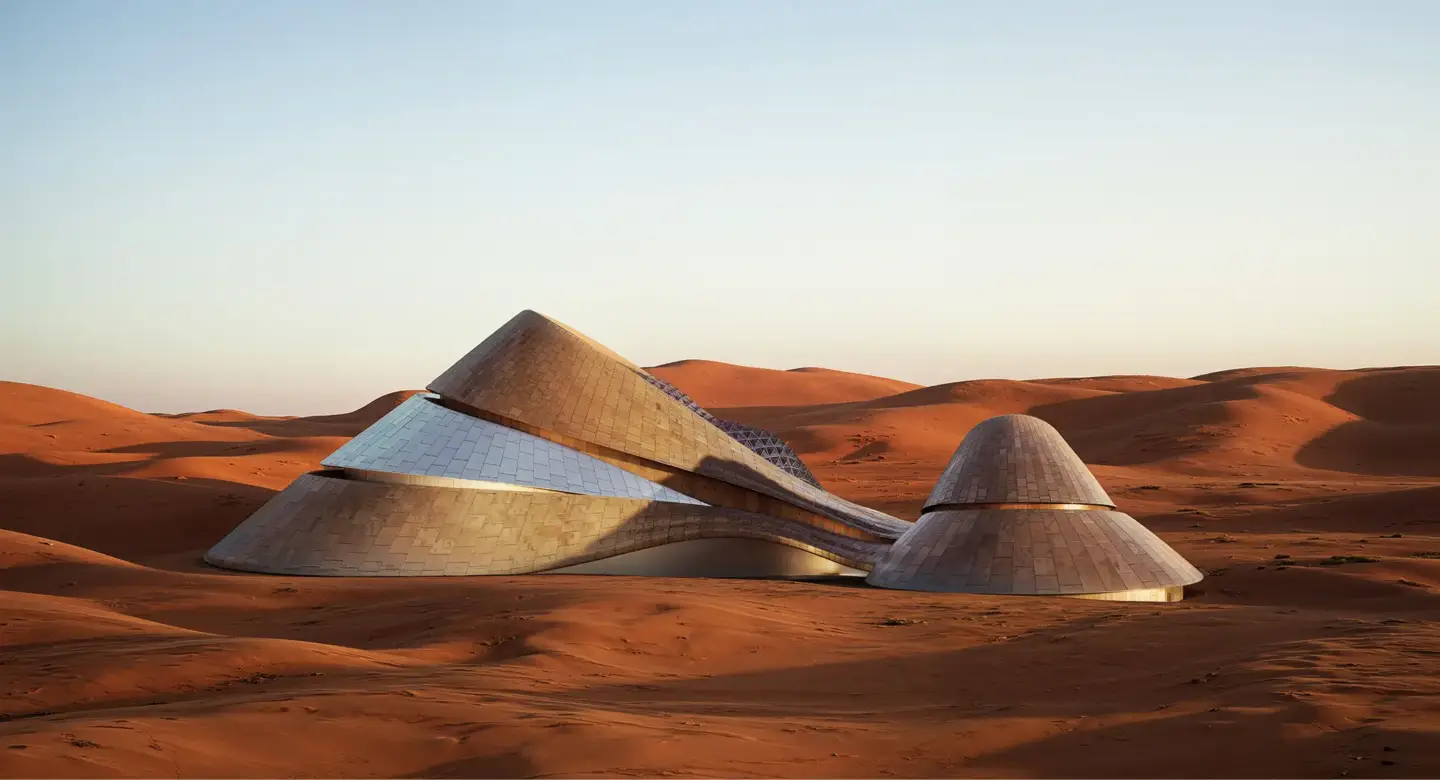
On desert and other extreme-environment projects, the hardest part isn’t photorealism, it’s atmosphere. A technically correct image isn’t enough. The render has to carry the light, the dust, the long shadows, the golden hour. It works like a fast-moving camera that makes a car feel faster: get the atmosphere right and the client finally sees how the space will actually feel.
Alexandr Kasperovich, Co-Founder & CEO
It is especially useful in desert projects because performance is closely tied to form. By modeling sunlight, shading, material behavior, and spatial layout early in the process, teams can make better decisions about how a building will feel and function in extreme conditions. This does not replace good design principles, but it helps apply them with more clarity and precision.
Final Thoughts
Desert architecture is, at its core, a negotiation. Buildings in arid climates can rely on technology to compensate for heat, but the ones that work best are usually the ones designed with the climate in mind from the start.
Shade, thick walls, and the direction a window faces are not decorative choices. In a desert environment, they are what make the difference between a space that feels exposed and one that stays comfortable. A courtyard that catches the evening breeze does something mechanical systems alone cannot fully replace – it helps the building feel connected to its setting.
That is what makes desert architecture so interesting across different cultures. A mudbrick house in Mali and a contemporary home in Arizona may look completely different, yet they are often responding to the same conditions. The forms change, but the logic remains.
When that logic is handled well, the building performs better, stays cooler with less effort, and sits more naturally in the landscape around it.
Two hospitality projects in extreme climates: a desert hotel 3D rendering and a hotel rendering in the Seychelles.

Turn Ideas Into Visual Stories
Free field guide
How to Brief a Style So You Get It Back
Why naming a style transmits almost nothing, the seven measurable variables that actually carry one, and a one-page brief you fill in for any style at all.
If it didn't open, download it here.
Download the PDF