3D pool rendering is the process of turning a pool design into a photorealistic CGI image or animation before anything is built. Using 3D software, artists model the pool, water, deck and surroundings, then light and render the scene so clients can see — and approve — the finished look in advance.
It sits inside the wider field of 3D visualization, applied to one of the trickiest subjects in archviz: water. Before going further, it helps to clear up a naming clash that confuses almost everyone searching for this term.
3D Pool Rendering vs Pool Plaster Render3D Pool Rendering vs Pool Plaster Render
These two terms get mixed up constantly. In construction, a “pool render” is the plaster or cement finish applied to a pool’s physical surface. In visualization, 3D pool rendering means creating a digital image of a pool that does not exist yet. This article is about the second kind — the CGI image, not the plaster.
| Aspect | 3D pool rendering (CGI) | Pool plaster render (construction) |
| Purpose | Show a design before it is built | Finish the pool’s surface |
| Output | Digital image or animation | Physical plaster or coating |
| Stage | Design, sales & approval | Construction |
| Done by | 3D artists / archviz studio | Pool builders / renderers |
| Priced by | Per image or per hour | Per square metre |
How 3D Pool Rendering Works
A pool render moves through the same core pipeline as any exterior CGI, with extra care spent on the water. The typical steps are:
- Modeling — build the pool shell, coping, deck and surroundings in 3D software (we work in 3ds Max).
- Water setup — create the water surface and depth; this is where realism is won or lost.
- Materials — assign tile, stone, decking and water materials with the correct gloss, matteness and reflection.
- Lighting — set the time of day and light the scene; dusk and night shots tend to sell home pools best.
- Rendering & post — render the frames, then refine caustics, reflections and colour in post-production.
What 3D Pool Rendering Is Used For
Pools are rarely commissioned on their own. In practice the work falls into three jobs, and each one solves a different problem.
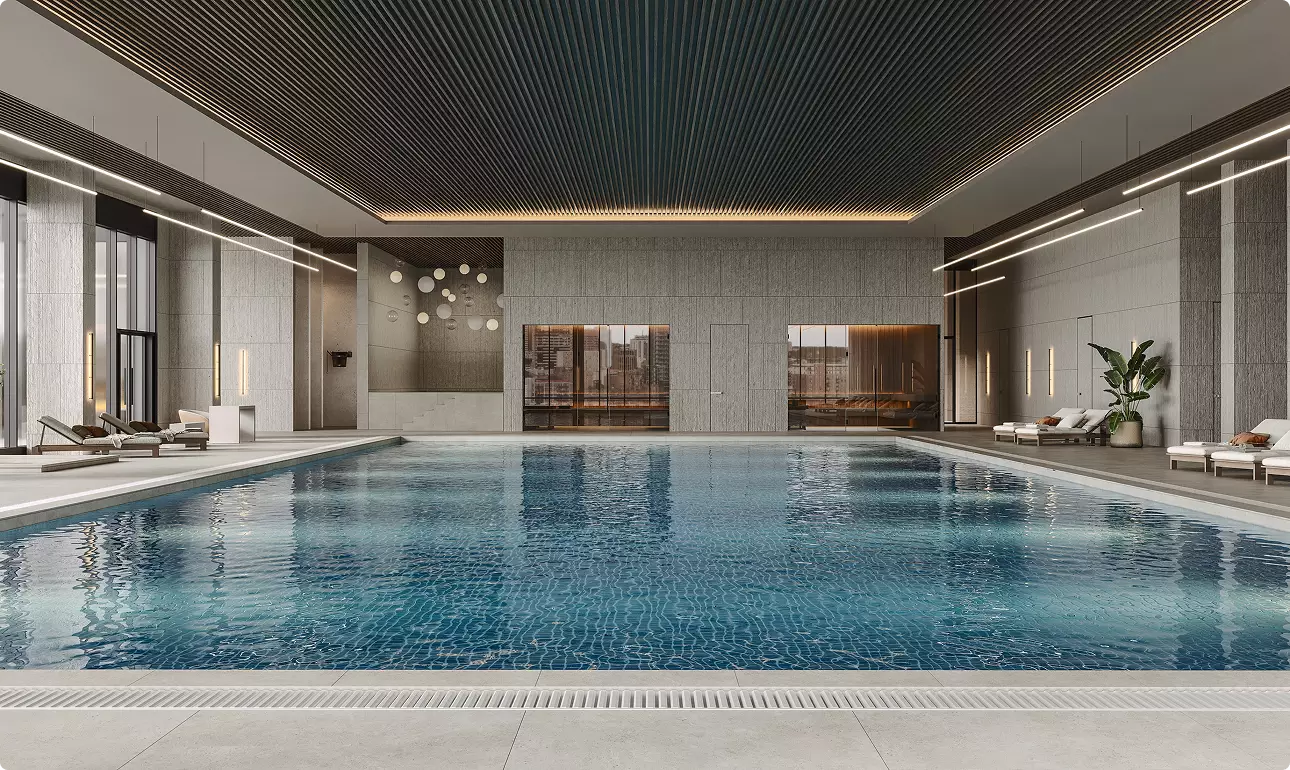
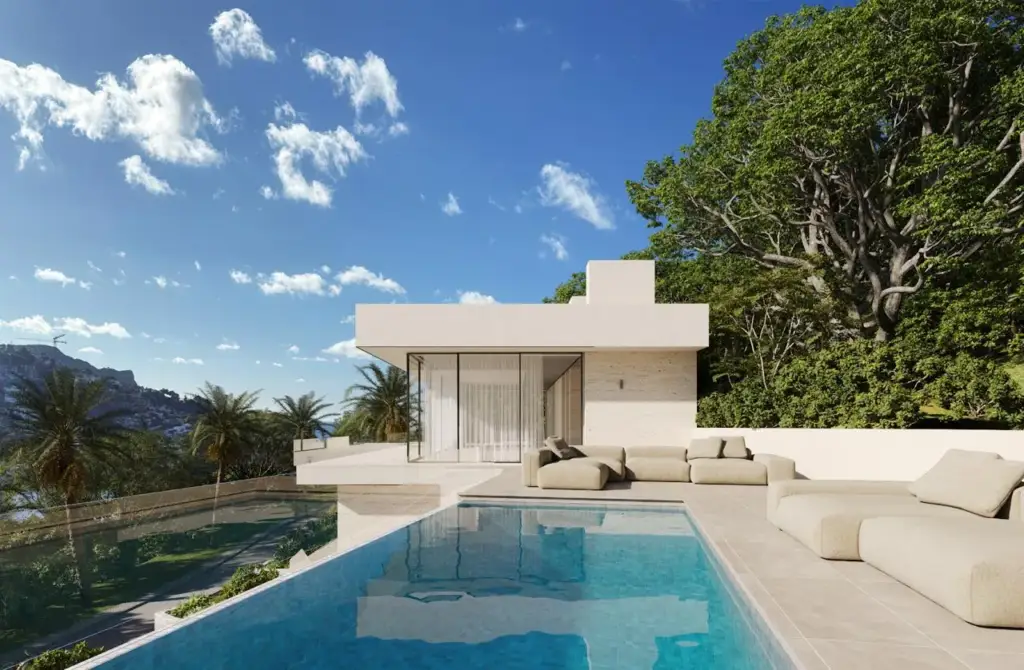
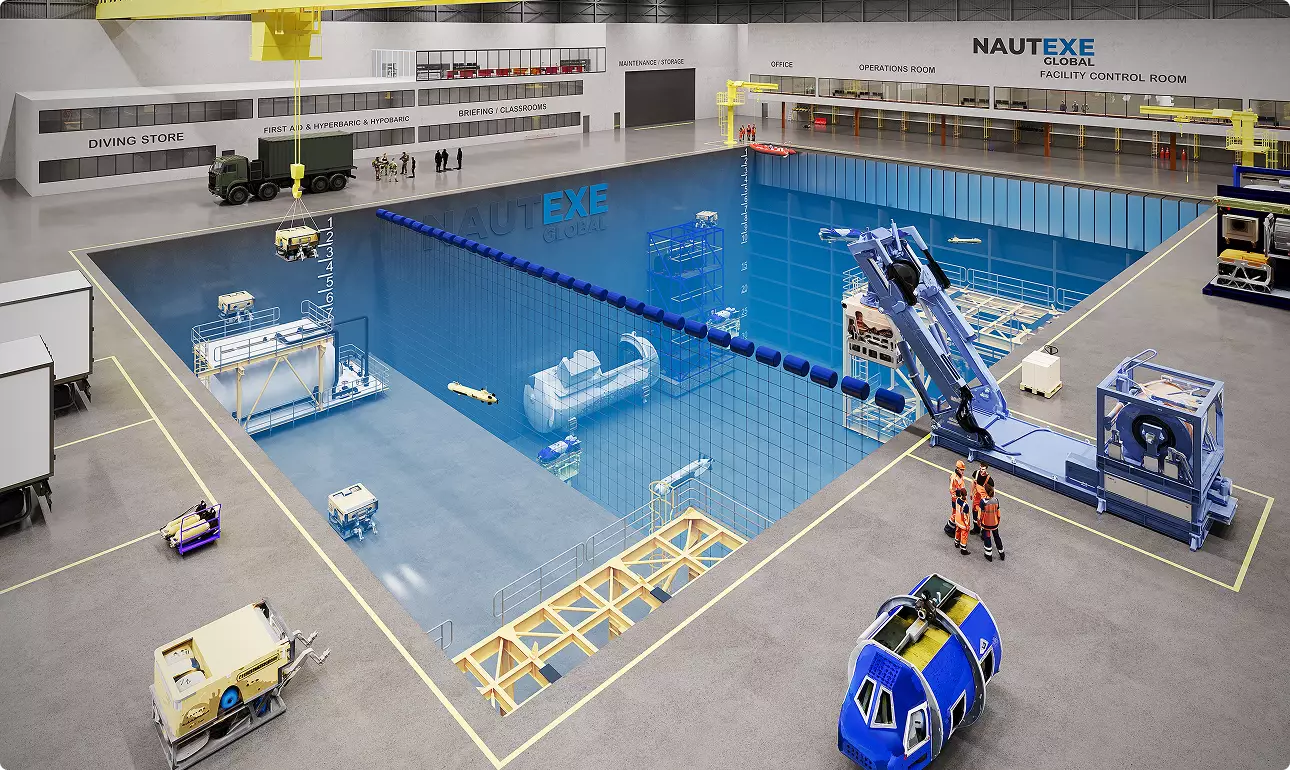
From our studio — We almost never get asked for a pool on its own. It’s one of three jobs. Commercial and sports pools — an Olympic pool, a public training facility — need a beautiful image to pull in buyers or investors. Home pools come as part of the whole exterior, never separate, and there the job is emotion: a sunrise shot, or a lit pool at night. Industrial and research pools are their own story — there we show proportions, depth and the equipment going into the water so a company can raise funding or present to its clients.
Dim Kuzmenko, Maverick Frame
- Commercial & sports pools — a striking image to attract buyers, members or investors.
- Private home pools — sell the lifestyle as part of a full exterior rendering.
- Industrial & research pools — communicate proportions, depth and submerged equipment to raise funding.
- Design approvals — sign off layout, materials and finishes before construction starts.
- Sales & marketing — listings, brochures, investor decks and ads.
Stills, Animation & Virtual Tours: Pool Visual Types
A pool can be visualised in several formats, often combined within one project depending on how the client needs to present it:
- Still images — single photorealistic shots for listings, approvals and brochures.
- 3D animation — a moving walkthrough or flythrough across the pool and deck.
- Virtual tours & 360° — interactive views a buyer can explore on their own.
- Day-to-dusk variations — the same pool shown at different times of day, including a lit night scene.
- Poolscape context — the pool set within full landscape rendering of the grounds.
Why Pools Are Hard to Render Well
The difference between a convincing pool render and a cheap one is almost always the water. Water reads as fake by default — get the surface, depth, caustics, refraction or reflections slightly wrong and the whole image collapses, no matter how good the architecture around it looks.
From our studio — Water is what separates a good pool render from a cheap one. It almost always looks fake first: you build it right in 3ds Max, then push it further with the right tools until the caustics, refraction and reflections read as real water. Without that, even a strong render is ruined by bad water. A cheap contractor will hand you an ugly pool in two hours — flat water, wrong lighting, materials that don’t know if they’re glossy or matte. The same shot done properly over a few days is the one that actually sells.
Dim Kuzmenko, Maverick Frame
What Affects 3D Pool Rendering Cost
3D pool rendering cost is driven by scope, not a flat rate. A pool shown inside a larger exterior scene adds very little — often a single day of work. A complex industrial or research pool, with diving equipment, underwater structures and infrastructure modelled, can take up to a month. Animation, the number of revisions and final resolution push it further.
Studios price pool work either per image or per hour; our pool rendering services start around $39/hour. For full ranges across image types and project sizes, see our 3D rendering pricing guide.
Sports amenities follow the same rules as pools: see this private padel court CGI and a tennis court design.

Turn Ideas Into Visual Stories
Free field guide
Water Is the Hardest Thing in the Frame
What makes a pool render convincing or amateur, the specification to supply before anyone models it, and the tell-tales to check the moment images arrive.
If it didn't open, download it here.
Download the PDF