Neoclassical architecture is a style that revived the symmetry, columns, and temple forms of ancient Greece and Rome from roughly 1750 to the mid-19th century, favoring proportion, restraint, and civic dignity over Baroque drama. It became the era’s most persuasive return to classical design, shaping museums, capitols, universities, and memorials across continents.
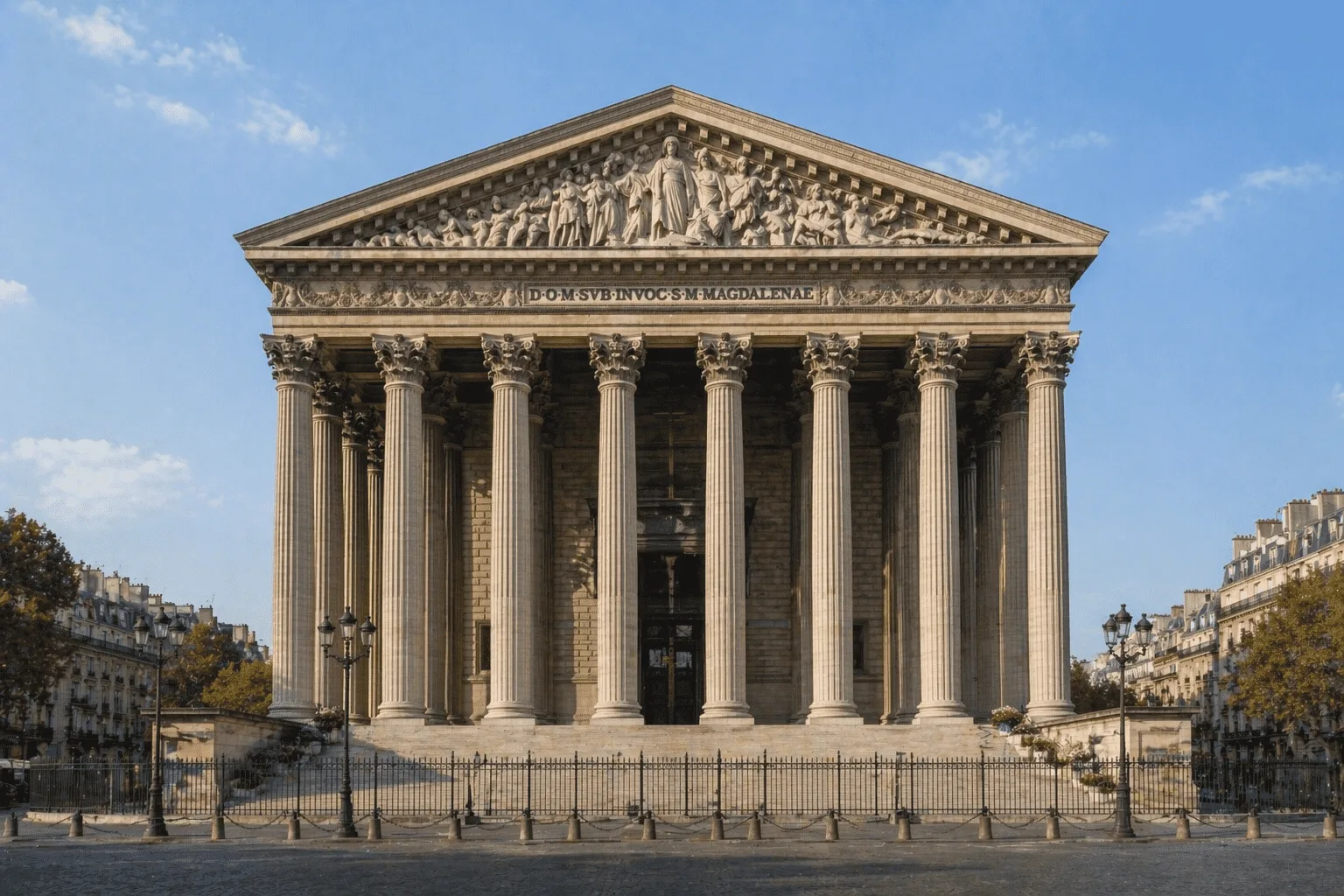
The Pantheon in Paris rises with a temple front, a disciplined colonnade, and a dome that turns ancient precedent into civic spectacle. That visual clarity explains why neoclassical architecture became the most persuasive revival of Greek and Roman design in the late 18th and early 19th centuries. Rooted in classical antiquity and filtered through earlier Renaissance study, it sought permanence, order, and public meaning rather than theatrical surprise. Its name reflects a direct revival of classical architecture.
This guide follows the movement from its intellectual origins to its modern afterlife, showing how a broad classical revival shaped museums, capitals, universities, and memorials across continents. Readers who want a wider context for how it sits among other popular architectural styles can see that its authority comes from proportion, not abundance. What follows is less a style catalog than a map of how ancient ideas kept returning whenever societies wanted architecture to look rational, durable, and legitimate.
Neoclassical Architecture at a GlanceNeoclassical Architecture at a Glance
| Period | c. 1750–1850 (late 18th to early 19th century) |
| Origins | The Enlightenment, archaeological finds at Pompeii and Herculaneum, and the Grand Tour |
| Key features | Symmetry, classical orders (Doric, Ionic, Corinthian), columns, porticoes, domes, pediments, restrained ornament |
| Materials | Stone masonry, marble facing, and stucco scored to resemble ashlar |
| Main types | Temple-style, Palladian, and classical block buildings |
| Famous examples | Panthéon (Paris), Altes Museum (Berlin), British Museum (London), U.S. Capitol, Museo del Prado (Madrid) |
| Related styles | Classical revival, Greek Revival, Federal, Beaux-Arts |
The Historical Context: Birth of Neoclassicism
The rise of Neoclassicism cannot be separated from the Age of Enlightenment, when architects and patrons increasingly treated buildings as arguments about reason, knowledge, and civic life. In that climate, Enlightenment architecture emerged as a fitting expression of order, legibility, and moral seriousness, supported by Johann Joachim Winckelmann’s writing and the renewed authority of Vitruvius. By the mid-18th century, the movement had both a philosophical program and a practical grammar.
Reaction Against Rococo and Baroque Excesses
Seen against late Baroque and Rococo work, the shift is easy to understand. Where those styles often prized motion, layered ornament, and surprise, neoclassical designers argued for classical restraint, with calmer profiles, clearer hierarchies, and flatter wall planes. The result was not blandness but a new seriousness suited to academies, courts, libraries, and reform-minded patrons. It emerged partly as a reaction against ornate Baroque architecture.
Archaeological Discoveries and the Grand Tour
Excavation changed taste as much as theory did. The Pompeii excavation campaigns, together with work at Herculaneum, exposed Roman houses, murals, objects, and construction details that travelers had never studied so directly. Combined with the Grand Tour and published drawings of the Pantheon and the Parthenon, those finds made antiquity feel measurable, portable, and newly available to designers across Europe.
Political and Social Dimensions of Neoclassicism
Form followed politics as much as archaeology. In revolutionary France and the early United States, architectural symbolism mattered because columns, domes, and temple fronts could point to Classical Athens, the Roman Republic, and a public ideal of civic virtue. That is why capitols, memorials, and secular pantheons adopted classical form when new regimes wanted buildings to look lawful, durable, and morally serious.

Defining Characteristics of Neoclassical Architecture
At its best, the style reads as a complete system rather than a box of borrowed motifs. The key lies in classical orders, which organize the relationship between column, capital, entablature, wall, and roofline instead of treating decoration as an afterthought. Greek precedent offered clarity and measure, while Roman precedent added scale, domes, vaults, and a broader civic repertoire.
- Classical orders and columns — Doric, Ionic, and Corinthian columns organize every facade.
- Symmetry and proportion — mirrored plans, central axes, and measured bay spacing.
- Temple fronts, porticoes, and domes — projecting porticoes and triangular pediments crown the entrance.
- Restrained ornament — flat wall planes and clean profiles in place of Baroque excess.
- Durable masonry — stone, marble, and ashlar-scored stucco that signal permanence.
Classical Orders and Their Application
Order selection was never random. Heavy doric columns projected gravity and institutional strength, Ionic capitals introduced a more learned elegance, and Corinthian forms supplied ceremonial richness when a building needed greater splendor. Because the capital announces the order instantly, it became the quickest visual cue for a building’s tone, status, and degree of ornament. Reproducing those orders precisely — fluted shafts, carved capitals, and entablatures — is where architectural 3D modeling proves its value, building each classical element as accurate geometry before rendering or fabrication.
Symmetry, Proportion, and Geometric Clarity
The movement’s calm comes from geometry as much as from ornament control. Designers pursued architectural symmetry through mirrored plans, central axes, repeated bay spacing, and proportional intervals that made a facade feel settled before any sculpture was noticed. Behind that discipline was the Vitruvian belief that beauty emerges when parts relate to a coherent whole, not when details compete for attention.
Materials and Construction Techniques
Material choice reinforced the message. Most major examples relied on stone masonry, stucco scored to resemble ashlar, or marble facing, because weight and finish helped buildings project permanence and tied them visually to Roman precedent. For present-day design communication, 3D exterior rendering services are especially useful for testing how light, shadow, and mass read across porticos, domes, and blank wall planes before construction begins.
The Role of Specific Elements in Neoclassical Design
Temple fronts work because their parts reinforce one another. A portico frames entry, a pediment crowns the composition, a colonnade sets rhythm, and friezes or coffered soffits carry the eye horizontally across the facade. That same layered reading is easier to explain to clients through 3D interior rendering services when ceremonial halls, rotundas, and ceiling depth must be understood before materials are finalized.

Types of Neoclassical Architecture
Under the same classical umbrella, architects developed several distinct approaches. Architectural typology matters here because not every neoclassical building copies a temple outright, and not every facade uses the same degree of archaeological fidelity. Broadly speaking, the movement ranges from temple-front monuments to Palladian houses and more pragmatic block-like public buildings.
Temple-Style Buildings
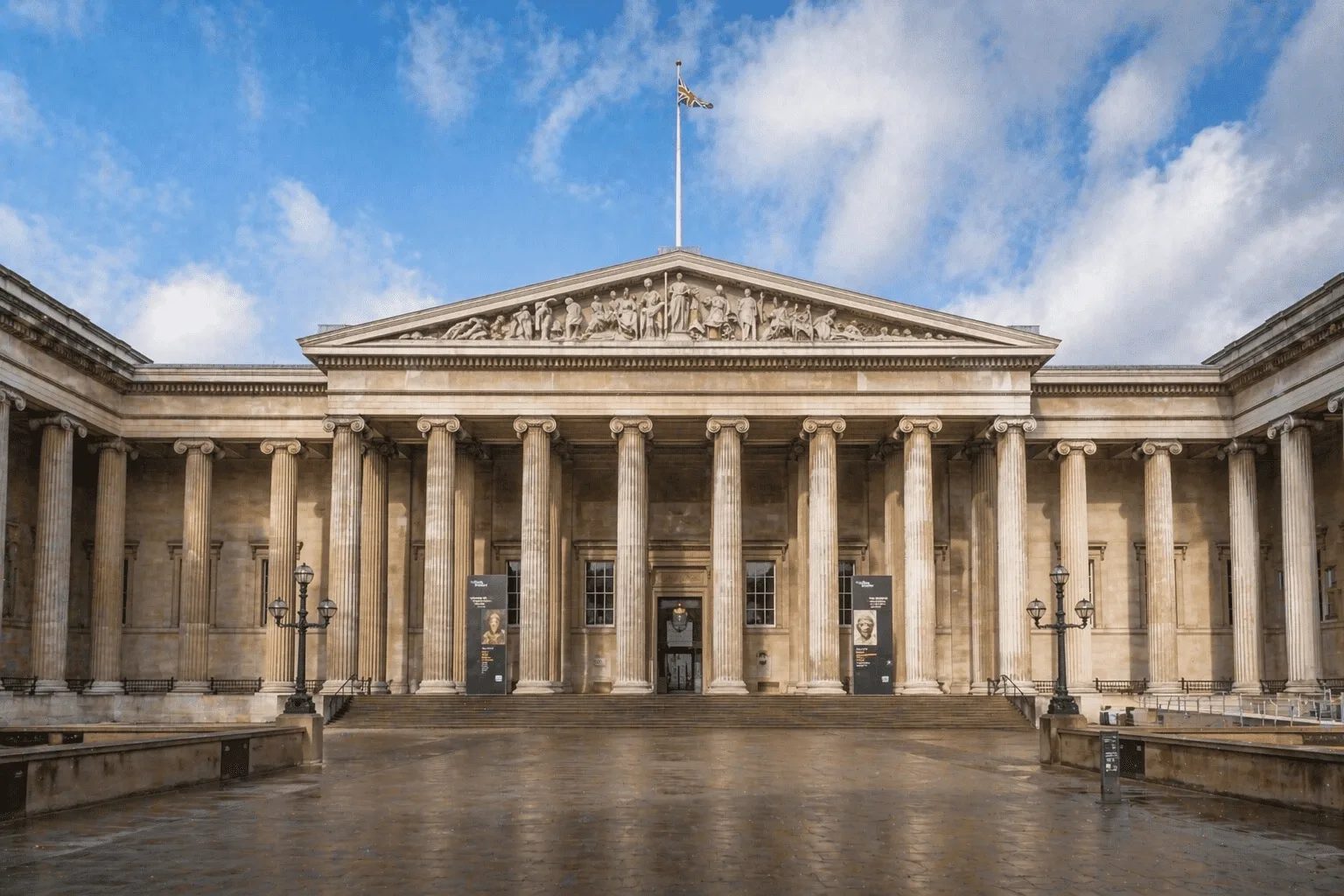
The most legible version is the museum, memorial, or assembly hall that behaves like an ancient sanctuary. These temple facades rely on an elevated podium, a deep portico entrance, and a triangular crown that turns the front elevation into a public emblem. Modern programs expanded behind that front, but the visual promise remained the same, namely solemn purpose announced through a canonical silhouette.
Palladian Buildings
A second line of development came through Andrea Palladio rather than direct excavation alone. Palladian architecture transmitted Roman precedent through Renaissance villas, symmetrical plans, and I quattro libri dell’architettura, a treatise that spread measured classical thinking far beyond Italy. Its legacy is especially strong in Britain and the United States, where the country house and civic villa became ideal vehicles for classical decorum.
Classical Block Buildings
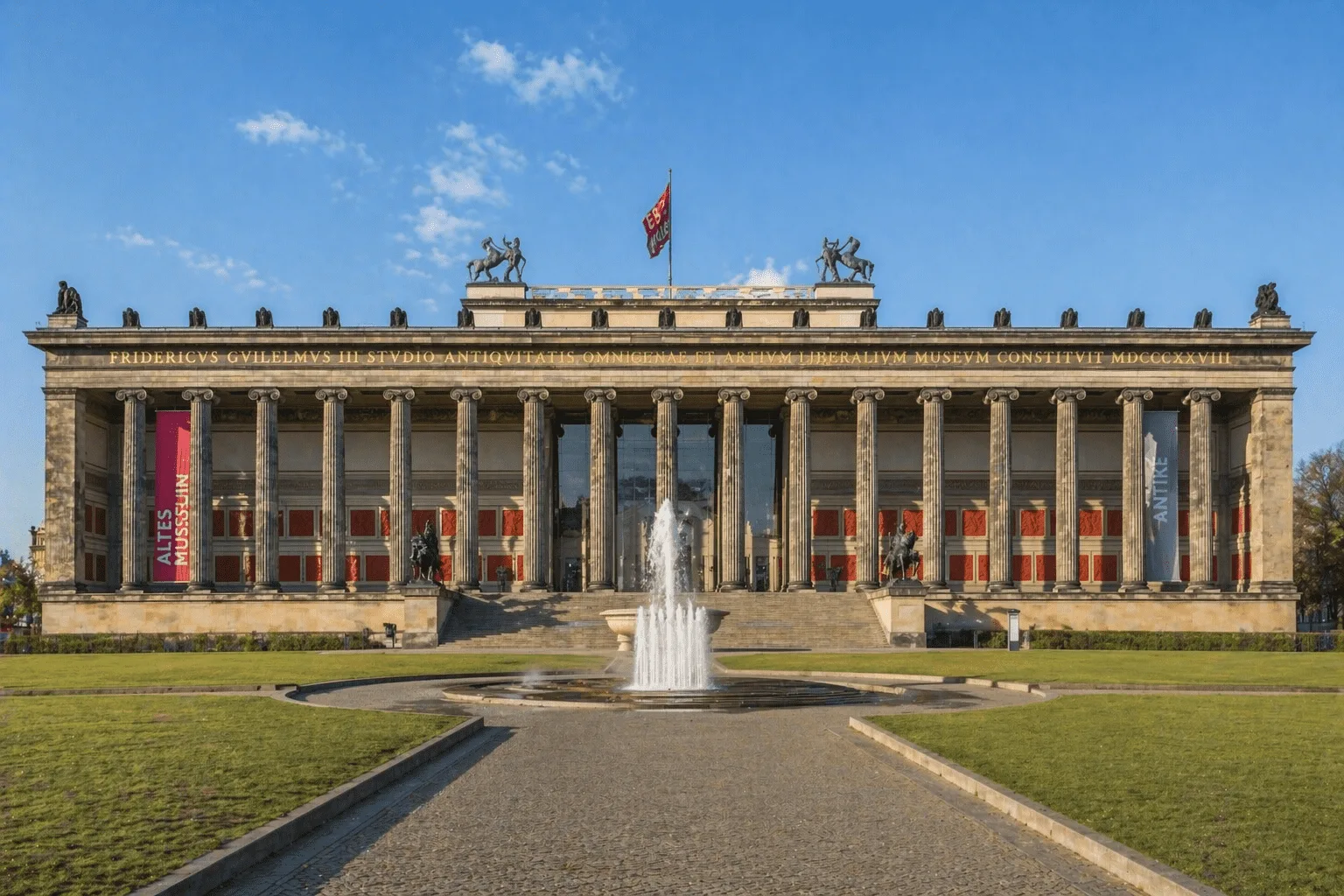
Urban institutions often needed larger and more flexible floor plates than a strict temple model could provide. That practical need encouraged classical block design, in which long rectangular masses used pilasters, rustication, stairs, and measured window spacing to achieve dignity without a dominant portico. Buildings such as the Altes Museum and the Prado show how a disciplined facade can carry classical authority even when the plan is unmistakably modern in scale.
Notable Neoclassical Buildings Around the World
The style’s reach becomes clearest when its best examples are set side by side. From neoclassical monuments and legislatures to museums and university centers, the language proved adaptable enough to serve state power, scholarship, commemoration, and public ceremony. Its global spread also reveals how each culture tuned the same classical grammar to local politics, patrons, materials, and urban setting.
European Masterpieces
Europe produced some of the movement’s most exacting works. European neoclassicism can be read through the Academy of Athens by Theophil Hansen, the Altes Museum by Karl Friedrich Schinkel, the Pantheon in Paris by Jacques-Germain Soufflot, and the British Museum by Robert Smirke, each using classical form to project learning and national ambition. What changes from one country to another is emphasis, with Athens leaning toward Greek refinement, Berlin toward measured monumentality, Paris toward civic grandeur, and London toward scholarly display.
American Neoclassicism
In the United States, classical form became inseparable from the language of government. American neoclassical design shaped the Capitol through a long sequence of authors, including Benjamin Henry Latrobe and Thomas Ustick Walter, while Jefferson’s Rotunda and the later Jefferson Memorial turned Roman precedent into arguments about education, republic, and memory. Because those buildings linked public authority to antique form, they helped make classicism look native to the young republic rather than imported from Europe.
Global Interpretations
Beyond France, Germany, Britain, and the United States, the movement traveled with empire, trade, education, and state formation. Global neoclassicism appears in Spain through Juan de Villanueva’s Prado building, in Latin American congress buildings, and in other capitals where local stone, climate, and craft traditions subtly altered the shared vocabulary. The spread was never uniform, but the appeal was consistent, because classical order promised administrative dignity in places trying to represent modern nationhood.

Neoclassical Urban Planning
The movement did not stop at individual buildings. Neoclassical urbanism extended classical ideas to streets, vistas, and civic ensembles, arranging monuments along axes so that approach, sequence, and public ritual became part of the design itself. In present-day planning work, architectural animation can make that ceremonial movement legible by showing how a person actually experiences a square, stair, or terminating dome in motion.
Monumental Squares and Civic Spaces
Well-composed civic space depends on proportion between built edges and open ground. Public squares in the neoclassical mode use symmetry, frontal building alignments, and focal monuments to create places that feel ordered without becoming visually static. The best examples act like outdoor rooms, where the surrounding architecture sets a collective backdrop for assemblies, processions, and everyday urban life.
Residential Districts and Garden Planning
Domestic planning followed a quieter version of the same rules. In estates and suburban layouts, garden design worked with house symmetry, long approaches, controlled views, and carefully placed outbuildings to frame residence as a center of order within the landscape. That logic came straight from Palladian thinking, where architecture, grounds, and social hierarchy were composed as a single visual system. Communicating that quiet domestic order to buyers today is exactly what 3D residential rendering conveys, presenting symmetry, approach, and setting before construction begins.
Neoclassicism’s Enduring Legacy in Contemporary Architecture
The 20th century did not erase the movement, even when modernists rejected overt historic reference. Contemporary neoclassicism survives because proportion, hierarchy, and civic legibility remain useful long after the heyday of revival styles ended. Beaux-Arts design extended classical planning into the modern city, and later architects kept returning to classical discipline whenever institutions wanted solemnity rather than novelty.
Modern Interpretations of Classical Principles
Successful updates do not copy antique buildings stone for stone. Instead, they use architectural reinterpretation to translate symmetry, base-middle-top hierarchy, and ordered rhythm into stripped forms, contemporary detailing, and materials suited to present codes and budgets. For teams testing those ideas at district scale, 3D visualization for real estate developers can clarify how classical massing reads in relation to streets, setbacks, and neighboring blocks.
New Classical Movement
A more explicit revival also remains active. New classical architecture is supported by schools, publications, and organizations such as the Institute of Classical Architecture & Art, which says it has 15 chapters nationwide and promotes the study and practice of classical design. In professional workflows, 3D rendering for architecture and design studios helps bridge old formal languages and current client expectations without reducing the work to nostalgic pastiche.
Preservation Challenges and Restoration Insights
Endurance is part of the style’s appeal, but endurance is never automatic. Because so many major examples depend on stone skins, carved orders, and load-bearing walls, building conservation for neoclassical work demands both material science and respect for original proportion. The challenge is not merely keeping fabric in place, but keeping the composition legible after weather, repairs, code changes, and altered use.
Common Deterioration Issues in Neoclassical Structures
Most failures begin slowly and then announce themselves at edges and joints. Stone deterioration often appears through cracking, displaced blocks, failing mortar, staining, biological growth, water infiltration, and damage to capitals, cornices, and column bases that carry concentrated stress. Because those failures can be structural as well as cosmetic, preservation work starts with close inspection, material analysis, and long-term monitoring before intervention is chosen.
Balancing Authenticity and Functionality
Use requirements rarely match historic fabric perfectly. Any serious preservation plan has to balance historical authenticity with accessibility, life safety, climate control, and changing programs, ideally through reversible upgrades and minimally invasive routes for new systems. The best projects protect the visual logic of the whole building even when selected parts must be adapted to keep it in active public use.
The Timeless Appeal of Neoclassical ArchitectureThe Timeless Appeal of Neoclassical Architecture
The movement endures because it solves a problem that never fully disappears. Its architectural legacy lies in showing how proportion, ordered structure, and historical memory can turn a building into a public statement about law, learning, and collective identity. Even now, when classical language is being reintroduced to marketing, development, and civic storytelling, 3D rendering for real estate helps translate that old authority into images contemporary audiences can immediately read.

Turn Ideas Into Visual Stories
Free field guide
How to Brief a Style So You Get It Back
Why naming a style transmits almost nothing, the seven measurable variables that actually carry one, and a one-page brief you fill in for any style at all.
If it didn't open, download it here.
Download the PDF