Kitchen renders are photorealistic CGI visuals used to present kitchens before construction, renovation, production, or photography. Photorealistic kitchen renderings help real estate teams and interior designers show a space clearly, while 3D kitchen renders help brands show products in a believable setting. Maverick Frame Studio creates these visuals for interior projects, product marketing, and sales presentations that need polished imagery before the real kitchen exists. Kitchens feature heavily among our interior 3D renders.
This guide explains what kitchen renders are, how they are used, and what makes them look realistic. It also shows portfolio-style examples, practical business use cases, and the inputs needed to start a project. You will also find a clear comparison with photography, agency selection criteria, and a final planning checklist for briefing a studio. A kitchen render is one application of interior rendering.
What Are Kitchen Renders?What Are Kitchen Renders?
Kitchen renders are photorealistic CGI images that show kitchen interiors before a space is built or renovated. They can visualize cabinetry and countertops, then show appliances and lighting in the same scene. They are also useful before manufacturing and before photography, especially when a team needs approval or marketing assets early. Cabinetry and fittings rely on precise furniture rendering.
A kitchen scene can be created from floor plans, sketches, CAD files, product photos, dimensions, or moodboards. The result can support design review and buyer confidence, or it can become a finished campaign visual. In simple terms, kitchen visualization turns planned layouts and product details into images that clients can understand quickly.
Photorealistic Kitchen Renderings: Examples by Maverick Frame StudioPhotorealistic Kitchen Renderings: Examples by Maverick Frame Studio
The strongest kitchen renders do more than show a clean room. They explain a business case, such as selling an unbuilt apartment or launching a faucet before samples arrive. The following examples show how realistic kitchen CGI can support interior design, property marketing, and kitchen product campaigns.
1. Modern Kitchen Render With Island and Pendant Lighting
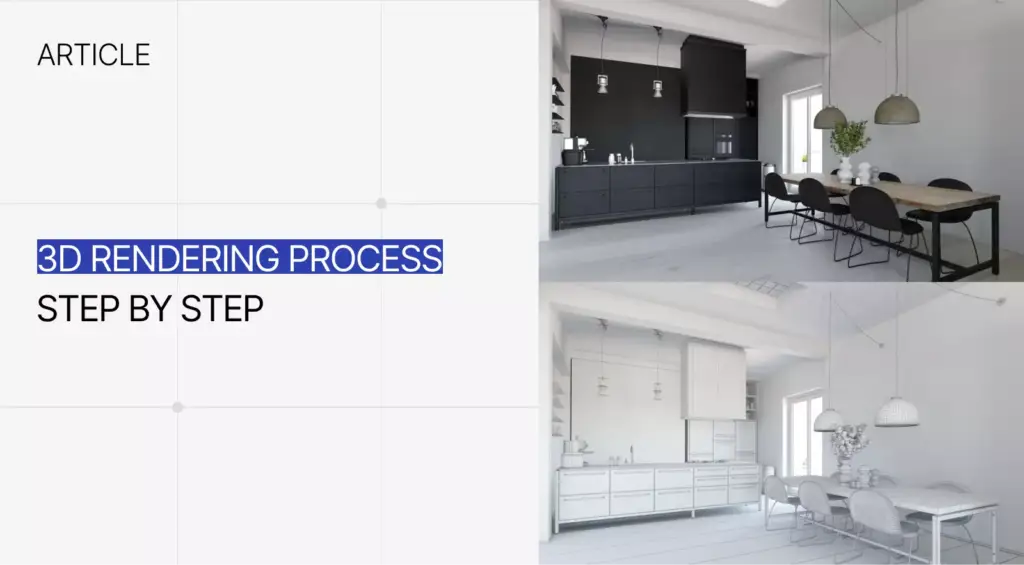
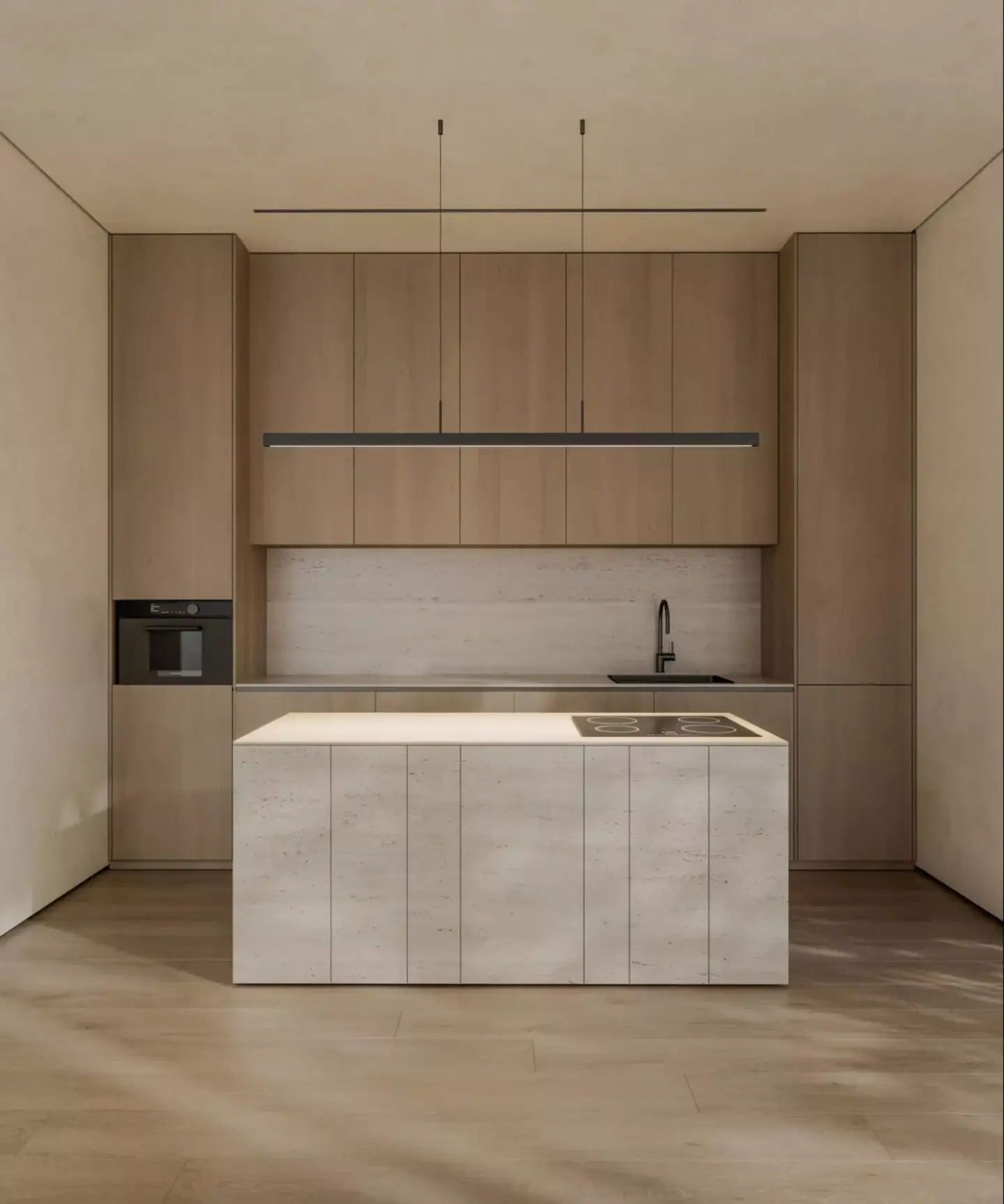
A modern 3D kitchen render can turn a clean layout into a polished visual for review, marketing, or client presentation. This type of kitchen render usually focuses on a kitchen island and pendant lights, while cabinetry and wood flooring give the room a finished residential feel. A photorealistic kitchen rendering becomes convincing when appliance scale, cabinet shadows, and reflected light all feel consistent.
2. Product-Focused Kitchen Render for Appliances or Fixtures
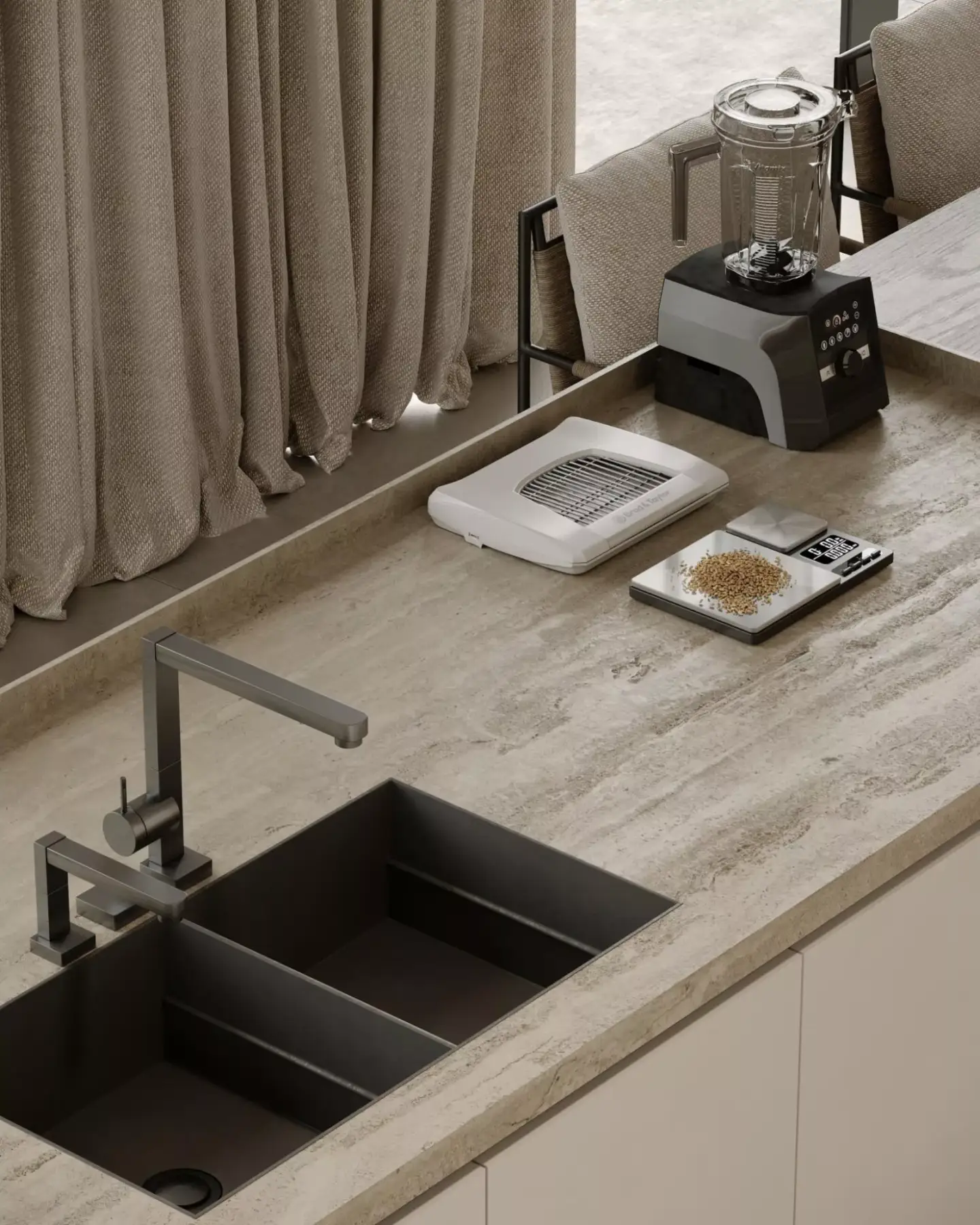
A product-focused render places an appliance or fixture inside a kitchen that matches the brand’s target customer. 3D product rendering kitchen projects often show faucets and sinks in context, then support close-up views for product pages. This approach gives manufacturers a practical kitchen product rendering asset without building a physical set.
3. Open-Plan Kitchen Render for Real Estate Marketing
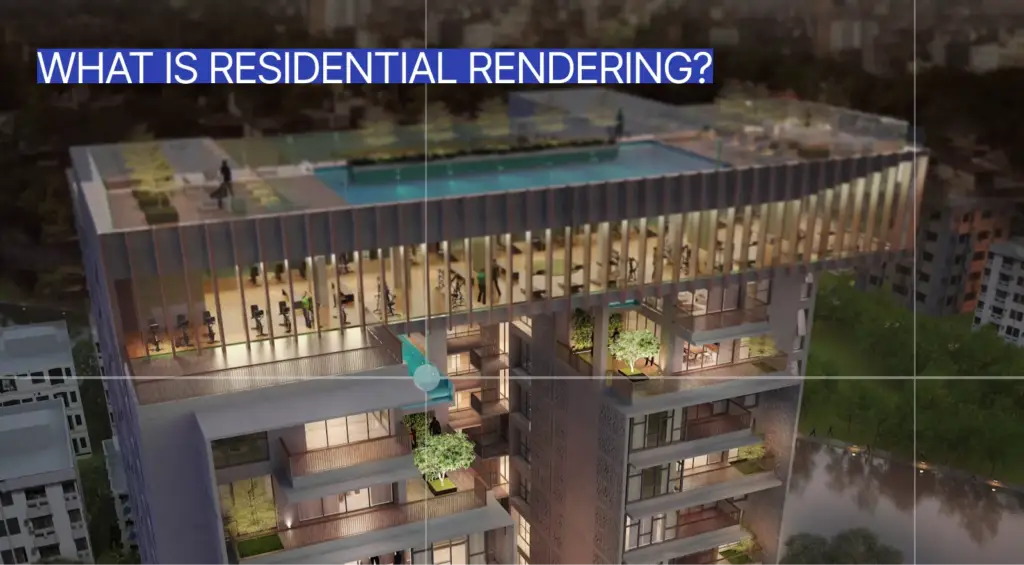
Open-plan kitchen renders help developers show how an unbuilt apartment will feel when cooking and living areas connect naturally. A staged interior can support real estate rendering by turning floor plans into images buyers can judge with confidence. Realism comes from correct circulation, balanced daylight, and lifestyle styling that feels useful rather than decorative.
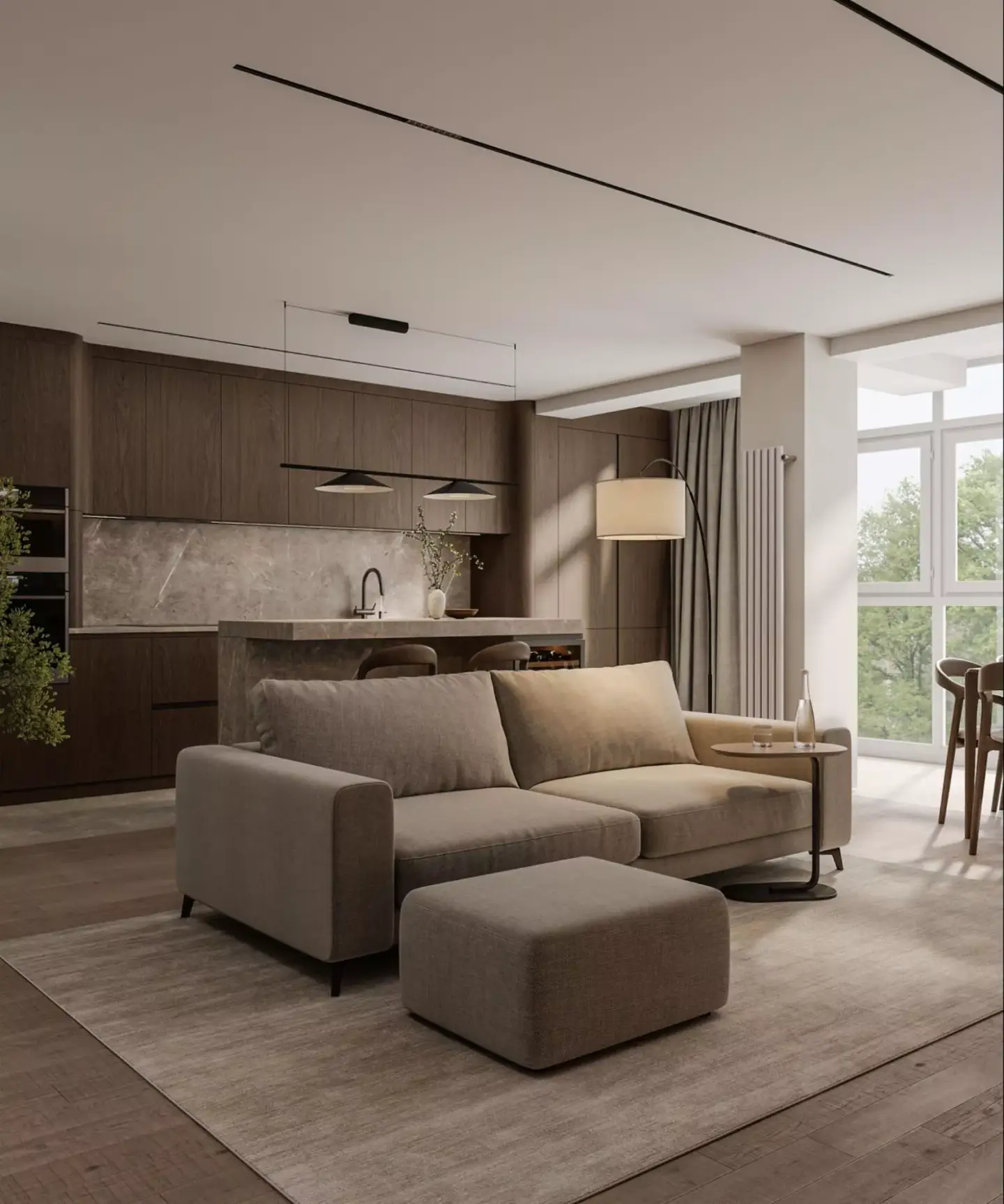
4. Minimalist Kitchen Render With Natural Materials
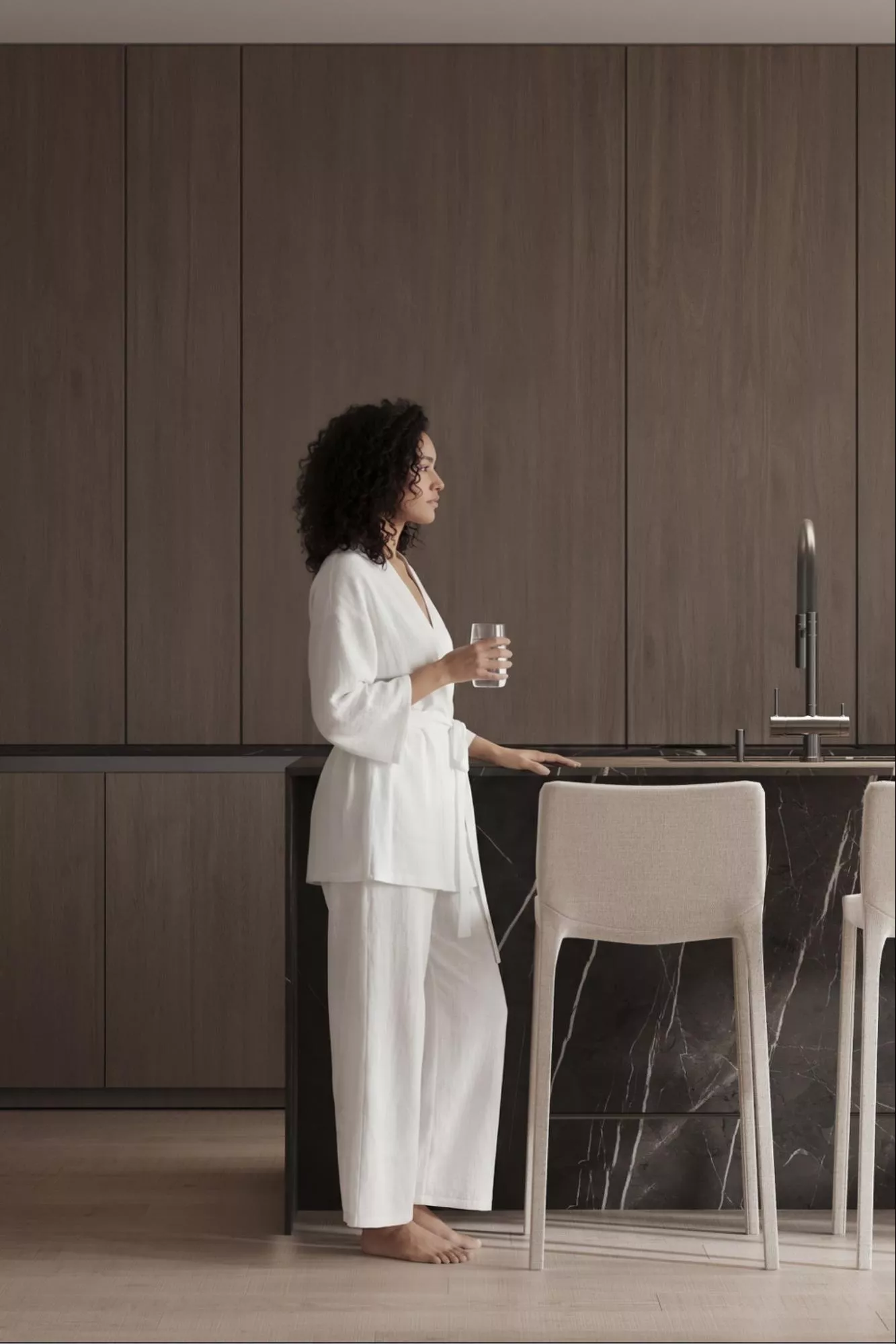
Minimalist photorealistic kitchen renderings depend on restraint because there are fewer decorative elements to hide weak details. Natural wood and stone surfaces need accurate texture depth, while neutral colors need soft daylight to avoid looking flat. This style works well for interior designers and kitchen brands that want calm, material-led imagery.
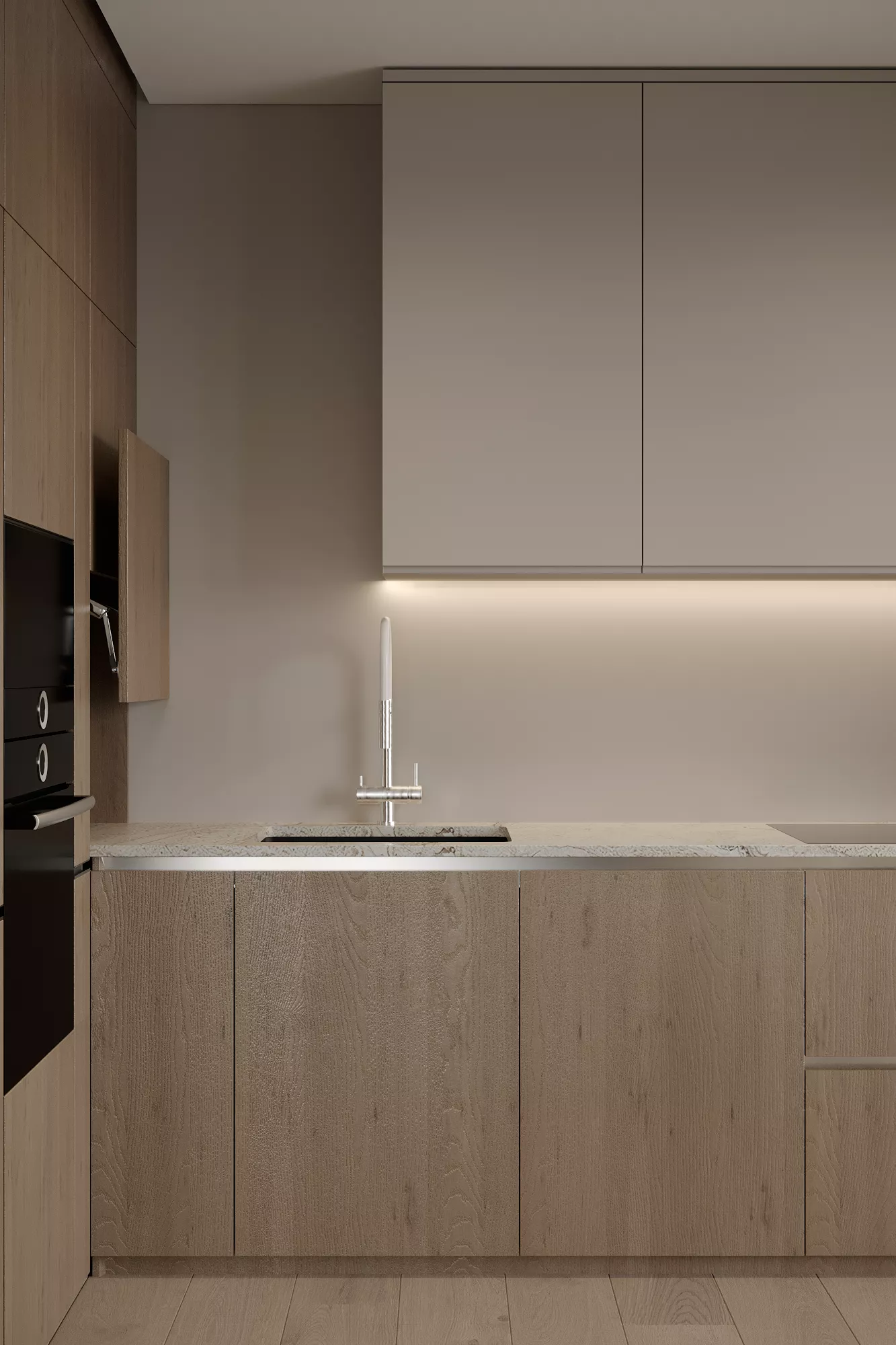
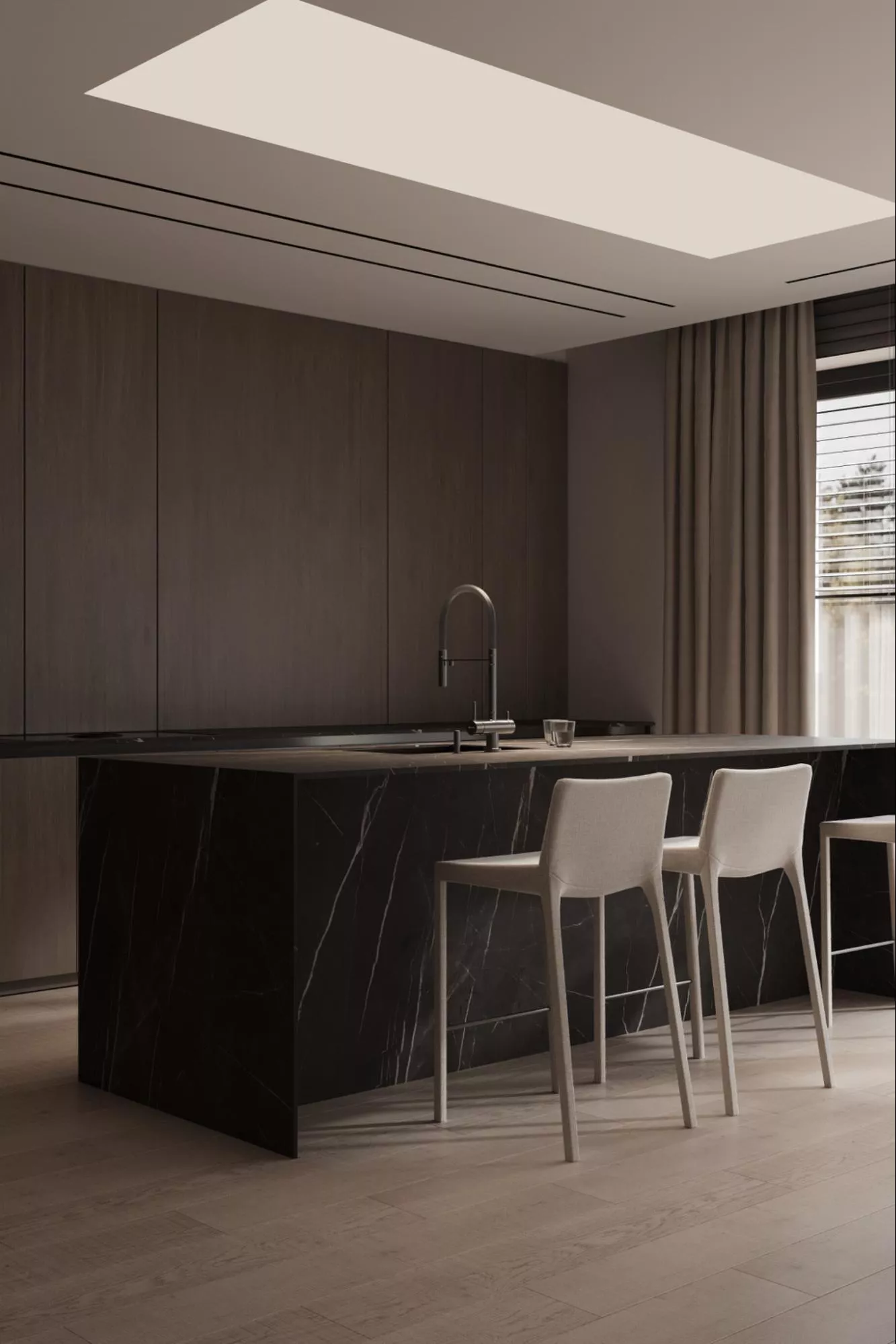
5. Luxury Kitchen Render With Premium Finishes
A luxury kitchen render is built around precision, atmosphere, and premium finish control. Marble and dark cabinetry need careful reflection behavior, while metal accents need enough contrast to feel expensive. These visuals are useful for high-end residential sales and hospitality or commercial rendering concepts where buyers judge value through mood.
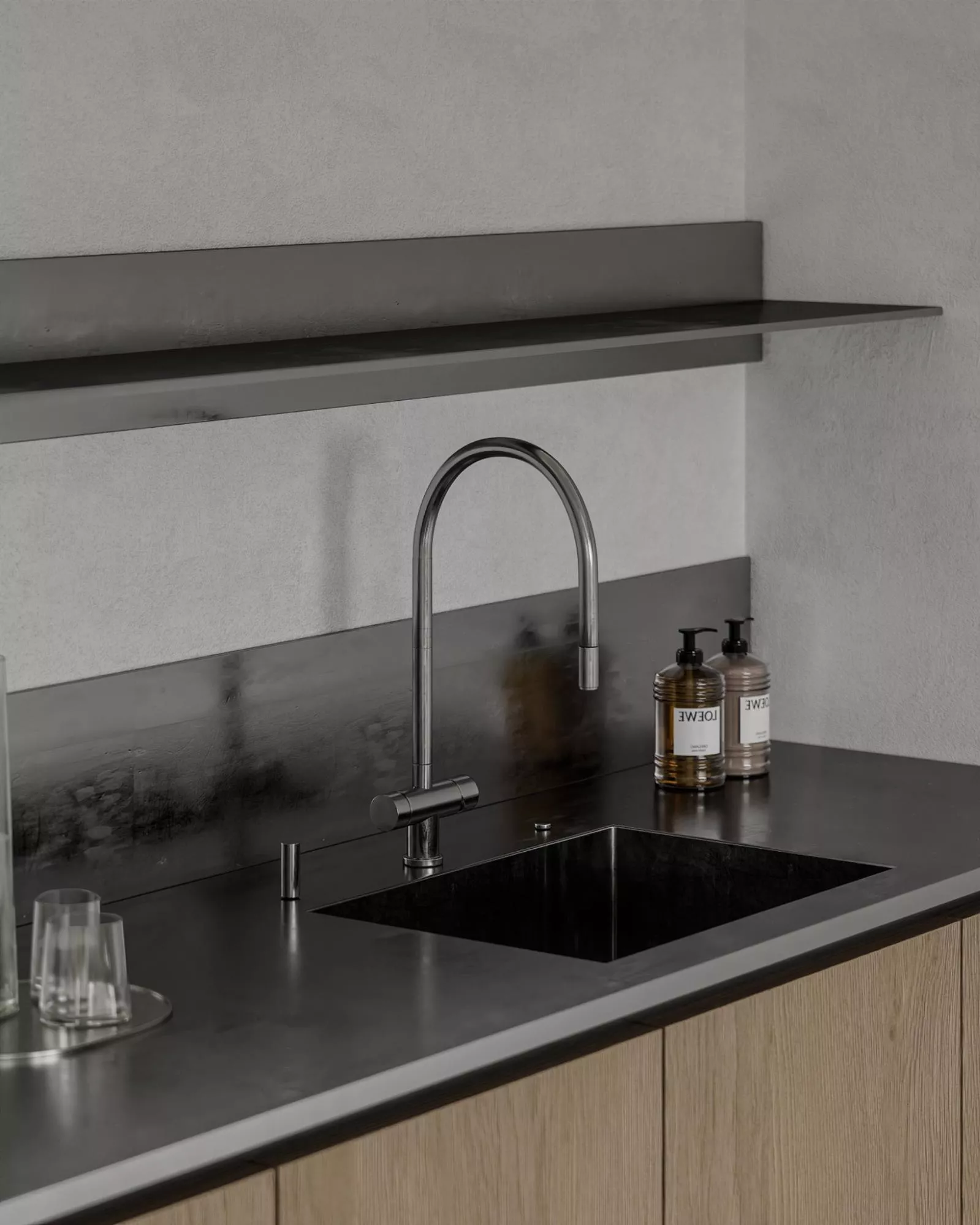
6. Close-Up Kitchen Rendering for Materials and Details
A close-up render helps brands sell the quality of a handle, faucet, cabinet profile, or stone edge. Strong photorealistic kitchen rendering techniques show tiny bevels and realistic reflections, then use texture variation to prevent the surface from looking artificial. This format works for material suppliers and product marketers that need detail-led imagery for catalogs.
7. Lifestyle Kitchen Render for Product Marketing
Lifestyle CGI helps a kitchen brand show products as part of a real daily environment. 3D product rendering for kitchen brands can create website hero images and catalog visuals, then adapt the same scene for ads. It also allows finish variations without repeating a physical photoshoot for every campaign.
For teams planning a product launch, real estate presentation, or interior design pitch, Maverick Frame Studio can create full-room kitchen CGI and close-up product visuals from a clear brief. These assets can be based on references or CAD files, depending on what already exists. The goal is to produce marketing-ready images that help stakeholders understand the kitchen before a physical shoot is practical.
3D Product Rendering for Kitchen Brands
Kitchen brands use 3D product rendering for kitchen brands when products need to be shown before samples, production, or photography are ready. A faucet can appear in a Scandinavian kitchen and a luxury kitchen without rebuilding sets, while an appliance can be shown in different finishes. This makes product rendering services useful for launches, e-commerce pages, and dealer presentations.
Product-in-context CGI is especially helpful when the product must feel integrated, not pasted into a generic scene. Kitchen appliance rendering can show a built-in oven with correct surrounding cabinetry, while product-in-context CGI can place a sink into a realistic countertop. Brands can also create color and material variations before final manufacturing decisions are locked.
Photorealistic Kitchen Rendering TechniquesPhotorealistic Kitchen Rendering Techniques
A realistic kitchen starts with lighting that has a clear purpose. Daylight defines the overall mood, while pendant lighting and under-cabinet lighting add depth. Warm and cool light must be balanced so shadows and reflections feel natural.
Materials need the same discipline because kitchens contain many reflective surfaces. Wood grain and marble need believable scale, while brushed metal and glass need accurate highlights. Interior rendering also depends on cabinet finish accuracy because small surface differences can change the entire mood.
Scale is where many weak renders fail. Appliances need correct dimensions, and countertop height must match real-world use. Furniture spacing also matters because a beautiful image still needs a kitchen that feels comfortable to move through.
Detailed modeling adds the realism that viewers notice subconsciously. Cabinet profiles and handles need slight bevels, while fixtures need enough geometry to catch light properly. Small imperfections help photo realistic kitchen renderings avoid the sterile look of unfinished CGI.
Camera composition should match the marketing goal. Wide shots explain the room, while close-ups sell materials or products. Eye-level views often feel more natural because they resemble how a buyer or client would enter the space.
Post-production should polish the image without making it look artificial. Color correction and contrast refinement improve clarity, while subtle reflection control keeps surfaces believable. The best way to make kitchen renders look realistic is not one trick, but a coordinated workflow.
Why Brands, Designers, and Developers Use Kitchen RendersFrom our studio — in kitchens it is almost never the big things that break a render. It is the small technical stuff: edge banding that does not show on a melamine cabinet, paint texture that is slightly off, the wrong hinges, a toe-kick that sits wrong. Nobody consciously notices any of it, but the eye does, and the whole image starts to feel fake even when you cannot say why. That hidden technical layer is what we check on every kitchen.
Dim Kuzmenko, Maverick Frame Studio
Why Brands, Designers, and Developers Use Kitchen Renders
Brands, designers, and developers use kitchen renders when the final space or product is not ready for photography. CGI can show a renovation before installation, and it can show a development before construction. It can also help a manufacturer market a product before the first physical sample is available.
The commercial value comes from control and speed. A team can test cabinet finishes or countertop materials, then choose the direction that supports sales. Developers can build buyer confidence, while product teams can prepare catalog imagery before launch.
Kitchen Renders vs Kitchen PhotographyKitchen Renders vs Kitchen Photography
CGI and photography both have a place in visual marketing. Photography is powerful when a finished space exists and the goal is editorial authenticity. Kitchen renders vs photography becomes a practical decision when the kitchen is unbuilt, the product is unavailable, or many variations are required.
| Criteria | Kitchen renders | Kitchen photography |
| Physical space required | Not required | Required |
| Product required | Optional | Required |
| Variations | Efficient across finishes | Often costly |
| Lighting control | Fully controllable | Site and crew dependent |
| Best for | Pre-launch work and many variations | Built spaces and editorial shoots |
A CGI product rendering vs physical photoshoot decision should not start with which method is better. It should start with what exists, what must change, and how many assets the campaign needs. CGI is strongest before production and variation-heavy campaigns, while photography is strong when the finished kitchen can be styled on site.
How to Choose a 3D Kitchen Renders AgencyHow to Choose a 3D Kitchen Renders Agency
A strong 3D kitchen renders agency should understand more than attractive room styling. It needs a relevant kitchen and interior portfolio, plus the ability to work from CAD files or product references. The studio should also show strong material realism and a clear revision process.
Look for experience across real estate and product marketing because each use case needs different image logic. Full-room interior kitchen rendering explains layout and atmosphere, while close-up product rendering sells details. A relevant residence rendering success story can also show whether the studio understands mood, materials, and decision-stage presentation.
Maverick Frame Studio can create kitchen renders for full interiors, product close-ups, and campaign visuals. A capable kitchen rendering studio should also understand brand positioning and e-commerce needs. That matters because a beautiful image still has to support sales, approvals, or launch communication.
What We Need to Start a Kitchen Rendering ProjectWhat We Need to Start a Kitchen Rendering Project
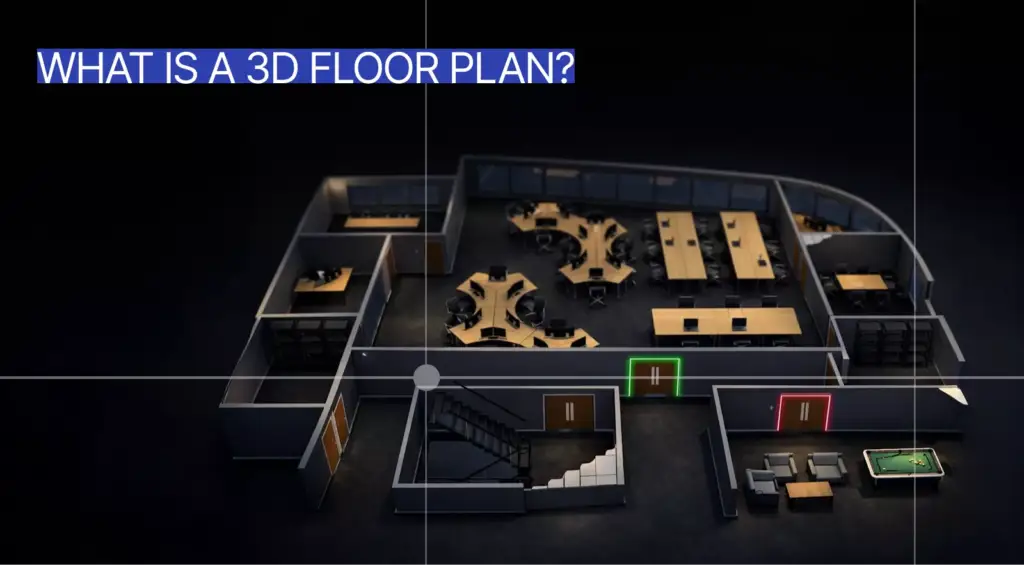
A kitchen interior project can start with floor plans and elevations — the same source files we use for 3D floor plan rendering — then move faster with material references and camera preferences. Sketches and moodboards help define the desired atmosphere, while appliance references help control scale. CAD files are helpful, but they are not always required for 3D kitchen rendering work.
For product rendering, the strongest inputs are CAD files and product dimensions. Product photos and material references help the CGI team reproduce finishes accurately. Brand guidelines and output needs help shape the final image set for websites, catalogs, or ads.
| Project Type | Helpful Inputs |
| Interior or real estate kitchen visual | Floor plans, elevations, moodboards, material references, appliance references, camera preferences |
| Product-led kitchen visual | CAD file, product dimensions, product photos, color options, brand guidelines, output formats |
Clear briefing reduces revision time and improves the first preview. It also helps the team decide whether the project needs a full-room scene, close-up detail shots, or a broader visual set. For project planning, you can contact Maverick Frame Studio with the files and references already available.
If you need kitchen renders for real estate, interior design, product marketing, or e-commerce, Maverick Frame Studio can turn plans and product details into photorealistic CGI visuals. The same workflow can support websites and catalogs, then extend into campaign imagery. It is a practical way to present kitchens before construction, production, or photography is ready.

Turn Ideas Into Visual Stories
FAQ about kitchen renders
What are kitchen renders?
Kitchen renders are photorealistic CGI images that show kitchen interiors, layouts, appliances, and materials before a space is built or photographed. They help designers, developers, and product brands present ideas clearly. They are useful for approvals, sales, and marketing when physical assets are not ready.
What is the difference between kitchen renders and kitchen photography?
Kitchen photography requires a finished space and physical products. Kitchen renders can be created before construction, production, or renovation is complete. CGI also makes it easier to create variations of materials, camera angles, and product configurations.
How long does a 3D kitchen rendering take?
Most kitchen renders take about 3–5 business days for a single photorealistic view and roughly 1–2 weeks for a full campaign set. The exact timeline depends on the number of views, level of detail, input quality, and how quickly revisions are approved.
How much does a photorealistic kitchen rendering cost?
A photorealistic kitchen render usually costs from about $250 per image, with most full-room interior views in the $400–$900 range; close-up product shots can be lower and large luxury or campaign sets higher. See our 3D rendering pricing guide for full ranges.
Can 3D product rendering be used for kitchen appliances and furniture?
Yes, 3D product rendering can be used for appliances and furniture. It is also useful for faucets, sinks, cabinetry, and lighting. Products can appear in realistic interiors, close-up views, product pages, and campaign visuals.
What makes a kitchen render look photorealistic?
A kitchen render looks photorealistic when lighting and materials behave naturally. Correct scale and detailed modeling make appliances, cabinetry, and furniture feel believable. Realistic reflections and subtle imperfections help the image avoid an artificial look.
Do you need CAD files for kitchen rendering?
Do you need CAD files for kitchen rendering depends on the project type. CAD files are helpful for products, cabinetry, and precise architectural spaces. Many projects can still begin with sketches, photos, dimensions, moodboards, and a clear visual brief.
What software do you use for kitchen renders?
We create kitchen renders in 3ds Max with Corona Renderer, the studio standard for photorealistic interior CGI. The tools matter less than disciplined lighting, accurate materials, and correct scale — that is what actually makes a kitchen look real.
Can you render kitchen cabinets and cabinetry in 3D?
Yes. We model cabinet doors, handles, edge profiles, hinges, and finishes individually, so close-ups of cabinetry and countertops stay believable. Accurate edge banding and material texture are what keep cabinet renders from looking fake.
What is the difference between a kitchen render and kitchen design software?
Kitchen design software gives you a quick DIY layout or planner view, while a kitchen render is a photorealistic, marketing-ready CGI image produced by a studio. Design tools help you plan a space; renders help you sell or present it before it exists.