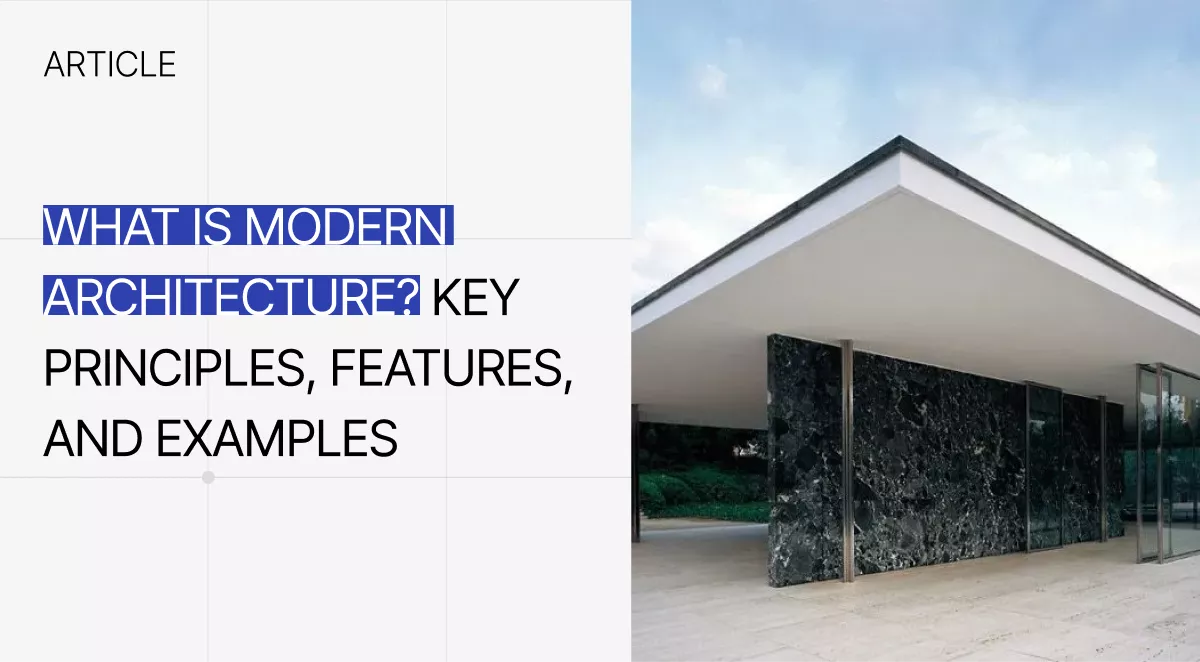
Modern architecture is a design movement that started in the early 20th century. It rejected heavy ornamentation in favor of function, clarity, and new construction methods. If you want to define modern architecture simply, it’s an approach that treats a building as a practical, honest object shaped by use, structure, materials, and light rather than by historical decoration.
That basic idea might sound simple, but the movement changed how people built houses, offices, schools, and cities. It brought in cleaner forms, open planning, structural innovation, and a different visual language from older revival styles. This also led to a bunch of buildings that people now think of as examples of minimalism and glass-and-steel design. That is one reason modernist architecture is still closely tied to 3D exterior rendering services when architects and developers need to communicate form, massing, and material clarity before construction.
This guide will tell you what modern architecture is, where it came from, what principles support it, how to recognize it, which projects define it best, and how it differs from contemporary architecture.
What Is Modern Architecture?
The term refers to a historically specific movement rather than to anything recent. So, when we talk about modern architecture definition, we’re usually referring to work that came about in the late 1800s, really hit its stride in the early 1900s, and had a major impact on architecture through the 1960s in different forms.
The idea was that design should be based on purpose, construction, and modern life. Instead of just copying classical columns, Gothic ornament, or decorative facades from earlier periods, architects focused on efficiency, geometry, proportion, and the expressive use of industrial materials.
To define modern architecture accurately, we’ve got to separate it from the everyday meaning of the word “modern.” When it comes to architecture, modern doesn’t just mean current. It’s connected to modernism, industrialization, social change, and a clear break from the ornate styles of the past. That historical focus also explains why architects today rely on 3D modeling to study and communicate proportion, structure, and spatial detail, making modernist logic easier to analyze and present before anything is built.
History of Modern ArchitectureHistory of Modern Architecture
The story starts when industrial production changed the materials and expectations. Steel frames, reinforced concrete, large sheets of glass, elevators, and new engineering methods made it possible to design spaces that older masonry systems couldn’t easily support.
At the same time, cities were growing fast, and architects were looking for a language suited to new housing needs, factories, offices, schools, and public buildings. Modernism architecture came about as both a practical response and a philosophical one: a building should reflect its time, not imitate the past.
This change was especially noticeable in Europe and the United States during the early 1900s. By the middle of the 20th century, modernism in architecture had spread all over the world through schools, exhibitions, publications, corporate construction, and postwar rebuilding.
Why Modern Architecture EmergedWhy Modern Architecture Emerged
Modernism architecture came about because the old design formulas just weren’t cutting it in the new reality. Industrial progress, urban expansion, mass production, and changing social expectations meant that we needed buildings that were faster to construct, easier to use, and better suited to modern living.
That pressure pushed architects to keep things simple and rethink their planning. Instead of focusing on how a space looks, they thought that layout, light, circulation, and how well the space was designed were more important. Today, that same logic still shapes how architects explain space and usability, prioritizing function and human experience over surface decoration alone.
Key Architects and InfluencesKey Architects and Influences
Several figures helped turn modernist architecture into a coherent movement. Louis Sullivan was a big influence on the idea that form should follow function. Frank Lloyd Wright came up with open floor plans and stronger connections between buildings and the surrounding landscape. Walter Gropius pushed for design reform through the Bauhaus, while Le Corbusier and Ludwig Mies van der Rohe gave the movement some of its clearest theoretical and visual expressions.
Bauhaus was really influential because it combined architecture, art, design, and industry into one way of thinking. Later on, the International Style spread a lot of these ideas through clean volumes, flat surfaces, minimal ornamentation, and a global visual language that could work across very different contexts. So, the architecture modernist tradition became both a set of buildings and a way of thinking.
Core Principles of Modern ArchitectureCore Principles of Modern Architecture
At its best, the movement was more than just a look. It was a discipline based on practical judgment. Good modern architecture design starts with purpose, then uses structure, materials, and space to give that purpose a clear form.
This approach to planning totally changed how architects thought about it. Rooms didn’t have to follow strict historical patterns, facades didn’t need to be decorated to look complete, and materials could be shown for what they were instead of being disguised to look older. That remains highly relevant in 3D rendering for architecture and design studios, where clarity of intent matters more than ornamental excess.
The result was a more direct relationship between use and appearance. Strong modern architectural design often feels calm and resolved because each part of the building seems connected to the whole.
Form Follows FunctionForm Follows Function
The phrase “form follows function” doesn’t mean buildings should be plain or lifeless. In modern architecture design, the goal is to create buildings that are based on function, human movement, construction methods, and how spaces connect.
When the rule is applied well, the building looks disciplined rather than decorated. This idea is important for pretty much everything, like the floor plan, the outside of the building, where the windows are, how people move around, and even the materials used.
New Materials and Structural FreedomNew Materials and Structural Freedom
One reason modern architectural design changed so dramatically was the rise of steel, reinforced concrete, and large-scale glass. These materials made it possible to span longer distances, open up interiors, and free exterior walls from their old structural role.
Once load-bearing masonry stopped dictating every opening and room arrangement, architects could experiment more boldly. Facades became lighter, windows grew larger, and plans became more flexible and open.
Space, Light, and Human Use
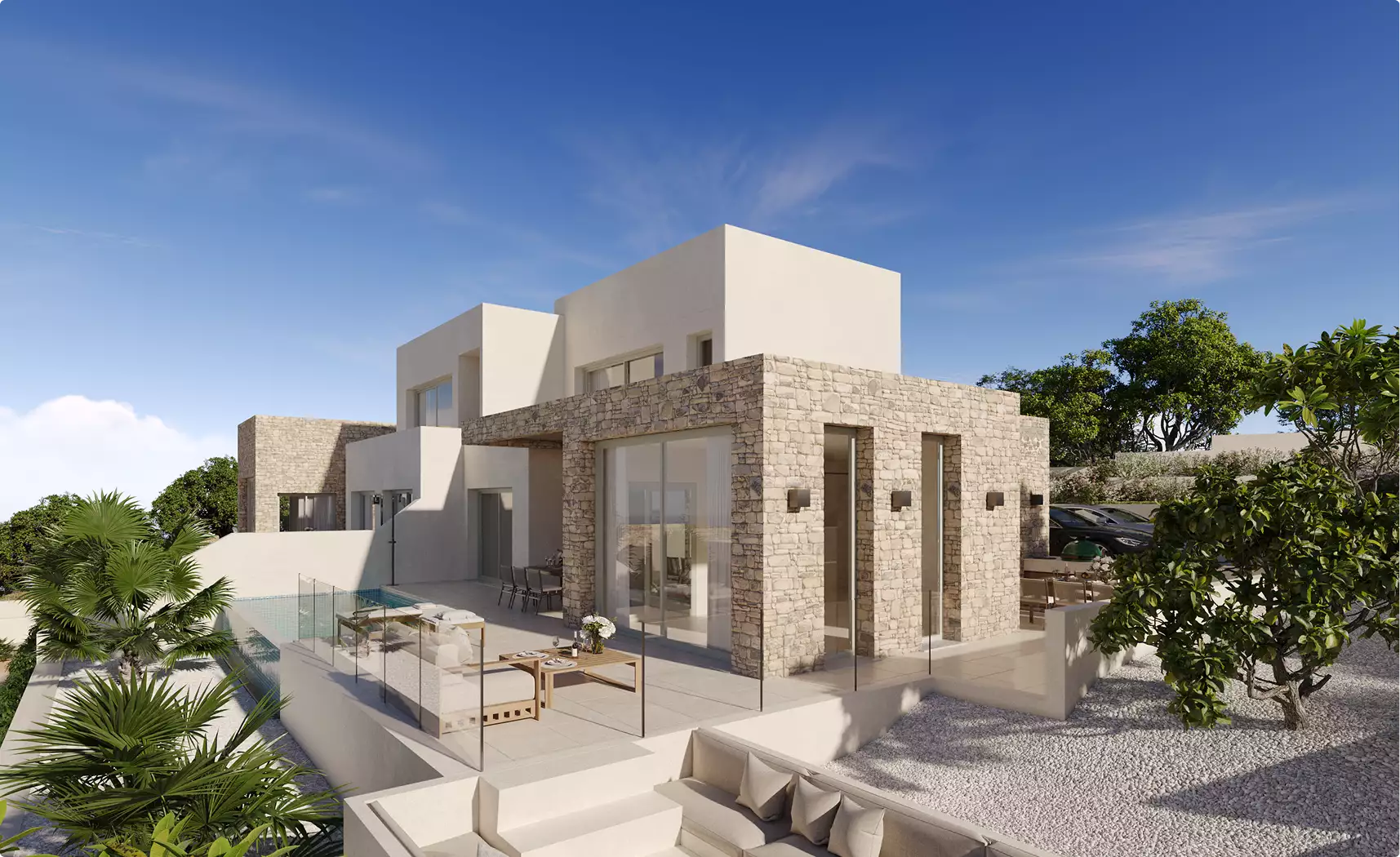
A major shift in building modern architecture was the idea that people should experience space more fluidly. Instead of a sequence of tightly boxed rooms, designers often created open zones, visual continuity, and stronger relationships between inside and outside.
Natural light mattered for more than atmosphere. It shaped orientation, comfort, and daily use. The same is true of proportion and circulation: these buildings were meant to be lived in, worked in, and moved through with less friction. In residential presentation, 3D interior rendering services are especially effective at showing how openness, daylight, and material balance actually shape the user experience.
Characteristics of Modern Architecture
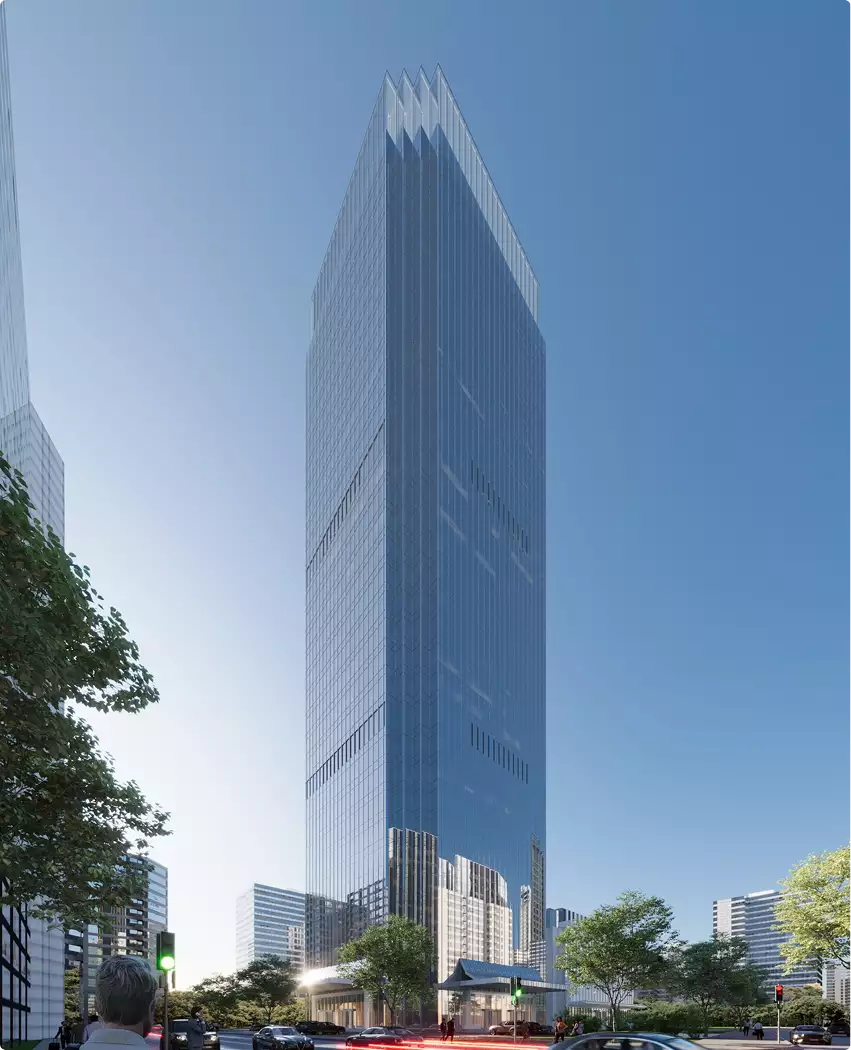
To recognize the style in practice, look for recurring features rather than one fixed formula. The most consistent modern architecture characteristics come from the movement’s broader logic: simplicity, structural honesty, and a preference for function-led form.
The following visual and spatial traits appear again and again in the strongest examples of the style:
- Clean lines and geometric forms
- Flat or low-pitched roofs
- Open floor plans
- Large windows, ribbon windows, or curtain walls
- Minimal ornamentation
- Visible use of glass, steel, and concrete
- Strong horizontal or vertical emphasis
- Integration with light, air, and surrounding landscape
Taken together, these modern architecture features produce a look that feels ordered, spare, and intentional. The key point is not minimalism for its own sake, but a close fit between purpose, structure, and appearance.
These patterns also help explain the broader modern architecture style. Even when individual architects worked differently, they often shared the same rejection of unnecessary decoration and the same belief that a building should express its own logic.
Visual Features That Define Modern ArchitectureVisual Features That Define Modern Architecture
Many people can identify the movement before they can name it. The most recognizable modern architecture features include flat planes, crisp edges, uninterrupted surfaces, asymmetrical compositions, and carefully framed glazing.
Among the most common modern architectural elements are open corners, pilotis or exposed supports, horizontal window bands, simple rectangular volumes, and facades with little or no applied ornamentation. You do not need specialist vocabulary to spot the pattern: the building usually looks pared down, deliberate, and structurally confident.
Materials Common in Modern Architecture
The materials didn’t just support the movement, they helped define it. In modern architecture and design, steel made it possible to build longer spans, reinforced concrete allowed for new structural shapes, and glass opened up facades to daylight and views.
Wood also appeared, especially in residential work, but often as a warm counterpoint rather than as the main expression of mass. Materials were valued for their actual properties rather than for their ability to imitate stone carving or historical detailing.
Types of Modern ArchitectureTypes of Modern Architecture
There is no single version of the movement, which is why it helps to distinguish a few major strands. The clearest types of modern architecture are not endless subcategories but broad tendencies that show how the core principles were interpreted in different ways.
Seen this way, modern style architecture includes austere international works, warmer domestic variants, and earlier functionalist experiments that pushed architecture away from historical imitation.
International StyleInternational Style
The International Style is a really clear example of modern style architecture. It’s all about volume over mass, regularity instead of decorative symmetry, and minimal ornament in place of historical reference.
Its buildings often use glass, steel, white surfaces, and clean lines. The language spread quickly because it was so transferable. It spread through offices, housing, institutions, and commercial development across many countries. Its legacy is also easy to trace in visual case studies such as skyscraper rendering, where vertical geometry and facade rhythm remain central to presentation.
Midcentury ModernMidcentury Modern
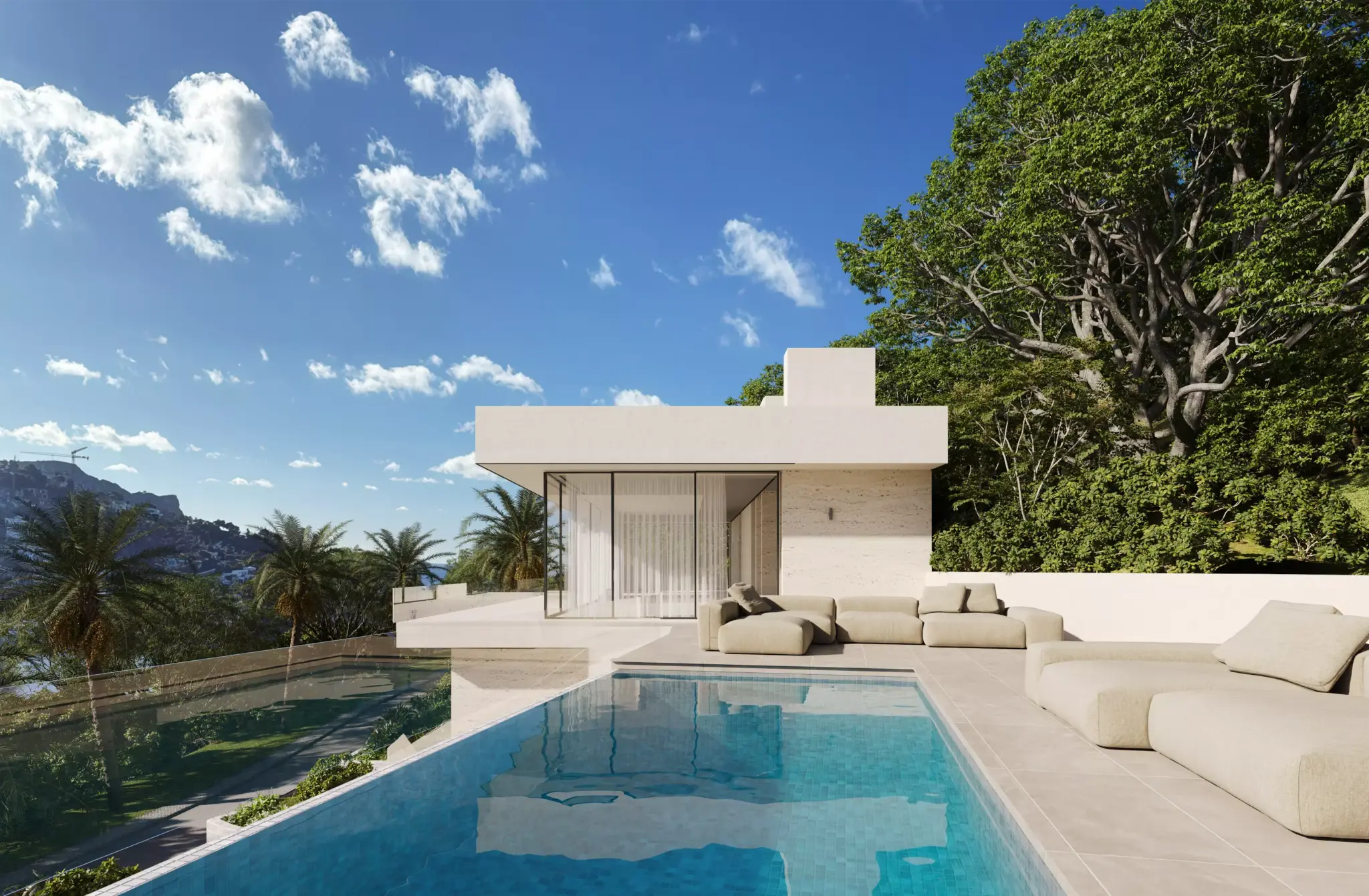
This strand was a big movement, but it softened some of its harder edges. When people ask about modern style architecture in residential design, this is often what they mean. Open interiors, low horizontal lines, large panes of glass, and a stronger connection to nature are all part of it.
Compared with earlier European models, it often feels warmer and more informal. Timber, stone, and landscape integration play a larger role, especially in houses designed for everyday living rather than theoretical purity. A practical example of how these ideas are visualized today can be seen in 3D rendering of a modern house, where openness and material contrast do much of the architectural work.
Early Modern / Functionalist Tendencies
Before the movement reached its mature midcentury forms, early modern work explored industrial honesty, rational planning, and stripped-down composition. In this phase, modernism in architecture was still testing how far design could move away from ornament without losing richness or civic presence.
These projects matter because they show the shift happening in real time. The goal was not visual novelty alone, but a more disciplined way of making buildings fit modern society.
Famous Examples of Modern Architecture
The strongest examples of modern architecture are important not for being famous, but because each one makes a principle visible. They show how architects took theoretical ideas and turned them into real-world spaces, structures, and everyday objects.
Check out some of the best examples of modern architecture. You’ll see how to avoid a common mistake. The movement wasn’t just one visual style. Architects used all kinds of materials and styles, but they were all about clarity and function.
Residential ExamplesResidential Examples
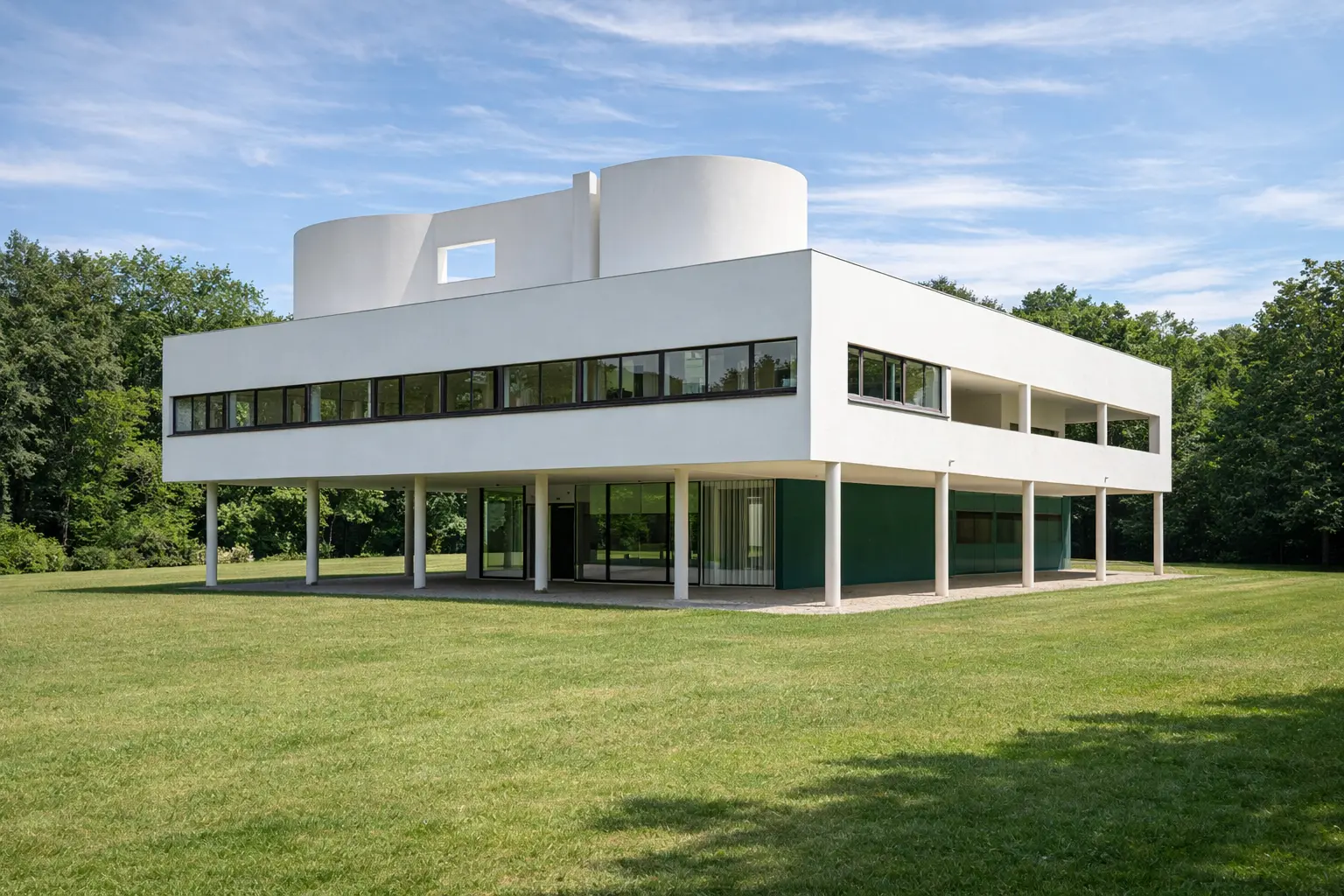
Villa Savoye by Le Corbusier is one of the best-known modern architecture examples, and it’s a great example of modernist thinking. The building’s design is like a complete residential system, with its pilotis, ribbon windows, roof terrace, and free plan.
Farnsworth House by Mies van der Rohe takes reduction to the next level. The house is pretty straightforward, using steel, glass, and proportion to create a living space that feels almost weightless.
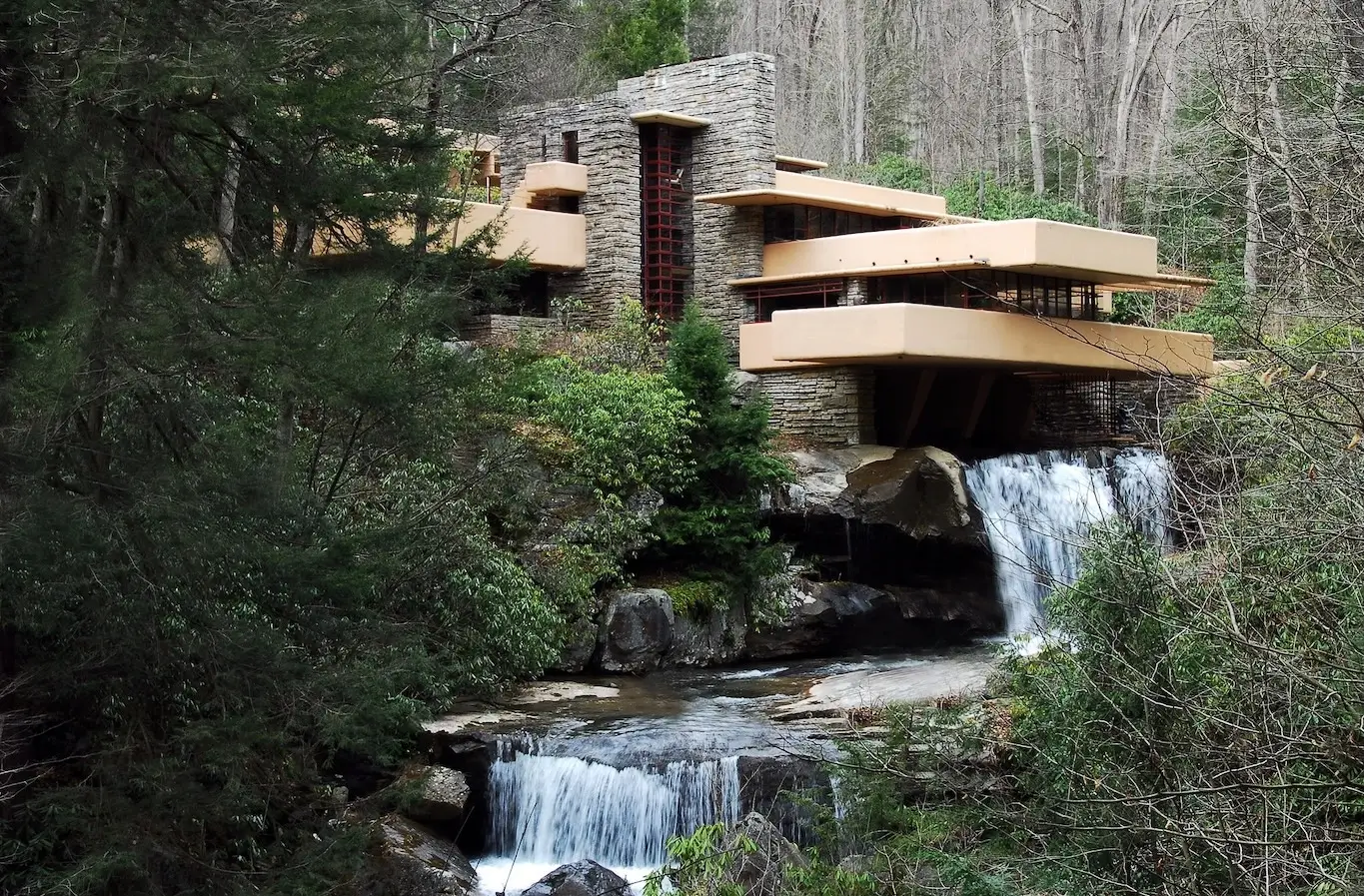
Fallingwater by Frank Lloyd Wright shows that the movement wasn’t always cold or detached. Its cantilevers, horizontal emphasis, and integration with the site make it one of the most convincing arguments for a modern language rooted in nature rather than ornament. That relationship between site, massing, and storytelling is also visible in 3D rendering of a house, where presentation depends on making architectural intent easy to read.
Philip Johnson’s Glass House reduces domestic architecture to enclosure, structure, and landscape. The house is simple, but it’s got a certain level of sophistication.
Civic and Commercial ExamplesCivic and Commercial Examples
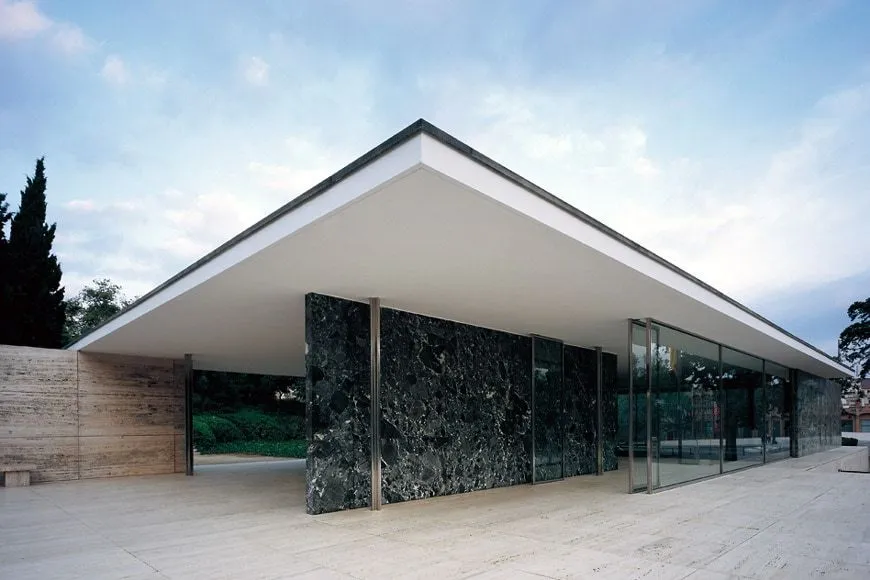
Some of the most influential modern architecture buildings are public or commercial because they broadcasted the movement’s values at urban scale. The Barcelona Pavilion, designed by Mies van der Rohe, is celebrated for its flowing space, refined materials, and astonishing precision.
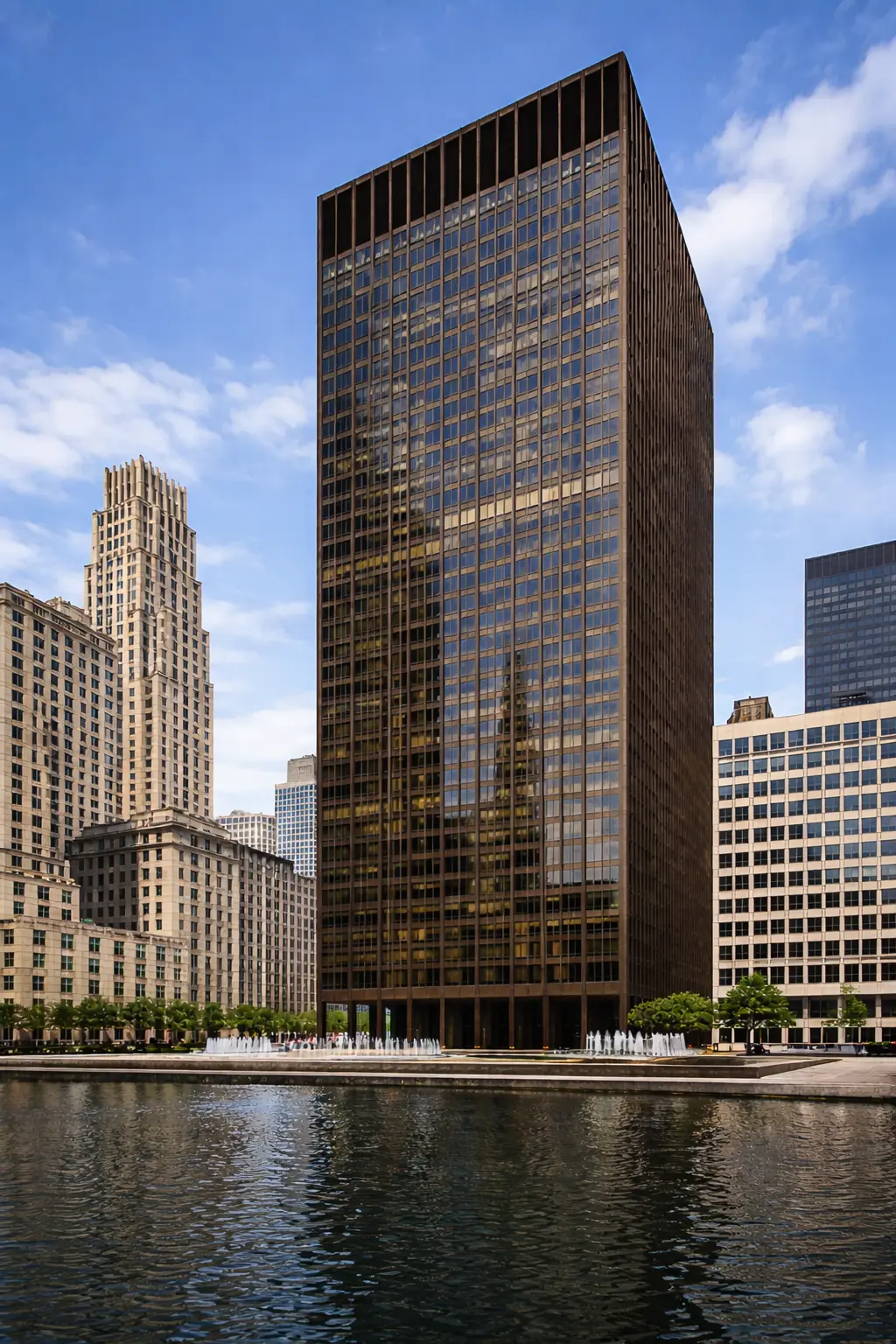
The Seagram Building is one of the best examples of modern architecture in high-rise form. Its disciplined grid, bronze-and-glass facade, and carefully controlled plaza setting helped define the corporate skyscraper for decades.
Other major modern architecture buildings include the Bauhaus Dessau building and, slightly later, the Salk Institute. Both matter because they show how the movement could remain rigorous while serving very different institutional purposes. Even in newer building systems, that clarity survives in projects like modular home exterior, where repetition, proportion, and clean expression remain central.
Modern vs Contemporary Architecture
The easiest way to understand the issue is this: modern architecture is a historical movement, while contemporary architecture refers to architecture of the more recent present. They can overlap in appearance, but they are not the same thing.
The confusion happens because many contemporary buildings borrow modernist ideas such as clean lines, minimal detailing, large glazing, and open planning. But contemporary design is not bound to one ideology and often mixes influences much more freely. For a fuller related comparison, see what is contemporary architecture.
| Aspect | Modern architecture | Contemporary architecture |
| Time period | Mainly early 20th century to midcentury | Late 20th century to the present |
| Core identity | A defined movement tied to modernism | A broader present-day category |
| Design logic | Function, clarity, structural honesty | Mixed influences, often experimental |
| Ornament | Generally reduced or rejected | Can be minimal or expressive |
| Materials | Steel, glass, reinforced concrete | Wide mix, including advanced composites and sustainable systems |
| Visual character | Geometric, disciplined, restrained | More varied, fluid, and hybrid |
This is why modern architecture vs contemporary architecture should not be treated as a simple old-versus-new contrast. One is a movement with a specific intellectual history, and the other is a term that’s changing.
The Main Difference in One Clear ExplanationThe Main Difference in One Clear Explanation
In plain terms, the difference is simple: modern describes a specific historical movement, while contemporary just means what architects are building today.
Why Modern Architecture Still MattersWhy Modern Architecture Still Matters
The movement still matters because its questions are still alive. Architects are still all about clarity, efficient planning, daylight, honest materials, and the relationship between structure and experience.
You can see it in all kinds of places, like houses, offices, museums, and even everyday spaces. A lot of the current trends in minimalism, open-plan thinking, and user-focused planning come straight from ideas first developed in modern architecture and design. In presentation terms, that legacy now extends to formats like 3D animation of house, which helps viewers understand movement, light, and spatial sequence rather than only static form.
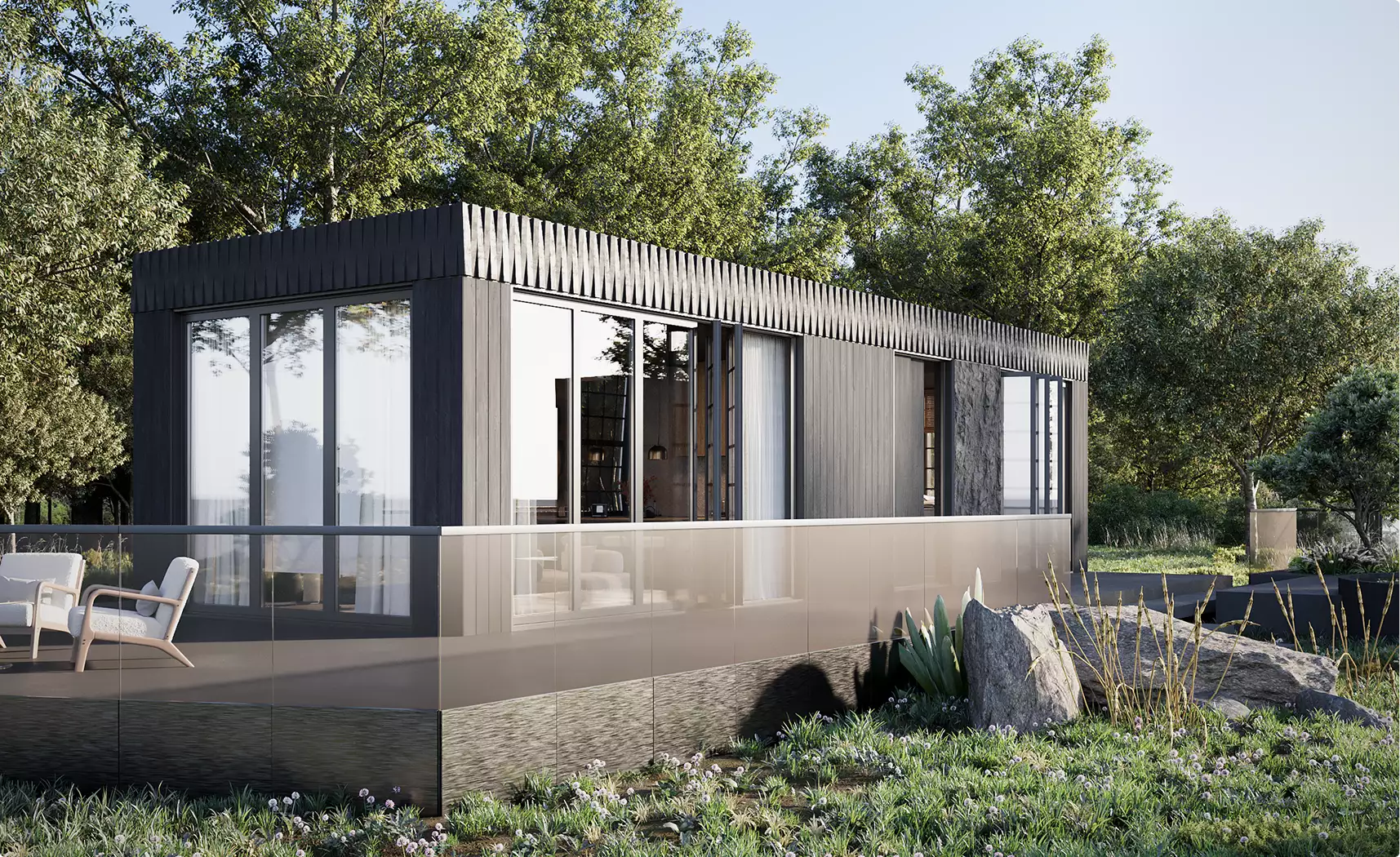
Understanding the movement also helps people read the built environment more clearly. Once you see how it changed planning, materials, and form, many later buildings make more sense, including those that react against it. That is also why modern architecture often intersects naturally with discussions of green architecture, where efficiency, daylight, and material logic remain central, even if the priorities are now broader.
Modernism also made it easier to think in regional rather than purely historical terms. A building can be modern in method while still responding to climate and place, which is part of what makes related readings like what is desert architecture useful when comparing universal principles with local adaptation.

Turn Ideas Into Visual Stories
FAQ
Modern architecture is a 20th-century design movement that emphasizes function, simplicity, and the use of modern materials like steel, concrete, and glass. It’s a departure from historical revival styles and decorative excess. When people ask what modern architecture is, the clearest answer is that it’s a historically defined approach shaped by modern life, technology, and rational design.
The best way to define modern architecture is through its principles: function over ornament, structural honesty, simple geometry, and purposeful planning. In this approach, buildings are usually designed based on function, construction, and natural light, rather than following a set design. These priorities shape everything from the layout and facade to the materials used and the overall character of the building.
The main modern architecture features include clean lines, geometric shapes, open spaces, flat roofs, large windows, minimal decoration, and visible use of industrial materials. A lot of projects also focus on natural light and making the indoor and outdoor spaces feel connected. All these features come together to create a look that feels organized, practical, and intentionally minimalist.
The main difference in modern architecture vs contemporary architecture is that modern refers to a specific historical movement, while contemporary refers to current or relatively recent design. Contemporary work may borrow from modernism, but it’s not limited to one philosophy. It mixes minimalism, sustainability, digital design, regional styles, and more.
Some well-known modern architecture examples include Villa Savoye, Farnsworth House, Fallingwater, the Glass House, the Barcelona Pavilion, and the Seagram Building. These projects are often mentioned because they clearly express a key modern idea. Some show structural reduction, some show open planning, and others show how the movement shaped major urban buildings.
In most situations, yes. Modernist architecture is basically the name for the style of architecture that emerged during the modernism movement. It’s often the same thing people mean when they talk about modern architecture. The only difference is the emphasis. “Modernist” is a term that’s more specific, pointing to the ideology and cultural movement behind the buildings. Meanwhile, “modern” is a more general label that’s used more often.