Best 3D Rendering Companies in Dubai: Architectural Visualization & CGI Guide
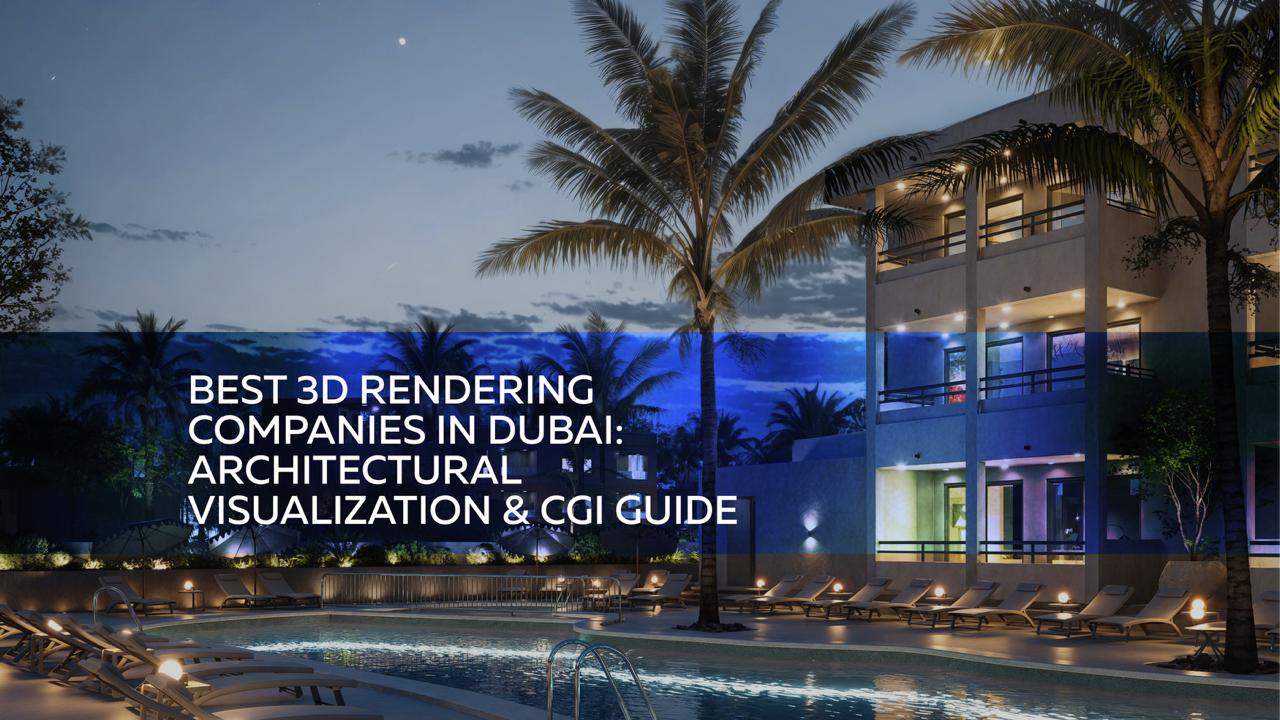
Discover High-Quality CGI Services Tailored to Your Business
- Why Dubai Is a Global Hub for Architectural Visualization & CGI
- The Role of 3D Rendering in Off-Plan Sales, Investment, and Architectural Competitions
- Who Is the Primary Client
- What Defines the Best 3D Rendering Companies in Dubai
- The Difference Between Local and International Studios
- Why Process and Mindset Matter More Than Individual Images
- Technical Expertise vs Marketing & Sales Thinking
- How to Choose a 3D Rendering Company in Dubai
- Criteria for Choosing an Architectural Visualization Studio
- Common Mistakes When Hiring CGI Studios in Dubai
- Top Architectural Visualization Studios in Dubai by Use Case
- Maverick Frame Studio
- The Boundary Middle East
- Arch22
- Brep Studio
- Render Atelier
- Vizion Studio
- 3D Storm Studio
- Intice
- Architectural Rendering Services Explained
- Interior Architectural Rendering
- Exterior Architectural Rendering
- Architectural Animation Services
- VR Architectural Visualization
- Interactive Architectural Visualization
- 3D Rendering Workflow & Production Pipeline
- Architectural Visualization Process: Step by Step
- Rendering Production Pipeline for Large-Scale Projects
- Final Thoughts: Choosing the Right 3D Rendering Partner in Dubai
The best 3D rendering companies in Dubai play a decisive role in one of the world’s most competitive real estate markets. Competition in Dubai’s property sector is fierce, and a building doesn’t have to exist to sell out — it just has to look good. Since most primary property sales happen off-plan, the success of a project depends more on pixels than bricks and mortar. That’s why picking the right 3D rendering company in Dubai isn’t just a creative afterthought anymore — it’s a strategic business decision that directly impacts how quickly you can get your product to market, how your brand is perceived, and your bottom-line ROI.
But not all architectural visualization companies in Dubai are created equal. While some offer technically flawless renders, only a few truly understand how to make architecture appealing to potential customers by creating visuals that comply with local norms, resonate with global investors, and convert potential buyers into customers. This guide gets straight to the point. We’ll talk about what really matters when picking a partner, show the big difference between “pretty pictures” and sales-driven visualization, and name the studios that always deliver when it counts. By that, we mean in the high-stakes world of Dubai’s property market.
Why Dubai Is a Global Hub for Architectural Visualization & CGIWhy Dubai Is a Global Hub for Architectural Visualization & CGI
Dubai is one of the world’s most competitive real estate and architecture markets, and there are a lot of reasons for that. The city says it’s a “neutral” financial and residential haven, and it’s attracting investors worldwide, from Russia and India to the UK and China. This influx of international money has led to a demand that’s not connected to local economic conditions. Instead, it’s driven by investment flows from other countries. So, it’s not just a competition between individual developers anymore. It’s between whole countries, too. Dubai’s seen as a crucial part of many people’s investment portfolios.
Unlike markets like London or Zurich that are really short on housing, Dubai has a ton of real estate that’s just sitting there. In this case, a property’s value isn’t based on objective factors like location or infrastructure. Instead, it’s all about how it looks. The big question is: “Does it look like the future?” With these changes, architecture and CGI are no longer just supporting tools — they start affecting the prices directly. It’s true that Dubai has more “iconic” towers and projects called “the tallest” or “the most luxurious” per square kilometer than anywhere else on Earth. This creates what’s called “visual noise,” which is basically a bunch of renderings with things like rooftop pools, floor-to-ceiling windows, and gold accents. To cut through all the noise, developers can’t just deliver beauty—they have to craft a visually compelling narrative that speaks directly to the buyer’s subconscious.
And to make matters more difficult, Dubai’s project lifecycles are super fast. The city’s building a lot, and developers often start selling properties before they’re even finished planning them—like two to three years before they’re actually delivered. Right now, CGI is pretty much the only thing the buyer interacts with. If you mess up your visual storytelling, you could lose months of marketing momentum and millions of dollars in revenue.
On top of that, developers and districts are competing with each other. Palm Jumeirah, Dubai Marina, Downtown, Emaar Beachfront, and Business Bay are each like a different “luxury brand” with their own look. Developers operating in these micro-markets aren’t just selling villas or apartments. They’re offering a hyper-localized lifestyle that’s exclusive and one-of-a-kind.
Finally, Dubai has a strong “first-mover advantage” culture. They love new ideas, but only if they really embody the future. The second, third, or tenth “bionic tower” or “floating garden” just doesn’t create the same buzz anymore because the market gets flooded with lookalikes. This makes developers always have to go after new visual and conceptual ideas, and it makes them pay a lot for them.
This makes Dubai go from being just another real estate market to a high-stakes arena of visual marketing. In this case, architecture becomes the vehicle for emotional promise, and 3D rendering and architectural visualization companies are the most important sales assets. It’s not about having the best floor plans, it’s about showing buyers a future that they can’t find anywhere else. In Dubai, selling “luxury” just isn’t enough anymore. You’ve got to sell a uniqueness that’s tied exclusively to this city and this moment.
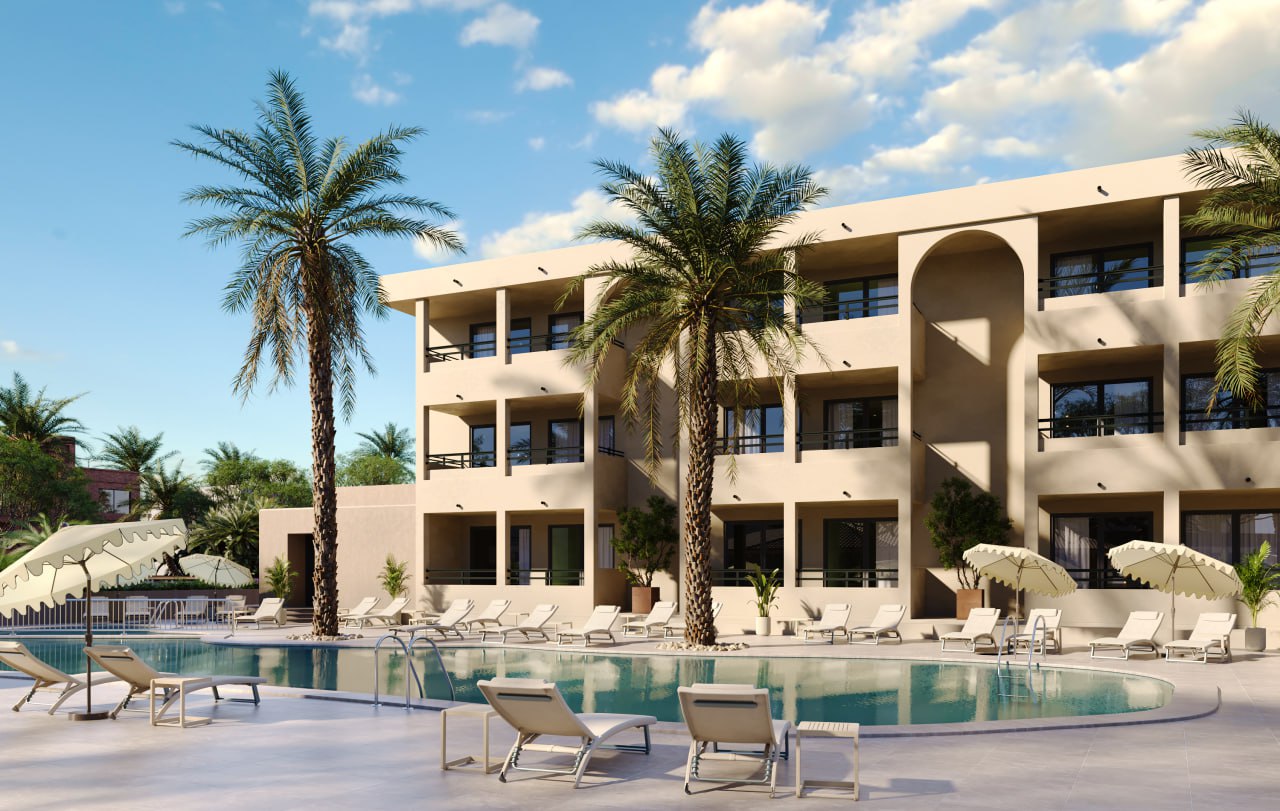
The Role of 3D Rendering in Off-Plan Sales, Investment, and Architectural Competitions
In the last decade, 3D visualization has completely changed the game in off-plan sales, investment decisions, and architectural competitions, especially in super competitive markets like Dubai, London, and Singapore. Today, it’s more than just a project illustration — it’s a key business tool that shapes perceptions, builds trust, and directly impacts asset valuation. When the product doesn’t exist yet, visualization isn’t a support tool. It’s the main thing that determines success in every phase, from initial sales and raising capital to winning important design competitions.
With off-plan sales, buyers commit to buying a property that hasn’t even been built yet. Construction can take 6–12 months to start, and delivery is usually 2–4 years later. When buyers have to make a decision, they only look at visual and textual materials. 3D rendering is the only way they can experience the product. It’s not just about showing a building, it’s about creating a captivating vision of what life could be like in the future that’s strong enough to overcome all the unknowns. Strategic, sales-driven visualization sticks to a step-by-step plan:
- The exteriors are set within the urban landscape, with nearby buildings, realistic shadows, accurate solar angles, and natural human movement. They’re never shown as pristine white backgrounds with everything isolated.
- Interiors show off spatial quality and scale through how light interacts with real materials, steering clear of messy furniture layouts that hide poor design.
- Things like cars at the entrance, boats at the marina, and palm tree shadows are included only where they enhance the perceived value, carefully avoiding both desolate emptiness and artificial oversaturation.
- Things like time of day and season are used to support this claim. “Mornings here are golden, and evenings are private.”
This approach has a clear business impact. Asteco says that projects in Dubai with night and sunset images get 22–35% more conversions than those with only daytime ones. For European and Asian buyers, many of whom never visit in person, the quality of the rendering directly shapes trust, and the launch price is set not by square meters but by perceived exclusivity. With off-plan sales, you’re not just selling space, you’re selling a future memory, and 3D rendering helps create that for you.
For most investors, 3D visualization is a useful tool, but for those with more significant financial resources, it’s an essential part of the decision-making process. It can show future demand and how much profit a project might make. Investors aren’t buying a “beautiful apartment”! They’re buying yield, liquidity, and confidence that the asset will find a buyer in three years. Rendering answers their core question: “Who’s going to buy this, and for how much?” It gives you a good idea of what the target market is like by using visual cues. A cozy, family-oriented interior suggests stable expat rental income, while an ocean-view penthouse with fountains implies a fast 18-month flip. It also lets you compare different options side-by-side, showing unique features like views, solar orientation, and pool privacy. This makes technical specs more appealing for marketing.
It’s important to note that the quality of a game’s rendering reflects the developer’s credibility. If the visuals are generic and low-effort, it can raise doubts about the team’s competence. But if the visuals are atmospheric and rich in context, it sends a clear message. “These guys know how to sell, so this asset will be liquid.”
The stakes are real: major institutions like Blackstone and ADIA now include CGI and marketing material quality in their due diligence processes. Projects with high-converting, emotionally resonant images get more money from investors and attract them at earlier, lower-price stages. For investors, rendering isn’t just an image — it’s a visual business plan.

In architectural shows, especially the big international ones where the judges look at tons of submissions that are full of ideas, sustainability strategies, and cultural references, 3D rendering is what makes the difference. Its job isn’t to explain how the building works, but to convey what it feels like to be inside it. The winning entries really stand out because they’re so specific. Instead of a vague “public space,” you see a specific scene, like a morning on a terrace with coffee, sunlight filtering through the building, and a kid running down a shaded alley. It’s not just a pretty face, it’s a sign that the community is alive and kicking. Context isn’t just background — it’s a key part of the idea. The building isn’t just shown on its own, but as an active part of the city, providing shade, attracting pedestrians, and reflecting the sunset, showing its importance to the community. Top competition visuals are usually more subtle than commercial ones. They avoid perfect skies, model-like people, and too much lighting because their goal isn’t to dazzle, but to convince through realism and meaning. Winning this kind of competition gets you not only prestige and portfolio rights, but also access to new clients. But even shortlisting often depends on whether the design conveyed the main idea in 7 seconds — the average time a juror spends on each submission. When you’re in a competition, you’re not competing for beauty, you’re competing for attention and understanding. Rendering becomes your voice!
This shows that 3D rendering has become so much more than just a supporting tool for architecture or marketing. It’s become this thing on its own, and you can use it in all sorts of ways. Like, in off-plan sales, it’s a replacement for physical experience. In investment, it shows future demand. And in competitions, it makes abstract ideas into real-life experiences.
When the stakes are high, like they are in Dubai, there’s a clear difference between using CGI just for visuals and using it as a strategic tool for sales, trust, and influence. In markets where everyone is competing hard, the project with the best architecture doesn’t always win. It’s the one that can capture the audience’s imagination the fastest and the best.
We’re talking about a high-stakes visual economy here, so partnering with high-performing 3D rendering studios in Dubai isn’t a creative luxury — it’s a business imperative.
Who Is the Primary ClientWho Is the Primary Client
In Dubai, most of the commercial orders for 3D rendering come from real estate developers. It’s because of how unique the local market is. Almost all the premium and luxury real estate in the city is sold off-plan, usually two to four years before the physical handover. So when sales start, developers don’t actually have a physical product yet. Their only real asset is the idea that they’re visual and verbal. This makes CGI not just an extra tool, but a way to make money directly. That’s why developers increasingly rely on 3D visualization solutions for real estate developers that integrate sales, marketing, and compliance into one system. They use it in a smart way in investor and broker presentations, sales galleries (both physical and virtual), digital advertising on Meta, LinkedIn, and YouTube, as well as printed brochures and lookbooks.
Some of the big names in the market, like Emaar Properties, DAMAC Properties, Nakheel, Sobha Realty, and Azizi Developments, are always investing in top-notch, marketing-driven CGI. It’s important to note that developers in Dubai don’t just focus on technical precision or photorealism. They pay for results, not abstractions — which is why they closely examine real estate CGI projects in our portfolio. Their main question isn’t “How closely does this match the drawings?” It’s more like “Will this image sell?”
Architects are the second most important group of clients, but they’re only responsible for about 10–15% of the market. They usually commission renderings for international design competitions, concept presentations to developers, or portfolio building to strengthen their studio’s brand. But their budgets are usually a lot smaller than developers’ and their visualizations are more for internal use than for final marketing materials. In Dubai, architects don’t usually act as the “authors” of a project. Instead, they’re more like technical executors working to a developer’s brief. Even when an architect starts the process, the final creative direction, approval, and quality control are usually the developer’s responsibility.
Hotel operators and management companies like Ritz-Carlton, Four Seasons, and the luxury parts of Marriott make up about 5–8% of the market. They’re the ones who create the designs when they’re launching new brands or ideas, fixing up existing properties, or making internal presentations for franchisees and investors. Their visualizations are all about making the guest experience a top priority. They focus on things like tactile materials, creating a nice atmosphere in the rooms, and how the space is used. But these projects don’t happen as often as residential developments. They’re usually commissioned by the company’s main offices, not in Dubai, and while the budgets can be high, the total order volume is nothing compared to developers’ big, ongoing campaigns.
Direct commissions from investors make up less than 2% of the market and are pretty rare. Investors don’t actually own the project, they just provide the money. If they need to see what something will look like, they either ask the developer for it under an NDA or pay someone to make simple versions, like massing models and basic views, instead of super detailed CGI. Big-time investors like funds and family offices aren’t into “pretty pictures.” They’re all about analytics and cash flow projections. The only exception is when high-net-worth individuals purchase entire floors or off-plan villas to “preview” custom interiors. However, these are B2C deals and don’t contribute much to the B2B market.
It’s pretty clear that in Dubai, the developer is in charge. They decide how a project looks, how much it costs, and how quickly it sells. For them, 3D rendering isn’t just about “visual support.” It’s a direct way to boost revenue.
This whole situation is shaping the entire industry. Architectural visualization companies in Dubai design their business models almost exclusively around developers, not architects or investors. Success in this market depends more on thinking like a developer and asking the right questions than on being an expert at material rendering.
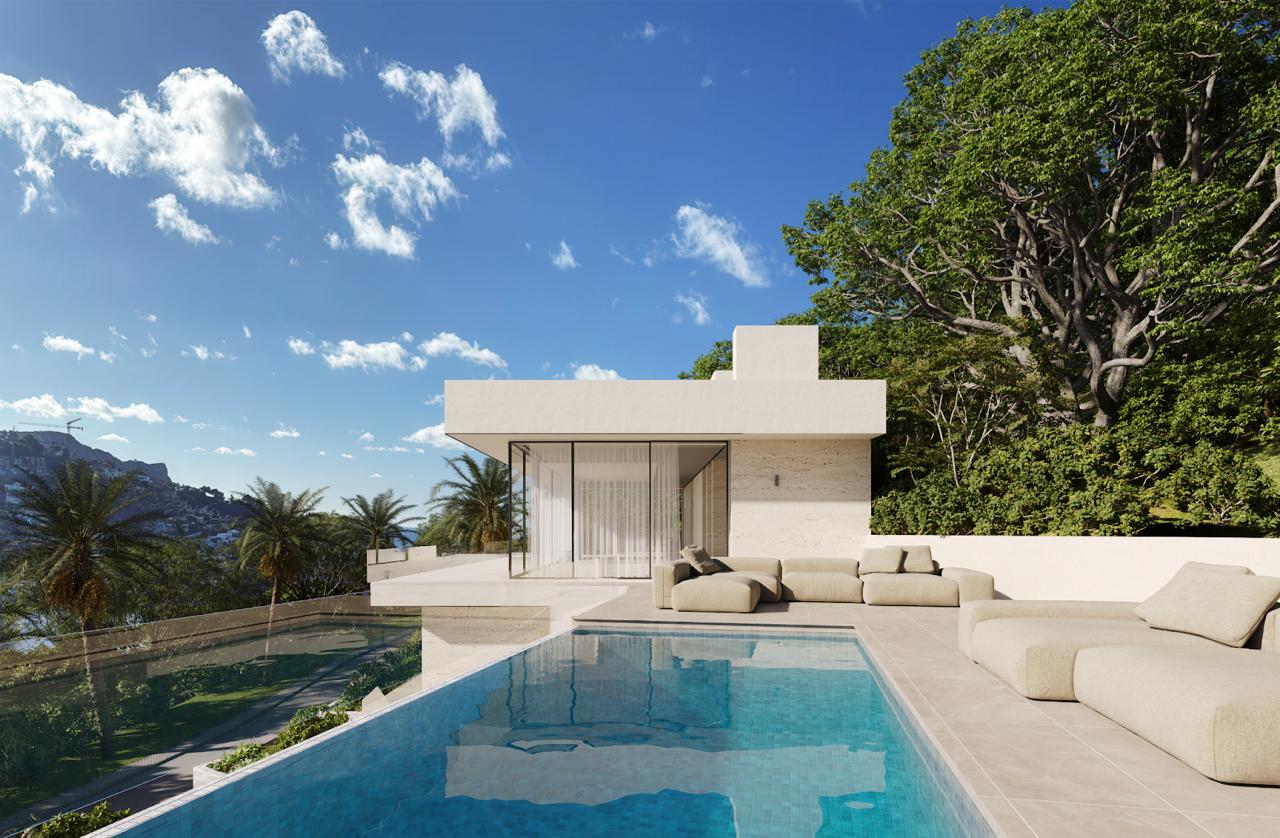
What Defines the Best 3D Rendering Companies in Dubai
By 2025, the success of architectural renders in Dubai will depend less on technical perfection and more on a deep understanding of the region’s cultural, digital, and regulatory landscape. These are details that even experienced visualization studios often miss. The way things play out on a page determines whether a render stands out or gets lost in the scroll.
One of these is what industry insiders call the “local algorithm of color perception.” Where people in the UAE like to shop is influenced by things like the climate, Islamic design preferences, and global investment trends. Take white, for example. It’s not really linked to purity. It’s more of a status symbol, representing freshness and exclusivity. So, premium renders often make the white balance cooler, even though the sunlight in Dubai is actually warm. Gold is still seen as a luxury, but using it straight up, like for building exteriors or making furniture, might make international investors skeptical. They might think it looks cheap or fake. But now, the subtle golden glow of sunset reflected on glass surfaces is seen as a must. When it comes to pools, classic bright blue just feels like it’s for tourists. Meanwhile, green-tinged turquoise has become the go-to for local and investor-focused developments, making them feel deeper, more secluded, and less common.
Another key thing to keep in mind is making the most of digital sales. These days, most primary real estate leads in Dubai come from Instagram, LinkedIn, and specialized portals like Bayut or Property Finder. On these platforms, a potential customer has less than three seconds to stop scrolling. When it comes to this kind of thing, a technically perfect but emotionless image doesn’t always beat out one that’s more emotionally charged, even if the latter breaks the usual rules of composition. Asymmetrical framing is now standard. Key elements, like a penthouse, are intentionally offset to create negative space for text overlays or call-to-action buttons. This isn’t a flaw, it’s a deliberate strategy to enhance focus. A single bright accent against a muted background, like a red armchair in a pastel room or an orange sunset sky above a concrete building, isn’t just a matter of style. It’s a neuro-marketing tactic. Even in the high-end segment, background detail is often intentionally reduced: foliage becomes schematic, neighboring buildings simplified to avoid visual noise. The goal is one powerful “icon” that instantly communicates the core promise.
The third and final layer is legal and religious filtering. A lot of Western studio renders get rejected not because they’re bad, but because they miss the mark on culture. Most developers in Dubai don’t allow pictures of random people, especially women without hijabs or mixed-gender couples, even for projects designed for expatriates. Alcohol, swimsuits, and dogs (even in fancy penthouse interiors) are automatically left out of visualizations. Even things that seem neutral, like views of the desert or mosques in the distance, can be problematic if you don’t use them in the right way. Marketing teams also take a close look at glass reflections to make sure there aren’t any accidentally included competitor logos or other unwanted symbols. If there are, it could mean the whole render has to be scrapped.
So, when we say “getting Dubai right,” we don’t mean showing it as it actually is. We mean creating an illusion that’s culturally appropriate and follows the law, and that works well in a certain digital space at a specific time. Great rendering is all about craftsmanship. But effective rendering is a strategy dressed in pixels. With so much on the line, the top 3D rendering companies in Dubai are the ones who don’t just render buildings, but decode market psychology. They’re the ones who embed cultural intelligence, digital fluency, and legal awareness into every frame they produce.
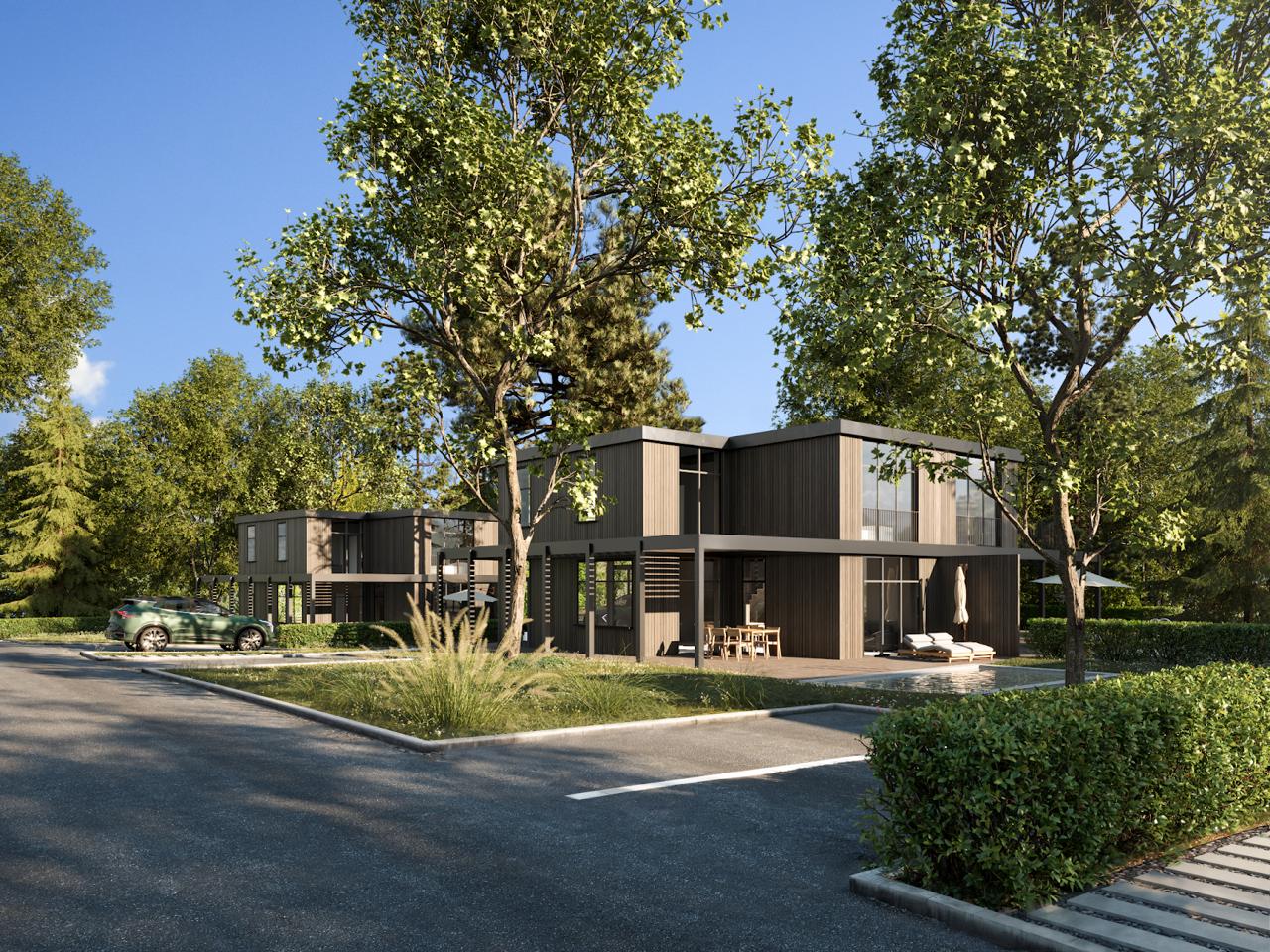
The Difference Between Local and International Studios
A lot of people think the difference is about technical image quality, but that’s not really the case. Local and international studios can both produce photorealistic visuals. The real difference is how well they fit in with Dubai’s local business culture, customs, and pace of business. There are three ways this gap shows up: in the strategy, execution, and communication.
Local Dubai-based creative studios, whether they’re fully Emirati teams or international agencies with a physical presence in the DIFC, work in a way that’s just like an extension of the developer’s marketing department. They get that a render isn’t “approved” for review — it’s just launched straight into sales. If they need to tweak a render to match a new floor plan or pricing strategy, they can do it in two days or less. That’s because they’re in the same time zone, speak the same business lingo, and meet the same crazy deadlines that define Dubai’s real estate world. In that world, a project can hit the market just two weeks after concept sign-off.
International studios, especially those from Europe, Latin America, or Eastern Europe, often have outstanding artistic talent and win global awards for visualization. But in Dubai, they hit an “invisible barrier.” Their designs are often too late, too beautiful, or too generic. They make universal images that “work everywhere,” but just don’t sell here. Their compositions are perfectly balanced, their lighting is naturalistic, and their interiors feature people in swimwear. These choices are technically perfect, but local clients always want revisions right away. Even with top-tier quality, these studios often lose on speed. The five-to-six-hour time difference with Dubai makes a simple tweak turn into a two-day delay. If a competitor has already launched a campaign with a “good enough” render, that delay means lost deals.
That’s why the best 3D rendering companies in Dubai aren’t huge visualization giants — they’re agile studios that mix local know-how with global thinking. They use top-notch tools like Unreal Engine, AI-assisted rendering, and real-time configurators, but always with a focus on the unique details of Dubai. They don’t just show a building, they show why you should buy it. Their renders aren’t like architectural illustrations; they’re more like conversion tools designed for Instagram scrolling, developer compliance teams, and investors comparing 12 projects in 20 minutes.
The main difference is pretty simple: local studios sell results, while international studios sell quality. In Dubai, where money talks and how you see things is shaped by culture and the law, it’s all about getting the results. That’s why the top 3D rendering companies in Dubai are those that master not just pixels, but context.
Why Process and Mindset Matter More Than Individual Images
Architectural rendering in Dubai has changed a lot, especially in 2025. It’s not just a pretty picture anymore, it’s a business. A single perfect render just isn’t enough to sell a project. What’s really effective is a system where every visualization isn’t the highlight of a creative exercise, but just one part of a marketing engine that’s designed for speed, compliance, and conversion.
When a developer launches a new project in Dubai, there’s no time for “the perfect render in three weeks.” There’s just 72 hours left to go live on Instagram, Bayut, and LinkedIn with a visual that stops the scroll, passes legal and compliance reviews, avoids triggering scrutiny from lawyers, and compels an investor from London, Moscow, or Singapore to click “Reserve Now.” It’s not possible if a studio thinks in static images. It’s only possible if the studio thinks in terms of processes: How quickly can a render adapt to a revised floor plan? And how can you switch the color of a pool from white to turquoise with just two clicks? How can you create 20 versions of a single view that are on-brand and consistent with the context, without sacrificing quality or identity, for different ads?
Mindset matters more than the image because an error in a render costs a week of revisions, but an error in the workflow costs a missed launch. The big local studios are moving away from the old way of doing business. They used to get a brief, then produce a render, and then deliver. Instead, they build modular, scalable pipelines: the same 3D model connects to real-time visualization systems where marketers can independently adjust time of day, weather, furniture, or window views without waiting for an artist. It’s not just about convenience. It’s a big help for developers. They can test market ideas right away instead of waiting days for a sunset to be re-rendered.
Plus, your mindset affects how well you understand different situations. A process-driven studio adds “cultural layers” to the scene from the start. It’s not just about getting rid of people; it creates a set design that makes empty spaces look like a luxury, not an issue. The goal is to make more than just a green pool — we’re talking a sunset reflection that gets you excited. If an artist thinks their job is just to create a “beautiful picture,” then none of this is possible. It only works when the whole team sees their mission as shaping behavior.
The real estate market in Dubai is super competitive, with 10 to 15 new projects launching every month. This makes scalability the key to success. A studio with a solid process can get 50 personalized, multilingual renders done in a week for targeted email campaigns. A studio that only makes images gets stuck on the third.
That’s why, in Dubai, it’s not the people with the most stunning visuals in their portfolio that win, it’s those whose workflows compress the timeline from concept to closing. The image is the result, but the process is what makes it work.
You know, in a market where even a few milliseconds matter and cultural nuances are a must, the top 3D rendering companies in Dubai aren’t judged just on how good their renders are. It’s about how smart, fast, and well-connected their systems are. The top 3D rendering companies in Dubai aren’t just known for making pretty pictures. They’ve actually made rendering a repeatable, responsive, and results-driven business function.

Technical Expertise vs Marketing & Sales Thinking
The difference between competition and property marketing CGI is like the difference between a portrait of a philosopher and a Tinder profile photo. They both show a person, but they have different goals, rules, and “languages.”
When architects enter competitions, like for a new museum, train station, or sustainable residential complex, the render is more than just advertising. It’s a visual argument to support an idea. Appearance isn’t as important as understanding the idea. The goal is to impress a professional jury made up of architects, urbanists, and curators by showing that the proposal is smart, makes sense, and is exactly what the brief calls for. These designs show how buildings fit into the city, the materials used, how daylight is distributed, and the purpose of public spaces. They’re often paired with diagrams, sections, and master plans to help people understand things better. They’re pretty minimalist, stylistically speaking. They use neutral colors like grays, beiges, and whites. There’s no excess or drama. Any human figures in the piece are just silhouettes, there to show scale, not emotion. Photorealism isn’t essential. The main goal is to demonstrate how and why the space works. For example, a competition render of a new airport terminal might show how sunlight filters through the roof, how passenger flows are choreographed to avoid congestion, and how the building harmonizes with the surrounding landscape.
Property marketing CGI, on the other hand, does the exact opposite. It’s not about explaining how a home is built; it’s about instantly igniting the buyer’s imagination, inviting them into the scene, and making them feel: “This is my perfect life.” It has to make you want it and feel like you deserve it. You’ll find luxury interiors, sunset-lit pools, panoramic sea views, perfect weather, silence, and total privacy. The style is cinematic, rich, and dramatic: soft lighting, warm tones, immaculate cleanliness, and zero visual noise. Realism is important, but it’s a curated version. It’s not how things are, but how they should feel in a dream. A great example is a penthouse in Dubai with golden evening light, a champagne flute on the coffee table, a cozy throw over the sofa, with the Burj Khalifa glowing in the distance.
The main difference is who the audience is and what they’re trying to do. Competition CGI has to be honest, precise, and analytical. The property marketing CGI has to be appealing, emotional, and visually captivating. One wins awards. The other wins sales. If you’re a developer in Dubai, where the competition is fierce and every hour matters, you need more than just a 3D artist with technical skills. You could use a psychologist who can transform digital images into emotions and empty space into temptation.
That’s why the top 3D rendering companies in Dubai are pros at both architecture and design. They understand that selling a future isn’t just about showing walls and windows. It’s about selling a version of yourself that only exists in the render.
How to Choose a 3D Rendering Company in Dubai
Knight Frank Middle East says that projects with a solid visual strategy sell 30–50% faster and get 15–25% more per square meter. Understanding how to choose a 3D rendering company for marketing in Dubai isn’t about technique or budget alone. It’s a strategic move that can really affect how quickly you can get your project off the ground, how reliable your buyers are, and how much your final project will earn.
Criteria for Choosing an Architectural Visualization StudioCriteria for Choosing an Architectural Visualization Studio
For developers operating in Dubai’s hyper-competitive real estate landscape, understanding how to choose a 3D rendering company begins with recognizing that you’re not hiring a vendor, but you’re aligning with a growth partner. The core criteria for choosing an architectural visualization studio must go beyond software proficiency and focus on market fluency, cultural intelligence, and sales-driven execution.
First, take a look at how relevant your portfolio is. Steer clear of studios that only make generic claims like “We’ve worked in the UAE.” Instead, ask: Have they produced visuals for Emaar, DAMAC, Binghatti, or Sobha? You can’t fake true expertise. It’s about authentically capturing the “Dubai dream”: those golden-hour penthouse terraces, green-tinged turquoise pools, and material palettes that scream exclusivity, not just realism. If a portfolio is full of competition, CGI, or European residential projects in muted, neutral tones, it’s a pretty good sign that the studio doesn’t really understand how properties actually sell in Dubai.
It’s also important to be flexible in how things are done. In a market where a launch can be scheduled within ten days, your chosen partner must operate in your time zone, implement revisions within hours, and leverage modular 3D workflows that allow rapid iteration of interiors, views, or branding without rebuilding entire scenes. There’s no sense in waiting around for “rendering queues” when your competitor is already live on Bayut and Instagram.
Also, don’t confuse firms that focus on architectural representation with those that are pros at real estate CGI. A sales-focused render isn’t an architectural illustration; it’s a psychological trigger. It should make you want it, not impress you with how much space it has. So, no recognizable faces, no culturally insensitive mistakes, and a focus on lifestyle storytelling. If an artist is obsessed with ray-traced reflections but doesn’t ask who their buyer is or where the image will be used, they’re solving the wrong problem.
Common Mistakes When Hiring CGI Studios in Dubai
Unfortunately, a lot of developers and architects still make basic mistakes when they’re hiring visualization partners. The worst thing you can do is choose based on price alone. When you get a low-cost render from an offshore studio, you often end up with compliance rejections, cultural misalignments, launch delays, and ultimately lost revenue. In Dubai, not having a solid visual plan is not saving, it’s sabotaging. The second mistake is giving a vague brief like “Make it look nice,” which leaves the studio guessing instead of executing with intent. The third is letting the look of the building be the deciding factor. Keep in mind that in Dubai, the render is usually the first and only time the buyer gets to see the project. Its goal isn’t to tell the truth, but to persuade.
That’s why 3D visualization in Dubai should be seen as a strategic asset, not just a line item on a budget. The top architectural 3D rendering companies in Dubai don’t just render buildings — they engineer desire. They think like marketers, move like developers, and see every pixel as a potential sales conversion. And when it comes to picking the best 3D architectural visualization companies, the winner is obvious: they don’t just show space, but sell a future so cool that buyers want to claim it today.
Mastering how to choose a 3D rendering company in this market means prioritizing cultural fluency, speed, and commercial impact over visual polish alone. In Dubai, where projects are still being planned, you’re selling conviction, not just concrete. And only studios that really get how to choose an architectural visualization studio in this ecosystem can make a profit from pixels.
Top Architectural Visualization Studios in Dubai by Use CaseTop Architectural Visualization Studios in Dubai by Use Case
Maverick Frame StudioMaverick Frame Studio
We blend 3D architectural rendering services with the future of digital marketing, and never lose sight of what really matters — selling real estate. Our 360° panoramas and architectural animations are key parts of our digital campaigns. They’ve shown a 300% boost in engagement and a 40% increase in conversions. Our VR Rendering lets buyers walk through a penthouse before construction even begins, so they can decide before their competitor finishes scrolling. But most importantly, we’re the first in Dubai to combine traditional visualization with 3D modeling for the Metaverse to reach more customers. Picture your off-plan project popping up not just on Property Finder but also in a virtual showroom where investors from Singapore or Los Angeles can check it out in a VR gallery, chat with agents via avatars, and even hang their NFT artwork on the walls. This is the next level of premium real estate sales, and it’s already live.
The Boundary Middle East
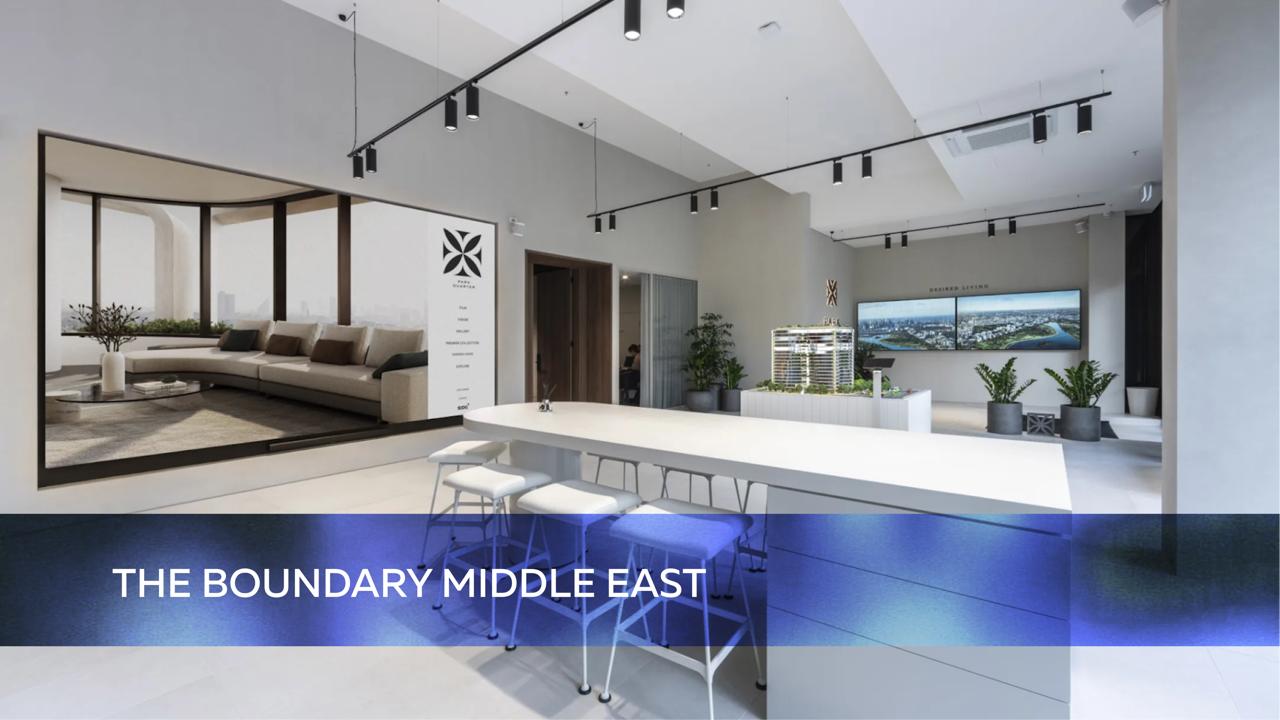
It’s a Dubai-based subsidiary of the well-known London company The Boundary. The studio has a fully local team, so there’s instant communication and deep insight into the UAE market. The Boundary Middle East is known for its hyper-realistic interiors, where every texture from marble to linen is rendered with tactile precision, and lighting is meticulously calibrated to serve the emotional intent of each render. They work with the best developers, like Emaar, Omniyat, and Sobha, on top-notch projects where the visuals have to show off your status, not just cover a lot of space. The studio is staying away from Metaverse and blockchain projects on purpose. They think these are just distractions from their main goal, which is to sell real estate.
Arch22
One of Dubai’s oldest and most reliable local studios, Arch22 has earned its reputation as the “workhorse” for developers focused on high volume. It’s super fast and can handle a ton of work. It can do 100+ renders for a big residential complex in just 5–7 days, and the style and quality stay the same every time. Arch22 is working with DAMAC, Binghatti, and other developers who are focused on selling quickly. The studio uses automated pipelines and standardized scenes, but only to speed up workflows in the real estate sector. Metaverse, NFTs, and virtual galleries aren’t part of its strategy.

Brep Studio
Well known for their amazing precision in materials, lighting, and proportions, especially in complex commercial projects. Pixelcase is great at visualizing office spaces, retail galleries, and mixed-use developments where aesthetics must be balanced with functional flow, zoning logic, and tenant ROI. The studio works with developers who are targeting B2B audiences, and they focus on clarity over drama. People are dismissing blockchain, the metaverse, and game engines as irrelevant. The focus is still on tangible assets and how to present them for the market.

Render Atelier
They’re pros at creating visuals that evoke strong emotions for mid-level and high-end off-plan projects. Its renders are often the basis for Instagram campaigns, email sequences, and landing pages. They’re optimized for vertical formats, bold visual hooks, and instant legibility. The studio works directly with developers’ marketing teams and always requests a detailed brief on target audience, channel, and desired CTA. The company isn’t into Metaverse development, as it thinks that if buyers in Dubai are paying for square meters then efforts should go towards generating real leads.

Vizion Studio
It’s a local studio with a ton of know-how in compliance and cultural adaptation, and Vizion Studio makes sure every render meets its high internal standards for UAE norms. That means no depictions of people, pets, alcohol, or improper handling of religious or national symbols. It’s all about residential projects and is often picked by developers targeting conservative GCC audiences. The studio steers clear of virtual world experiments, focusing instead on visuals that clear approval gates and convert into sales.

3D Storm Studio
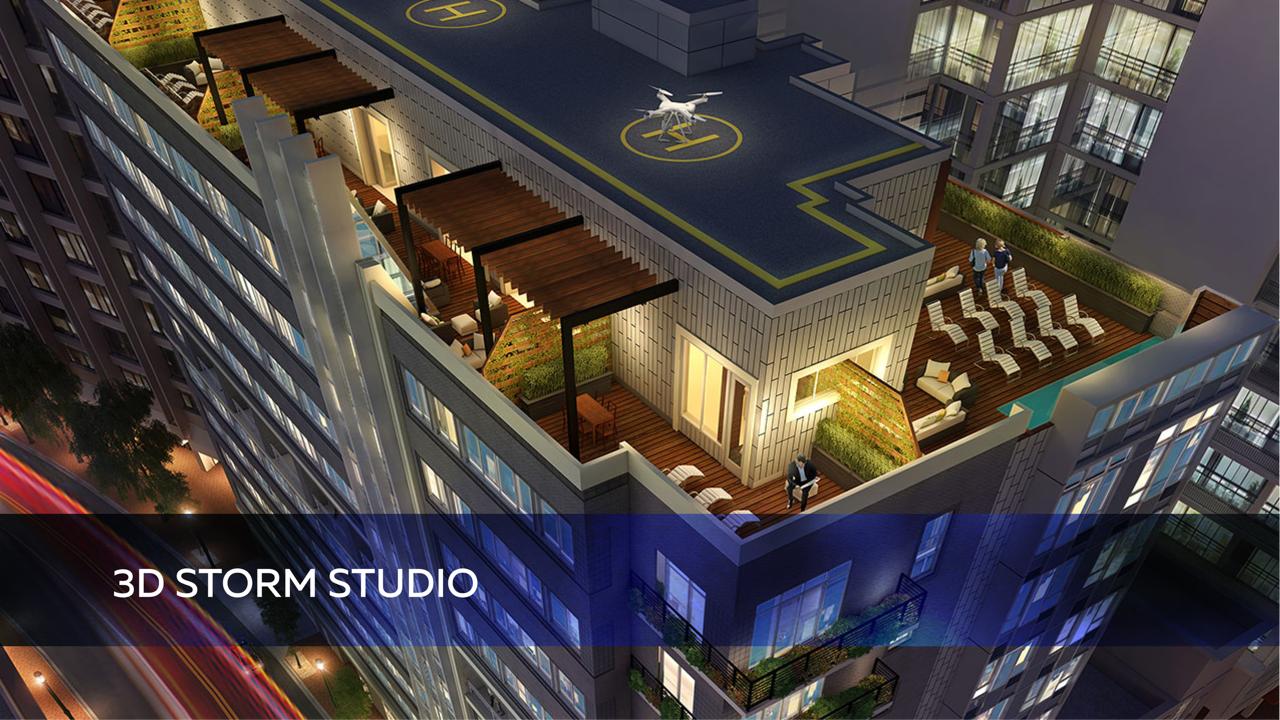
When it comes to digital marketing, RenderLabs ME really shines. They’re pros at integrating their services with digital marketing, and they can produce stunning visuals that are perfect for Instagram Reels, carousels, email banners, and landing pages. It uses AI to make content more personal. You can change the furniture colors or window views based on audience segments. You don’t need artists. This makes the studio a gem for developers running large-scale campaigns in Dubai’s bustling marketplace. It doesn’t offer 3D modeling for virtual platforms because it thinks that ROI in Dubai comes from channels with immediate conversion potential, not long-term digital experiments.
Intice
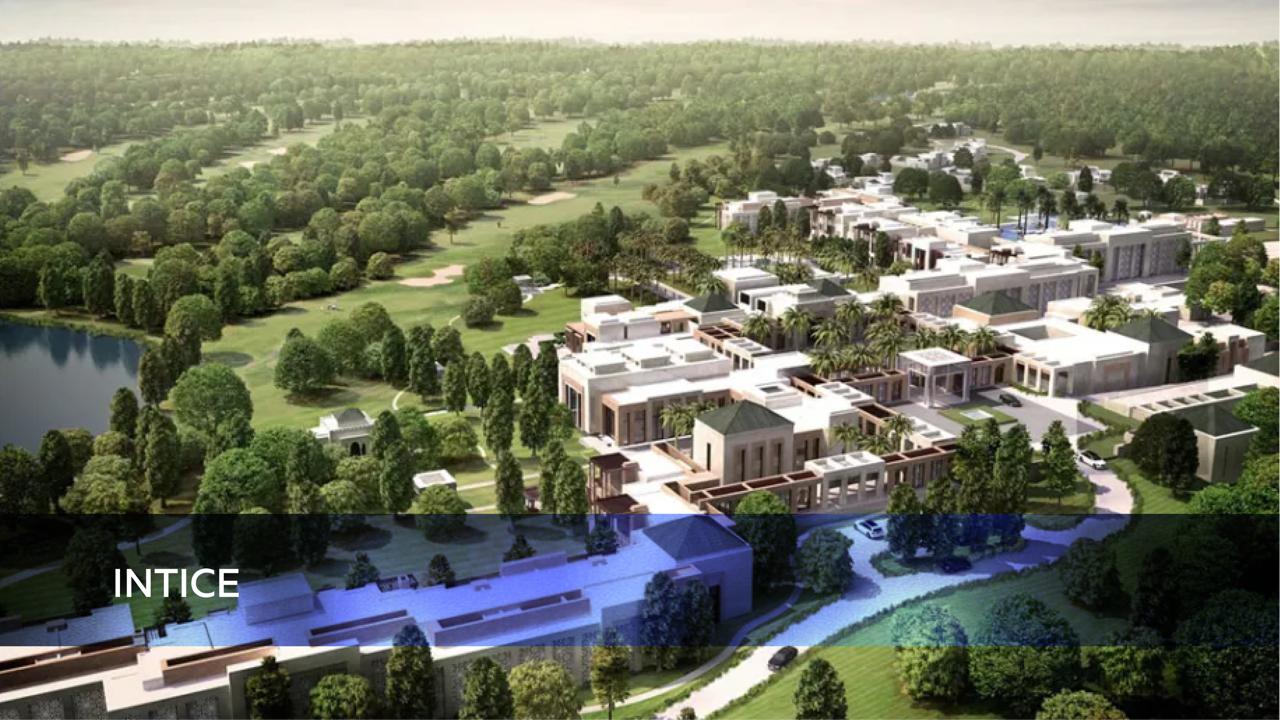
They mostly work with high-end developers and architectural firms, and they’re all about storytelling through imagery. The studio puts a lot of thought into creating the perfect atmosphere, including things like the smell of coffee or the sound of waves, to make it feel like you’re really there. Technology is used only to speed up real estate sales, and digital universes, NFTs, and blockchain projects are skipped because they don’t provide an immediate return on investment in Dubai’s fast-paced market.
Architectural Rendering Services Explained
Ten years ago, 3D rendering in real estate was just a finishing touch, pretty “wrapper” for a project that had already been approved. Today, it’s the opposite. Visualization gets sales started way before the first brick is even laid. It shapes how people see the brand, and it even influences architectural decisions. As top executives from Emaar and DAMAC noted in an interview with Property Weekly, “A render isn’t an architectural document — it’s a Class-A marketing asset.” So, 3D visualization isn’t just a service anymore. It’s become a key part of marketing, helping to solve real business problems like getting people excited about products and closing deals.
Interior Architectural RenderingInterior Architectural Rendering
Modern interior architectural rendering isn’t just a photograph of a space that doesn’t yet exist. These days, it’s all about tapping into people’s emotions and making sure your message is just right for the person you’re trying to reach. For example, a render targeting a Russian investor in Dubai might include books on the shelf even if they aren’t in the spec because “intellectual coziness” is appealing to that audience. For a Chinese HNWI, surfaces are empty and layouts are symmetrical because visual chaos equals risk. For GCC families, open-plan kitchens just aren’t an option. Privacy is more important than style.
Also, modern interior rendering often hides some hidden functionality. For example, having smart-home systems like touch panels on walls isn’t just for show — it shows that the space is modern. The wide-angle lens makes the space look bigger. The color palettes are in line with the developer’s brand guidelines, not the actual materials. For example, a gray floor might be made to look warm beige in the render to warm up the mood. So, interior rendering isn’t just about showing off the design. It’s more like a visual psychographic guide for the audience we’re aiming for.
Exterior Architectural RenderingExterior Architectural Rendering
By 2025, exterior rendering is a visual positioning strategy, not just a facade. The goal isn’t to show what the building looks like, but to place it within a status hierarchy. For example, if an Emaar skyscraper is going up next door, you won’t show it even if it’s actually there. Instead, you’ll want to elevate the camera angle to just capture the horizon and sea. This isn’t deception, it’s visual PR.
These days, exterior renderings use contextual filtering to tone down or even omit neighboring buildings, making the property seem more luxurious. Even weather is a tool that marketers use: a misty morning tells people that something is exclusive, a clear sunset signals that a place is comfortable for families, and rain evokes intimacy. There’s also a deliberate height hierarchy: penthouses are shot from below to look like crowns, while the more affordable units are framed from a slight high angle to make them look more accessible. Exterior rendering isn’t about architecture! It’s the visual answer to the question: “Why is this project a good fit for me?”
Architectural Animation ServicesArchitectural Animation Services
It used to be that architectural animation was only for trade shows, but now it’s a self-contained sales funnel that’s part of Instagram, YouTube Shorts, and even WhatsApp. The latest Dubai animations are short — 15 to 45 seconds, which is about the length of time modern investors can focus. They don’t show the whole project, but rather focus on one emotional journey: from the lobby entrance to the elevator ride, then to the window view, and finally to the sunset on the terrace.
These animations are made for silent viewing because 80% of social media is watched without sound. That means the whole story has to be easy to understand visually. They put CTAs right into the last three seconds of the video: If there aren’t a lot of units available, you can use the “Limited Units Available” option or scan the QR code to book a tour. Otherwise, the animation doesn’t work right. They often make a bunch of versions: one for Instagram, another for Property Finder, a third for email — each with a different pace, focal points, and even color temperature. Animation isn’t just an extra feature anymore — it’s the main way people are getting interested.

VR Architectural Visualization
In Dubai, VR has moved beyond being a tech gimmick. These days, it’s basically a remote deal-closing tool. Even if a buyer from Moscow or Singapore can’t travel for a viewing, they can still walk through the apartment using Meta Quest 3 and see exactly how sunlight hits the floor at 4 a.m. — a key detail for feng shui or prayer routines.
Modern VR architectural visualization has physically accurate lighting, so you can change the time of day in real time to check out the shadows. Interactive hotspots let users tap the kitchen to see appliance specs or click a window to access noise insulation data. Multi-user mode lets agents and buyers meet inside the virtual unit and discuss layouts in real time. VR isn’t just about the tech anymore. It’s all about breaking down mental barriers. Once you’ve been inside, you’ll start to feel more confident and less uncertain.
Interactive Architectural VisualizationInteractive Architectural Visualization
This is the most underrated yet most powerful offering. Interactive architectural visualization is a real-time conversion tool for property marketing that turns browsers into buyers. It lets users instantly customize floor level, view, finishes, furniture, and time of day — and see the result in real time. It’s not a 3D tour, it’s a visual configurator that’s integrated directly with the developer’s CRM.
These days, the top interactive platforms connect to booking systems, and selected units are automatically reserved for 24 hours. They collect behavioral data, like what people pay the most attention to, which finishes they like the most, and send real-time insights to the marketing teams. They work on any device, even smartphones, without needing to download any apps. In this case, visualization isn’t just content anymore. It becomes a sales agent that works 24/7, never gets tired, and always converts.
By 2025, marketing and architecture will be one and the same. What we used to call a render is now a multi-layered communication system where every pixel has intent, every angle steers perception, and every technology serves a single purpose: turning an abstract idea into an immediate purchase decision. According to a Bayut study, 76% of investors decide to reserve a unit before ever reviewing a floor plan, based solely on visuals and a 30-second tour. In Dubai, the question isn’t “How does it look?” anymore. Now it’s more like, “How does it sell?” People who get it get great images and a big advantage in speed, trust, and conversion thanks to our world-class 3D architectural rendering services, premium architectural rendering services, and next-generation architectural visualization.
3D Rendering Workflow & Production Pipeline3D Rendering Workflow & Production Pipeline
In Dubai, speed is money, and predictability is reputation. A structured architectural visualization process is what separates scalable studios from one-off image producers. When a project worth a hundred million dollars depends on getting dozens of visuals delivered on time and without mistakes, success doesn’t depend on the talent of a single artist. It depends on how well the process is managed. It’s a simple, clear, and tech-backed system that makes architectural visualization a sure thing for sales. It’s time to talk about how a professional studio works. Every stage is designed not for beauty, but for getting business results in the high-stakes world of the Dubai market.
Architectural Visualization Process: Step by Step
The process of creating architectural visualization isn’t started with a 3D model. It begins with a marketing brief that clearly defines the target audience, the intended channels, and the desired emotional impact. So, we pick visual references and get them approved before we start rendering. We use them not just as a source of inspiration, but as a solid visual contract. Then, we make low-detail drafts. They’re pretty accurate in terms of composition and atmosphere, but they’re also intentionally rough. The studio won’t start working on the final rendering until the drafts are signed off. This solves the common problem of a project being finished but the client doesn’t like the angle.
There are always risks, of course, and most failures don’t come from quality issues, but from misalignment at handoff points. For example, the architect sends an updated floor plan, but the marketer unknowingly approves a render based on the old version. The artist used a reference image of a dog in the living room, not realizing the project is aimed at GCC buyers. The client approves a draft, but later asks for a switch from daytime to golden hour, which means a complete lighting overhaul. Professional studios deal with these risks by using digital workspaces. In these workspaces, every step has a defined status, owner, and checklist.
Rendering Production Pipeline for Large-Scale ProjectsRendering Production Pipeline for Large-Scale Projects
When we’re working on large-scale projects, it’s essential to have a rendering production pipeline that can adapt and grow with us. When a project has hundreds of units, it’s not practical to create each render from scratch. The best studios use modular 3D scenes. They link a single master building model to multiple floor plans using instanced geometry, material libraries, furniture kits, and parametric lighting and weather systems. This means you can generate dozens of variations from a single core file without having to do any manual rework. Without this system, scaling becomes chaotic.
To make sure everything meets our high standards, we’ve got a strict system in place for making adjustments. The first part is about the structure, like the camera angle and how the scene is set up. The second round is all about the nitty-gritty, like materials and furniture placement. Round three is for color grading and final polish. Any requests that come in outside of this sequence will be blocked to prevent scope creep and timeline issues. Quality assurance isn’t just about making something look good. It’s also about making sure it works well technically. That includes making sure it’s optimized for Instagram, using the right color profiles for printing, and working well with popular email services. All of this is part of the pipeline, not something you can add on later.
In Dubai, deadlines are usually moving forward, not backward. Professional studios build buffer systems into their 3D rendering workflow: 30% of the allotted time is set aside for urgent revisions, final renders are delivered 48 hours before the hard deadline, and a dedicated “express team” is on standby for last-minute tasks like swapping a project name in on-screen text. The idea is simple: don’t make promises you can’t keep when things change. Flexibility isn’t achieved through sudden, dramatic changes — it’s built into the process.
Final Thoughts: Choosing the Right 3D Rendering Partner in DubaiFinal Thoughts: Choosing the Right 3D Rendering Partner in Dubai
In Dubai, real estate success isn’t decided on the construction site. It’s already a hit on the screen, even before the first foundation is poured. These days, the right architectural visualization studio is so much more than just a vendor for pretty pictures. It becomes like an extension of your marketing team, a strategic ally, and often the thing that makes the difference between a project selling out in weeks and one that sits on the market for months.
When you’re trying to choose between the leading architectural visualization studios in Dubai, it’s not about comparing their portfolios. It’s all about understanding their mindset. Can the studio speak the language of developers, marketers, and investors all at once? Can it take a technical spec sheet and turn it into an emotional story that still follows the rules and doesn’t break any compliance stuff, all within 72 hours of a launch deadline? It’s this ability to actually drive sales that gives you a real leg up in a market where every day can mean tens of thousands of dollars in missed revenue. Our approach aligns with what leading research highlights about top architectural 3D rendering companies worldwide.
If you’re looking for more than just a service provider, but for a reliable strategic partner among architectural visualization studios in Dubai, come chat about how your next project can hit the market faster, stronger, and more persuasively. Let’s turn visualization into your superpower.
SHARE THIS...
Get High-Quality CGI for Your Business Purposes
Book a call to get started
Our other articles
Elevate Your Business with Stunning CGI
Start working on your next project as soon as tomorrow. Book a call with our team and discuss the key details:
- Learn how we achieve photorealistic quality in our visualizations and animations. Explore our award-winning projects, featured multiple times on Behance.
- Get to know our company structure and decide which services you need
- Tell us about your project and let us complete a free test task to demonstrate our approach
- Find out the exact cost of bringing your project to life