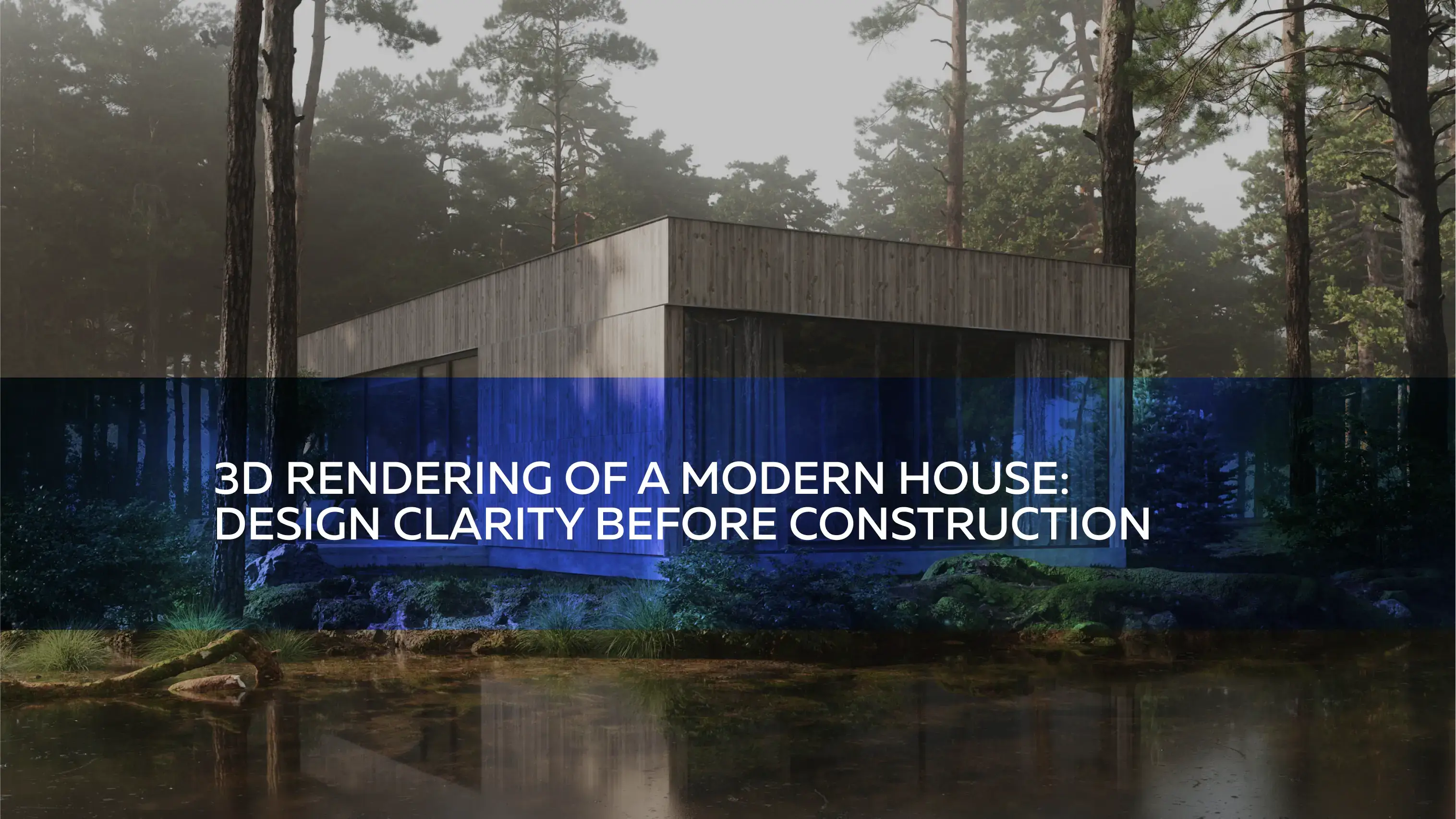
Unlike technical drawings, which communicate dimensions to contractors, a 3D rendering of a modern house provides a photorealistic visualization of architectural plans, offering a spatial, viewable experience. While engineering documentation communicates dimensions to contractors, 3D renderings illustrate experiences for everyone involved. For instance, they demonstrate how light falls across a concrete floor at 4 p.m., how a cantilevered roof appears from the street, and whether a 12-foot ceiling feels expansive or cavernous. This visual translation is essential for modern residential design, which is defined by clean lines, material honesty, and the deliberate interplay of interior and exterior spaces. The abstract becomes inhabitable space.
What 3D Rendering of a Modern House Actually IsWhat 3D Rendering of a Modern House Actually Is
Put simply, 3D rendering transforms a digital model of a house into a two-dimensional image that mimics real-world optics. This includes light behavior, material reflectivity, shadow depth, and atmospheric perspective. The output ranges from conceptual mood studies with soft lighting and suggestive forms to photorealistic renderings with individual wood grain and glass refraction.
The key difference from architectural drawings lies in dimensionality of understanding:
Architectural drawings communicate measurements and construction data. Wall thickness, window placement, and structural spans are defined precisely, but spatial interpretation requires professional training. Drawings describe what will be built, without conveying how the space will feel once completed.
3D rendering communicates experience rather than abstraction. Spatial flow, material warmth, and light quality become immediately legible, even for non-architects. Instead of relying on dimensions alone, rendering reveals what will be felt when moving through the house.
For modern houses where a single misplaced window can disrupt the balance of an entire facade or where material transitions are essential to achieving an appealing aesthetic, this experiential preview prevents costly discrepancies between expectation and reality.
Why Modern Houses Demand Visualization Early
Contemporary residential architecture relies on principles that make miscommunication through drawings alone more likely.
Form complexity is one example. Clean lines can obscure spatial nuances. For instance, a flat roof with a two-degree pitch may appear flat in a drawing, but it can create subtle water pooling or shadow lines that are only visible in three dimensions. Cantilevers that appear elegant in two dimensions may appear visually heavy or structurally precarious in context.
Material interplay plays a role as well. Modern design relies on juxtaposition, such as rough-hewn stone against smooth plaster or black steel framing against white oak. However, these relationships depend on lighting conditions, viewing angles, and scale, none of which are conveyed by material callouts on a plan. A 3D rendering of a modern house reveals how materials harmonize or clash under the morning sun versus the evening glow.
Light as a design element is also important. In modern homes, light isn’t incidental; it’s structural. Floor-to-ceiling windows, clerestories, and interior courtyards direct daylight throughout the day. Only through 3D visualization can designers determine whether a north-facing skylight will provide adequate lighting or create a cold, shadowed area.
Precision tolerances are no less essential. Modern architecture often specifies tight construction tolerances, such as 3 mm gaps between materials, flush transitions between surfaces, and minimal reveals around windows. These details may appear intentional in a rendering but can become glaring imperfections if misinterpreted on site. Visualization allows contractors to understand the visual consequences of tolerances before fabrication begins. For instance, a 5 mm gap between stone cladding panels may be structurally acceptable, yet appear sloppy in a rendering. Aligning design intent with construction execution prevents disputes when precision is a must.
When these elements converge, as they do in most contemporary residential projects, drawings alone are insufficient. This is why visualization shifts from a luxury to a necessity.
Exterior Rendering: Massing, Materials, and ContextExterior Rendering: Massing, Materials, and Context
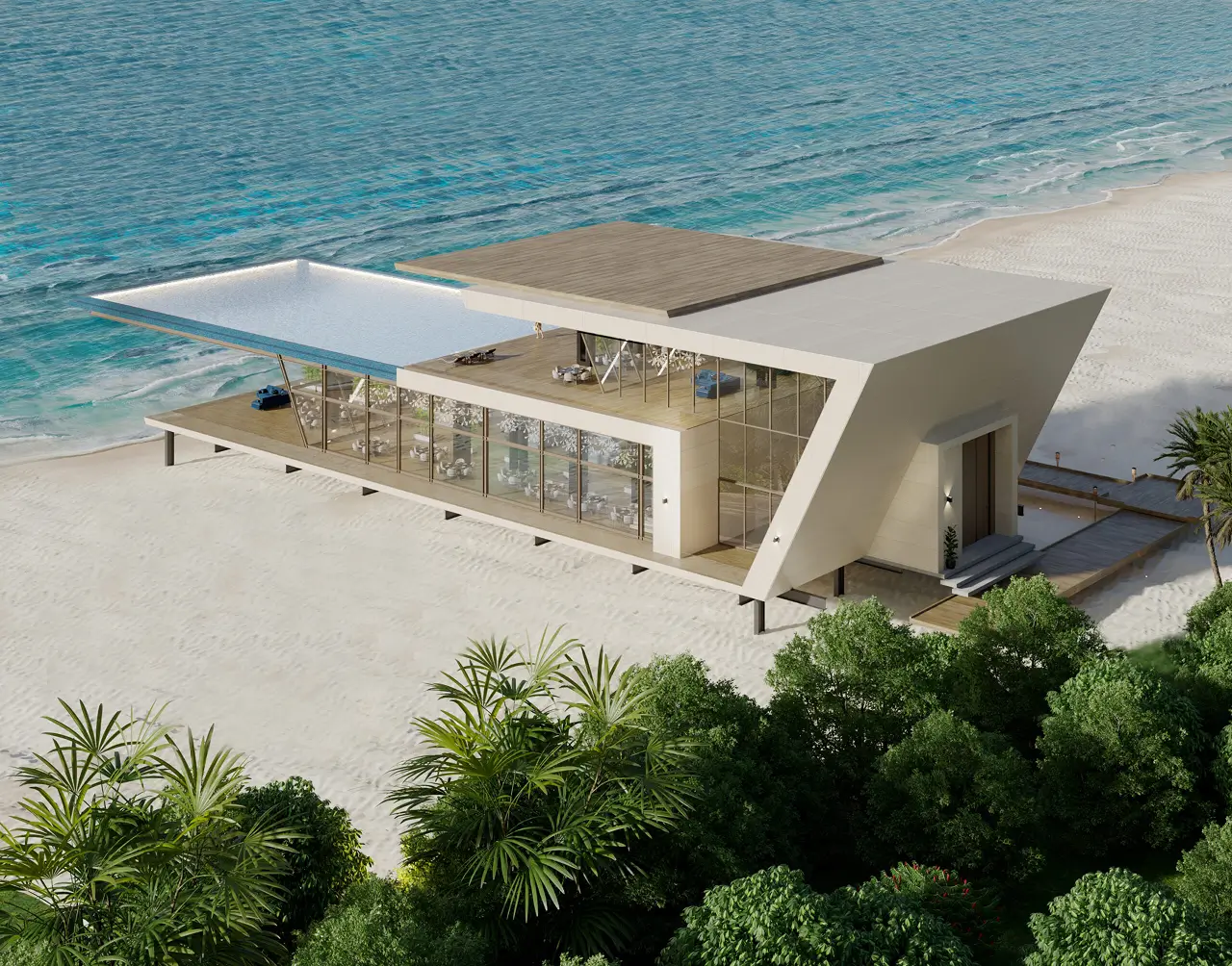
Beyond aesthetics, the exterior render of a modern house serves three practical functions:
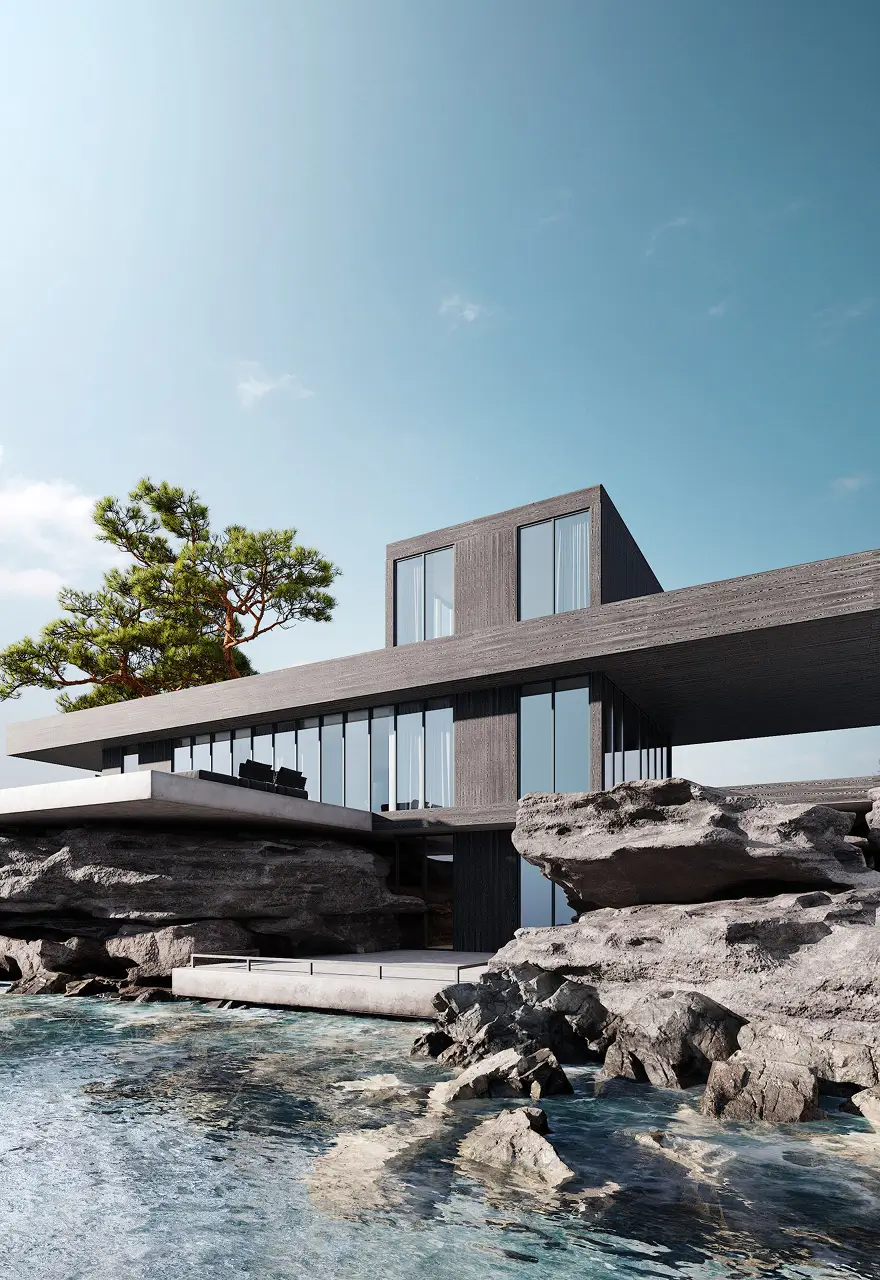
Massing validation. Modern architecture often incorporates elements such as floating slabs, recessed volumes, and asymmetrical compositions to play with volume. A 3D rendering reveals whether these design choices appear intentional or awkward from key approach angles. For example, a volume that looks dynamic on a floor plan may appear top-heavy or unbalanced when viewed from the street.
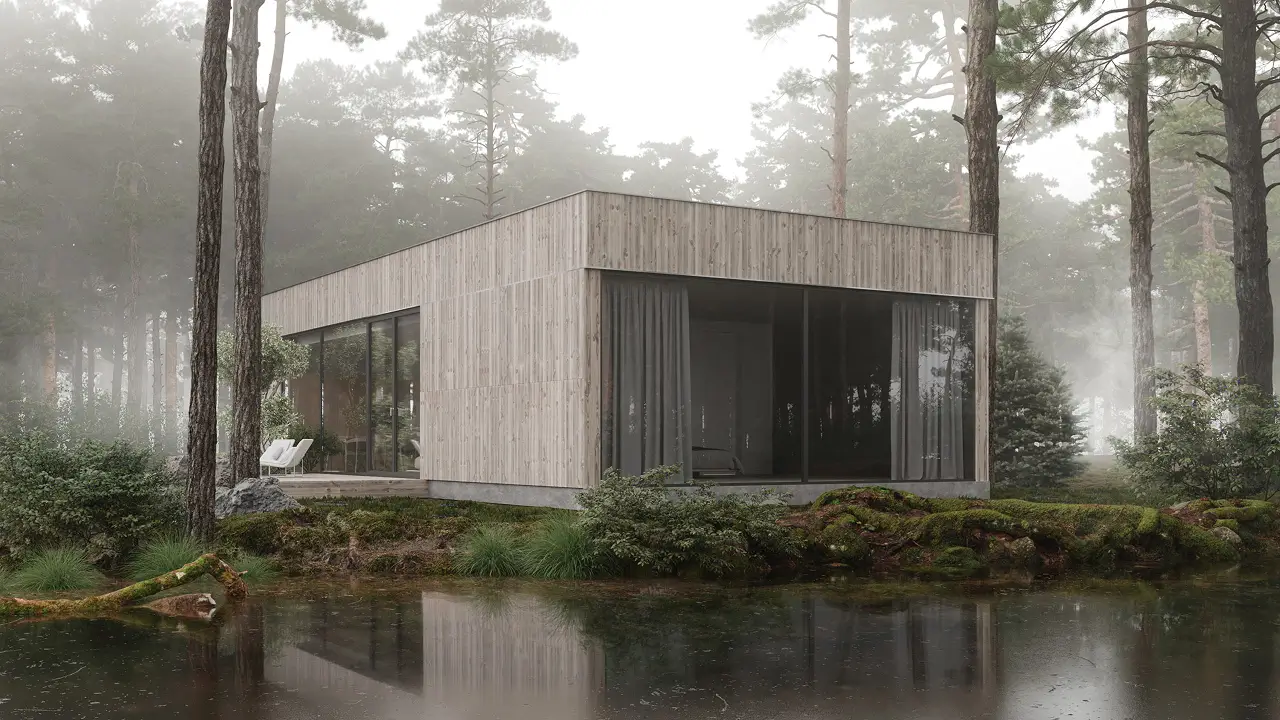
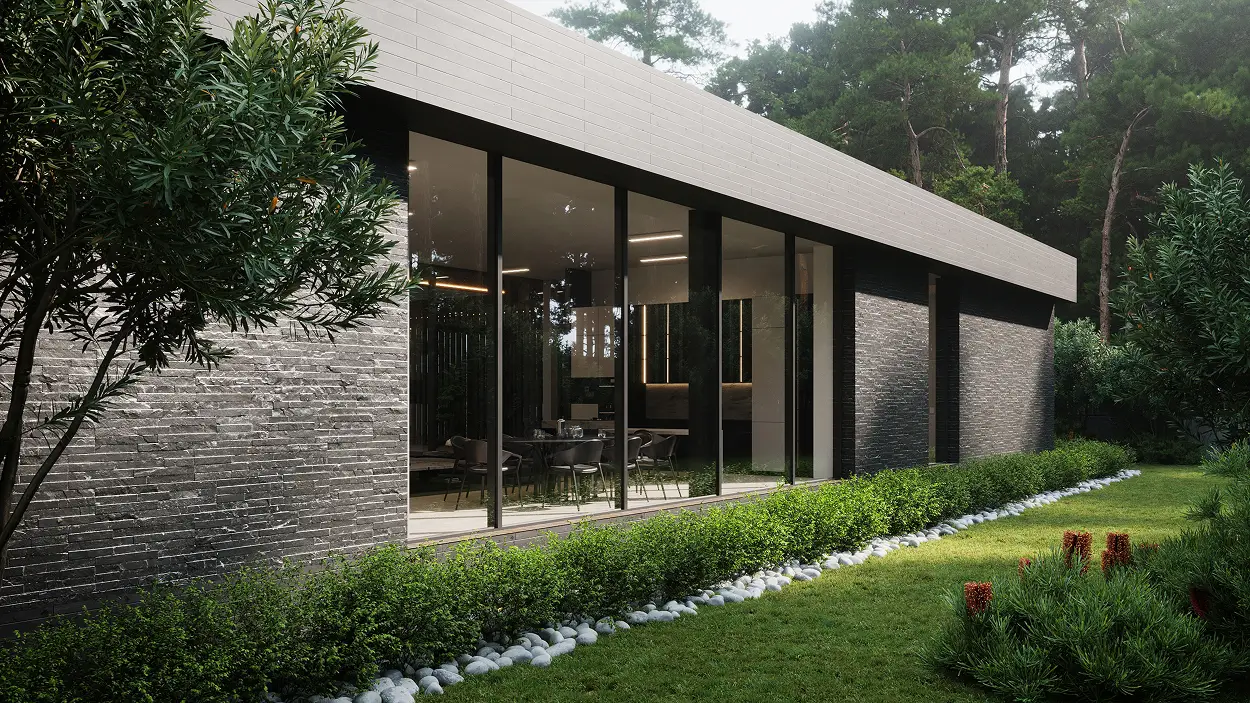
Material authenticity. A photorealistic 3D rendering house visualization captures how materials behave in real conditions. It shows the weathering of concrete under rain streaks, the reflection of surrounding greenery by metal cladding, and how wood siding absorbs or repels light at different times of day. This prevents the common pitfall of selecting materials that look ideal in showroom samples but subpar at a building’s actual scale.
Site integration. Modern houses often emphasize a connection to the landscape, but that bond can be fragile. A rendering placed within an accurate site context shows whether the building respects the topography, preserves sightlines to views, and appears grounded or imposed. This is especially important for sloped sites or dense urban infill, where context defines success.
Interior Rendering: Space, Light, and Human Scale
Through interior 3D rendering home visualization, the gap between measured and perceived space is bridged. This distinction is significant in modern design, where minimal ornamentation emphasizes proportion and light.
Spatial perception is key. For example, a 12-foot ceiling may feel either soaring or oppressive, depending on the room’s width, window placement, and ceiling continuity. Only a 3D rendering can reveal whether a space feels open and airy or overwhelming. Similarly, open layouts that appear logical on paper can create visual chaos or acoustic challenges that are only apparent in three dimensions.
Light behavior simulation is another important aspect of interior 3D rendering. Modern spaces rely on controlled daylight. A rendering can simulate sun angles for specific dates and times. It can show whether a west-facing glass wall would create unbearable glare on summer afternoons or how a precisely placed skylight would illuminate a hallway at 9 a.m. This shifts lighting design from assumption to fact.
Finish coordination can also be simulated. With minimal visual distraction, every material choice in a modern interior carries weight. A 3D render home visualization shows how floor tones interact with wall colors under artificial lighting, whether cabinet hardware creates visual noise, and how texture variety prevents sterility. These subtleties determine whether a space feels curated or cold.

How Rendering Shapes Real Design Decisions
The value of 3D rendering house visualization lies not in the presentation itself, but rather in the revisions it prompts before construction begins.
For example, when a client reviews a rendering, they might realize that the kitchen island blocks the view of the garden. This issue of flow is invisible in floor plans. The layout can be digitally adjusted to ensure that no concrete is poured incorrectly.
Similarly, an architect might notice that the proposed black window frames disappear against the dark exterior walls at dusk, which reduces visual definition. The architect can then adjust the design accordingly. So, the frames are switched to bronze, and this decision is made in hours rather than weeks after installation.
A contractor might point out that the dramatic cantilever shown in the renderings requires additional structural support that is not reflected in the initial engineering plans. Calculations are updated before permits are filed.
This feedback loop transforms months of on-site problem solving into days of digital iteration. The rendering becomes a decision-making tool rather than just a decorative item.
When Exterior vs Interior Rendering Matters MostWhen Exterior vs Interior Rendering Matters Most
Not every project requires equal investment in both areas. Strategic allocation depends on the phase of the project and the stakeholders’ needs.
Prioritize exterior rendering when:Prioritize exterior rendering when:
– Seeking planning permission or design review approval, during which committees evaluate massing and context.
– Marketing off-plan sales, as curb appeal drives initial interest.
– Resolving complex site relationships, such as slope, neighboring structures, and view corridors.
Prioritize interior rendering when:
– Finalizing material selections, as texture and light interaction prove decisive.
– Designing renovation additions so that new spaces must harmonize with existing volumes.
– Presenting to end-users who care more about daily living experience than facade composition.
For large-scale projects, the order of the steps is important. Take exterior renders, for example. They often precede interior work, first establishing the container and then detailing the content. However, both serve the same purpose of reducing uncertainty before irreversible decisions are made.
Setting Realistic Expectations
Although a 3D render home visualization is a powerful tool, it has its limits. Understanding these limitations prevents misalignment.
What rendering guarantees:What rendering guarantees:
– Spatial relationships and proportions
– Material behavior under specified lighting conditions
– Design intent as interpreted by the visualization artist
What rendering cannot guarantee:
– Exact color matching on all screens due to calibration
– How materials will age or weather over years
– The emotional experience of physically occupying the space
The most effective renderers acknowledge these limitations by using consistent lighting references, providing material samples alongside visuals, and presenting renders as informed previews rather than perfect predictions. This approach builds trust and manages expectations among all stakeholders.
The Role of Viewpoint Selection in Decision-MakingThe Role of Viewpoint Selection in Decision-Making
Not all renderings carry the same weight in the design process. The selection of strategic viewpoints determines which decisions are validated and which are overlooked.
Human-eye perspectives reveal how spaces feel during daily use. For example, they show whether a hallway seems narrow and if a window provides an attractive view from a seated position. They also reveal visual obstructions caused by ceiling beams. Such views reveal ergonomic issues that plans often overlook.
Approach sequences simulate movement toward the house, revealing how the building unfolds visually from the street to the entryway. A facade that appears balanced in a static shot may seem disjointed when viewed as a series of glimpses through trees or around a curve in the driveway.
Detail callouts focus on critical junctions, such as where the floor meets the wall or the interior transitions to the exterior. These macro views validate the material transitions that define the quality of modern architecture, preventing designs that look good from afar but fail up close.
Selecting viewpoints is a matter of risk management, and each camera angle addresses a specific question before construction begins.
Common Use Cases for 3D Rendering of a Modern House
Beyond design refinement, 3D renderings of residential buildings have specific, practical applications.
One example is new construction with no physical reference. When building from scratch, especially with custom designs, renderings are the only visual reference for months or even years. They help align architects, clients, contractors, and even neighbors on what will be built.
Renovations and additions also benefit from renderings. Blending new, modern elements with existing structures demands precision. Renders demonstrate how a glass extension will integrate with the original brickwork and if the new roofline will maintain historic proportions. This prevents jarring mismatches.
Renders are also useful for obtaining planning approvals and stakeholder buy-in. Municipal review boards, homeowners’ associations, and investors often lack architectural training. Photorealistic visualizations translate technical proposals into accessible experiences, which accelerates approvals and secures commitments.
Visualizations also help with marketing pre-construction sales. For developers selling homes before completion, renders serve as the primary marketing tool, allowing prospective buyers to visualize their future residence with enough confidence to place deposits.
Budget-constrained projects can benefit from renders as well. When clients have budget limitations for materials, side-by-side renders compare options and make trade-offs visible. The emotional impact of downgrading a feature becomes apparent before purchase orders are placed. So, visualization transforms abstract cost savings into a tangible difference in experience.
From Concept to Buildable DesignFrom Concept to Buildable Design
The ultimate function of 3D rendering house visualization is risk reduction. Modern residential projects are pretty high-stakes, with custom details, premium materials, and clients that expect top-notch work. If you mess up the proportions or materials, it can totally ruin months of design work and thousands of dollars in construction costs.
Rendering compresses the feedback cycle. Instead of finding a spatial flaw during drywall installations that needs demolition and rework, the issue is caught when pixels can be easily changed. Stakeholders don’t get stuck arguing over material samples under showroom lighting. Instead, they evaluate options under simulated real-world conditions.
But this doesn’t make everything certain. It moves the risk from the construction to the design phase, where changes cost 10 times more. And since iteration is fast and cheap in the early stages, it’s a win-win. For modern houses, where precision is key, that shift is a must.
A 3D rendering of a modern house is neither art nor advertisement. It’s a useful tool for getting everyone on the same page about spatial concepts before the construction starts and materials are ordered. In a time when modern residential design is all about precision in form, material, and light, visualization is the key to turning good ideas into reality. It’s not just because it looks impressive. Instead, it helps you avoid mistakes that you might not spot with drawings alone.