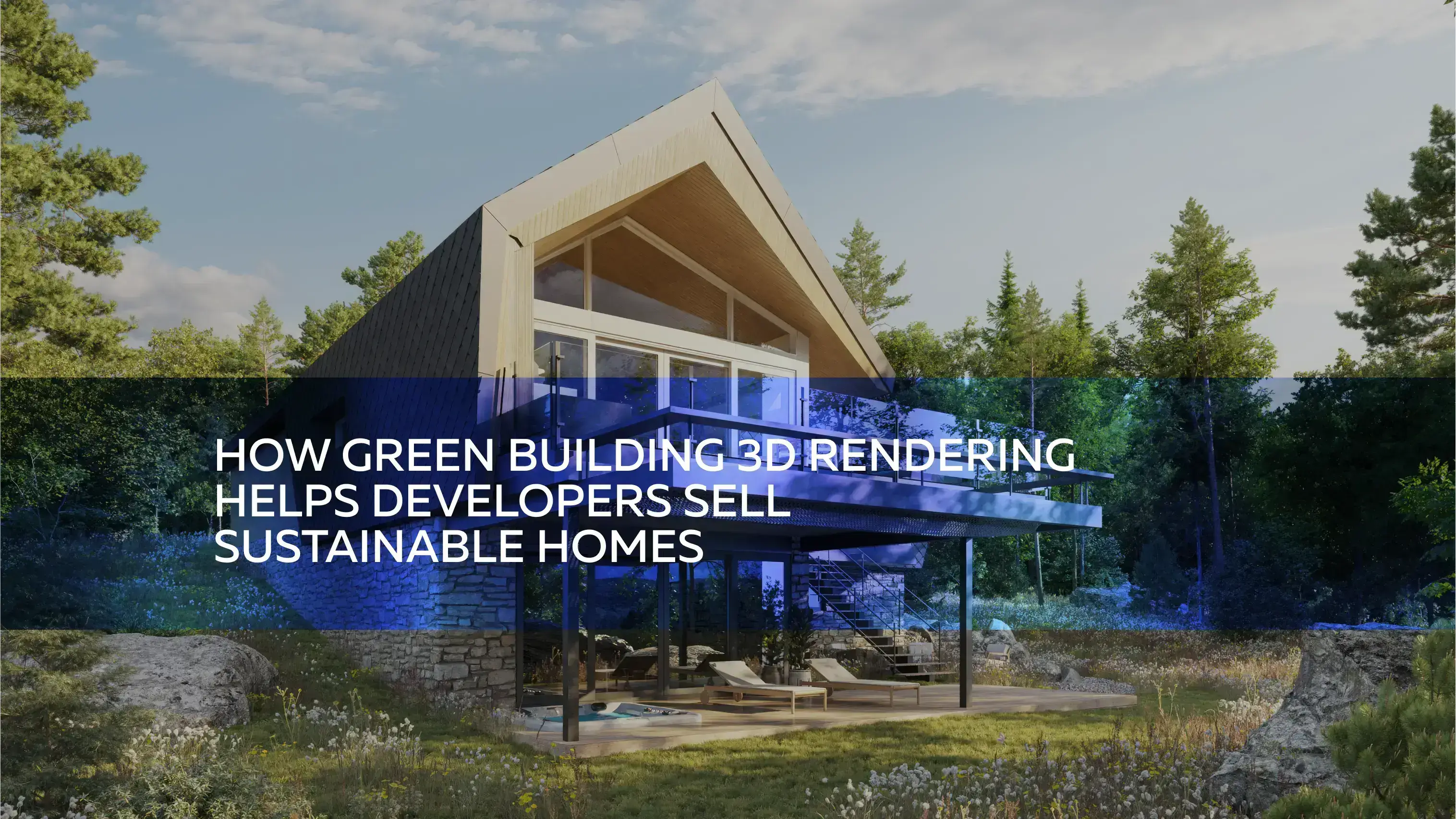
How Green Building 3D Rendering Helps Developers Sell Sustainable Homes

Discover High-Quality CGI Services Tailored to Your Business
- Why Sustainable Design Is Hard to Explain with Traditional Tools
- How Green Building 3D Rendering Improves Decisions and Risk Management
- Clarifying the Final Design
- Linking Sustainable Design Choices to Real Outcomes
- Reducing Misalignment Between Architecture, Engineering, and Marketing
- Visualizing Eco‑Friendly Design Before Construction
- The Commercial Impact of Green Building 3D Rendering on Sustainable Housing Projects
- Making Technology Visible in Eco-Friendly Design
- De‑Risking Remote and Nature‑Focused Green Building Sites with 3D Rendering
- Supporting Higher Prices with Clear Visuals
- Aligning Architecture, Technology, and Marketing Around One Story
- What Stakeholders Should Look For in a 3D Rendering Partner
- From Vision to Market: The Role of Green Building 3D Rendering
Eco-friendly housing is becoming a core part of many real estate portfolios. Green design, building standards, and technology now influence funding decisions, product roadmaps, and brand positioning. We have already explored how 3D rendering is transforming property development in a broader context. In this article, we focus specifically on how green building 3D rendering helps stakeholders communicate and market eco-friendly homes.
As a rule, such housing projects are harder to sell and manage. They are more complex to design, often expensive to build, and frequently located in places that are difficult to show before construction. This leads to a clear set of business risks for stakeholders:
– Uncertain demand at a higher price point
– The value of sustainable systems is difficult to explain without a finished show house
– Higher perceived risk when the site is remote or the architecture is unconventional
Green building 3D rendering directly addresses these issues. It allows leadership teams to view the project from a buyer’s perspective, explain the logic behind design and technology decisions, and give marketing clear and consistent visuals.
Why Sustainable Design Is Hard to Explain with Traditional ToolsWhy Sustainable Design Is Hard to Explain with Traditional Tools
On internal slides, eco‑friendly design looks straightforward. Teams talk about insulation levels, solar panels, material choices, and energy performance. Architects and engineers work with these details daily, so the meaning is clear. Buyers and non-technical stakeholders, however, often perceive them as abstract.
Plans and sections require training to interpret. An overview of sustainable features often reads like a checklist rather than a benefit. Photos of empty land or early construction rarely help anyone imagine the final environment. As a result, key decisions about pricing, positioning, and launch timing are sometimes made with only a partial understanding of how the project will feel once completed.
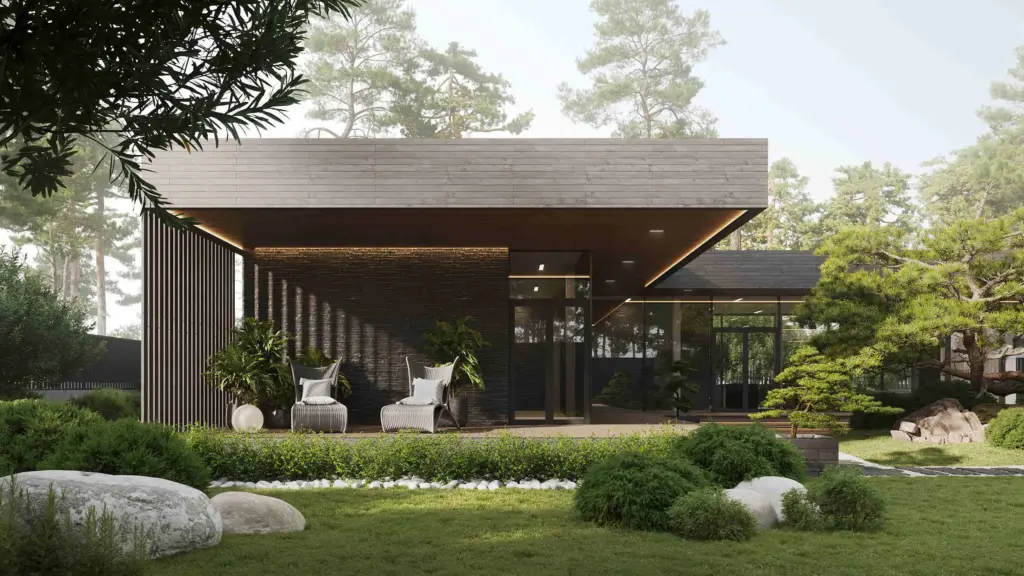
Architectural 3D rendering changes the format of the conversation. Instead of asking people to project from drawings and numbers, it presents the future development through realistic scenes. The building appears in its landscape, rooms are shown with natural light, and the transition between interior spaces and the surrounding environment becomes clear.
How Green Building 3D Rendering Improves Decisions and Risk Management
If 3D visualization is involved only at the very end of a project, it acts as a cosmetic layer. When it is introduced earlier and used systematically, it becomes part of the decision‑making process. For real estate developers integrating 3D visualization into their projects, this has several practical effects.
Clarifying the Final DesignClarifying the Final Design
One of the most direct benefits of early 3D rendering is clarity. Stakeholders can see the building’s proportions, its placement within the landscape, and the way facades interact with light and shadow. Massing, material choices, window sizes, and outdoor areas come together in a single view. If a building seems too large for a slope or a terrace feels exposed, these issues can be fixed before construction starts.
Linking Sustainable Design Choices to Real OutcomesLinking Sustainable Design Choices to Real Outcomes
Sustainable design decisions like orientation, shading, glazing, envelope performance are often treated as technical parameters. With green building 3D rendering, their effects become visible. Leadership can observe the impact of orientation on daylight in living areas, view shading devices reduce glare while preserving views, and notice how the rhythm of the facade shapes the perception of quality.
Reducing Misalignment Between Architecture, Engineering, and Marketing
Large projects involve several teams, each with different priorities and ways of working. Without a shared visual reference, they may interpret the design in slightly different ways. A coordinated set of 3D renderings provides a single reference point for everyone. Architects verify that the design intent is maintained. Engineers ensure that key systems are shown accurately. Marketing checks that the product story is clear and consistent. This shared understanding helps shorten approval cycles and reduces the need for late-stage redesigns.
Visualizing Eco‑Friendly Design Before ConstructionVisualizing Eco‑Friendly Design Before Construction
For many teams, the most strategic advantage of green building 3D rendering is the ability to test sustainable design decisions early. Renderings show the project in natural light, actual surroundings, and changing weather. This allows decision‑makers to compare different design options: facade strategies, material palettes, landscape approaches, or massing scenarios.
The Commercial Impact of Green Building 3D Rendering on Sustainable Housing Projects
Beyond internal decision‑making, architectural visualization also affects how eco-friendly housing projects perform on the market.
Making Technology Visible in Eco-Friendly DesignMaking Technology Visible in Eco-Friendly Design
Sustainable technology is one of the main cost drivers in green developments. High‑performance windows, advanced insulation, heat pumps, ventilation systems, solar installations, and water‑saving infrastructure all require investment. If these systems remain invisible in communication, they risk being perceived simply as extra cost.
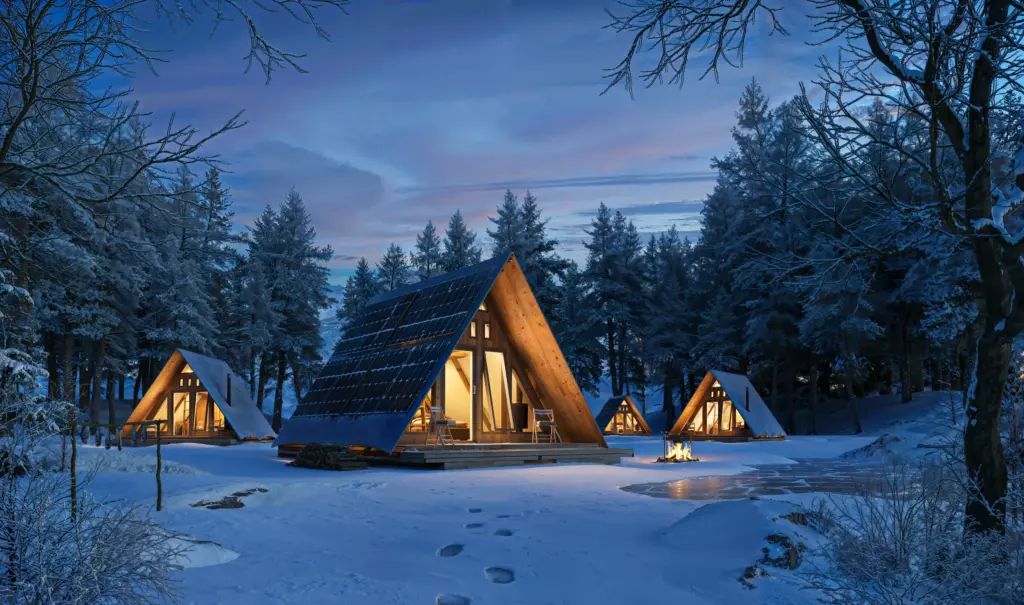
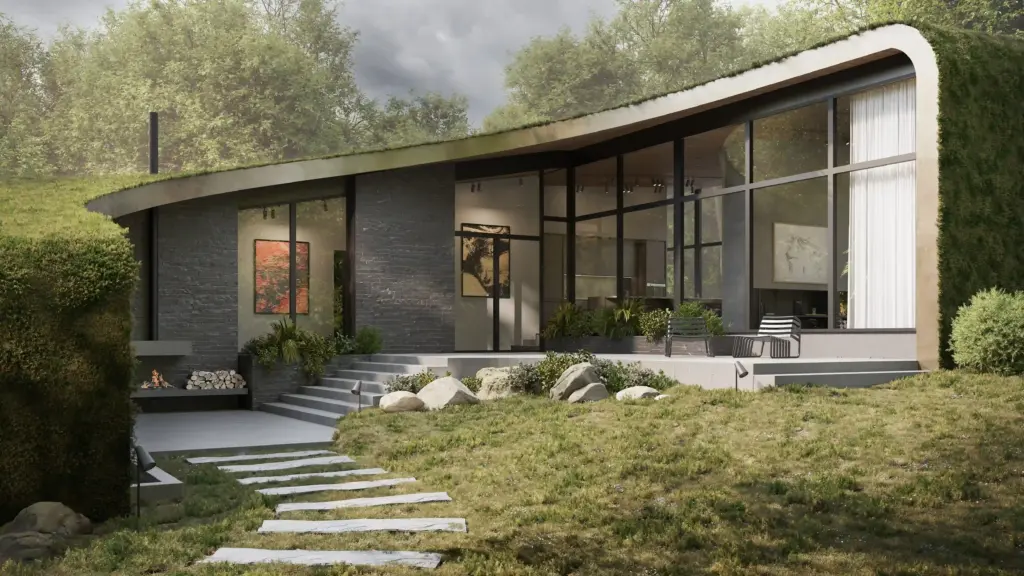
Green building 3D rendering gives stakeholders a way to show how these technologies influence the experience of the building. Instead of describing systems in specifications, teams can show how they shape the living experience. Solar panels, green roofs, or shading elements are integrated into the architecture. Interior images illustrate bright, stable, comfortable rooms that implicitly reflect good thermal and daylight performance. In some cases, more diagrammatic renders can reveal a simplified section of the construction buildup or indicate where key systems sit, without overwhelming non‑technical audiences.
For marketing directors, this creates a set of assets that make sustainable technology easier to explain. Instead of relying on dense specifications, they can point to specific visuals and describe how eco‑friendly design and technology improve daily life. For leadership, this strengthens the link between engineering decisions and market impact. The investment is visible and can be connected to buyer perception and pricing strategy.
De‑Risking Remote and Nature‑Focused Green Building Sites with 3D Rendering
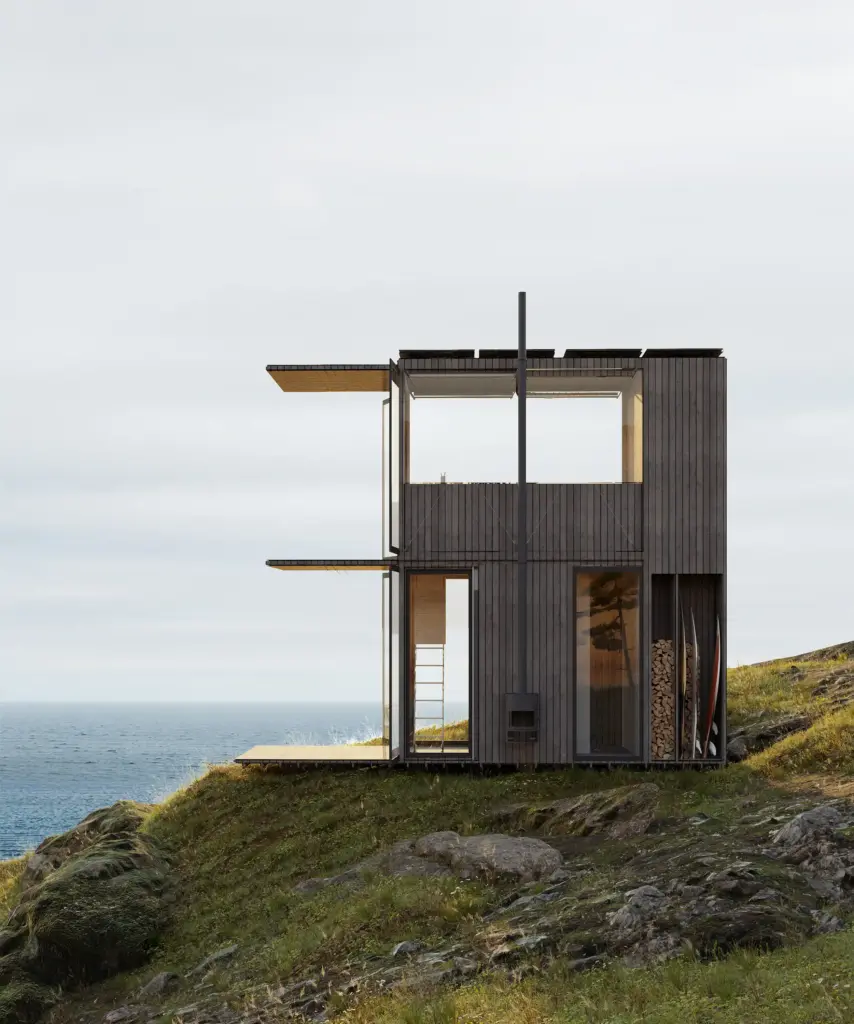
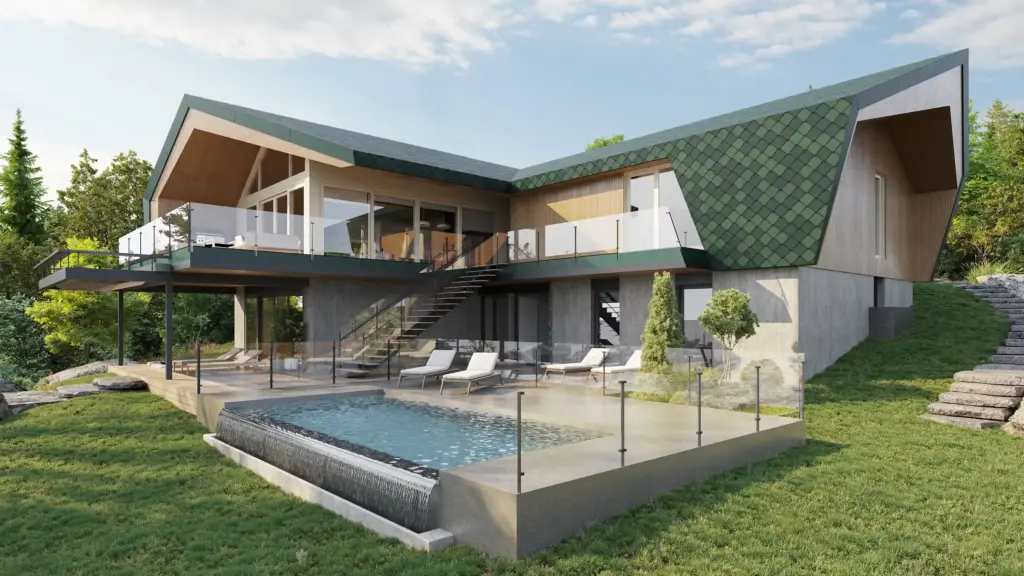
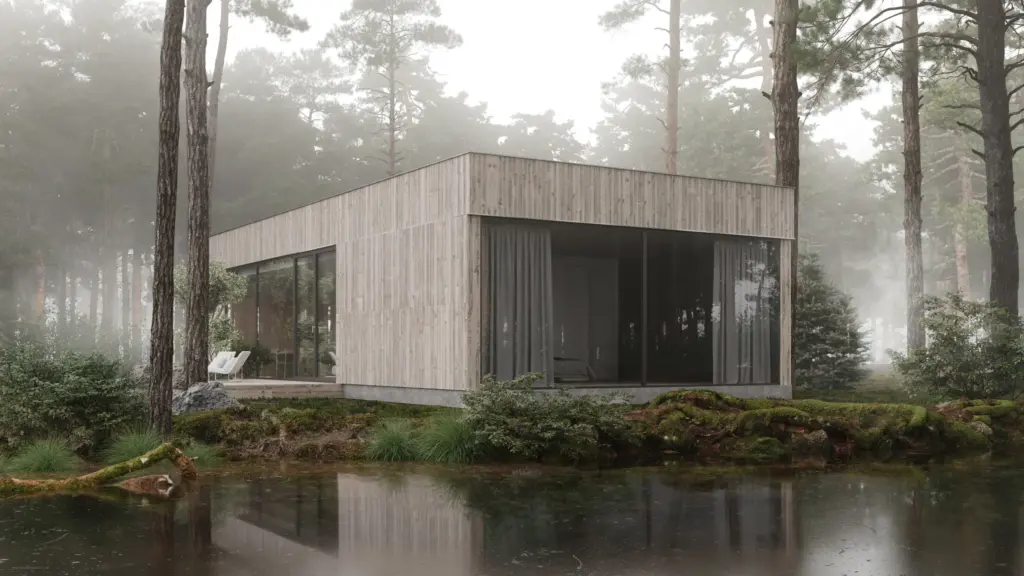
Many eco-friendly projects are located in natural settings like forests, lakes, mountains, or dunes. These sites highlight sustainability but also bring challenges. Access is difficult, photos rarely show the final look, and buyers who are far away find it hard to judge the property.
3D visualization replaces a physical model that isn’t built yet. By combining accurate terrain data with realistic vegetation and lighting, it illustrates how the building fits into its surroundings. Visuals may capture the view from the access road, the approach through the forest, the main terrace, and key interior rooms. Seasonal variations also help illustrate how the same location changes over time, which is especially valuable in regions with strong contrasts between summer and winter.
From a stakeholder perspective, this reduces risk in several ways. Teams can see sightlines, privacy issues, or access challenges early on. It also helps highlight the project’s strongest points, for example, a terrace with a great view or a sunlit living area. By turning abstract plans into concrete images, stakeholders feel more confident about the project, and discussions become faster and more focused.
Supporting Higher Prices with Clear VisualsSupporting Higher Prices with Clear Visuals
Green projects usually cost more to build than comparable conventional developments. Without clear communication, this difference may create tension during pricing discussions and negotiations.
Green building 3D rendering helps convey the benefits of the design. Well-prepared images show more than floor plans. Buyers notice daylight in rooms, the flow between spaces, the feeling of private outdoor areas, framed views, and the building’s relationship to its surroundings. Material quality and the overall sense of openness or comfort also stand out.
When visuals match the design and the underlying sustainable technology, they support the idea that the home is genuinely different from a standard alternative.
Aligning Architecture, Technology, and Marketing Around One Story
Sustainable projects require consistent communication across many touchpoints: design reviews, authority submissions, investor presentations, sales materials, and public campaigns. If each group uses different visuals or different language, the project’s story can become fragmented.
A consistent set of 3D renderings helps keep that story aligned. Instead of preparing separate visuals, architects can point to the same images when they explain design intent.
For technology and sustainability teams, these renderings become a reference they can check against to ensure key systems are shown accurately.
What Stakeholders Should Look For in a 3D Rendering PartnerWhat Stakeholders Should Look For in a 3D Rendering Partner
To obtain these benefits, the choice of visualization team matters. Not every studio is equally suited to eco‑friendly and green building work. For stakeholders, a few criteria are particularly important:
– The partner should have a basic understanding of sustainable architecture and technology. This doesn’t mean the studio must perform engineering calculations, but its team should know enough to avoid unrealistic elements, such as incorrectly oriented solar panels or implausible shading solutions. They should also be experienced with real landscapes, vegetation, and climate conditions, especially for projects set in forests, mountains, or coastal areas.
– Equally important is the ability to build image sets around the project’s commercial needs. A studio that only delivers a hero shot is less useful than a partner that plans a full visual toolkit for investor decks, sales portals, social media, and long‑term brand use from the start.
– Finally, a good studio is ready to collaborate with architects, engineers, and marketing to ensure that all perspectives are reflected in the visuals.
From Vision to Market: The Role of Green Building 3D Rendering
As eco‑friendly design and green building become central to real estate strategy, clear communication of these projects is increasingly important. How developments are presented can influence which move forward and how they perform. Stakeholders need ways to reduce uncertainty, make sustainable technology understandable, and help teams move from concept to market with confidence.
Green building 3D rendering plays a key role in this process. It makes complex design and technology decisions visible, supports projects in remote or unconventional locations, and provides marketing teams with accurate visuals that reflect the true character of the development.
SHARE THIS...
Get High-Quality CGI for Your Business Purposes
Book a call to get started
Our other articles
Elevate Your Business with Stunning CGI
Start working on your next project as soon as tomorrow. Book a call with our team and discuss the key details:
- Learn how we achieve photorealistic quality in our visualizations and animations. Explore our award-winning projects, featured multiple times on Behance.
- Get to know our company structure and decide which services you need
- Tell us about your project and let us complete a free test task to demonstrate our approach
- Find out the exact cost of bringing your project to life