How a Home Nurse App Secured $1.2M Pre-Seed Funding
in Boston’s Market
A strategic repositioning transformed a booking app into a platform that stabilizes the workforce.
-
Client
Home Nurse
-
Services
Presentation Design Service, Strategic Positioning, Investment Deck Development, Business Model Architecture
-
Property Type
Digital Health Startup
-
Location
Boston, Massachusetts
Client & Market Context
Who They Are and What They Stand For
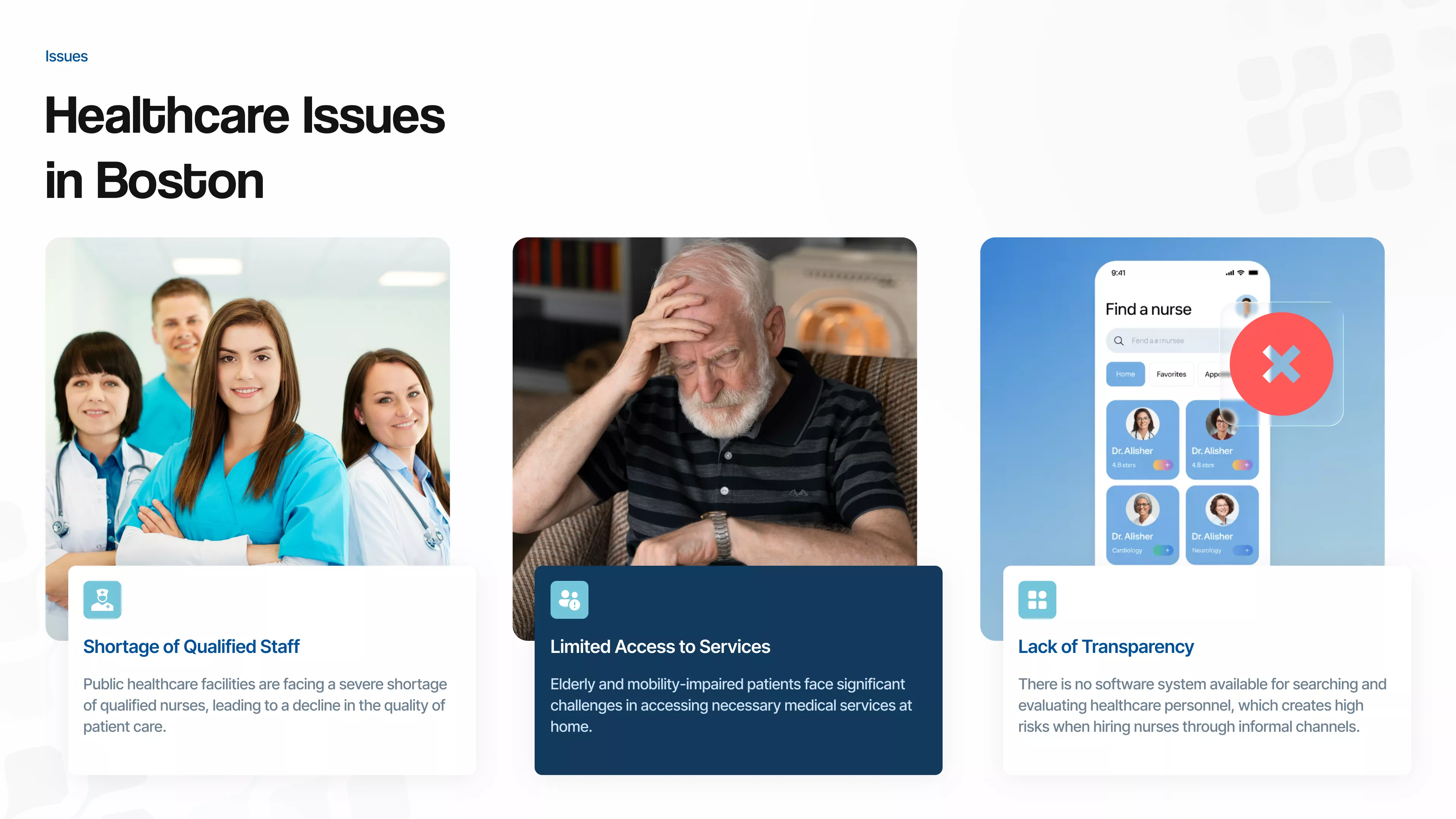
Before starting the company, the founder and CEO of Home Nurse worked as an ER nurse at Massachusetts General Hospital for 12 years. She observed her colleagues abandoning their hospital shifts for unstable gig work on fragmented platforms, which resulted in unpredictable incomes. Meanwhile, families scoured Nextdoor and Facebook groups to find vetted home care providers.
Boston’s paradox was acute. World-class medical institutions coexisted with a broken home care market. There was no centralized credential verification, payment protection, or career path for nurses working in home settings. Professional dignity, which has become scarce in America’s burnout-plagued nursing workforce, was the real product.

Business Challenge
Navigating the Challenges Ahead
Early investor feedback revealed three fatal perceptions:
- This is a crowded space with razor-thin margins and high churn.
- Subscription models fail when professionals control the supply.
- Massachusetts nursing boards, HIPAA, and Medicare compliance would sink a pre-revenue startup.
Even worse, the founding team’s initial pitch emphasized features like an SOS button, e-records, and geolocation.
The challenge: investors saw a spec sheet instead of a business plan.
Results & Business Impact
-
91%
Investor focus shifted to scaling velocity across the USA
-
78%
Founder retained equity
-
20%
Above target in 138 days
-
60
Advisory formalized with Massachusetts Board of Nursing
Project Objectives
Setting Our Sights on Success
-
Secure $1M+ in pre-seed funding in just five months by repositioning Home Nurse as a tool to retain nurses, rather than a patient convenience solution.
-
Prove nurses would pay subscriptions by anchoring value to income predictability rather than features.
-
Transform regulatory complexity into defensibility through proactive engagement with the Massachusetts Board of Nursing.
-
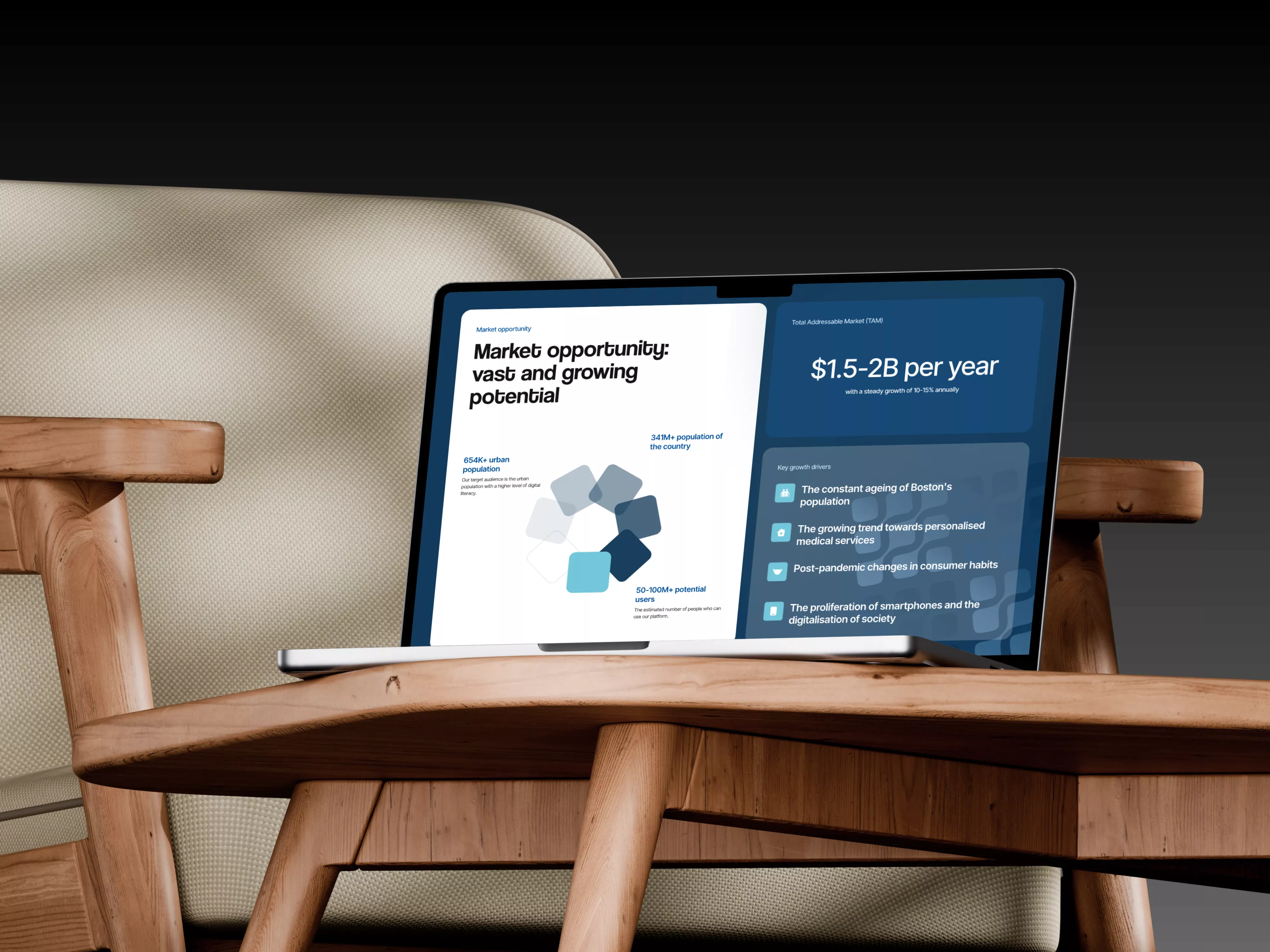
Refocus the TAM from booking fees in Boston to the $4.2 billion home nursing segment across the USA.
Services Provided
Our Toolkit for Transformation
When strategy, business model, and regulatory logic are brought together into a single narrative, a presentation is no longer a set of slides. It becomes a strategic asset delivered through a professional Presentation Design Service, built to attract capital, approvals, and partnerships.
Strategic CGI Approach
Innovative Strategies That Stand Out
Key Visual Decisions
Capturing the Essence of the Brand
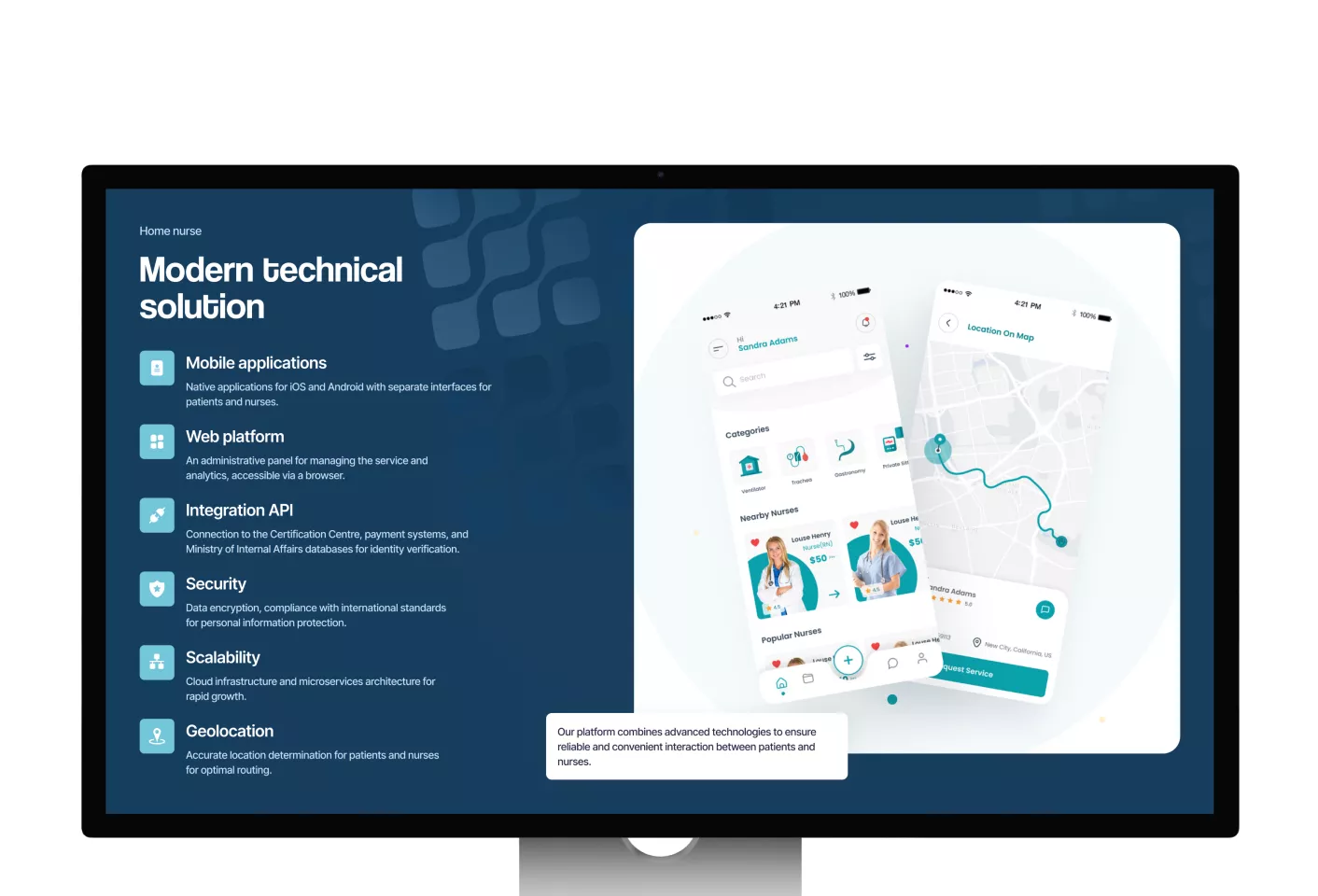
Replaced “How It Works” with “Why Nurses Stay”
Early-stage healthcare investors care about defensibility more than UI flows. Using pilot data from 47 Boston nurses, we created a slide showing that the subscription model drove 3.2 times higher retention than commission-based competitors, with nurse LTV at $2,800 and CAC at $85.
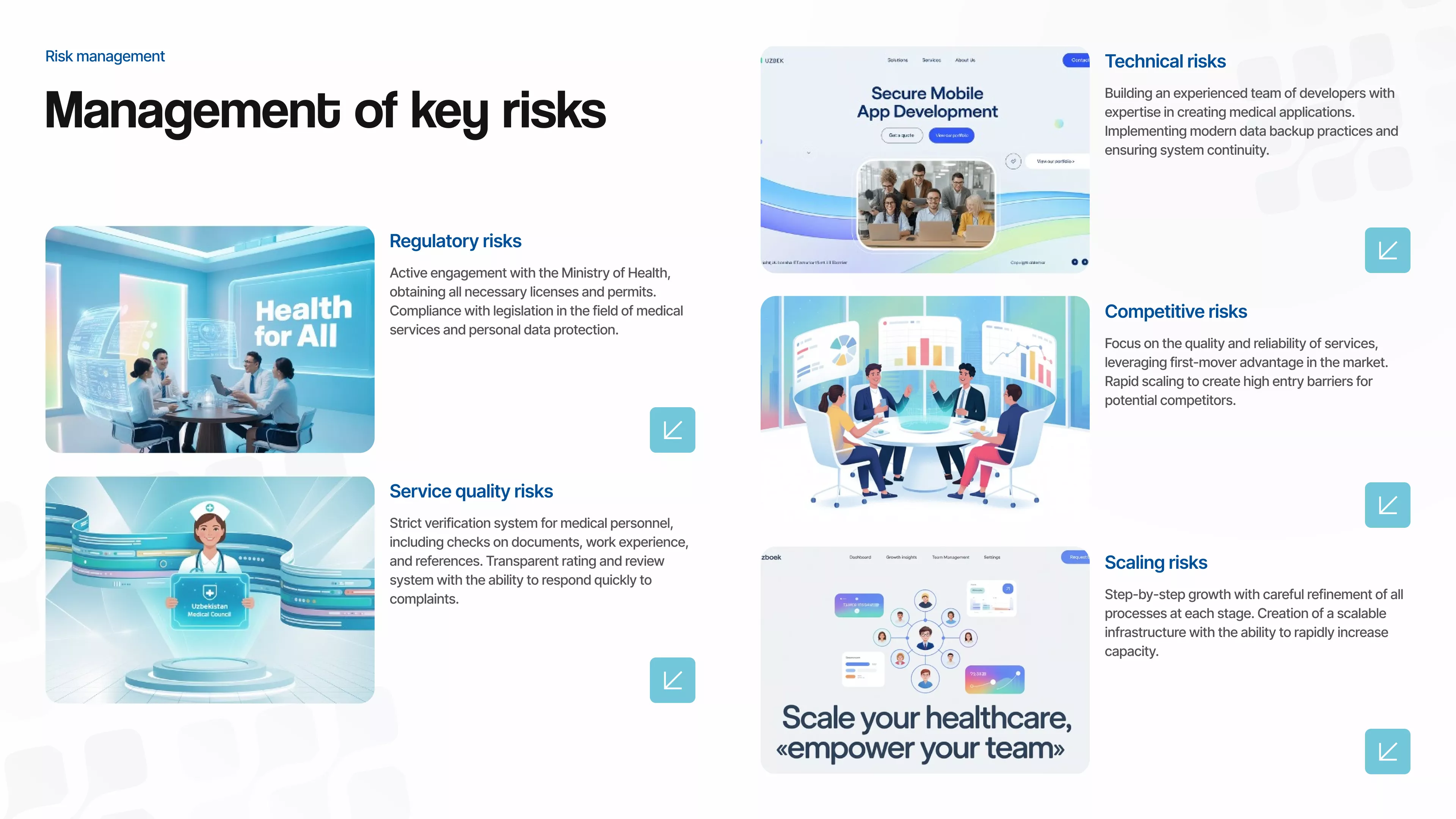
Reframed regulatory complexity as moat
Instead of glossing over compliance, we emphasized Home Nurse’s advisory relationship with the Massachusetts Board of Nursing and its planned integration with Mass HIway, the state health information exchange. We turned risk into proof of our commitment to operational excellence.
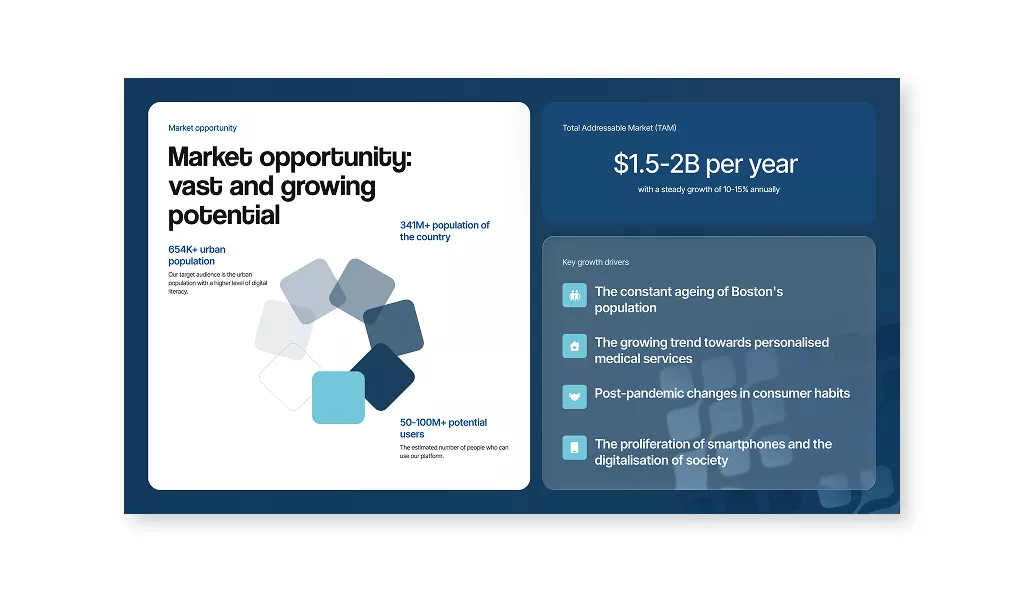
TAM is grounded in USA reality
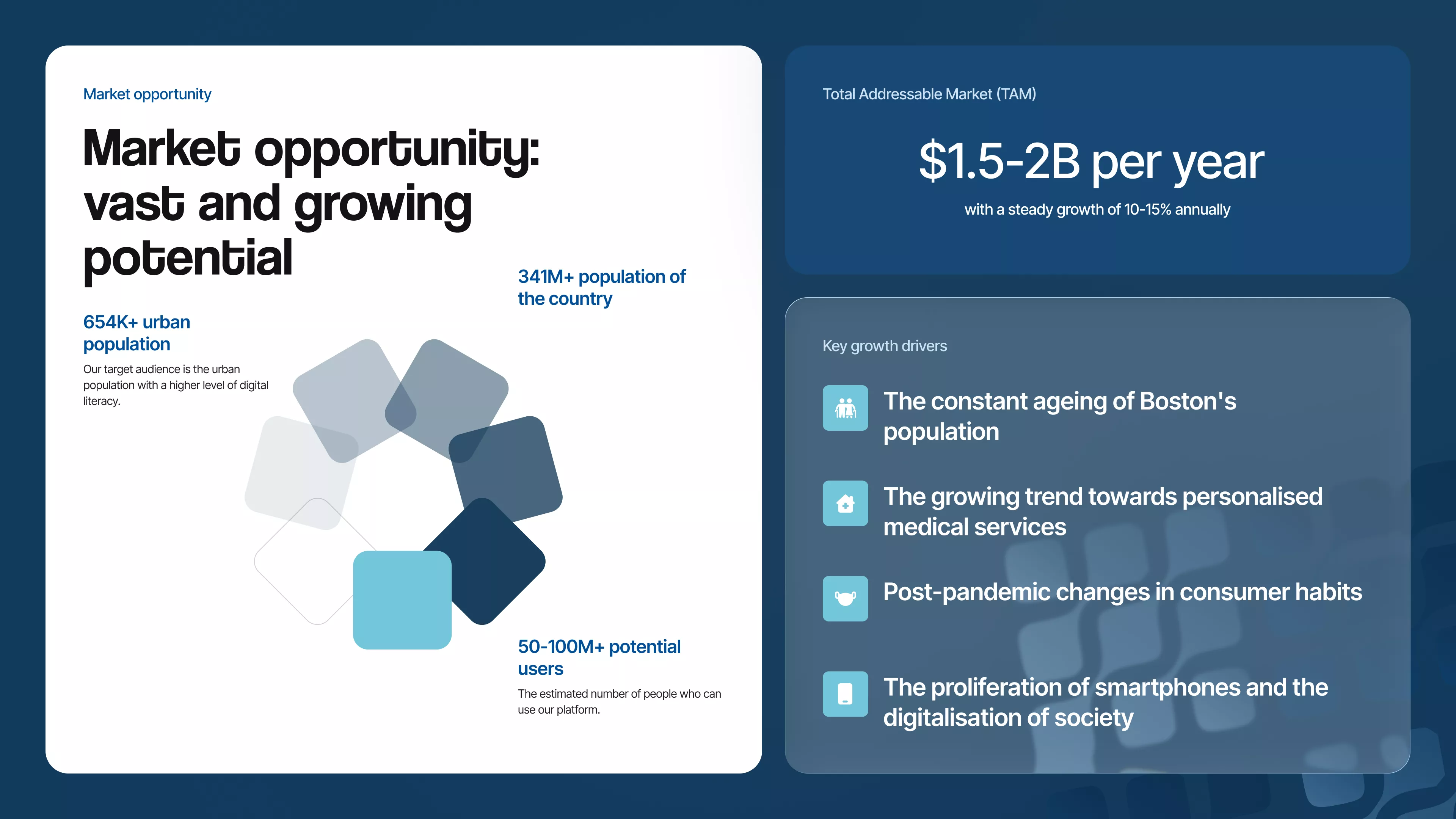
The addressable market across Massachusetts and Rhode Island is $1.8 billion, as determined by CMS data on Medicare-covered home health visits requiring RN oversight. There are no inflated claims about the total US market, only a defensible foothold with clear expansion logic into Connecticut and New Hampshire.
Production Process
Building a Narrative Through Imagery
-
Nurse Immersion
After interviewing 31 nurses across Boston for three weeks, one thing was clear: they wanted income stability more than extra bookings. One ICU nurse quit her job for more flexibility but now worries every Sunday if she’ll have work on Monday. The tone of the conversation shifted from transactional to human.
-
Investor Empathy Mapping
We anticipated every possible objection and incorporated preemptive answers into the slide logic. Rather than defensive footnotes, these responses were core value propositions anchored in pilot retention data.
-
Visual Restraint
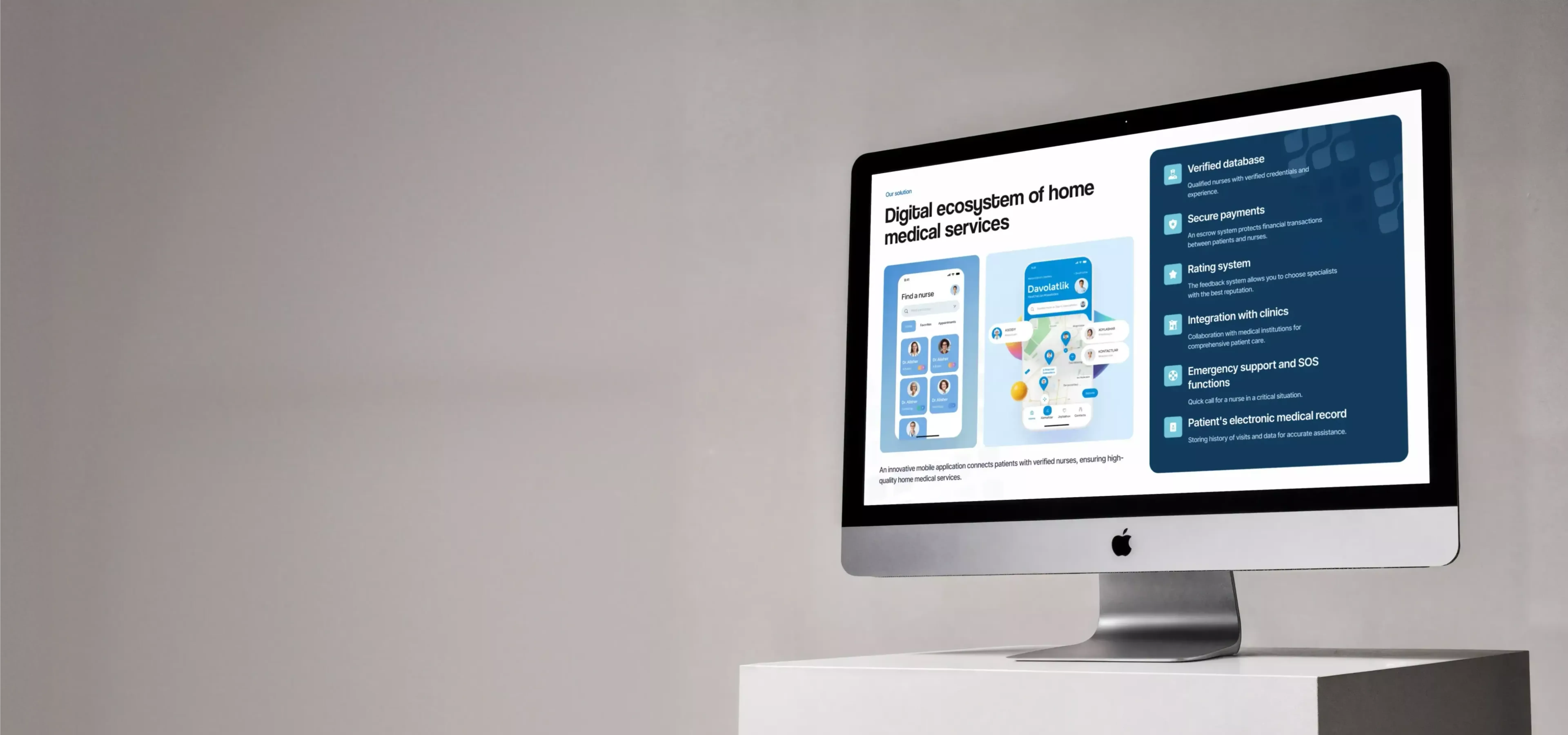
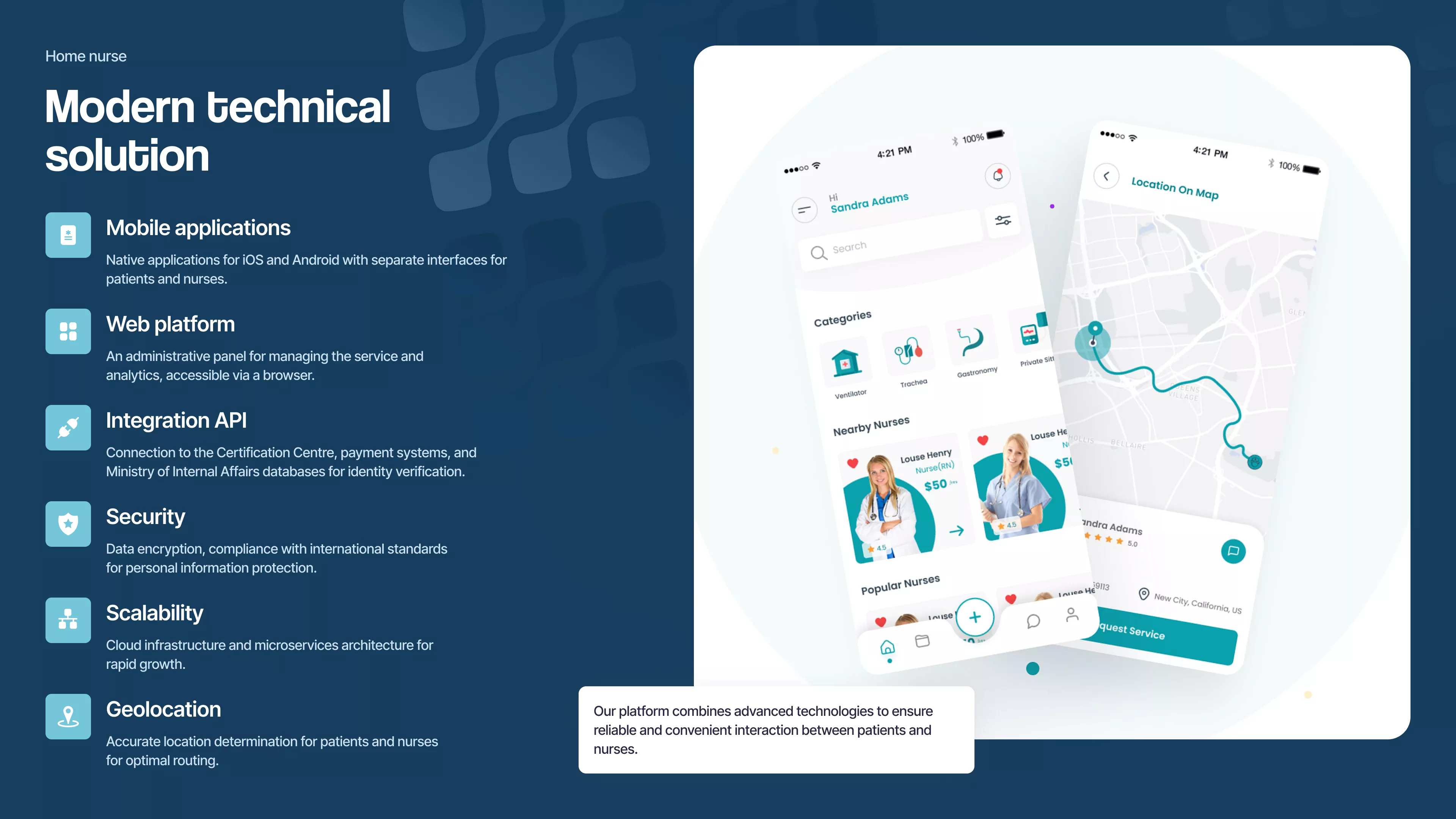
There are no glossy app mockups or stock photos of smiling nurses. Just clean data visualizations and Massachusetts nursing license verification flows.
Visual Results
Visuals That Resonate With Emotion
-

-

-

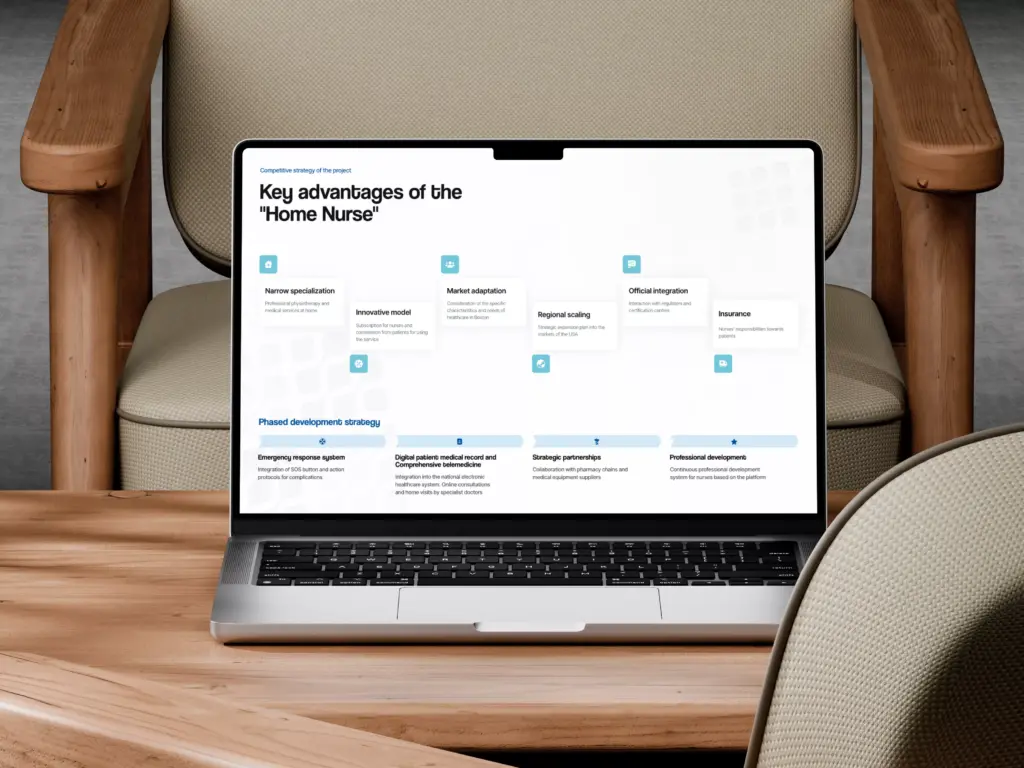
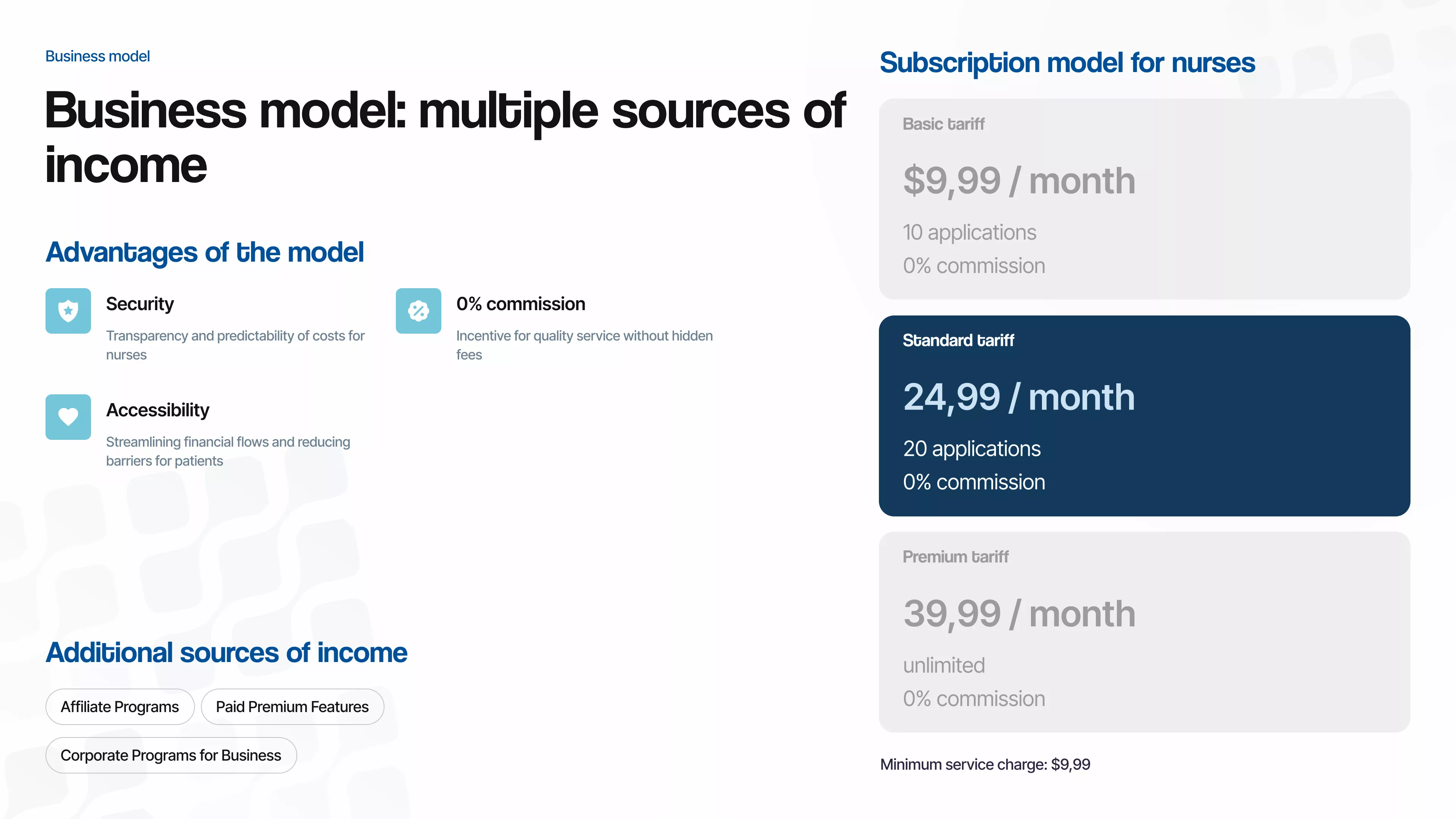
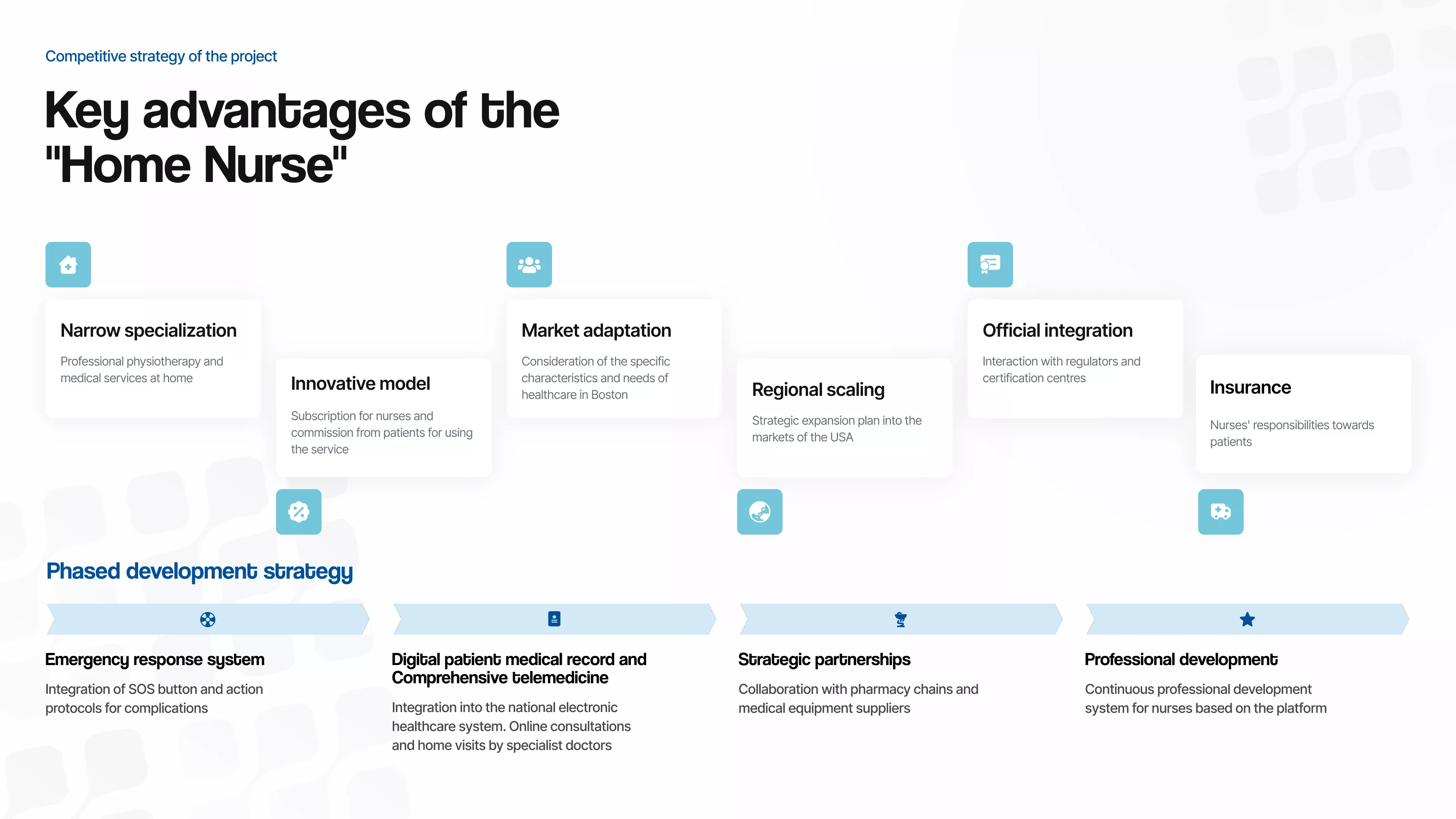
The business model slide shows a dual-revenue structure for nurses plus patient service fees, creating predictable cash flow with no hidden charges.
-

-

-

-

-

-

-

-

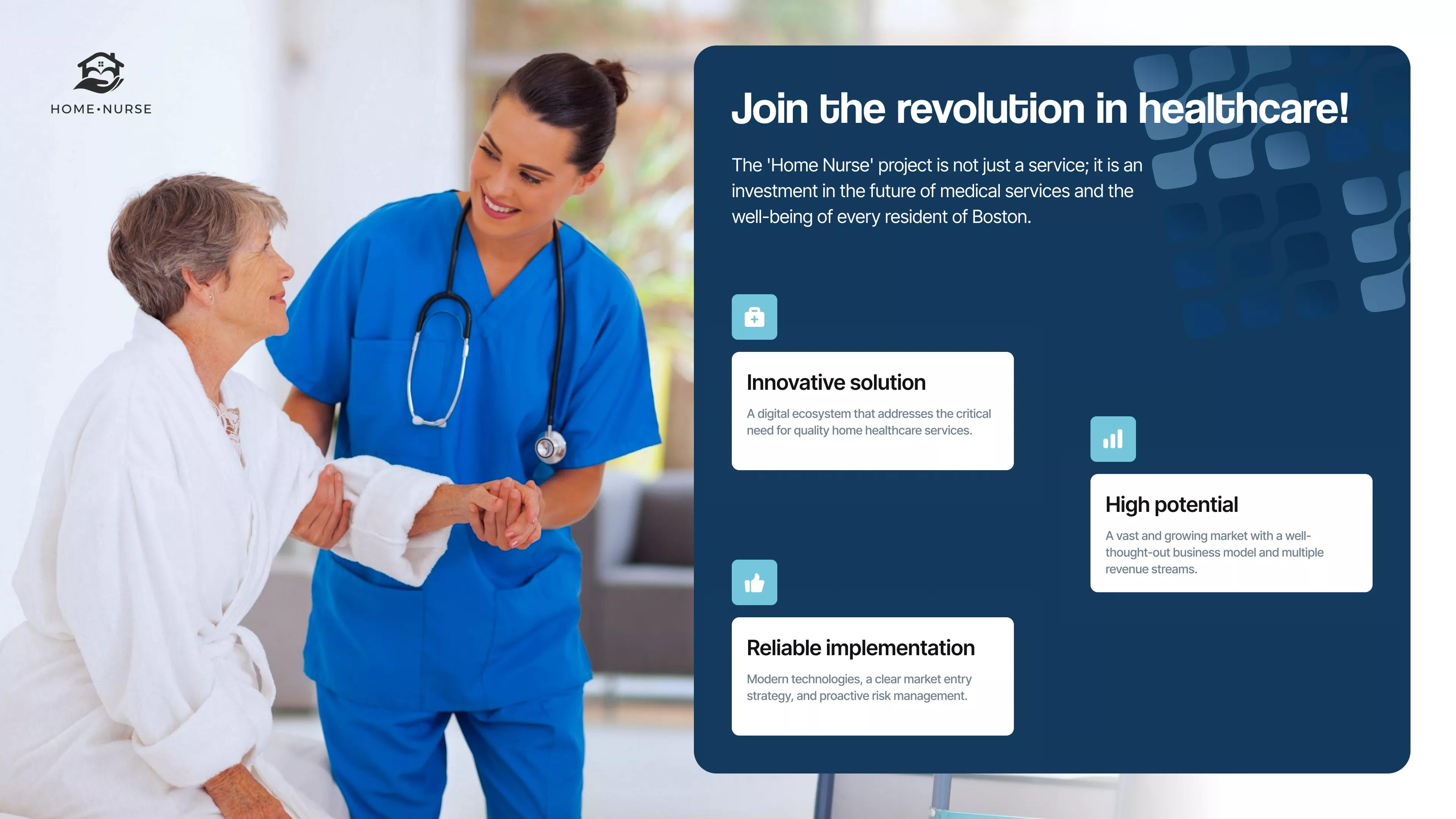
Marketing & Sales Usage
Driving Engagement and Growth
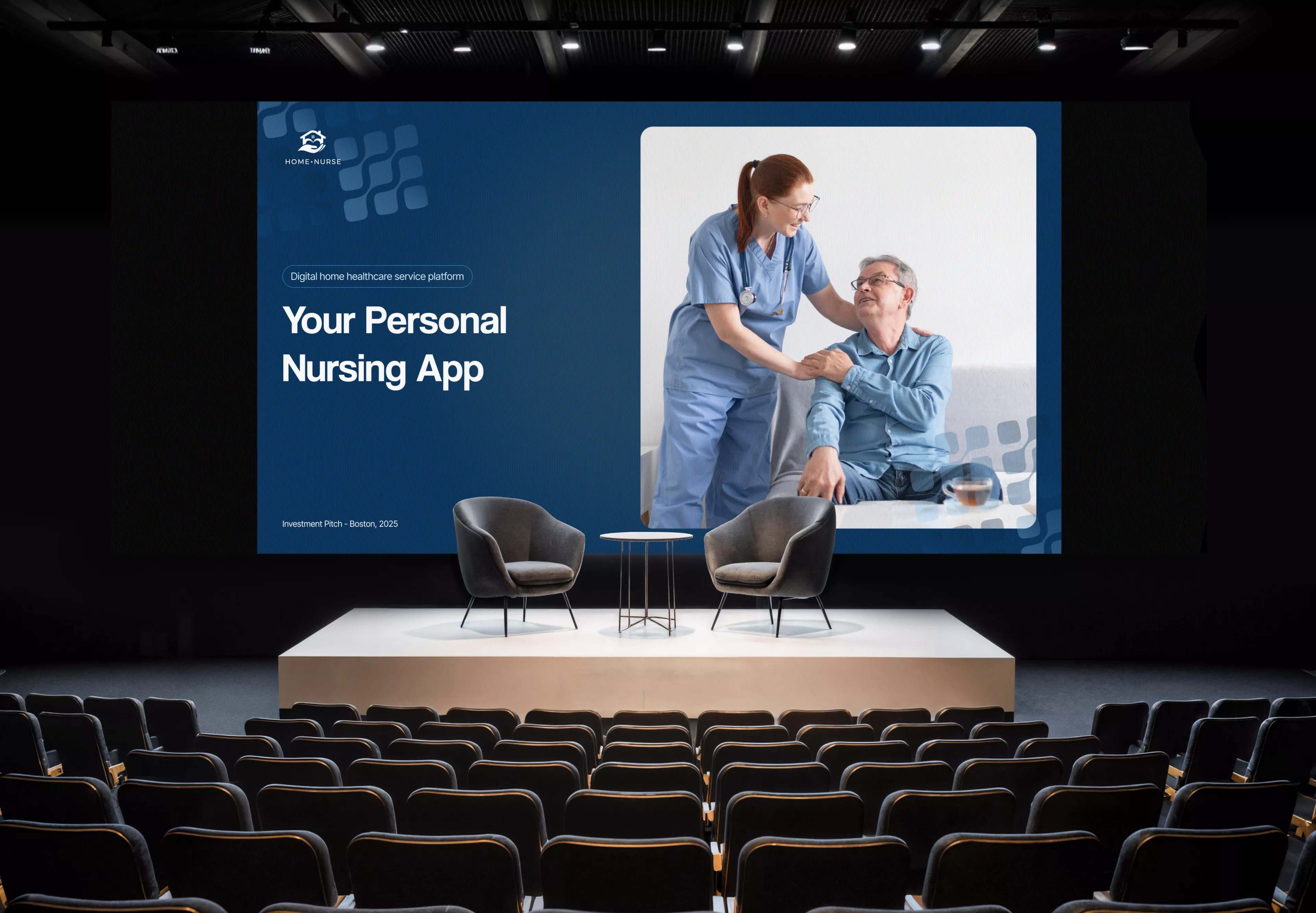
The deck anchored five pitch sessions with Boston- and NYC-based healthcare venture capitalists:
- Two funds that specialize in boring infrastructure plays in regulated industries
- One corporate VC from a regional hospital system seeking home care innovation
- Two generalist funds with a healthcare focus
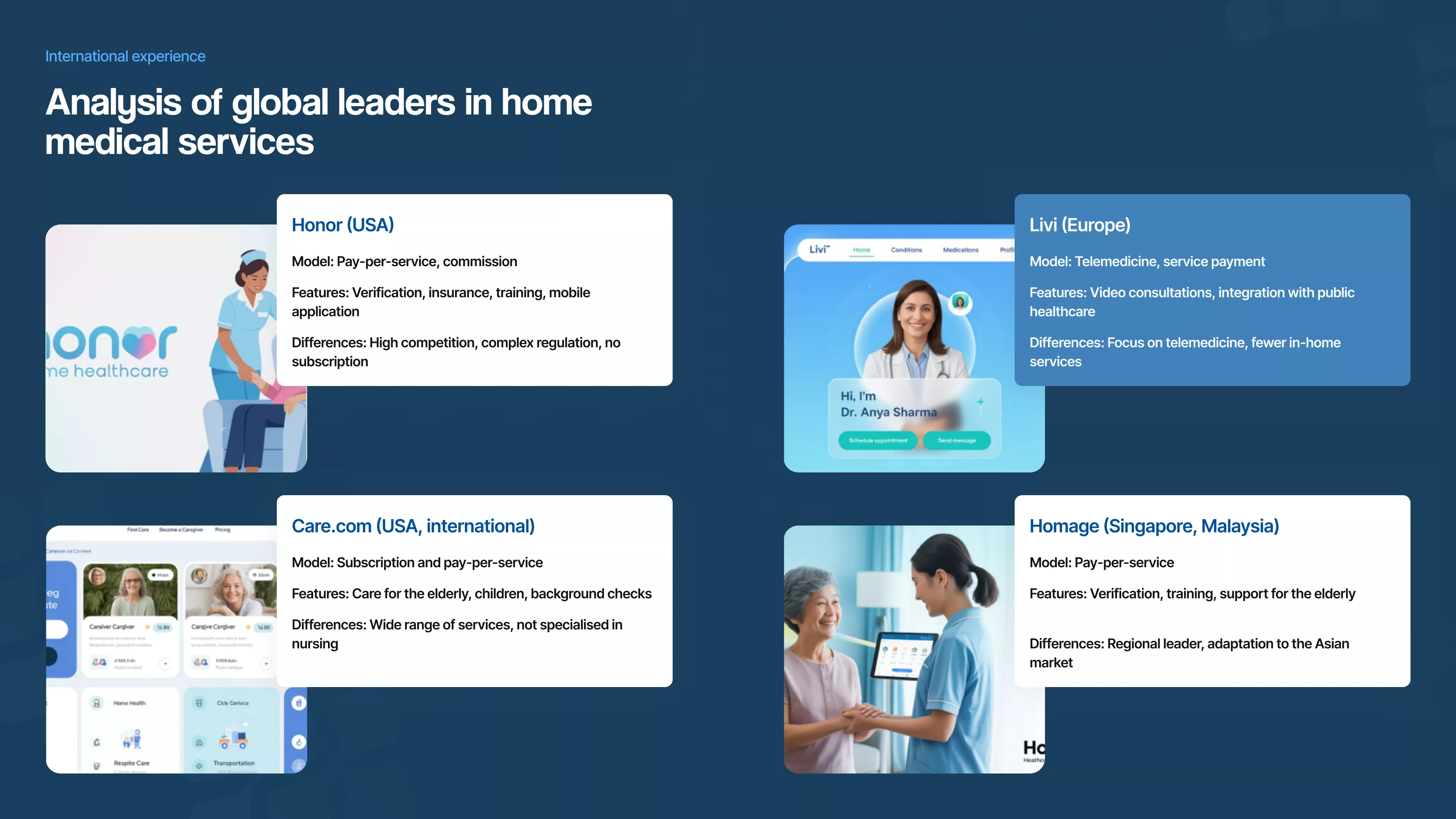
At each meeting, the deck sparked conversation rather than replacing it. Investors stopped asking how it was different from Honor and started discussing nurse acquisition costs in the Providence and Boston metropolitan areas.
Key Insight
The project was worked on






Explore Similar Real Estate Cases