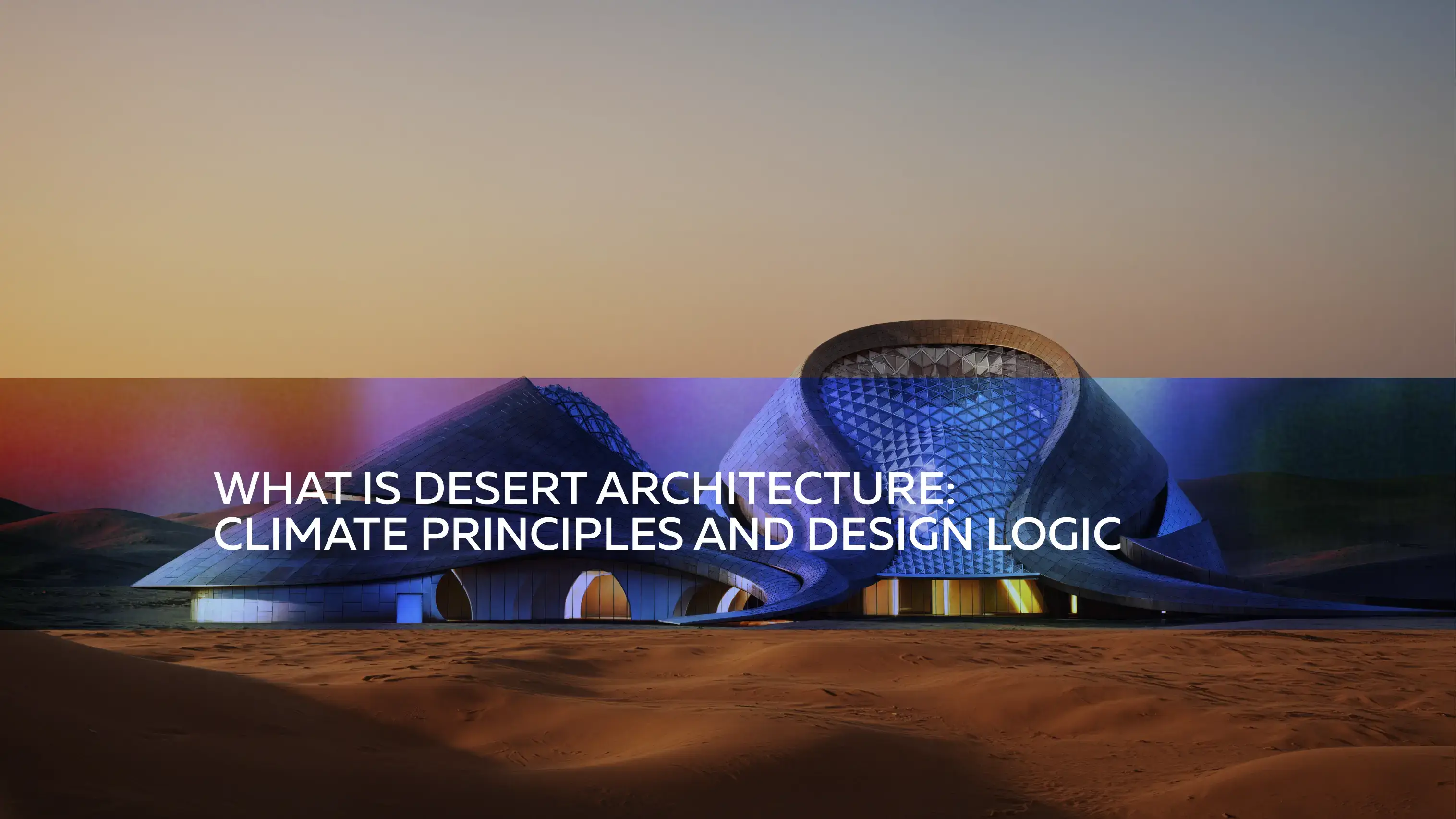
Understanding what desert architecture is begins with recognizing how buildings respond to extreme arid climates. In these conditions, comfort is not achieved through decoration or technology alone. It depends on a building’s orientation, construction, and its interaction with the surrounding climate.
Rather than resisting the dry and hot climate, desert architecture works with it. Buildings are designed to limit heat gain, manage sunlight, store or release warmth at the right time, and allow natural airflow. Material choice, wall thickness, shading systems, and spatial layout are central to creating interiors that remain usable throughout extreme temperature cycles.
This approach applies to homes, public buildings, and even entire settlements. Traditional houses in the desert reflect centuries of environmental adaptation, while modern interpretation builds on the same principles using contemporary materials, construction techniques, and performance analysis tools. Together, they form a practice focused on durability, comfort, and long-term suitability in some of the world’s toughest climates.
Climate Challenges in Desert EnvironmentsClimate Challenges in Desert Environments
Architectural decisions are affected by a unique combination of challenges presented by deserts:
– Daytime temperatures can exceed 45°C, while nights may drop below 15°C. Buildings must limit heat gain during the day and retain warmth at night.
– Direct sunlight can overheat walls and interiors, damaging materials and making the building uncomfortable.
– Rains are rare, so construction needs a strategy for collecting and storing water.
– Strong winds can erode surfaces, make outdoor areas uncomfortable, and bring fine sand into interior spaces.
Most design decisions in desert architecture focus on addressing these challenges. Orientation, massing, wall thickness, shading, and ventilation are all influenced by local climate conditions. For example, reducing exposure on east and west facades helps limit heat gain from low, hard-to-block sunlight. Shaded courtyards and controlled openings are often used to encourage airflow while keeping interiors protected from direct sun and blowing sand.
To answer what is desert architecture, it helps to look at how traditional homes evolved to handle extreme heat and scarce water.
Traditional Desert Architecture
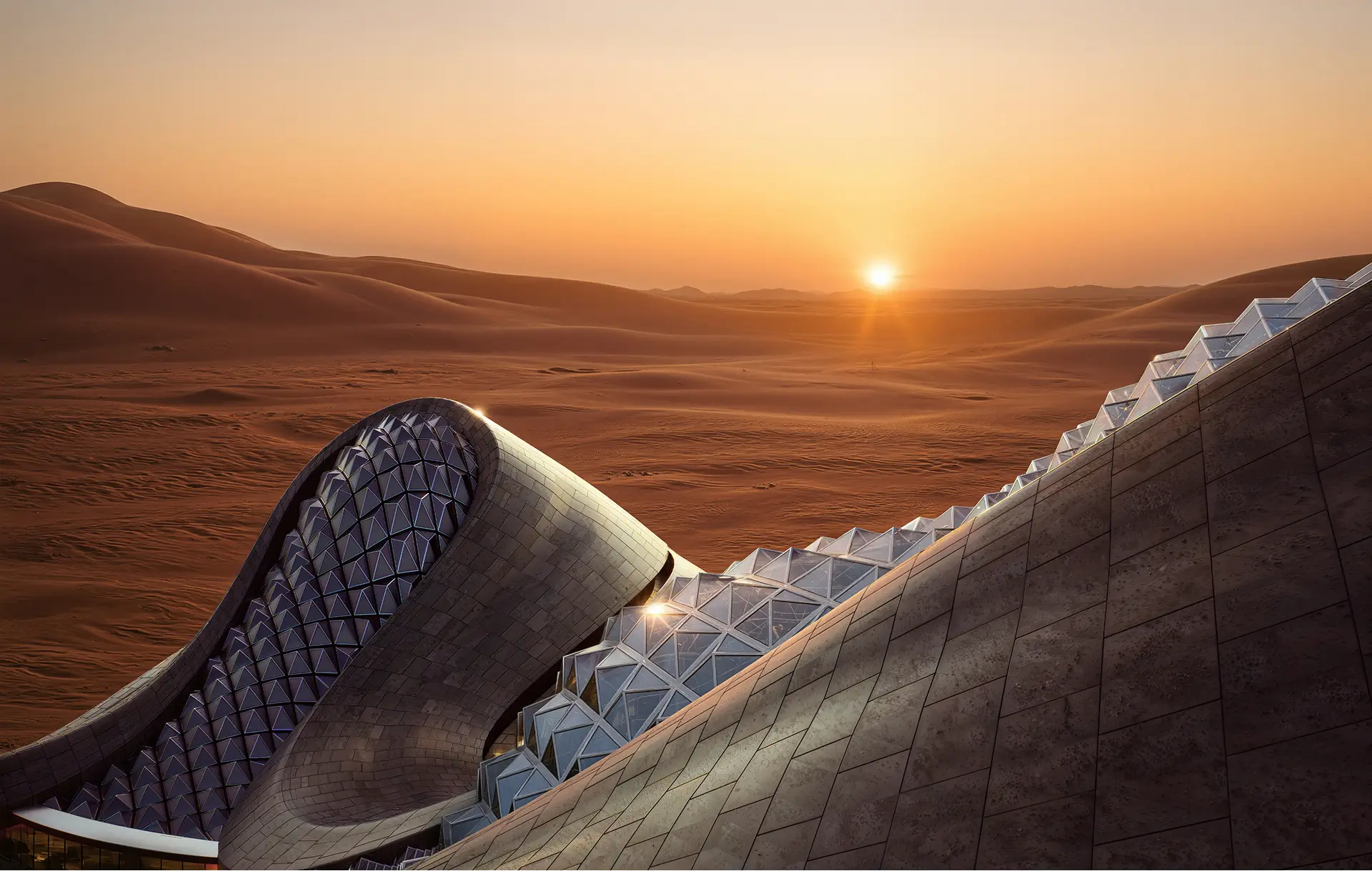
The evolution of architectural design in traditional desert homes is evident through trial and error across generations. These buildings prioritize function over form with compact footprints, minimal exterior exposure, and spatial sequences that guide airflow while blocking sunlight. The logic applies to all architecture, whether for dwellings or civic structures. In arid zones, design serves survival.
Traditional Desert HomesTraditional Desert Homes
Buildings in such environments are typically inward-looking and compact. Exterior walls are often plain and thick, minimizing exposure to direct sunlight. Living spaces are organized around courtyards or shaded internal zones rather than open facades. This layout protects interiors from heat while creating calm, usable outdoor space inside the house.
Buildings are closely grouped, reducing exposed surface area and helping neighboring structures shade one another. Windows are usually small and placed higher on walls, limiting heat gain while still allowing light and air inside.
Passive Cooling LogicPassive Cooling Logic
In regions such as North Africa, the Middle East, and parts of Iran, traditional homes rely on passive strategies that do not require mechanical cooling. Thick earthen walls made of adobe, rammed earth, or clay have a high thermal mass. They absorb heat slowly during the day and release it slowly at night. This softens temperature swings inside. Roofs are often flat, built with multiple layers of materials that slow heat transfer.
Courtyards and inward-facing spaces are common in many traditional houses. These semi-enclosed areas create shaded outdoor zones that remain noticeably cooler than the surrounding landscape. They also help manage airflow, drawing breezes through the building and improving natural ventilation.
Materials and Spatial SolutionsMaterials and Spatial Solutions
Local materials like mudbrick and stone are used because they handle heat well. Thick mudbrick walls slow heat transfer and keep interiors cooler during the hottest hours. Light plaster finishes help protect the walls and reflect some sunlight.
In places like Yazd in Iran, cities were designed to reduce heat. Narrow streets and closely built houses create shade, while thick walls and small, high windows limit direct sun. As a result, outdoor spaces and interiors stay cooler.
Windcatchers use natural airflow to cool buildings. These towers catch the wind and guide it inside, often working with shaded courtyards or water to improve ventilation in extreme heat.
Vernacular Urban FormVernacular Urban Form
Cities like the Old Town of Ghadames in Libya exemplify traditional desert urbanism. Its dense, compact layout and narrow streets limit direct sun exposure while helping retain cooler air at ground level. This creates a natural thermal buffer that softens the harsh climate before heat reaches interior spaces.
Adopting a vernacular approach, neighborhoods are treated as climate systems in which shading, wind paths, and material properties work together.
Modern Desert ArchitectureModern Desert Architecture
Unlike traditional approaches, modern desert architecture carries forward the climate logic while integrating contemporary materials, construction methods, and analytical tools.
Evolving Traditional LogicEvolving Traditional Logic
Contemporary desert homes reinterpret age-old wisdom through precise engineering. While traditional desert buildings relied on intuition, modern architectural design uses climate data to optimize every element, from the angle of a brise-soleil to the thermal properties of rammed earth. This evolution exemplifies modern desert architecture, applying the same principles with greater refinement.
Orientation and shading strongly influence thermal comfort. In the Northern Hemisphere, windows are often recessed and oriented toward the north to capture soft, indirect daylight while avoiding direct solar heat. Overhangs, screens, and pergolas block the harshest radiation while letting light filter into living areas.
Material and Technology IntegrationMaterial and Technology Integration
New materials enhance traditional massing strategies. Insulation, special heat-storing materials, and smart shading help keep buildings cool. Sunshades, whether fixed or adjustable, block heat while allowing soft daylight in.
Digital tools now allow architects to test these strategies before construction. Simulations can show how sunlight, heat, and airflow will affect a building. This lets designers refine walls, windows, and shading to achieve the right balance of comfort, light, and energy efficiency.
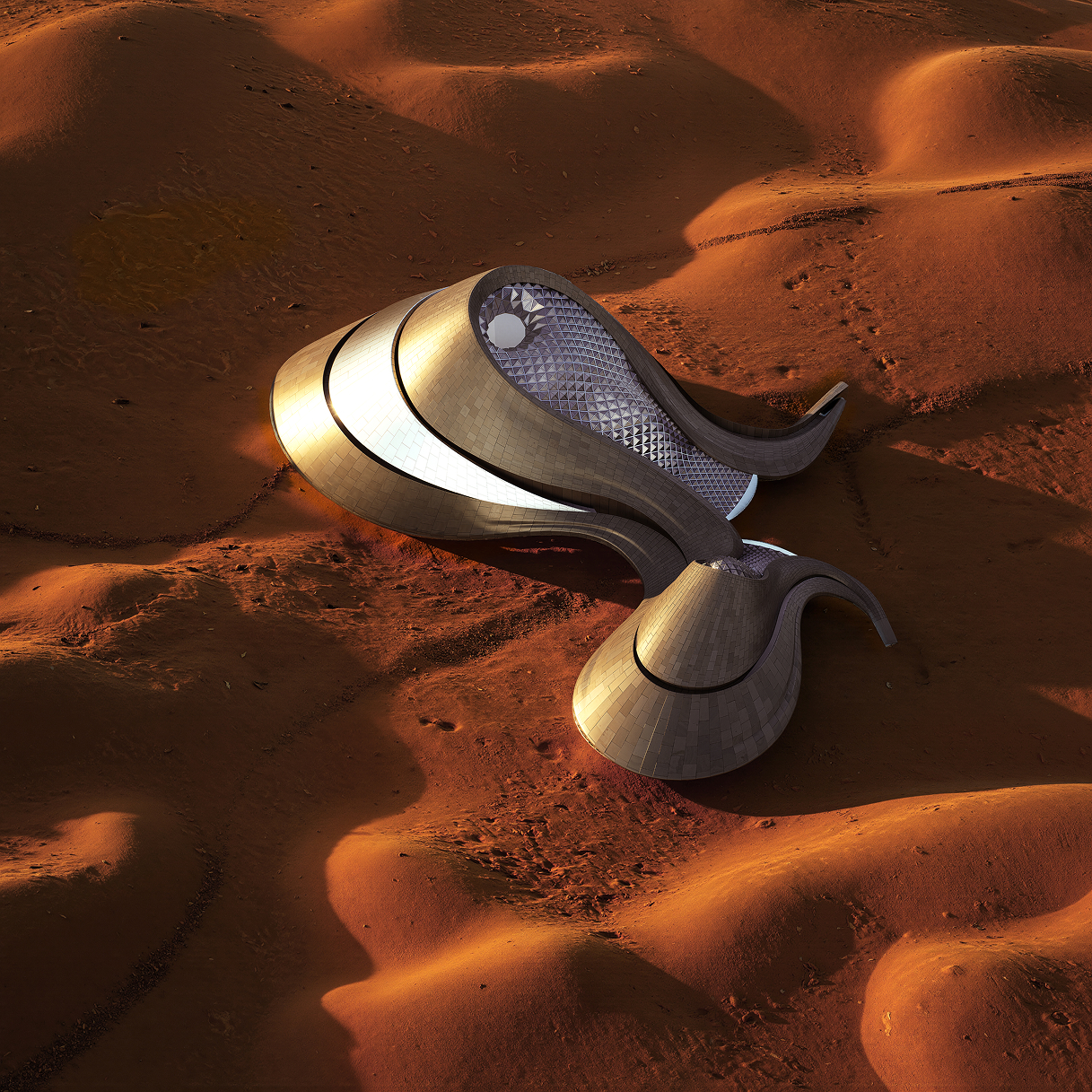
How Desert Buildings Stay Cool
In hot, dry climates, passive cooling strategies are real, proven building patterns. These solutions appear consistently across both traditional desert settlements and contemporary climate-adapted housing.
Similar results were found in research conducted on residential buildings in Saudi Arabia: envelope strategies combining insulation, shading, and glass selection significantly outperformed unoptimized houses under the same climate conditions. This data explains why modern home design increasingly relies on testing and climate performance visualization rather than assumptions.
Compact Massing and Settlement PatternsCompact Massing and Settlement Patterns
In historic desert towns, houses are built close together, often sharing walls. This reduces the total surface area exposed to direct sunlight and creates shaded streets that remain noticeably cooler during the day. Desert housing uses the same logic: compact, attached, sheltered designs that reduce heat exposure.
Shading and ReflectivityShading and Reflectivity
Deep roof overhangs, recessed openings, pergolas, and perforated screens are integrated into the building’s structure. These elements block high-angle sun while allowing diffuse daylight to enter interior spaces. In contemporary homes, this approach appears in brise-soleil facades, layered screens, and deep-set glazing, which serve the same purpose using modern materials.
Parametric studies of desert housing show that lowering the window-to-wall ratio, using high-performance glazing, and installing reflective roofing can reduce cooling energy demand by over 35% compared to baseline designs.
Ventilation and AirflowVentilation and Airflow
Keeping desert buildings comfortable requires air movement. Courtyards, wind channels, and high vents direct breezes into interior spaces, replacing hot indoor air with cooler outdoor air.
Heat Dissipation at NightHeat Dissipation at Night
Nighttime temperature drops enable passive heat dissipation. After sunset, stored heat radiates from the thermal mass through the roof vents and open apertures, purging the warm air from the walls and floors. This nightly process prepares houses in the desert for the next day’s thermal cycle.
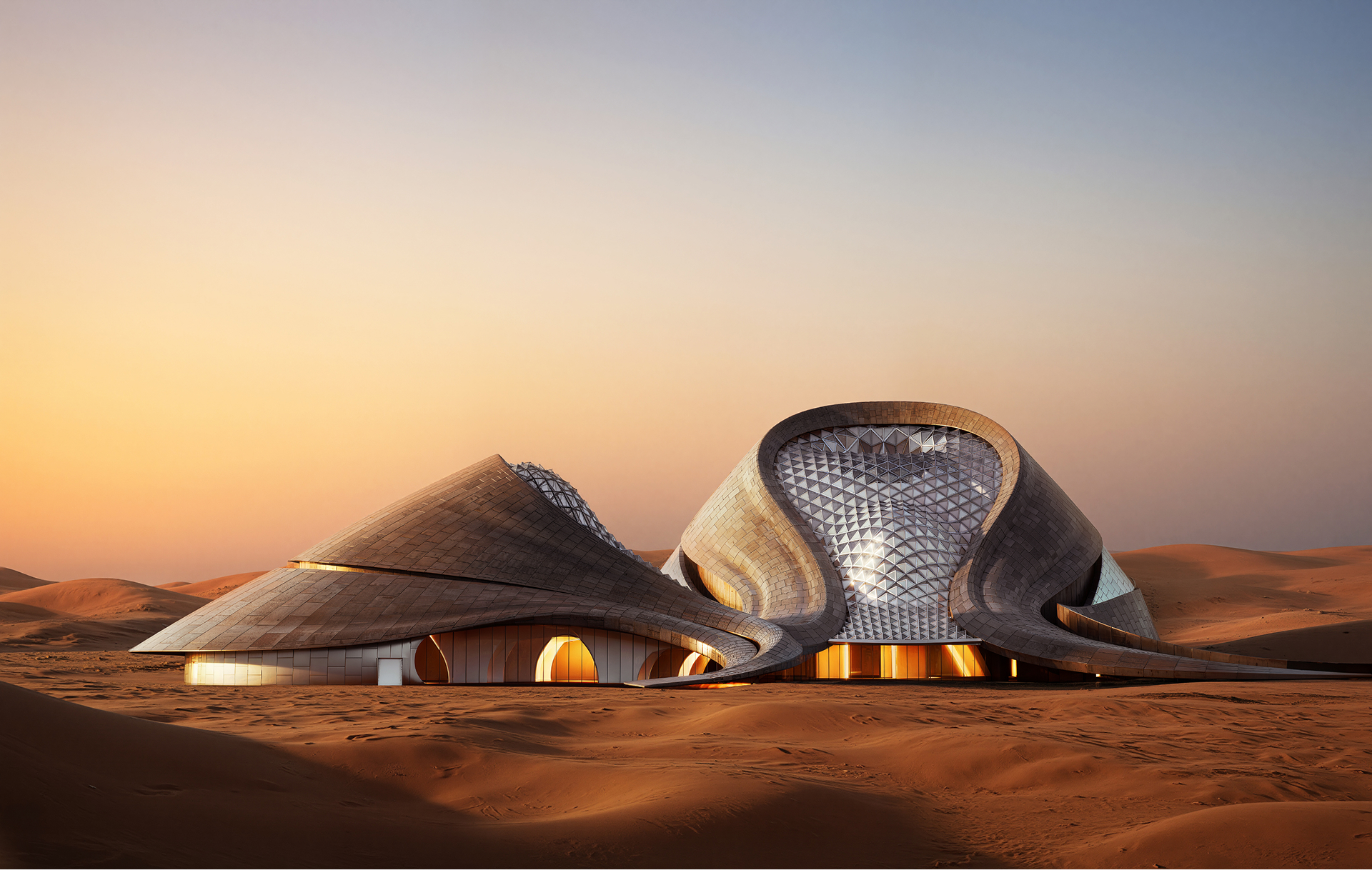
The Role of Architectural Visualization in Desert Environments
Designing buildings for extreme climates requires more than intuition. Traditional drawings cannot demonstrate how sunlight interacts with a space over time or illustrate the effect of materials on temperature. This is where architectural visualization and 3D rendering become essential evaluation tools. With 3D visualization, designers can simulate a building’s behavior under realistic desert conditions. They can test sun paths, simulate heat and sunlight accumulation, and analyze airflow before construction begins. These workflows transform abstract concepts into measurable performance outcomes. Teams working on climate-responsive projects often use specialized rendering services to validate design decisions before construction starts.
Simulations also assess material choices. For instance, they can evaluate different wall finishes, roof coatings, and glazing for thermal performance and visual appearance. Designers can model courtyards, wind channels, and vents to see how air moves through spaces and keeps interior zones cool and habitable. By testing these strategies digitally first, architects can make informed adjustments early on. This saves time on fixing mistakes and making unnecessary changes once construction begins.
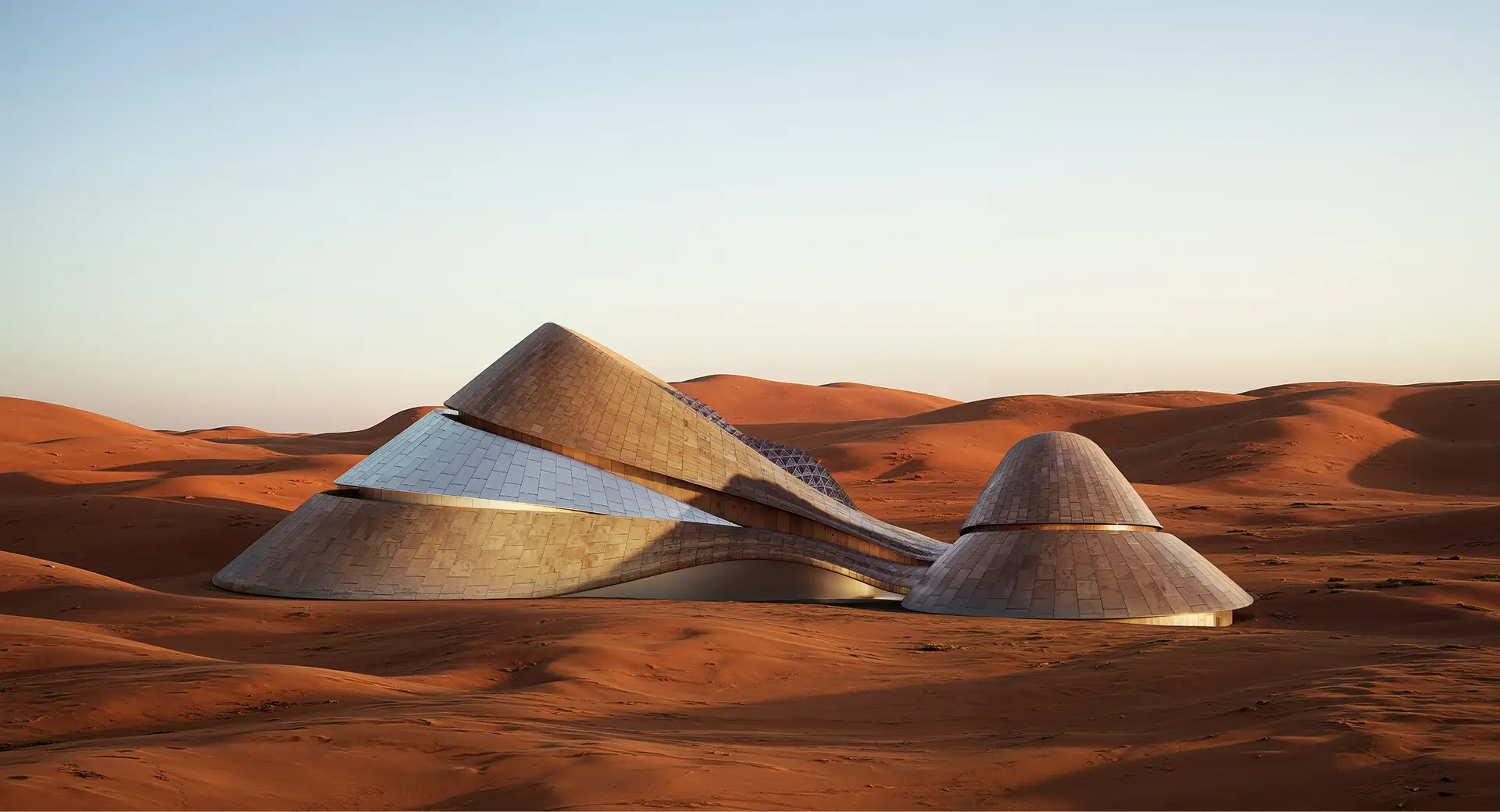
From Concept to Performance
Bringing a desert house from an idea to a real building is a process that happens step by step. It starts with a 3D model that shows walls, windows, roof shapes, and materials. This allows the team to test layouts, sunlight movement, shading, and airflow before construction.
Building performance simulation does more than estimate energy consumption. It clarifies which design choices have the greatest impact in a specific climate and which ones matter less than expected. Performance models use identical climate data, which allows architects to make decisions based on measurable outcomes rather than intuition. Simulation turns climate-responsive design from an abstract concept into a measurable strategy.
Then, the design is tested against real climate conditions. The 3D rendering shows which walls, windows, and roofs will keep the house cooler, what areas need more shade, and how air moves through rooms and courtyards. This helps clients picture what the house will feel like, and contractors know exactly what to build.
This approach streamlines the process. Any issues show up early, so everyone knows what to expect during construction. Houses planned this way end up more comfortable, reliable, and easier for the team to bring to life.
Moving from concept to performance through simulation and visualization makes desert architecture much more predictable. Instead of building first and fixing later, buildings are tested and refined early, so they perform reliably and comfortably in some of the harshest climates on Earth.
Final ThoughtsFinal Thoughts
3D visualization gives teams a clear picture of a desert project before construction begins. It shows how each choice, including materials and airflow, will actually perform. As a result, potential problems can be identified and resolved early on. This saves time and reduces unexpected costs, keeping the project on track from day one.
For businesses, this means fewer surprises, smoother approvals, and more predictable results. Everyone, including designers, contractors, and clients, sees the same picture. The final building then performs as intended, and investments in time and materials pay off.

Turn Ideas Into Visual Stories