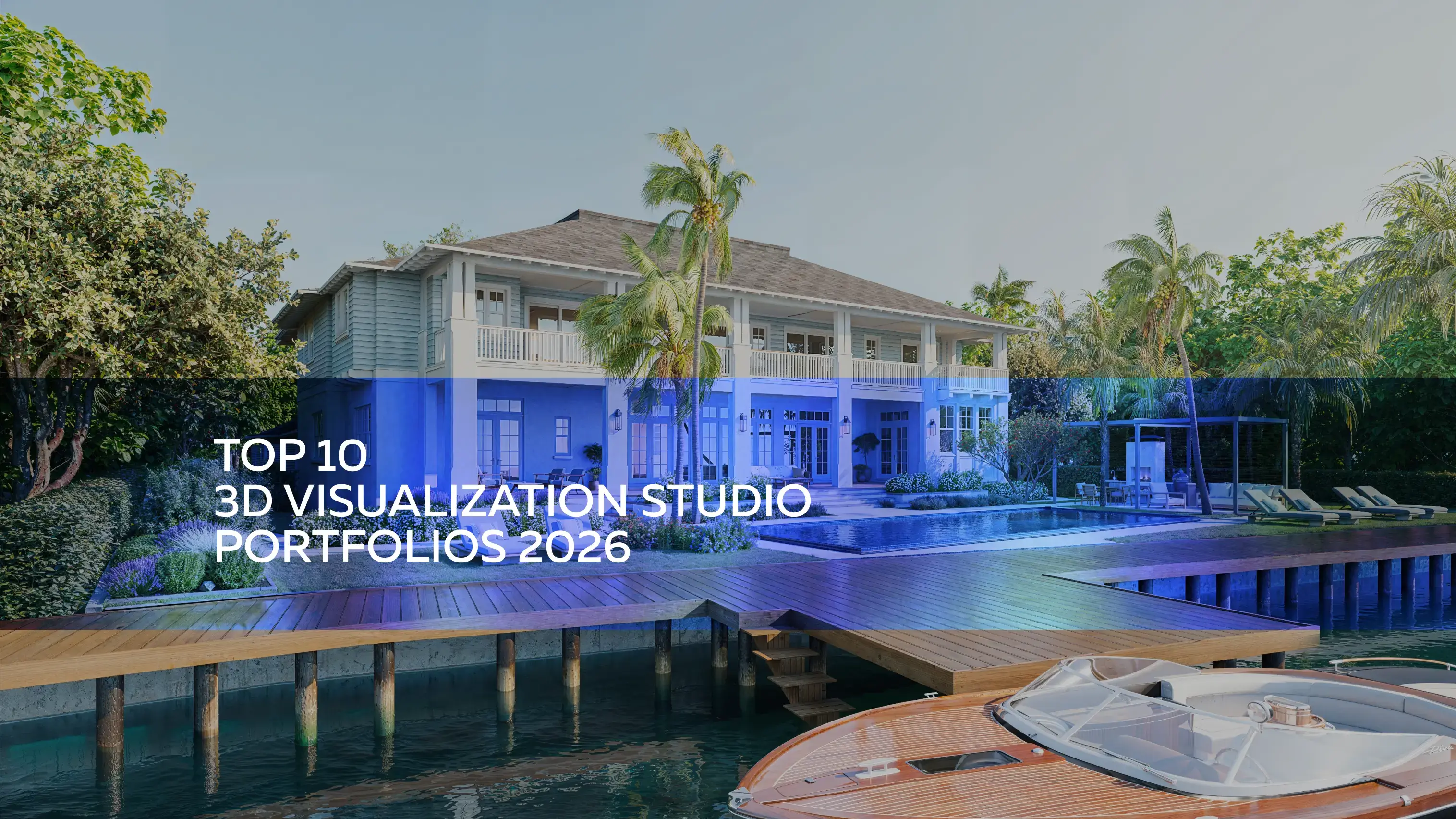
For businesses working in the visual economy, a strong 3D visualization portfolio is a powerful business resource. If you’re a developer evaluating studios for an off-plan project, an architect seeking photorealistic renderings, or a product designer looking to pitch a new concept, the quality and structure of your partner’s portfolio will influence your final decision. But with hundreds of studios claiming best-in-class results, how can you distinguish true excellence from marketing hype?
We analyzed dozens of global studios based on visual fidelity, case depth, user experience, clarity, and client impact. Then, we ranked the best 3D visualization portfolios of 2026. You’ll find more than just names. There are also actionable insights, such as what makes each portfolio stand out, which projects demonstrate real-world value, and how these examples can inform your work or selection process. Whether you’re looking for a partner or developing your own 3D rendering portfolio, this guide provides an expert, unbiased analysis based on industry standards.
How We Ranked the Best 3D Visualization PortfoliosHow We Ranked the Best 3D Visualization Portfolios
Unlike other rankings, we didn’t base our evaluation on follower counts, awards, or subjective wow-factor. Instead, we built our evaluation framework around the decision-making process of developers, architects, product marketers, and creative directors. These are the people who use portfolios to evaluate reliability, compatibility, and ROI before allocating budget or trust.
Here’s why each of our five criteria matters, both aesthetically and commercially:
1. Visual Quality and Technical Mastery
Photorealism alone isn’t enough. Distinguished work intentionally uses lighting to convey the time of day and mood, responds to the environment through materials, and guides the viewer’s attention to key selling points through composition. In high-stakes contexts, such as off-plan sales in Dubai or London, even minor inaccuracies can erode buyer confidence. We prioritize studios whose technical execution is persuasive and aligned with professional-grade 3D architectural rendering services.
2. Project Diversity and Relevance
A studio that only showcases luxury villas won’t be helpful to a cosmetics brand launching a new serum. Similarly, a CGI company focused on products may lack the spatial understanding needed for mixed-use developments. We looked for portfolios that demonstrate a strategic range and fluency across core commercial sectors, such as architecture, interiors, products, and branded CGI, rather than just variety for its own sake. All examples had to be from 2024–2026 to reflect current market expectations, such as sustainability cues, inclusive lifestyle staging, and mobile-first presentations.
3. Case Study Depth
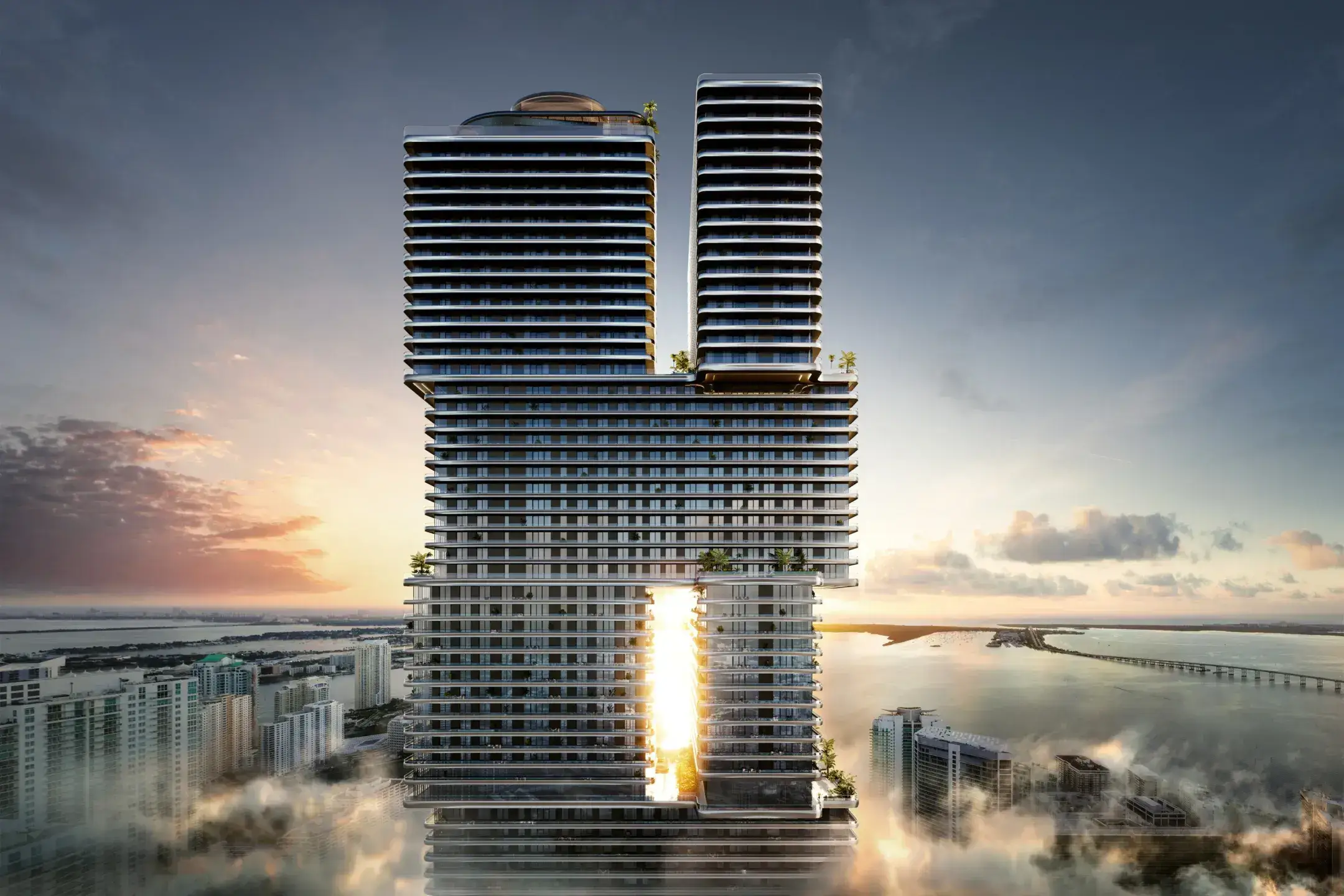
Anyone can post a beautiful rendering, but professionals need to understand how and why it was achieved. A strong case includes the client’s original challenge, the visual strategy employed, and the outcome. For instance, the client’s initial problem could be that units weren’t selling in Q3. The visual strategy might entail shifting the focus from the facade to the private terrace lifestyle. The outcome would be an increase in conversions by 28%. This transforms a portfolio from a gallery into a proof deck, which is essential for stakeholders who must justify vendor selection internally. A good example is Axis Skyscraper, where high-rise architectural visualization was used not just to present the form, but to clarify scale, density, and investment logic for complex urban decision-making.
4. User Experience and Navigation
Time is the most valuable resource for busy executives. If visitors can’t find relevant work within 15 seconds of filtering by sector, geography, or format, they’ll leave. We evaluated load speed, mobile responsiveness, and information architecture. Studios that offer smart filters, such as “Show only residential projects in Asia” or “View animation reels,” demonstrate that they understand how clients browse and respect their time.
5. Client-Centric Communication
The best portfolios speak the client’s language. Instead of saying, “We used Octane with custom shaders,” top studios explain, “We simplified complex facade geometry to meet planning submission deadlines without sacrificing visual impact.” This shows that the studio sees itself as a strategic partner, not just a service provider.
Portfolios that failed to meet these criteria, particularly those lacking context or containing outdated or purely decorative content, were excluded, regardless of visual appeal. Only studios that demonstrated consistent commercial relevance, clarity, and professionalism earned a place in this ranking. All featured entries are currently publishing new work.
Top 3D Visualization Portfolios of 2026Top 3D Visualization Portfolios of 2026
10. Brick Visual (Hungary)10. Brick Visual (Hungary)
Brick Visual consistently sets the standard for excellence in architectural visualization portfolios. Their 2026 showcase blends cinematic realism with strategic storytelling. Each project includes a brief summary, the evolution of the mood board, and post-rendering analytics.
The Project Journey section is particularly notable. Rather than presenting static images, they provide scroll-driven narratives that demonstrate the progression from initial sketches to modeling to final renders. This level of transparency fosters trust with developers and architects alike.
Their 3D architectural rendering portfolio covers everything from luxury towers in Dubai to sustainable housing in Europe, demonstrating scalability without sacrificing detail.

9. The Boundary (UK)
Specializing in high-end residential and cultural architecture, The Boundary’s CGI portfolio rivals a design magazine. They excel at capturing emotional precision, from dusk lighting in London penthouses and rain-slicked cobblestones in historic districts to the subtle texture of hand-troweled plaster.
Unlike many studios, The Boundary publishes failed iterations alongside final designs, demonstrating how client feedback shapes the outcome. This transparency builds credibility.
Their website features a smart filter by geography, making it easy for international clients to assess local relevance. A notable example is how their visuals for the Tate Modern extension helped secure planning approval months ahead of schedule.
8. MIR (Norway)
The 3D visualization portfolio at MIR leans into artistic minimalism without sacrificing clarity. They are renowned for their hauntingly beautiful architectural landscapes and masterful atmospheric storytelling. This includes fog over Nordic cabins, snow-dusted rooftops, and the golden glow of the hour on concrete.
While their work is less commercial than that of others, it is often recognized in architectural competitions. Their architecture visualization portfolio includes downloadable PDF project dossiers that are perfect for jury submissions. For companies targeting awards or institutional clients, MIR’s work shows that poetic visuals can lead to professional recognition.
Note that this approach is best suited for conceptual or competition-focused work, not fast-turnaround sales renders.

7. Luxigon (France)
Luxigon seamlessly bridges the gap between art and commerce. Their architectural visualizer portfolio specializes in large-scale urban projects, including master plans, mixed-use developments, and transit hubs. Each image strikes a balance between the human scale and the macro context, avoiding the pitfall of empty utopias often seen in real estate renderings.
In 2026, Luxigon introduced interactive hotspots. Hover over a balcony, for instance, and a tooltip will explain the material choices or sustainability features. This subtle interactivity adds layers without overwhelming the viewer.
Luxigon is particularly strong for European and Middle Eastern developers who need investor-grade visuals to communicate density, flow, and livability.

6. Neoscape (USA)
Boston-based Neoscape dominates the product visualization space while maintaining its elite status in the architectural field. Their dual expertise shines in mixed-media campaigns. For example, a luxury car launch might feature the vehicle parked in a hyperrealistic condo lobby, and all of this rendering is done in-house.
Their portfolio is segmented by industry, and they provide clear ROI metrics. If you need cross-category versatility, especially for branded environments, Neoscape delivers integrated storytelling that few can match.

5. Hayes Davidson (UK)
Hayes is a big name in architectural visualization in Europe. They’ve been helping developers, architects, and investors turn concepts into compelling visual stories for over 30 years. Their 3D architectural visualization portfolios include everything from London residences to international mixed-use projects, and they’re known for two things: photorealism and deep understanding of context.
For luxury markets, the studio makes visualizations where every detail works to sell the product. Their Sales Toolkit has everything from super detailed renders for brochures to interactive VR presentations and optimized social media formats. That makes Hayes Davidson a solid choice for anyone who wants more than just pretty pictures. You can count on them for ready-made marketing assets that will actually boost your off-plan sales.

4. Beauty & The Bit (Spain)
Don’t let the playful name of this Barcelona studio fool you. They create stunning 3D product visualizations for cosmetics, fashion, and luxury goods. Imagine liquid pouring into a perfume bottle with such precise subsurface scattering that you can almost smell it.
Their 3D visualizer portfolio showcases technical details such as shader networks, lighting setups, and render times. These details appeal to art directors and in-house teams who need to replicate high-quality work. As a bonus, they offer portfolio audits for brands, a unique service that establishes them as consultants rather than just vendors.
3. ZOA Studio (Netherlands)
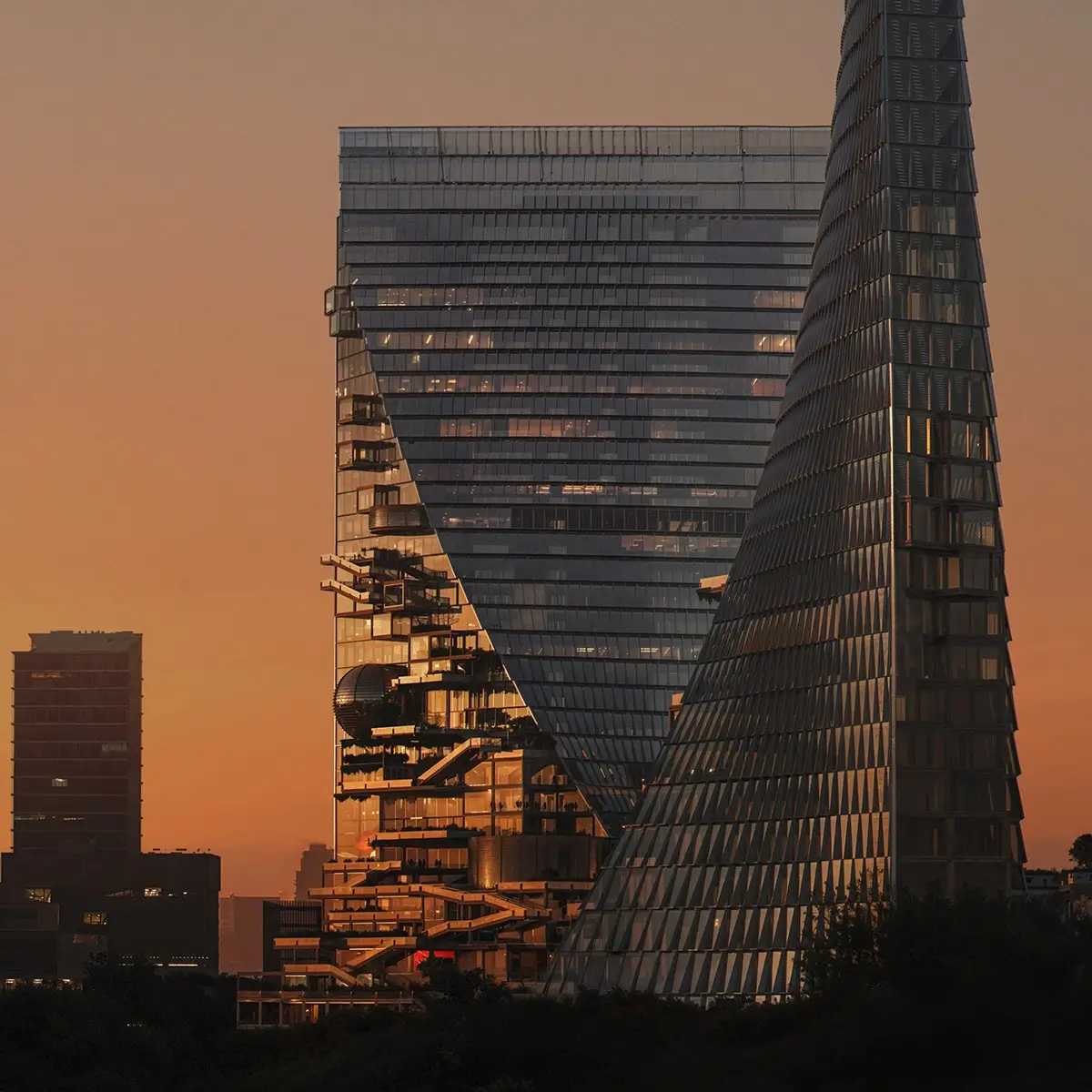
ZOA seamlessly merges architecture and animation. Their visualization portfolio includes short films of every major project, showcasing camera movements, day/night cycles, and seasonal changes. This dynamic approach is optimal for digital billboards, investor pitches, and immersive web experiences.
ZOA Studio also publishes Render Diaries, time-lapse videos of complex scenes being built. While not every client requires motion, ZOA shows that still images alone are inadequate for premium positioning.
2. Vizoo (Germany)
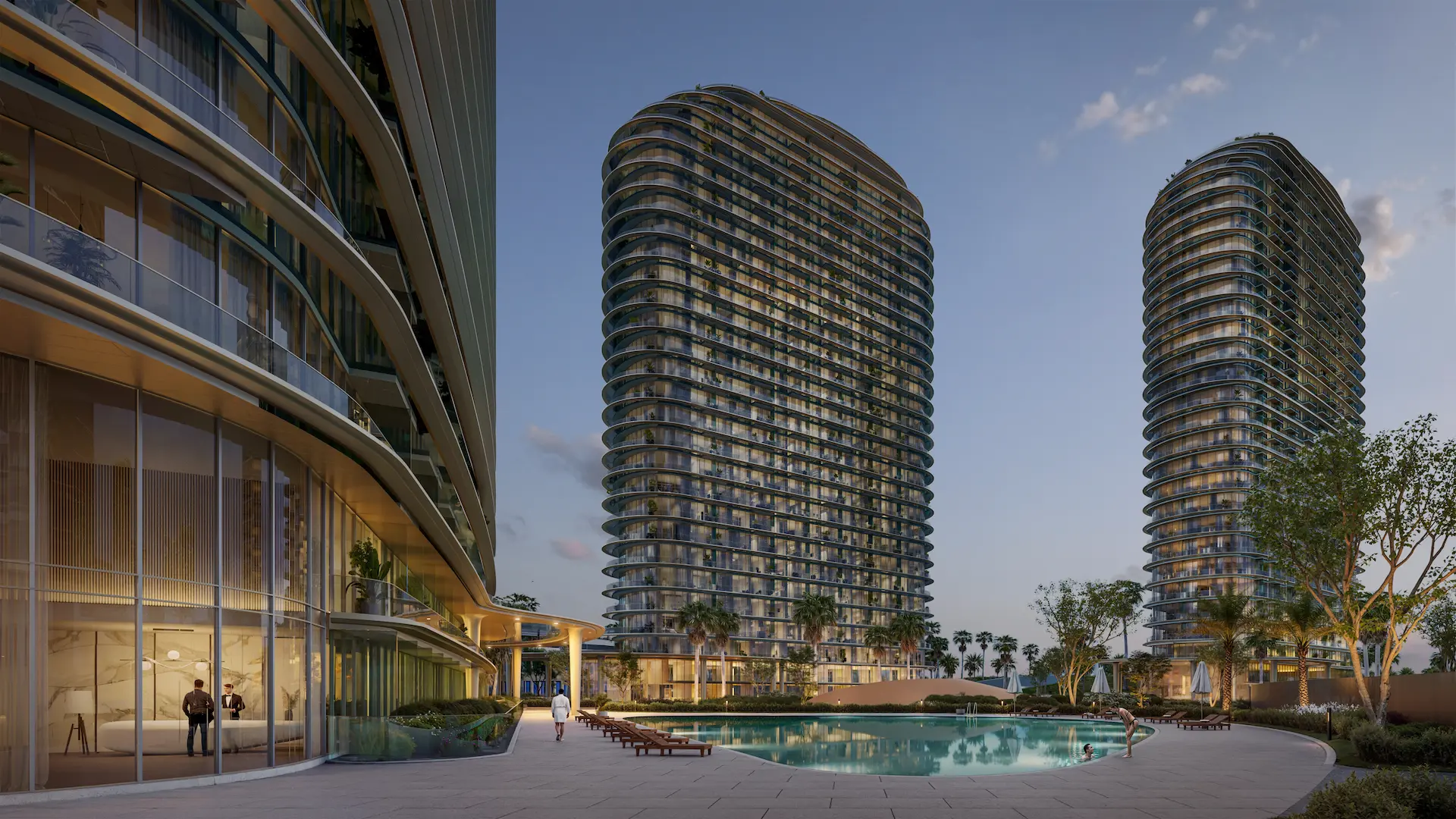
Vizoo stands out in the 3D visualization portfolio space by focusing on material accuracy. They use proprietary scanning technology to digitize real fabrics, woods, or metals and apply them to renders. The result is unmatched tactile realism for furniture, automotive interiors, and retail spaces.
Their portfolio includes side-by-side comparisons of physical samples and digital twins. In industries where material authenticity is paramount, such as luxury hospitality, Vizoo’s scientific rigor is a game-changer.

1. Maverick Frame (UK)
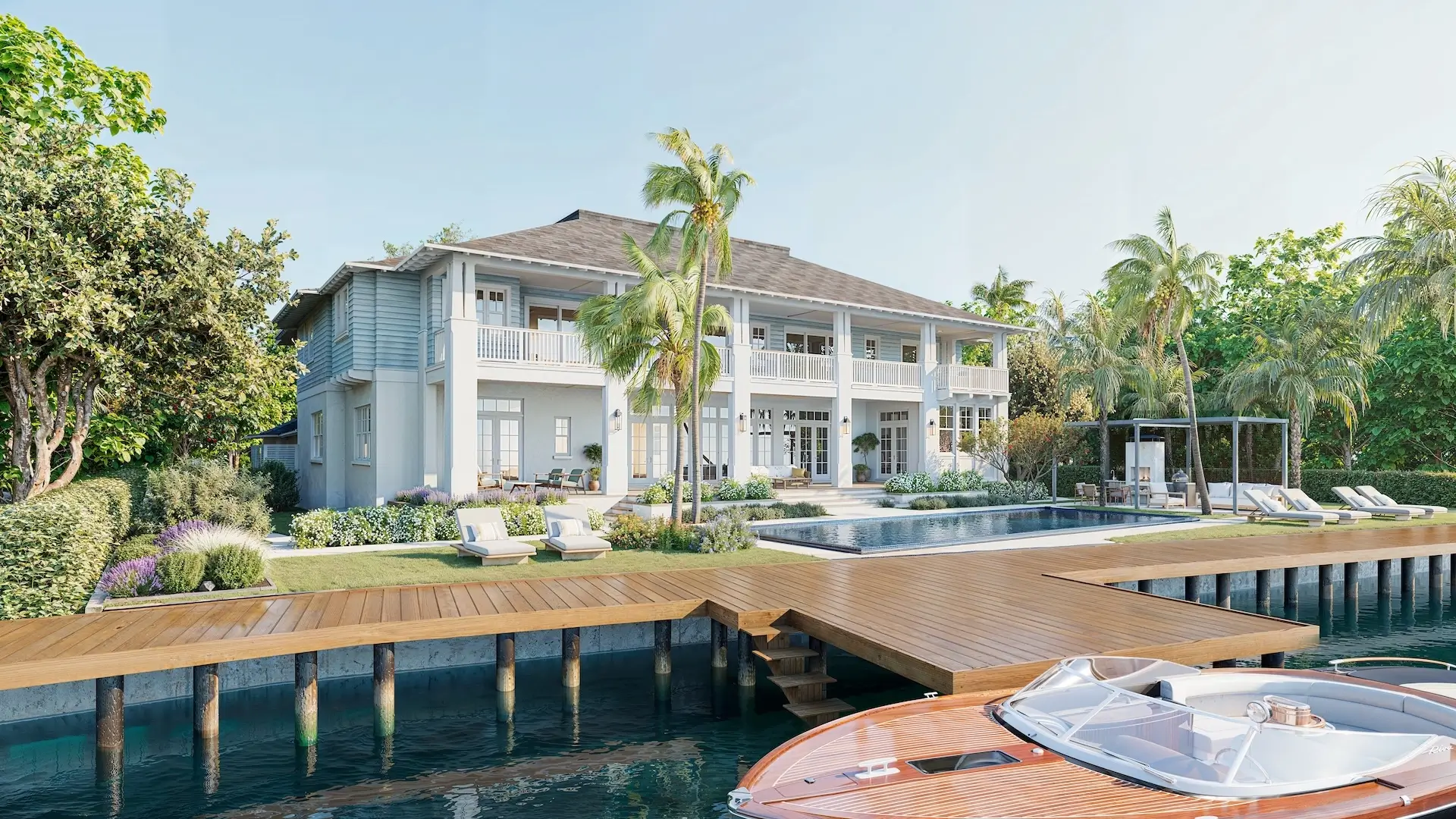
Maverick Frame creates strategic 3D visualizations for discerning clients in London, Dubai, Singapore, and beyond. Our portfolio reflects a refined balance of photorealism and commercial intent. We showcase luxury off-plan residences, high-end product CGI for cosmetics and lifestyle brands, and award-winning, investor-inspiring architectural narratives.
What sets Maverick Frame apart is our business-oriented mindset. We design each image to solve a specific challenge, such as boosting conversion in pre-sales campaigns, clarifying complex spatial concepts, or elevating brand perception through attention to detail. With rapid turnaround times, seamless collaboration across time zones, and a deep understanding of premium markets, Maverick Frame delivers measurable impact. Clients who value clarity, precision, and results over spectacle trust Maverick Frame as a partner in the UK’s 3D visualization landscape.
What Makes a Great 3D Visualization Portfolio?
A truly effective 3D visualization portfolio acts as a silent sales representative, demonstrating expertise, reliability, and business acumen. Our analysis of top-performing portfolios reveals a clear pattern: the most compelling ones resemble strategic case studies more than art galleries.
The strongest studios understand that realism relies on nuance rather than perfection. Instead of creating sterile, overly polished renders, they incorporate subtle human touches, such as slightly rumpled sofa cushions, unevenly spilled natural light, and swaying foliage that suggests wind. These details build trust by mirroring the imperfect reality clients expect to see.
Equally important is depth over volume. A tightly curated selection of eight to twelve projects, each accompanied by a clear narrative about the client’s challenge, your specific role, and the constraints you navigated, carries far more weight than dozens of anonymous thumbnails. This is because decision-makers are looking for relevance and proof of your ability to solve problems.
Navigation plays a surprisingly important role. Professionals often evaluate studios on the go or between meetings. Portfolios that allow for quick filtering by sector, format, or geography help users swiftly find what matters to them. This self-serve clarity signals professionalism and respect for clients’ time.
Technical performance is also important. With over half of all B2B research now beginning on mobile devices, a slow-loading site is a silent deal-breaker. Google’s 2025 data shows that 53% of visitors abandon a page if it doesn’t load within three seconds. Optimized assets, lazy loading, and clean code are essential to keeping your audience engaged.
Finally, the most persuasive portfolios demonstrate measurable impact. Instead of ending with a rendering, they include a statement such as: “This visual sequence contributed to $4.2M in pre-sales.” This single sentence transforms an image from an aesthetic exercise into business evidence.
In short, your portfolio isn’t meant to impress, but to convince. In 2026, conviction will come from clarity, context, and results.
Tips to Build Your Own 3D Visualization PortfolioTips to Build Your Own 3D Visualization Portfolio
Start by curating with discipline. A 3D architecture portfolio of eight to ten outstanding, carefully selected projects will always outperform an extensive archive of everything you’ve ever done. Don’t include outdated or subpar work just because it came from a recognizable client. Inconsistency undermines credibility more than selectivity ever could.
For each project, go beyond the final image. Share the story behind it:
– What challenge did the client face?
– How did you approach it visually?
– What changed as a result?
– Did your rendering help sell units in a difficult location?
– Did your product visualization reduce returns by setting accurate expectations?
Remember that your portfolio lives online and must be found there. Use clear, descriptive file names and alt text, as well as structured data so search engines can understand your work. However, never optimize at the expense of the human experience. Clean layouts, intuitive navigation, and fast loading times are just as important as keywords.
While it’s tempting to end with a hard sell, a softer invitation works better in professional contexts. Instead of saying “Hire me now,” try saying something like “See how we helped a London developer accelerate pre-sales. Let’s explore what’s possible for your project.” This approach is confident without being pushy.
If you show your process, it will add value. For example, mood boards, lighting studies, and early spatial sketches demonstrate a depth of thinking that final renders alone cannot convey. This reassures clients that you’re making intentional creative decisions instead of just operating software.
Finally, design for mobile first. Over 60% of B2B professionals start their research on phones. If your site doesn’t load quickly or display cleanly on a small screen, you’ve already lost them, no matter how stunning your work is.
This ranking of the top 3D visualization portfolios reflects the evolving demands of the 2026 market, where clients want proof, not just pixels. The studios above succeed because they treat their 3D visualization portfolios as living business assets. Whether you’re hiring or establishing your own presence, focus on clarity, context, and client impact. In a field saturated with renders, that’s what truly stands out.

Need yacht CGI that actually supports sales?
We create yacht visualization designed for pre-sales, approvals, and marketing — not just for portfolios.
Book a call